by in News

Aurora forecasts Western Balkans power capacity growth of 20 GW by 2040

The Western Balkans could see a 20 GW increase in installed capacity by 2040, with nearly 65% coming from renewables, Aurora Energy Research found. Short-term volatility and increased costs of commodities are expected to keep electricity prices near or over EUR 100 per MWh until 2030.

Aurora Energy Research issued its first forecast for the Western Balkans, eyeing investor movement. The firm expanded its market forecasting services, now offering full granularity modeling for Albania, Kosovo*, North Macedonia, Montenegro and Bosnia and Herzegovina, available in its Western Balkans Power and Renewables Market Forecast.

The announcement follows the conclusion of a multiclient study comprising three workshops, the results of which reveal increased investor interest in the region.

Photovoltaics have the fastest growth rate and biggest capacity in the forecast

The combined installed capacity in the Western Balkans excluding Serbia is expected to grow by 20 GW by 2040 and by as much as 35 GW by 2060 from the current levels, leading to tens of billions in investments, Aurora said. Renewables account for the lion’s share with nearly 65% while battery energy storage systems (BESS), interconnectors and hydrogen-fired combined-cycle gas turbines (CCGT) make up the remaining capacity additions.

Solar power shows the fastest rate of growth and absolute capacity value, according to the global power market analytics provider.

Electricity market prices returning below EUR 100 per MWh only after 2030

Looking into wholesale prices, the analysis expects the Western Balkans to follow similar trends as other SEE markets but with regional nuances, based on the local energy system evolution. Short-term volatility and increased commodities are foreseen to keep prices near or over the EUR 100 per MWh mark until 2030 while long-term baseload prices under Aurora’s central scenario are expected at between EUR 70 per MWh and EUR 80 per MWh, driven by high commodity prices, while an increasing renewables’ penetration acts in the opposite direction.

Early movers have an advantage as cannibalization looms

Renewable energy assets capture prices will benefit from lower cannibalization levels in the early years compared to other SEE countries, as there is less capacity in the system, giving early movers an advantage, the analysis reads. Over time, the momentum for storage seen in SEE likely spreads to the Western Balkans.

Coal phaseout seen by 2045

The speed of decarbonization in the region largely depends on the implementation of the European Union’s Carbon Border Adjustment Mechanism (CBAM) or alignment with the EU Emissions Trading System (EU ETS). The shift away from lignite could take time, Aurora’s experts say, with a full exit expected by 2045, but its share in the power system is expected to decrease significantly in the next decade due to pressure from CBAM and carbon taxes.

“The Western Balkans are Europe’s most rapidly changing power markets. Ageing thermal fleets, liberalisation of markets, policy support schemes, and strong fundamental economics are poised to bring the Western Balkans at the forefront of developers’ agendas,” said Panos Kefalas, Research Lead at Aurora Energy Research.

The Western Balkans Power and Renewables Market Forecast provides in-depth insights, detailed market analysis, and data-driven projections for investors, developers, and stakeholders.

Established in 2013, Aurora Energy Research provides power market forecasting and analytics for investment and financing decisions. Headquartered in Oxford, it operates out of 16 offices worldwide covering Europe, North and South America, Asia, and Australia. The firm’s services include market outlook for energy industry participants, advisory support, and software solutions.
* This designation is without prejudice to positions onstatus and is in line with UNSCR 1244/99 and the ICJ Opinion on the Kosovo declaration of independence.
by in News

Bulgaria suspends ill-designed solar energy support program

The Ministry of Energy of Bulgaria doesn’t intend to publish the second call for subsidies for households for solar panels with batteries and solar collectors. The program is partly covered by the European Union’s Recovery and Resilience Facility, so now the country risks losing the funds.

The Ministry of Energy of Bulgaria told Kapital that it does not plan to launch a second procedure to support households in purchasing and installing rooftop photovoltaic panels and solar water heaters. The measure was one of the few for citizens in the National Recovery and Resilience Plan (NRRP) rather than businesses or municipalities.

Through the first call, 1,500 households were selected for grants, worth some EUR 20.5 million in total. There is EUR 123 million for the entire scheme, called Support for Renewable Energy for Households. The solar power panel segment includes an option to install batteries as well.

Procedure too complicated

Initially there were fears that there would be more applications than the sum can cover, the article adds. But the procedure turned out to be so complicated that few people actually submitted documentation, the news outlet wrote. So now Bulgaria is about to lose the funds, after the European Commission already blocked the second NRRP tranche late last year.

The Ministry of Energy said it expects all the remaining contracts from the first round to be signed by the end of the month.

The program covers up to 70% of the costs for PV panels and 100% for solar collectors

According to Balin Balinov from Greenpeace, the government is once again demonstrating lack of commitment when it comes to energy poor households.

The program covers up to 70% of the costs for PV panels and 100% for solar collectors. But beneficiaries must buy them on their own and get reimbursed afterward. Notably, people who can afford such devices don’t want to deal with the bureaucracy, the report adds.

Installers struggling with backlogs amid tight deadlines

Moreover, Balinov said, there are hardly any firms available at the moment for installing solar panels, and the deadlines are short. Another issue is the lack of a net metering mechanism for rooftop and balcony photovoltaics. In such a setting, the electricity that beneficiaries generate would be subtracted from their bills.

The draft Law on Energy from Renewable Sources, currently in procedure in the National Assembly of Bulgaria includes the introduction of virtual net metering for prosumers and renewable energy communities. The deadline for approving an application for the installation of a solar power system of up to 20 kW would be just one month, the ministry pointed out.

Moreover, to get a grid connection, prosumers with up to 10.8 kW would only be required to notify the operator.

by in News

Romania’s Hidroelectrica picks contractors for 36 MW battery system at its only wind farm

Prime Batteries Technology and Enevo Group won Hidroelectrica’s tender for the installation of a battery energy storage system of 36 MW with a two-hour duration at the power utility’s Crucea Nord wind park.

A renewable energy hub is in the making in the small communes of Crucea and Pantelimon in the Dobruja (Dobrogea) province in Romania’s east. The area is home to state-owned hydropower producer Hidroelectrica’s only wind farm, Crucea Nord, but it includes several sites for projects of other companies, too.

The facility has been operating at a significant loss due to unfavorable balancing requirements. Hidroelectrica launched a small battery first, only to publish a tender four months ago for contractors for a system of 36 MW in operating power and 72 MWh in capacity.

Contract is worth EUR 16 million excluding VAT

The news is that the utility signed a EUR 16 million deal with Prime Batteries Technology and Enevo Group, the consortium with the best bid. The deadline is 12 months. Hidroelectrica initially estimated the investment at EUR 20.3 million plus excluding value-added tax.

Prime Batteries manufactures lithium ion batteries and provides energy storage solutions for the automotive, smart grids, and industrial sectors. The startup is headquartered in Cernica near Bucharest. The other company is Romanian as well.

Primary idea is to reduce imbalances

Crucea Nord, commissioned in 2014, has 108 MW in capacity. The battery energy storage system needs to be built at the substation.

“The primary objective of this investment is to reduce internal imbalances at the wind farm within Hidroelectrica’s portfolio, provide system balancing services for the national energy grid, improve the performance of the wind turbines, and decrease the wear on the electromechanical systems of the turbines,” Hidroelectrica said. It would be its first lithium ion battery.

The company operates 188 hydropower plants with a combined capacity of 6.4 GW.

Romania and neighboring Bulgaria are racing to boost battery capacity within deadlines for subsidies from the European Union. Both achieved robust growth rates in the solar power sector, so balancing needs are also surging.

by in News

Curtailments reach new highs in Greece ahead of first battery installations

Greek renewable energy producers are fearful of any delay in the deployment of battery energy storage systems, because of high curtailments.

The sector expects that in a hypothetical scenario without the storage, the curtailments would rise to 25% by 2030, compared to last year’s 3.3%.

So far in 2025, curtailments have risen further. According to the Renewable Energy Sources Operator and Guarantees of Origin (DAPEEP), just last week they amounted to 30 GWh. Sunday, April 6, was a particularly eventful day, as over 4 GW of renewable electricity capacity was cut for multiple consecutive hours.

It also marked the first time that grid operators curtailed photovoltaic plants in the distribution network, which were formerly left unscathed. In total, 116 GWh was consumed in Greece on Sunday. Renewables gave 88.7 GWh, but one third had to be curtailed to stabilize the system.

Many producers at the distribution level receive messages from the operator every few days to turn off their photovoltaics manually. If they do not comply, they are subject to a fine of EUR 500 per MWh.

Timely storage development is crucial

Curtailments are expected to double this year, according to Aristotle University of Thessaloniki Professor Pantelis Biskas. Both the market and the Ministry of Environment and Energy expect storage to provide a solution. By the end of 2025, the first battery projects that were selected in auctions are expected to connect to the grid. However, investors have warned that strict timeframes, red tape and uncertainty in global markets could lead to harmful delays.

Large players to gain market share

Until the storage comes online and reduces curtailments, the renewable energy sector will be subject to various effects. DAPEEP’s CEO Anastasia Riga said large vertical players would probably gain more market share in the current environment. Also, the introduction of negative pricing in the balancing market adds another layer of complexity and potentially reduces profits for producers.

by in News

Share of coal power in Finland nearly zero as cogeneration plant shuts down

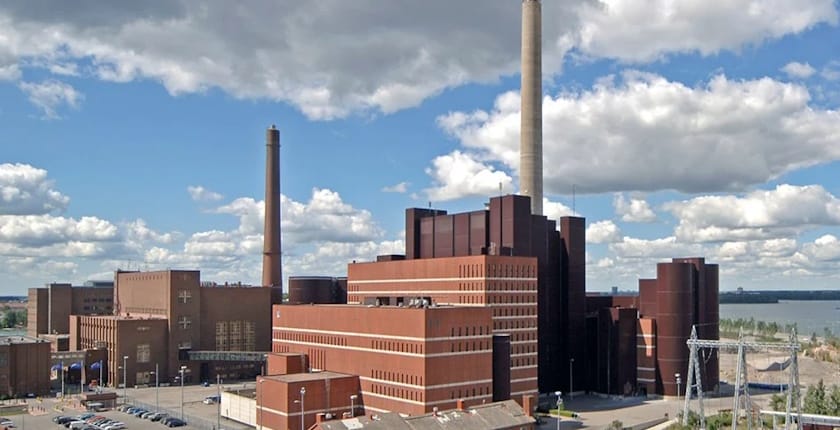
Helsinki’s municipal energy company Helen closed its last coal facility. Together with the country’s remaining plants that use the solid fossil fuel, Salmisaari accounted for just 0.8% of the electricity mix in 2024. The Government of Finland earlier set May 1, 2029, as the coal exit date.

Two years ago, the Olkiluoto 3 nuclear reactor of 1.6 GW, the strongest in Europe, entered commercial operation. Apparently it helped the energy system of Finland to almost eliminate coal from the board. Helen, controlled by the local authority of the capital Helsinki, closed its Hanasaari B plant in 2023, leaving the Salmisaari combined heat and power (CHP) facility as the only one using coal. This week the company shut it down.

Finland is now using neglectable quantities of coal. Salmisaari has 177 MW in power capacity and 300 MW for heat. Together with the country’s remaining three coal power plants, it accounted for a mere 0.8% of the electricity mix last year, Coal-Free Finland and Beyond Fossil Fuels said.

Moreover, coal amounts to just 30% of fuel in Vaskiluoto 2. The facility mostly uses biomass. The operator of the Martinlaakso coal unit is eliminating fossil fuels from regular operations next year. The third one, Meri-Pori, is in strategic reserve.

Share of coal in Finland is marginal

Finland will retain reserve coal capacity for security of supply purposes, which can be deployed if necessary, Helen said. In addition, some energy companies use small amounts of coal in their energy production for peak, reserve and security of supply reasons, it added. The law forbids using coal in energy production after May 1, 2029.

Wind power output more than doubled in Finland since 2020, reaching a quarter of the total. At the same time, coal-fired generation plummeted 73% while fossil gas is down 82%, according to the report. “Finland has shown what’s possible when clear political signals are matched with rapid investments in renewable power,” said Deputy Campaign Director at Beyond Fossil Fuels Cyrille Cormier. The group called on the authorities to double down on renewables and clean flexibility.

Finnish energy experts can pull off impossible tasks

Helen delayed the closure of Salmisaari by a year. Coal still accounted for 64% of the company’s district heating supply in 2022!

The utility managed to slash its greenhouse gas emissions by more than 80% since 1990. It aims to reach 95% by the end of the decade.

“Helen giving up coal and, at the same time, foreign imported energy with regard to it, will remain a significant part of our country’s industrial history and shows that Finnish energy expertise enables actions that initially seemed impossible,” Chief Executive Officer Olli Sirkka said.

Helen transitioning to clean solutions

Helen is shifting to clean solutions. It enables operating more profitably with lower prices, the CEO pointed out. A range of facilities are under construction.

Heat production is mainly moving to heat pumps – utilizing waste and environmental heat – electric boilers, energy storage and sustainable biofuels. Helen will lean on wind, nuclear energy, hydropower and photovoltaics for electricity.

The new units in Salmisaari will be two electric boilers of a combined 100 MW, in combination with a heat pump of 33 MW in external capacity, as well as a 153 MW plant burning wood pellets. Helen is planning a 200 MW electric boiler facility of four units in Hanasaari, able to store 1 GWh of heat. It would currently be the biggest in Europe.

Helsinki has the ambition to reach climate neutrality by 2030, though including external offsets. It would eliminate them within the following ten years, which means only the city’s carbon sinks are included in the equation. The next step is turning carbon negative.

Market forces are decimating the remaining coal power capacity in Europe as it is expensive because of emissions rights and strict environmental regulations, as well as inflexible. Germany, Poland, Slovenia, the Czech Republic, Serbia, Montenegro, Bosnia and Herzegovina, Kosovo* and Turkey have the largest shares of coal in power production in the European Union and Southeastern Europe. Their phaseout deadlines are all after 2030, but the situation is changing fast.

* This designation is without prejudice to positions onstatus and is in line with UNSCR 1244/99 and the ICJ Opinion on the Kosovo declaration of independence.
by in News

PPC plans EUR 5.8 billion makeover of Western Macedonia coal region, including data centers

Public Power Corp. (PPC) presented a EUR 5.8 billion investment plan for the coal region of Western Macedonia in northern Greece. It held the ceremony in the retired Kardia 2 lignite-fired power plant.

According to PPC’s chairman and CEO George Stassis, the endeavor consists of the decommissioning of old assets and the rollout of new energy technologies.

Stassis: Western Macedonia can reinvent itself

PPC, or DEI in Greek, said it would return to the government 8,000 hectares of coal land that it no longer needs, after completely restoring it. All equipment, such as 400 kilometers of lignite conveyor belts, cooling towers and excavators, are planned to be recycled up to 95%.

According to the decarbonization timeframe, Ptolemaida 5 will be the last coal plant in the country, continuing to operate until the end of 2026. It is set to be converted to a gas power plant with a capacity of 350 MW. PPC is also open to upgrading it to 500 MW or even 1 GW.

New photovoltaics, storage underway

“Western Macedonia can reinvent itself using new technology,” said the CEO.

The group aims to install a total of 2.1 GW in photovoltaics across the region. A 550 MW solar power plant in the former lignite mine of Ptolemaida is almost complete. It will be the biggest in the Balkans. Separately, a group of clusters of 940 MW is under construction within the Meton joint venture with German RWE.

Energy storage is another major segment in PPC’s investment plan. Within the next three years, it aims to funnel EUR 940 million for a total capacity of 860 MW. It includes two pumped storage hydropower projects. The one in Kardia is for 320 MW and an eight-hour storage duration, and the other in the South Lignite Field – 240 MW and a 12-hour duration. The projects are worth EUR 430 million and EUR 310 million, respectively.

Equally important, battery storage units of 300 MW altogether would be installed in Amyndaio, Akrini, Meliti and Kardia in the country’s main coal region. The other one is Megalopolis in the Peloponnese.

PPC plans a 50 MW hydrogen production facility together with Motor Oil, as Hellenic Hydrogen, and a cogeneration plant to cover district heating needs from the end of 2026.

Large 300 MW data center

Last but not least, the Greek group aims to create a 300 MW data center, as part of an investment of EUR 2.3 billion. A subsidiary in fiber optic cables would upgrade the telecommunication links with Thessaloniki and Igoumenitsa to improve data flow in Greece and abroad.

If conditions are favorable, PPC would further upgrade the data center to 1 GW, increasing its investment by EUR 5.4 billion.

Greek Prime Minister Kyriakos Mitsotakis said at the event that existing infrastructure in Western Macedonia is a great advantage.

by in News

Kosovo* receives financing for 120 MW solar power plant on coal ash dump

The European Investment Bank is providing a EUR 33 million loan for a solar power plant of 120 MW in peak capacity. Government-controlled power utility KEK plans to install it on its former coal ash dump near Prishtina.

The European Investment Bank (EIB) signed a EUR 33 million investment loan for the construction of a photovoltaic plant in Kosovo* with a connection to the grid of up to 100 MW, translated to 120 MW in peak capacity.

The financing package for the Solar4Kosovo project is part of the European Union’s Economic and Investment Plan for the Western Balkans of EUR 9 billion in grants. It is aimed at mobilizing a total of EUR 30 billion.

Solar power project involves EUR 32 million EU grant

The proposed facility is expected to produce 169 GWh per year, EIB said. The location, owned by government-controlled Kosovo Energy Corp. (KEK), is on the former ash dump of its Kosovo A power plant. The electricity producer is also getting a EUR 32 million grant via the EU’s Western Balkans Investment Framework.

“As one of the largest renewable energy developments in the region under Team Europe, this project will help Kosovo* achieve its energy security and renewable energy goals. Together with the European Commission and other partners, we are glad to be able to jointly help Kosovo* lay the groundwork for the decarbonisation of the local economy and diversification of the energy mix, in line with the EU Green Agenda,” said EIB’s Vice-President Kyriacos Kakouris.

Investment valued at EUR 107 million in total

Germany’s KfW Development bank is providing a EUR 29 million loan. The project’s total value, including KEK’s own funds, is estimated at EUR 107 million. The solar power plant between the towns of Obiliq/Obilić and Fushë Kosova (called Kosovo Polje in Serbian), near Prishtina, would have an underground connection to the existing substation at the Kosovo A thermal power plant.

“This project, the largest of its kind in the region, not only guarantees a sustainable energy production method but also accelerates Kosovo’s shift from conventional energy sources,” according to Kosovo’s Minister of Finance, Labour and Transfers Hekuran Murati.

Kosovo* is dependent on obsolete Kosovo A and Kosovo B coal plants for almost all its electricity. Renewables projects are gradually gaining traction.

The other part of the Solar4Kosovo project is for a solar thermal facility for the nearby capital city’s district heating system. The site is in the village of Shkabaj (Orlović) in Obiliq municipality.

In other news, the government in Prishtina established Energy Storage Corp. or ESCorp. It will manage the project for batteries with total operating power of 125 MW and 250 MWh in capacity. It is funded by the Millennium Challenge Corp. (MCC) of the United States.

The remaining 45 MW (90 MWh) is expected to be owned by Transmission, System and Market Operator (KOSTT). The battery systems are envisaged to store surplus electricity and stabilize the frequency in the transmission system. They are valued at USD 180 million altogether.

* This designation is without prejudice to positions onstatus and is in line with UNSCR 1244/99 and the ICJ Opinion on the Kosovo declaration of independence.
by in News

Kosovo* adopts Law on the Promotion of the Use of Renewable Energy Sources

Only after the first auction was held, lawmakers in Prishtina enabled subsidizing renewable electricity plants through contracts for difference (CfDs). Passing the Law on the Promotion of the Use of Renewable Energy Sources, they also cleared the way for the introduction of guarantees of origin, a renewable energy operator and support fund, energy communities and energy storage in Kosovo*. The legislation includes provisions on self-consumption.

Kosovo’s parliament adopted the Law on the Promotion of the Use of Renewable Energy Sources. It won praise from the Energy Community Secretariat for aligning the legal framework with the Renewable Energy Directive. The international organization based in Vienna also commended the move toward sustainable energy development.

“This law will bring benefits to the private sector, through new concepts of consumer involvement in the energy sector and through the definition of procedures that must be done competitively. In this way, all enterprises are treated equally, benefiting from their competition which leads to lower prices and affordable costs for citizens,” the Ministry of Energy said.

Provisions for green heating, cooling, transportation

Among the objectives are increasing the security of supply and protecting the environment. The Law on the Promotion of the Use of Renewable Energy Sources includes provisions on the combined generation of heat and power (CHP or cogeneration).

The legislation covers the electricity sector, heating and cooling and transportation. The law cleared the way for incentivizing consumers to produce, store and sell the surplus of renewable electricity.

A system for guarantees of origin of electricity is envisaged to be rolled out as well. Notably, the Energy Regulatory Office (ERO) expects to establish a registry in June. The law stipulates that a renewable energy operator would be founded. The entity would manage a renewable energy support fund.

Liquid day-ahead market was necessary to have reference prices for CfDs

In addition, the legislation defines energy communities, energy storage activities and behind-the-meter installations for renewables self-consumers. Such units wouldn’t be able to inject electricity into the grid.

The adoption of the law was apparently on hold until the Albanian Power Exchange (ALPEX) set up a liquid day-ahead market. Kosovo* and Albania jointly launched the bourse. The reference price set in trading is necessary for obligations determined in contracts for difference (CfDs). The subsidies are awarded in renewable energy auctions.

On the other hand, the first such competitive bidding process was completed late last month, before the Law on the Promotion of the Use of Renewable Energy Sources was passed.

The Government of North Macedonia sent a similar bill to the national assembly a month ago.

* This designation is without prejudice to positions onstatus and is in line with UNSCR 1244/99 and the ICJ Opinion on the Kosovo declaration of independence.
by in News

Prequalification open for 170 MW of battery storage in Kosovo*

Millennium Challenge Account Kosovo invited qualified companies to respond to the prequalification call for a battery storage project. The two lots are for 45 MW and 125 MW in operating power, with a duration of two hours.

The United States, acting through its Millennium Challenge Corp. (MCC) and the Government of Kosovo*, entered into a Millennium
Challenge Compact in 2022. The project contributes to poverty reduction through economic growth. Within the mechanism, a new prequalification call is on until February 14 for the design and build of utility-scale battery energy storage systems (BESS) and transmission connection infrastructure.

The US participates with USD 202 million and the government in Prishtina allocated USD 34.7 million for the entire endeavor. Kosovo* intends to apply a portion to eligible payments under one or two contracts for BESS, the documentation shows.

The contracting authority in the prequalification process is called Millennium Challenge Account Kosovo (MCA-K). The subproject will be instrumental in enhancing the stability of the power grid and improving the management of energy imbalances, the call reads. It is the biggest investment in BESS in the Western Balkans.

Facilities to provide grid services, conduct energy arbitrage

The first lot will be for batteries with 45 MW in capability and a duration of two hours. It translates to 90 MWh in capacity. The second lot is for 125 MW and 250 MWh, respectively.

According to the project presentation MCC released earlier, the first facility will provide automatic frequency restoration reserve (aFRR) services. It would work for the Transmission, System and Market Operator (KOSTT) of Kosovo* and within the Albania-Kosovo (AL-KS) Control Block.

The site for one BESS facility is next to US Army base Camp Bondsteel

The site, near the city of Ferizaj (Uroševac), is right next to Camp Bondsteel. Led by the US Army, it is the seat of the Kosovo Force (KFOR).

The second BESS system would provide ancillary, balancing and other services and conduct energy arbitrage. It would operate under government-controlled Energy Storage Corp. (ESC or ESCorp). The location is in the municipality of Peja or, in Serbian, Peć.

The two future lithium-ion battery systems have budgets of USD 46 million and USD 125 million, respectively, the document shows.

They will be connected to 400/110 kV substations Ferizaj 2 and Peja 3, via underground cables.

Online conference scheduled for December 23

The current announcement adds there would be a prequalification webinar on December 23.

MCC expects to issue the call for bids in July and that construction would start in May 2026. The targeted commercial operation date is August 2028.

Of note, the Millennium Challenge Compact program includes the Just and Equitable Transition Acceleration (JETA) project. It consists of reskilling and the promotion of an inclusive energy sector workforce.

* This designation is without prejudice to positions onstatus and is in line with UNSCR 1244/99 and the ICJ Opinion on the Kosovo declaration of independence.
by in News

Greece presents 3.55 GW plan for standalone batteries

A new ministerial decree sets the framework for the installation of 3.55 GW of energy storage – standalone batteries, without subsidies.

The new framework for batteries, presented by the Ministry of Environment and Energy, is under public consultation.

It drastically increases the ambition, originally for between 2 GW and 2.5 GW. Now the government aims for 2.65 GW of batteries in the transmission grid plus another 900 MW in the distribution grid.

It should be noted that the Greek National Energy and Climate Plan (NECP) calls for 4.3 GW of storage by 2030. So far, 900 MW was allocated through auctions, which means that all the rest would be under the scope of the new plan. The difference is that there are no more subsidies, as battery storage is considered a mature technology.

Strict completion times for new standalone batteries

To participate in auctions, batteries will need to provide at least two hours of storage. The new projects will face strict completion deadlines, including 14 months for grid connection terms. Otherwise, investors will lose the EUR 200,000 per MW letter of guarantee required for projects in the transmission network and EUR 50,000 per MW in distribution.

Another interesting aspect is the inclusion of a competition restriction. Each company would be able to submit applications for a maximum 200 MW in combined capability.

Capability quota split among several categories

Future auctions for standalone batteries will be divided into categories.

In the transmission network, 500 MW was allocated to projects with power purchase agreements (PPAs) of at least eight years with energy intensive industries.

Another 100 MW is set for batteries of over 10 MW each, also with private PPAs.

There is a 250 MW quota for batteries in coal regions. The largest part, 1.8 GW, is for other projects

When it comes to the distribution level, 400 MW is for battery energy storage systems (BESS) of at least 5 MW apiece.

The categories of 1 MW to 5 MW, and under 1 MW, have quotas of 200 MW each. The ministry envisages 100 MW for investments with PPAs signed with businesses or industrial production facilities.

The regions of Central Macedonia and Western Macedonia account for the largest shares of the planned operating power, 300 MW each.