by in News

Karatzis, Metlen to install Greece’s largest battery in joint venture

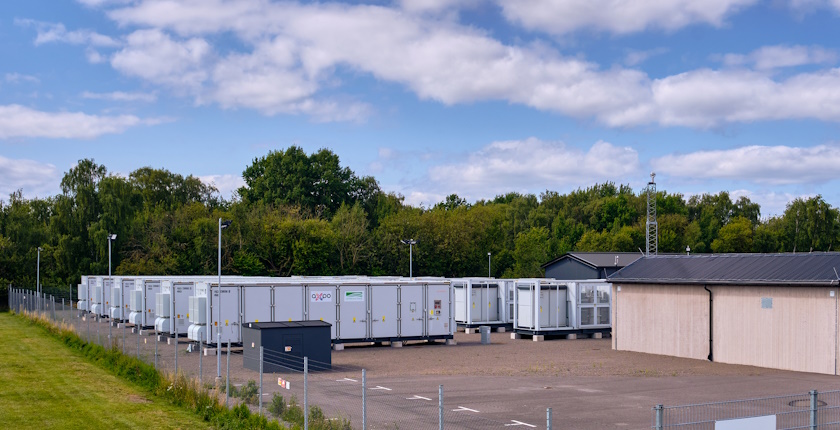
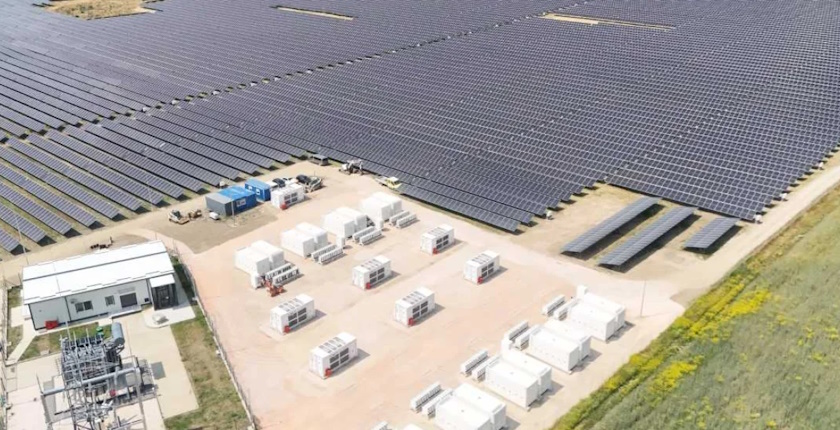
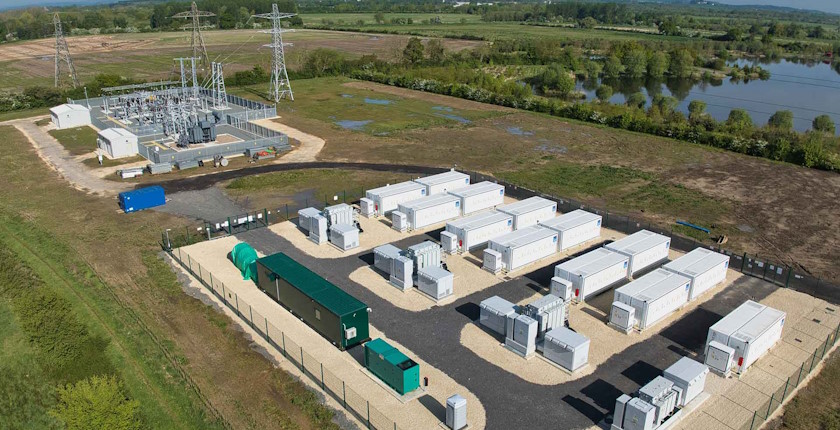
Karatzis Group of Companies and Metlen are establishing a joint venture for a standalone battery energy storage system (BESS) of 330 MW and 790 MWh. It is the biggest project in Greece so far and one of the biggest in Europe.

Metlen said it is entering into a new strategic partnership in Greece with Karatzis Group of Companies, through a joint venture with ownership stakes of 49% and 51% respectively, for the development, construction, operation, and energy management of a BESS with 330MW in operating power and a capacity of 790 MWh. The site is in Thessaly.

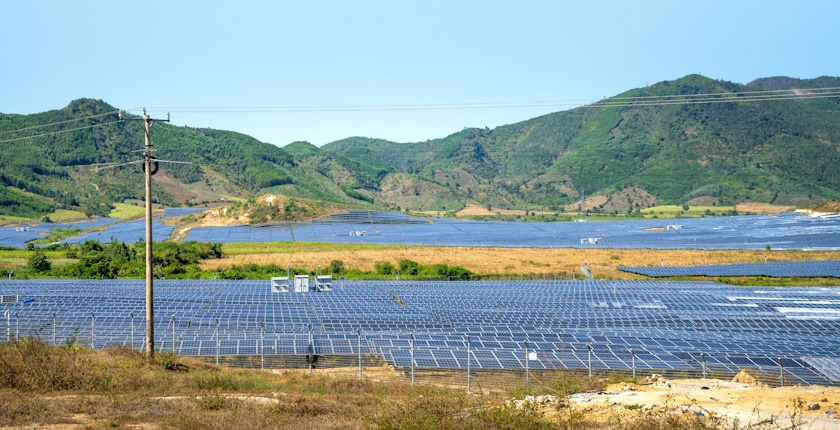
The two Greek companies are building upon their cooperation in the sale and purchase of green energy. Since August 2024, it has involved the implementation of a portfolio of solar power plants with a total capacity of 262 MW in the same region, the update adds.

The partners value their BESS investment at EUR 170 million

The BESS would be the largest standalone storage unit planned to date in Greece and one of the biggest in Europe, Metlen said. Total investment amounts to some EUR 170 million.

Karatzis and Metlen expect to complete it in the second quarter of next year. The partners expect no further grants or tax reliefs for the project, according to the announcement.

Metlen is tasked with full construction, operation, and maintenance of the unit through its M Renewables segment. It has presence and projects on five continents, the company pointed out. In 2024 alone, Metlen said it completed storage projects with a total capacity of 0.7 GWh and is in the final stages of agreements for third-party projects totaling 2.2 GWh.

Karatzis, based in Crete, manufactures a variety of netting products. It has five plants. In recent years it expanded to the construction of photovoltaic plants. The Metlen conglomerate produces metals and has a vertical presence in the energy market, being one the largest producers and suppliers in Greece.
by in News

Indian ChemVolt Global, Serbian ElevenEs forge strategic partnership for batteries

Indian company ChemVolt Global and ElevenEs, based in Serbia, established a strategic partnership to accelerate the development of battery energy storage systems (BESS), lithium-ion cell manufacturing, and electric vehicle (EV) battery pack supply across India.

ChemVolt Global is a clean energy and storage solutions company and ElevenEs develops lithium-ion battery cell technology.

The collaboration combines ChemVolt Global’s extensive expertise in project development, engineering, procurement, and construction (EPC), and local market execution, with ElevenEs’ industry-leading experience in lithium-iron-phosphate (LFP) cell technology and large-scale European manufacturing, the Serbian company said.

The first objective is to deploy advanced BESS solutions across India and the Middle East

The two companies aim to establish a robust ecosystem for advanced energy storage and electric mobility in India.

The partnership includes three key objectives.

The first one is to deploy advanced BESS solutions across India and the Middle East, with advanced lithium ion cells with a higher life cycle and less degradation and high thermal stability.

The two companies also plan lithium-ion cell manufacturing collaboration based on ElevenEs’ pioneering European cell technology and production capabilities, the update reads.

The companies intend to accelerate the adoption of electric mobility across India

The third goal is to supply EV battery packs to original equipment manufacturers (OEMs).

The partners plan to enable domestic automotive manufacturers to access high-performance, safe, fast-charging and reliable battery packs, accelerating the adoption of electric mobility across India.

Gupta: The deepening industrial and technological cooperation between India and Europe

ChemVolt Global CEO Kuldeep Gupta said the partnership with ElevenEs represents a defining moment for India’s clean energy and electric mobility ambitions.

“Beyond technology, this collaboration reflects the deepening industrial and technological cooperation between India and Europe, positioning both nations at the forefront of the global energy transition,” he stated.

Mikać: We are not just participating

According to Nemanja Mikać, CEO of ElevenEs, the partnership is a decisive move to bring the company’s proven LFP cell technology and large-scale manufacturing to India.

ElevenEs’ expertise, in his words, is ready to deliver nothing less than advanced battery solutions that will be foundational to India’s energy independence.

“We are not just participating; we are positioned to define the future of this industry,” Mikać stressed.

by in News

Romania’s Hidroelectrica to equip hydropower plants with battery storage

Romanian state-owned power utility Hidroelectrica will install storage on all its run-of-river hydropower plants, to be able to switch the supply of surplus electricity to the evening peak, according to interim CEO Bogdan Nicolae Badea.

Hybrid power plants are all the rage. Two- and even three-way combinations between batteries and solar and wind power plants have become more and more popular over the past few years, as they enable steadier and more predictable supply. But energy storage can have a meaningful role in tandem with hydropower as well, and interim President of the Board of Directors of Hidroelectrica Bogdan Nicolae Badea revealed plans for such investments.

Namely, impoundment hydroelectric plants control the flow from the reservoir through the dam, so much of their production can be adjusted to demand. Run-of-river facilities can store little to no water, which is why the Romanian state-owned hydropower plant operator intends to add energy storage to its entire operational portfolio in the segment, Badea explained.

Goal is to lower daily price spreads at power exchange

The idea is to switch the supply of electricity from times of surplus within the day to the evening peak, the interim CEO stressed at the Profit Energy.forum. There are seven to eight slots a day at the electricity exchange with very low or negative prices, and others with excessive prices, Badea pointed out.

“Even in free market conditions and affected by external crises, the cost borne by consumers could be somewhat lower than today if Romania had energy storage capacities, so that daily consumption peaks are in balance with production peaks,” the interim CEO underscored.

Price caps hurting Romanian state budget

Romania caps power prices, which harms the state budget, Badea noted and said there are two ways to achieve a balance.

“The first solution is a systemic one – and here all the important participants in the energy sector must invest – and Hidroelectrica is doing this, investing primarily in diversification. We have a wind farm in operation today. We are investing a lot in the storage area and we are trying to combine renewable sources, hydro, photovoltaics, floating photovoltaics,” he stated.

Hidroelectrica signed a contract in April with a consortium of Romanian companies Prime Batteries Technology and Enevo Group, for a lithium ion battery energy storage system at its Crucea Nord wind farm.

Hidroelectrica is investing in storage, solar power and hybrid power plant projects

The company also plans to integrate a BESS with hydropower plant Iron Gate 2 (Porţile de Fier 2) on the Danube. The project is valued at EUR 61.2 million. Some hydropower plants are set to be equipped with rooftop photovoltaic systems.

Badea was also the company chief from 2017 to 2023. He was recently reappointed, after he was the chief investment officer for almost two years.

For the first six months of this year, hydrological data shows a situation reminiscent of the critical moment when the company entered insolvency, in 2015, Badea added. However, unlike that period, today Hidroelectrica is a profitable, stable company and a pillar of the energy system, he stressed.

by in News

GridFlex to install standalone BESS in Serbia

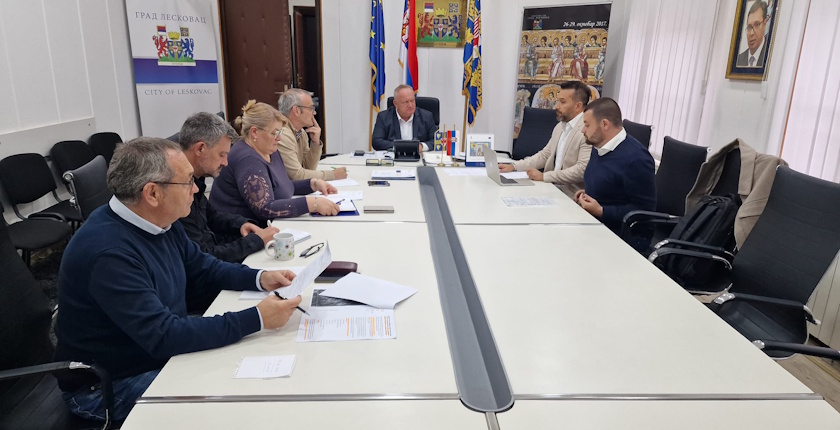
GridFlex plans to install a standalone battery energy storage system with a capacity of 125 MWh near the city of Leskovac, in southern Serbia. The investment is estimated at EUR 17 million.

Serbia doesn’t have any utility-scale batteries, but many are in the project pipeline. GridFlex is one of 11 companies in the process of obtaining approvals from transmission system operator (TSO) Elektromreža Srbije (EMS) for the connection of planned standalone battery energy storage systems (BESS) to the network.

Mayor of Leskovac Goran Cvetanović met with representatives of Turkish company GridFlex, which has an office in Belgrade.

Battery systems provide flexibility to the system

The company is developing a project for a BESS that would provide system flexibility, support the integration of renewable energy sources, and contribute to the local economy, the city authority said.

GridFlex plans to invest EUR 17 million in the installation of an energy storage facility in Leskovac, the update revealed.

Owner and CEO of GridFlex Alkin Yaman participated in the meeting.

The deadline for completing the construction is the end of 2026

The planning and technical documentation for the facility is under development. The deadline for completing the facility is the end of 2026, while commissioning is expected in early 2027, the city stressed.

The battery would be installed on 1.5 hectares of privately owned land that the firm purchased near the Leskovac 2 substation.

The city will provide assistance to GridFlex for project implementation.

Three co-owners

The investment will secure numerous benefits for the city – the possibility of new investments, weakened load and voltage fluctuations in the power system, and an increase in the capacity for connecting new local consumers and producers to the grid, the local authority stressed.

According to data from the Business Registers Agency, the owners of GridFlex are Alkin Sevket Yaman, Sirin Cem, and Denis Severinov Karamov.

Of note, investors in Serbia are in the process of obtaining approvals for connecting their planned BESS facilities of an overall 2,021 MW and 5,899 MWh to the grid. They would be standalone batteries and ones co-located with power plants.

by in News

Green light for one of first standalone battery investments in Cyprus

The Cypriot Department of Environment has approved the project for what is set to become one of the country’s first battery energy storage systems. HESS Hybrid Energy Storage Systems is planning to install a 59 MW facility with a capacity of 120 MWh, which would ease the strain on the European Union’s only non-interconnected electricity grids.

Pressured by curtailments of renewable electricity and frequent outages amid a lack of flexibility, Cyprus is in a rush to install battery energy storage systems (BESS). Stabilizing the grid is challenging also because of delays in the introduction of gas and the Great Sea Interconnector project, as the island country is the only one in the European Union without a power transmission link to the rest of the 27-member bloc.

Soon after state-owned Electricity Authority of Cyprus (EAC) launched a tender for a contractor for two BESS facilities, a private firm received a green light from the Department of Environment for a planned investment.

HESS Hybrid Energy Storage Systems is developing a project for a standalone battery system with 59 MW in operating power, which would consist of just as many units. Having 2 MWh in capacity each, the installation would amount to 120 MWh in nominal terms.

Water protection, relocation of olive trees are among obligatory measures

The department ruled that an environmental impact study isn’t required, but under several mitigation measures. For instance, the developer must deliver excess excavation material to a licensed entity, and use surface soil for landscaping.

Olive trees would be removed, and the groundwater and local water stream protected. The project involves underground cabling and wetting to contain dust during construction.

Grid development plan indicates 2029 for commissioning

The 4.9-hectare location is in Psevda in Larnaca district, near the 10.8 MW Ayia Anna (Agia Anna) wind park. The BESS would have a 50 MW connection to the 132 kV transmission grid, and an effective storage capacity of 100 MWh, documentation shows.

It would include an on-site substation, eight medium-voltage transformer units and 259 converters. The Electricity Authority of Cyprus plans to upgrade the nearby Psevdas high-voltage substation by 2029 to integrate the standalone battery system.

Construction work is expected to last ten months, while the cost of the BESS project is valued at EUR 22 million.

by in News

Software maker Volue acquires power trading, battery optimization platform smartPulse

Volue took over smartPulse, accelerating the expansion into Central and Eastern Europe, Southern Europe and Turkey, with its power trading and battery optimization capabilities.

Software maker Volue said it has completed a deal to acquire smartPulse, a full-suite short-term power trading and battery optimization platform for asset owners and aggregators across Europe. It significantly accelerates the expansion into Central and Eastern Europe (CEE), Southern Europe and Türkiye, according to the announcement.

The takeover will expand the offering with a comprehensive suite that now covers forecasting, position management, scheduling and nomination, day-ahead bidding, intraday trading, battery optimization and asset connectivity, Volue said. The company said it provides solutions and systems powering the green transition as well as insights to industries critical to society. Headquartered in Oslo, Norway, it is active in more than 40 countries.

Volue pointed out that it is strengthening its capabilities with smartPulse’s proven platform and seasoned team, adding that they bring decades of expertise in one of Europe’s fastest-growing power markets.

SmartPulse to benefit from Volue’s resources, expertise, commercial team

Founded in 2018 in Turkey, smartPulse is a certified independent software vendor (ISV) at EPEX Spot, Nord Pool and various other European energy exchanges, with more than 80 energy market specialists.

The firm expressed confidence it would benefit from Volue’s resources, expertise and commercial team to further accelerate its development and geographic expansion while also strengthening its end-to-end value proposition.

Jointly connecting assets to markets

“With this acquisition, we accelerate our expansion into new European markets and strengthen our position as a full-suite provider for renewable asset operators. The move directly enhances our battery storage and optimisation capabilities, deepens our presence across regions, and supports our ambition of becoming the leading global independent energy software player,” said Volue’s Interim Chief Executive Officer and Chief Transformation Officer Martin Vieider.

The transaction enables smartPulse to accelerate its European rollout of transmission system operator (TSO) connections and broaden its suite internationally, while giving customers the confidence of a market-leading global partner, according to CEO and co-founder Önder Akar

“We share Volue’s ambition of connecting assets to markets, and we’re excited to scale that vision together,” he stated.

by in News

Slovenia allocates EUR 375 million for sustainable mobility

Slovenia has allocated EUR 835 million from the Climate Fund for climate change mitigation and adaptation. The funds should be used over the period 2025-2028.

The Government of Slovenia has adopted a decree on the allocation plan for the Climate Fund for 2025-2028. The plan follows the key measures from the previous plan for the period 2023-2026 and adds funds for 2027 and 2028. The amount is determined based on expected revenues from emission allowance auctions.

Emission allowances are part of the European Union Emissions Trading System (EU ETS).

The funds will be directed to sectors addressing the main climate challenges, both in mitigation and adaptation to climate change. Measures supporting the green transition and increasing the country’s resilience to climate change will also be supported, according to the Government of Slovenia.

EUR 121 million was allocated for decarbonizing the economy

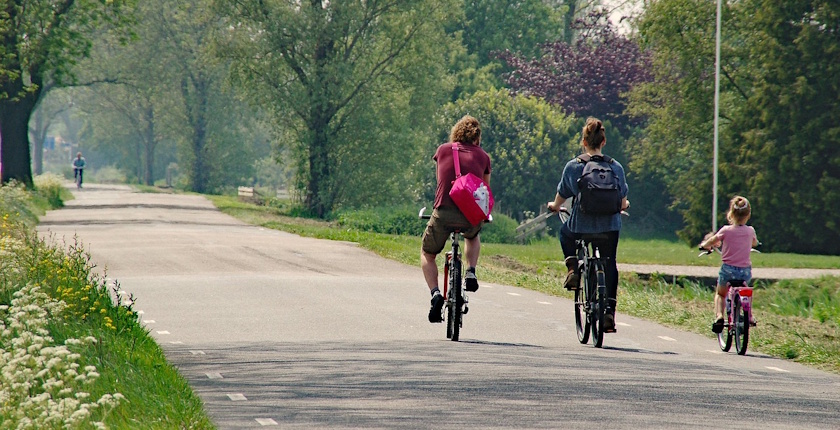
The largest chunk will go to sustainable mobility – EUR 375 million. The funds will be used for investments in public transport – purchase of new trains and buses, renovation of ticketing and information systems, co-financing of zero-emission vehicles and charging infrastructure, promotion of cycling and walking, and shifting freight transport from roads to rail.

EUR 121 million is designated for decarbonizing the economy. The government will co-finance successful European Union projects, support the introduction of a circular economy and sustainable reporting for small and medium-sized enterprises, as well as investments in industrial decarbonization.

Energy renovation of public and residential buildings, measures to reduce energy poverty, and the construction of nearly zero-energy buildings are also part of the allocation plan. There is EUR 111 million for such activities.

EUR 26 million is set for awareness raising and education

EUR 95 million is designated for renewable energy sources. The funds will be used to replace outdated household heating devices with modern ones and heat pumps, as well as for energy storage, geothermal energy, and measures to increase the energy self-sufficiency of buildings.

The Climate Fund will support additional climate change adaptation measures. The activities include reducing flood risks, preserving biodiversity, adaptation in forestry and agriculture, and strengthening the resilience of local communities. The allocated funds amount to EUR 49 million.

Slovenia has envisaged EUR 12 million for international climate change financing and EUR 26 million for awareness raising and education.

by in News

Econergy to assume 100% ownership of Romania’s biggest solar park, add batteries

Econergy agreed to buy out Nofar’s 50% stake in the 155 MW Rătești photovoltaic plant, the largest in Romania. The next step is to add a 120 MW battery energy storage system.

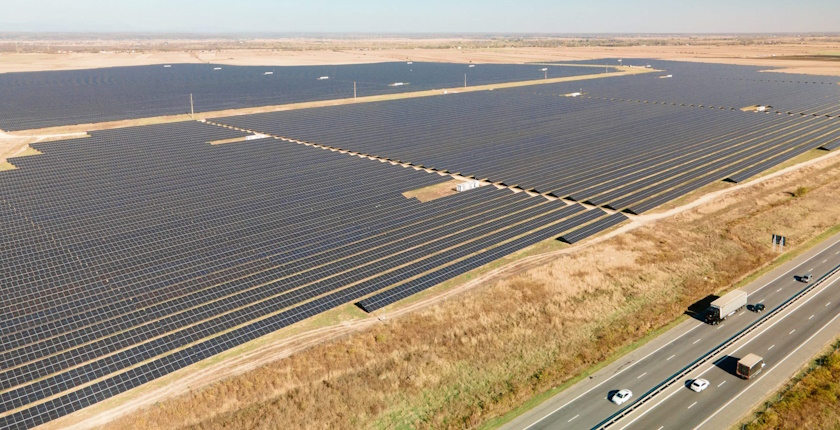
Econergy Renewable Energy said its subsidiary Econergy International, in which it holds 75.2%, has signed an agreement with Nofar Energy to acquire the partner company’s entire 50% stake in the Rătești solar power plant. The facility northwest of Bucharest, in Argeș county, is the largest in Romania. It has 155 MW in peak capacity.

Following the transaction, Econergy will hold 100% ownership and assume control of the shareholder loan previously provided by Nofar, of EUR 14.9 million, according to the update. The total consideration for the transaction is €45.6 million, payable in three instalments through June 2026.

Both companies are based in Israel. Econergy expects a capital gain of EUR 13 million from the deal. Like with some of its other investments in Romania, it plans to add a 120 MW battery energy storage system (BESS). The operator values the investment at EUR 32 million.

The battery storage facility is expected to enter commercial operation in the second quarter of next year, Econergy revealed. It would generate an additional EUR 15 million in annual revenue and EUR 12 million in earnings before interest, taxes, depreciation and amortization – EBITDA, the announcement reads.

Econergy said its portfolio of solar, wind and storage projects in Romania amounts to 3.5 GW. It includes 473 MW in operation or facilities that are ready to connect, 763 MW under construction and 395 MW scheduled to begin construction by the end of the year. Total project pipeline exceeds 14 GW.

by in News

Romanian town signs partnership for 200 MW solar park with BESS

A firm recently established by Turkish and Romanian investors has launched a public-private partnership with the local authority in Târgu Lăpuș in northern Transylvania. They are planning a hybrid power plant worth EUR 100 million.

A public-private partnership in the making in northern Romania is aimed at building a 200 MW photovoltaic plant, the largest in Transylvania, with a battery energy storage system, 2Mnews reported. Global Energy Asset, a firm founded by Turkish and Romanian investors less than half a year ago, has signed a deal with the municipal authority in Târgu Lăpuș.

The investors value the project at EUR 100 million. They intend to install the facility on 200 hectares on the territory of the town, also known as Magyarlápos. Târgu Lăpuș is in Maramureș County.

The seat of Global Energy Asset, formerly known as Global Finance Asset, is Tunari in Ilfov county near Bucharest. In addition to financial benefits and covering the costs of electricity for street lighting, its representatives offered the local authority scholarships for children and sponsorship of events and institutions, the article reveals.

The project firm’s largest shareholder reportedly has ties with Feridun Geçgel of Astor Enerji

Muhammed Ishak Çiftçi, who has Romanian citizenship, controls 48% of the project firm. According to the news outlet, he is associated with Turkish billionaire Feridun Geçgel, Chairman of the Board of Astor Enerji.

It is the largest manufacturer of transformers in Turkey. Astor Enerji entered the Romanian photovoltaic market this year by acquiring four projects for 279 MW in total.

In August, Swiss energy storage provider Energy Vault agreed to supply up to 2 GWh of battery capacity for the Turkish company’s future solar power plants in Romania. Astor Enerji is listed on the Istanbul Stock Exchange (Borsa Istanbul).

Head of Global Energy Asset, lawyer Cătălin Iulian Marin, holds 25%, and there are four more co-owners.

Approving the proposal for the public-private partnership, Târgu Lăpuș town hall cited the need for business ventures amid economic difficulties. Namely, furniture manufacturer Taparo, which supplied IKEA and was the biggest business in the area, has become insolvent.

by in News

Sunterra RE equips its PV plants in Bulgaria with batteries totaling 156 MW

Bulgarian solar power plant operator Sunterra RE added co-located energy storage to its operational portfolio. The company’s three photovoltaic systems, with 524 MW in combined peak capacity, now also have batteries of 156 MW and 312 MWh in total.

With the ongoing solar boom in Bulgaria, investors have lately also been rushing to set up co-located and standalone battery energy storage systems (BESS). Bridging the gap between the peaks of daily photovoltaic production and power consumption is one of the key factors for the energy transition – stabilizing prices and the electricity system’s stability. Sunterra RE – Santera RE in Bulgarian – stands out with a large new operational solar and battery portfolio.

In its latest updates, the company revealed that it has put three BESS facilities into operation. They are co-located with its photovoltaic plants of 524 MW in total peak capacity.

There are 77 lithium-iron-phosphate (LFP) battery units now online. They have an overall capability of 156 MW and a duration of two hours. It translates to 312 MWh in storage capacity.

The investments received support through the National Recovery and Resilience Plan (NRRP), funded from the European Union’s Recovery and Resilience Facility – RRF. Sunterra RE said it completed them in less than a year.

Galabovo BESS accounts for half of battery operating power

The Kaloyan solar power plant of 208 MW, also known as Dalgo Pole, was the biggest in Bulgaria for a short while. It is backed with a 47 MW / 94 MWh facility, comprising 23 battery units.

The BESS investment at the site just north of Plovdiv was worth BGN 31.7 million (EUR 16.2 million).

The three subsidized battery projects were completed in less than a year

Accompanying the Galabovo solar power plant (201 MW) is a BESS with 75 MW in operating power. Sunterra RE said it consists of 37 battery containers. The Galabovo municipality is east of Plovdiv, Bulgaria’s second-largest city.

The remaining seventeen units, of 34 MW, make up the battery energy storage system at the Karlovo solar power plant. The PV facility in the eponymous municipality north of Kaloyanovo, has 115 MW.

The company’s fourth photovoltaic plant, in Pleven in the north, has only 9.6 MW.

Sunterra RE to expand its three new energy storage facilities by over 1 GWh altogether

Sunterra RE recently entered into a strategic partnership with Sungrow to expand the three BESS by more than 1 GWh in total. The deal is for the China-based partner’s MV-Power Titan 2.0 LFP units and accompanying equipment and software.

The city of Lovech, northeast of Sofia, hosts the strongest BESS in the Balkans – of 124.1 MW and 496.4 MWh. It is a standalone battery facility, part of a closed power distribution system.

Renalfa IPP and Eurowind Energy are installing a 315 MW / 760 MWh BESS at their Tenevo PV plant. They plan to turn it into the largest and most complex hybrid power plant in Bulgaria.