by in News

First merchant battery projects in Greece to be highly profitable, study shows

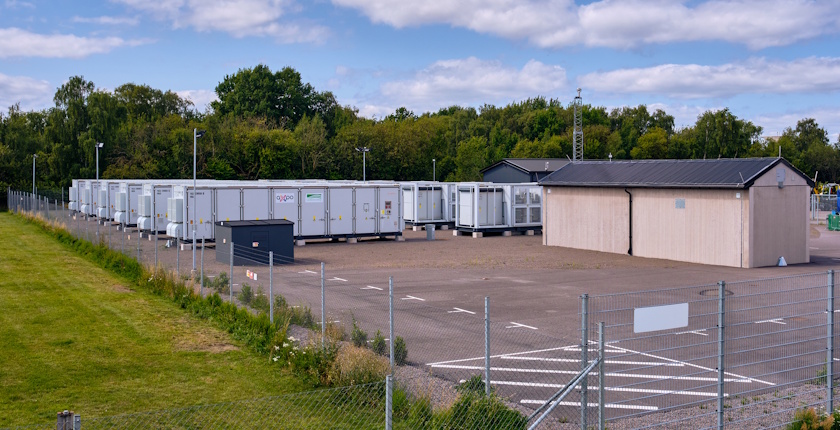
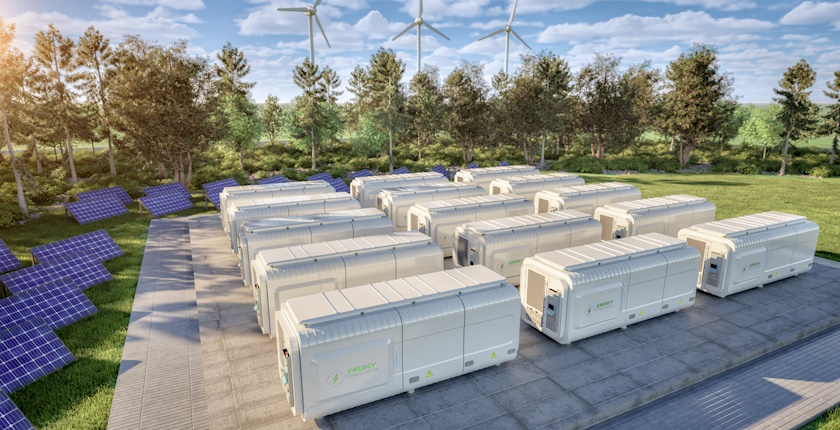
Standalone battery units in Greece are expected to be profitable both in the short and the long term, according to a new study by the Aristotle University of Thessaloniki (AUTh).

The results were based on a simulation carried out for a variety of battery types, with storage durations between two and five hours. A maximum of two charge-discharge cycles per day was taken into account.

The study concerns merchant projects that rely exclusively on the market for their profitability. This means that they can generate revenue in three ways: through the daily arbitrage between the lowest and highest hourly wholesale power prices, from balancing the system and providing reserves.

Storage duration determines revenues

In the case of a battery with a capability of 10 MW and five hours of storage, the results showed a revenue of EUR 2.6 million in 2026. The amount falls after 2030 to EUR 1.6 million, which is still sufficient for investments. It remains near the same level all the way to 2037.

Revenues for a 10 MW facility with a two-hour duration are much lower. They begin at EUR 1.5 million in 2026 and decline to EUR 800,000 after 2030.

Projects will rely mostly on arbitrage after 2028

In comparison, a 10 MW project costs between EUR 2.5 and EUR 5 million to develop, depending on storage duration, according to current battery prices. Therefore, it is evident that investors would return the investment in less than 10 years. Typical systems have an operational life expectancy of 20-25 years.

“Batteries will benefit initially from high revenues through balancing and reserves provision. After the first few years, they will rely mostly on arbitrage,” said Pantelis Biskas, professor at AUTh.

Greece published a plan earlier this year to develop 4.7 GW in commercial battery storage systems. Businesses are currently moving to secure licenses and the first installations are expected to come online by 2028.

It means the projects will probably miss the initial high returns that AUTh expects. However, they will still be profitable, especially the ones with long storage duration.
by in News

Domac: No energy transition without much stronger grid investments

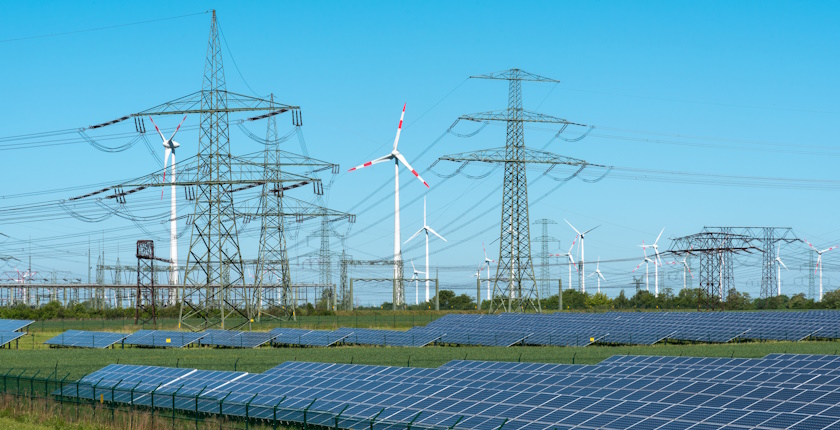
Croatia is investing only half as much in the electricity network as Slovenia and Austria, said Managing Director of North-West Croatia Regional Energy and Climate Agency (REGEA) Julije Domac. He warned that without an acceleration in grid investments, there are no renewable sources and no energy transition.

Croatia is about to overcome one of the biggest obstacles to investments in green energy, with its proposed methodology for the grid connection fee. However, there are several more bottlenecks in the sector, and they mostly also concern the electricity network.

The grid is apparently not among priority segments in Croatia, which depends to a large extent on electricity imports. The situation is similar throughout the Balkans and Europe, and beyond, and the basic question is who will cover the expenses as well as which projects are the most important for enabling the deployment of renewables. Among other difficulties, the administrative capacity for permitting for grid improvements and expansion is too weak, alongside complex environmental and spatial planning requirements.

Managing Director of REGEA Julije Domac outlined his view on the matter in a LinkedIn post. “Without an electricity network, there are no grid connections, no RES, no transition… There is more than 13 GW of solar and wind power projects under development today, but the network cannot integrate it without accelerated investments,” he wrote.

Photo: Julije Domac (REGEA)

Grid operators reacting with emergency measures instead of long-term strategy

The free capacity in the power distribution grid is estimated at 3.7 GW, but a large part is in areas with low interest for investing, Domac pointed out. Of note, he is also Croatian President Zoran Milanović’s special advisor on energy and climate.

“In the coastal area and Dalmatia, where the resources are the best, the network is near the maximum load in many parts – it means a malfunction of one element could jeopardize the system’s stability. To avoid that, the operators are already often turning to emergency measures in dispatching now: shutting down parts of the network, redirecting flows, pausing works. It is ‘putting out fires’ – and not a long-term strategy,” the head of REGEA said.

The regulated income from tariffs limits investments as the transition’s urgency isn’t acknowledged

Domac stressed that Croatia is investing less than EUR 20 per customer per year, only half as much as Slovenia and Austria. In his opinion, the tariff-based methodology is limiting investments. Namely, Croatian Transmission System Operator (HOPS) and HEP-ODS, the national distribution system operator, are funded through regulated income under the Croatian Energy Regulatory Agency (HERA), and the mechanism doesn’t acknowledge the urgency of the transition, according to the energy expert.

Another point is delayed digitalization, as Croatia has a much lower share of smart meters than neighboring Slovenia, where it surpassed 99%, or Italy, where the level is around 95%, he underscored. There is no domestic market for flexibility and no contracts with batteries and with consumers that could help ease the pressure on the grid, Domac claims.

In addition, he highlighted the sluggish grid connection procedure, saying it lasts ten years for wind power plants and four years for photovoltaics, the most in all European Union.

Grid connection costs can be covered with EU funding, green bonds

Domac is recommending to the authorities to introduce temporary connection points, with a controlled power delivery – limited until network enhancements are completed. HERA did envisage such a possibility in its draft methodology.

The grid connection fee for renewable electricity plants should be abolished, which was already promised, Domac recalled. It is an obstacle blocking 60 projects for 3.5 GW in total, he noted. It is the grid operator that should bear the cost and, aside from the tariff items, it can finance them through EU funds and green bonds, like most member states do, Domac added.

He expressed the belief that ten or so most important grid interventions should be accelerated – transformer stations and transmission lines in particular and especially in Dalmatia. Pilot projects for batteries and flexibility would pave the way for more grid connections without the wires, and public procurements need to be streamlined as well for works worth up to EUR 1 million, for instance, so that the replacement of one transformer doesn’t last twelver months, Domac asserted.

by in News

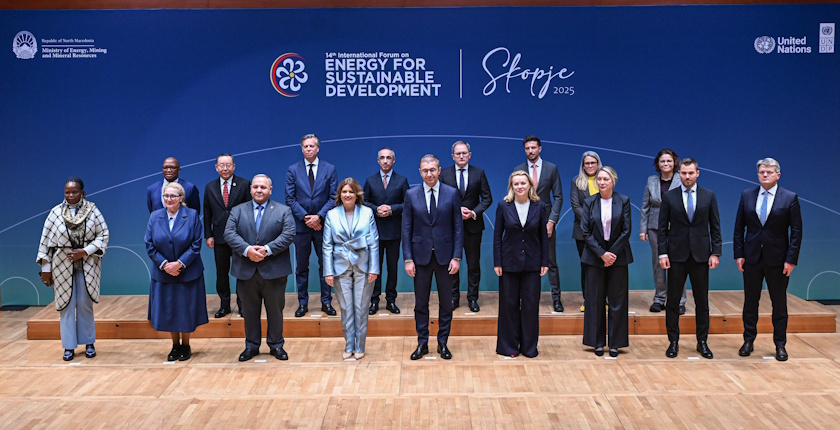
International Forum on Energy for Sustainable Development kicks off in Skopje: reliance on single supplier is risk of past

Reliance on a single source or supplier is a risk of the past – the future belongs to diversified, sustainable, and safe energy solutions, Minister of Energy, Mining and Mineral Resources of North Macedonia Sanja Božinovska said at the opening of the 14th International Forum on Energy for Sustainable Development in Skopje.

The three-day International Forum on Energy for Sustainable Development (IFESD-14), with the theme From Goals to Action: Powering the Future with Sustainable Energy, gathered more than 500 participants from more than 70 countries, including high-level representatives of international institutions, companies, as well as academics and experts.

The meeting is organized by the Ministry of Energy, Mining and Mineral Resources of North Macedonia, in cooperation with the United Nations Development Programme (UNDP) and the UN’s five regional commissions – UNECE, UNESCAP, UNECLAC, UNECA, and UNESCWA.

The Skopje Declaration will be signed at the forum. The document will remain as an important permanent record of the commitment of the participating countries to a sustainable, safe, and inclusive energy future, according to the ministry.

Sanja Božinovska, Minister of Energy, Mining and Mineral Resources, underlined that North Macedonia would be the center of the global energy dialogue for the next three days.

Božinovska: Energy transition is not a race between countries​

Energy resilience today is the ability of the system to withstand, adapt, and continue to function stably even in conditions of global uncertainty and geopolitical upheaval, she said.

“In this new era, technology and artificial intelligence are our allies, not a threat. They can help us forecast demand, optimize consumption, and improve energy accessibility. But energy must be used wisely, focusing on people, not just machines,” Božinovska stated.

Sanja Božinovska (photo: Ministry of Energy, Mining and Mineral Resources)​

​Energy transition is not a race between countries but a shared journey, in the minister’s view. No country, regardless of size, can handle climate challenges alone, she added.

“Our role, as ministers and leaders, is to create conditions for this transition to be fair, sustainable, and inclusive and to ensure that no one is left behind; no country, no community,” Božinovska stressed.

The actions of the Government of North Macedonia confirm the stance, she asserted and highlighted the construction of natural gas interconnectors with Greece and Serbia. The investment will enable supplying thousands of households and businesses and help Europe achieve better connectivity and security of gas supply, she explained.

Grid modernization and investments in digitalization and energy storage are the country’s policy as well, she added.

Mickoski: Energy is high on the government’s agenda

Hristijan Mickoski (photo: Ministry of Energy, Mining and Mineral Resources)

Prime Minister Hristijan Mickovski said the forum is an opportunity for North Macedonia to show that a small country can have a big impact – when it has a clear vision, determination, and leadership.

He highlighted the role and vision of Minister Božinovska, saying she is determined to move things forward even in the short term, to accelerate processes and not let Macedonia fall behind in the race against time.

“As someone who comes from the energy sector, I know very well how important that feeling of constant movement, change, and responsibility is. That’s why energy is high on the government agenda – not as a technical matter, but as a national priority and state strategy,” he asserted.

Every solar panel, every wind farm, every new power plant fueled by clean energy – this is part of the modern struggle for the independence of North Macedonia, he explained.

“Our vision is clear: to prepare the country for the future – for climate challenges, technological changes and global risks. To make an example in the region of a stable, clean and independent energy economy,” Mickoski said.

Molcean: The forum has developed into a leading global platform for the promotion of sustainable energy

Tatiana Molcean, United Nations Under-Secretary-General and Executive Secretary of the United Nations Economic Commission for Europe (UNECE), pointed out that the forum, which was launched in 2010, has evolved into a leading global platform for advancing sustainable energy.

“Today, we stand at a crossroads when it comes to multilateralism in energy. The global energy transition represents not only a historic opportunity for sustainable development but also a profound responsibility. We must build resilient energy systems that ensure a secure, affordable, and environmentally sustainable supply of energy,” she stressed and added: “None of us will succeed if we work in isolation.”

Tatiana Molcean (photo: Ministry of Energy, Mining and Mineral Resources)

​UNECE is here together with other UN partners to help make energy not only a driver of just transition and economic growth, but also a catalyst for sustainability and resilience, Molcean told the audience.

In the view of Resident Representative of UNDP in North Macedonia Armen Grigoryan, the forum’s theme, From Goals to Action: Powering the Future with Sustainable Energy, reflects urgency and growing consensus among nations that sustainable energy solutions are urgent.

Grigoryan: We have to move from commitments to concrete implementation

“Now we have to move from commitments to concrete implementation and steps. Sustainable energy stands as a cornerstone of our collective sustainable future. Around the world, the UNDP programme is deeply engaged in advancing this agenda,” he stressed.

Grigoryan recalled that the work of UNDP in North Macedonia, but also elsewhere, through the green finance facility and tackling air pollution initiatives, is about the people.

“By helping families heat their homes with green and affordable energy, enabling businesses to invest in green solutions, we are creating healthier communities and new opportunities for growth,” he asserted.

Photo: Ministry of Energy, Mining and Mineral Resources
by in News

Webinar summary: How to design PV and BESS in the Balkans faster and smarter with RatedPower software

RatedPower, a leading provider of software for PV plant and BESS design and engineering, has organized a webinar to present its solutions that make it faster and easier for developers and contractors to design and build PV and battery storage facilities, helping increase their efficiency and profitability. The online event included a step-by-step demonstration of how RatedPower’s cloud-based software tool creates simulations of PV plants, battery energy storage systems (BESS), and hybrid facilities to assess costs, performance, and profitability under various scenarios. The hosts also answered questions such as whether the software can be used for rooftop solar, how it accounts for terrain, what financial aspects it considers, and how user-friendly it is for non-technical staff. A recording of the webinar is available at this link.

The webinar opened with an overview of the main challenges that solar and BESS projects face in the Balkans, but also elsewhere in the world. These include a lack of collaboration between teams, difficulty finding investors for projects in the ready-to-build stage, insufficient documentation needed for permitting, lengthy manual calculations, and poor decision-making in feasibility studies.

Addressing common challenges in the Balkans

RatedPower was created precisely to address these problems, and today it provides services for a wide range of companies in the solar and BESS market, including well-known international players, it was explained at the webinar, hosted by Emil Trepin, Account Executive at RatedPower.

The company decided to expand to the Balkans because it is one of the fastest-growing regions in Europe when it comes to renewable energy projects. This, it was explained, is thanks to energy transition efforts, grid modernization, investment momentum, and state support for renewables across the region.

Much more than an engineering tool

RatedPower, part of Enverus, a global software-as-a-service (SaaS) platform for the energy sector, offers a cloud-based tool for designing ground-mounted PV plants of 1 MW and above, and up to 3-4 GW, as well as hybrid systems (PV plus BESS) and standalone battery storage projects.

The platform creates the fastest simulations in the industry, reducing design and engineering time by up to 90%, while helping increase project profitability by about 20%. It generates over 400 pages of ready-to-use documents, including bills of quantities, single-line diagrams, business plans, and much more.

The tool reduces design and engineering time by up to 90%

RatedPower’s software is much more than an engineering tool – it is a decision-making platform that combines the simulation of technical design, energy yield, and financial analysis, according to the hosts.

A step-by-step demonstration of how the platform works

During the demonstration, Matteo Menazzi, Technical Advisor at RatedPower, explained how the platform is used in practice. Since it is cloud-based, it can be accessed from any web browser and used simultaneously by several people working on the same project or on multiple projects.

The first step is to select a location on the map, taking into account various restrictions, such as roads, forests, and archaeological sites, and then add PV arrays, BESS, and other equipment.

Equipment, such as PV modules or battery containers, is selected from a pre-filled database or uploaded manually. The software then creates a full simulation in a matter of seconds, allowing users to test different modules or equipment and compare results.

Solar modules, batteries, and other equipment can be selected from a pre-filled database

In the layout phase, users can set the distance between rows, adapt the configuration to the terrain slope, and estimate the scope and cost of necessary earthworks.

The software also allows the customization of grid connection parameters, including voltage levels and line types (underground or overhead). It then automatically estimates substation size and electrical losses, and calculates the necessary cable lengths.

It calculates the amount of electricity that can be produced and injected into the grid, as well as financial performance. In addition, a large number of documents is automatically generated – from hourly energy yield and battery performance results to lists of necessary cables, bills of quantities, and 2D and 3D drawings.

Designs can be edited and saved as templates for future projects

It is important to note that any design created with the RatedPower software can be edited by moving, adding, or removing elements. Also, all inputs can be saved as a template, which can be used for another project, saving considerable time.

Designing battery storage systems with RatedPower

When it comes to batteries, users can choose a power conversion system and battery containers from the database, define the number of BESS blocks and their layout, and adjust the distances between containers to comply with fire safety regulations. They can also customize charging and discharging efficiency and use the optimization algorithm to adjust operations for maximum profitability.

It is also possible to choose between a fixed and a variable price. For variable prices, the software will upload the day-ahead price for the relevant market or allow users to upload their own price. The tool will also recommend the most profitable time to sell electricity.

Users can also choose whether to charge the batteries only from the PV plant or from the grid as well.

The software provides project cost estimates based on standard values or the user’s input

In the financial segment, RatedPower’s software will estimate the total cost of building a PV plant or battery system, based on standard values provided by the International Renewable Energy Agency (IRENA) and the US National Renewable Energy Laboratory (NREL).

However, input values can also be fully customized by the user, based on the price of solar modules, BESS units, or cables.

If you want to know more about RatedPower’s software, request a demo today.

by in News

Croatia allocates EUR 50 million for prosumers in business sector to install BESS

Croatia has allocated EUR 50 million to support businesses in installing batteries for storing energy from their existing solar power plants or ones they plan to install.

In recent years, many companies all over Europe have installed solar panels for self-consumption to reduce electricity costs. But battery energy storage systems (BESS) offer additional benefits for such prosumers.

Now Croatia’s Ministry of Economy and Sustainable Development has launched a public call for the allocation of grants to firms.

Small, medium, and large entrepreneurs are eligible to apply

The goal is to enable entrepreneurs to store the energy produced in their power plants and use it when it is most needed – delivering it to the grid later or for their own consumption.

The call is financed by funds from the National Recovery and Resilience Plan (NRRP). Small, medium, and large entrepreneurs are eligible to submit applications. The deadline is January 31, 2026.

The ministry’s goal is to continue investments in the power system, thereby ensuring the integration of an increasing amount of energy from renewable sources.

BESS has numerous advantages over other technologies: high efficiency, adaptability, reliability, economic viability, and fast response, the call reads.

The call targets installation of batteries with a total capacity of 60 MWh

All applicants must specify concrete benefits that would be achieved by implementing the project in their bids.

BESS projects with a total capacity of at least 60 MWh could be installed by the end of the second quarter of 2026, according to the call.

New energy storage capacities would significantly increase the flexibility and resilience of the domestic power system, the ministry said.

The minimum subsidy amount per project is EUR 60,000, and the highest is EUR 1.5 million. The minimum storage capacity eligible for grant is 1 MWh per facility.

Of note, Croatia has already implemented a call for the installation of batteries in firms.

However, the subsidies were allocated for joint installation of renewable power plants and batteries.

by in News

Repono acquires BESS project for 404 MWh in Romania

Swedish energy storage operator Repono has completed the acquisition of a 202 MW / 404 MWh battery energy storage system project located in Romania’s Argeș county.

Romania has become one of the most active markets for battery energy storage system (BESS) projects in South East Europe.

Developed by a domestic firm, the Argeș project reached a ready-to-build stage, Repono said. The investment benefits from a grid connection contract with the country’s transmission system operator Transelectrica. The entry point is the 220 kV Pitești substation, northwest of Bucharest.

Once operational, it will be among the largest grid-scale storage assets in Southeast Europe, capable of storing and releasing enough energy to supply more than 120,000 four-person households during peak-demand periods, according to the company.

The partnership with local developers includes a framework for additional energy storage projects

A partnership with local developers is set to drive significant future growth for the firm, based in Sweden.

It includes a framework for additional energy storage projects across Romania with a combined capacity of up to 1.4 GW, reinforcing Repono’s long-term commitment to the market, the update reads.

“This transaction represents an important milestone for Repono AB and demonstrates our continued commitment to developing large-scale storage infrastructure that supports Europe’s energy transition,” CEO Karim Nils Grueber stated.

De Kool: Large-scale storage assets are key enablers of a stable European power system

The Argeș project’s market optimization will be handled by Gunvor, in collaboration with Vienna-based optimiser Enspired. They are tasked with managing the energy offtake and market strategy to ensure the BESS is efficiently integrated into the Romanian and regional power markets.

According to Harmen de Kool, Chairman of the Board of Repono and a representative of InnoEnergy, large-scale storage assets like the one in Argeș are key enablers of a stable and decarbonized European power system.

It further fortifies InnoEnergy’s aim to achieve carbon neutrality, he added.

With this acquisition, Repono continues to expand its European portfolio of grid-scale BESS, with active developments spanning Germany, Romania, Italy, Austria, and Poland.

by in News

Romanian power distributor Electrica to build 15 battery systems totaling 1 GWh

Romanian power supplier and distributor Electrica has initiated a permitting procedure for the construction of 15 battery energy storage parks, with a combined capacity of about 1 GWh, aimed at providing flexibility to the national grid and supporting the integration of renewable energy sources.

The battery energy storage systems (BESS) would boost Electrica’s ability to respond dynamically to fluctuations in consumption and production within the national energy system. It should also enable the efficient integration of growing renewable capacities in Romania, significantly reducing price volatility and dependence on imports, according to a press release from Electrica.

Electrica’s new battery capacity is expected to reduce price volatility and dependence on energy imports

“Developing this 1 GWh storage infrastructure is a strategic pillar in Electrica’s transformation into a leader of the energy transition,” the company said, adding that the battery systems would be built on Electrica’s own land, leveraging assets from its existing portfolio.

“This project is not just about technology or capacity; it is about redefining how Romania manages energy security for the decades ahead,” said Alexandru Chirița, Electrica’s CEO. He also stated that the timeline for the project was “ambitious,” according to the press release.

The BESS capacities will be distributed across Romania

The project, part of Electrica’s 2030 strategy, will be developed in phases, with BESS installations distributed across Romania. The first phase is expected to bring a significant portion of the storage capacity online already in 2025, according to a report by PVknowhow.com.

Battery energy storage is on track to become another pillar of Romania’s energy transition, as investors increasingly develop BESS capacities combined with solar, hydropower, and wind, or as standalone energy storage facilities.

Romania is supporting BESS projects for renewables integration with subsidies provided from its national recovery and resilience plan (NRRP). In September last year, the Ministry of Energy awarded grants to 13 projects.

by in News

SANY International takes over large PV-BESS project in southwestern Romania

Renewable energy company Sany International (Singapore) has completed the acquisition of a project for a solar power plant of 95 MW in peak capacity combined with 218 MWh in battery storage. The location is in Romania’s Dolj county.

SANY Renewable Energy signed power purchase agreements (PPAs) and contracts for difference (CfD) earlier this year in Serbia for its wind power projects Alibunar 1 and Alibunar 2. Just before that, and through another subsidiary, SANY Group secured its entry into the European market for solar power plants with energy storage

Renewable energy company SANY International (Singapore) is now the owner of a project for a solar power plant of 95 MW in peak capacity combined with 218 MWh in battery storage. The location is in Dobrești in Romania’s southwest.

Deal was signed in April

The shares transfer ceremony took place in Bucharest on October 15 in the presence of representatives of domestic developer Enero and local energy officials, the company said, as quoted by Economica.net. It is its first acquisition of such a project outside China.

SANY Singapore’s representative Xu Zhongtian signed the share purchase agreement in April. After that, the Commission for the Examination of Foreign Direct Investments (CEFDI or CEISD) approved the transaction.

Dobrești project is at ready-to-build stage

The project at a site 45 kilometers from Craiova in southwestern Romania is at a ready-to-build stage, Sany International (Singapore) revealed.

It is one of the largest hybrid projects integrating photovoltaics with a battery energy storage system (BESS) in Romania, the company added. Of note, Dolj is one of Romania’s coal regions, which are transitioning to cleaner energy sources.

“This investment reflects the growing interest in the clean energy sector in Central and Eastern Europe, in a context in which countries in the region accelerate efforts to achieve EU energy and climate targets. At the same time, SANY strengthens its strategic focus on renewable energy investments at the European level, aiming to expand its presence in fast-growing green energy markets,” the announcement reads.

SANY Group is an industrial conglomerate, established in 1989 in China. It is mostly known for construction machinery, but SANY Renewable Energy is one of the world’s biggest wind turbine manufacturers, too.

by in News

Sunotec secures financing for Bulgarian BESS, renewables portfolio

Sunotec has secured financing for a portfolio of seven projects in Bulgaria. The deals were agreed in September.

The portfolio, for 115 MW in peak solar power capacity and 763 MWh of battery storage, significantly expands Sunotec‘s investment presence in its home market, according to the update.

Six projects are for standalone battery energy storage systems (BESS) and one is for a solar power plant with a colocated BESS.

According to the firm, they are either wholly owned or partially, through Solaris Holding AD, a 50/50 joint venture with the main shareholders of Eurohold Bulgaria AD.

The standalone battery energy storage system projects are part of the government’s RESTORE program

The seven projects contribute to decarbonizing Bulgaria’s power sector, enhancing its grid stability and energy independence, Sunotec stressed.

The Bulgarian Ministry of Energy has approved the said standalone BESS projects to receive subsidies under the RESTORE program, the company added.

In the first round of the National Infrastructure for Storage of Electricity from Renewable Sources (RESTORE) program, Bulgaria approved EUR 587 million in subsidies for 82 BESS projects totaling 9.71 GWh.

In late July, Sunotec and Sungrow agreed to install 2.4 GWh of BESS

In late August, the ministry launched the public consultation process for a proposed new round of its subsidy program for BESS.

Viktor Stefanov, Head of IPP at Sunotec, said the seven investments mark a major milestone in its evolution.

The company added that they further strengthen its position, as well as of Solaris Holding, among Bulgaria’s leading investors in photovoltaics and energy storage.

In late July, China-based Sungrow achieved an agreement with Sunotec on installing 2.4 GWh of BESS in Europe. The portfolio includes several large-scale projects across Bulgaria, which will serve energy storage needs.

by in News

Romania’s coal town Turceni starts EUR 380 million green energy transformation

Turceni is dependent on the local coal power plant, so the municipal authority is turning to agrivoltaics, energy storage and green hydrogen to replace it. The small town in southwestern Romania is kickstarting a EUR 380 million project.

The coal plant in Turceni used to be one of the biggest in Europe, at 2.3 GW. Located next to the eponymous town in Romania’s Gorj coal region, only two units of 660 MW in total are still operational. At the same time, dozens of such facilities across Europe are shutting down ahead of schedule. The power plant and its associated mines within Complexul Energetic Turceni have been essential for the local economy, which is under threat of devastation amid the country’s coal phaseout.

As with other coal regions in the European Union, the solution is in green energy and new technologies. The town hall has signed a contract with the European Investment Bank for agrisolar parks, energy storage units and the production and storage of green hydrogen.

Turceni town hall secures municipal land for green energy projects

The project is worth a whopping EUR 380 million, Mayor Constantin Popescu revealed. Turceni and its administrative area have fewer than seven thousand inhabitants.

More than 123 hectares of municipal land (pastures) and more than 200 hectares of private land were designated for the renewable energy hub, the mayor stressed.

Bankwatch: The coal region is transitioning to a future based on innovation, sustainability and strong partnerships

Partners in the project are Bankwatch Romania and GAL Sudul Gorjului, the so-called local action group for southern Gorj. Bankwatch said over 370 hectares would be switched to clean and sustainable energy production.

“We are glad that we had an important role in developing the project plan and aligning it with European environmental policies, as well as in applying for technical assistance. For a region that has been, for decades, a pillar of coal-fired energy, this project marks a strategic transformation: a transition to a future based on innovation, sustainability and strong partnerships,” the organization added.

Investments to start in 2026

Implementation is scheduled to begin next year. The project will contribute to a just transition of the region by increasing the production of electricity from renewable energy sources, Popescu asserted. In his words, it will be complementary to the local authority’s other ongoing and future decarbonization investments.

The mayor also highlighted the plans to use geothermal energy for district heating and agriculture.

Complexul Energetic Turceni is part of state-owned Complexul Energetic Oltenia (CE Oltenia). According to the company’s restructuring and decarbonization plan, the coal business will be separated from green energy and other investments.

They include projects for CCGT (combined-cycle gas turbine) power plants of 475 MW in Turceni and 800 MW in nearby Ișalnița, as the main replacement for coal plants. Both are suffering heavy delays.

Minister of Energy Bogdan Ivan said last week that CE Oltenia’s Ișalnița coal plant in neighboring Dolj county would be closed on January 1. Romania has asked the European Commission to delay the closure of several coal plant units, scheduled for this year, until 2030.

Earlier this year, a joint venture between CE Oltenia and OMV Petrom hired contractors for four solar power plants at former coal land, with a combined capacity of about 550 MW. One of the sites is in Ișalnița.