by in News

Battery storage market in SEE emerging, Western Balkans lagging behind with positive prospects

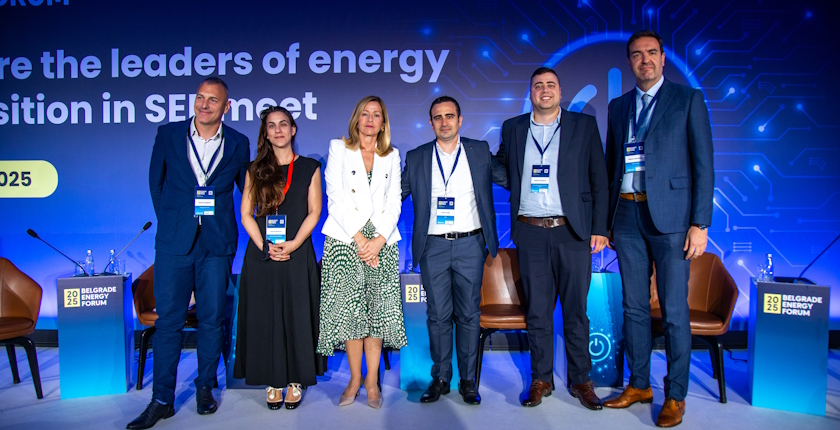
The deployment of battery energy storage systems (BESS) across Southeast Europe is progressing at an uneven pace. State subsidies and financing mechanisms have enabled the rapid implementation of BESS solutions in Greece, Romania and Bulgaria, while markets in the Western Balkans are lagging behind. However, the outlook remains positive, as experiences from neighboring markets and best practices from other parts of the European Union can help overcome initial challenges and streamline the deployment process. This was highlighted by participants of the panel dedicated to BESS at the Belgrade Energy Forum.

Among the technologies required for the energy transition, battery energy storage systems (BESS) stand out as a key factor for integrating electricity from intermittent renewable sources – wind and solar power – into the grid. There are few such facilities in Southeastern Europe and the segment is yet to even be fully regulated in the narrower Western Balkans region. The panelists at a session called Energy storage system market in SEE: trends and forecasts, at Belgrade Energy Forum (BEF 2025), outlined the trends in the budding market.

There are more and more cases of low and negative hourly prices in the wholesale electricity market in the region, providing a clear business case for BESS investments. In addition, the grid is often overloaded on weekends and holidays when solar and wind power production is high, given the weak demand.

Managing Director of Go2Power Consulting Goran Vukojević, who moderated the discussion, warned that negative prices may jeopardize system stability as well, if operators of power plants disconnect them from the grid at the same time, to avoid costs.

He highlighted the preparations in Serbia’s transmission system operator Elektromreža Srbije (EMS) for auctions for ancillary services and praised the company for transparency in regulating the competitive process. The other option for battery operators is to participate in the open market.

Managing Director of Go2Power Consulting Goran Vukojević moderated the panel discussion

Region seen with 9 GW of BESS operating power in 2030

Ioanna Barouni from Aurora Energy Research said a total of 40 GW of solar and wind power is expected to be online at the end of 2025 in the SEE region, comprising 12 countries, including Hungary. In 2030, the level is expected to reach 70 GW, which is expected to be doubled to 145 GW by mid-century. As for BESS, projections stand at 9 GW in 2030 and 25 GW in 2050.

Barouni: We miss flexibility and ancillary services for transmission and distribution system operators

The countries of the region are retiring power plants that use fossil fuels, a firm capacity, in Barouni’s words, while adding renewables. “It’s not very easy to predict how the generation profile is going to be during the day, so we miss flexibility and we miss ancillary services for TSOs and DSOs,” she said.

The gap between power prices for midday and the evening is gradually increasing. Barouni explained that batteries “create some artificial demand and absorb these low prices.” At peak demand and with less renewables, a battery can replace expensive fossil fuels, lowering the price.

Ioanna Barouni from Aurora Energy Research (pictured left) and Head of Specialized Lending at UniCredit Bank Serbia Svetlana Cerović

Serbia preparing auctions for ancillary services

Division Manager of transmission system operator (TSO) EMS Nikola Tošić acknowledged that Serbia is preparing auctions for ancillary services. He revealed that there would probably be one auction for 70% of the needed reserve in the first year. The next rounds would be more frequent, shifting toward daily auctions for balancing capacity.

In the verification process, EMS’s System Operation Department will first test the battery, Tošić added. State-owned power utility Elektroprivreda Srbije (EPS) already provides ancillary services to the TSO, so it won’t require tests, he asserted.

Serbian law defines ancillary services the same as European Union does

EMS drafted the new grid code, and it will publish the draft balancing market code for public discussion soon, according to Tošić. He said the domestic law defines ancillary services in the same way as the EU defines them in its legislation. One part is balancing services: frequency containment reserve (FCR, primary), automatic frequency restoration reserve (aFRR, secondary) and manual frequency restoration reserve (mFRR, tertiary). The other part are non-frequency services – energy.

“We think that it would be good to incentivize the periods of the year or periods of day when the needed amount of reserve is more attractive or more in demand,” Tošić said.

Market Division Manager of EMS Nikola Tošić

Fortis Energy moving ahead with battery investments regardless of government support schemes

Fortis Energy’s Chief Executive Officer for Eastern Europe Nikola Oklobdžija considers the lack of regulation to be the biggest challenge for developers. An investor can currently only focus on charging the batteries when the prices are low and sell when they are high, he underscored.

The Turkey-based company develops photovoltaic, wind power and BESS projects in the region. The first bigger investments in renewable electricity plants with energy storage are the ones that will break the ice, in Oklobdžija’s opinion.

“Of course, it helps if you have a CfD contract, so the banks will look at it more favorably,” he stated. Oklobdžija added that companies need to be able to present revenue to the lenders and what the fees are for renting the capacity or providing different services.

Bankability depends on state support and PPA contracts, cash flow models and insurance

In the meantime, Fortis is examining the experiences in Bulgaria and Greece, which have already held auctions for standalone batteries. Financing a project is easier with a CfD – contract for difference, but the company is determined to push ahead anyway, Oklobdžija stressed.

In North Macedonia it commissioned a solar power plant in Oslomej and recently contracted a BESS to be added to the facility. Oklobdžija said it wasn’t a requirement but that Fortis opted for energy storage because of market pressure with prices and occasional curtailments, like during Easter last month.

The introduction of ancillary services would facilitate the development for standalone battery systems, he explained.

Fortis Energy’s CEO for Eastern Europe Nikola Oklobdžija

Cerović: First there will be more projects for colocated BESS units than for standalone facilities

Head of Specialized Lending at UniCredit Bank Serbia Svetlana Cerović highlighted the intensive activity in Germany and Italy, for instance, but also in neighboring Romania. UniCredit is present in those markets and is analyzing the development of the battery storage market, she pointed out, arguing that the best practices in the EU are the best way for building and financing battery storage.

Cerović said there would first be more projects in the region for BESS colocated with renewable energy plants than standalone units.

She suggested that the proposed investments that include storage should be better pondered at the next renewable energy auction in Serbia. It is in the country’s interest to enable providing flexibility and to support the projects, she said.

There may be a rationale for subsidizing prosumers to add storage in Serbia, Cerović said. Turning to small-scale projects, she expressed the belief that power purchase agreements (PPAs) are “convenient” for them. She is recommending dedicating a certain capacity for the category at the next auction in the country.

The first projects in Serbia, conditioned by energy storage requirements for a grid connection, are in the process of negotiating financing, according to Cerović.

Fire protection is especially significant for insurers

Renewable Energy Insurance Broker (REIB) has insured some 4 GWh of energy storage capacity in Bulgaria and just as much elsewhere in the world, Business Development Manager Dimitar Dimitrov said. Developers should contact insurance companies when the design is done, as well as for cargo insurance, he suggested and added it is particularly important for projects that get subsidies.

“We’re not only insurance brokers, but we’re also investors, which helps us understand a bit more about the clients’ needs, and what we can definitely do more in cases of coverage. Understanding clients’ needs helps us also prevent risks that could occur during certain stages,” Dimitrov stated.

Most insurers prefer at least a six-meter distance between containers or rows of three to four containers holding batteries, he said. It is the most important factor in fire protection, in Dimitrov’s opinion. When the distance is shorter than three meters, a firewall is required for insurance, he explained.

REIB’s Business Development Manager Dimitar Dimitrov

The next segment is construction insurance. For insurance companies, it is not a higher risk profile, Dimitrov asserted. Next, he recommended operational risk insurance including coverage for business disruption, and insurance against cyberattacks. In such events, the grid connection can be damaged, the company’s representative pointed out. “Insurance policies are definitely bankable,” he added.

Bulgaria has completed its tenders for state support to BESS combined with renewable energy plants, and for standalone units. But even before subsidies, batteries have been delivered and facilities are under construction, Dimitrov stressed. Many photovoltaic projects in Bulgaria have emerged in the past few months and most of them include BESS, he said.
by in News

Romania to commission offshore wind study, targeting 3 GW by 2035

The Ministry of Energy of Romania launched a public call for expressions of interest for a study identifying areas in the Black Sea for concession agreements for offshore wind farms. It encouraged consortia of international and domestic firms and research institutions to apply.

Romania is gradually developing the legal framework for the start of the first offshore wind power projects in domestic waters in the Black Sea. Qualified companies and research institutions can express interest in conducting the necessary Specialized Study for the Delimitation of Offshore Areas that Can Be Concessioned for the Exploration, Construction, and Operation of Offshore Wind Power Plants, the Ministry 0f Energy said.

The country adopted the relevant law last year, followed by a roadmap.

“The study we are preparing will form the basis of strategic decisions on the concession of offshore perimeters and will provide investors with a clear vision, scientifically substantiated and in line with international best practices,” Minister of Energy Sebastian Burduja said. Interested entities can submit their expressions of interest by email by June 10.

Study to determine areas with offshore wind power potential of at least 800 MW each

The ministry said consortia of international and domestic firms are encouraged to apply. The World Bank estimated Romania’s wind power potential in the Black Sea at 76 GW.

The Energy Strategy 2025-2035 with a perspective until 2050 targets the first 3 GW by 2035, the announcement notes. Burduja said a year ago that the first facility could come online already in 2032.

Areas or perimeters will have a potential capacity of at least 800 MW each, according to the call. The study needs to establish the technical and strategic basis for the development of offshore wind farms in Romania’s Black Sea Exclusive Economic Zone.

Best practices, standardized methodology required

The task involves wind potential analysis, geotechnical and seabed studies, biodiversity and marine environment assessment and the connectivity to the national energy system. In the study, the selected contractor must include commercial navigation routes, fishing areas, existing submarine cables and pipelines, oil and gas exploration and production areas, military or national security zones and other
maritime uses and restrictions that may interfere with offshore wind development.

The work should be based on best practices and standardized methodology, the ministry pointed out. It said the offshore wind study implies collection and analysis of available metocean, geological, ecological, infrastructure and other data, use of GIS systems to overlay information layers (wind, depths, habitats and constraints), and modelling and calculations of estimated energy production.

by in News

GGF’s Kostadinov: Western Balkans responded to energy crisis with innovation, ambition (video)

The past three to four years have been nothing short of transformational when it comes to the energy transition in the Western Balkans, said Borislav Kostadinov, Finance in Motion’s Fund Director for the Green for Growth Fund, in a keynote address at Belgrade Energy Forum. The region has responded to the energy crisis with innovation, ambition and resilience, he pointed out. The challenge in the energy transition is understood and so is the solution, Kostadinov stressed.

Borislav Kostadinov, a Fund Director at Finance in Motion, gave a keynote speech at Belgrade Energy Forum (BEF 2025). He leads the Green for Growth Fund, or GGF, the company’s flagship green finance fund.

Finance in Motion is an impact asset manager based in Frankfurt with over 20 years of experience and more than EUR 4 billion in assets under management (AUM). It specializes in blended finance vehicles that deliver positive social and environmental impact. GGF has delivered over EUR 500 million in green finance to almost 50,000 beneficiaries in the Balkans. As of the end of last year, it was above EUR 1 billion in size.

Renewables have become mainstream investments

The breadth and flexibility of the fund’s model allow it to support a wide spectrum of the energy transition, which has enabled it to expand to over 19 markets along the European Union’s borders, Kostadinov explained.

The past three to four years have been nothing short of transformational when it comes to the energy transition in the Western Balkans, he underscored.

“I would not be the first to say that we are at a key juncture in the energy transition. At this stage, the challenge is understood and so is the solution. Renewables have become mainstream investments, championed by the public and private sectors, and are the foundation of a future that is not only sustainable but cost-efficient, competitive, and secure. The question now becomes how quickly and how completely we can deliver on this vision over the next five, fifteen and 25 years,” Kostadinov stated. In terms of energy systems and climate change, it is not much time, he pointed out.

[wpcc-iframe title=”Belgrade Energy Forum 2025 Borislav Kostadinov, Fund Director Green for Growth Fund, Finance in Moti” width=”500″ height=”281″ src=”https://www.youtube.com/embed/TJFTOD-1keQ?feature=oembed” frameborder=”0″ allow=”accelerometer; autoplay; clipboard-write; encrypted-media; gyroscope; picture-in-picture; web-share” referrerpolicy=”strict-origin-when-cross-origin” allowfullscreen=””]

Western Balkans are broad-based renewables growth story

For several years now, there has been a broad-based renewables growth story across the region: from utility-scale project finance transactions, to large installations for captive use by industry and manufacturing, to photovoltaics on the roofs of households, Kostadinov recalled.

“What is driving this shift? Certainly, the energy crisis jolted all of Europe, and the Western Balkans have responded with innovation, ambition, and resilience. In a short time, we have improved policy, strengthened regulatory frameworks and prioritized the sector with clearer strategies and market mechanisms,” he said.

GGF’s director praised the countries in the region for embracing transparent, competitive auctions as a foundation for market-based deployment of renewables.

Kostadinov particularly highlighted Serbia for leading the way. “Its recent auctions for wind and solar have been consistent, well-communicated, credible and investor friendly, drawing broad investor participation. Most importantly, they’ve been successful, and we are proud to have contributed to this achievement alongside our longstanding partner UniCredit Bank, through its investment in the landmark Čibuk 2 wind farm,” he told the audience at BEF 2025.

Corporate PPAs, guarantees of origin deepen markets while also expanding them

The public sector must continue strengthening markets and frameworks and develop and roll out mechanisms such as corporate power purchase agreements (PPAs) and guarantees of origin, which deepen and expand markets, Kostadinov said.

“We need more purely private projects, such as the GGF-backed 50 MW Project Blue solar plant in Albania. As the largest non-subsidized solar project in the Western Balkans, and developed without a long-term PPA from the utility, it is the type of investment that we hope to increasingly catalyse in the region,” he asserted.

The three principles for the next five years are speed, integration, and resilience, Kostadinov says

In Kostadinov’s view, the three principles for the next five years are speed, integration, and resilience.

“We must continue to improve the speed, transparency and bureaucratic process when it comes to permitting, approving and bringing projects online. This is true in the EU, and it is true in the Western Balkans, in particular for construction permitting and grid connections,” he said.

The necessary investments in the integration of energy markets in the EU and the region will create scale, meaning larger markets, deeper spot markets, and more varied offtake, Kostadinov added. His message to energy producers in the Balkans is that they would be able to diversify and address a larger market by supplying Europe’s industrial base.

The recent blackout in Spain is a cautionary tale, but the story is not a failure of renewables but rather a failure of grid resilience, Kostadinov said.

by in News

Alarming rise in unpaid bills from electricity consumers in Greece

A steep rise in arrears was recorded last year in the Greek electricity supply market.

According to the latest report from the Regulatory Authority for Energy, Waste and Water (RAAEY or RAEWW), total debt for electricity rose by EUR 1 billion to EUR 3.4 billion in 2024.

It occurred despite a 10% reduction in retail electricity prices last year in the country.

Out of the total sum, existing customers owe EUR 1.74 billion to their suppliers. Another EUR 1.65 billion is debt by customers that have switched suppliers, leaving unpaid bills behind.

As for the EUR 1 billion of new debt, consumers in the mid-voltage account for EUR 400 million. They are large businesses and small industries. Another EUR 440 million is owed by various water utilities.

In December 2024, the Ministry of Environment and Energy passed a regulation subsidizing water utilities for EUR 200 million of their total debt. It means actual arrears in the segment were smaller, at EUR 240 million, but still sizeable.

Measures to reduce power theft

On top of increasing debt, the Greek market is also faced with a rise in electricity theft. In recent years, the phenomenon has worsened and is estimated to cost law-abiding consumers EUR 400 million per year.

The government and the regulator recently enacted strict fines to reduce theft. Offenders pay more than 100% over the normal power price for stolen quantities. The gradual installation of smart meters starting this year is also expected to help.

Suppliers warn of consequences

Power utilities must handle all the said liabilities. The Greek Energy Suppliers Association (ESPEN) has said that the issues indirectly increase power prices, as companies need to balance their budget through additional hedging and careful positioning.

ESPEN: Suffocating pressure as a result of high arrears

“The accumulation of large arrears causes suffocating pressure to the supply sector, raising prices and leading to negative effects for consumers,” it said.

Furthermore, suppliers asked the Hellenic Electricity Distribution Network Operator (HEDNO or DEDDIE) to waste no time in disconnecting consumers who owe money, in line with guidelines from the network code.

by in News

Alteo’s Chikán: Aggregators have AI solutions for grid stability, production optimization (video)

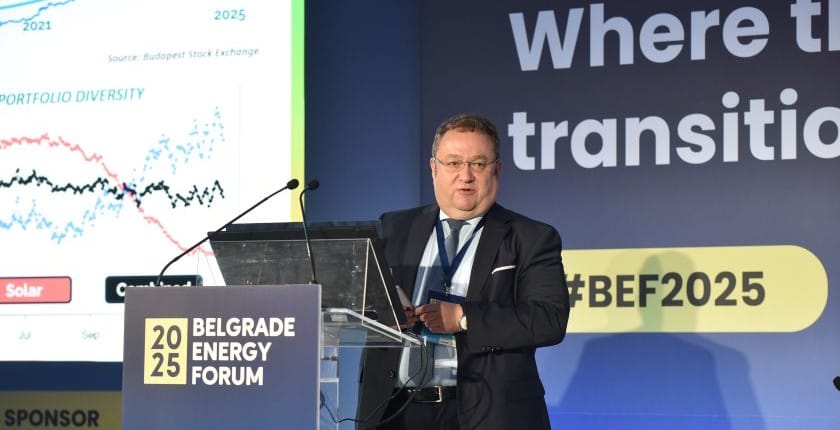
Factors like power price volatility, the global shift in policy making and the need for flexible solutions for the integration of renewables are creating an important momentum for developers and aggregators, Chief Executive Officer of Alteo, Attila Chikán, said at Belgrade Energy Forum 2025. The company is expanding in Central and Southeastern Europe with investments in power plants and its AI-backed platform for operating third-party assets.

The electricity system needs to become more and more flexible to accommodate weather-dependent, intermittent sources – solar, wind and hydropower, Alteo’s CEO and Chairman of the Board Attila Chikán said and pointed out that the outage in Spain and Portugal on April 28 highlighted the need for investing in grid stability and upgrades.

In his keynote speech at Belgrade Energy Forum (BEF 2025), he stressed that a global shift in policy making in the sector, particularly in the United States and Europe, is bringing both challenges and opportunities. In Chikán’s view, the situation creates an important momentum for developers and aggregators.

[wpcc-iframe title=”Belgrade Energy Forum 2025 – Attila Chikan Jr., CEO and President of the Board, ALTEO Plc” width=”500″ height=”281″ src=”https://www.youtube.com/embed/FZCrhx8yh6E?feature=oembed” frameborder=”0″ allow=”accelerometer; autoplay; clipboard-write; encrypted-media; gyroscope; picture-in-picture; web-share” referrerpolicy=”strict-origin-when-cross-origin” allowfullscreen=””]

“In the past five years we have seen a great deal of price volatility on the markets in the region. If you look into the future, taking into account the impact of the ambitious plans of regional countries to expand renewable power, one might expect even more pressure on balancing price volatility,” he asserted.

Role of international initiatives

Alteo’s CEO said tailored incentive mechanisms are essential for developing a balanced energy mix. There are also major endeavors on an international scale, Chikán added: connecting markets with diverse geographical characteristics, power plant portfolios and different supply-demand balances.

He explained that cross-border initiatives such as PICASSO and the Blue Sky project bring electricity exchanges in the region closer together. Interconnectors like the Pannonian Corridor and the proposed Black Sea green cable contribute to balancing and the management of energy price volatility, Chikán noted.

Future-proof tech solutions required for risk mitigation

In risk mitigation, the energy system’s stability benefits from future-proof technological solutions as well, namely smart metering, advanced weather forecasting and artificial intelligence–based production optimization, he said. This is where aggregator companies like Alteo come into the picture, its chief underscored.

As for its hardware, the company based in Budapest operates a diverse and balanced production portfolio of gas power plants and renewables, combined with storage, Chikán added.

Alteo runs a portfolio of gas power plants, renewables and storage facilities

“Sounds good, but without a well-designed and functional software, any hardware is purely a collection of materials. And even if they do operate, for sure they operate in a suboptimal way, without synchronization,” he stated.

That’s why Alteo developed its own production management platform, which it offers as a software-as-a-service (SaaS) solution as well. The company also supports the operation of 2 GW in third-party capacity, mostly photovoltaics.

“We optimize production in an automated way, using artificial intelligence, integrating real-time weather forecast data, capacity data and market data,” Chikán stressed.

The platform includes executing trading activities. The partners don’t have to deal with scheduling and the balancing energy costs, he said. The company makes a renewable electricity product closer to baseload, Alteo’s head asserted.

Slovakia, Croatia, Serbia are primary investment destinations in Alteo’s regional expansion

Early this year, the company unveiled a strategy for expansion in Hungary as well as into Slovakia, Croatia and Serbia as primary investment destinations. Alteo revealed it is interested in Poland, Czechia, Slovenia, Bosnia and Herzegovina, Montenegro and North Macedonia, too.

Chikán said it also aims to position itself in operations and maintenance (O&M), among other segments. Alteo is particularly seeking stable and reliable AI-based aggregator partnerships, he noted. The company has an investment target of up to EUR 3.5 billion by the end of the decade.

by in News

Akuo Energy signs PPA with EPS for Bela Anta 2 wind project in Serbia

French renewable energy company Akuo Energy has signed a power purchase agreement (PPA) with Serbia’s state-owned power utility Elektroprivreda Srbije (EPS) for the Bela Anta 2 wind power project, for the full capacity and including the balancing responsibility.

The project is being developed through Matrix Power, a special purpose vehicle (SPV) fully owned by Akuo Energy. With a total installed capacity of 80 MW, Bela Anta 2 was among the awarded projects in Serbia’s second round of renewable energy auctions, held in early 2025. Akuo secured a contract for difference (CfD), positioning it with the largest wind projects contracted with EPS to date, under the new market-based support scheme.

Milestone for Serbia’s energy transition

The agreement marks a major step in Serbia’s ongoing shift toward renewable energy, Akuo Energy said. All electricity produced by Bela Anta 2 will be supplied to the domestic market, supporting energy security and sustainability, it added.

“Akuo Energy is honored to support Serbia’s renewable energy goals in partnership with EPS. This PPA reflects strong institutional support and our shared commitment to accelerating the country’s green transition,” said a company spokesperson. The CfD ensures price stability and investment certainty, creating long-term benefits for both investors and the Serbian power system, Akuo Energy pointed out.

Akuo Energy: Global expertise with regional depth

Akuo Energy is an independent global renewable (wind, solar and storage) energy producer and developer. The group is present across the entire value: development, financing, construction and operation.

All electricity produced by Bela Anta 2 will be supplied to the domestic market

As of the end of 2024, the company had a total capacity of 1.9 GW in operation or under construction and a total project portfolio of over 12 GW. With more than 450 employees, the group, headquartered in Paris, France, develops projects in more than twenty countries around the world.

With nearly two decades of experience, Akuo has delivered projects in onshore wind, photovoltaics, hydropower, biomass, and battery energy storage systems (BESS). In Central and Eastern Europe, it operates more than 324 MW, with a strong and established presence in the Western Balkans.

More projects to come in Serbia

Akuo Energy plans to further expand its presence in Serbia’s renewable energy sector. One of its most advanced upcoming projects is the Bašaid Wind Farm (85 MW) near Kikinda, which is fully permitted and ready for construction. The company is also exploring new solar power and hybrid opportunities across the country.

With the PPA for Bela Anta 2, Akuo strengthened its long-term commitment to Serbia’s energy transition and to supporting the growth of a reliable, sustainable power system in the region, the update reads.

Akuo was a silver sponsor of Belgrade Energy Forum (BEF 2025), held last week in Serbia’s capital city.

by in News

Wind farm project in Cyprus rejected to protect birds, habitats

The Department of Environment of Cyprus scrapped a proposal for a wind power plant partly within or near protected areas due to the expected impact, including on vulnerable bird species such as the Bonelli eagle and long-legged buzzard. The project was launched in 2008 and amended several times.

Stivo Trading and its wind farm project in Cyprus failed to renew a temporary planning approval. The developer initially proposed 33 turbines of 49.5 MW in total, the domestic press reported.

Since 2008, when the project was launched, it was amended several times. The final version, from 2023, is for just four wind turbines instead of the previous ten, and a capacity of 18 MW, down from 22.5 MW.

Irreversible impact on Natura 2000 zones

The sites are within and near the Panagia Stazousa River special protection area and as close as one kilometer from the Stavrovouni forest, designated a special area of conservation.

The locations belong to the local communities of Pyrga, Klavdia and Alethriko. The Department of Environment said it expects that the investment would directly, negatively and irreversibly impact the Natura 2000 zones. It includes vulnerable species, habitats and conservation objectives.

Environmental authority highlights risk to birds from collisions, electrocution

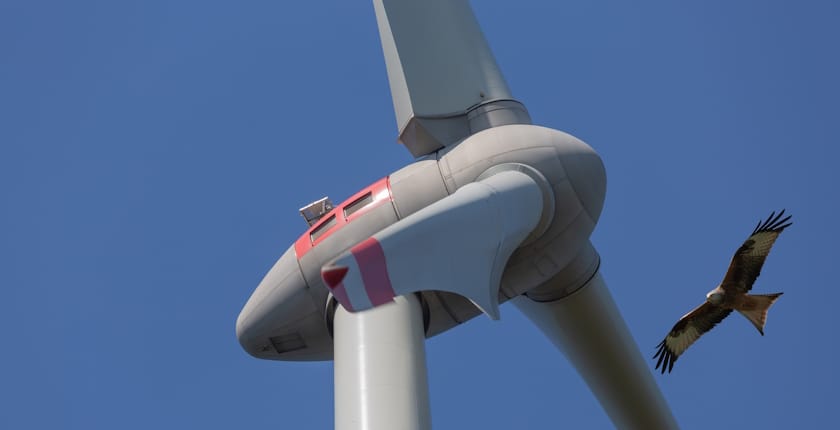
Sensitive species would be displaced and their populations reduced, the update reads. The environmental authority also highlighted the risk to birds from collisions and electrocution.

It pointed to a cumulative impact from supporting infrastructure and the existing projects. In the wider area there are four wind power plants, of which the one in the northeast is in the Panagia Stazousa River special protection area. West of Stivo Trading’s zone, the fifth one, is a nesting area.

The department highlighted the Bonelli eagle, long-legged buzzard, the European roller and thrush, among other birds. At least three Bonelli’s eagles died in collisions with energy infrastructure and another five by electrocution.

by in News

Hidroelectrica picks contractor for PV systems on 20 hydropower plants

Romanian state-owned hydropower plant operator Hidroelectrica signed a deal with Servelect and subcontractor Electroplus, which need to install solar panels on the roofs of 20 hydroelectric plants. They are on the middle and downstream parts of the Olt river.

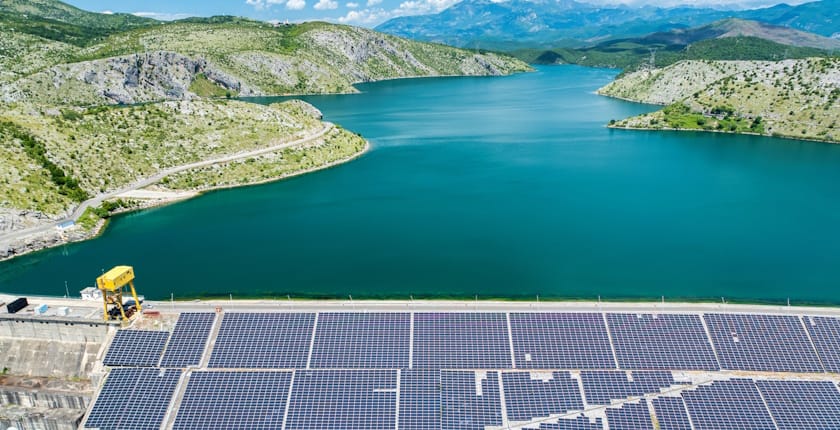
Combining hydropower with photovoltaics including floating solar power plants is becoming popular. The two sources are compatible, especially if there is a dam, as it can save water in reservoirs. The grid infrastructure for PV panels is already there and there are usually no land ownership issues. Hidroelectrica, which mostly operates hydropower plants, is about to solarize its existing facilities.

The Romanian state-owned company pursuing diversification signed an agreement with Servelect and its subcontractor Electroplus. There were four bids in the tender.

First solar power project for Hidroelectrica

Solar power systems will be on the roofs of 20 hydropower units on the middle and downstream sections of the Olt river. Hidroelectrica, listed at the Bucharest Stock Exchange since 2023, turnkey deal, said it aims to optimize production costs. However, it didn’t reveal whether it would operate the colocated assets jointly, as hybrid power plants.

Hidroelectrica is the largest electricity producer in the country, but it will be its first solar power units. The deal, for an overall 2.96 MW, is worth EUR 1.77 million excluding value-added tax. The deadline is 24 months, of which four months for the design.

Servelect, Electroplus responsible for all phases from procurement to commissioning

The utility also tasked the two firms, based in Cluj-Napoca, with manufacturing and procurement, transportation, testing and commissioning. The PV systems would consist of 620 W panels and 100 kW inverters. Hidroelectrica estimated the combined annual output at 3.71 GWh.

The company operates 188 hydropower plants, 6.4 GW overall, and the Crucea Nord wind park of 108 MW. Earlier, Hidroelectrica and Masdar were considering a pilot project, under an upcoming joint venture, for floating solar power plants on seven reservoirs, also on the Olt.

Servelect is active in engineering and energy services. It was founded in 2005. Electroplus, which handles electrical installations, operates since 2001.

by in News

Weakness in Serbian energy system is no option

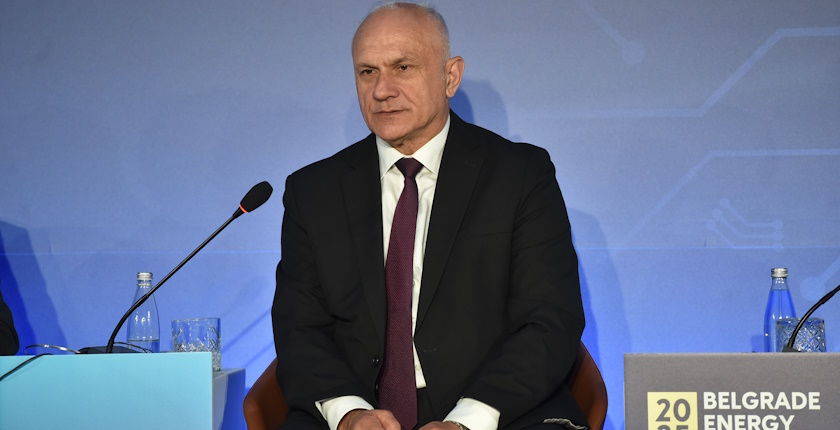
Serbia’s state-owned power utility Elektroprivreda Srbije (EPS) is committed to its own and the country’s goals for green energy and emission cuts, but it is sustainable only if it doesn’t jeopardize energy security, Chief Executive Officer Dušan Živković said. Weakness in the energy system is not an option, he underscored.

The recent blackout in entire Spain and Portugal and the one last year in the Balkans have imposed the topic of large energy storage facilities which would support the integration of renewables, CEO of EPS Dušan Živković said at Belgrade Energy Forum (BEF 2025). The company is committed to its own and the country’s goals for green energy and emission cuts, he asserted.

“We will work on that, of course, believing in these objectives, but without compromising energy security and the energy sovereignty of the state of Serbia. It was proven to be the only sustainable path and that if we don’t follow it, it can result in situations that are not a good message toward consumers, and they are not a good message toward investors either. Weakness in the energy system is certainly not an option”, Živković stated.

In its Integrated National Energy and Climate Plan (INECP or NECP), Serbia is targeting for 2030 a 45.2% share of renewable energy sources in electricity production and a decrease of greenhouse gases by 40.3% from the 1990 level.

Decarbonization is not easy without serious storage

Among its other activities, EPS is working on its small green energy projects on open cast coal mines, while the strategic partner, a consortium of UGT Renewables (UGTR) and Hyundai Engineering, is tasked with building a group of solar power plants of 1 GW in combined connection capacity alongside 200 MW of battery energy storage, and transfer them to Serbia’s government-controlled power utility, Živković noted. But the process of decarbonization with necessary renewable energy capacity won’t be easy “without serious storage,” he stressed.

Serbia hosts fossil fuel power plants of 4 GW in total

Big energy storage projects are financially challenging, only marginally cost effective, and they are not easy to build, EPS’s head claims. They are necessary to be able to draw enough baseload energy, and in Serbia they need to contribute replacing a large fossil fuel capacity – currently it amounts to 4 GW, Živković said.

Pumped storage hydropower project Bistrica, existing facility Bajina Bašta enable comfort for signing PPAs

EPS primarily focuses on the Bistrica pumped storage hydropower project and the possibility to develop the one for Đerdap 3, he added. That way conditions would be created for the facilities to provide new services in the market, so “the region feels safer, too,” Živković underscored.

Counting on Bistrica and the existing pumped storage hydropower plant, Bajina Bašta, EPS is in “a comfortable zone” for signing power purchase agreements (PPA) with companies for their green power plants, Živković explained. Bajina Bašta is undergoing the second half of reconstruction works.

Turning back to the April 28 collapse of the Iberian electricity system, Živković pointed to the adverse interest of private investors – get profit in the short term – and companies responsible for energy security. In his view, it is necessary to act “more intergenerationally responsibly” and very important to find balance in relation to profits.

by in News

North Macedonia adopts Law on Energy

With a majority of votes, 62 out of 120, the Assembly of North Macedonia adopted the Law on Energy. The government’s representatives say it is systemic, comprehensive, and reform-oriented legislation laying the foundation for the country’s new energy policy. The act aligns the country’s legal framework with the European Union.

The new Law on Energy will bring numerous benefits to the country and its energy future, according to the Government of North Macedonia. They include a liberalized, transparent and competitive electricity market ensuring fairer prices and more choice for consumers, the introduction of smart meters for more accurate consumption measurement, and daily insight for consumers into their electricity usage.

The law is compatible with the reform agenda for the Western Balkans and with EU directives. Its pillars are:

  • A significant increase in the share of renewable energy sources in final consumption;
  • Greater energy efficiency and reduction of losses;
  • An open energy market in which citizens become active participants – producers, sellers, and members of energy communities.

The law supports new concepts such as citizen energy communities and demand-side management models, increased market liquidity, and broader access to energy sources for the economy, along with equal investment opportunities.

It addresses infrastructure stability through investments in storage systems and their digitalization, as well as providing a stable, transparent, and predictable framework for domestic and foreign investors. The law strengthens the capacities of regulators and operators, creates conditions for greater integration with regional and European energy networks, and enables new investments in solar, wind and other renewable sources, district heating, gasification, storage and digitalized grid infrastructure.

Božinovska: New law paving way for energy sovereignty for Macedonia

Minister of Energy, Mining and Mineral Resources Sanja Božinovska said in parliament ahead of the vote that the Law on Energy is the foundation of the national transformation toward a clean, sustainable and fair energy future.

„This is a law that creates opportunities but also demands responsibility. Energy is not just the engine of the economy; it is the basis for a quality life. With this law, we are opening the door to an energy sovereign, green and European Macedonia. This law is more than a normative act – it is a signpost for the future. A chance we must not miss,” she said.

Transparent, predictable investment framework

The law includes provisions for protecting vulnerable groups, supporting the fight against energy poverty and ensuring fair access to energy for all.

According to the ministry, the law provides a stable, transparent and predictable framework for domestic and foreign investors.

All EU energy directives have been implemented, said President of the Energy, Water Services and Municipal Waste Management Services Regulatory Commission (ERC or RKE) Marko Bislimoski. Of note, yesterday he spoke at the Belgrade Energy Forum – BEF 2025, organized by Balkan Green Energy News.

The drafting process involved institutions, experts, the business community, operators and the national regulator. A total of 61 amendments were adopted.

Unlike the ruling majority, the Left (Levica), an opposition party, claimed the Law on Energy does not protect consumers or national interests. Out of 11 amendments that it submitted, only four were adopted. They include provisions aimed at protecting consumers from unrealistically high electricity bills.