by in News

Europe has record battery storage capacity growth in 2024 but expansion slows

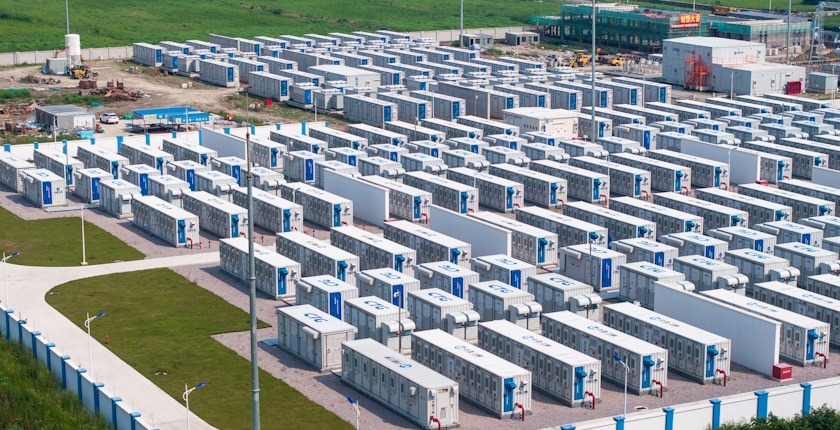
New battery storage installations last year in Europe came in at an all-time high 21.9 GWh in capacity, though the leap wasn’t as impressive as in the previous years. The total reached 61.1 GWh. “If Europe has already entered the solar age, the battery storage age is just beginning,” said Walburga Hemetsberger, CEO of SolarPower Europe, which issued the annual report.

Europe marked the eleventh consecutive year of record-breaking battery storage installations – in capacity terms, the addition was 21.9 GWh. According to SolarPower Europe’s update, the new capacity was 15% bigger than in 2023, after effectively doubling for several years in a row.

The battery fleet ended December at 61.1 GWh. The growth rate in 2024 was 56%, compared to the 94% registered one year before.

The region that was tracked consists of the European Union, United Kingdom and Switzerland. The EU alone closed 2024 with 18.5 GWh in newly installed battery storage capacity.

“If Europe has already entered the solar age, the battery storage age is just beginning. With solar energy mainstreaming across the continent, now is the time for European decision makers to put batteries at the centre of a flexible, electrified energy system,” the organization’s Chief Executive Officer Walburga Hemetsberger stated.

She urged the European Commission to double down on its efforts and adopt an action plan as part of a broader energy system flexibility package. “The recent electricity outage in the Iberian Peninsula is a stark reminder of why this is important,” Hemetsberger pointed out.

BESS projection puts EU likely below 2030 target

In the most likely scenario, 29.7 GWh of battery storage will be installed this year, translating to a 36% annual growth in new capacity and 49% in total. The report anticipates a sixfold increase to 118 GWh added in 2029. It would bring the entirety of battery energy storage systems (BESS) to 399 GWh, of which 334 GWh in the EU.

However, it is far below the levels required to meet flexibility needs in a renewables-driven energy system, the annual report’s authors warned. A study showed that the EU needs 780 GWh by 2030 to fully support the transition.

This year the share of the new front-of-meter BESS, in the utility scale segment, is seen at 55%, against last year’s 40%. The absolute level would nearly double. As for behind the meter, commercial and industrial (C&I) systems grow to 12% from 10% of the new fleet while residential installations decline from 50% to 33% in 2025.

Drop in power prices from crisis levels faded appeal of battery storage capacity

Residential battery deployment declined by 11% in 2024 after years of rapid growth. The report attributes it to the drop in electricity prices when the energy crisis subsided, the removal or reduction of subsidies in key markets and a parallel decline in the deployment of residential solar power units.

Home batteries account for 57% of the whole cumulative level.

New large-scale grid batteries surged 79% against 2023, marking a turning point for utility-scale storage.

Last year new C&I installations were 17% bigger, remain below their potential and holding at one tenth of the whole capacity for several years now, the document shows. Companies in the segment generally invest in battery storage to maximize self-consumption from on-site photovoltaics, avoid peak demand charges and reduce reliance on backup diesel generators.

Additionally, solar and storage allow businesses to meet corporate sustainability targets by reducing carbon footprint of operations. Lastly, the electrification of production processes, heating, and transport fleets is driving unique use cases and a need for storage.

Spain lags but seen rebounding, reaching top five in 2025

The top growers and their positions in the chart were the same as in 2023: Germany (6.2 GWh), Italy (6 GWh), the United Kingdom (2.9 GWh), Austria (1.1 GWh) and Sweden (1 GWh). Together they had a 78% share in both new and cumulative installations.

Germany added slightly less on an annual scale than in 2023 amid a drop in newly installed residential units. Italy’s home battery segment also decreased, but the large-scale segment’s capacity surge brought the market to new heights. The UK experienced a temporary slump due to project delays at the large-scale level.

Last year Spain added less than 250 MWh in battery storage capacity, making it the 14th-biggest market in Europe. Overall it reached 1.7 GWh, of which 90% were small-scale systems.

The country’s new battery installations were 41% lower than in 2023. The Spanish market has been declining since 2022, but it is expected to enter the top five this year, with 1.3 GWh, amid a utility-scale segment’s revival.

BESS market requires level playing field

SolarPower Europe said the authorities need to encourage the participation of hybrid projects of solar and BESS in renewable energy auctions.

“Contracts for difference must be settled based on energy production rather than energy injection. This will allow the asset operator to receive the CfD for the PV asset while generating additional market-based revenues from the BESS. These extra revenues will eventually lead to lower bids from developers and reduce the support costs for society,” the document reads.

The EU must ensure transmission system operators (TSOs) procure balancing services in market-based procedures in which batteries can compete on a level playing field, the organization added. Some EU markets still rely on bilateral contracts that limit fair competition and exclude smaller storage assets, it underscored.
by in News

EU outlines measures to end Russian gas, oil imports by end-2027

The European Commission set out a plan to phase out by the end of 2027 the purchases of Russian natural gas, including in the form of LNG, and oil. The package includes proposals aiming to replace Russian nuclear fuel and materials as well.

The European Union will end its dependency on Russian energy by stopping the import of Russian gas and oil and phasing out Russian nuclear energy, while ensuring stable energy supplies and prices, the European Commission said. Its new REPowerEU Roadmap targets full energy independence from Russia.

Since Russia’s invasion of Ukraine in 2022, the EU was lowering the share of Russian fossil fuels under the REPowerEU plan and via sanctions. However, Russian gas imports rebounded last year by 18%, led by Italy, Czechia and France. The commissioners argued that the “overdependency on Russian energy imports is a security threat” and called for new coordinated actions.

Von der Leyen: It is now time for Europe to completely cut off its energy ties with an unreliable supplier

“The war in Ukraine has brutally exposed the risks of blackmail, economic coercion and price shocks. With REPowerEU, we have diversified our energy supply and drastically reduced Europe’s former dependency on Russian fossil fuels. It is now time for Europe to completely cut off its energy ties with an unreliable supplier. And energy that comes to our continent should not pay for a war of aggression against Ukraine. We owe this to our citizens, to our companies and to our brave Ukrainian friends,” European Commission President Ursula von der Leyen stated.

The volumes of imported Russian gas fell to last year’s 52 billion cubic meters from 150 billion in 2021. The share of Russian gas imports dropped from 45% to 19%. All imports of the country’s coal have been banned by sanctions. Russian oil imports have shrunk from 27% at the beginning of 2022 to the current 3%.

Member states need to roll out national plans by end-2025

The new measures have been designed to preserve the security of energy supply while limiting any impact on prices and markets. They would be applied in parallel to advancing the energy transition.

“Last year we in the EU paid EUR 23 billion to Russia for our energy imports. That is EUR 1.8 billion per month. This needs to stop,” European Commissioner for Energy Dan Jørgensen stressed.

The administration in Brussels expects to replace up to 100 billion cubic meters of natural gas by 2030, which means a decrease in demand by 40-50 billion by 2027. It sees an increase in liquefied natural gas (LNG) capacities by 200 billion cubic meters by 2028, which is five times more than current EU imports of Russian gas. The EU still hasn’t imposed sanctions on Russian LNG.

Member states will be asked to prepare national plans by the end of this year, the announcement reveals. All the measures will be accompanied by continuous efforts to accelerate the energy transition and diversify energy supplies, including via the aggregation of gas demand and a better use of infrastructure, according to the document.

Administration in Brussels intends to tackle Russian shadow tanker fleet carrying oil

The European Commission said the proposed measures would improve the transparency, monitoring and traceability of Russian gas.

“Crucially, new contracts with suppliers of Russian gas (pipeline and LNG) will be prevented, and existing spot contracts will be stopped by the end of 2025. This measure will ensure that already by the end of this year, the EU will have slashed by one third remaining supplies of Russian gas. The commission will further propose to stop all remaining imports of Russian gas by the end of 2027,” the plan reads.

Under the roadmap, the commission will put forward new actions to address Russia’s shadow fleet transporting oil. It said the vessels are circumventing sanctions and the international oil price cap.

EU depends on Russia for quarter of its uranium conversion, enrichment needs

As regards nuclear, the proposals coming next month cover enriched uranium and supply contracts co-signed by the Euratom Supply Agency (ESA) for uranium, enriched uranium and other nuclear materials. The EU intends to increase its production of medical radioisotopes.

“While diversification efforts might create uranium and fuel price volatility over access to uranium supply on global markets, major impacts on electricity prices are unlikely as the price of nuclear fuel and related services represent only a small portion of the final cost of electricity from nuclear power plants,” the plan adds.

The EU intends to increase its production of medical radioisotopes

More than 14% of uranium was sourced in the EU from Russia in 2024. The commissioners highlighted the concentration of uranium conversion and enrichment services – needed to transform processed uranium into the material for nuclear fuel manufacturing – in a limited number of companies.

In 2024, around 23% of the whole EU demand for uranium conversion services and almost 24% of enrichment was covered by Russia.

While more than 85% of uranium is produced in Kazakhstan, Canada, Australia, Namibia, Niger and Russia, uranium mines currently operate in many countries and unmined deposits exist in some EU member states.

It will take years to make use of domestic, other Western resources

European enrichment companies have expansion plans but the first new enrichment installation is not expected earlier than 2027.

“Moreover, the global uranium conversion industry is facing obstacles in ramping up production due to technological complexity and market uncertainties, and new conversion capacities are currently announced only for early 2030s. The EU’s nuclear sector also continues to rely on Russia for some spare parts and maintenance services,” the European Commission said.

EEB: Replacing Russian gas with US gas is senselless

The European Environmental Bureau (EEB) noted that imports of Russian gas including LNG rose 18% in 2024 despite no growth in demand.

Numbers of shadow LNG tankers from Russia have also increased, as have indirect imports of Russian energy via third countries, it added. Plans to tackle the shadow fleet are vague, the organization claimed. It went on to label the United States a clearly unreliable trade partner.

“Phasing out Russian coal and gas only to replace it with a dependence on US fracking gas is not in the EU’s security or financial interests. EU countries should instead focus on accelerating their deployment of wind and solar energies. The technologies to move to 100% renewable energy are available,” EEB’s Policy Manager for Climate and Energy Luke Haywood underscored.

by in News

Global solar power capacity hits 2.2 TW in 2024, with Turkey among top growers

The world added 597 GW of photovoltaic capacity last year, achieving an astounding 36% rate of growth, SolarPower Europe found. China accounted for 55.1% of all new installations. Turkey is in the global top ten with its 1.42% annual share, while Greece is sixth in the world in the category of solar capacity per person.

SolarPower Europe calculated a much higher global total, 2.2 TW, for photovoltaic facilities at the end of 2024, than the International Renewable Energy Agency (IRENA) – 1.87 TW. The Global Market Outlook for Solar Power 2025-2029 showed annual growth of 36%, by a record 597 GW. The increase itself was 33% higher than in 2023, the update reads.

Photovoltaics accounted for 81% of all new renewable electricity capacity added worldwide. While remaining a modest contributor to overall electricity generation for now, its share reached 6.9%, nearly doubling in just three years. It took nearly 70 years to reach the first terawatt, but only two to more than double it.

Total global capacity is projected at 7.1 TW by 2030

Other renewables accounted for 25% of electricity output in 2024.

In its “most realistic,” moderate scenario, the report’s authors anticipate a 10% increase in new installations to 655 GW this year. Annual growth rates remain in the low double digits through 2029, reaching 930 GW. Total capacity is projected at 7.1 TW by 2030, compared to the 11 TW renewable energy target from the United Nations Climate Change Conference COP28.

China hosted 44% of global solar fleet at end-2024

A key issue is the uneven distribution of solar market growth, SolarPower Europe pointed out. China grew by 329 GW, which is 30% more than in 2023 and more than the combined total of the other top 10 markets! Of note, IRENA measured just 278 GW.

China’s increase was 55.1% of the global total last year. It hit 985 GW overall, the report reads. It is 44% of the global photovoltaics fleet, after 40% in 2023 and 34% in 2022. In IRENA’s statistics, China topped 50% of all solar power installations in the world.

Turkey spikes 76% to 19.7 GW

Turkey, the largest country in the region that Balkan Green Energy News covers, delivered 8.5 GW, catapulting its capacity by 76% to complete 2024 at 19.7 GW.

Its addition made up 1.42% of the world’s annual increase, earning it the seventh position. Turkey’s absolute increase was five times higher than in 2023. Rooftop photovoltaics attributed a stunning 90%.

There are nearly 70 companies in the country actively engaged in PV module manufacturing, with a total capacity exceeding 40 GW. Several investments in solar cell production increased the segment to 2 GW altogether in annual terms.

The number of countries with expansion greater than 1 GW per year is 35, after 31 in 2023. The group, which includes Greece, Romania and Bulgaria, is seen getting ten more members in 2025.

EU within reach of 2030 target

At the end of last year, Europe had a total installed capacity of 407 GW, which is 25.2% more than in 2023. The European Union accounted for 338 GW, growing 23.9%.

The medium scenario suggests the EU would climb to 797 GW altogether by 2030, exceeding the REPowerEU target of 750 GW. But it is 11% lower than in last year’s outlook.

In 2024, solar power generation in the European Union surpassed coal for the first time. Its share in the electricity mix exceeded 10% and reached 20% or more in markets such as Cyprus, Greece, Hungary and Spain. The last two even touched 25%.

Germany is Europe’s largest solar market for 13 years in a row. Overall capacity surged 21% to 101 GW.

Romania is advancing in 2025 by an estimated 67% to 2.9 GW. The government provided strong backing for the rally, advancing large-scale solar projects.

Greece is sixth in world in watts per capita

The report reveals that Germany became the third country hosting more than 1 kW of solar power per capita. It spiked 20.5% to 1,187 W.

The first is Australia, which leaped 10.9% to 1,521 W per person. The Netherlands advanced 13.4% to 1,491 W.

All other countries in the top 10 chart are in Europe. Greece is in the global vanguard, in the sixth place, after spiking 40.3% to 964 W for every inhabitant.

by in News

Kosovo* launches reconstruction of coal power plant unit

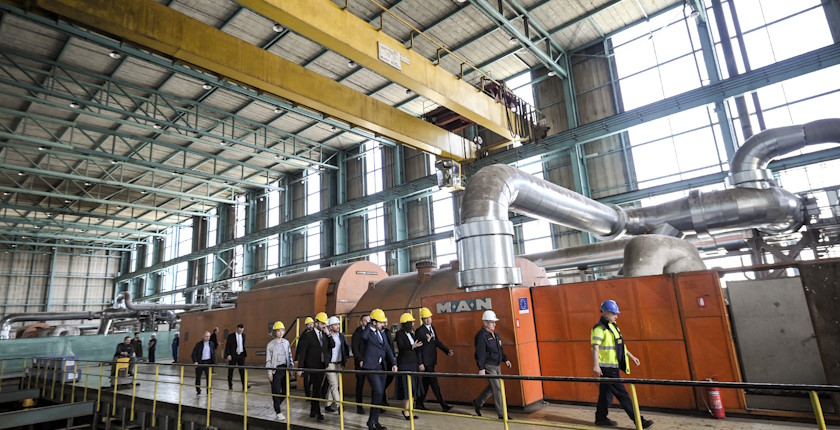
Kosovo Energy Corp. (KEK) began the reconstruction and modernization of one of the two units in its Kosovo B coal power plant. The works are part of a EUR 56.5 million project for the entire facility.

Kosovo* relies almost entirely on lignite in domestic electricity production, with a 92% share, the highest in the world. The failure of a gas pipeline project in 2021 and the sluggish development of wind and solar power projects have prompted the reconstruction of both old coal plants.

The works have officially started at last at Kosovo B, two years after government-owned power utility KEK signed a contract with General Electric. The entire project is worth EUR 56.5 million. Acting Prime Minister Albin Kurti said the company is financing the investment on its own.

The B2 unit, commissioned in 1984, is undergoing modernization and B1 is supposed to be next. It is one year older.

Investment cutting pollutant emmissions by 60%

The government said the project would increase annual output at Kosovo B by more than 600 GWh. According to the energy strategy through 2031, the two units had 260 MW each in effective capacity in 2022. It compares to 339 MW from when they were built.

Acting Minister of Economy Artane Rizvanolli said the coal plant’s operating life would be extended by 20 years. The plan is to cut the emissions of particulate matter and nitrogen oxides by 60%.

Capital repairs will be required once every ten years instead of every five years now, she underscored. Rizvanolli claimed the investment would cut power imports by EUR 23 million per year and boost exports by a minimum of EUR 20 million.

Budget much higher for reconstruction of one unit in Kosovo A coal plant

In February, KEK issued a call for the reconstruction of the Kosovo A3. The coal plant unit is 55 years old. The project is worth EUR 137.3 million.

The capacity would be raised to 215 MW from the current range of 120 MW to 140 MW. A3 originally had 200 MW.

* This designation is without prejudice to positions onstatus and is in line with UNSCR 1244/99 and the ICJ Opinion on the Kosovo declaration of independence.
by in News

Landmark report demonstrates safety, cybersecurity, higher yield of SolarEdge PV systems

VDE Renewables found in its new report that SolarEdge’s advanced safety capabilities minimize photovoltaic system risks and effectively prevent fire hazards, while exceeding international PV safety regulations. SolarEdge has robust cybersecurity mechanisms, essential to mitigating risks associated with cyberthreats, and its solutions bring higher energy yields for both simple and complex roofs.

A new report by VDE Renewables, a subsidiary of the VDE Group, has demonstrated that SolarEdge’s inverter and Power Optimizer-based PV systems deliver measurable advantages in advanced safety, cybersecurity and higher energy production across a wide range of installation types.

In its in-depth assessment of Module-Level Power Electronics (MLPE) topology and SolarEdge’s approach to PV systems, the report highlights how SolarEdge’s advanced safety features reduce PV system vulnerabilities and exceed international PV safety standards. Reviewed and validated by VDE Renewables, the integration of multiple protective mechanisms including Sense Connect proactively identifies and addresses faulty connections long before abnormal temperature is reached.

SafeDC™, rapid shutdown, and module-level monitoring was reported to provide a proactive approach to risk mitigation to ensure a significantly higher level of protection for system operators, maintenance personnel, and emergency responders.

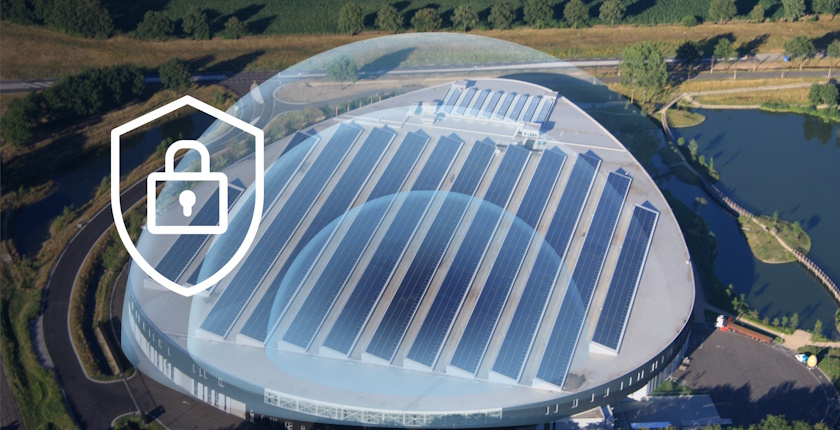
Photo: SolarEdge’s inverter + Power Optimizer solution shown to produce higher energy yields for both simple and complex roofs (4% and 10.5% more power, respectively)

Unsecure PV systems becoming more vulnerable to cyberthreats

The VDE Renewables report also emphasizes cybersecurity as a top priority in PV systems, noting that as solar technology becomes increasingly digitized and interconnected, unsecure PV systems also become more vulnerable to cyberthreats.

With PV systems now integral to energy infrastructure, the consequences of cyberattacks can extend far beyond individual installations, raising wider concerns around grid security and resilience. In this context, VDE Renewables validated SolarEdge’s strong cybersecurity credentials, recognizing its comprehensive, built-in defence architecture and highlighting its robust cybersecurity mechanisms that mitigate risks associated with cyberthreats.

These mechanisms comply with leading international cybersecurity regulations, including IEC 62443, NIST Cybersecurity Framework, and ISO/IEC 27001. Additionally, SolarEdge’s solution includes encrypted communication protocols, secure remote firmware updates, multi-level access control, continuous monitoring, and penetration-tested system architecture.

SolarEdge provides residential solutions bolstering output on complex roofs by 10.5%

VDE Renewables also validated the performance of SolarEdge’s residential solution against leading traditional string inverter systems, even when using multiple MPPTs. The report confirms results that show a 4% increase in energy production on simple (single facet with no shading) rooftops and an impressive 10.5% increase on complex rooftops.

These gains are attributed to SolarEdge’s use of MLPE-based Power Optimizers and advanced Buck and Boost technology. The VDE Renewables report highlights the SolarEdge ONE energy optimization platform that helps maximize saving potentials with support for both fixed and dynamic electricity tariffs, as well as design advantages such as the ability to use longer strings, enabling lower BoS costs and larger systems within the same roof area – further contributing to overall energy yield.

Gruenewald: SolarEdge’s technology demonstrates its strategic market position in safety, cybersecurity, and performance

The report was sponsored by SolarEdge to evaluate its Power Optimizer-based PV system.

Arne Gruenewald, Project Manager Batteries and Energy Storage Systems, VDE Renewables: “Our assessment shows that SolarEdge’s technology demonstrates its strategic market position in safety, cybersecurity, and performance – criteria that are essential for the technology’s long-term viability and trust.”

VDE Group offers quality assurance services for the global renewable energy sector.

Christian Carraro, General Manager Europe, SolarEdge: “We welcome VDE Renewables’ validation of our technology, being a trusted partner for quality assurance, risk minimization and certification. As the solar industry grows and evolves, it’s essential that we continue to prioritize not just performance, but also safety and cybersecurity. This report encourages us to keep raising the bar and deliver technologies that support more powerful and secure energy solutions.“

About SolarEdge

SolarEdge is a global leader in smart energy technology. By leveraging world-class engineering capabilities and with a relentless focus on innovation, SolarEdge creates smart energy solutions that power our lives and drive future progress.

SolarEdge developed an intelligent inverter solution that changed the way power is harvested and managed in photovoltaic systems. The SolarEdge DC-optimized inverter seeks to maximize power generation while lowering the cost of energy produced by the PV system.

Continuing to advance smart energy, SolarEdge addresses a broad range of energy market segments through its PV, storage, EV charging, batteries, and grid services solutions.

by in News

Electricity system in Spain, Portugal collapses

Power was out today throughout Spain and Portugal as well as in Andorra and parts of southern France, in one of the most serious such incidents so far, on a European scale. The European Commission’s Executive Vice President Teresa Ribera and other officials from the EU and the affected countries said there are no indications of sabotage or cyberattack.

Grid operators and electricity producers are gradually restoring the power supply after a massive outage struck the Iberian peninsula today. Prime Minister of Spain Pedro Sánchez convened the National Security Council. It is one of the most serious blackouts in Europe in many years. The outage spread throughout Spain and Portugal.

Power was out in Andorra and, briefly, in parts of southern France. Transportation and telecommunications were heavily affected.

Spanish TSO Red Eléctrica de España called it a “collapse of the Iberian electricity network.” The company said it would take six to ten hours to restore it. Notably, the production system is relying almost completely on photovoltaics and wind farms at the moment, so just a few hours of solar power production remain.

The outage paralyzed major cities including Madrid, Barcelona and Lisbon and caused disturbances in the European grid. The European Commission’s Executive Vice President for Clean, Just and Competitive Transition and Commissioner for Competitiveness Teresa Ribera said there were no indications that “any kind of sabotage or cyberattack” was behind the grid collapse.

According to the Government of Portugal, the incident started from outside the country

According to the Government of Portugal, the incident started from outside the country and, apparently, in Spain.

Shares of solar, wind power production in Spain breaking records

In the spring and autumn, when there is little to no demand for heating or cooling, electricity grids in most of Europe are sometimes strained from surges in high solar and wind power production, amid a lack of energy storage and flexibility capabilities that would balance the surplus.

On April 16, the Spanish electricity system achieved total coverage for the first time with renewable energy sources. At one point during the day, wind and solar met 100.6% of demand. Then on April 21, solar power generation was equivalent to a record 78.6% of domestic demand for a moment.

Reid: The massive outage occurred while prices are negative in electricity markets across Europe

“Spanish grid operator Red Eléctrica has so far blamed a power ‘oscillation’ on the power outage. We still don’t know the cause but it looks like problems at the Spanish-French power interconnector led to the Spanish grid operator islanding their power system and I would say at this point they lost control,” said Gerard Reid, investor and strategic advisor in energy, finance and geopolitics.

It has also proven difficult to restore power with multiple black start (restart) procedures taking place, but the issue is that at the time of the blackout there were no conventional power units in operation, he pointed out. Reid added it makes the restart complicated and stressed that Europe requires enhanced grid-scale battery storage solutions, including for black start capabilities.

He also highlighted the fact that the massive outage occurred while prices are negative in electricity markets across Europe.

Of note, a grid incident last summer left much of the Western Balkans and parts of Croatia out of power for several hours.

by in News

OMV opens Austria’s largest green hydrogen plant

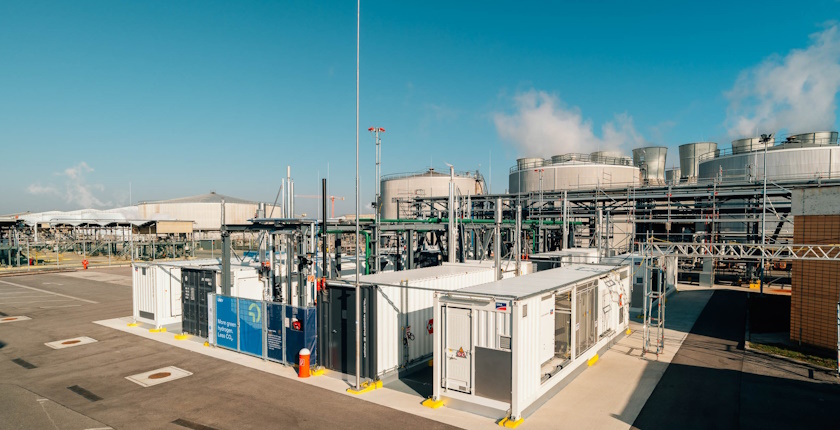
OMV put into operation its green hydrogen plant in Schwechat near Vienna. The facility can produce 1,500 tons per year.

OMV is producing green hydrogen on a commercial scale for the first time. The Vienna-based fossil fuel and petrochemicals producer started up a 10 MW plant at its Schwechat refinery near Austria’s capital. It is the largest in the country.

The investment amounts to EUR 25 million. The electrolyzer system can produce up to 1,500 tons per annum. OMV said the green hydrogen would be used to make more sustainable fuels and chemicals including sustainable aviation fuel (SAF) and renewable diesel (HVO).

PEM electrolyzer uses wind power, hydropower, photovoltaics

The new 10 MW polymer electrolyte membrane (PEM, also called proton exchange membrane) electrolyzer is powered entirely by renewable electricity. It is generated by wind power, hydropower plants and photovoltaics.

The innovation enables annual savings of up to 15,000 metric tons of carbon dioxide emissions, according to the comparator from the European Union’s Renewable Energy Directive. It is equivalent to 2,000 persons per year, based on the EU’s 2024 average of 7.5 tons of CO2 equivalent per capita.

“With the start-up of Austria’s largest electrolysis plant, we are re-inventing how essentials we use in everyday life are produced sustainably. Green hydrogen is at the heart of this transformation, serving as a critical component in producing fuels and chemicals while advancing the decarbonization of our Schwechat site,” said board member Martijn van Koten, responsible for fuels, feedstock and chemicals.

Green hydrogen project is step toward making OMV carbon neutral

The majority owner of Romanian OMV Petrom aims to cut its net emissions to zero by 2050. Its transformation is based on projects including for geothermal energy and chemical recycling. Green hydrogen can be utilized in the production process in refineries.

The green hydrogen plant is certified for producing renewable fuels of non-biological origin (RFNBOs).

Making green hydrogen through PEM electrolysis involves splitting water into hydrogen and oxygen using renewable electricity. At the anode, oxygen and positively charged hydrogen protons are generated. The protons pass through the PEM, and at the cathode, they combine with electrons to form hydrogen gas.

by in News

US interested in pumped storage hydropower projects in Romania, Bulgaria

Minister of Energy of Romania Sebastian Burduja and Minister of Energy of Bulgaria Zhecho Stankov both met with United States Secretary of Energy Chris Wright and discussed bilateral cooperation in projects in their countries including for pumped storage hydropower plants and nuclear power plants. Burduja said studies would be conducted with American support for a string of pumped storage hydroelectric facilities throughout the Carpathians.

At the sidelines of the 2025 Three Seas Business Forum in Warsaw, Minister of Energy Sebastian Burduja held a meeting with US Secretary of Energy Chris Wright about ongoing strategic projects in which American companies are involved. He revealed that state-owned power utility Hidroelectrica has signed a memorandum with the National Renewable Energy Laboratory (NREL) of the United States on cooperation in pumped storage hydropower projects.

The initiative will put Romania “at the forefront of Europe” as it will store green energy throughout the Carpathian mountain range, according to Burduja. Prefeasibility and feasibility studies will be developed with American support, he added.

“In this era of energy transition, we need pragmatic and effective solutions that ensure secure, affordable, and clean energy – in that order of priorities. Romania and the United States share a vision for a common energy future, and our collaboration will significantly contribute to achieving this goal,” the minister stated.

Significant involvement of US companies in strategic energy projects in Romania

Burduja highlighted NuScale’s project for small modular reactors (SMRs) in Doicești and the contract signed with Fluor and Sargent and Lundy for units 3 and 4 at the Cernavodă nuclear power plant. Fluor is also participating in a project for a high-voltage direct current interconnector (HVDC), he pointed out.

The lack of interconnections is bolstering energy prices

The minister noted that American partners are involved in a project for mapping and utilizing geothermal sources for district heating in Bucharest, with support from the European Union’s Modernisation Fund. Namely, Electrocentrale Bucharest (ELCEN) has established cooperation with US-based SAGE Geosystems

Burduja recalled that American platform Transocean Barents is drilling for gas in the Neptun Deep project in the Black Sea.

The Romanian ministry said the two officials discussed the rise of energy prices, attributing it to the lack of interconnections and the challenge of closing coal-fired power plants without viable alternatives. They also touched upon the costs of carbon dioxide certificates and how they affect competitiveness, the announcement reads.

Stankov, Wright discuss possibility of building AI ‘gigafactories’

Bulgarian Minister of Energy Zhecho Stankov separately met with US Secretary of Energy Chris Wright. Bulgaria will be the first in Europe to deploy the American AP1000 technology, Stankov claimed.

The country is preparing to build two more units at the Kozloduy nuclear power plant, in a deal with Westinghouse Electric. State-owned Bulgarian Energy Holding is controlling the project.

The two officials discussed the possibility of building “artificial intelligence gigafactories” to complement the nuclear infrastructure and promote innovation and employment, the ministry said. In addition, Stankov and Wright spoke about projects for new pumped storage hydropower and the exploration of oil and natural gas in the Black Sea.

by in News

Public voting open for EUSEW Awards

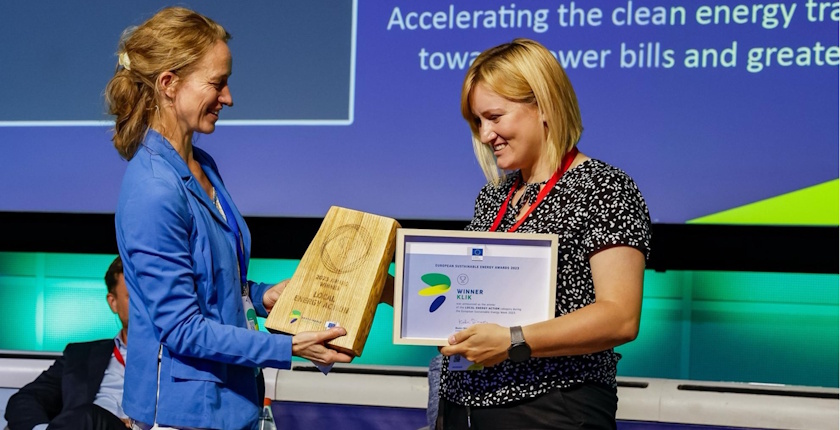
EUSEW Awards will be presented on June 10, within the European Sustainable Energy Week (EUSEW), to outstanding individuals and organisations driving Europe’s energy transition. A jury has selected nine finalists across three categories: Innovation, Local Energy Action, and Woman in Energy. The public now gets to decide the winners.

Online public voting for EUSEW Awards is open until June 1. Voters can support one finalist in each category.

The winners will be announced during the official awards ceremony in Brussels on June 10.

Innovation category

The Innovation Award recognises outstanding projects funded by the European Union that are ongoing or recently completed, demonstrating original and innovative approaches to the energy transition and delivering tangible results.

Dutch company AquaBattery has launched a pilot project in Delft for a long-duration energy storage (LDES) battery system that uses only salt and water as storage medium.

During charging, renewable electricity converts saltwater into acid and base, which are stored in separate tanks, effectively storing the electricity. During discharge, the acid and base are recombined into saltwater, generating electricity. This enables a stable power supply even when there is no sun or wind, without relying on critical raw materials like lithium.

[wpcc-iframe title=”EUSEW2025 Finalist | Dutch saltwater battery commercialises groundbreaking energy storage solution” width=”500″ height=”281″ src=”https://www.youtube.com/embed/1xs2khpQB2k?list=PLMKHMvnaraHMd4y5rZuvjnnW1veToA8qm” frameborder=”0″ allow=”accelerometer; autoplay; clipboard-write; encrypted-media; gyroscope; picture-in-picture; web-share” referrerpolicy=”strict-origin-when-cross-origin” allowfullscreen=””]

The LIFE4GreenBroadband project in Croatia, led by telecom operator A1 Hrvatska, is the second finalist in the Innovation category. It aims to reduce emissions in the telecommunications sector by introducing solar panels and passive cooling systems to mobile base stations.

[wpcc-iframe title=”EUSEW2025 Finalist | Project cutting emissions in Croatian telecoms sector” width=”500″ height=”281″ src=”https://www.youtube.com/embed/UHkQHJ4e9ls?start=7&feature=oembed” frameborder=”0″ allow=”accelerometer; autoplay; clipboard-write; encrypted-media; gyroscope; picture-in-picture; web-share” referrerpolicy=”strict-origin-when-cross-origin” allowfullscreen=””]

The third finalist is the Spanish-Italian project LIFE Turbines, focused on developing smart cities and generating green electricity by using surplus pressure in water pipelines. By integrating microturbines directly into existing infrastructure, the project demonstrates how to harness urban hydropower without affecting water quality or supply.

[wpcc-iframe title=”EUSEW2025 Finalist | Spanish-Italian project harnessing hydropower from urban water systems” width=”500″ height=”281″ src=”https://www.youtube.com/embed/E2VLw49_WCs?list=PLMKHMvnaraHMd4y5rZuvjnnW1veToA8qm” frameborder=”0″ allow=”accelerometer; autoplay; clipboard-write; encrypted-media; gyroscope; picture-in-picture; web-share” referrerpolicy=”strict-origin-when-cross-origin” allowfullscreen=””]

Local Energy Action

The Local Energy Action Award celebrates implemented sustainable energy initiatives carried out by citizens or consumers at the local level, contributing to their community’s energy transition. It also aims to inspire similar efforts across the EU by showcasing economic and environmental benefits. This year’s finalists are: Amiestas, proKlima, and Shared Energy for Social Housing in Otterbeek.

Amiestas is a public, non-profit organisation managing a centre for energy-efficient renovation of residential buildings in Vilnius, Lithuania. It streamlines processes for residents and provides technical and financial support to improve building energy efficiency by 50% to 60%.

[wpcc-iframe title=”EUSEW2025 Finalist | non-profit supporting multi-apartment renovations in Vilnius” width=”500″ height=”281″ src=”https://www.youtube.com/embed/nTZG3NTDI_E?list=PLMKHMvnaraHMd4y5rZuvjnnW1veToA8qm” frameborder=”0″ allow=”accelerometer; autoplay; clipboard-write; encrypted-media; gyroscope; picture-in-picture; web-share” referrerpolicy=”strict-origin-when-cross-origin” allowfullscreen=””]

ProKlima is a public-private partnership funding clean energy projects in and around Hanover. It brings together municipal utility enercity, local authorities, and NGOs. Nearly 40,000 clean energy projects were funded so far within the endeavor.

The partners created a fundraising instrument independent of municipal budgets. The money, sourced from gas sales, profit sharing from the said energy supplier and from concession fees, is distributed to local projects addressing climate change and raising awareness about global warming.

[wpcc-iframe title=”EUSEW2025 Finalist | German clean energy fund” width=”500″ height=”281″ src=”https://www.youtube.com/embed/RsKK4HZ4w1I?list=PLMKHMvnaraHMd4y5rZuvjnnW1veToA8qm” frameborder=”0″ allow=”accelerometer; autoplay; clipboard-write; encrypted-media; gyroscope; picture-in-picture; web-share” referrerpolicy=”strict-origin-when-cross-origin” allowfullscreen=””]

Shared Energy for Social Housing in Otterbeek, Belgium, gives access to renewable energy to residents in vulnerable groups. Two hundred social housing units have been equipped with solar panels, allowing residents to receive green electricity at a fixed, lower-than-market rate.

[wpcc-iframe title=”EUSEW2025 Finalist | Belgian social housing energy initiative” width=”500″ height=”281″ src=”https://www.youtube.com/embed/Q30AOi-58ck?list=PLMKHMvnaraHMd4y5rZuvjnnW1veToA8qm” frameborder=”0″ allow=”accelerometer; autoplay; clipboard-write; encrypted-media; gyroscope; picture-in-picture; web-share” referrerpolicy=”strict-origin-when-cross-origin” allowfullscreen=””]

Woman in Energy

The Woman in Energy Award recognises the efforts of women whose actions, if replicated, can accelerate the transition to clean energy in Europe. Special attention is given to promoting gender equality and equal opportunities in the energy sector.

This year’s finalists are Carmen Sánchez-Guevara, Sofie Loots, and Stella Tsani.

Spanish architect and professor Carmen Sánchez-Guevara is a leading voice in the fight against summer energy poverty, which affects vulnerable households exposed to extreme heat. Through projects like Cooltorise, she has helped people in five countries protect themselves through education, greening initiatives, and improved public spaces.

[wpcc-iframe title=”EUSEW2025 Finalist | Spanish architect tackling summer energy poverty” width=”500″ height=”281″ src=”https://www.youtube.com/embed/LqwFIljOk1c?list=PLMKHMvnaraHMd4y5rZuvjnnW1veToA8qm” frameborder=”0″ allow=”accelerometer; autoplay; clipboard-write; encrypted-media; gyroscope; picture-in-picture; web-share” referrerpolicy=”strict-origin-when-cross-origin” allowfullscreen=””]

Sofie Loots advocates for local energy cooperatives in Belgium. For 16 years, she worked as a sustainability advisor in the Municipality of Edegem near Antwerp, focusing on climate action through energy efficiency and building renovation.

In 2016, Sophie co-founded the energy cooperative ZuidtrAnt with a group of other volunteers. Their goal was to prioritise citizens’ interests in the energy transition and to make renewable energy more affordable.

[wpcc-iframe title=”EUSEW2025 Finalist | Pioneer of Flemish energy cooperatives” width=”500″ height=”281″ src=”https://www.youtube.com/embed/x-uyBKLxXPU?list=PLMKHMvnaraHMd4y5rZuvjnnW1veToA8qm” frameborder=”0″ allow=”accelerometer; autoplay; clipboard-write; encrypted-media; gyroscope; picture-in-picture; web-share” referrerpolicy=”strict-origin-when-cross-origin” allowfullscreen=””]

Stella Tsani, an associate professor at the University of Athens, links academic research with real-world energy policy, focusing on economic incentives for a sustainable energy transition.

Through work with organisations such as the United Nations Environment Programme (UNEP) and the Intergovernmental Panel on Climate Change (IPCC), her research informs policies that balance economic growth with environmental protection. She is also dedicated to empowering young women in the energy sector through mentorship and education, believing that future female leaders are key to achieving the EU’s climate goals.

[wpcc-iframe title=”EUSEW2025 Finalist | Greek academic driving country’s energy transition” width=”500″ height=”281″ src=”https://www.youtube.com/embed/YIizBrFETqc?feature=oembed” frameborder=”0″ allow=”accelerometer; autoplay; clipboard-write; encrypted-media; gyroscope; picture-in-picture; web-share” referrerpolicy=”strict-origin-when-cross-origin” allowfullscreen=””]

by in News

CEO of Kosovo* TSO KOSTT dismissed amid allegations of abuse of office

The Board of Directors of Transmission, System and Market Operator (KOSTT) of Kosovo* fired Chief Executive Officer Evetar Zeqiri after a complaint that former board members sent to the Special Prosecutor’s Office surfaced in the media. The company appointed Shaban Neziri as acting CEO.

Evetar Zeqiri is dismissed from the top position in KOSTT, the transmission system operator (TSO) of Kosovo*, but also fired. The board deposed the CEO, who led the government-controlled company since October 2022, and replaced him with Shaban Neziri, in an acting capacity.

Just before the announcement, the Dukagjini television station showed criminal charges that former board members allegedly filed with the Special Prosecutor’s Office against Zeqiri for abuse of office. KOSTT denied the connection between its move and “the reports published in some media.”

Allegations of interfering in procurements

According to the document, the former CEO violated his obligations regarding finance, interfered in procurement, set discriminatory criteria and demanded that all technical specifications for the company’s projects be sent to him in advance. The allegations include influence to make illegal decisions and failing to properly inform the board, causing financial damages to the company. Zeqiri has asked legal entities to withdraw their bids, during evaluation, according to the report.

The authors of the complaint, who weren’t named, said they raised concerns several times, but that they were a minority within the board and that both its then-Chairman Jeton Mehmeti and CEO Zeqiri blocked them.

KOSTT cites poor personnel management, investment

The same media outlet obtained the decision to remove Zeqiri. The board said his personnel changes impacted the functioning of the enterprise’s operational structures and the motivation of the staff. It cited unsatisfactory capital investment and improper planning of projects in the budget.

Acting CEO Neziri is an electrical engineer, in KOSTT since its establishment.

From 2021 to 2024, Kosovo* imported electricity worth nearly EUR 590 million in total, according to Klan Kosova. One of the main importers is Noa Energy Trade, a company with an apparently unknown address and owner.

Notably, government-owned Kosovo Energy Corp. (KEK) has been led by acting CEOs for the past two years, since CEO Nagip Krasniqi was arrested. The current interim head is Gramos Hashani.

* This designation is without prejudice to positions onstatus and is in line with UNSCR 1244/99 and the ICJ Opinion on the Kosovo declaration of independence.