by in News

EDPR reportedly exiting Greece as all power plants, projects are on sale

EDP Renewables (EDPR) is about to divest of all its assets in Greece and leave next year, according to the domestic media. Market-oriented green electricity producers in the country are at a disadvantage, due to low and negative prices and curtailments, against companies involved in retail supply and with long-term power purchase agreements (PPAs) and feed-in tariff support.

Green energy giant EDP Renewables (EDP Renováveis) is expecting official bids for its four wind parks northwest of Athens, while also looking to sell all its other assets to MORE, the renewables subsidiary of oil refiner Motor Oil Hellas, according to news reports. The latter portfolio is said to include their joint venture.

EDPR, part of Portugal-based EDP Group, is apparently planning to exit the country next year, as early as the summer, and is already cutting jobs. The company entered Greece in 2018.

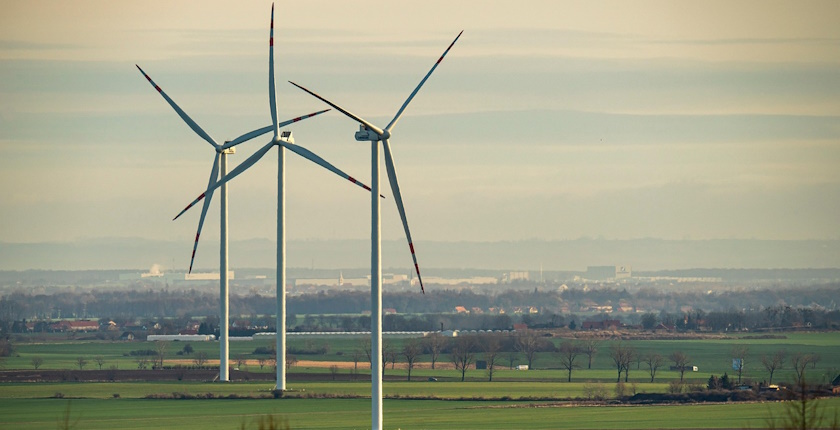
The wind parks, reportedly pursued by four domestic companies, are Livadi (45 MW) and Erimia (35 MW) in Malesina, Phthiotis, both commissioned last year, and new facilities Xironomi (36 MW)  and Chalcodonio (33.6 MW). They are located in Boeotia, Central Greece, and Magnesia, Thessaly, respectively.

Of note, EDP Renewables is headquartered in Spain, but traded on the Euronext Lisbon stock exchange.

Project portfolio includes major wind power clusters in Evia

The Greek press learned that MORE is likely to buy out EDPR’s 51% share in their projects for two wind farm clusters in Evia (Euboea), of 150 MW and 214 MW. Other assets that the oil refiner would pursue include another cluster under development for sites in the same island, of 156 MW, an operating 22 MW photovoltaic park in the Peloponnese and two wind farms under construction in Boeotia (also Beotia and Viotia).

In addition, the company has a pipeline of less mature projects for photovoltaics, standalone battery energy storage systems (BESS), hybrid power plants and wind power. They could all fit into one large package for sale.

EDPR is also exiting Hungary, Belgium, the Netherlands, Colombia, Brazil and a group of Asian countries.

Vertical integration or bust

Analysts have pointed out that the Greek market is no longer attractive to companies in the sector that are not vertically integrated. Namely, renewable energy producers oriented toward the market are exposed to curtailments and low, zero and negative power prices at electricity exchanges.

The ones also active in the supply and retail market have an advantage, as do the operators of power plants that receive subsidies like feed-in tariffs or have long-term PPAs.

The share of curtailed electricity in Greece is set to be more than doubled this year

Since the beginning of the year, over 860 GWh has been curtailed, Euro2day wrote. It is already more than all last year, when the share of lost electricity was 4%

But some companies seem dedicated to the Greek market.

France-based Valorem recently completed a wind park of 27 MW in Vlasti in the municipality of Eordaia. It is located in the Kozani regional unit in the region of Western Macedonia in northern Greece. The facility consists of six turbines, with an estimated annual output of 68 GWh overall.

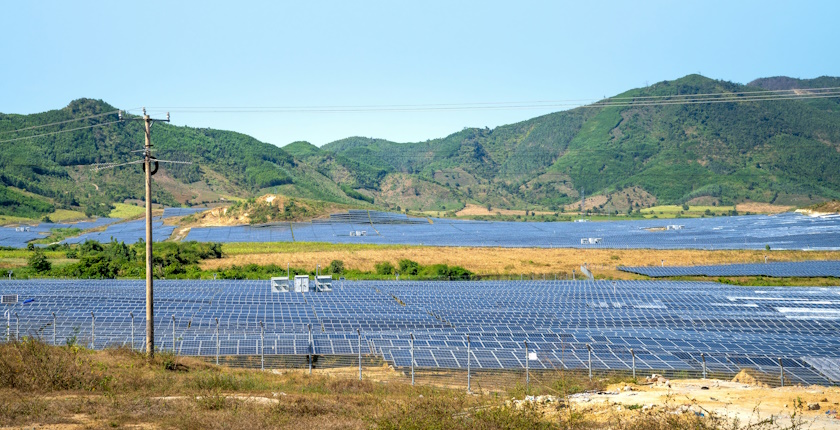
Also in Kozani, Principia inaugurated a photovoltaic cluster of 95 MW. The firm is a joint venture between Enel and funds managed by Macquarie Asset Management. The Perasma facility, near the villages of Mavrodendri and Sidera, is set to generate 126.8 MW per year. It comprises seven solar power plants.
by in News

ENTSO-E proposes delaying CBAM on electricity by one year

The European Network of Transmission System Operators for Electricity suggested to the European Commission to prolong the transitional period of the Carbon Border Adjustment Mechanism (CBAM) for electricity by one year, to January 1, 2027. It recommended an additional impact assessment, an analysis of possible exemptions for third countries as well as to exempt transmission system operators (TSOs).

In its new position paper, ENTSO-E supported the general principles of CBAM, but it warned against creating disproportionate administrative burdens and costs for TSOs. The pan-European body recommended exempting TSO activities from the CBAM scope, arguing there is a minimal risk of carbon leakage and pointing to their role in keeping the lights on and ensuring the security of the power system.

Moreover, ENTSO-E said an additional impact assessment is needed before the completion of the transitional period for electricity overall. The European Commission should also review in depth the list of third countries eligible for exemption, pending their adjustment to the European Union’s Emissions Trading System (EU ETS), it added.

The current criteria to calculate the actual emissions embedded in electricity production are impossible for importers to implement

“ENTSO-E encourages policy makers to use the targeted revision of CBAM part of the Omnibus simplification package on sustainability to postpone the definitive period as of 1 January 2027. It should also be noted that in its current form, the application of the provisions under CBAM regulation would have a major impact on the Energy Community countries and the UK imports,” the update reads.

Carbon leakage occurs when companies based in the EU move carbon-intensive production to countries with less stringent climate policies, or when EU products get replaced by more carbon-intensive imports.

CBAM was devised to bring CO2 prices for imported cement, iron and steel, aluminum, fertilizers, hydrogen and electricity to the same level as in EU ETS. Under the current rules, the EU will start charging CBAM at the beginning of January next year and gradually increase the tariffs to reach 100% at the start of 2034.

No provisions regulating implicit electricity trading

ENTSO-E acknowledged the role of the carbon border tax in putting a fair price on carbon emissions from carbon-intensive goods entering the EU, and to promote cleaner industrial production globally. Nevertheless, there are still many questions even about the current reporting obligations, it pointed out.

“TSOs adjacent to EU external borders are the most exposed to the concerns raised in this paper. It concerns a significant number of ENTSO-E members, almost one third of the EU members of the association,” the paper adds. In specific cases, the measures may also lead to efficiency losses, reduce EU competitiveness and reduce incentives for building and connecting offshore wind, it underscored.

Obstacles to importing electricity from third countries could contradict the goal of efficiently importing cheap green electricity

CBAM only assumes that electricity is traded with third countries through explicit allocation, not taking into account implicit trading. Like implicit electricity trading within the internal electricity market, there is no nomination on the interconnectors, only anonymous trading between markets, ENTSO-E explained.

“These obstacles to importing electricity from third countries could contradict the goal of efficiently importing cheap green electricity into the EU if applied also to third countries with robust decarbonisation policies and renewable energy sources. The current criteria to calculate the actual emissions embedded in electricity production make it impossible for importers to implement, mainly due to impossibility to trace the origin of the electricity,” the TSO network stressed.

CBAM would tax historical instead of actual emissions

The current default CO2 levels are based upon the carbon intensity of the five-year average through 2020, even though third countries made tremendous efforts in decarbonising their energy mix in the meantime, according to ENTSO-E. It suggested allowing such countries to be exempted if they verify their progress through proper data platforms.

ENTSO-E invited the European Commission to envisage a revision aligned with the current delay in CBAM implementing acts, stressing that it is impossible for the market to digest them before the end of the year.

Energy Community contracting parties, including the Western Balkans, are eligible for exemption from CBAM on electricity until 2030. The condition for each one is to couple its electricity market with an EU neighbor.

by in News

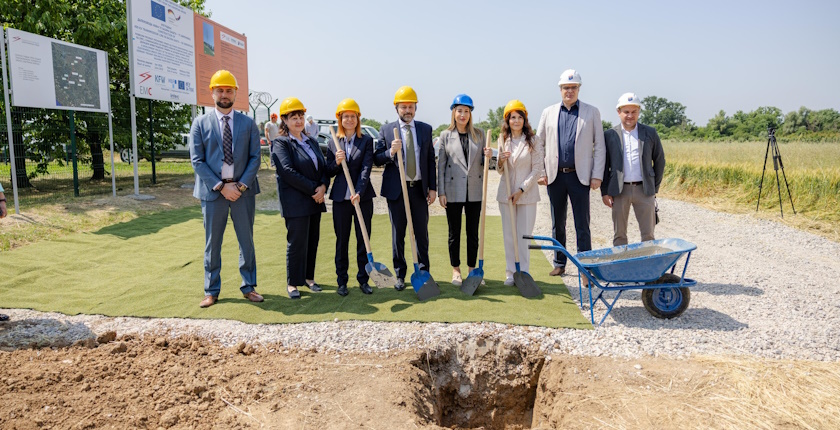
Serbia’s EMS starts construction of third section of Trans-Balkan Corridor

The foundation stone was laid today in Serbia for the third section of the Trans-Balkan Electricity Corridor. The investment amounts to EUR 100 million. It entails a high-voltage overhead power line of 109 kilometers between Obrenovac and Bajina Bašta, equipping two new switchyards in the Obrenovac transformer substation and upgrading the Bajina Bašta substation to 400 kV. The fourth and last section, with the interconnections with Bosnia and Herzegovina and Montenegro, is planned to be completed in 2028.

Serbian Minister of Mining and Energy Dubravka Đedović Handanović said at the groundbreaking ceremony for the third section of the Trans-Balkan Corridor that it is the most important project for the transmission system not only in the country but in Southeastern Europe.

“What highways are for transportation, high-voltage power lines are for energy, and today we are beginning the works on the new part of the most important energy highway,” she said in Obrenovac and added that the segment would enhance the security of supply for consumers in western Serbia.

The third section of the Trans-Balkan Electricity Corridor involves the construction of an overhead power line of 109 kilometers on 309 towers, equipping two new switchyards in the Obrenovac substation and lifting the voltage level in the Bajina Bašta substation to 400 kV.

The project is financed with a EUR 64.5 million loan from Germany’s KfW Development Bank, a grant from the European Union via its Western Balkans Investment Framework (WBIF) of approximately EUR 21 million, and own funds of the Serbian transmission system operator Elektromreža Srbije (EMS), according to the state-owned company’s announcement. The third section is worth EUR 100 million, of which EUR 71 million is for the overhead power line.

“With the completion of the entire project, we will additionally strengthen the links with Bosnia and Herzegovina and Montenegro and beyond, with Italy,” Đedović Handanović stated.

She recalled that significant transmission grid investments are planned in the next five years, including the construction of the Pannonian Corridor toward neighboring Hungary. The priority projects in the segment are worth EUR 500 million in total, the minister revealed.

“I expect the contractors not to be late with the works, so that the project is completed within two and a half years, as it is planned,” Đedović Handanović stressed.

Matejić: Final section to be finished in 2028

General Manager of EMS Jelena Matejić said the construction of the entire Trans-Balkan Corridor is worth more than EUR 200 million. She noted that it includes 323 kilometers of 400 kV power lines, voltage level upgrades for two transformer stations and switchyards in three of them.

The investments in the Trans-Balkan Corridor are estimated at more than EUR 200 million altogether

“Except this section, the third one, we will also have the fourth, for which the funds have been secured, and it will be finished in 2028,” Matejević asserted.

The old lines in western Serbia of 220 kV will be replaced with new, 400 kV systems, which will create possibilities for connecting the planned Bistrica pumped storage hydropower plant to the grid, according to EMS. The contractor is Kodar Energomontaža, and the works are expected to be completed by 2027.

EU donated EUR 38.3 million for Trans-Balkan Electricity Corridor

Head of the EU Delegation in Serbia Emanuele Giaufret pointed out that the funds the EU has earmarked for the current section are part of wider support.

“The EU has secured a EUR 38.3 million donation for the whole Trans-Balkan Corridor, together with KfW’s favorable loans. Over the years, the EU has earmarked more than EUR 1 billion for the energy sector in Serbia. This project is important for the rest of Europe as well, because it will contribute to the creation of a wider, integrated system, which will enable a more stable supply to consumers on the entire continent, as well as to avoid problems in the future,” he stated, as quoted by EMS.

The first section of the Trans-Balkan Corridor, from the city of Pančevo near Belgrade to the Romanian border, was finished in 2017. The second one, between Kragujevac and Kraljevo in central Serbia, is operational since 2022. It included substation upgrades in the two cities. The fourth section needs to connect Bajina Bašta with nearby Višegrad in Bosnia and Herzegovina, and with Pljevlja in Montenegro.

by in News

TotalEnergies to build 100 MW solar power plant with energy storage in Cyprus

TotalEnergies is betting big on the solar power market in Cyprus. It won the environmental approval for a photovoltaic park of 100 MW in peak capacity, with energy storage. It intends to build it in an area previously designated for a golf course.

France-based TotalEnergies is an oil supermajor, but also one of the world’s largest renewable energy developers. The company is planning to build a photovoltaic system in Cyprus equivalent to a quarter of all the current capacity in larger solar power units in the country, even though the competition in the segment is enormous.

At the same time, grid stability in the island state is under jeopardy given the surge in PV investments and the lack of energy storage. According to a recent statistical report, Cyprus hosted almost 850 MW of solar power, of which less than 400 MW was in commercial photovoltaic plants. Prosumers operated the rest. Licensed projects amounted to 2.8 GW.

In the first five months of the year, according to the CyprusGrid tracker, 58% of green electricity production was curtailed, out of a potential 251 GWh, pv magazine reported. It compares to 29% in all of 2024, 13.4% the year before and 3.3% in 2022.

The Department of Environment has issued consent for TotalEnergies’ solar power project of 100 MW in peak capacity, Philenews reported. The company is conducting it in cooperation with Universal Green Energies. It is a subsidiary of Universal Golf Enterprises, the owner of the land.

The environmental authority’s positive opinion is valid for the duration of urban planning and other permits.

Environmental approval conditioned on wildlife protection, reforesting

The area of 200 hectares was originally intended for a golf course. It is on the territory of the villages of Vasa Kellakiou, Asgata and Sanida in the Limassol district.

The photovoltaic park would cover 83 hectares, of which 44 hectares would be under solar panels. The plan includes a substation and energy storage. Annual output is estimated at 160 GWh, equivalent to the electricity needs of 33,000 households.

The PV park would generate an estimated 160 GWh per year

TotalEnergies and its partner are obligated to protect fauna and flora and exclude water streams and protected zones from construction works. They are not allowed to install solar panels on land with a slope higher than 25%. The companies especially need to preserve the habitats of protected species, including the Bonelli eagle.

The environmental approval was issued with a condition to plant trees and shrubs instead of the ones that would be removed during construction.

Villagers concerned about environmental, economic impact

Some representatives of the local population in Sanida expressed concern, among other matters, over the effect of the planned solar park on the air temperature in the area. Residents of Asgata argued that the local community would benefit more from a golf course.

At the end of the first quarter, TotalEnergies had 28 GW of gross renewable electricity capacity installed worldwide. It aims to reach 35 GW by the end of the year and 100 GW in 2030.

by in News

Greece plans six waste-to-energy plants, set to meet EU landfilling limits

Large Greek companies, interested in the construction and operation of waste incinerators producing electricity and heat, are waiting for the government to complete the legal framework and launch tenders. Without the six planned facilities and accompanying infrastructure, the country would substantially lag behind the European Union’s targets for lowering the share of landfilled material.

Greece is transforming its waste management sector – dozens of units mechanically treating the material to feed six incinerators, covering all the regions. The Ministry of Environment and Energy is about to complete a strategic environmental assessment (SEA), after which its plan is to adopt a legal framework, before the end of the year.

Following a public consultation process, the general parameters would be determined including the details of a tender for the waste-to-energy plants. They are valued at EUR 1 billion in total. State-controlled Public Power Corp. (PPC or, in Greek, DEI) has expressed interest in entering the sector, alongside the conglomerates GEK Terna and Metlen, construction company Aktor, oil refinery operator Motor Oil and water, wastewater and waste processing operator Mesogeos.

The ministry intends to complete the competitive process in 2026, followed by a three-year construction period. The Greek media learned that public-private partnership is a favorable model for the investments.

At least two of six plants would provide district heating

In the central scenario, an incinerator in the Rhodope area would serve the wider region of East Macedonia and Thrace. One would be in Kozani, a coal region, for Central and Western Macedonia, Epirus, Thessaly and Corfu.

The government envisaged a unit in the Peloponnese to cover Western Greece, the Peloponnese peninsula itself and the Ionian Sea, excluding Corfu. One waste-to-energy plant is planned in Boeotia (Viotia), covering parts of Central Greece and the western part of Attica.

The waste incinerator in Kozani is likely to be built in the vicinity of Ptolemaida 5, Greece’s last coal power plant

In the same peninsula, where Athens is situated, a unit would also get shipments of waste from the north Aegean islands, one section of the Cyclades archipelago and the Dodecanese. An incineration plant in Heraklion (Iraklio) would be for Crete, Santorini, Karpathos and Rhodes.

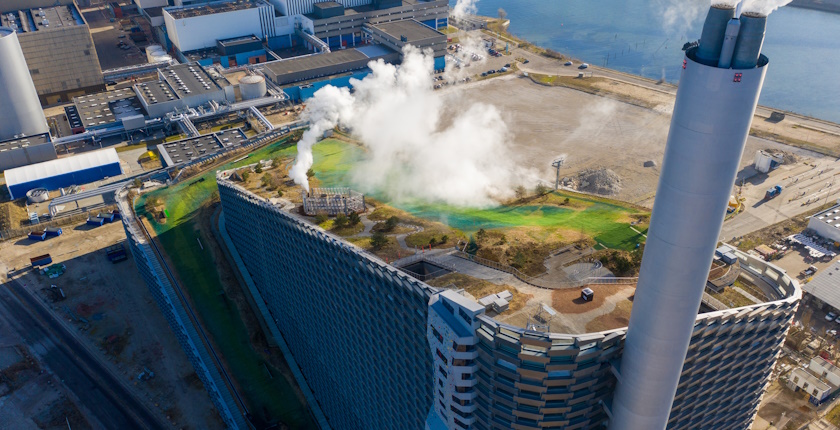
The combined annual capacity of the six units is projected at 1.19 million tons. The largest ones are the Attica project (356,000 tons) and the Kozani plant (288,000 tons). The latter, which would probably be located near PPC’s Ptolemaida 5 coal power plant, is also seen providing up to 40% of the district heating needs in the area. The investment is valued at EUR 300 million.

Ptolemaida 5 is scheduled to be closed at the end of next year, marking the completion of Greece’s coal phaseout. The waste incinerator in Boeotia would provide district heating as well, the plan reads.

System for energy recovery clings on construction of mechanical treatment units, waste separation

On the logistics side, there are 13 waste treatment units in operation in Greece and 25 are under construction. The ministry expects all units to be complete by 2029, to feed the incinerators.

The capacity amounts to 1.45 million tons per year altogether, of which 651,000 tons of waste would be processed into solid recovered fuel (SRF), which is of higher quality. The energy-intensive industry would absorb 150,000 tons. The development of the treatment system requires substantial infrastructure including the selection of municipal waste selection at the source.

Up to 651,000 tons of SRF is expected to be produced per year in the waste treatment facilities

The estimated electricity production from 1.19 million tons of waste is 1.03 TWh, equivalent to 2% of the country’s total consumption. Notably, 57.5% of the projected output is considered renewable energy, in line with the portion of biodegradable waste.

In the study, the options to deploy pyrolysis or gasification technologies were rejected. The authors argued they are not viable in Europe. It left incineration as the only option to recover energy from waste.

If the incinerators aren’t built, but the energy-intensive industry receives the same amount of SRF, 22.7% of waste would be landfilled in 2030, projections showed. The European Union’s target is 10%. The share of landfilled waste rises to 29.2% in the same scenario.

by in News

Turkey-based Çalık Enerji secures financing for Zatriq wind farm in Kosovo*

Çalık Enerji, part of Turkey-based Çalık Holding, obtained EUR 112 million in financing for its 73 MW Zatriq wind power project in Kosovo*.

In a consortium with fellow Turkish company Limak, Çalık Holding took over Kosovo Electricity Supply Company (KESCO) and Electricity Distribution Services in Kosovo (KEDS) in 2013. The conglomerate is expanding to electricity production with a wind farm project. Çalık Enerji closed the financing for the Zatriq facility of 73 MW in planned capacity.

The deal is worth EUR 112 million, according to the company’s legal advisor Watson Farley and Williams. It is Çalık Renewables’ first renewable energy investment outside of Turkey and the first wind project supported by Swiss Export Risk Insurance (SERV), the law firm revealed.

Çalık Enerji secured financing from Helaba bank and Deutsche Bank

Calik Enerji Swiss, Çalık Enerji’s engineering, procurement and construction (EPC) subsidiary, acted as the EPC provider, while the financing was provided to project firm EV Wind Park. The lender is Landesbank Hessen-Thüringen Girozentrale (Helaba), headquartered in Frankfurt.

Zatriq or Zatrić is a village in the municipality of Rahovec-Orahovac. The wind potential at the site is one of the highest in Kosovo*.

Çalık Enerji said it established cooperation with wind turbine manufacturer GE Vernova for the project.

The financing package led by Helaba bank is for the construction period and another 14 years, and there is also a commercial uncovered tranche, the company added. Çalık Enerji said it received equity financing as well, from Deutsche Bank, under Japan’s Nippon Export and Investment Insurance (NEXI).

Çalik and Limak participated in the first solar power auction in Kosovo*. The first wind power auction is underway.

* This designation is without prejudice to positions onstatus and is in line with UNSCR 1244/99 and the ICJ Opinion on the Kosovo declaration of independence.
by in News

Association of Serbian Energy Intensive Industry is actively participating in decarbonization dialogue

The Association of Serbian Energy Intensive Industry (ASEII), founded in September 2024, advocates for a coordinated national and regional approach to decarbonization that ensures the process strengthens rather than erodes competitiveness. “We believe it is very important that energy-intensive industries have their place in the dialogue around decarbonization, not only as passive observers but as active participants,” Director Svetlana Simić said at Belgrade Energy Forum 2025.

The Association of Serbian Energy Intensive Industry was established at a time when the domestic industry is facing complex challenges associated with the energy transition. Its five founding members represent the core of Serbia’s real economy, operating in the steel, fertilizer, and cement sectors.

“These are five leading companies in their respective fields: Metalfer, Elixir, Lafarge, Titan, and Moravacem. Our mission is clear: to be the voice of industry in the era of the energy transition. We believe it is very important that energy-intensive industries have their place in the dialogue around decarbonization, not only as passive observers but as active participants,” Director of ASEII Svetlana Simić said at Belgrade Energy Forum 2025 (BEF 2025).

The companies can offer solutions through their capacities, know-how, and experience, she underscored.

[wpcc-iframe title=”Stanislava Simic, Director, Association of Serbian Energy Intensive Industry” width=”500″ height=”281″ src=”https://www.youtube.com/embed/LM69KRWjkm4?feature=oembed” frameborder=”0″ allow=”accelerometer; autoplay; clipboard-write; encrypted-media; gyroscope; picture-in-picture; web-share” referrerpolicy=”strict-origin-when-cross-origin” allowfullscreen=””]

State and industry need to be partners in decarbonization

The Association of Serbian Energy Intensive Industry was founded in September. It advocates for a coordinated national and regional approach: one that protects strategic sectors, fosters low-carbon investment, and ensures that decarbonization strengthens rather than erodes competitiveness.

ASEII was a silver sponsor of this year’s conference, organized by Balkan Green Energy News. “We are at Belgrade Energy Forum today to highlight the importance of partnership between the state, the industry, and other stakeholders. We are also facing a serious challenge: the introduction of CBAM,” Simić stated.

Simić: We need legislative mechanisms that recognize how much companies are investing in their processes and innovation to reduce emissions

CBAM – the European Union’s Carbon Border Adjustment Mechanism, is a levy on carbon dioxide emissions for foreign cement, iron and steel, aluminum, fertilizers, hydrogen and electricity. The administration in Brussels launched it to protect its economy from imports from third countries with less stringent or no carbon pricing. CBAM charges are due to be introduced gradually, starting in January.

Serbia, like the entire region, must act wisely, strategically, and swiftly, Simić pointed out. “We need legislative mechanisms that recognize how much companies are investing in their processes and innovation to reduce emissions and secure an equal footing in the market,” she said.

Zečević: Many companies have been preparing for CBAM

Branko Zečević, president of Metalfer Group and one of the founders of the Association of Serbian Energy Intensive Industry, was one of the panelists at BEF 2025, in a session titled Addressing carbon pricing in the Western Balkans – Turning decarbonisation challenges into opportunities through collaboration, innovation and competitiveness.

He said CBAM’s effects on Serbian exports can’t be quantified easily yet, but that many companies have been preparing for it and investing in decarbonization. In Zečević’s view, a much bigger threat for the industry in Serbia and the region is an expected flood of goods that will not be able to enter the EU market anymore. He stressed that a domestic carbon pricing system is necessary.

by in News

Montenegro preparing first renewable energy auction to accelerate green transition

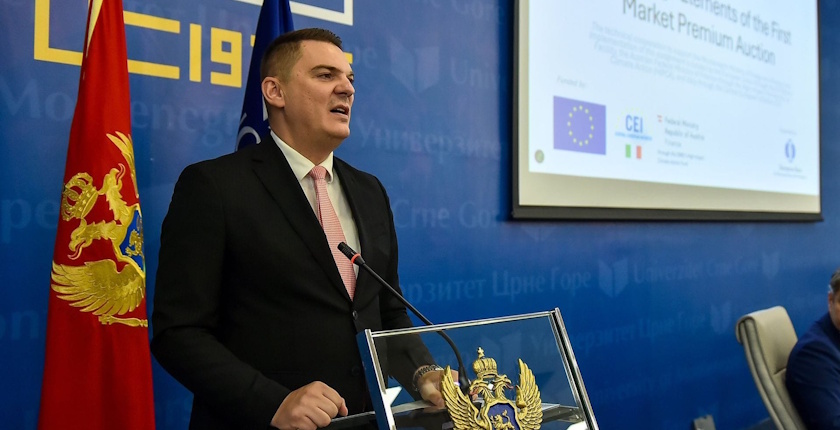
A model for Montenegro’s first auction for market premiums for solar power was outlined at an event in the capital Podgorica. The new legal framework for the green energy transition includes guarantees of origin, citizen energy communities and streamlined permitting. Stakeholders will be able to participate with their comments and suggestions in the renewables auction design.

The Ministry of Energy and Mining of Montenegro organized a conference today to present the key design elements of the first market premium auction for renewables. The competitive bidding process for wind and solar power is part of the reform agenda within the European Union’s Growth Plan for the Western Balkans.

The country’s new legal framework includes guarantees of origin, citizen energy communities and simplified permitting aimed at facilitating investment. They were defined with the new laws on energy and renewables.

The ministry said the first auction would be for photovoltaics. Solar power is the segment with the greatest potential and the lowest share in domestic electricity production, it explained.

EBRD’s Zakaria: First auction should match market needs

The Head of Montenegro in the European Bank for Reconstruction and Development (EBRD) Remon Zakaria urged stakeholders to send their comments and suggestions. The design of the first auction should match the needs of the market as much as possible, he argued.

EBRD participated in drafting the model. The ministry also thanked the Ministry of Finance of Austria, Central European Initiative (CEI) and other partners for their assistance.

At the event in Podgorica, a team of experts presented the technical matters concerning the upcoming auction.

Montenegro to boost renewables’ share in electricity output to 70% by 2030

This is not just the beginning of a technical process – it is a strategic leap, according to Minister of Energy and Mining Admir Šahmanović. He pointed out that Montenegro is transitioning from state incentives to a market-based support model, saying it aligns with the best European practices.

“We know our ambitions and goals for 2030 – a 50% share of renewable energy sources in final consumption and 70% of electricity to be produced from renewable sources. They are indeed demanding targets, but reachable – especially with support from international partners and the private sector,” Šahmanović added.

Montenegro has demanding, but achievable green energy targets, Minister Admir Šahmanović said

Montenegro doesn’t see itself isolated in its energy future but as an integral part of the European market, the minister asserted. With the forthcoming auction, the country is sending a clear message that it is ready for the next steps in the green transition, in his view.

The government is committed to decarbonization, digitalization and preparations for the European Union’s instruments like the emissions trading system (ETS) and Carbon Border Adjustment Mechanism (CBAM), Šahmanović underscored.

“We don’t see this process as a political goal – but as an economic opportunity and social imperative,” the minister said.

by in News

BESS factory of 1.5 GWh per year opening near Sofia in Bulgaria

International Power Supply (IPS), a Bulgarian manufacturer of battery energy storage systems, is about to launch operations at its new facility near Sofia. Its latest model has 8.2 MWh and fits into a standard container. The company plans to double the factory’s annual capacity to 3 GWh already by the end of the year.

IPS, headquartered in Sofia, is automating and scaling its production of battery energy storage systems (BESS). It is counting on growing demand in Europe, including the domestic market. The company already has orders for 7 GWh for the next three years, Chief Executive Officer Alexander Rangelov told the Kapital news website.

The systems in the new X-BESS line have 8.2 MWh in capacity, fitting into a standard TEU container of 20 feet (6.1 meters). Each consists of seven liquid-cooled modules of 1.17 MWh. The model has inverters of 4 MW, translating to a two-hour duration.

Serial production is about to begin in the Hemus high-tech industrial park near Bulgaria’s capital city. Initially, the annual capacity would be 1.5 GWh, but IPS aims to double it already by the end of the year.

IPS plans another, fully robotic factory

X-BESS started three years ago with a 6.5 MWh version. IPS is currently fulfilling contracts for 670 MWh for projects funded through the country’s National Recovery and Resilience Plan (NRRP or, in Bulgarian, PVU). The company also applied for EUR 150 million from the European Union’s Innovation Fund, for a fully robotic 5 GWh factory.

The majority owner of IPS, with 65.5%, is Power Technology Investment Group. It is controlled by the family of the founder Stoil Rangelov Trifonov. SIL Energy Invest has 31.5%. The Capital Investments Fund (CIFund) of the Bulgarian Development Bank holds the remaining 3%.

X-BESS includes a battery management system developed by IPS

The company mainly uses European parts and the lithium-iron-phosphate (LFP) battery cells are from China. The battery management system (BMS) is proprietary. The project pipeline includes a 5 MW rooftop solar power plant for the new factory, combined with own batteries.

IPS is looking for a strategic partner for further expansion.

Just ten days ago, a BESS facility of 124.1 MW – 496.4 MWh was inaugurated in Lovech in Bulgaria. The Ministry of Energy said it is the biggest in the European Union.

Deal with NEK for BESS at Vacha 1 hydroelectric plant

In consortium with GBS Energy Solutions, IPS recently won a tender for equipping the Vacha 1 hydropower plant with BESS. It is a pilot project of state-owned National Electricity Co. (NEK), which has several such investments underway.

The deal is for a system of at least 5 MW in capability and 10 MWh in capacity. The minimum round-trip efficiency is 85%. At 365 cycles per year, the contractors guarantee at least 60 GWh within the duration the 15-year arrangement. They won the job, which includes maintenance, with a bid of EUR 3.4 million.

NEK is also planning another pumped storage hydropower plant at the Vacha dam

Notably, Minister of Energy Zhecho Stankov said last week that NEK sent applications to the European Commission for four pumped storage hydropower projects. Initially, two facilities were planned, at the Batak and Dospat sites. Stankov revealed there would be two systems at Dospat.

The fourth new pumped storage hydroelectric plant is planned near Ravnogor, he said. The village is right next to Vacha 1 and the existing Orphey pumped storage system. The proposed facility would have some 800 MW in capacity, similar to Chaira, according to Stankov. The three existing pumped storage hydropower plants and the sites for the four projects are all in the Rhodope mountains in the south.

by in News

Western Balkans urged to step up just transition measures

In its new guidelines for the just transition, the Energy Community Secretariat highlighted the lack of policies and measures in its contracting parties in the Western Balkans. The concept implies incorporating a people-centred and regionally tailored approach, in national energy and climate planning, to phasing out fossil fuels while providing targeted support to those most affected. Just transition plans can help attract investments.

The Energy Community Secretariat published the Policy Guidelines on Just Transition as part of integrated energy and climate planning. It aims to assist the contracting parties in aligning with their legal obligations. The international organization called on them to adopt dedicated just transition plans (JTPs) or roadmaps, matching their national energy and climate plans (NECPs). The criticism of the Western Balkans mostly concerns the lack of policies and measures in the NECPs.

Of note, Serbia issued its draft Just Transition Action Plan last month. The World Bank approved a EUR 79.9 million loan and a EUR 2.89 million grant for the purpose, to the Federation of Bosnia and Herzegovina, one of the two entities constituting BiH.

Signing the Sofia Declaration in 2020, the Western Balkans committed to decarbonizing their economies to net zero by 2050

The secretariat recommended that the contracting parties improve their reporting on the matter as well. The just transition is a people-centred and regionally tailored approach to phasing out fossil fuels while providing targeted support to those most affected by the process, it pointed out.

In the Sofia Declaration on the Green Agenda for the Western Balkans, adopted in 2020, six contracting parties in the region committed to decarbonizing their economies and the 2050 climate neutrality objective.

A just transition implies support to affected workers and communities, addressing energy poverty, promoting inclusive governance, and ensuring fair access to the benefits of the transition, according to the guidelines. The economies would need to switch to clean, secure and affordable energy for all, the document notes.

Average coal power plant is almost five decades old

In most contracting parties, coal-based electricity generation is still dominant, characterised by low efficiency and high levels of emissions of carbon dioxide and pollutants.

Coal plants in the Western Balkans are between 34 and 67 years old, with an average age of 46 years in 2023. It entails risks to the security of electricity supply, the Energy Community Secretariat warned.

For comparison, it provided an overview of the situation in the European Union. The authors noted that Romania has no national JTP, but that it developed six territorial just transition plans or TJTPs. They cover the coal regions of Hunedoara, Gorj, Dolj, Galați, Prahova and Mureș.

Due to the insufficient level of integration of just transition in NECPs and the decision by many Energy Community contracting parties to create separate policies and measures in the form of just transition plans, the secretariat recommends that they develop them replicating the structure and content of TJTPs and base them on lessons learnt from European Union member states.

Authorities should support firms, job creation, equal opportunities

JTPs should be based on a granular identification of territories most impacted by decarbonisation, supported by thorough socio-economic and environmental impact assessments.

According to the guidelines, decision makers should support economic stakeholders such as micro, small and medium-sized enterprises and startups. It applies to the creation of firms, too, including through business incubators and consulting services. Workers and jobseekers need upskilling, reskilling and training, the update reads.

Women’s labour market participation and entrepreneurship, as well as equal pay, play an important role in ensuring equal opportunities

Women’s labour market participation and entrepreneurship, as well as equal pay, play an important role in ensuring equal opportunities, the document adds.

“Although no dedicated financing is currently available solely for just transition in the Energy Community, the preparation of comprehensive and credible just transition plans can significantly increase the chances of mobilising both public and private funding in the future. Just transition plans can serve as strategic investment roadmaps,” the authors of the guidelines underscored.