by in News

Athens International Airport builds biggest photovoltaic-BESS plant

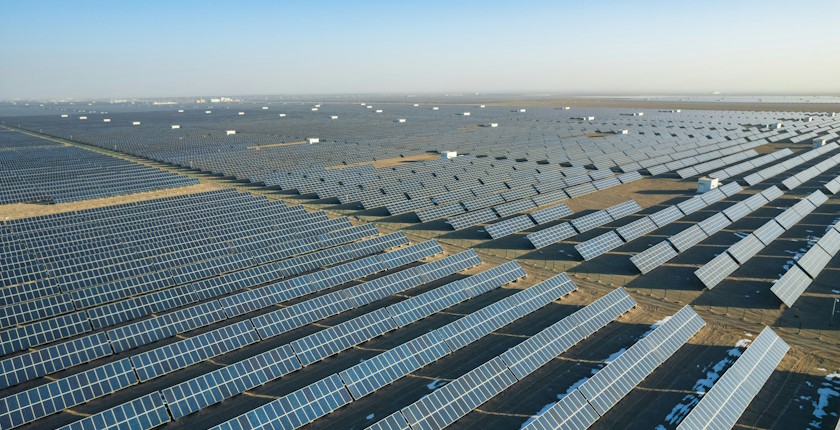
Athens International Airport (AIA) Eleftherios Venizelos completed its comprehensive energy makeover program. It is now operating a photovoltaic facility of 51.5 MW and a battery energy storage system of 82 MWh. It is the largest hybrid power plant of its kind within the premises of any airport in Europe and, reportedly, even the entire world.

At the same time, the Bucharest Henri Coandă International Airport is about to build 12.6 MW in peak PV capacity and a BESS of 17.9 MWh, in the first phase of a larger project.

Following European and global trends, airports in Southeastern Europe are introducing resource, waste and wastewater management systems. Energy is the largest segment of the decarbonization push. With the completion of its Route 2025 program, Athens International Airport Eleftherios Venizelos covered all its electricity needs with photovoltaics, becoming the only such airport in Europe.

In the groundbreaking project, the operator extended the existing solar power plant by 35.5 MW in peak capacity, reaching 51.5 MW, and added a battery energy storage system. The facility has 124 MWh in nominal capacity, of which 82 MWh is usable.

The hybrid system is the largest of its kind inside the fence of any airport in Europe, while the Greek press has even called it the largest in the world. Some of the world’s largest airports are set to follow soon. For instance, IGA Istanbul Airport is investing EUR 212 million in an external solar power plant of 199.3 MW, in Eskişehir.
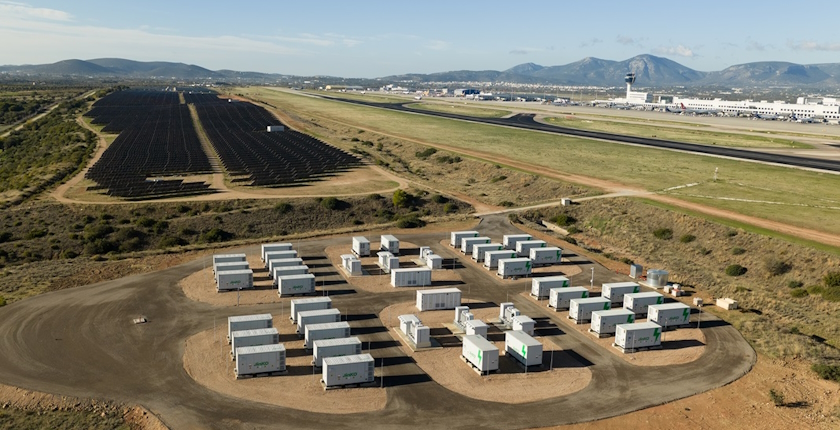
Athens International Airport builds biggest photovoltaic BESS plant
Photo: Athens International Airport

Hybrid power plant to keep Athens International Airport at net zero through 2046

AIA’s PV-BESS plant will generate an estimated 88 GWh per year, which is equivalent to the consumption of 22,000 households. The storage system is only for self-consumption. Importantly, the hybrid system can cover the entire planned expansion up to 2046, when the concession period ends.

AviAlliance, which controls 50.2% of the public-private partnership, is a wholly-owned subsidiary of Public Sector Pension Investment Board (PSP Investments) from Canada. The government holds 25.6% through Superfund, officially Growthfund – The National Fund of Greece.

AIA launched Route 2025 six years ago, with the aim to cut net greenhouse gas emissions to zero by the end of this year. It compares to the 2050 net zero goal of the European airports sector.

The Route 2025 program was worth EUR 70 million

The investments totaled EUR 70 million. A significant portion was financed through loans from the European Union’s Recovery and Resilience Facility (RRF), the update adds.

Heat pumps have eliminated the need for natural gas in buildings at AIA in normal winter conditions. The electric vehicle fleet consists of 19 buses, 13 follow-me vehicles and 29 vans. A network of chargers also serves passenger cars.

“In the airport company, we operate on the basis of the principle that sustainability, and environmental responsibility in particular, are and will increasingly be prerequisites for what we call the social license to operate and grow,” said outgoing Managing Director of AIA Yiannis Paraschis.

Two airports in Romania receive EU funds for solar-BESS projects

As for other recent developments in the Balkans, operators of two airports in Romania received grants via the European Union’s Modernisation Fund for solar power plants with battery storage.

National Company Bucharest Airports (CNAB) signed a contract for RON 132.04 million (EUR 25.9 million) excluding value-added tax. It is for 12.6 MW in peak PV capacity and a BESS of 17.9 MWh at the Bucharest Henri Coandă International Airport in Otopeni.

The entire investment amounts to RON 176.9 million (EUR 34.7 million) excluding VAT. The Romanian state-owned company said it is the first phase of a project for 31.5 MW and 30 MWh overall, valued at EUR 55.7 million.

Bacău International Airport George Enescu will build a solar power plant of 1.25 MW and a BESS of 2.06 MWh. Bacău County Council will also provide support for the on-site project on 2.2 hectares, worth more than EUR 4.9 million.
by in News

OMV Petrom, CE Oltenia building solar parks of 550 MW in total

Coal land of Romanian state-owned CE Oltenia is undergoing transformation with the beginning of construction of four photovoltaic plants. The projects, which the company is conducting with OMV Petrom, are for 550 MW in combined capacity. In a separate partnership, with Tinmar Energy, 280 MW more is in development.

Almost four years after the European Union approved the grants from the Modernisation Fund and the start of negotiations between Complexul Energetic Oltenia (CE Oltenia) and OMV Petrom about a partnership, their four solar power projects of 550 MW in total peak capacity reached the construction phase. They would cover the equivalent of an estimated 410,000 Romanian households’ annual consumption, the update adds.

The largest integrated energy company in Southeastern Europe and Romania’s main coal power producer are building the photovoltaic systems in Ișalnița, Tismana, and Rovinari in the coal region in the counties of Dolj and Gorj. CE Oltenia and OMV Petrom expect the facilities to become operational next year.

OMV Petrom, CE Oltenia partnership receives first tranche of EU funding

Total investment is over EUR 400 million, with 70% financed through the Modernisation Fund. There are four joint ventures, in which the partners hold 50% each. Just this month, they received the first EUR 16 million, the announcement reveals.

The locations are on CE Oltenia’s coal land. They are aimed at partly substituting the power plants there, as Romania is heading for a coal exit by 2032.

“Through these projects, OMV Petrom reaffirms its commitment to a low-carbon energy future, contributing to Romania’s and the EU’s climate objectives. We are transforming a region with a long-standing tradition in coal-based energy into a renewable energy hub,” said Franck Neel, member of OMV Petrom’s Executive Board responsible for Gas and Power.

Ameresco and Sunel won three contracts together, and Turkey-based Girişim is in charge of the fourth one

Following tenders, contractors for the design and execution were picked in April. The consortium of United States–based Ameresco and Sunel is tasked with the projects Rovinari Est, Tismana 1, and Tismana 2. The latter company is registered in the United Kingdom, but its operational headquarters are in Athens, Greece. The capacity amounts to 460 MW.

Turkish company Girişim Elektrik is in charge of the fourth endeavor. The site is a slag deposit at the CE Ișalnița coal-fired power plant. Per earlier documentation, the contractors will operate the solar power systems for three years and transfer them to the owners.

Coal miners becoming PV installers

OMV Petrom said it is supporting the RenewAcad program in the nearby city of Târgu Jiu, where CE Oltenia is seated.

In the past two years, over 200 mining technicians have been retrained as photovoltaic system installers. The initiative is part of a broader effort. It involved training over 10,000 professionals for Romania’s energy transition, the company added.

Another 280 MW of solar power is in pipeline

CE Oltenia, also known as CEO, runs another four PV projects totaling 280 MW in planned peak capacity with its partner Tinmar Energy. They received 13 bids and the procedure is ongoing.

The partnership model is the same, and so is the share of investment that the Modernisation Fund covers. The locations are slag and ash deposits at coal plants Rovinari and Turceni, and external dumps Pinoasa and Bohorelu.

The fifth partnership between CE Oltenia and Tinmar is for a CCGT (combined-cycle gas turbine) power plant of 475 MW in Turceni. It is suffering heavy delays. The Modernisation Fund has approved a grant for 50% of the investment.

by in News

From construction waste to circular economy: how STRABAG drives green transition

Today, the construction industry is at the crossroads between tradition and transformation. Accounting for approximately 40% of the global energy consumption and for more than 35% of the overall CO₂ emissions, this sector has a huge potential, as well as a responsibility to become one of the key leaders of change in environmental protection. It is this change where STRABAG in Serbia recognises its task and opportunity: through recycling and reuse of materials, solar energy consumption, electric vehicles and digital innovation, the company demonstrates that sustainability can be an integral part of every construction phase.

Acting responsibly, objectively and ethically, STRABAG operates in accordance with the highest integrity standards. Aiming to expand business operations to new areas, they develop innovative and creative approaches within defined frameworks, utilising resources regionally, purposefully and efficiently. Their goal is to become the market leader via automation and adoption of new technologies, while pledging to achieve climate neutrality and CO₂ emission reduction.

Circular economy in practice: second life of materials

Construction waste is no longer and must not be the end of a process, but the start of a new cycle. For instance, concrete that used to end up at a landfill is now treated as a valuable resource: after separating reinforced elements and crushing, the material is reused in construction, as an aggregate for bases, foundations or access roads. This reduces the need for exploiting natural resources, the volume of waste at landfills and CO₂ emissions resulting from transport and production of new materials. The approach confirms that the construction industry can be a generator of a circular economy, rather than just its observer.

By recycling materials, STRABAG enhances processes and rationalises costs, while setting a new benchmark in responsible resource management, thus following its strategic goal of transforming every construction site into a part of a closed, sustainable construction cycle by 2040.

“Our objective is to turn every tonne of waste into a resource in the next project – that is the essence of the circular approach,” STRABAG’s representatives say.

Solar energy and electric mobility: construction sites of the future

In line with STRABAG’s Work On Progress strategy and aiming to become climate neutral by 2040, the company is introducing photovoltaic (PV) panels at its facilities, construction sites and logistics and asphalt bases in Serbia. Solar systems enable a reduction of power consumption from the grid, as well as of CO₂ emissions, thus directly contributing to the company’s global objective.

Green transition also includes the transport segment. STRABAG is modernising its vehicle fleet and introducing e-vehicles and new-generation construction machinery, decreasing its fossil fuel consumption and overall carbon footprint. By combining solar energy sources and electric mobility, construction sites become self-sustainable, with more environmentally responsible and technologically advanced daily operations.

Digital tools – less paper, more efficiency

Not only does digital transformation in STRABAG represent the implementation of new technologies, but it also changes the method of managing each segment of a construction site. By introducing the SSO (Smart Site One) application, the process of planning, monitoring and optimising operations is fully digitalised, from asphalt transport to final installation phases. The app connects people, machinery and processes in real time, thus eliminating downtime, increasing efficiency and reducing fuel consumption and waste.

Furthermore, the company has developed the 5S application (based on the 5S principles – sort, set in order, shine, standardise, sustain), aimed at monitoring order, safety and implementation of the LEAN methods at construction sites. This digital tool enables daily on-site status monitoring, design of automatic reports in order to reduce the risk of injuries, for orderly construction sites with optimal resource use, while additional values: 6S (safety), 7S (team spirit) and 8S (sustainability), facilitate further the culture of safety, team spirit and environmental awareness.

With these applications, STRABAG connects digitalisation and sustainability, showcasing that modern construction can simultaneously be precise, efficient and environmentally responsible.

Journey to climate neutrality

STRABAG in Serbia is implementing an ambitious plan, harmonised with its global ESG strategy and climate neutrality goals. The focus is both on technological innovation and systemic change in the method of construction, use of resources and day-to-day operations.

Key objectives set by the company include the following:

  • 50% of recycled materials in construction processes by 2030
  • CO₂ emission reduction of 42% per project by 2030
  • Fully electric or hybrid vehicle fleet by 2035

Besides technical and infrastructure measures, STRABAG continuously invests in employee education via LEAN and sustainability training courses (training in environmental protection), promoting the principles of sustainable construction, energy efficiency and responsible resource management. As a result, sustainability within the company goes beyond restrictions of individual initiatives, becoming a part of the corporate culture and mindset in every segment of operations.

STRABAG’s sustainability story is more than a series of projects – it is a long-term strategy that changes the future perspective of the construction sector.

“Sustainability is not a trend, but a new foundation of quality. What we are building today must last for the generations to come,” STRABAG’s representatives concluded.

by in News

Serbia is first Energy Community contracting party to enter verification phase of market coupling

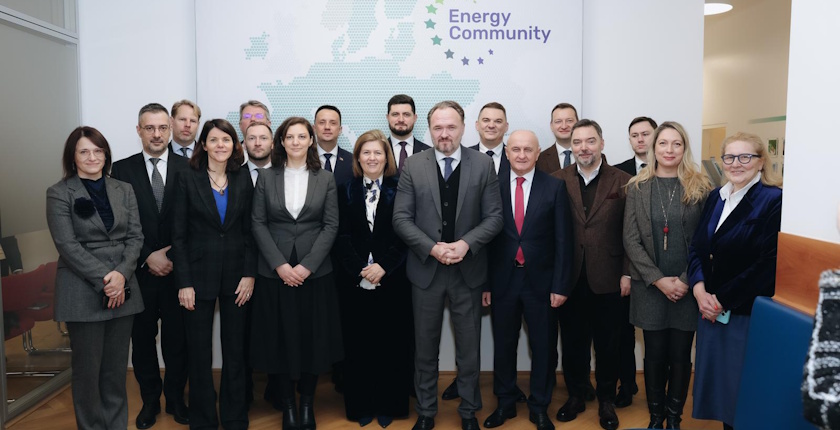
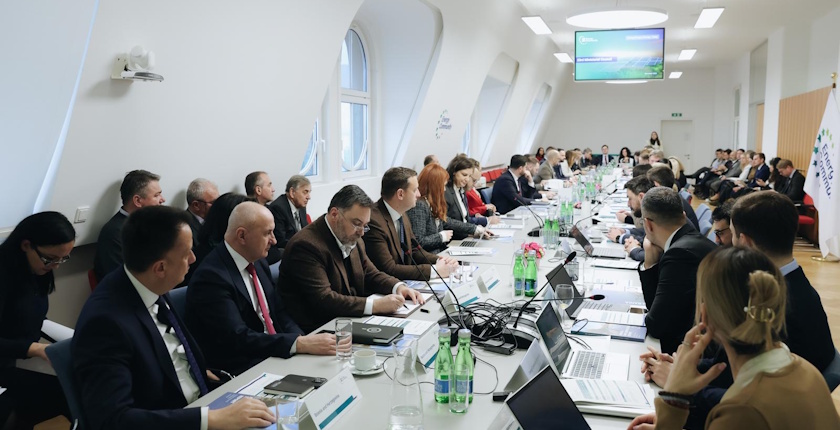
Serbia is the first Energy Community contracting party to enter the verification phase of the market coupling procedure, the Energy Community Secretariat said after the annual meeting of the Ministerial Council in Vienna.

At the Energy Community Ministerial Council, ministers addressed energy security, market integration, climate policy, and environmental protection, confirming a shared EU–contracting parties direction for Europe’s energy future, according to the secretariat.

Ministers and representatives of the secretariat also discussed the amendments to the Carbon Border Adjustment Mechanism’s regulation revealed by the European Commission yesterday. The meeting was attended by European Commissioner for Energy Dan Jørgensen.

The secretariat underlined that several contracting parties are now approaching a decisive stage in electricity market integration ahead of accession, having fully or nearly transposed the Electricity Integration Package (EIP).

The two-step verification phase for Serbia kicked off on October 22

Subject to verification of compliance by the European Commission, this progress opens the door to electricity market coupling with the EU internal market ahead of accession, it added.

“Serbia has already entered the verification phase, while Moldova has fully transposed the package. In this context, ministers underlined that the CBAM, entering into force in January,  should not pose an issue for cross-border electricity trade,” the update reads.

eu region ministerial council 2025 meeting
Photo: Energy Community Secretariat

Full electricity market integration ahead of accession offers a clear pathway to safeguarding decarbonization gains, supporting fair and efficient cross-border electricity exchanges, and attracting clean energy investment, according to the secretariat.

The two-step verification phase for Serbia kicked off on October 22. The first step is the verification by the secretariat, and the second by the commission.

The secretariat must complete the verification within three months, by January 22. The process is in the final stage, Balkan Green Energy News has learned.

The European Commission has five months to do its part

Once this is finished, the commission has five months to do its part. If the commission’s verification is positive, Serbia could meet the end-July deadline to apply for market coupling. The next phase involves technical activities, and it lasts 18 months.

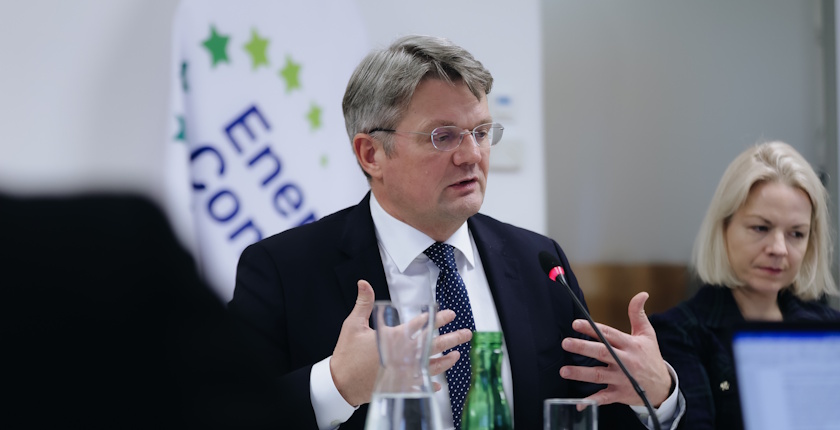
“We are very deep in the process of verifying what Serbia has adopted. Now we are about to start this process for Moldova. And soon, I hope, after the remaining elements of the legislative package are adopted by Montenegro and North Macedonia, the verification can start in these two cases,” stressed Artur Lorkowski, Director of the Energy Community Secretariat.

He added that it has taken two decades of cooperation to build the momentum toward market coupling that ministers today have consolidated.

Lorkowski: The voice of the Energy Community ministers on CBAM has been heard by the commission

eu region ministerial council 2025 artur lorkowski
Artur Lorkowski (photo: Energy Community Secretariat)

Regarding the European Commission’s amendments to the CBAM regulation, he recalled that, on behalf of the ministers, the secretariat has sent a list of 11 different issues that needed to be addressed.

“The voice of the Energy Community ministers has been heard by the commission, and the progress which has been made in the contracting parties has been recognized. We see that in different amendments which are proposed. The proposal is going in a good direction. If you ask me whether this is satisfactory and whether it solves all of the problems, no, for two reasons,” he underscored.

The first reason is that it requires time, and the damage will be done from January 1, 2026, when the CBAM implementation starts.

Jørgensen: A lot of progress has happened

“We already see that, for example, the allocations of the cross-border power lines between the contracting parties and the EU member states for next year are dropping significantly,” Lorkowski explained.

The second reason is the issue of completeness. “We are still not certain whether, for example, renewables in the contracting parties can be treated equally as those in the EU,” he said, and added that the secretariat is in communication with the commission on these issues.

According to European Commissioner for Energy Dan Jørgensen, it is clear that a lot of progress has been made in what will hopefully be future EU member states or neighbors, especially in the transposition of EU energy law.

Focus on four issues

According to the secretariat, the ministers further committed to advancing a coherent and predictable framework to sustain electricity market integration while creating the enabling conditions for the clean energy transition.

The secretariat highlighted four issues.

First, contracting parties will individually pursue national carbon pricing models according to their domestic circumstances, while work continues to explore coordination possibilities and ensure coherence between national carbon pricing systems in view of their gradual alignment with the EU ETS.

Second, the Energy Community framework will further incorporate core EU legislation on nature conservation, biodiversity, and water protection into the Energy Community Treaty.

Third, to keep momentum behind the rapid growth of renewables, the contracting parties will step up efforts to secure mutual recognition of guarantees of origin with the EU.

Finally, effective coordination and implementation of national energy and climate plans (NECPs) is critical, participants agreed.

The EU’s recent agreement on the 2040 climate targets sets a clear direction, and contracting parties must follow this pathway as they develop their long-term energy and climate policies, the update reads.

by in News

European Commission proposes easing 2035 car emissions rules

The European Commission has proposed a new Automotive Package that aims to give carmakers greater flexibility in meeting emissions reduction requirements. The new rules would lower the emissions cut target from 100% to 90%, allowing the sale of hybrid and internal combustion vehicles after 2035.

From 2035 onwards, carmakers will need to comply with a 90% emissions reduction target, while the remaining 10% emissions will need to be compensated through the use of low-carbon steel produced in the European Union, or from e-fuels and biofuels, according to a press release from the commission.

“This will allow for plug-in hybrids (PHEV), range extenders, mild hybrids, and internal combustion engine vehicles to still play a role beyond 2035, in addition to full electric (EVs) and hydrogen vehicles,” reads the announcement.

Carmakers will be incentivized to produce affordable EVs

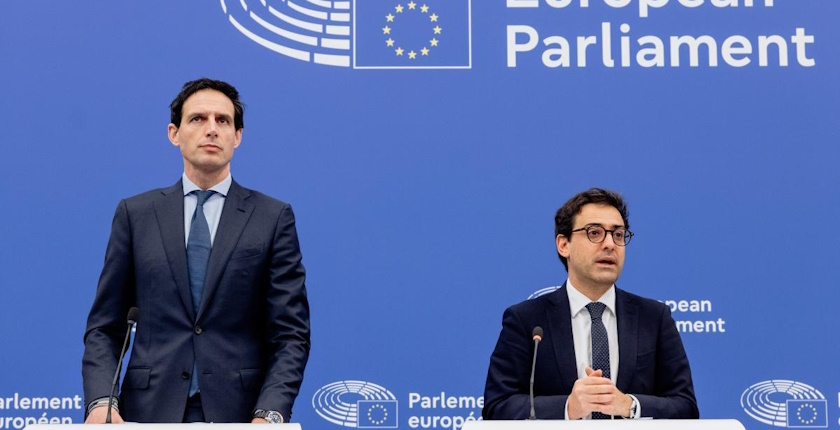
The commission is also proposing “super credits” to incentivize carmakers to produce small, affordable electric cars made in the European Union. This measure would be in place until 2035.

Hoekstra: The EU is staying the course towards zero-emissions mobility

European Climate Action Commissioner Wopke Hoekstra has said the EU is staying the course towards zero-emissions mobility, but introducing some flexibilities for manufacturers to meet their CO2 targets in the most cost-efficient way.

The move comes amid pressure from car manufacturers, who claim their business is threatened by competition from China and the United States, according to reports.

The move comes amid pressure from European carmakers

Several EU member states – Germany, Italy, Bulgaria, the Czech Republic, Hungary, Poland, and Slovakia – say their automakers are struggling with high energy prices, a shortage of components, including batteries, and weak demand for electric vehicles.

The proposal includes a EUR 1.8 billion package to help develop a fully EU-made battery value chain and tackle competition from outside the bloc. As part of the accompanying Battery Booster package, EUR 1.5 billion will be disbursed in interest-free loans to European battery manufacturers, according to the press release.

by in News

CBAM tests market integration and green investments

Author: Zoran Gjorgjievski, CEO of North Macedonia’s National Electricity Market Operator MEMO

This text reflects a personal viewpoint and represents an attempt to present the Macedonian position in an argument-based manner — with respect for European objectives, but also with a clear message that the implementation of CBAM must be just, proportionate, and based on clearly defined implementation phases.

The Carbon Border Adjustment Mechanism (CBAM), which is scheduled to enter into force on 1 January 2026, represents one of the most ambitious instruments within the European climate package. Its objective – to create a level playing field between industries within the European Union and those outside the Union – is, at a theoretical level, justified and logical. However, the application of CBAM to electricity in regions such as ours, where market and regulatory conditions are still transforming, raises serious risks and challenges that deserve careful assessment. This is particularly relevant given the increased volume of investments in renewable energy sources (RES) recorded in recent years, accompanied by ambitious plans for their further expansion through active institutional support.

For Macedonia, which has invested significant efforts in the development of an organized electricity market – currently operating at the day-ahead level and, as of next year, also at the intraday level – as well as in its gradual integration with the single European market, the application of CBAM may create structural imbalances.

Changes in the structure of electricity generation and price formation on European markets in recent years indicate high volatility, which is even more pronounced in markets of a similar size to ours, primarily due to limited liquidity and the specific characteristics of the generation mix. The introduction of an additional carbon component, based on indirect verification methodologies, may introduce further unpredictability and reduce the competitiveness of domestic RES producers.

At the same time, subjecting exports to CBAM could create pressure during hours of low consumption and increased RES production – periods in which the majority of electricity exports from our country are concentrated. This could lead to a paradoxical situation in which RES producers are forced to curtail or suspend production in order to avoid imbalance costs.

Risks for the organized electricity market

Although initial analyses suggest that an increase in trading volumes on the day-ahead market may be expected in the short term, the inability to place total production through the organized market will encourage market participants to seek alternative channels. This carries the potential to undermine the development of a transparent and competitive market and to reduce trading liquidity.

For a young market like ours, which has recorded significant liquidity growth of over 40% and a record number of active participants in just the past year, this could represent a real slowdown of its development momentum.

The energy crisis of the 2021–2023 period clearly demonstrated that security of supply and price stability cannot be ensured without functional, liquid, and investment-attractive electricity markets. Under such conditions, the application of CBAM to electricity, without taking into account the specific characteristics of organized markets in non-EU countries, may produce the opposite effect: reduced liquidity, increased uncertainty, and delayed investments in renewable energy.

Differing speeds of two interrelated mechanisms – market coupling and CBAM – call into question the integration of electricity markets

This is particularly important given that regional integration into the single European market has been slowed by a number of objective and subjective factors, both in the Energy Community Contracting Parties and within the EU itself, and cannot proceed at the same pace as the implementation of CBAM. These differing speeds of two interrelated mechanisms – market coupling and CBAM – call into question the very rationale of the Energy Community, namely the integration of electricity markets.

It thus becomes evident that introducing CBAM without adequate progress in market integration with the EU creates a structural imbalance, whereby Energy Community countries incur additional costs without fully benefiting from an integrated market. Therefore, accelerating market coupling and aligning the start of CBAM implementation accordingly is a key prerequisite for mitigating the economic and investment impacts of CBAM.

Potential slowdown of renewable energy investments

Although CBAM is theoretically intended to stimulate green investments, in practice, there is a risk that it could have the opposite effect on already implemented projects, primarily due to the seasonal and daily characteristics of RES generation and the limited capacities for electricity storage.

A premature and insufficiently calibrated introduction of CBAM for electricity may create a perception of increased regulatory risk

This situation may place serious pressure on the financing sources of RES projects, exposing them to increased credit risk, especially in cases where expected returns on investment (ROI) are brought into question due to CBAM-related effects. This analysis does not even address the distorted investment expectations created during the energy crisis, when extreme electricity price growth further skewed investment projections.

Furthermore, Macedonia’s energy transition largely depends on private capital and strategic investors, who expect a stable, predictable, and competitive market environment. A premature and insufficiently calibrated introduction of CBAM for electricity exports by the EU may create a perception of increased regulatory risk, which could result in the postponement or redirection of investments to other markets.

Need for a transitional period and regional coordination

Despite the challenges outlined above, it is important to emphasize that Macedonia supports the objectives of European decarbonization and is already making substantial efforts to align with EU policies. What is essential is the provision of an appropriate transitional period, aligned with the pace of integration into the single European market.

Such a transitional period would allow the domestic industry and the energy sector to adapt gradually, without compromising already established market instruments and ongoing investments.

The regional context is equally important. The electricity systems of the Western Balkans are highly interconnected, and the risk of destabilization in one country can easily spill over into others. Therefore, it is necessary for the European Commission to consider a model that rewards reforms, supports the gradual phase-out of coal, and enables the integration of electricity markets without creating new barriers.

Where is the market headed?

Although CBAM has a clear climate and economic rationale, the question remains whether its application at this point in time is aligned with the realities in the countries of the Energy Community.

Macedonia demonstrates a clear commitment: market liquidity is increasing, renewable energy sources are developing dynamically, and concrete steps are being taken toward market coupling with the EU. Excessive rigidity in the application of CBAM could undermine this positive trajectory.

by in News

KEK seeks contractor for 100 MW solar power project near Prishtina

Government-controlled Kosovo Energy Corp. (KEK) launched the prequalifications call for its Solar4Kosovo photovoltaic project. The area is in the municipalities of Obiliq (Obilić) and Fushë Kosovë (Kosovo Polje), northwest of Prishtina.

After more than four years of planning the project, KEK is receiving applications for the design and construction of its first solar power plant, on a former coal ash dump. The government-owned power utility operates coal plants Kosovo A and Kosovo B, which account for some 90% of domestic electricity.

The location for the first part of the Solar4Kosovo project is in the municipalities of Obiliq (Obilić) and Fushë Kosovë (Kosovo Polje). The area, northwest of Prishtina, is in the Sitnica river valley, near Kosovo A.

The facility is planned for a grid connection of at least 100 MW. It translates to 120 MW in peak capacity, according to earlier updates. It would be the biggest PV plant in Kosovo*.

KEK is receiving prequalification bids until January 22, within the process of selecting contractors for the project. Companies apply through the exficon (exfitender) platform. Three months ago, the utility said agricultural activities on the designated land weren’t allowed anymore.

KEK obtained EUR 32 million EU grant

The financing for the Solar4Kosovo facility is part of the European Union’s Economic and Investment Plan for the Western Balkans of EUR 9 billion in grants. The package is aimed at mobilizing a total of EUR 30 billion.

The European Investment Bank is providing a EUR 33 million loan. The EU has approved a EUR 32 million grant via its Western Balkans Investment Framework (WBIF), while Germany’s KfW Development Bank is lending EUR 29 million to KEK. The investment was earlier estimated at EUR 107 million overall.

Annual output estimated at 169 GWh

The proposed solar power plant is expected to produce 169 GWh per year. It would have an underground connection to the existing substation at the Kosovo A thermal power plant.

The other part of the Solar4Kosovo project is for a solar thermal facility of 30 MW for the capital city’s district heating system. The site is in the village of Shkabaj (Orlović) in Obiliq municipality. Another segment of the investment is for a further network extension of 20 MW with supply from Kosovo B.

* This designation is without prejudice to positions onstatus and is in line with UNSCR 1244/99 and the ICJ Opinion on the Kosovo declaration of independence.
by in News

EU simplifying CBAM exemption for electricity, improving emissions calculation

The European Union is further simplifying the Carbon Border Adjustment Mechanism (CBAM), but with stricter oversight and an extension to 180 steel- and aluminium-intensive downstream products. From January 1, importers of designated goods and commodities will be paying the emissions tax.

Among the novelties, countries in the Energy Community that transposed the relevant EU regulations are getting an opportunity for exemptions for CBAM for electricity earlier than initially planned. The new legislation is tackling the hurdles for electricity transit as well. The calculation of emissions on national levels in the same sector is becoming more favorable for the payers of the cross-border CO2 tax. There is even a possibility, in theory for now, to declare the actual emissions level, which would suit renewable energy producers.

In response to feedback from industrial producers and other stakeholders, the European Commission proposed measures to prevent circumvention of CBAM and strengthen its efficacy. The next step is to expand it to 180 manufactured products with high steel or aluminum content, 79% on average. The list mostly consists of machinery and hardware, and 6% of the items are household appliances.

From January 1, importers will be paying a carbon price within the Carbon Border Adjustment Mechanism, which is tied to the Emissions Trading System (EU ETS). It concerns aluminum, cement, electricity, iron and steel, hydrogen and fertilizers, and the expenses will spill over to their suppliers in third countries such as the Western Balkans and Turkey.

The charge for downstream products is planned to be rolled out in January 2028.

Striving for level playing field

The system gradually levels the field, by the beginning 2034, with producers of the same goods and commodities in the EU. The measures are introduced in the form of delegated and implementing acts. They enter into force if other institutions responsible for them, like the European Parliament, don’t block them.

Hoekstra: Our system was too broad, too clunky and had too many loopholes.

“CBAM makes sure there is a level playing field – that we’re not asking anything more, or asking anything less for those goods that come into the EU. And in doing so, we’re rewarding investments in low carbon… We’re not going to ask anything more from others, than we’re asking from ourselves. During the CBAM transition period, we learned important lessons. Our system was too broad, too clunky and had too many loopholes,” said European Commissioner for Climate, Net Zero and Clean Growth Wopke Hoekstra.

Thoroughly against evasion

The tax level is envisaged to be proportional to an established quantity of greenhouse gases released in production. However, if the authorities notice attempts to evade the levy, they can make the process of providing evidence stricter and, in the meantime, switch to a charge under the emissions factor of the particular country of origin.

“If I had to summarize these points in a few words, I would say: a simpler CBAM, more robust in its application, and fairer in its scope,” said the European Commission’s Executive Vice-President for Prosperity and Industrial Strategy Stéphane Séjourné.

Shortcut to exemption from CBAM for electricity

One of the measures is intended for easing the administrative burden for countries in the process of electricity market coupling with the EU, namely the Energy Community contracting parties.

There is going to be a possibility to sign an MoU with the European Commission with a detailed schedule

The commission may sign a memorandum of understanding with a third country, once the commission has assessed that the country has fully transposed the electricity market acquis, the proposal reads. The document would lay down details on the timeline for the CBAM exemption, including in relation to technical work still to be carried out between transmission system operators (TSOs), and for implementing a carbon pricing instrument equivalent to the EU ETS as far as electricity generation is concerned.

Hoekstra said technical adjustments to CBAM would be made to facilitate market coupling when the relevant countries are ready.

Import tax for electricity from Energy Community to be 30% lower on average

Stakeholder feedback and the experience with the implementation of CBAM during the transitional period – before the actual charge – demonstrated that the rules for electricity imports are overly rigid, the European commissioners added. In particular, they ascertained that progress in decarbonizing electricity production isn’t sufficiently acknowledged or encouraged.

Unlike with the goods, for electricity there is a default country-specific emissions value. It is based on production from fossil fuels and a five-year average. Coal is mostly dominant in the Western Balkans, except for Albania, which has a completely green mix. In addition, the conditions which must be met to declare actual emissions of electricity have proven to be almost impossible.

The proposed package is introducing solutions for electricity transit and cross-border PPAs

In the new setting, the national value will reflect the carbon intensity of all sources of electricity. The estimated taxes in the Energy Community would be over 30% lower on average.

The procedure is being streamlined for declaring actual emissions. On the other hand, at least in the Western Balkans, there has been almost no progress in that area. The proposed package is also introducing solutions for the hurdles in electricity transit through Energy Community Contracting Parties and cross-border power purchase agreements (PPAs).

Power imports from the Western Balkans account for 1% of the EU’s demand, but their share in Croatia, Bulgaria and Greece is significant, the European Commission explained. Importantly, exports of electricity to the EU represent some 58% of Montenegro’s exports to the EU, compared to 5% for Serbia and Albania.

Funds for maintaining competitiveness of domestic industrial producers in third countries

A fund has been launched to temporarily support EU producers of CBAM goods and mitigate carbon leakage risks. It addresses the competitiveness loss in third-country markets with a weaker climate policy and lower costs. Potential beneficiaries will have to demonstrate decarbonization efforts.

Th European commission is also preparing proposals for limiting scrap aluminum exports and using more scrap metal. Furthermore, it said pre-consumer metals scrap, from manufacturing, would come under CBAM.

by in News

Energy Community: Serbia best in Western Balkans in alignment with EU regulations

Integration with the European Union is advancing in practice, and the decade ahead must sustain the momentum with focus and determination, Energy Community Secretariat Director Artur Lorkowski pointed out in this year’s Annual Implementation Report.

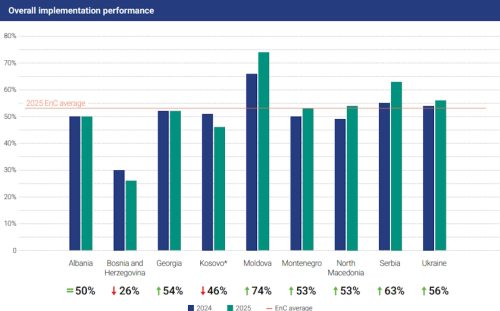
Serbia fares best in the Western Balkans, as it advanced to 63% from 55%. Bosnia and Herzegovina is at the bottom of the entire Energy Community chart, with alignment at just 26%.

Following the 2025 CBAM Readiness Tracker, the Energy Community Secretariat also published its Annual Implementation Report 2025. The international organization marked its 20th anniversary this year.

“The message from Athens was clear: integration with the European Union is advancing in practice, and the decade ahead must sustain this momentum with focus and determination. The 2025 Implementation Report reflects this direction. It shows a region taking decisive steps toward alignment with the EU acquis and strengthening the foundations required for accelerated integration. It also highlights where further effort is needed for gradual integration with the EU energy markets – completing the electricity market coupling, boosting the cross-border trade in renewables, eliminating bottlenecks for gas flows, synchronising energy infrastructure development and gradual alignment of carbon pricing mechanisms,” Energy Community Secretariat Director Artur Lorkowski stressed.

He added that electricity integration remains central. Several contracting parties completed the required transposition of the European Union’s Electricity Integration Package (EIP), while others advanced significantly.

Deadline for requests for 2028 market coupling to expire in seven months

Intensive market coupling efforts throughout 2025 by contracting parties and EU stakeholders have laid the groundwork for a compliant and sustainable integration process, according to the Annual Implementation Report. Of note, market coupling is the requirement for an exemption from the EU’s Carbon Border Adjustment Mechanism (CBAM) for electricity.

Contracting parties aiming to go live in 2028 must submit a formal request by July, the secretariat warned.

Energy Community Serbia best score Western Balkans
Photo: Energy Community Secretariat

Montenegro, North Macedonia advance slightly to match average

Five main indicators measure the integration with the EU energy markets and they are combined into an overall score. The Energy Community as a whole is at 53%.

Moldova has advanced the most in the process by far, climbing eight points from last year to reach 74%. Serbia fares best in the Western Balkans, as it advanced to 63% from 55%. It ranked the highest last year as well. Bosnia and Herzegovina is at the lowest level again. It retreated four points, to just 26%.

Montenegro and North Macedonia advanced slightly, both to 53%, to match the Energy Community average. Kosovo* has weakened to 46% while Albania remained at 50%.

At 61%, North Macedonia is in the lead in the Western Balkans in the markets and integration segment. Serbia reached the highest level in the Energy Community in energy sector decarbonization, 83%.

* This designation is without prejudice to positions onstatus and is in line with UNSCR 1244/99 and the ICJ Opinion on the Kosovo declaration of independence.
by in News

Bulgarian firm Hydrogenera gets electrolyzer order from Volkswagen

Hydrogenera will integrate its electrolyzer with a gas burner at Volkswagen Poznań’s automotive factory in western Poland with the aim of cutting the consumption of the fuel as well as related emissions by up to 30%. The produced hydrogen and oxygen would both be utilized within the system, the Bulgarian company said.

Hydrogenera, which was listed on the Bulgarian Stock Exchange (BSE) in July, is one of the few companies in Southeastern Europe designing and manufacturing proprietary equipment for cutting-edge energy technologies. Its parent company Green Innovation recently became Volkswagen’s authorised supplier and obtained the giant automotive giant’s Sustainability Rating, setting the stage for a new order.

In addition to mixing it with gas for combustion, industrial producers are gradually introducing hydrogen and electrolyzers into other processes. Collaboration is underway with Volkswagen Poznań for a hydrogen-oxygen system at the carmaker’s plant in Września, in western Poland.

Hydrogenera explained that the challenge is to enhance the combustion efficiency of a natural gas burner with 1.5 MW in nameplate capacity. The 90 kW electrolyzer would operate as a non-intrusive add-on to the existing equipment – not affecting installations, automation or safety systems, according to the update.

Oxygen produced in the electrolyzer will be utilized as well, improving combustion

Hydrogen and oxygen are supplied separately to optimize the flame. Hydrogen is mixed with natural gas directly before the burner, while oxygen is introduced into the air stream directed to the combustion chamber. It enables complete fuel combustion, minimizing losses, Hydrogenera said.

The company claimed the solution can reduce fuel consumption by 30%, alongside a corresponding cut in emissions at the facility near Poznań.

Of note, green or renewable hydrogen is produced using electricity only from renewable sources, therefore without greenhouse gas emissions.

Green Innovation has raised BGN 7.96 million (EUR 4.1 million) in the initial public offering in Sofia. Its market capitalization has slipped 2% to BGN 92.1 million (EUR 47.1 million) since listing on July 29 under the ticker HYDR.