by in News

Voice from beyond the centre

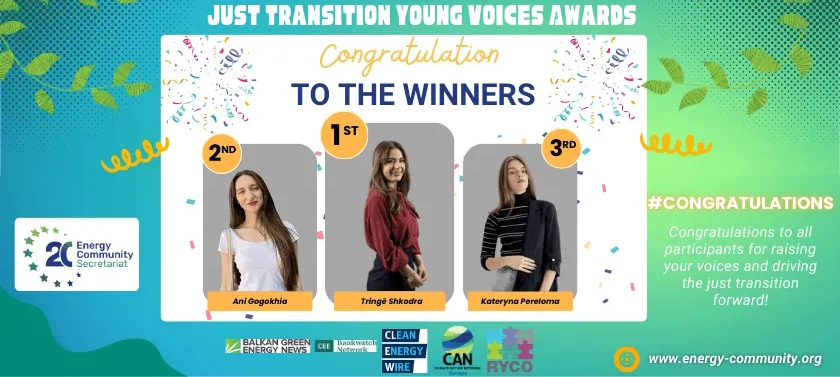
Balkan Green Energy News, the media partner of the 2025 Just Transition Young Voices Awards, is publishing the three winning articles. The Energy Community Secretariat organized the contest in collaboration with Bankwatch, CAN Europe, the CLEW Network, and the Regional Youth Cooperation Office. The aim is to promote young adults set to shape the climate, energy, and social landscape in the years ahead in the Energy Community region. 

Author: Ani Gogokhia

It is the summer of 2045  – unusually hot compared to previous years – but the unbearable heat is not the only problem. I wake up in my small apartment in western Georgia, open the window, and immediately see clouds of exhaust fumes. For me, this is just another part of everyday life.

After a quick breakfast, I step outside for a short walk to wake myself up. The buildings in the city are the only things that remain unchanged. The number of people on the streets is declining. I feel lonely – most of my peers have either moved to the capital, Tbilisi, or left for European countries.

Thinking of them inevitably leads me to reflect on my own career path. Unfortunately, I haven’t had the opportunity to make a meaningful impact in my region.

Not much choice for young woman

With those thoughts weighing on me, I walk quickly to my first job. I call it my first job because I’ll head to another one later in the afternoon. The commute is long, and public transport only slows me down – so I walk. As I pass the local market, I see vendors, most of them women, standing in the scorching sun.

My job is house cleaning. The pay is just enough to cover groceries and utility bills, but with the cost of living rising daily, I rush to a second cleaning job in the afternoon. Floors, windows, walls – it’s all the same. If you wonder why I chose this line of work, the answer is simple: there wasn’t much choice, especially for a young woman.

The scenario described above could become a regular part of life if we halt progress toward a just transition and neglect it

There’s little to say about the workday. I return home as the sun begins to set, carrying groceries in both hands. As I unpack, I wait for my family. Everyone works – my mother and father in a factory, and my sister at a hospital. We gather for dinner and talk about current events: rising tensions, protests over low wages, unemployment, and deepening poverty.

But these conversations always end the same way – with my mother’s cancer. She developed the disease after years of exposure to harmful substances at the factory, yet she still can’t stop working. We simply can’t afford her treatment otherwise.

The scenario described above could become a regular part of life if we halt progress toward a just transition and neglect it. For the energy transition to be truly just, it must include rural areas, too, creating fair opportunities for people across Georgia.

A just transition refers to a series of policies that ensure fair and equal opportunities for everyone as we shift to a greener economy in the fight against climate change. It’s a process meant to align energy systems with modern, sustainable standards. Local governments play a vital role, though many factors – such as geography and ethnicity – can affect how smoothly this transition occurs.

Just transition in Georgia

Georgia is working to stay aligned with global green trends through international cooperation. Hydropower dominates its energy sector, but the country is slowly incorporating wind and solar systems. Since joining the Energy Community in 2017, Georgia has made notable strides toward harmonizing its legislation with the European Union’s energy standards.

This alignment has attracted major investments in renewable energy. Projects like the Kartli wind farm and a national roadmap for a circular economy – supported by the EU4Environment program – are steps in the right direction.

The city of Zugdidi is among the trailblazers in Georgia in the energy efficiency segment, youth engagement and environmental education

These national achievements are significant, but what about rural areas far from the capital? Each region presents unique challenges and opportunities in the just transition. In western Georgia, Zugdidi has started participating in this process. Although large-scale renewable projects remain concentrated elsewhere, the city has seen pilot initiatives in energy efficiency, youth engagement, and environmental education supported by the EU.

The rural development programs of the United Nations Development Programme (UNDP) in Zugdidi focus on inclusive economic participation, especially for youth, and promote eco-tourism and sustainable agriculture to curb outward migration. One noteworthy initiative involved using hazelnut shells to heat school greenhouses – a clever use of a crop central to local livelihoods. Educational projects and international partnerships have also helped raise awareness about the green economy, yet challenges remain.

Chiatura craves economic diversification away from mining

Take, for example, Chiatura – a mining town east of Zugdidi, known for its manganese industry since Soviet times. Chiatura’s economy has long depended on mining, with consequences such as environmental degradation, poor working conditions, and economic stagnation when mining activity declines. Without economic diversification, residents remain vulnerable and largely excluded from sustainable development benefits.

In 2024, Georgian news outlets reported: The hunger strike entered its 22nd day on July 10, involving eight miners, three of whom have sewn their mouths shut. The unrest stems from decisions to shut down underground mining operations, leaving workers desperate and uncertain about their futures.

While Zugdidi explores decentralized, eco-friendly solutions like biomass heating, Chiatura still lags in implementing alternatives – clean industries, green technologies, or renewable energy – deepening the divide between regions.

Youth massively moving to capital Tbilisi

Unfortunately, Georgia’s development remains overly centralized. Most opportunities are clustered in Tbilisi, causing a massive youth outflow from other regions into the capital.

Geographic and infrastructural limitations in rural and mountainous areas also pose serious barriers. For example, eastern Georgia has high solar radiation – perfect for photovoltaic panels – but varied terrain complicates installation. Wind energy prospects are greater in the east, as western regions are less windy.

A just transition also demands inclusive participation, especially from women. As of 2024, women make up just 28% of the global STEM (science, technology, engineering and mathematics) workforce – a glaring underrepresentation. In Georgia, the meaningful inclusion of women in the just transition remains a significant challenge. Empowering women – politically, economically, and socially – is key.

A difficult past marked by political instability and conflict has left its mark, but the more women engage in public life, the greater their chances of economic empowerment, entry into traditionally male-dominated professions and establishing decent place in economy.

What must be done

While Georgia has made substantial headway towards its climate goals, it is key for the country to create a unified national policy that addresses all regions equitably. We need robust educational campaigns, targeted support for rural areas, and most importantly, greater inclusion of women and minority groups in the just transition.

Only then can we build a fair, resilient society capable of meeting the challenges of the 21st century.
Just transition Young Voices Awards articles Ani Gogokhia
Photo: Just Transition Young Voices Awards
by in News

IRENA: Global daily flexibility needs are quadrupling by 2050

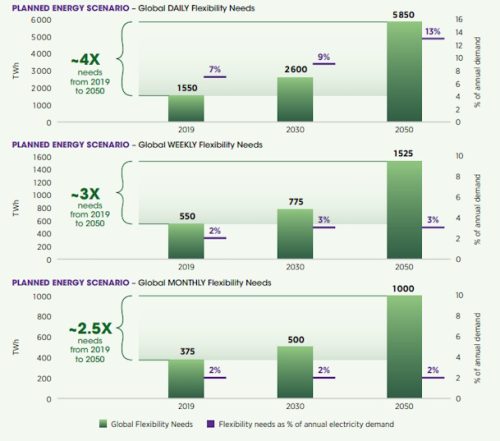
In IRENA’s Planned Energy Scenario at the global level, electricity system flexibility needs on a daily timescale are four times higher in 2050 than in 2019. In the weekly and monthly timescales, the energy required for the purpose grows by three and 2.5 times, respectively. As for the 1.5°C Scenario, implying a much higher share of renewables, the daily flexibility needs jump ten times by mid-century, versus six times for both remaining segments.

Electrification of end-use energy, large-scale deployment of distributed energy resources and the emergence of large new electricity loads from data centres are increasing demand and adding new layers of complexity. It means power systems will need stronger grids and more flexibility to ensure that electricity is available when and where needed and at the lowest possible cost, the International Renewable Energy Agency (IRENA) pointed out in a brief called Flexibility for a secure and affordable power sector transformation.

Aside from buildings and transportation, new demand is coming from the growing adoption of artificial intelligence (AI), driving the expansion of data center capacity. In 2024, data centers consumed 1.5% of electricity. The International Energy Agency expects the share to double by 2030.

The share of variable renewable energy is increasing – wind and solar power in particular. Demand patterns become more complex, so the potential for mismatches between supply and demand is likely to grow, becoming more frequent and significant. It highlights the increasing importance of system flexibility. It is the capacity to respond to expected and unexpected fluctuations in the demand for and supply of electricity in a cost-effective manner.

Some forms of flexibility act automatically to keep the system stable, while others can be scheduled and operate over hours, days or even seasons

Insufficient system flexibility can result in excessive curtailment or, in market-based systems, negative electricity prices. It can also result in shortages, jeopardising the reliable supply of electricity.

System flexibility is needed by the power system to adjust to the variability of generation and demand patterns across different timescales. Some forms of flexibility act automatically within seconds to keep the system stable, while others can be scheduled in anticipation and operate over hours, days or even seasons, through market adjustments and operational and resource planning.

Network flexibility, which isn’t covered in IRENA’s brief, is different. It is the capacity to adjust for grid availability by means of preventing or solving congestion or voltage issues.

Required flexibility depends on numerous factors

In the timescale of seconds to minutes, flexibility is needed to maintain the balance during sudden changes in demand or supply, such as the
disconnection of an interconnector or a major load or generator. The hours and days timescale has daily ups and downs of solar and wind generation alongside the peaks and troughs in demand throughout the day.

In the weeks and seasons segment, flexibility enables covering longer weather patterns caused by changes in the season or low-wind periods. In power systems mainly supplied by renewables, flexibility is also needed at inter-annual timescales. The main factors are climate-driven variations in resource availability. It especially concerns hydrology, but also wind and solar, as well as year-to-year differences in seasonal heating and cooling demand.

In power systems mainly supplied by renewables, flexibility is also needed at inter-annual timescales

Flexibility is not a single asset or function; instead it corresponds to a capability provided by a portfolio of different technologies, operational practices and market mechanisms. The required level of flexibility in a power system depends on, among other factors, the prevailing generation mix, geography, power sector structure and affected timescales.

Storage, demand-side management (DSM), interconnections and dispatchable resources each contribute differently.

Advances in forecasting and the introduction of shorter dispatch intervals, scheduled closer to real-time operation, allow more frequent and precise adjustments of generation and demand before electricity is delivered. One example are intraday markets complementing day-ahead markets.

Electricity must become main energy carrier by mid-century to keep global warming in check

In IRENA’s 1.5°C Scenario, the energy transition will be driven by the deployment of renewable energy, improvements in energy efficiency and the electrification of end-use sectors. The aim is to limit global warming to 1.5 degrees Celsius by 2100.

Electricity would need to become the main energy carrier by 2050. It would account for over half of total final energy consumption. The 2022 level was 23%.

Global electricity generation is projected to be 36% higher in 2030 and three times higher in 2050 than in 2023. Renewable resources would supply 68% of electricity in 2030 and 91% in 2050. Renewables would account for 77% of total installed power capacity in 2030 and 94% in 2050.

In the same setting, 70% of electricity generated in 2050 comes from wind and photovoltaics, taken together. In IRENA’s Planned Energy Scenario, not projecting full decarbonization, the level is 53%.

In IRENA’s 1.5°C Scenario, the share of electricity in total final energy consumption more than doubles by 2050, surpassing 50%

Flexibility needs are calculated as total cumulated annual energy deviation from the average net load (which excludes variable renewable energy generation).

In the 1.5°C Scenario, the power sector requires ten times more flexibility in 2050 than in 2019 to manage the daily variability of net load. In terms of share of annual electricity demand, the authors observed a surge to 30% from 7%. Flexibility needs for managing the variability in weekly and monthly timescales are both six times higher.

In IRENA’s Planned Energy Scenario, daily flexibility needs in 2050 are four times higher. In the weekly timescale, the level triples from 2019, and the monthly item is 2.5 times higher.

IRENA Global daily flexibility needs quadrupling by 2050
Photo: The height of bars indicates flexibility requirements in terawatt-hours per year. Purple horizontal markers show flexibility needs as a percentage of annual electricity demand. (IRENA)

Batteries perform best in daily segment

Battery energy storage is the most effective in addressing daily flexibility needs, the report finds. It is only 24% as effective at meeting weekly needs and 12% as effective for monthly needs.

Interconnections and LDES are effective on the weekly and monthly scales

Interconnections are the most effective in addressing weekly flexibility needs, but also 98% as effective for monthly needs. As for the daily segment, the coverage is just 28%.

The numbers for long-duration energy storage (LDES) solutions are similar. Compared with addressing weekly flexibility needs, LDES is 90% as effective for monthly needs and 34% as effective in the daily item.

by in News

Renewables account for 99% of Turkey’s net electricity capacity additions

Electricity capacity in Turkey reached 122 GW in 2025, of which 62% was from renewable sources, according to the SHURA Energy Transition Center. Photovoltaics grew by 4.9 GW, compared to 1.7 GW in the wind power segment. Renewables made up 99% of the net additions, amounting to 6.3 GW, the think tank calculated. This year, however, the first unit of the Akkuyu nuclear power plant is scheduled to come online, adding 1.2 GW.

Gross electricity production in Turkey increased 2% last year, to 360 TWh, the SHURA Energy Transition Center estimated in a new report. The share of renewables dropped to 44.1% from 46%. Namely, hydropower output is on a downward trajectory, due to droughts. Wind, solar and geothermal power rallied to 24.6%, though. Photovoltaics and wind power together surpassed 20%.

Renewables continue to dominate the sector’s development, accounting for 99% of the overall 6.3 GW in net additions, the think tank calculated. The total reached 122 GW. Renewable sources made up 62%, compared to 59.7% in 2024.

Solar power surged by 4.9 GW and the wind power capacity jumped by 1.7 GW, while the natural gas item declined by 684 MW.

Importantly, the picture is about to change, as the first, 1.2 GW reactor in Akkuyu, Turkey’s first nuclear power plant, is scheduled to be commissioned this year. Coal plant projects remain dormant and uncertain.

Race to 2035 targets

Daily power consumption reached an all-time high of 1,244 GWh on July 29. SHURA attributed the record to cooling demand caused by rising temperatures.

To reach the 2035 targets, an average of 8 GW of combined solar and wind capacity must be commissioned each year. The high momentum is expected to continue in 2026, the report reads. The government aims to hit 120 GW altogether from the two technologies, against the current 40 GW.

However, grid constraints for self-consumption units (formally, unlicensed power plants) may slow solar energy growth, the authors warned. The plan is to resolve the issue through capacity allocations for the segment. The increasing prevalence of renewable and hybrid power plants with storage will enhance system flexibility, SHURA added.

Electricity decarbonization plan costs USD 15 billion per year

Just transition plans for coal regions are critical, the think tank said. It estimated that decarbonizing the electricity sector by 2053 would require an average annual investment of USD 15 billion.

Decisions regarding fossil fuels made for security of supply reasons must be more carefully balanced with the net zero target, SHURA stressed. Temporary solutions risk creating a permanent deadlock, it underscored.

Focus switching to grid, flexibility

Turkey has reached a critical juncture in its energy transformation, according to the update. The authors commended the rise in capacity and new tenders and investments. Nevertheless, they claim the pace cannot be sustained without strengthening the grid, flexibility and implementation capacity, while implying expansion in storage, electrification and financing.

In the view of SHURA’s Steering Committee Chair Selahattin Hakman, energy transition should no longer be considered solely as a topic of climate policy, but rather in conjunction with geopolitical developments, security and economic resilience. Clean energy investments, particularly in solar and wind power, continue to grow despite increasing global uncertainties, he noted.

“In this new era, energy transition is defined at the intersection of geopolitical independence, economic resilience and social justice. Energy policies have transcended the boundaries of the environment and have become central to foreign policy, industrial strategy and trade policies,” Hakman stated.

by in News

ContourGlobal installs 500 MWh standalone BESS facility in Bulgaria

A standalone battery energy storage system of 202 MW and 500 MWh is fully operational and actively participating in Bulgaria’s day-ahead and intraday electricity markets. ContourGlobal built it at its Maritsa East 3 coal plant, using the grid connection of one of its former units. Acting Minister of Energy Zhecho Stankov, who attended the inauguration, said the country added 5 GWh last year and estimated that the overall BESS capacity would hit 15 GWh by mid-2026.

Bulgaria is, with the Czech Republic, Poland and Germany, in the group of only European Union member states in which more than a fifth of electricity is still generated from coal. But the situation is rapidly changing. One of the biggest standalone battery storage installations in Eastern Europe and among the first in Bulgaria recently came online. Located within the ContourGlobal Maritsa East 3 (Maritsa iztok 3) coal power plant, the facility uses the grid connection of a former unit.

Two remained in operation, supplying electricity during periods of peak demand.

The BESS has 202 MW in operating power and a duration of 2.5 hours, translating to 500 MWh, the company said. It inaugurated the battery system in the presence of Acting Minister of Energy Zhecho Stankov.

Stankov: New BESS creates sustainable pathway for evolution of Maritsa East coal complex

The new facility is actively participating in both the day-ahead and intraday national electricity markets, supporting optimized power dispatch and improved balancing of electricity supply and demand, the update adds.

Such projects signify how innovation and existing industrial infrastructure can work together to strengthen grid stability, improve flexibility, and accelerate the integration of renewable energy sources, Stankov stressed. The investment enhances energy security, supports market-based operation, and creates a sustainable pathway for the evolution of traditional energy hubs such as Maritsa East, in his words.

According to the acting minister, Bulgaria added 5 GWh of BESS capacity last year, nearly matching the Chaira pumped storage hydropower plant. He recalled that the overall level is set to reach 15 GWh by mid-2026.

Project materialized in under nine months

The project in Maritsa East 3 received just under EUR 30 million in support through the European Union’s Recovery and Resilience Facility (RRF) and the Bulgarian National Recovery and Resilience Plan (NRRP). The company participated with EUR 44.7 million.

Spanning 2.5 hectares, the installation is part of ContourGlobal’s 3 GWh operational BESS portfolio. The company is owned by KKR.

BYD supplied the 110 battery skids for the battery system, which also includes 28 power conversion system (PCS) and transformer units. ContourGlobal progressed from the final investment decision (FID) to commercial operation date (COD) in less than nine months.

The company is developing a second BESS on the same site, with a matching capability. It has a project for a battery in combination with a solar power plant as well.

Battery energy systems allow for the storage of electricity generated from various sources, including photovoltaic and wind power plants, during periods of low demand and its release back to the grid during peak demand, which helps balance production and consumption and the stable operation of the electricity transmission system.

Coal plants switching to energy storage

AES Corp. is interested in replacing one of the boilers in its AES Maritsa East 1 (AES Maritsa iztok 1) coal plant with a molten salt reactor.

Greece’s government-controlled Public Power Corp. (PPC Group) is already building BESS facilities at its coal plants.

German utility Uniper is planning to build a battery energy storage system at its Heyden coal power plant site in western Germany with Slovenia-based energy solutions provider NGEN.

Thre months ago, International Power Supply (IPS) opened its Factory X1, with a capacity of 3 GWh per year. It is the first gigafactory in Bulgaria for battery energy storage systems. The same company is building another manufacturing facility.

by in News

From construction waste to circular economy: how STRABAG drives green transition

Today, the construction industry is at the crossroads between tradition and transformation. Accounting for approximately 40% of the global energy consumption and for more than 35% of the overall CO₂ emissions, this sector has a huge potential, as well as a responsibility to become one of the key leaders of change in environmental protection. It is this change where STRABAG in Serbia recognises its task and opportunity: through recycling and reuse of materials, solar energy consumption, electric vehicles and digital innovation, the company demonstrates that sustainability can be an integral part of every construction phase.

Acting responsibly, objectively and ethically, STRABAG operates in accordance with the highest integrity standards. Aiming to expand business operations to new areas, they develop innovative and creative approaches within defined frameworks, utilising resources regionally, purposefully and efficiently. Their goal is to become the market leader via automation and adoption of new technologies, while pledging to achieve climate neutrality and CO₂ emission reduction.

Circular economy in practice: second life of materials

Construction waste is no longer and must not be the end of a process, but the start of a new cycle. For instance, concrete that used to end up at a landfill is now treated as a valuable resource: after separating reinforced elements and crushing, the material is reused in construction, as an aggregate for bases, foundations or access roads. This reduces the need for exploiting natural resources, the volume of waste at landfills and CO₂ emissions resulting from transport and production of new materials. The approach confirms that the construction industry can be a generator of a circular economy, rather than just its observer.

By recycling materials, STRABAG enhances processes and rationalises costs, while setting a new benchmark in responsible resource management, thus following its strategic goal of transforming every construction site into a part of a closed, sustainable construction cycle by 2040.

“Our objective is to turn every tonne of waste into a resource in the next project – that is the essence of the circular approach,” STRABAG’s representatives say.

Solar energy and electric mobility: construction sites of the future

In line with STRABAG’s Work On Progress strategy and aiming to become climate neutral by 2040, the company is introducing photovoltaic (PV) panels at its facilities, construction sites and logistics and asphalt bases in Serbia. Solar systems enable a reduction of power consumption from the grid, as well as of CO₂ emissions, thus directly contributing to the company’s global objective.

Green transition also includes the transport segment. STRABAG is modernising its vehicle fleet and introducing e-vehicles and new-generation construction machinery, decreasing its fossil fuel consumption and overall carbon footprint. By combining solar energy sources and electric mobility, construction sites become self-sustainable, with more environmentally responsible and technologically advanced daily operations.

Digital tools – less paper, more efficiency

Not only does digital transformation in STRABAG represent the implementation of new technologies, but it also changes the method of managing each segment of a construction site. By introducing the SSO (Smart Site One) application, the process of planning, monitoring and optimising operations is fully digitalised, from asphalt transport to final installation phases. The app connects people, machinery and processes in real time, thus eliminating downtime, increasing efficiency and reducing fuel consumption and waste.

Furthermore, the company has developed the 5S application (based on the 5S principles – sort, set in order, shine, standardise, sustain), aimed at monitoring order, safety and implementation of the LEAN methods at construction sites. This digital tool enables daily on-site status monitoring, design of automatic reports in order to reduce the risk of injuries, for orderly construction sites with optimal resource use, while additional values: 6S (safety), 7S (team spirit) and 8S (sustainability), facilitate further the culture of safety, team spirit and environmental awareness.

With these applications, STRABAG connects digitalisation and sustainability, showcasing that modern construction can simultaneously be precise, efficient and environmentally responsible.

Journey to climate neutrality

STRABAG in Serbia is implementing an ambitious plan, harmonised with its global ESG strategy and climate neutrality goals. The focus is both on technological innovation and systemic change in the method of construction, use of resources and day-to-day operations.

Key objectives set by the company include the following:

  • 50% of recycled materials in construction processes by 2030
  • CO₂ emission reduction of 42% per project by 2030
  • Fully electric or hybrid vehicle fleet by 2035

Besides technical and infrastructure measures, STRABAG continuously invests in employee education via LEAN and sustainability training courses (training in environmental protection), promoting the principles of sustainable construction, energy efficiency and responsible resource management. As a result, sustainability within the company goes beyond restrictions of individual initiatives, becoming a part of the corporate culture and mindset in every segment of operations.

STRABAG’s sustainability story is more than a series of projects – it is a long-term strategy that changes the future perspective of the construction sector.

“Sustainability is not a trend, but a new foundation of quality. What we are building today must last for the generations to come,” STRABAG’s representatives concluded.

by in News

ContourGlobal installs 500 MWh standalone BESS facility in Bulgaria

A standalone battery energy storage system of 202 MW and 500 MWh is fully operational and actively participating in Bulgaria’s day-ahead and intraday electricity markets. ContourGlobal built it at its Maritsa East 3 coal plant, using the grid connection of one of its former units. Acting Minister of Energy Zhecho Stankov, who attended the inauguration, said the country added 5 GWh last year and estimated that the overall BESS capacity would hit 15 GWh by mid-2026.

One of the biggest standalone battery storage installations in Eastern Europe and among the first in Bulgaria recently came online. Located within the ContourGlobal Maritsa East 3 (Maritsa iztok 3) coal power plant, the facility uses the grid connection of a former unit. Two remained in operation, supplying electricity during periods of peak demand.

The BESS has 202 MW in operating power and a duration of 2.5 hours, translating to 500 MWh, the company said. It inaugurated the battery system in the presence of Minister of Energy Zhecho Stankov.

Stankov: New BESS creates sustainable pathway for evolution of Maritsa East

The new facility is actively participating in both the day-ahead and intraday national electricity markets, supporting optimized power dispatch, improved balancing of electricity supply and demand, and the integration of renewable energy sources, while enhancing overall system stability and flexibility, the update adds.

Such projects signify how innovation and existing industrial infrastructure can work together to strengthen grid stability, improve flexibility, and accelerate the integration of renewable energy sources, Stankov stressed. The investment enhances energy security, supports market-based operation, and creates a sustainable pathway for the evolution of traditional energy hubs such as Maritsa East, in his words.

According to the acting minister, Bulgaria added 5 GWh of BESS capacity last year, nearly matching the Chaira pumped storage hydropower plant. He recalled that the overall level is set to reach 15 GWh by mid-2026.

Project materialized in under nine months

The project in Maritsa East 3 received support through the European Union’s Recovery and Resilience Facility (RRF) and the Bulgarian National Recovery and Resilience Plan (NRRP). Spanning 2.5 hectares, the installation is part of the company’s 3 GWh operational BESS portfolio. ContourGlobal is owned by KKR.

BYD supplied the 110 battery skids for the battery system, which also includes 28 power conversion system (PCS) and transformer units. ContourGlobal progressed from the final investment decision (FID) to commercial operation date (COD) in less than nine months.

The company is developing a second BESS on the same site, with a matching capability. It has a battery project in combination with a solar power plant as well.

Battery energy systems allow for the storage of electricity generated from various sources, including photovoltaic and wind power plants, during periods of low demand and its release back to the grid during peak demand, which helps balance production and consumption and the stable operation of the electricity transmission system.

Three months ago, International Power Supply (IPS) opened its Factory X1, with a capacity of 3 GWh per year. It is the first gigafactory in Bulgaria for battery energy storage systems. The same company is building another manufacturing facility.

by in News

Serbia developing legal framework for CO2 storage

The draft law on hydrocarbon exploration and exploitation will include permanent disposal of carbon dioxide in geological formations of depleted deposits, the Ministry of Mining and Energy of Serbia said.

Serbia has begun work on a draft bill on hydrocarbon exploration and exploitation and the basic principles for the law. The Ministry of Mining and Energy invited interested individuals, expert institutions, representatives of companies and scientific and academic bodies as well as civil society organizations to submit proposals and suggestions via the email address [email protected].

The deadline is January 18. Under development is one of the key regulatory frameworks for mining, given that it entails exploration, exploitation, preparation and transport of hydrocarbons within the process of exploration and exploitation ‒ in particular, oil, natural gas, condensates and other hydrocarbon resources.

In Serbia, the sector is regulated by the Law on Mining and Geological Explorations. It treats hydrocarbons as mineral raw materials for energy. The aim of the forthcoming law is to establish a unique legal and institutional framework for hydrocarbon exploration and exploitation as well as for the exploration of geological structures suitable for underground storage of natural gas and permanent disposal of CO2 in geological formations of depleted deposits in exploitation zones, in line with the highest security and environmental standards.

The forthcoming law needs to facilitate incentives for exploration and the use of geological structures for storing gas and carbon dioxide

The ministry explained that the regulatory framework needs improvement as regards the process of approving exploration and exploitation rights, including alignment with European regulations. It especially concerns directive 94/22/EC on the conditions for granting and using authorizations for the prospection, exploration and production of hydrocarbons, directive 2009/31/EC on the geological storage of carbon dioxide and directive 2013/30/EU on safety of offshore oil and gas operations.

Among the specific goals is the introduction of environmental standards and environmental protection measures in all phases of the process. In the law, the ministry also intends to define investors’ obligations when it comes to remediation, rehabilitation and monitoring. As for gas and CO2 storage, the new framework needs to facilitate incentives for exploration and the use of geological structures for the purpose, within the strategy to lower greenhouse gas emissions.

by in News

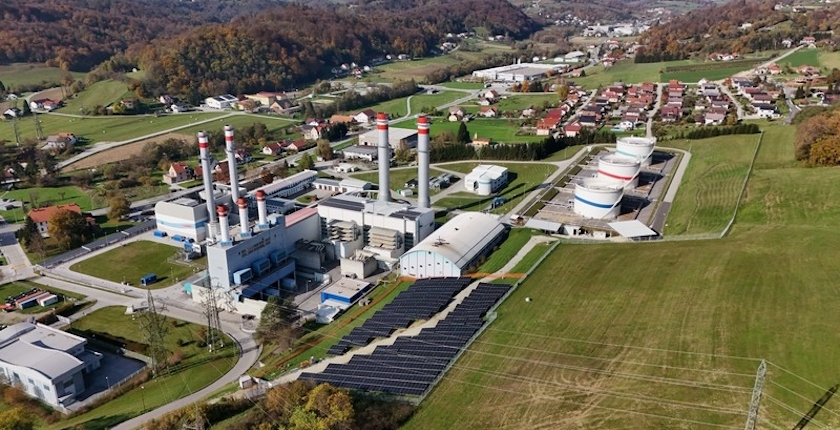
After adding PV unit, Slovenian gas power plant TEB launches battery project

The management of the Brestanica gas power plant in Slovenia has decided to diversify its activities by installing a battery energy storage system (BESS) of 40 MW in operating power and 80 MWh in capacity. The project follows the construction of a ground-mounted solar power plant on the facility’s premises and photovoltaic units on roofs and a parking canopy.

Brestanica Thermal Power Plant – Termoelektrarna Brestanica (TEB) is contributing to the flexibility of Slovenia’s energy system with its investments, Naš stik reported. Due to preventive maintenance and rapid response, electricity output reached 35 GWh in 2025, compared to the planned 25 GWh, the report adds.

The firm issued its development strategy for 2025 to 2030 last year and, based on it, decided to launch a project for a two-hour 40 MW battery energy storage system. It translates to 80 MWh in capacity.

The project will strengthen the flexibility of the energy system, enable more efficient integration of renewable sources and confirm TEB’s focus on modern and sustainable solutions, the article adds. “With the investment in the battery storage facility, we are laying the foundations for a reliable and flexible energy future,” Brestanica Thermal Power Plant said.

Among the other priorities for this year are corporate and cybersecurity.

Brestanica Thermal Power Plant is part of state-owned GEN Group. GEN energija, their parent company, operates the Krško nuclear power plant, also known by the acronym NEK and, in Slovenian, JEK. The gas power plant is also in the municipality of Krško, near Slovenia’s border with Croatia.

TEB put into operation a ground-mounted 466 kW solar power plant on its premises last year. Before that, in 2009 and 2010, the gas plant’s operator built two rooftop PV units and one on a parking canopy. They have 170 kW in combined peak capacity.

by in News

After adding PV unit, Slovenian gas power plant TEB launches battery project

The management of the Brestanica gas power plant in Slovenia has decided to diversify its activities by installing a battery energy storage system (BESS) of 40 MW in operating power and 80 MWh in capacity. The project follows the construction of a ground-mounted solar power plant on the facility’s premises and photovoltaic units on roofs and a parking canopy.

Brestanica Thermal Power Plant – Termoelektrarna Brestanica (TEB) is contributing to the flexibility of Slovenia’s energy system with its investments, Naš stik reported. Due to preventive maintenance and rapid response, electricity output reached 35 GWh in 2025, compared to the planned 25 GWh, the report adds.

The firm issued its development strategy for 2025 to 2030 last year and, based on it, decided to launch a project for a two-hour 40 MW battery energy storage system. It translates to 80 MWh in capacity.

The project will strengthen the flexibility of the energy system, enable more efficient integration of renewable sources and confirm TEB’s focus on modern and sustainable solutions, the article adds. “With the investment in the battery storage facility, we are laying the foundations for a reliable and flexible energy future,” Brestanica Thermal Power Plant said.

Among the other priorities for this year are corporate and cybersecurity.

Brestanica Thermal Power Plant is part of state-owned GEN Group. GEN energija, their parent company, operates the Krško nuclear power plant, also known by the acronym NEK and, in Slovenian, JEK. The gas power plant is also in the municipality of Krško, near Slovenia’s border with Croatia.

TEB put into operation a ground-mounted 466 kW solar power plant on its premises last year. Before that, in 2009 and 2010, the gas plant’s operator built two rooftop PV units and one on a parking canopy. They have 170 kW in combined peak capacity.

by in News

Athens International Airport builds biggest photovoltaic-BESS plant

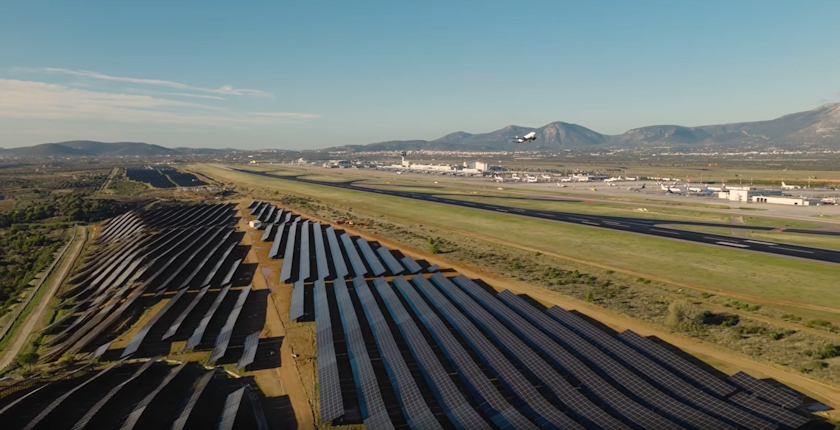
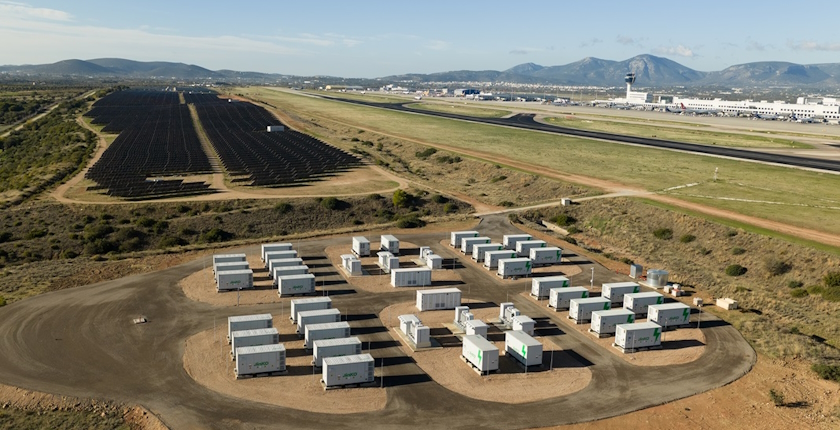
Athens International Airport (AIA) Eleftherios Venizelos completed its comprehensive energy makeover program. It is now operating a photovoltaic facility of 51.5 MW and a battery energy storage system of 82 MWh. It is the largest hybrid power plant of its kind within the premises of any airport in Europe and, reportedly, even the entire world.

At the same time, the Bucharest Henri Coandă International Airport is about to build 12.6 MW in peak PV capacity and a BESS of 17.9 MWh, in the first phase of a larger project.

Following European and global trends, airports in Southeastern Europe are introducing resource, waste and wastewater management systems. Energy is the largest segment of the decarbonization push. With the completion of its Route 2025 program, Athens International Airport Eleftherios Venizelos covered all its electricity needs with photovoltaics, becoming the only such airport in Europe.

In the groundbreaking project, the operator extended the existing solar power plant by 35.5 MW in peak capacity, reaching 51.5 MW, and added a battery energy storage system. The facility has 124 MWh in nominal capacity, of which 82 MWh is usable.

The hybrid system is the largest of its kind inside the fence of any airport in Europe, while the Greek press has even called it the largest in the world. Some of the world’s largest airports are set to follow soon. For instance, IGA Istanbul Airport is investing EUR 212 million in an external solar power plant of 199.3 MW, in Eskişehir.

Athens International Airport builds biggest photovoltaic BESS plant
Photo: Athens International Airport

Hybrid power plant to keep Athens International Airport at net zero through 2046

AIA’s PV-BESS plant will generate an estimated 88 GWh per year, which is equivalent to the consumption of 22,000 households. The storage system is only for self-consumption. Importantly, the hybrid system can cover the entire planned expansion up to 2046, when the concession period ends.

AviAlliance, which controls 50.2% of the public-private partnership, is a wholly-owned subsidiary of Public Sector Pension Investment Board (PSP Investments) from Canada. The government holds 25.6% through Superfund, officially Growthfund – The National Fund of Greece.

AIA launched Route 2025 six years ago, with the aim to cut net greenhouse gas emissions to zero by the end of this year. It compares to the 2050 net zero goal of the European airports sector.

The Route 2025 program was worth EUR 70 million

The investments totaled EUR 70 million. A significant portion was financed through loans from the European Union’s Recovery and Resilience Facility (RRF), the update adds.

Heat pumps have eliminated the need for natural gas in buildings at AIA in normal winter conditions. The electric vehicle fleet consists of 19 buses, 13 follow-me vehicles and 29 vans. A network of chargers also serves passenger cars.

“In the airport company, we operate on the basis of the principle that sustainability, and environmental responsibility in particular, are and will increasingly be prerequisites for what we call the social license to operate and grow,” said outgoing Managing Director of AIA Yiannis Paraschis.

Two airports in Romania receive EU funds for solar-BESS projects

As for other recent developments in the Balkans, operators of two airports in Romania received grants via the European Union’s Modernisation Fund for solar power plants with battery storage.

National Company Bucharest Airports (CNAB) signed a contract for RON 132.04 million (EUR 25.9 million) excluding value-added tax. It is for 12.6 MW in peak PV capacity and a BESS of 17.9 MWh at the Bucharest Henri Coandă International Airport in Otopeni.

The entire investment amounts to RON 176.9 million (EUR 34.7 million) excluding VAT. The Romanian state-owned company said it is the first phase of a project for 31.5 MW and 30 MWh overall, valued at EUR 55.7 million.

Bacău International Airport George Enescu will build a solar power plant of 1.25 MW and a BESS of 2.06 MWh. Bacău County Council will also provide support for the on-site project on 2.2 hectares, worth more than EUR 4.9 million.