by in News

EU outlines measures to end Russian gas, oil imports by end-2027

The European Commission set out a plan to phase out by the end of 2027 the purchases of Russian natural gas, including in the form of LNG, and oil. The package includes proposals aiming to replace Russian nuclear fuel and materials as well.

The European Union will end its dependency on Russian energy by stopping the import of Russian gas and oil and phasing out Russian nuclear energy, while ensuring stable energy supplies and prices, the European Commission said. Its new REPowerEU Roadmap targets full energy independence from Russia.

Since Russia’s invasion of Ukraine in 2022, the EU was lowering the share of Russian fossil fuels under the REPowerEU plan and via sanctions. However, Russian gas imports rebounded last year by 18%, led by Italy, Czechia and France. The commissioners argued that the “overdependency on Russian energy imports is a security threat” and called for new coordinated actions.

Von der Leyen: It is now time for Europe to completely cut off its energy ties with an unreliable supplier

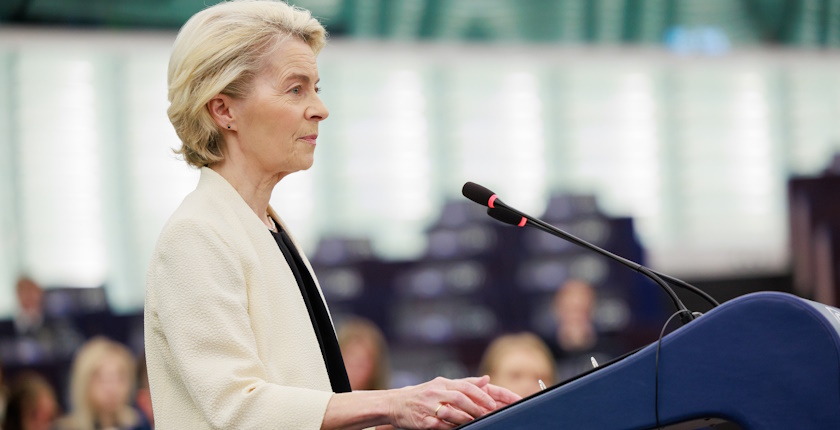
“The war in Ukraine has brutally exposed the risks of blackmail, economic coercion and price shocks. With REPowerEU, we have diversified our energy supply and drastically reduced Europe’s former dependency on Russian fossil fuels. It is now time for Europe to completely cut off its energy ties with an unreliable supplier. And energy that comes to our continent should not pay for a war of aggression against Ukraine. We owe this to our citizens, to our companies and to our brave Ukrainian friends,” European Commission President Ursula von der Leyen stated.

The volumes of imported Russian gas fell to last year’s 52 billion cubic meters from 150 billion in 2021. The share of Russian gas imports dropped from 45% to 19%. All imports of the country’s coal have been banned by sanctions. Russian oil imports have shrunk from 27% at the beginning of 2022 to the current 3%.

Member states need to roll out national plans by end-2025

The new measures have been designed to preserve the security of energy supply while limiting any impact on prices and markets. They would be applied in parallel to advancing the energy transition.

“Last year we in the EU paid EUR 23 billion to Russia for our energy imports. That is EUR 1.8 billion per month. This needs to stop,” European Commissioner for Energy Dan Jørgensen stressed.

The administration in Brussels expects to replace up to 100 billion cubic meters of natural gas by 2030, which means a decrease in demand by 40-50 billion by 2027. It sees an increase in liquefied natural gas (LNG) capacities by 200 billion cubic meters by 2028, which is five times more than current EU imports of Russian gas. The EU still hasn’t imposed sanctions on Russian LNG.

Member states will be asked to prepare national plans by the end of this year, the announcement reveals. All the measures will be accompanied by continuous efforts to accelerate the energy transition and diversify energy supplies, including via the aggregation of gas demand and a better use of infrastructure, according to the document.

Administration in Brussels intends to tackle Russian shadow tanker fleet carrying oil

The European Commission said the proposed measures would improve the transparency, monitoring and traceability of Russian gas.

“Crucially, new contracts with suppliers of Russian gas (pipeline and LNG) will be prevented, and existing spot contracts will be stopped by the end of 2025. This measure will ensure that already by the end of this year, the EU will have slashed by one third remaining supplies of Russian gas. The commission will further propose to stop all remaining imports of Russian gas by the end of 2027,” the plan reads.

Under the roadmap, the commission will put forward new actions to address Russia’s shadow fleet transporting oil. It said the vessels are circumventing sanctions and the international oil price cap.

EU depends on Russia for quarter of its uranium conversion, enrichment needs

As regards nuclear, the proposals coming next month cover enriched uranium and supply contracts co-signed by the Euratom Supply Agency (ESA) for uranium, enriched uranium and other nuclear materials. The EU intends to increase its production of medical radioisotopes.

“While diversification efforts might create uranium and fuel price volatility over access to uranium supply on global markets, major impacts on electricity prices are unlikely as the price of nuclear fuel and related services represent only a small portion of the final cost of electricity from nuclear power plants,” the plan adds.

The EU intends to increase its production of medical radioisotopes

More than 14% of uranium was sourced in the EU from Russia in 2024. The commissioners highlighted the concentration of uranium conversion and enrichment services – needed to transform processed uranium into the material for nuclear fuel manufacturing – in a limited number of companies.

In 2024, around 23% of the whole EU demand for uranium conversion services and almost 24% of enrichment was covered by Russia.

While more than 85% of uranium is produced in Kazakhstan, Canada, Australia, Namibia, Niger and Russia, uranium mines currently operate in many countries and unmined deposits exist in some EU member states.

It will take years to make use of domestic, other Western resources

European enrichment companies have expansion plans but the first new enrichment installation is not expected earlier than 2027.

“Moreover, the global uranium conversion industry is facing obstacles in ramping up production due to technological complexity and market uncertainties, and new conversion capacities are currently announced only for early 2030s. The EU’s nuclear sector also continues to rely on Russia for some spare parts and maintenance services,” the European Commission said.

EEB: Replacing Russian gas with US gas is senselless

The European Environmental Bureau (EEB) noted that imports of Russian gas including LNG rose 18% in 2024 despite no growth in demand.

Numbers of shadow LNG tankers from Russia have also increased, as have indirect imports of Russian energy via third countries, it added. Plans to tackle the shadow fleet are vague, the organization claimed. It went on to label the United States a clearly unreliable trade partner.

“Phasing out Russian coal and gas only to replace it with a dependence on US fracking gas is not in the EU’s security or financial interests. EU countries should instead focus on accelerating their deployment of wind and solar energies. The technologies to move to 100% renewable energy are available,” EEB’s Policy Manager for Climate and Energy Luke Haywood underscored.
by in News

Federation of BiH secures EUR 83 million for just transition of coal regions

Bosnia and Herzegovina has secured EUR 83 million for a just transition project, which includes installing renewable power plants, social protection measures, and skills development in coal regions.

The funds are for the Federation of BiH, one of the two entities constituting Bosnia and Herzegovina.

The Board of Executive Directors of the World Bank has approved a EUR 79.90 million loan and a EUR 2.89 million grant to support Bosnia and Herzegovina’s National Energy and Climate Plan, enhance energy independence, foster job opportunities, and strengthen local economies in former coal regions.

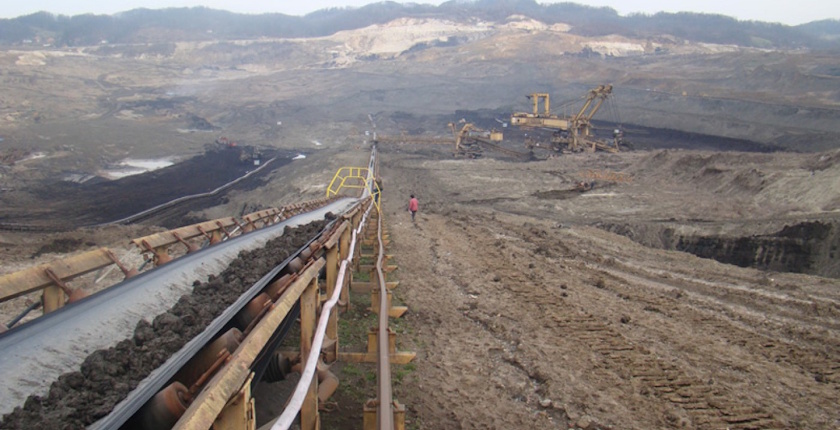
It explained that the Just Transition in Select Coal Regions of Bosnia and Herzegovina Project would help repurpose post-mining lands in Banovići, Zenica, and Kreka, and facilitate the closure of underground works in Zenica. The project entails support for the installation of renewable energy systems at Banovići and Kreka mines.

The project has four components

The measures also involve social protection and skills development for workers and communities seeking opportunities outside the coal sector, the international financing institution noted.

The project will be implemented by the Federal Ministry of Energy, Mining and Industry and the state-owned RMU Banovići coal mine operator and power utility Elektroprivreda Bosne i Hercegovine (EPBiH). It has four components.

The first focuses on enhancing the capacity of coal regions, their entities, and the state-level government to manage a just transition. It will support the Committee on Just Transition at the State Level, a state-level knowledge platform, and capacity building of the Interministerial Committee on Just Transition in the Federation of BiH.

The project includes the land repurposing master plans in Banovići, Zenica, and Kreka

Technical assistance to relevant FBiH ministries to enhance the existing regulatory laws on labor transitions will be provided.

Component 2 supports the repurposing of select post-mining lands in Banovići, Zenica, and Kreka, and closure of specific underground works in the Zenica mine. The segment includes implementing the land repurposing master plans in all three areas

The third part envisages the construction of new power plants. A photovoltaic system of 27 MW in peak capacity will be installed at two identified sites at the Banovići and Kreka mines. Annual power production is projected at over 30 GWh.

Sheldon: To make sure no one is left behind

Component 4 aims to mitigate the social and labor impacts of coal transition on workers and communities by covering the financial obligations toward the miners in Zenica, reskilling and retraining eligible workers in Banovići and Zenica, and supporting affected communities through community investment, the project reads.

According to the World Bank, BiH is developing a National Energy and Climate Plan (NECP). The lender intends to ensure that mine closure is environmentally and socially responsible, supporting new job opportunities and strengthening local economies in former coal regions.

“This new project is an opportunity to boost BiH’s energy security while supporting communities, making sure no one is left behind,” said Christopher Sheldon, World Bank Country Manager for BiH and Montenegro.

by in News

Kosovo* launches reconstruction of coal power plant unit

Kosovo Energy Corp. (KEK) began the reconstruction and modernization of one of the two units in its Kosovo B coal power plant. The works are part of a EUR 56.5 million project for the entire facility.

Kosovo* relies almost entirely on lignite in domestic electricity production, with a 92% share, the highest in the world. The failure of a gas pipeline project in 2021 and the sluggish development of wind and solar power projects have prompted the reconstruction of both old coal plants.

The works have officially started at last at Kosovo B, two years after government-owned power utility KEK signed a contract with General Electric. The entire project is worth EUR 56.5 million. Acting Prime Minister Albin Kurti said the company is financing the investment on its own.

The B2 unit, commissioned in 1984, is undergoing modernization and B1 is supposed to be next. It is one year older.

Investment cutting pollutant emmissions by 60%

The government said the project would increase annual output at Kosovo B by more than 600 GWh. According to the energy strategy through 2031, the two units had 260 MW each in effective capacity in 2022. It compares to 339 MW from when they were built.

Acting Minister of Economy Artane Rizvanolli said the coal plant’s operating life would be extended by 20 years. The plan is to cut the emissions of particulate matter and nitrogen oxides by 60%.

Capital repairs will be required once every ten years instead of every five years now, she underscored. Rizvanolli claimed the investment would cut power imports by EUR 23 million per year and boost exports by a minimum of EUR 20 million.

Budget much higher for reconstruction of one unit in Kosovo A coal plant

In February, KEK issued a call for the reconstruction of the Kosovo A3. The coal plant unit is 55 years old. The project is worth EUR 137.3 million.

The capacity would be raised to 215 MW from the current range of 120 MW to 140 MW. A3 originally had 200 MW.

* This designation is without prejudice to positions onstatus and is in line with UNSCR 1244/99 and the ICJ Opinion on the Kosovo declaration of independence.
by in News

Ember: Warming’s 2024 share of global power demand rise was covered with fossil fuels

According to Ember’s new figures, renewable energy sources met almost three quarters of last year’s increase in the world’s electricity demand. Together with nuclear energy, they would have covered almost the entire jump if it wasn’t for the share attributed to the annual increase in temperatures. Looking at it the other way around, the need for additional cooling accounted for the overwhelming part of the rise in fossil fuel use, and at the same time the resulting additional emissions contributed to the acceleration of global warming.

The share of low-carbon sources rose to a historic 40.9% of global output in 2024. Photovoltaics made up 55.2% of renewable electricity production growth. Hungary, Greece and Bulgaria are among the world’s strongest solar power producers while Turkey has one of the highest power demand growth rates.

Taken together, wind and solar power, hydroelectric plants, other renewables and nuclear energy amounted to 40.9% of global electricity generation in 2024. One year earlier, the level was 39.4%. Last year’s share was the highest since the 1940s, when the global electricity system was fifty times smaller, Ember said in its Global Electricity Review 2025. 

At the time, there was only hydropower and some biomass on the list. Solar power has been the main factor of change over the past several years, and so has China.

Global electricity demand jumped 4% last year or 1.17 PWh, amplified by heatwaves, and reached an all-time high of 30.9 PWh. Periods of higher temperatures in another hottest year ever drove up demand for cooling. The relative increase in 2023 was 2.6%.

Hydropower remained the largest source of low-carbon electricity (14.3%), followed by nuclear (9%). Wind (8.1%) and photovoltaics (6.9%)  are rapidly gaining ground and together they overtook hydro in 2024, while nuclear’s share reached a 45-year low.

Renewables meet 73.2% of growth in world power demand

Renewable power sources accounted for 858 TWh of added output. The previous record of 577 TWh was set two years earlier, as hydropower dropped in 2023, also mostly because of heat.

EVs, heat pumps, data centers and other new drivers of power demand more than doubled their share in annual growth in five years

Renewables met 73.2% of growth in demand and nuclear energy covered 5.9%. Together, they nearly accounted for all growth except the temperature effects, and the rest was from fossil fuels.

Interestingly, looking at it the other way around, the need for additional cooling accounted for the overwhelming part of the rise in fossil fuel use. Of course, the resulting additional emissions contributed to the acceleration of global warming.

Fossil fuel use would have remained almost unchanged if temperatures didn’t grow, the think tank claims. Global power sector emissions rose by 1.6% to a new all-time high of 14.6 billion tonnes of CO2.

But at least the demand for cooling during the day mostly runs in parallel to solar power production. Moreover, the pace of energy storage capacity increase still isn’t keeping up with the growing need to balance photovoltaics and wind power, as they depend on the weather.

However, the update focuses only on one indicator, within the annual growth in power demand. The system is much more complex and fossil fuels weren’t only and directly used for cooling. There is also the matter of distribution across segments from the entire output.

New drivers of demand such as electric vehicles, heat pumps and data centers contributed roughly the same to annual demand growth as the temperature effect, but more than twice as much as they did five years before.

China nearing one third of global electricity demand

China’s electricity demand surged 6.6% or by 623 TWh, which accounted for more than half of the global rise. Its 10.07 PWh in total was 32.6% of the overall figure. Five years before the country was at 28%. Renewables and nuclear energy covered 81% of its demand increase.

China’s per capita electricity use overtook France’s for the first time last year

The United States is number two overall, with 4.4 PWh in 2024 or 14.3% of the global level. China’s per capita electricity use overtook France’s for the first time, and was five times that of India’s.

Turkey’s growth rate, 5.6%, was among the highest on the planet. In absolute terms, demand jumped 18 TWh.

Photovoltaics beat coal power in 2024 in EU

Solar power production spiked by a stunning 29%, which was a six-year high, or by 474 TWh. Photovoltaics were the largest segment of new electricity for the third year in a row and grew the fastest for the 20th straight year. Total output reached 2.13 PWh.

Global solar power capacity reached 1 TW in 2022 after decades of growth, but it surpassed 2 TW only two years later. China amounted to 53% of the increase in PV generation in 2024.

Solar power topped coal power output in the European Union for the first time. As for the share of domestic production, Hungary tops the global list, with 25%. Chile is second at 22%, and Greece is third and best, with 22%, among the countries that Balkan Green Energy News mainly tracks.

Bulgaria is also in the main chart, coming in ninth on a global scale, with 14.4%.

As for solar power production per capita, Australia leads by far with 1.87 MWh, followed by the United Arab Emirates (1.29 MWh) and Greece, also at 1.29 MWh on a rounded basis. Hungary is seventh in the category, at 971 kWh per person.

In the rest of Southeastern Europe, Turkey sticks out as tenth on the planet in hydropower output, at 75 TWh. Albania has the fourth-highest share of domestic production, 97%.

Notably, Kosovo* tops the list of coal’s share in electricity production, with 92%. Bosnia and Herzegovina and Serbia still seem pretty much stuck with the technology. They are fifth and sixth, respectively, both at 63% on a rounded basis.

* This designation is without prejudice to positions onstatus and is in line with UNSCR 1244/99 and the ICJ Opinion on the Kosovo declaration of independence.
by in News

Share of coal power in Finland nearly zero as cogeneration plant shuts down

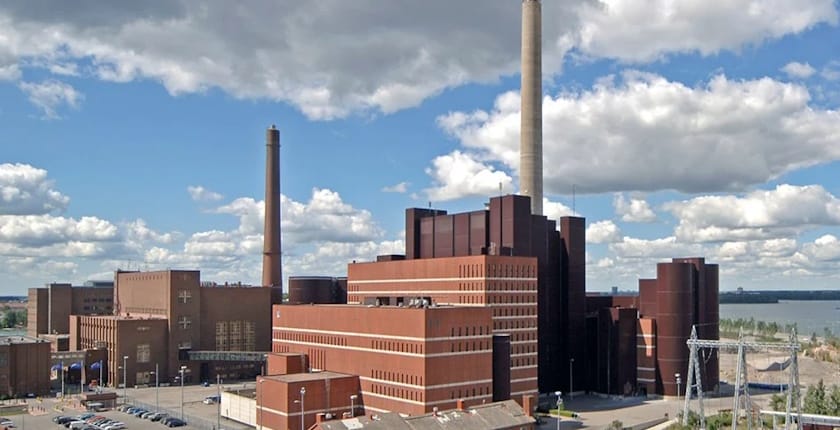
Helsinki’s municipal energy company Helen closed its last coal facility. Together with the country’s remaining plants that use the solid fossil fuel, Salmisaari accounted for just 0.8% of the electricity mix in 2024. The Government of Finland earlier set May 1, 2029, as the coal exit date.

Two years ago, the Olkiluoto 3 nuclear reactor of 1.6 GW, the strongest in Europe, entered commercial operation. Apparently it helped the energy system of Finland to almost eliminate coal from the board. Helen, controlled by the local authority of the capital Helsinki, closed its Hanasaari B plant in 2023, leaving the Salmisaari combined heat and power (CHP) facility as the only one using coal. This week the company shut it down.

Finland is now using neglectable quantities of coal. Salmisaari has 177 MW in power capacity and 300 MW for heat. Together with the country’s remaining three coal power plants, it accounted for a mere 0.8% of the electricity mix last year, Coal-Free Finland and Beyond Fossil Fuels said.

Moreover, coal amounts to just 30% of fuel in Vaskiluoto 2. The facility mostly uses biomass. The operator of the Martinlaakso coal unit is eliminating fossil fuels from regular operations next year. The third one, Meri-Pori, is in strategic reserve.

Share of coal in Finland is marginal

Finland will retain reserve coal capacity for security of supply purposes, which can be deployed if necessary, Helen said. In addition, some energy companies use small amounts of coal in their energy production for peak, reserve and security of supply reasons, it added. The law forbids using coal in energy production after May 1, 2029.

Wind power output more than doubled in Finland since 2020, reaching a quarter of the total. At the same time, coal-fired generation plummeted 73% while fossil gas is down 82%, according to the report. “Finland has shown what’s possible when clear political signals are matched with rapid investments in renewable power,” said Deputy Campaign Director at Beyond Fossil Fuels Cyrille Cormier. The group called on the authorities to double down on renewables and clean flexibility.

Finnish energy experts can pull off impossible tasks

Helen delayed the closure of Salmisaari by a year. Coal still accounted for 64% of the company’s district heating supply in 2022!

The utility managed to slash its greenhouse gas emissions by more than 80% since 1990. It aims to reach 95% by the end of the decade.

“Helen giving up coal and, at the same time, foreign imported energy with regard to it, will remain a significant part of our country’s industrial history and shows that Finnish energy expertise enables actions that initially seemed impossible,” Chief Executive Officer Olli Sirkka said.

Helen transitioning to clean solutions

Helen is shifting to clean solutions. It enables operating more profitably with lower prices, the CEO pointed out. A range of facilities are under construction.

Heat production is mainly moving to heat pumps – utilizing waste and environmental heat – electric boilers, energy storage and sustainable biofuels. Helen will lean on wind, nuclear energy, hydropower and photovoltaics for electricity.

The new units in Salmisaari will be two electric boilers of a combined 100 MW, in combination with a heat pump of 33 MW in external capacity, as well as a 153 MW plant burning wood pellets. Helen is planning a 200 MW electric boiler facility of four units in Hanasaari, able to store 1 GWh of heat. It would currently be the biggest in Europe.

Helsinki has the ambition to reach climate neutrality by 2030, though including external offsets. It would eliminate them within the following ten years, which means only the city’s carbon sinks are included in the equation. The next step is turning carbon negative.

Market forces are decimating the remaining coal power capacity in Europe as it is expensive because of emissions rights and strict environmental regulations, as well as inflexible. Germany, Poland, Slovenia, the Czech Republic, Serbia, Montenegro, Bosnia and Herzegovina, Kosovo* and Turkey have the largest shares of coal in power production in the European Union and Southeastern Europe. Their phaseout deadlines are all after 2030, but the situation is changing fast.

* This designation is without prejudice to positions onstatus and is in line with UNSCR 1244/99 and the ICJ Opinion on the Kosovo declaration of independence.
by in News

Balkan leaders have to realise new coal plants are a liability, not a gold mine?

Author:  Pippa Gallop, Research Co-ordinator, CEE Bankwatch Network

In April this year, the EU proved that whatever difficulties it might be going through, it can still make momentous decisions. It approved new pollution control standards for power stations, entitled the LCP BREF (1) The name might sound obscure, but the results should be concrete: The new standards are projected to save up to 20 000 lives annually across the EU.

On the EU’s doorstep in the Western Balkans, however, you would hardly know the LCP BREF existed. Almost all the countries in the region are planning to build new coal power plants, and there has been virtually no mention of the need for them to comply with the new standards.

This is strange, because not only is compliance with the new LCP BREF necessary for EU accession, but most Western Balkans already stipulate it as part of their domestic pollution control legislation (2). This means that as soon as the standards enter force in the EU this year, they also enter into force in most of the region.

CO2 remains an unsolvable problem with coal

Let’s be clear here: the LCP BREF is not a panacea. It limits emissions of SO2, NOx, PM10, HCl, HF and mercury, so it makes a great contribution to reducing coal’s health impacts. But it can’t do anything about the biggest problem with coal: CO2 and its contribution to climate change. There is no filter that can stop CO2 emissions, and if we are to limit climate change to 1.5-2 degrees, no new coal plants can be built. Unlike climate science, BREF is legally binding, and attempts to ignore it will likely backfire even sooner than attempts to ignore climate science.

Legislative changes need to be anticipated

Whether you have to comply with the LCP BREF right now or in a few years, it’s not something you want to ignore. With power stations lasting 40 years and more, they need to be designed in line with the very latest technical and environmental standards, and their promoters need to anticipate the rules coming up within the next few years. Failure to do so means additional and potentially expensive retrofits just a couple of years after a plant has opened.

With the chances of new coal plants being viable already at rock bottom, such additional costs could easily increase the risk of stranded assets. Only very few EU countries are planning new coal plants, because of low electricity prices, the growth of renewable energy, CO2 costs, and pollution control legislation that is gradually making polluters, instead of the public, pay the health costs of coal.

Yet governments and utilities in the Western Balkans are not doing their homework about recent trends and new legislation that awaits them in the next few years, with the result that their planned projects are dangerously out of date.

Earlier this year we revealed that none of the planned coal power plants seem to have properly taken the costs of CO2 into account in their financial planning. Now we’ve crunched the numbers for the LCP BREF and found that none of the plants has proven compliance with the new standards either.

Planned Balkan coal plants not in compliance with new BREF

There are eight units currently being actively planned in the region. Out of these, five would violate the new standards while for three there is insufficient information available. Kostolac B3 in Serbia, Pljevlja II in Montenegro, and the Oslomej reconstruction in Macedonia have been designed in line with the older Industrial Emissions Directive (IED) Annex V standards, but not the new BREF. Tuzla 7 and Banovići in Bosnia-Herzegovina don’t even go this far: Tuzla 7 is bound only by the even more outdated local legislation while the environmental permit for Banovići is unclear about what standards are relevant. For the remaining three units, Ugljevik III units 1 and 2, and Kosova e Re, the information about likely emissions is still unclear.

Kostolac B3 in Serbia is the only plant for which the new BREF has even been mentioned in its official documentation. It is currently undergoing an environmental impact assessment process, in which local groups have commented on the need for the plant to comply with the BREF. The only reaction so far is an amendment in the study stating that the plant would be an existing plant under the BREF and thus allowed to pollute more than new plants. Even if some retrofits are necessary, the study argues, this is a normal procedure after running a plant for a few years, and thus nothing to worry about.

Neither of these claims is true: Any plant receiving its integrated environmental permit after the LCP BREF enters force in the EU is a new one, according to the BREF definitions, and has to stick to the highest standards. As for undertaking retrofits, the study authors should really check the plant’s feasibility assessment, which shows that the plant will be unviable even with a low CO2 price.

The story is not dissimilar with Pljevlja II in Montenegro. Despite being hailed – like all the plants – as being in line with EU standards, it turns out that it is in line only with outdated ones. Local NGOs pointed out during the environmental assessment process that the plant must comply with the new LCP BREF, but they have received no reaction from the authorities as yet.

Montenegro and Serbia may seem like the most alarming cases due to being ahead of others in EU accession, but Bosnia-Herzegovina is if anything a more worrying case, due to the number of projects planned. The Stanari lignite power plant which started commercial operation last September is already out of date compared to the Industrial Emissions Directive and will now be out of line with the BREF as well. If Ugljevik III, Tuzla  7, and Banovići are all completed and all out of line with the BREF, the country will end up with a significant burden on its hands.

If the Balkans electricity utilities really ran on commercial lines, as they are bound by the Energy Community Treaty to do, they would never risk these projects. The new LCP BREF is but one more indicator that coal is an increasing liability, and the Balkan countries should be looking much more carefully at what’s going on around them. After all, the region has ample potential for wind, solar and energy savings combined with a relatively small population, so if this region can’t make a transition to sustainable energy, who can?

NOTES:

  1. Large Combustion Plants Best Available Techniques Reference Document
  2. Albania, the Federation entity of Bosnia-Herzegovina, Kosovo Macedonia and Montenegro. Serbia and Republika Srpska both require the application of best available techniques but do not specify that the EU reference document should be used.