by in News

Davos: China reaffirms green agenda as US slams EU’s net-zero goal

At the World Economic Forum (WEF) in Davos, China reiterated its commitment to green development, in contrast to the United States, whose secretary of commerce said America should rely on oil and gas instead of pursuing a green transition and criticized the European Union’s (EU) net-zero target. US President Donald Trump, for his part, described the energy transition as a “scam” that caused an energy collapse in Europe.

Speaking at the WEF Annual Meeting 2026 in Davos, Switzerland, Chinese Vice Premier He Lifeng emphasized China’s resolve to reduce its greenhouse gas emissions, adding that the country’s upcoming five-year plan would keep the focus on green growth fueled by solar, batteries, and electric vehicles (EVs).

China’s Vice Premier urged other countries to help combat emissions

He also urged other nations and foreign companies to collaborate with China on creating “a green and prosperous future.”

“We invite enterprises from all over the world to embrace the opportunities from the green and low-carbon transition, and work closely with China in such areas as green infrastructure, green energy, green minerals, and green finance,” He said in a speech at Davos.

In contrast, US Commerce Secretary Howard Lutnick criticized the EU’s solar and wind development, as well as its net-zero goal, adding that the green transition is not something the US should pursue. Lutnick also said that the world should focus on coal as an energy source rather than renewables, according to reports.

In January 2025, President Donald Trump signed executive orders reversing much of the previous administration’s climate policy and withdrawing the US from the Paris Agreement once again.

US Commerce Secretary claims seeking net zero without battery production would make the EU subservient to China

“Why are you going to do solar and wind? Why would Europe agree to be net zero in 2030 when they don’t make a battery? So, if they go 2030, they are deciding to be subservient to China, who makes the batteries,” Lutnick said.

“Why would the US, which has oil and natural gas, try to convert to all-electricity? China does not have oil and natural gas – electricity and electric cars make perfect sense to them,” Lutnick said at a WEF panel.

According to news agencies, Lutnick’s harsh criticism of Europe at a VIP dinner on Tuesday made European Central Bank President Christine Lagarde walk out of the event.

Trump slams “the green new scam” and claims China sells wind turbines to others, but does not build its own wind farms

For his part, Trump also criticized the EU’s transition to renewables, claiming that the US had avoided “the catastrophic energy collapse which befell every European nation that pursued the green new scam.” He also described the green transition as “perhaps the greatest hoax in history.”

In his speech in Davos, the US president claimed that wind farms “lose money” and that China only sells wind turbines without building any wind farms itself.

“They sell them to the stupid people that buy them. They don’t use them themselves,” Trump said, adding that China has only built a “couple of wind farms” in order to “show people what they could look like.”

According to available data, China has the largest wind power capacity in the world, at around 600 GW.

by in News

Davos: China reaffirms green agenda as US slams EU’s net-zero goal

At the World Economic Forum (WEF) in Davos, China reiterated its commitment to green development, in contrast to the United States, whose secretary of commerce said America should rely on oil and gas instead of pursuing a green transition and criticized the European Union’s (EU) net-zero target. US President Donald Trump, for his part, described the energy transition as a “scam” that caused an energy collapse in Europe.

Speaking at the WEF Annual Meeting 2026 in Davos, Switzerland, Chinese Vice Premier He Lifeng emphasized China’s resolve to reduce its greenhouse gas emissions, adding that the country’s upcoming five-year plan would keep the focus on green growth fueled by solar, batteries, and electric vehicles (EVs).

China’s Vice Premier urged other countries to help combat emissions

He also urged other nations and foreign companies to collaborate with China on creating “a green and prosperous future.”

“We invite enterprises from all over the world to embrace the opportunities from the green and low-carbon transition, and work closely with China in such areas as green infrastructure, green energy, green minerals, and green finance,” He said in a speech at Davos.

In contrast, US Commerce Secretary Howard Lutnick criticized the EU’s solar and wind development, as well as its net-zero goal, adding that the green transition is not something the US should pursue. Lutnick also said that the world should focus on coal as an energy source rather than renewables, according to reports.

In January 2025, President Donald Trump signed executive orders reversing much of the previous administration’s climate policy and withdrawing the US from the Paris Agreement once again.

US Commerce Secretary claims seeking net zero without battery production would make the EU subservient to China

“Why are you going to do solar and wind? Why would Europe agree to be net zero in 2030 when they don’t make a battery? So, if they go 2030, they are deciding to be subservient to China, who makes the batteries,” Lutnick said.

“Why would the US, which has oil and natural gas, try to convert to all-electricity? China does not have oil and natural gas – electricity and electric cars make perfect sense to them,” Lutnick said at a WEF panel.

According to news agencies, Lutnick’s harsh criticism of Europe at a VIP dinner on Tuesday made European Central Bank President Christine Lagarde walk out of the event.

Trump slams “the green new scam” and claims China sells wind turbines to others, but does not build its own wind farms

For his part, Trump also criticized the EU’s transition to renewables, claiming that the US had avoided “the catastrophic energy collapse which befell every European nation that pursued the green new scam.” He also described the green transition as “perhaps the greatest hoax in history.”

In his speech in Davos, the US president claimed that wind farms “lose money” and that China only sells wind turbines without building any wind farms itself.

“They sell them to the stupid people that buy them. They don’t use them themselves,” Trump said, adding that China has only built a “couple of wind farms” in order to “show people what they could look like.”

According to available data, China has the largest wind power capacity in the world, at around 600 GW.
by in News

Kosovo’s* just energy transition: greening the Kingdom of Coal

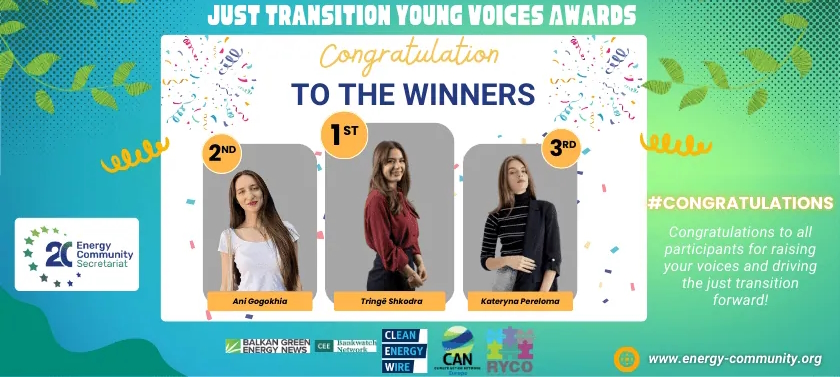
Author: Tringë Shkodra

Kosovo’s* energy transition has great potential but key players such as small and medium-sized enterprises (SMEs) and young people are facing structural exclusion.

Our energy system is still heavily dependent on dirty fossil fuels and overburdened by frequent outages, reliance on imports, and growing costs, particularly during the winter when demand is at its highest and most households and businesses can no longer afford to pay energy bills. While infrastructure upgrades are essential, they are not enough. In order to succeed, this transition must be just, meaning it needs to be inclusive and rooted in the lived experiences of the people it aims to serve.

Understanding Kosovo’s* distinct socio-economic landscape, with the country having the youngest population in Europe as well as a large number of SMEs, is essential for addressing its development challenges and unlocking its potential.

SMEs form the backbone of the Kosovan* economy but get structurally excluded from accessing energy-saving practices. Many studies shed light on energy efficiency within Kosovo’s* private sector – particularly among SMEs, and show that these businesses face serious barriers to adopting sustainable practices. While larger firms are more likely to invest in energy-saving technologies, SMEs struggle with access to finance, lack awareness, and get minimal institutional support.

Businesses require energy efficiency for survival

Yet energy audits show that many could reduce consumption by up to 40% with low-cost interventions. This isn’t about reluctance, but structural exclusion. Energy efficiency, in this context, is not just a technical fix but a survival strategy for businesses.

With the right incentives, this sector can become a driver of Kosovo’s* green transition, creating jobs and fostering innovation.

Youth rarely invited to table

Another overlooked potential for Kosovo’s* energy transition are the youth. Over half of Kosovo’s* population is under the age of 30, yet their involvement in environmental governance remains limited. A study of youth participation in environmental and climatic concerns across ten municipalities of Kosovo* found that, while 63% of young respondents reported a strong desire to contribute to environmental policymaking, only 15% had ever participated in such processes.

Youth-led initiatives, innovation hubs, and climate advocacy networks are lacking institutional trust and real influence

This isn’t a lack of engagement; it’s again a lack of access. Youth-led initiatives, innovation hubs, and climate advocacy networks are already active, but they need to be met with institutional trust and real influence. The potential of our youth is vast – from engineers developing solar microgrids to community organizers shaping local green agendas. However, without inclusion, this potential remains untapped. We are ready to lead, but we are rarely invited to the table.

Dependence on lignite is cause of public health crisis

Advancing fundamental reforms aligned with European values is a prerequisite for sustainable development. This includes harmonizing structural reforms outlined in the Economic Reform Programmes (ERPs), strengthening the rule of law, and embedding the energy transition within the European Union’s broader green agenda. Kosovo’s* overreliance on lignite coal poses not only environmental but social risks, and the outdated mindset of living in the Kingdom of Coal clashes with the urgent need for a clean, secure, and just energy future.

Data from Riinvest Institute outlines clearly that over 90% of Kosovo’s* electricity is still produced from coal, while renewable energy accounts for less than 6%. This dependence is more than an economic liability – it is a public health crisis. Around 300,000 to 400,000 people live within 30 kilometers of lignite-fired power plants Kosovo A and Kosovo B, which lack modern emission controls.

Air pollution and outdated technology put thousands at risk every day. The urgency to diversify the energy mix isn’t only environmental – it is humanitarian. Energy, when approached with justice in mind, can become a tool for dignity and equal opportunity.

Despite a myriad of strategies and policy documents, Kosovo* has made only partial progress in aligning with EU energy and environmental standards. The Energy Community Annual Implementation Report (2024) shows that implementation across clusters such as decarbonization and energy security ranges from just 40% to 66%. True transformation demands more than technical upgrades as it requires institutional coordination, transparency, and strong evidence-based policymaking.

We are transitioning lives

In a recent conversation, a national energy expert put it simply: “We are not just transitioning technologies. We are transitioning lives.” A just energy transition must therefore encompass more than grid modernization or solar farms. It requires tailored policies – legislation that removes bureaucratic bottlenecks, the rollout of incentives for low-income households to adopt renewables, and clear pathways for communities to become prosumers.

Kosovo’s* policy frameworks, such as the forthcoming National Energy and Climate Plan and the renewable energy law, must be instruments of real transformation – practical, inclusive, and focused on impact.

Permitting procedures for renewables need to be simplified

To catalyze a just energy transition, the country requires comprehensive investments across its energy infrastructure while ensuring that reforms are socially inclusive and environmentally sound. This begins with diversifying the energy mix by prioritizing renewables – particularly solar and wind – through competitive auctions and de-risked investment environments that attract private sector participation. Kosovo* must simplify permitting procedures, build institutional expertise, and enhance the grid’s technical capacity to absorb renewable inputs.

Alongside infrastructure upgrades, investments are needed in energy efficiency for public and private buildings, especially given the country’s high winter heating demand and grid losses. Carbon-free heating solutions and retrofitting programs can help reduce both emissions and energy poverty, especially among vulnerable groups.

Subsidies must be designed for low-income households

Financing this transformation requires a blended approach – mobilizing domestic resources, securing grants from the EU and the United States, and leveraging international financial institutions through loans with state guarantees. But energy justice is not only about technology or money, it is about who benefits. Subsidies and support schemes must be designed for low-income households to participate in renewable adoption as consumers and prosumers.

A just transition brings inclusive growth and long-term climate resilience

Moreover, Kosovo* must link its investment strategies to broader social objectives, like upskilling labor for green jobs, protecting coal-reliant communities, and embedding equity and participation in every step of reform.

Kosovo* needs to make use of its strengths, and supports its young population, smaller enterprises and low-income households. Without an integrated approach, it risks reinforcing existing inequalities, but if it creates an energy transition that is just for the people, the country can turn its transition into a platform for inclusive growth, and long-term climate change resilience.

Tringe Shkodra Just Transition Young Voices Awards

* This designation is without prejudice to positions onstatus and is in line with UNSCR 1244/99 and the ICJ Opinion on the Kosovo declaration of independence.
by in News

Serbia to put mining strategy to parliament vote

The government passed the draft Strategy for the Management of Mineral and Other Geological Resources of the Republic of Serbia for the period from 2025 to 2040, with projections until 2050, so the National Assembly is required to put it to vote. With full appreciation of economic, environmental and social aspects, the implementation needs to contribute to improving the legal framework, establishing a balance between economic growth and environmental protection, remediation of abandoned mining facilities and securing a stable supply of critical and strategic raw materials, Minister of Mining and Energy Dubravka Đedović Handanović stressed.

After a turbulent public discussion process, the Government of Serbia adopted the draft Strategy for the Management of Mineral and Other Geological Resources of the Republic of Serbia for the period from 2025 to 2040, with projections until 2050. Several dozen objections and suggestions were accepted or partly accepted. However, the text of the strategy that will be passed on to the National Assembly for a vote hasn’t been published yet.

A special emphasis is on the development of risk management mechanisms, climate neutrality and the application of energy-efficient and low-carbon technologies, the government pointed out.

The strategy is based on the principles of sustainable utilization of natural wealth, biodiversity protection, climate resilience and the reduction of negative effects of mining activities, the announcement reads.

According to the report on the environmental impact of the strategy’s implementation, Serbia hosts many deposits of metallic, non-metallic and energy raw materials, groundwaters and geothermal energy. The authors of the accompanying document acknowledged that the exploitation of mineral raw materials in Serbia caused air, water and land pollution. Metals mining hub of Bor and Majdanpek and the Kolubara and Kostolac lignite basins are the most affected.

Another challenge highlighted in the environmental impact report are the abandoned mines, tailings dumps and mining facilities that require remediation and rehabilitation.

Strengthening state’s role in planning, oversight

The document sets a long-term framework for the responsible management of mineral resources and the strengthening the role of the state in planning, oversight and the improvement of the sector of mining and geology, in the interest of citizens and a sustainable development of local communities, the Ministry of Mining and Energy said.

A special emphasis is on critical and strategic raw materials, geothermal energy and rational utilization of natural resources

Minister Dubravka Đedović Handanović said the strategy defines programs and measures directed toward a secure supply of domestic companies and the energy system with mineral raw materials, job creation and a greater participation of the domestic industry in the value chain, as well as for reducing import dependency and strengthening the country’s economic stability.

She explained that the focus is particularly on critical and strategic raw materials, geothermal energy and rational utilization of natural resources, alongside the implementation of high environmental and security standards. This is the way, in her words, to protect the environment, improve work safeety and lower the risks for people’s health and the quality of life in local communities.

Treating protected areas responsibly

Dubravka Đedović Handanović added that the strategy clearly defines a responsible treatment of protected areas and the spaces of special natural value, through a principle of prevention and respect toward the protection regime, as well as the transparency in the processes of planning and decision making, so that the citizens would be informed timely and included in dialogue.

With full appreciation of economic, environmental and social aspects, the implementation needs to contribute to improving the legal framework, establishing a balance between economic growth and environmental protection, remediation of abandoned mining facilities and securing a stable supply of critical and strategic raw materials, the minister underscored. She said that in the long term it meant greater safety, a better quality of life and responsible development.

by in News

Kosovo’s* just energy transition: greening the Kingdom of Coal

Author: Tringë Shkodra

Kosovo’s* energy transition has great potential but key players such as small and medium-sized enterprises (SMEs) and young people are facing structural exclusion.

Our energy system is still heavily dependent on dirty fossil fuels and overburdened by frequent outages, reliance on imports, and growing costs, particularly during the winter when demand is at its highest and most households and businesses can no longer afford to pay energy bills. While infrastructure upgrades are essential, they are not enough. In order to succeed, this transition must be just, meaning it needs to be inclusive and rooted in the lived experiences of the people it aims to serve.

Understanding Kosovo’s* distinct socio-economic landscape, with the country having the youngest population in Europe as well as a large number of SMEs, is essential for addressing its development challenges and unlocking its potential.

SMEs form the backbone of the Kosovan* economy but get structurally excluded from accessing energy-saving practices. Many studies shed light on energy efficiency within Kosovo’s* private sector – particularly among SMEs, and show that these businesses face serious barriers to adopting sustainable practices. While larger firms are more likely to invest in energy-saving technologies, SMEs struggle with access to finance, lack awareness, and get minimal institutional support.

Businesses require energy efficiency for survival

Yet energy audits show that many could reduce consumption by up to 40% with low-cost interventions. This isn’t about reluctance, but structural exclusion. Energy efficiency, in this context, is not just a technical fix but a survival strategy for businesses.

With the right incentives, this sector can become a driver of Kosovo’s* green transition, creating jobs and fostering innovation.

Youth rarely invited to table

Another overlooked potential for Kosovo’s* energy transition are the youth. Over half of Kosovo’s* population is under the age of 30, yet their involvement in environmental governance remains limited. A study of youth participation in environmental and climatic concerns across ten municipalities of Kosovo* found that, while 63% of young respondents reported a strong desire to contribute to environmental policymaking, only 15% had ever participated in such processes.

Youth-led initiatives, innovation hubs, and climate advocacy networks are lacking institutional trust and real influence

This isn’t a lack of engagement; it’s again a lack of access. Youth-led initiatives, innovation hubs, and climate advocacy networks are already active, but they need to be met with institutional trust and real influence. The potential of our youth is vast – from engineers developing solar microgrids to community organizers shaping local green agendas. However, without inclusion, this potential remains untapped. We are ready to lead, but we are rarely invited to the table.

Dependence on lignite is cause of public health crisis

Advancing fundamental reforms aligned with European values is a prerequisite for sustainable development. This includes harmonizing structural reforms outlined in the Economic Reform Programmes (ERPs), strengthening the rule of law, and embedding the energy transition within the European Union’s broader green agenda. Kosovo’s* overreliance on lignite coal poses not only environmental but social risks, and the outdated mindset of living in the Kingdom of Coal clashes with the urgent need for a clean, secure, and just energy future.

Data from Riinvest Institute outlines clearly that over 90% of Kosovo’s* electricity is still produced from coal, while renewable energy accounts for less than 6%. This dependence is more than an economic liability – it is a public health crisis. Around 300,000 to 400,000 people live within 30 kilometers of lignite-fired power plants Kosovo A and Kosovo B, which lack modern emission controls.

Air pollution and outdated technology put thousands at risk every day. The urgency to diversify the energy mix isn’t only environmental – it is humanitarian. Energy, when approached with justice in mind, can become a tool for dignity and equal opportunity.

Despite a myriad of strategies and policy documents, Kosovo* has made only partial progress in aligning with EU energy and environmental standards. The Energy Community Annual Implementation Report (2024) shows that implementation across clusters such as decarbonization and energy security ranges from just 40% to 66%. True transformation demands more than technical upgrades as it requires institutional coordination, transparency, and strong evidence-based policymaking.

We are transitioning lives

In a recent conversation, a national energy expert put it simply: “We are not just transitioning technologies. We are transitioning lives.” A just energy transition must therefore encompass more than grid modernization or solar farms. It requires tailored policies – legislation that removes bureaucratic bottlenecks, the rollout of incentives for low-income households to adopt renewables, and clear pathways for communities to become prosumers.

Kosovo’s* policy frameworks, such as the forthcoming National Energy and Climate Plan and the renewable energy law, must be instruments of real transformation – practical, inclusive, and focused on impact.

Permitting procedures for renewables need to be simplified

To catalyze a just energy transition, the country requires comprehensive investments across its energy infrastructure while ensuring that reforms are socially inclusive and environmentally sound. This begins with diversifying the energy mix by prioritizing renewables – particularly solar and wind – through competitive auctions and de-risked investment environments that attract private sector participation. Kosovo* must simplify permitting procedures, build institutional expertise, and enhance the grid’s technical capacity to absorb renewable inputs.

Alongside infrastructure upgrades, investments are needed in energy efficiency for public and private buildings, especially given the country’s high winter heating demand and grid losses. Carbon-free heating solutions and retrofitting programs can help reduce both emissions and energy poverty, especially among vulnerable groups.

Subsidies must be designed for low-income households

Financing this transformation requires a blended approach – mobilizing domestic resources, securing grants from the EU and the United States, and leveraging international financial institutions through loans with state guarantees. But energy justice is not only about technology or money, it is about who benefits. Subsidies and support schemes must be designed for low-income households to participate in renewable adoption as consumers and prosumers.

A just transition brings inclusive growth and long-term climate resilience

Moreover, Kosovo* must link its investment strategies to broader social objectives, like upskilling labor for green jobs, protecting coal-reliant communities, and embedding equity and participation in every step of reform.

Kosovo* needs to make use of its strengths, and supports its young population, smaller enterprises and low-income households. Without an integrated approach, it risks reinforcing existing inequalities, but if it creates an energy transition that is just for the people, the country can turn its transition into a platform for inclusive growth, and long-term climate change resilience.

Tringe Shkodra Just Transition Young Voices Awards

* This designation is without prejudice to positions onstatus and is in line with UNSCR 1244/99 and the ICJ Opinion on the Kosovo declaration of independence.
by in News

Serbia to put mining strategy to parliament vote

The government passed the draft Strategy for the Management of Mineral and Other Geological Resources of the Republic of Serbia for the period from 2025 to 2040, with projections until 2050, so the National Assembly is required to put it to vote. With full appreciation of economic, environmental and social aspects, the implementation needs to contribute to improving the legal framework, establishing a balance between economic growth and environmental protection, remediation of abandoned mining facilities and securing a stable supply of critical and strategic raw materials, Minister of Mining and Energy Dubravka Đedović Handanović stressed.

After a turbulent public discussion process, the Government of Serbia adopted the draft Strategy for the Management of Mineral and Other Geological Resources of the Republic of Serbia for the period from 2025 to 2040, with projections until 2050. Several dozen objections and suggestions were accepted or partly accepted. However, the text of the strategy that will be passed on to the National Assembly for a vote hasn’t been published yet.

A special emphasis is on the development of risk management mechanisms, climate neutrality and the application of energy-efficient and low-carbon technologies, the government pointed out.

The strategy is based on the principles of sustainable utilization of natural wealth, biodiversity protection, climate resilience and the reduction of negative effects of mining activities, the announcement reads.

According to the report on the environmental impact of the strategy’s implementation, Serbia hosts many deposits of metallic, non-metallic and energy raw materials, groundwaters and geothermal energy. The authors of the accompanying document acknowledged that the exploitation of mineral raw materials in Serbia caused air, water and land pollution. Metals mining hub of Bor and Majdanpek and the Kolubara and Kostolac lignite basins are the most affected.

Another challenge highlighted in the environmental impact report are the abandoned mines, tailings dumps and mining facilities that require remediation and rehabilitation.

Strengthening state’s role in planning, oversight

The document sets a long-term framework for the responsible management of mineral resources and the strengthening the role of the state in planning, oversight and the improvement of the sector of mining and geology, in the interest of citizens and a sustainable development of local communities, the Ministry of Mining and Energy said.

A special emphasis is on critical and strategic raw materials, geothermal energy and rational utilization of natural resources

Minister Dubravka Đedović Handanović said the strategy defines programs and measures directed toward a secure supply of domestic companies and the energy system with mineral raw materials, job creation and a greater participation of the domestic industry in the value chain, as well as for reducing import dependency and strengthening the country’s economic stability.

She explained that the focus is particularly on critical and strategic raw materials, geothermal energy and rational utilization of natural resources, alongside the implementation of high environmental and security standards. This is the way, in her words, to protect the environment, improve work safeety and lower the risks for people’s health and the quality of life in local communities.

Treating protected areas responsibly

Dubravka Đedović Handanović added that the strategy clearly defines a responsible treatment of protected areas and the spaces of special natural value, through a principle of prevention and respect toward the protection regime, as well as the transparency in the processes of planning and decision making, so that the citizens would be informed timely and included in dialogue.

With full appreciation of economic, environmental and social aspects, the implementation needs to contribute to improving the legal framework, establishing a balance between economic growth and environmental protection, remediation of abandoned mining facilities and securing a stable supply of critical and strategic raw materials, the minister underscored. She said that in the long term it meant greater safety, a better quality of life and responsible development.

by in News

Energy Community Secretariat sets up renewables support hub for contracting parties

The Energy Community Secretariat has established a hub to speed up the deployment of renewables in contracting parties with a focus on transforming coal mines.

With the exception of Albania, members of the Energy Community in the Western Balkans generate electricity predominantly by burning coal from domestic mines.

Locations of depleted mines are suitable for renewable electricity plants.

The new Centre for Renewables Acceleration is a regional hub designed to provide technical support to all Energy Community contracting parties in accelerating renewable energy deployment through improved planning and coordination, according to the Energy Community Secretariat.

The center will especially help support the rollout of renewables acceleration areas (RAA) in brownfields, including coal mines.

Strengthening public trust in the energy transition is essential

In these locations, renewable energy projects can move forward more quickly through streamlined procedures grounded in strategic spatial planning that protects sensitive ecosystems, in the secretariat’s view.

It sees strengthening public trust in the energy transition as key to this mission, particularly in regions affected by coal phase-out and undergoing broader structural changes.

In the Western Balkans, the center will be supported through a partnership with the Open Society Foundations – Western Balkans (OSF-WB). The two sides recently formalized cooperation through a memorandum of understanding.

Work is complemented by the secretariat’s cooperation with The Nature Conservancy

Their activities in supporting the region include pilot interventions in contracting parties, expert exchanges, capacity-building initiatives and regional workshops.

The partnership with OSF-WB builds on the secretariat’s ongoing work in Ukraine, supported by the European Climate Foundation, which focuses on developing cross-border renewables acceleration areas in five regions bordering the EU and Moldova.

This work is further complemented by the secretariat’s cooperation with international environmental organization The Nature Conservancy (TNC), whose EU-recognized methodology for designating renewables acceleration areas informed the development of the Operational Blueprint for the Designation of RAAs in the Energy Community region and now serves as a best practice, the update reads.

Back in 2023, the secretariat and TNC formed a partnership to improve the planning and permitting procedures for renewable energy projects. TNC has implemented projects on RAAs in Serbia, Montenegro.

by in News

Energy Community Secretariat sets up renewables support hub for contracting parties

The Energy Community Secretariat has established a hub to speed up the deployment of renewables in contracting parties with a focus on transforming coal mines.

With the exception of Albania, members of the Energy Community in the Western Balkans generate electricity predominantly by burning coal from domestic mines.

Locations of depleted mines are suitable for renewable electricity plants.

The new Centre for Renewables Acceleration is a regional hub designed to provide technical support to all Energy Community contracting parties in accelerating renewable energy deployment through improved planning and coordination, according to the Energy Community Secretariat.

The center will especially help support the rollout of renewables acceleration areas (RAA) in brownfields, including coal mines.

Strengthening public trust in the energy transition is essential

In these locations, renewable energy projects can move forward more quickly through streamlined procedures grounded in strategic spatial planning that protects sensitive ecosystems, in the secretariat’s view.

It sees strengthening public trust in the energy transition as key to this mission, particularly in regions affected by coal phase-out and undergoing broader structural changes.

In the Western Balkans, the center will be supported through a partnership with the Open Society Foundations – Western Balkans (OSF-WB). The two sides recently formalized cooperation through a memorandum of understanding.

Work is complemented by the secretariat’s cooperation with The Nature Conservancy

Their activities in supporting the region include pilot interventions in contracting parties, expert exchanges, capacity-building initiatives and regional workshops.

The partnership with OSF-WB builds on the secretariat’s ongoing work in Ukraine, supported by the European Climate Foundation, which focuses on developing cross-border renewables acceleration areas in five regions bordering the EU and Moldova.

This work is further complemented by the secretariat’s cooperation with international environmental organization The Nature Conservancy (TNC), whose EU-recognized methodology for designating renewables acceleration areas informed the development of the Operational Blueprint for the Designation of RAAs in the Energy Community region and now serves as a best practice, the update reads.

Back in 2023, the secretariat and TNC formed a partnership to improve the planning and permitting procedures for renewable energy projects. TNC has implemented projects on RAAs in Serbia, Montenegro.

by in News

Serbia plans to stop using coal, fuel oil in district heating by 2040

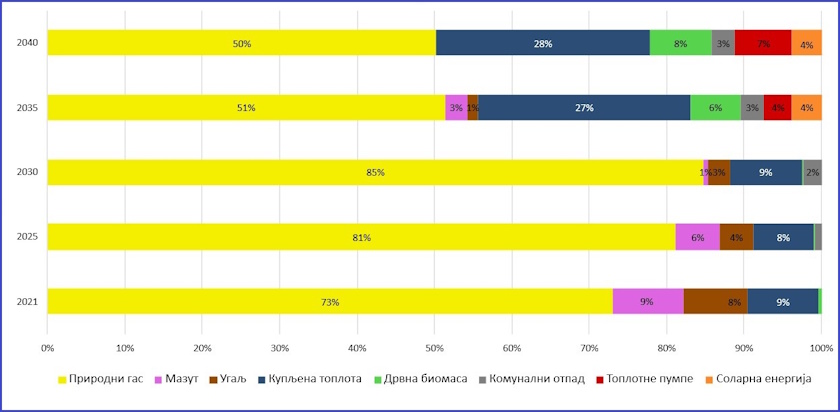
By 2040, Serbia intends to replace fuel oil and coal in district heating plants with solar, wood biomass, heat pumps, municipal waste and geothermal energy.

Maja Vukadinović, acting Assistant Minister of Mining and Energy for Energy Efficiency and Climate Change, has said that the goal for the district heating sector is to phase out fuel oil and coal by 2040.

She explained that the idea is to replace fossil fuels with solar energy, wood biomass, heat pumps, municipal waste and geothermal energy.

“The list of programs and projects until 2028 is defined in the draft Program for the Implementation of the Energy Development Strategy of the Republic of Serbia until 2040 with projections to 2050, for the period from 2026 to 2028,” Vukadinović told Balkan Green Energy News.

The share of renewables should increase from 2.4% to 5.5%

According to the draft, implementation of decarbonization projects in district heating systems by 2028 should lift the share of renewable energy sources in heat production from 2.4% to 5.5%.

The fuel mix in 2023 was 75% natural gas, 8% petroleum products, 2% coal, 2% wood biomass, and 13% purchased heat. The structure of purchased heat production is 46.8% natural gas, 48.8% coal, 3.3% wood biomass, and 1.1% fuel oil.

serbia decarbonization district heating mix 2040

Natural gas will remain the dominant source of thermal energy, as it is today, although its share is expected to decrease from 73% to 50% by 2040, according to Vukadinović.

The decarbonization of the district heating system would reduce air pollution in cities, especially where coal or fuel oil is currently used, the ministry added.

A strategic plan for the district heating decarbonization policy is being prepared

“It’s very important that the fuels conversion is carried out in parallel with energy renovation of buildings and a reduction of the energy consumption for heating. It would significantly improve living conditions,” Vukadinović underlined.

Decarbonization would also have to lead to the improvement of the overall operation of the heating plants, as well as a reduction in network losses, the modernization of substations, and the introduction of daily and seasonal thermal energy storage, in her opinion. The operation of the district heating systems should depend less on the price volatility of imported fuels, Vukadinović stressed.

Serbia is preparing a strategic plan for the district heating decarbonization policy. The document is under development in cooperation with the European Bank for Reconstruction and Development (EBRD) and the business association of Serbian heating plants, Toplane Srbije.

The document, she explained, will outline steps to improve the district heating system, including the rollout of thermal energy storage, heat pumps, and heat production from waste, as well as the development of the country’s first district cooling systems.

by in News

Bulgaria’s coal regions to get further EUR 808 million for just transition

Bulgaria’s coal regions will receive BGN 1.58 billion (EUR 808 million) through the Just Transition program, under the European Union’s Just Transition Fund (JTF), for energy efficiency, renewable energy, and green hydrogen projects, as well as for converting mining areas for commercial use.

With a EUR 598 million program already underway, total investments in the economic transformation during and after the country’s coal phaseout would reach EUR 1.38 billion. They cover coal regions Stara Zagora, Kyustendil, and Pernik and the municipalities of Nova Zagora, Yambol, Simeonovgrad, Harmanli, Topolovgrad, Dimitrovgrad, Haskovo, Elhovo, Sliven and Tundzha.

Grants from the JTF are intended to help coal regions shut down mines and coal-fired power plants, rehabilitate land, switch to a circular and climate-neutral economy, and lift households out of energy poverty.

By the end of the year, the Bulgarian Ministry of Regional Development and Public Works will launch three new procedures for the allocation of grants, according to Deputy Minister Yura Vitanova.

One, worth EUR 153.4 million, will focus on energy communities and energy efficiency in public buildings. Another, worth EUR 72.6 million, will help small and medium-sized enterprises (SMEs) install solar panels and energy storage systems for both self-consumption and commercial use.

A third call, with a budget of EUR 242.9 million, will support the socio-economic transformation, including projects to convert mining areas into business and industrial zones.

Green hydrogen projects will be backed with EUR 134.5 million

Additionally, EUR 134.5 million will be used to fund the development of hydrogen production and transportation infrastructure in Stara Zagora. It includes the construction of a green hydrogen production complex and hydrogen charging stations, the procurement of hydrogen vehicles and hydrogen trailers, and the construction of supporting infrastructure, including photovoltaic systems and energy storage facilities.

The current JTF program in Bulgaria’s coal regions focuses on renovating residential buildings, supporting SMEs, and developing industrial and logistics parks. It also funds training and retraining programs for workers affected by the energy transition, as well as production investments in large enterprises.