by in News

Croatia prepares first bioeconomy strategy

The Government of Croatia has adopted the Draft Bioeconomy Strategy until 2035, which foresees investments of EUR 200 million.

The draft bioeconomy strategy until 2035 will provide a strategic planning framework for intensive sector development and contribute to the economic and social development of the country, according to the Government of Croatia.

The strategy defines the bioeconomy as all sectors and systems that rely on biological resources – animals, plants, microorganisms, and biomass from these sources, including organic waste.

The sectors of agriculture, forestry, fisheries, aquaculture, and the production of food, beverages, and tobacco are fully included in the bioeconomy, the document reads.

Of note, back in 2018 the European Commission has put forward an action plan to develop a sustainable and circular bioeconomy.

The strategy has two goals

Deputy Prime Minister and Minister of Agriculture, Forestry, and Fisheries David Vlajčić pointed out that the strategy defines the vision for the development of the bioeconomy. It will be achieved by 2035 through interventions, strategic projects, and activities, he explained.

The strategy has two strategic goals – the development of sustainable production and raw material markets and the increase of added value in the bioeconomy, the government said.

The achievement of the strategic goals will be financed by funds from European financial programs, co-financed by the state budget, Vlajčić added.

According to the minister, EUR 199 million is envisaged for the implementation of the strategy for the period from 2025 to 2027. For the period from 2028 to 2035, the financial framework would be defined later.

The draft envisages the construction of biomass distribution centers

To achieve the strategic goals, various mechanisms would be used, Vlajčić stressed.

These include the construction of biomass distribution centers, regulating the use of waste sludge, encouraging the construction and modernization of capacities in bioeconomy sectors, promoting the production of packaging from recycled materials, bio-based and biodegradable plastics, and conducting research and innovation related to the bioeconomy.

The strategy should also increase the utilization of by-products, residues, and waste from production and processing in the agriculture, forestry, and fisheries sectors and stimulate the biomass market.

The government adopted a decision on October 13 to initiate the development of the bioeconomy strategy by 2035. The Ministry of Agriculture, the Ministry of Economy and Sustainable Development, the Ministry of Science and Education, and the Ministry of Regional Development and European Union Funds have cooperated in the production of the draft.

by in News

EU4CAET project pre-selects 43 ideas for first renewable energy communities in BiH

A total of 43 project ideas from 28 local authorities for establishing the first renewable energy communities in Bosnia and Herzegovina have been pre-selected to receive assistance under the EU for Collective Action for Energy Transition project.

The EU for Collective Action for Energy Transition (EU4CAET) project is jointly financed by the European Union and the German Federal Ministry for Economic Cooperation and Development (BMZ). Under the slogan ‘Together for Energy Transition,’ the EUR 3 million project is implemented by GIZ.

The initiative aims to empower local municipalities, citizens, and private actors to develop sustainable energy solutions that create jobs, improve energy efficiency, and advance climate goals, according to the EU Delegation to Bosnia and Herzegovina.

A total of 51 municipalities submitted 89 project ideas

In the project’s development phase, 51 municipalities submitted a total of 89 project ideas, such as solar power plants, heat pumps, biomass heating systems, public lighting upgrades, and electric vehicle charging stations.

The proposed projects also included kindergartens, youth centers, sports halls, theaters, health centers, and other public facilities. Following the evaluation, 28 local self-governments submitted their first concept notes, and 43 ideas were pre-selected.

“The final selection, based on detailed concept notes, is currently ongoing. The number of final projects will depend on the quality of submitted concepts and available funding under EU4CAET,” the Communication Office of the Delegation of the EU to BiH & EU Special Representative in BiH told Balkan Green Energy News.

The evaluation will begin in January 2026

The deadline for the pre-selected local authorities to submit their detailed concept notes was December 20. The evaluation of the submitted concepts will begin in January 2026.

Selected local authorities will be invited to present and discuss their ideas in more detail, according to the Communication Office.

The strongest concepts will receive assistance for capacity development, business planning, feasibility studies, and the preparation of technical design documentation.

The 28 municipalities pre-selected for further evaluation are as follows: Bijeljina, Bileća, Centar Sarajevo, Doboj, Donji Vakuf, Drvar, Goražde, Ilijaš, Kakanj, Kalesija, Laktaši, Maglaj, Milići, Modriča, Mostar, Novi Grad, Novi Travnik, Novo Sarajevo, Šamac, Sokolac, Srebrenica, Teslić, Travnik, Višegrad, Vogošća, Zenica, Živinice, and Zvornik.

BiH does not yet have renewable energy communities, but one of its two entities – the Republic of Srpska – managed to adopt the necessary regulations for their establishment in May this year, becoming the first in the region to do so.

Hahr: The grant call is planned for February 2026 and 2027

Mareike Hahr, Head of EU4CAET, said the project is now focused on tailored technical assistance to further refine the ideas and prepare high-quality applications for the grant call, planned for February 2026 and 2027.

“What has been particularly encouraging is the remarkable level of interest and readiness shown by local communities from both entities to ‘enter new terrain’—to propose their own project concepts, explore innovative solutions, and actively shape their energy future,” she explained.

by in News

EU4CAET project pre-selects 43 ideas for first renewable energy communities in BiH

A total of 43 project ideas from 28 local authorities for establishing the first renewable energy communities in Bosnia and Herzegovina have been pre-selected to receive assistance under the EU for Collective Action for Energy Transition project.

The EU for Collective Action for Energy Transition (EU4CAET) project is jointly financed by the European Union and the German Federal Ministry for Economic Cooperation and Development (BMZ). Under the slogan ‘Together for Energy Transition,’ the EUR 3 million project is implemented by GIZ.

The initiative aims to empower local municipalities, citizens, and private actors to develop sustainable energy solutions that create jobs, improve energy efficiency, and advance climate goals, according to the EU Delegation to Bosnia and Herzegovina.

A total of 51 municipalities submitted 89 project ideas

In the project’s development phase, 51 municipalities submitted a total of 89 project ideas, such as solar power plants, heat pumps, biomass heating systems, public lighting upgrades, and electric vehicle charging stations.

The proposed projects also included kindergartens, youth centers, sports halls, theaters, health centers, and other public facilities. Following the evaluation, 28 local self-governments submitted their first concept notes, and 43 ideas were pre-selected.

“The final selection, based on detailed concept notes, is currently ongoing. The number of final projects will depend on the quality of submitted concepts and available funding under EU4CAET,” the Communication Office of the Delegation of the EU to BiH & EU Special Representative in BiH told Balkan Green Energy News.

The evaluation will begin in January 2026

The deadline for the pre-selected local authorities to submit their detailed concept notes was December 20. The evaluation of the submitted concepts will begin in January 2026.

Selected local authorities will be invited to present and discuss their ideas in more detail, according to the Communication Office.

The strongest concepts will receive assistance for capacity development, business planning, feasibility studies, and the preparation of technical design documentation.

The 28 municipalities pre-selected for further evaluation are as follows: Bijeljina, Bileća, Centar Sarajevo, Doboj, Donji Vakuf, Drvar, Goražde, Ilijaš, Kakanj, Kalesija, Laktaši, Maglaj, Milići, Modriča, Mostar, Novi Grad, Novi Travnik, Novo Sarajevo, Šamac, Sokolac, Srebrenica, Teslić, Travnik, Višegrad, Vogošća, Zenica, Živinice, and Zvornik.

BiH does not yet have renewable energy communities, but one of its two entities – the Republic of Srpska – managed to adopt the necessary regulations for their establishment in May this year, becoming the first in the region to do so.

Hahr: The grant call is planned for February 2026 and 2027

Mareike Hahr, Head of EU4CAET, said the project is now focused on tailored technical assistance to further refine the ideas and prepare high-quality applications for the grant call, planned for February 2026 and 2027.

“What has been particularly encouraging is the remarkable level of interest and readiness shown by local communities from both entities to ‘enter new terrain’—to propose their own project concepts, explore innovative solutions, and actively shape their energy future,” she explained.

by in News

North Macedonia’s first annual construction plan for energy projects envisages EUR 1.4 billion in investments

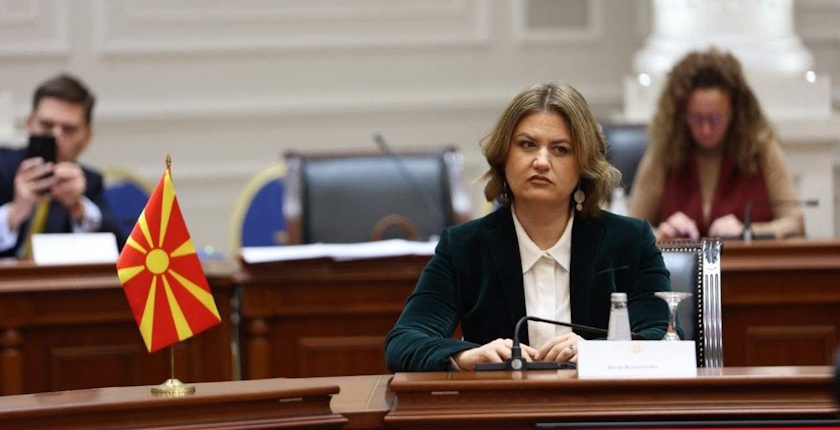
The annual construction plan for energy projects for 2025 envisages the installation of power plants with a capacity of 1,265 MW, according to Minister of Energy, Mining and Mineral Resources Sanja Božinovska.

North Macedonia has introduced an annual construction plan for the energy projects with the new Law on Energy, adopted this year. The goal is to bring order to the approval and construction of new power plants.

According to the new regulation, October 1 was the deadline for investors to submit the documentation for their projects for the first annual plan. The review of all documents is in the final phase, according to Božinovska.

The construction of the power plants from the annual plan represents investments of around EUR 1.4 billion, Sanja Božinovska stressed, local media reported.

Solar power plants in the plan have the largest capacity – 812 MW, followed by wind farms  with 426 MW, biomass power plants with 11 MW, and hydropower plants with 15 MW.

Investors have submitted applications for the construction of energy facilities with a capacity of 10,950 MW

She recalled that for the first time, requests were received for the installation of standalone batteries and ones that would be co-located with power plants. The capacity of the standalone battery systems is 675 MW, and of the co-located is 93 MW, Božinovska added.

North Macedonia has received requests for the construction of energy facilities with a total capacity of 10,950 MW.

Investors submitted photovoltaic projects with a capacity of 4,758 MW and wind farms with a capacity of 1,697 MW. Investors were also interested in building gas-fired power plants.

Requests were also submitted for standalone battery energy storage systems (BESS) with a capacity of 2,573 MW and co-located with a capacity of 1,405 MW.

The annual plan should be adopted by January 31, 2026

Božinovska pointed out that 10,950 MW represents a large capacity. The transmission system operator (TSO) MEPSO will have to make a plan to strengthen the grid, she underlined.

The Government of North Macedonia should adopt the annual plan for the construction of energy facilities by January 31, 2026.

The minister recalled that the regulation for the construction of energy facilities has also been adopted. It precisely defines what every potential investor must submit, starting with a feasibility study, regardless of the type of facility, Bozinovska explained.

She said that the adoption of the law on renewable energy sources is expected in the first quarter of next year.

by in News

Serbia plans to stop using coal, fuel oil in district heating by 2040

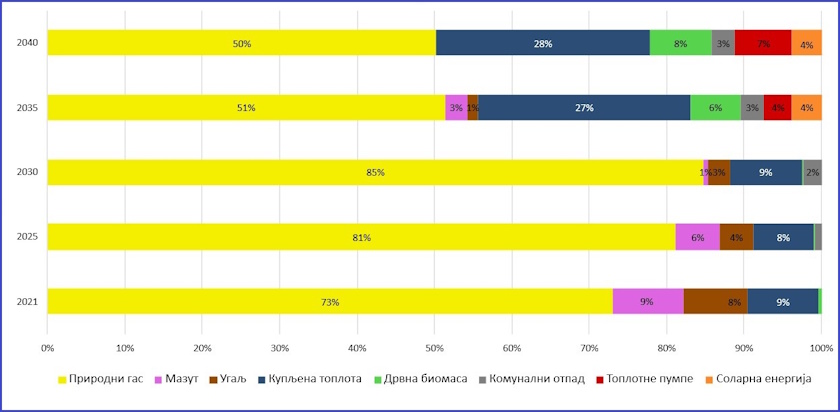
By 2040, Serbia intends to replace fuel oil and coal in district heating plants with solar, wood biomass, heat pumps, municipal waste and geothermal energy.

Maja Vukadinović, acting Assistant Minister of Mining and Energy for Energy Efficiency and Climate Change, has said that the goal for the district heating sector is to phase out fuel oil and coal by 2040.

She explained that the idea is to replace fossil fuels with solar energy, wood biomass, heat pumps, municipal waste and geothermal energy.

“The list of programs and projects until 2028 is defined in the draft Program for the Implementation of the Energy Development Strategy of the Republic of Serbia until 2040 with projections to 2050, for the period from 2026 to 2028,” Vukadinović told Balkan Green Energy News.

The share of renewables should increase from 2.4% to 5.5%

According to the draft, implementation of decarbonization projects in district heating systems by 2028 should lift the share of renewable energy sources in heat production from 2.4% to 5.5%.

The fuel mix in 2023 was 75% natural gas, 8% petroleum products, 2% coal, 2% wood biomass, and 13% purchased heat. The structure of purchased heat production is 46.8% natural gas, 48.8% coal, 3.3% wood biomass, and 1.1% fuel oil.

serbia decarbonization district heating mix 2040

Natural gas will remain the dominant source of thermal energy, as it is today, although its share is expected to decrease from 73% to 50% by 2040, according to Vukadinović.

The decarbonization of the district heating system would reduce air pollution in cities, especially where coal or fuel oil is currently used, the ministry added.

A strategic plan for the district heating decarbonization policy is being prepared

“It’s very important that the fuels conversion is carried out in parallel with energy renovation of buildings and a reduction of the energy consumption for heating. It would significantly improve living conditions,” Vukadinović underlined.

Decarbonization would also have to lead to the improvement of the overall operation of the heating plants, as well as a reduction in network losses, the modernization of substations, and the introduction of daily and seasonal thermal energy storage, in her opinion. The operation of the district heating systems should depend less on the price volatility of imported fuels, Vukadinović stressed.

Serbia is preparing a strategic plan for the district heating decarbonization policy. The document is under development in cooperation with the European Bank for Reconstruction and Development (EBRD) and the business association of Serbian heating plants, Toplane Srbije.

The document, she explained, will outline steps to improve the district heating system, including the rollout of thermal energy storage, heat pumps, and heat production from waste, as well as the development of the country’s first district cooling systems.

by in News

Insa Oil building Bulgaria’s first bioethanol plant

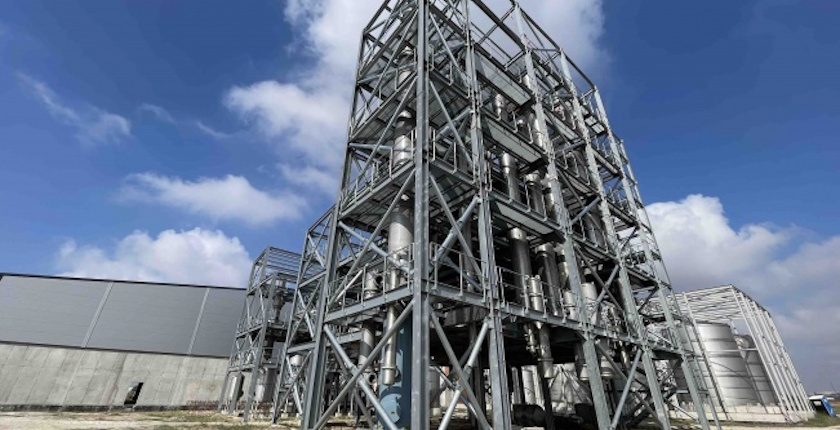
Bulgarian oil company Insa Oil plans to finish its bioethanol plant by the end of 2026. The company claims the plant under construction will be the country’s first to produce renewable fuel from biomass.

The construction of the Insa Spirit plant began in June 2022 and is already in an advanced phase, according to an announcement by Insa Oil. Bioethanol is a renewable fuel produced primarily from grains and often blended with gasoline.

The plant, estimated to cost EUR 56 million, spans about 45,000 square meters. It includes production facilities and a high-tech laboratory.

The biorefinery will produce ethyl alcohol, part of which will be converted into bioethanol for the Bulgarian energy market.

The plant’s capacity is 41,000 liters of ethyl alcohol per day

The plant’s capacity is 41,000 liters of ethyl alcohol per day, the company said, adding that the facility is expected to be operational in the second half of 2026.

Bulgaria has set the minimum required amount of bioethanol to be added to gasoline at 9%. It is regulated by the European Directive on the Promotion of the Use of Energy from Renewable Sources and the Renewable Energy Law, which came into force in the first half of this year.

“Our ambition is to turn Bulgaria into a regional factor for bioethanol production. We believe that this investment will be important for our economy and will increase our energy independence, while also taking care of environmental protection,” said Insa Oil manager Georgi Samuilov.

The plant uses technology from India

Following the launch of Insa Spirit, the company plans to develop technologies for second-generation bioethanol produced from biomass.

The technology for the plant was developed by India-based PRAJ.

The equipment was supplied by leading producers such as Bühler Group (Germany), Alfa Laval (Sweden), Bosch (Germany), Siemens (Germany), Hydro-Thermal (USA), and Solar Turbines (USA), according to Insa Oil.

by in News

Worrying results of coal, overburden production in BiH’s power utility

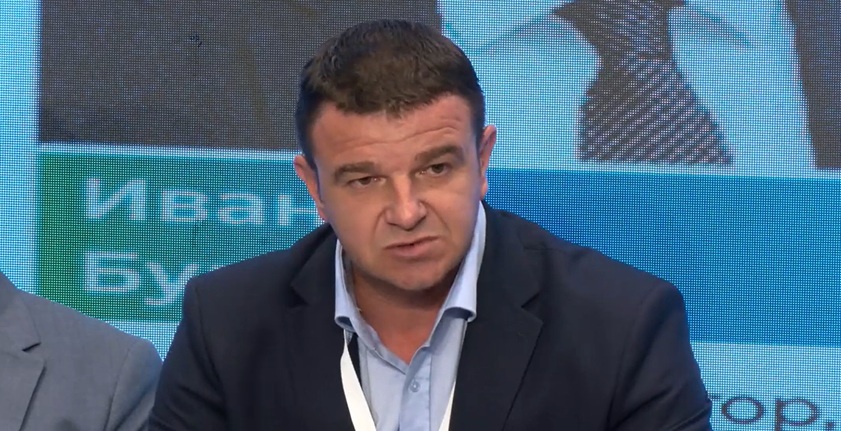
Coal deliveries to thermal power plants in the first half of the year reached 73% of the plan, while only 43% of the overburden excavation target was achieved, warned Sanel Buljubašić, CEO of Bosnia and Herzegovina’s state-owned power utility Elektroprivreda Bosne i Hercegovine (EPBiH).

Increasing coal production is the only way to stabilize the energy system in the Federation of Bosnia and Herzegovina (FBiH), Sanel Buljubašić told state news agency Fena. Focus.ba republished the report.

FBiH is one of the two entities making up BiH. The other one is the Republic of Srpska.

The chief executive pointed to the significance of coal, stressing that 80% of EPBiH’s production comes from coal power plants, with hydropower plants providing the remainder.

Of note, the company recorded a loss of BAM 45.47 million (EUR 23.25 million) for the first half of this year. BiH’s electricity imports were 4.5 times higher than in the same period of 2024.

Buljubašić: We will fulfill our obligations only if the mines fulfill theirs

Buljubašić recalled that the Government of FBiH raised the price of coal at the beginning of 2024 and signed a new collective agreement in the mining sector to demonstrate its commitment to improving working conditions for miners and their status.

The coal mines are operating under an entity called EPBiH Concern. They must produce the planned quantities of coal, which have been jointly agreed and contracted, the CEO underscored and added that EPBiH would meet its obligations only if the mines do the same.

Buljubašić said RMU Breza and RMU Đurđevik are facing the most pressing issues while that RU Kreka is making its best result of the past three years. Coal mine operators RU Kreka, RMU Kakanj, and RMU Abid Lolić have increased production, he added.

Of the nearly 5,000 workers, 1,226 are occupationally disabled

The company head said EPBiH Concern’s mines employ 4,967 workers, of whom 1,226 are occupationally disabled. Additionally, on average, between 1,500 and 1,700 employees are absent every day for various reasons, such as annual leave or sick leave.

In his words, restructuring would imply a program for surplus workers at RMU Zenica, closing mines that are technologically and economically unviable and continuing investments by procuring equipment for economically viable mines to increase productivity.

One of the main problems is the devastated coal deposits, a result of years of delay in overburden excavation, Buljubašić stressed.

Just transition includes mine shutdowns, installation of solar power, batteries, and the use of biomass

The just transition project in BiH’s coal regions, estimated at BAM 160 million (EUR 81.8 million), is being implemented with a World Bank loan. Most of the funds will be spent on closing mines and taking care of surplus employees of RMU Zenica, repurposing RU Kreka’s land, building the 12.2 MW Dubrave photovoltaic plant, repurposing the land of RMU Banovići and installing another solar power plant, of 15 MW, the CEO explained.

He pointed out that the authorities are preparing a law on the closure of Zenica mines — the first such legislation in BiH.

Green investments within a just transition platform for coal regions can include the construction of battery energy storage systems (BESS) and fast-growing biomass plantations, according to Buljubašić.

He announced that EPBiH would soon present its Prosumer 5000+ project and a long-term development plan for EPBiH for the period 2025-2050, within the energy sector development strategy.

by in News

IRENA: 91% of new renewables units are more cost-effective than fossil fuel alternatives

The fossil fuel age is crumbling, according to UN Secretary-General António Guterres. Renewables maintained their cost leadership in global power markets, the International Renewable Energy Agency said in an annual report. In 2024, onshore wind farms were the cheapest of all versus the lowest-cost fossil fuel alternatives, by 53% on average, while photovoltaic systems were 41% cheaper.

Onshore wind power was also the cheapest in levelized cost of electricity (LCOE) terms, followed by solar power. At the same time, 91% of newly commissioned utility-scale capacity was delivering power at a cost lower than for the cheapest electricity from new fossil fuel–fired units.

The Renewable Power Generation Costs in 2024 report confirmed the price advantage of renewables over fossil fuels, with cost declines driven by technological innovation, competitive supply chains and economies of scale, the International Renewable Energy Agency said. IRENA expects cost reductions to continue, but highlighted the short-term challenges.

Geopolitical shifts including trade tariffs, raw material bottlenecks, and evolving manufacturing dynamics, particularly in China, could temporarily raise costs.

Asia, Africa and South America, with stronger learning rates and high renewable potential, could see pronounced cost declines.

Higher costs are likely to persist in Europe and North America, driven by structural challenges such as permitting delays, limited grid capacity, and higher balance-of-system expenses, according to the update. In contrast, regions like Asia, Africa and South America, with stronger learning rates and high renewable potential, could see pronounced cost declines.

The organization pointed to the need for stable and predictable revenue frameworks to lower investment risk and attract capital.

“Clean energy is smart economics – and the world is following the money,” United Nations Secretary-General António Guterres stressed. In his view, the fossil fuel age is crumbling.

Capital costs inflating LCOE in developing countries

Mitigating financing risk is central to scaling renewables in both mature and emerging markets. Instruments such as power purchase agreements (PPAs) play a pivotal role in accessing affordable finance, while inconsistent policy environments and opaque procurement processes undermine investor confidence, IRENA added.

In many developing countries of the Global South, high capital costs, influenced by macroeconomic conditions and perceived investment risks, significantly inflate the levelized cost of electricity (LCOE) of renewables.

Onshore wind power production cheapest by far of all kinds of electricity

In 2024, onshore wind farms were the cheapest of all versus the lowest-cost fossil fuel alternatives, by 53% on average, while photovoltaic facilities were 41% cheaper. Of note, the cost of battery energy storage systems (BESS) declined by 93% from 2010 to 2024, to USD 192 per kWh.

Onshore wind remained the most affordable source of new renewable electricity, with a global weighted average LCOE at USD 0.034 per kWh (USD 34 per MWh), followed by new solar, at USD 0.043 per kWh, and new hydropower plants, USD 0.057 per kWh.

Again per the levelized cost of electricity, 91% of newly commissioned utility-scale renewables capacity was delivering power at a lower cost than the most affordable new fossil fuel–based units.

That said, LCOE increased slightly for solar power, by 0.6%. Onshore wind power was 3% more expensive than in 2023, compared to 4% for offshore wind and 13% for the bioenergy segment. Meanwhile, costs declined for concentrated solar power (CSP), by 46%, followed by electricity from geothermal units, 16%, and hydropower, which slipped 2%.

Solar and wind energy prices have begun to stabilize, which is a natural sign of market maturity, the authors underscored.

Photo: Renewable energy LCOE 2010-2024, in United States dollars per kilowatt-hour (IRENA)

Clear path to affordable, secure, sustainable energy

The addition of 582 GW of renewables capacity in 2024 led to significant cost savings, avoiding fossil fuel use valued at about USD 57 billion, new data shows. Looking at all renewables in operation, the avoided fossil fuel costs in 2024 reached up to USD 467 billion, IRENA’s Director-General Francesco La Camera stated.

New renewable power outcompetes fossil fuels on cost, offering a clear path to affordable, secure and sustainable energy, he pointed out.

by in News

Serbia secures EUR 50 million loan for air quality projects

The Government of Serbia has secured a EUR 50 million loan to fund a series of air quality projects across several cities. The funds will primarily go towards replacing coal- and fuel oil-fired boiler rooms in six cities.

For years, air pollution has been one of the biggest environmental issues in Serbia.

Minister of Environmental Protection Sara Pavkov and First Deputy Prime Minister and Minister of Finance Siniša Mali have signed two agreements with the European Bank for Reconstruction and Development (EBRD), which will soon lead to significant investments in air protection projects in multiple Serbian cities, the Ministry of Environmental Protection said.

Mali signed a EUR 50 million loan agreement, while Pavkov inked the project agreement. On behalf of the bank, both documents were signed by Matteo Colangeli, EBRD Regional Head of the Western Balkans.

EUR 50 million will be invested in cities with the highest levels of harmful emissions

Pavkov noted that based on these agreements, EUR 50 million would be invested in cities mapped as those with the largest excesses of harmful emissions. This is good news for residents of Belgrade, Niš, Valjevo, Zaječar, Novi Pazar, and Smederevo, where the projects will be implemented, she added.

In these cities, old, outdated boilers running on fuel oil, coal, and other fuels with an adverse impact on air quality will be replaced. Modern and sustainable heat energy sources, such as heat pumps, biomass, and industrial waste heat, will be installed, she stressed.

The projects will also include, where possible, connection to district heating systems or natural gas networks.

An air protection law is in the process of adoption

“These projects are the culmination of years of work. We have entered a phase where we can expect the launch of construction and intensification of the efforts for cleaner air, which remains one of our top priorities,” Pavkov stressed.

She recalled that an EBRD loan had helped replace 50-year-old coal boilers with state-of-the-art gas boilers at the Kragujevac district heating plant. The second phase, the remediation of the ash landfill, has also begun, she added.

From 2021 to 2024, the ministry has implemented projects to replace 169 boiler rooms in public institutions across 76 local authorities, according to Pavkov.

Under a public call, funds have been allocated for projects in 18 municipalities in 2025, with another call currently underway. An air protection bill is now before the National Assembly, intended to provide a new overarching framework and fresh momentum in the fight for better air quality, Pavkov noted.

by in News

Serbia to invest EUR 60 million in renewables in district heating

Serbia plans to sign an agreement by the end of the year on introducing renewable sources in district heating plants, according to the Ministry of Mining and Energy.

Minister of Mining and Energy Dubravka Đedović Handanović met with Ambassador of Germany Anke Konrad and Director of Germany’s KfW Development Bank for Southeast Europe and Turkey Klaus Müller.

They discussed cooperation on ongoing projects in the energy sector and a plan for further investments in renewables and energy efficiency.

The minister highlighted the successful cooperation with KfW in the construction of biomass heating plants and the introduction of renewable energy in district heating systems. She recalled that four biomass heating plants have been installed.

In the coming years, new boilers will be installed in several heating plants

She noted that in the second phase of the project, in the coming years, heating plants in Prijepolje, Novi Pazar, Niš, Rača, Vranje and Majdanpek are envisaged to get new boilers.

By the end of the year, Serbia plans to sign an agreement on the introduction of renewables in district heating plants, namely solar technology and heat pumps, Đedović Hanadanović announced.

The investment is estimated at EUR 60 million, of which EUR 20 million would be a donation, thanks to the support of KfW, she added.

Serbia and Germany plan to strengthen cooperation

Đedović Handanović stressed the importance of the climate partnership with Germany and thanked for the support that the other country provides to Serbia in the modernization of the energy sector.

“We are grateful to the German government and the KfW Development Bank for their continuous support in different subsectors in energy, from district heating and energy efficiency to the development of new capacities from renewable energy sources,” she stated.

In line with its ambitions and reform goals in energy, Serbia intends to deepen cooperation with Germany through new projects.

Of note, the four heating plants were installed in Priboj, Mali Zvornik, Novi Pazar and Majdanpek. The agreement for the second phase of the project was signed in May last year.

  • 1
  • 2