by in News

Renewables keep top spot in Greece’s power mix despite surge in curtailments

Renewable energy sources continued to rank first in Greece’s electricity mix despite significant curtailments in the first half of 2025, which more than doubled against the same period a year earlier. At the same time, gas-fired power generation hit a 10-year high, while coal’s share in covering domestic demand fell to the lowest level in at least a decade, according to a recent analysis by the Green Tank.

In the year through June, curtailments totaled 1,327 GWh, equivalent to 9.6% of Greece’s overall renewables output, compared to 513 GWh in the same period last year and 899 GWh in the whole of 2024.

Curtailments in June 2025 reached 351.7 GWh, which means renewable energy generation could have been 12.3% higher. The level compares to only 59.5 GWh, or 2.5%, rejected in June 2024. Most curtailments in June occurred between 10 am and 3 pm, with the highest daily amount, of 32.7 GWh, recorded on June 1.

In May 2025, curtailments were 382.5 GWh, up from 127.3 GWh a year earlier, and in April they totaled 359.1 GWh, compared to 253.3 GWh in the same month of 2024. In March, the grid rejected 229 GWh of renewable electricity, up from 73.3 GWh in March 2024, while curtailments in February and January amounted to 3.4 GWh and 1.3 GWh, respectively, compared to zero in the first two months of 2024.

Renewables covered 46% of Greece’s electricity demand in H1 2025

Greece’s electricity demand in the first half of 2025 reached 27,038 GWh, with renewables covering 46%. The only equivalent period so far when the share was higher was last year. In June, electricity demand jumped 22% against May, to 5,094 GWh. The average market price remained low, at EUR 85.4 per MWh, the Green Tank noted.

Renewables ranked first in electricity generation in H1 2025, with a total of 12,435 GWh, a marginal increase from 12,354 GWh in H1 2024.

Gas-fired power generation reached 10,925 GWh in the first half of 2025 or 19.3% more than one year before, hitting a 10-year high. The rise was mostly driven by an increase in net exports and electricity demand. A drop in output in the segments of hydropower lignite and oil also contributed, together with an expansion of the gas power fleet.

Gas covered 40.4% of electricity demand in the first six months of the year, after 34.1% in the comparable period of 2024.

Coal power production fell steadily from January to June

Coal, on the other hand, covered just 5.2% of Greece’s power demand in H1 2025. It was the lowest share in at least a decade. Electricity production from lignite declined steadily in the first six months of the year, from 511 GWh in January to just 66 GWh in June.
by in News

Bosnia and Herzegovina’s power utility keeps posting losses amid weak output, increased imports

State power utility Elektroprivreda Bosne i Hercegovine (EPBiH) failed to stabilize its operations and turn a profit in the first half of 2025, posting a loss of BAM 45.47 million (EUR 23.25 million) instead. The poor performance was largely due to reduced electricity production and increased imports caused by a coal shortage.

EPBiH’s target for the first six months of 2025 was BAM 11 million in profit. Instead, the state power utility generated a loss that was by BAM 18.76 million higher than in the same period of 2024, when the loss amounted to BAM 26.71 million, according to Biznisinfo.

EPBiH suffered a net loss of EUR 29.4 million in 2024, following a EUR 170 million loss in the previous year.

In the first half of this year, EPBiH’s hydropower plants generated 121.8 GWh less electricity than planned, while output at its thermal power plants fell short of the target by as much as 651.4 GWh amid a coal shortage. At the same time, due to the lower production in its own power plants, EPBiH’s expenditure on electricity purchases was several times higher than planned.

The lower production and losses were mainly due to the coal shortage

In H1 2025, Bosnia and Herzegovina imported almost 4.5 times more electricity than it did in the same period in 2024, reflecting the difficult state of EPBiH and the other two power utilities in the country – Elektroprivreda HZHB (EPHZHB) and Elektroprivreda Republike Srpske (ERS).

EPBiH recorded a loss despite higher revenues

EPBiH recorded the six-month loss despite an increase in total revenues, from BAM 561.8 million in H1 2024 to BAM 745.1 million in the first half of this year. Revenues from power purchase agreements grew from BAM 549.3 million to BAM 733.3 million.

Total expenditures, however, increased to BAM 790.6 million from BAM 588.5 million in the first half of last year.

by in News

Serbia adopts Just Energy Transition Plan until 2030

Serbia now has a Just Energy Transition Plan until 2030. The document contains suggested measures for the mitigation of the impact of reducing fossil fuel use, primarily coal, so that workers, firms and communities aren’t left behind.

Following last month’s completion of the public consultation process regarding the proposed Just Transition Action Plan, the Government of Serbia passed, at its last session, the Just Energy Transition Plan of the Republic of Serbia until 2030. The document leans on the Integrated National Energy and Climate Plan (INECP or NECP)

It lays out sustainable energy policy measures that would need or could be undertaken. The point is in reducing fossil fuel dependence and improving security and efficiency of electricity supply by switching to renewable energy sources, and in an energy efficiency boost.

A just transition aims to promote environmentally sustainable economies in a way that is fair and inclusive for all

“A just transition aims to promote environmentally sustainable economies in a way that is fair and inclusive for all – workers, businesses and communities – by creating opportunities for decent work and leaving no one behind. This initiative should not be seen as a fixed set of rules, but as a dynamic process based on dialogue with a focus on addressing the concerns and needs of local populations and affected stakeholders,” the plan reads.

The approach is based on mitigating the negative effects of the energy transition process. It implies significant investments in retraining and reskilling, to assist workers in adjusting to new industries, as well as education, the plan adds.

It highlights the importance of incentivizing the development of new industries, and supporting small and medium-sized enterprises, which can enable alternative sources of income and employment.

Electricity system collapse in December 2021 marked as turning point?

Until December 2021, domestic electricity production met domestic needs, although even before that, the power system had been making maximum efforts for many years to provide sufficient amounts of electricity or, rather, provide sufficient amounts of coal for the operation of thermal power plants, the document notes.

There is no elaboration on the time reference, but that’s when a major outage struck coal-fired thermal power plants of state-owned power utility Elektroprivreda Srbije (EPS). Of note, it was one in a string of serious incidents in the electricity system.

Coal plants are old and they mostly don’t comply with environmental standards

“The fact is that existing electricity generation plants are old and most of them are not in line with new operating conditions and standards when it comes to environmental protection. Therefore, it is quite clear that in the case of the Serbian energy sector, the energy transition should lead to a radical change in the structure of sources and methods of electricity production,” according to the plan.

Coal plants, open pit mines could be replaced with wide range of activities from culture to gas power plants

Listed among the possibilities for repurposing coal plants and coal mine land after shutting them down are green power plants (but also gas-fueled energy facilities), launching industrial production, logistical and commercial activities, together with sports, culture, education, agriculture, tourism and waste management.

In 2023. there were 25,288 employees in thermal power plants (22.2%) and coal mines (77.8%), the document notes. The oldest coal plant, Kolubara A of 239 MW, was built in 1956, and the newest unit is Kostolac B3, of 350 MW. It came online last year.

“Social dialogue mechanisms should be established to ensure that the voices of all stakeholders are heard and their concerns are addressed. This includes consultations with trade unions, local self-governments and civil society organisations,” the Just Energy Transition Plan of the Republic of Serbia until 2030 suggests.

Expenses are envisaged at EUR 75.4 million, of which EUR 12 million would be for incentives for entrepreneurship and self-employment and EUR 60 million for improving business structure at existing industrial parks.

Carbon pricing system to make coal power plants in Serbia increasingly uncompetitive

One section covers the upcoming rollout of charges within the European Union’s Carbon Border Adjustment Mechanism (CBAM). The tax affects imports of a group of raw materials and electricity. Third countries can be exempted if they establish their own carbon pricing and emissions trading systems.

“In order to balance the economic and environmental impacts of the introduction of domestic carbon pricing in Serbia, a phased approach could be adopted, starting with a modest carbon price and gradually increasing it. Support for affected industries, such as subsidies for low-carbon technologies and worker retraining programs, along with recycling revenues to finance green projects and providing direct rebates to citizens, can mitigate negative effects,” the plan adds.

NGOs have criticized the action plan draft for only describing preparatory activities

Actually, proceeds from greenhouse gas emissions allowances in the EU are used only for the green economic transition, and it is similar with most environmental levies.

The introduction of a carbon tax mechanism will make domestic coal-fired power plants increasingly uncompetitive, especially in regional electricity markets, the government warned.

Nongovernmental organizations and associations earlier criticized the draft, arguing that it delays the energy transition until 2030, only lists preparatory activities and that, inter alia, there is no targeted date for ending the use of coal for electricity production.

In any case, a just energy transition requires defining deadlines and projects and securing funds exclusively for the said purposes. Otherwise the market will trample coal plants and mines, and it will probably happen abruptly, which would jeopardize energy security and employment. Such effects are already tangible in Southeastern Europe, especially in Bosnia and Herzegovina, as well as in Bulgaria and Slovenia.

by in News

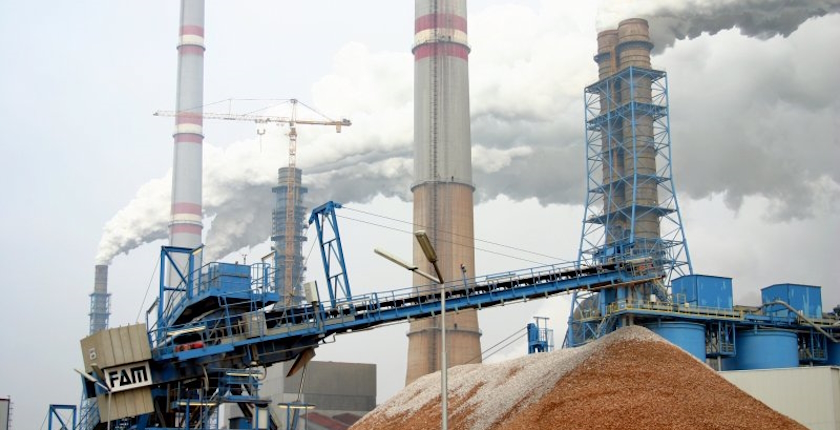
Bulgaria’s TPP Maritsa East 2 coal plant posts EUR 52 million loss for 2024

Even with a quota for the regulated electricity market in Bulgaria, low electricity prices pushed TPP Maritsa East 2 into a loss last year. It is the only state-owned coal power plant.

The financial report for 2024 showed a loss of EUR 52 million for TPP Maritsa East 2 (Maritsa-iztok 2), Kapital reported. It compares to a modest net income of EUR 29 million achieved one year earlier. Notably, the subsidiary of state-owned Bulgarian Energy Holding (BEH) had a record profit of some EUR 600 million in 2022, during the energy crisis.

Operating income plunged almost 15% to EUR 614 million last year. The only government-controlled coal power plant sold more electricity than in 2023, but at lower prices.

Moreover, liabilities surged to EUR 358 million from EUR 127 million, mainly due to greenhouse gas emission certificates. The gap between liabilities and assets reached EUR 1.18 billion, against EUR 920 million one year before, the report reads.

Regulated market keeps Maritsa East 2 afloat

Interestingly, almost 86% of the output was sold on the regulated electricity market, which covers households. For the past few years, TPP Maritsa East 2 has been operating under a quota determined by the Ministry of Energy, even though it doesn’t have the right, in principle, to work for the regulated market, the article notes.

Even with the market liberalization that was introduced on July 1, the facility keeps supplying households, the news outlet added. It was enabled through a new segment at the electricity exchange, for long-term contracts, with so-called non-standard products. They are intended for all sellers, but in practice the sellers are state-owned power plants: Kozloduy Nuclear Power Plant, TPP Maritsa East 2 and National Electricity Co.’s hydroelectric facilities.

It means the coal plant’s high production costs are passed on to household bills. It has 1.62 GW in nominal capacity, but it is utilizing much less. The enterprise sold 605 GWh in the open market and 3.23 TWh in the regulated market in 2024.

Coal plants failing to maintain competitiveness throughout EU

Slovakia and Spain officially intend to exit coal this year, followed by Greece (2026), France and Hungary (2027) and Denmark and Italy (2028). However, the dates could be pushed forward and there is a possibility that more countries will join the group in the meantime.

Several of the remaining facilities in the European Union and beyond are active just sporadically – in islands or to cover winter peaks or only until the district heating systems that they supply switch to cleaner sources.

Coal power is already uncompetitive most of the time, particularly because of emission costs. In addition, when such facilities are idle, their costs rise further because of salaries and the complex logistics, primarily mining operations. Other coal plants in Bulgaria are also affected.

by in News

Slovenia’s sole coal-fired power plant Šoštanj to keep main unit offline until fall

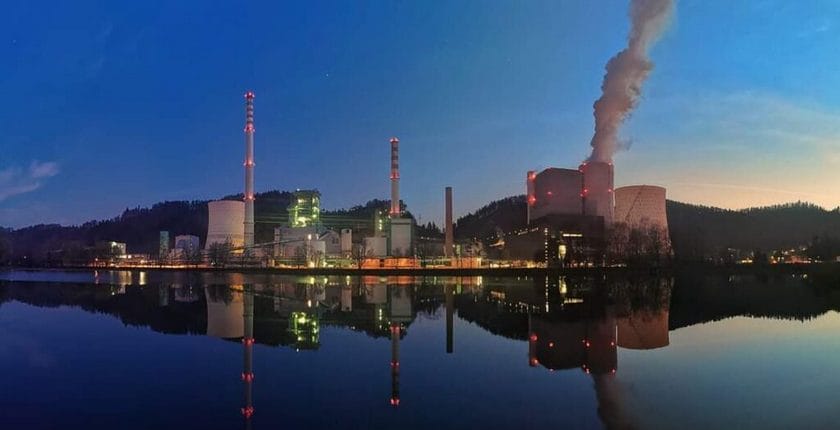
As of this year, Slovenia’s only coal-fired power plant, Termoelektrarna Šoštanj (TEŠ), has shifted its primary focus to supplying heat, with electricity now sold as a byproduct. The ongoing overhaul of its unit 6 is expected to be completed in the coming days, but the 600 MW block will not be restarted until the end of September, when demand for heat is set to rise.

As part of the coal-phaseout process, targeted for completion in 2033, the Government of Slovenia decided last year to set aside EUR 403 million to save TEŠ and coal mine Velenje from bankruptcy and take over both from state-owned power utility Holding Slovenske Elektrarne (HSE).

TEŠ hopes the fall months will drive revenues

TEŠ hopes that the fall months will enable it to meet this year’s revenue target, as the operation of unit 6 is unprofitable in the summer due to low market prices for electricity and reduced demand for heat. This year, the power plant aims to earn EUR 400 million from the sale of heat and electricity.

Apart from unit 6, TEŠ operates only one other coal-fired generator, unit 5, with a capacity of 345 MW, while its first four blocks have been shut down.

The changed circumstances have been challenging for TEŠ, according to its CEO, Branko Debeljak. As HSE no longer sells TEŠ’s electricity, the plant had to set up its own sales department and seek customers on the market. Even so, the first four months of 2025 were quite successful when it comes to electricity sales, says Debeljak. The plant sold 1,045 GWh of electricity, generating revenues of EUR 138 million, or EUR 29 million more than initially planned, according to him.

The overhaul of unit 6 began in April

The overhaul of unit 6 began on April 22 and was expected to be completed by June 20. However, due to delays in the delivery of components, it had to be extended until early July. The completion of the overhaul will be followed by a short trial run, and a restart is planned at the end of September when the need for heat supply is set to rise again.

Slovenia aims at a 55% drop in emissions by 2033, and an early closure of its only coal-fired plant could help achieve that target. It seems likely that TEŠ will be shut down within a few years or operate at minimum capacity.

In June, Ireland’s Moneypoint power plant stopped burning coal, marking the end of coal use in the country. Slovakia and Spain officially intend to exit coal in 2025, followed by Greece (2026), France and Hungary (2027), and Denmark and Italy (2028). However, the dates could be pushed forward, and more countries could join the group in the meantime.

by in News

Serbia secures EUR 50 million loan for air quality projects

The Government of Serbia has secured a EUR 50 million loan to fund a series of air quality projects across several cities. The funds will primarily go towards replacing coal- and fuel oil-fired boiler rooms in six cities.

For years, air pollution has been one of the biggest environmental issues in Serbia.

Minister of Environmental Protection Sara Pavkov and First Deputy Prime Minister and Minister of Finance Siniša Mali have signed two agreements with the European Bank for Reconstruction and Development (EBRD), which will soon lead to significant investments in air protection projects in multiple Serbian cities, the Ministry of Environmental Protection said.

Mali signed a EUR 50 million loan agreement, while Pavkov inked the project agreement. On behalf of the bank, both documents were signed by Matteo Colangeli, EBRD Regional Head of the Western Balkans.

EUR 50 million will be invested in cities with the highest levels of harmful emissions

Pavkov noted that based on these agreements, EUR 50 million would be invested in cities mapped as those with the largest excesses of harmful emissions. This is good news for residents of Belgrade, Niš, Valjevo, Zaječar, Novi Pazar, and Smederevo, where the projects will be implemented, she added.

In these cities, old, outdated boilers running on fuel oil, coal, and other fuels with an adverse impact on air quality will be replaced. Modern and sustainable heat energy sources, such as heat pumps, biomass, and industrial waste heat, will be installed, she stressed.

The projects will also include, where possible, connection to district heating systems or natural gas networks.

An air protection law is in the process of adoption

“These projects are the culmination of years of work. We have entered a phase where we can expect the launch of construction and intensification of the efforts for cleaner air, which remains one of our top priorities,” Pavkov stressed.

She recalled that an EBRD loan had helped replace 50-year-old coal boilers with state-of-the-art gas boilers at the Kragujevac district heating plant. The second phase, the remediation of the ash landfill, has also begun, she added.

From 2021 to 2024, the ministry has implemented projects to replace 169 boiler rooms in public institutions across 76 local authorities, according to Pavkov.

Under a public call, funds have been allocated for projects in 18 municipalities in 2025, with another call currently underway. An air protection bill is now before the National Assembly, intended to provide a new overarching framework and fresh momentum in the fight for better air quality, Pavkov noted.

by in News

Investment risk highest for nuclear power, lowest for solar

Nuclear power plants have the highest construction cost overrun and the longest time delays of all energy projects. In the clean energy sector, the worst marks for violation of set construction cost and timelines go to hydrogen, carbon capture and storage as well as gas power plants, according to a study by the Boston University Institute for Global Sustainability.

The average project costs 40% more than expected for construction and takes almost two years longer than planned, the Boston University Institute for Global Sustainability (IGS) said.

Its researchers used an original dataset 50% larger than the ones in previous literature. They examined cost overrun risks for 662 energy infrastructure projects across 83 countries built between 1936 and 2024, covering USD 1.358 trillion in investment and a total capacity of more than 400 GW.

In total, the study evaluated ten types of projects: coal-, oil-, and natural gas–fueled power plants; nuclear reactors; hydropower plants; utility-scale wind farms; utility-scale solar photovoltaic and concentrated solar power (CSP) facilities; high-voltage transmission lines; bioenergy and geothermal power plants; hydrogen production units; and carbon capture and storage (CCS) facilities.

Both hydrogen and CCS projects exhibited significant time and cost overruns

“We found that more than three fifths of the projects experienced cost overruns, with these overruns being particularly prominent in projects exceeding 1,561 MW in capacity. Positively, the escalation rate in cost overruns has been declining since 1976,” reads the study, published in the Energy Research & Social Science journal.

However, the findings show patterns of cost overruns varied by fuel source. Nuclear and fossil thermal projects exhibited higher cost escalation rates over time, whereas solar power projects showed a decline.

Critically, both hydrogen and CCS projects exhibited significant time and cost overruns, casting doubt on their ability to be rapidly scaled up, to address climate change or meet energy and climate policy priorities, the authors underlined.

The average nuclear power plant has a construction cost overrun of 102.5% and ends up costing USD 1.56 billion more than expected, IGS said.

Red flag for efforts to substantially push forward a hydrogen economy

“Worryingly, these findings raise a legitimate red flag concerning efforts to substantially push forward a hydrogen economy,” said Benjamin Sovacool, lead and first author of the study, director of IGS, and professor at Boston University’s Department of Earth and Environment.

In the results, solar energy and electricity grid transmission projects have the best construction track record and that they are often completed ahead of schedule or below expected cost.

Wind farms also performed favorably in the financial risk assessment, according to the study, called ‘Beyond economies of scale: Learning from construction cost overrun risks and time delays in global energy infrastructure projects’.

“Low-carbon sources of energy such as wind and solar not only have huge climatic and energy security benefits, but also financial advantages related to less construction risk and less chance of delays,” Sovacool stated.

For him, it’s further evidence that such technologies have an array of underrated and underappreciated social and economic value.

by in News

Serbia drafts just transition action plan

Serbia plans to invest EUR 88.8 million by 2030, through its just transition action plan, in activities aimed at mitigating the impacts of the planned reduction in coal-based energy production, and ensuring a just transition.

The Ministry of Mining and Energy has published a draft just transition action plan and launched a public debate. Within the process, it scheduled a meeting for June 9 in the Chamber of Commerce and Industry (PKS) in Belgrade.

A decarbonization plan will be subsequently defined, including for the shutdown of coal power plants and the transition of underground mines run by state-owned firm JP PEU Resavica, the document reads.

The draft includes an analysis of the planned closure of two coal power plants

The draft contains an analysis of the planned closure of coal-fired thermal power plants Kolubara A and Morava, the oldest in the country. State-owned power utility Elektroprivreda Srbije (EPS) operates them, alongside four other such facilities and open pit mining complexes Kolubara and Kostolac, while Resavica comprises nine mines.

Of note, EPS presented a preliminary plan in 2023 for shutting down its coal power plants.

A significant workforce reduction in lignite production is expected after 2030

The total number of employees in coal power plants and coal mines in Serbia is 25,288. About 20,000 are in the mines.

If the Kolubara and Morava plants were closed, about 472 jobs in the Kolubara region could be indirectly affected, mainly within subcontractors and firms in EPS’s value chain. The draft’s authors estimated that at Rembas, the largest mine within JP PEU Resavica, a total of 930 jobs could be directly affected by 2030, with an additional 958 to 1,367 jobs in indirect risk, primarily in mining subcontractors.

New jobs in the renewable energy sector

Citing Serbia’s Integrated National Energy and Climate Plan, the document adds the thermal power plants are expected to operate at reduced capacity after 2030, but that an accelerated closure is not foreseen. It would result in significant job cuts in lignite production, the draft reads.

The draft’s authors expect the transition to a green economy to create full-time jobs by 2030 and beyond, nationwide, in the construction, management, and maintenance of new renewable energy capacities.

The renewable energy industry in Serbia is projected to create up to 6,105 jobs across the country by 2030, of which 4,397 in the solar energy sector.

EUR 60 million allocated for industrial parks

Out of the planned EUR 88.6 million, the largest portion – EUR 60 million, would be allocated for the improvement of economic infrastructure in existing industrial parks. Local authorities would get grants to upgrade them, amounting to EUR 12 million.

The measure is expected to diversify local economies and attract new investments within industrial parks in affected areas.

The second-largest allocation in the draft would be EUR 12 million for an entrepreneurship and self-employment support program. It includes grants and tax incentives for starting new businesses, with investments of at least EUR 50,000 for small and medium-sized enterprises and EUR 10,000 for self-employed individuals.

Again, the initiative is expected to facilitate the creation of at least 200 businesses and support 200 self-employed individuals.

The draft is the result of a project financed by the European Bank for Reconstruction and Development (EBRD). It began in October 2021.

by in News

Slovenia keeps phasing out coal as key heating plant boosts natural gas share to 60%

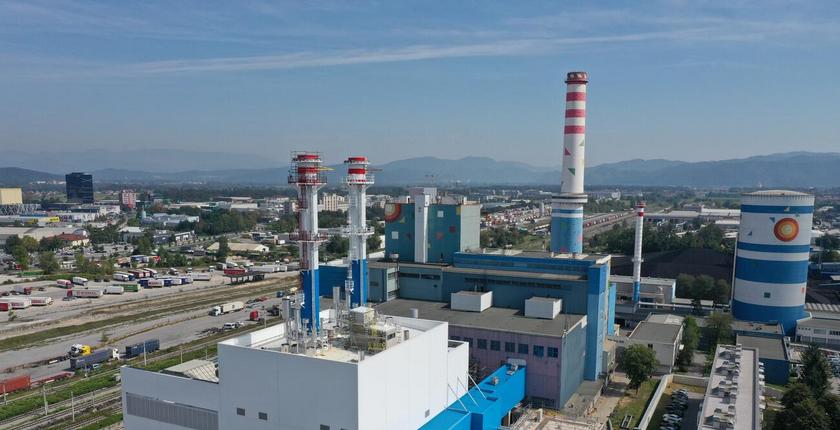
TE-TOL, the main district heating provider in the Slovenian capital, Ljubljana, has taken over a newly built gas-steam unit, reducing the share of coal in heat generation to 20% and marking another step toward a complete coal phaseout in the country.

Slovenia’s official deadline for abandoning coal is 2033, although there are indications it might happen much sooner. In a step seen as the beginning of the country’s coal phaseout, the Government of Slovenia decided in December to provide EUR 403 million to save the Šoštanj coal power plant and coal mine Velenje from bankruptcy, announcing it would take over both entities from state-owned power utility Holding Slovenske Elektrarne (HSE).

Over the weekend, Srečko Trunkelj, deputy CEO of Energetika Ljubljana, a state-controlled energy company that operates TE-TOL, explained that heat production at the plant was previously based on 65% coal, 19% natural gas, and 16% wood biomass. “This structure has changed significantly, as we now use 20% coal, 60% natural gas, and 20% wood biomass,” Trunkelj said at a conference on Sunday, the Naš stik magazine reported.

The share of coal in heat production at TE-TOL has now dropped from 65% to 20%

Last week, the Greek contractor handed over the management of the new gas-steam unit to TE-TOL. “The […] plant is now under our management, with a three-year warranty period,” Energetika Ljubljana explained.

The new unit, called PPE-TOL, comprises two gas turbines, each with a nominal electrical power of 57 MW, and one steam turbine with 42 MW of nominal power. Officially, the facilities are still in a trial operation period until the company obtains a use permit. The new gas-steam unit is expected to begin regular operation in the coming heating season.

The new unit will also boost TE-TOL’s electricity output

The new unit will also enable TE-TOL to boost its electricity generation, making it the third-largest power producer in the country. It will provide around 8% of the country’s total electricity supply, Energetika CEO Samo Lozej said earlier. Its output should be enough to supply 600,000 households.

Energetika Ljubljana operates the largest district heating network in Slovenia, supplying heat to about 60,000 homes, and is also a major player in the natural gas retail market, according to Slovenian media.

by in News

Serbia to soon finish study on use of nuclear energy – minister

The preliminary study on the use of nuclear energy in Serbia should be completed by the end of the second quarter, according to Dubravka Đedović Handanović, the Minister of Mining and Energy.

A preliminary technical study for considering the peaceful use of nuclear energy is being prepared by French state-owned energy utility EDF and engineering company Egis Industries. The two companies won a tender organized by the Ministry of Mining and Energy.

Minister Dubravka Đedović Handanović told public broadcaster RTS that the study focuses on three aspects. The first one is developing a roadmap for the implementation of 19 institutional and infrastructural steps for a potential nuclear program.

Experts from Serbia’s TSO EMS are involved in the preparation of the study

The roadmap, in her words, must be in line with the guidelines of the International Atomic Energy Agency (IAEA).

The second topic is an analysis of available technologies, including conventional nuclear power plants and small modular reactors (SMRs), and the third is to consider how a nuclear plant, depending on capacity, could be integrated into the country’s energy system.

Experts from Serbia’s transmission system operator Elektromreža Srbije are providing help in the third part, she noted.

Serbia would need to choose a partner for the development of a nuclear power project

According to Đedović Handanović, SMRs are a technology under development for cheaper facilities, which require less time to be built than conventional reactors.

“It is up to us to look at the advantages and disadvantages of both technologies, of which one is under development and the other is proven in the market, and say what we want to go with. Of course, if all the preconditions are met. Also, finally, with whom, as all the main developers of the technologies are certain companies from different parts of the world,” she stressed.

Baseload energy is crucial for the stability of the energy system

The minister pointed out that the IAEA prescribes clear steps each country must fulfill if it is considering the development of a nuclear program. It means no country can do anything on its own, she added.

“All those institutional and infrastructural prerequisites have to be checked, approved, verified, and ultimately monitored by the IAEA,” Đedović Handanović underlined.

Speaking about the long-term strategy, she recalled that baseload energy is crucial to secure the stability of the energy system. In Serbia it is currently provided from coal and natural gas, while nuclear plants can also play the role.

Natural gas, in her words, will serve as a transitional fuel for baseload energy for another 20-30 years, so it is necessary to find a long-term solution. Nuclear energy is one of the options, but it requires a lot of experience, time, and investment, Đedović Handanović noted.