by in News

Germany, Netherlands emerging as BESS optimization, offtake deal hotspots

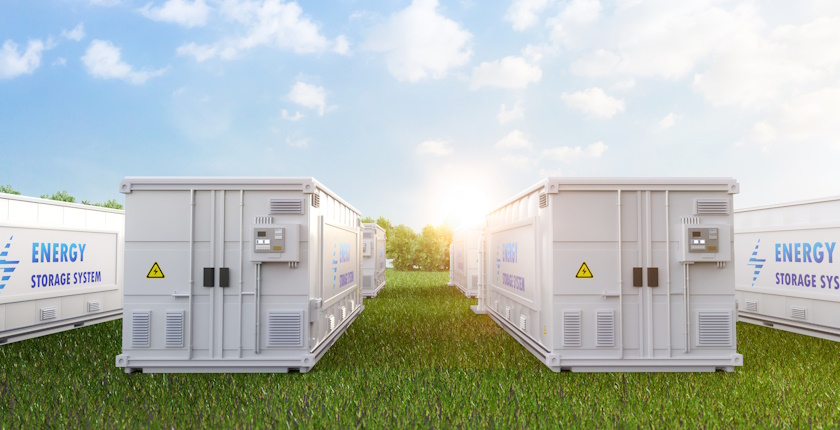
The BESS dealmaking landscape in Europe has evolved dramatically over the past four to five years, driven by diminishing battery pack costs and the emergence of stackable revenue streams in mature markets, Pexapark said in a new brief. Germany and Netherlands have emerged as hotspots for optimization and offtake, after Great Britain’s convincing lead for several years.

Navigating the fast-paced battery energy storage system (BESS) optimization market is a new challenge for the industry, given the growing number of players, the lack of standardization, and the speed of contractual innovation, Pexapark said in its BESS Brief. To support market participants, the firm has launched the BESS Deal Tracker, which captures the vast majority of publicly disclosed optimisation and offtake deals across European markets.

The first optimization agreements emerged five to six years ago in Great Britain – the maiden European country to develop an advanced utility-scale BESS market. Of note, the electricity systems of Great Britain and Northern Ireland are separate.

Spurred by multiple revenue stacking opportunities available to BESS – from the dynamic frequency response product suite to wholesale arbitrage, the balancing mechanism, imbalance, and inertia services – Great Britain has led the way in deal activity. As of May 26, it accounted for nearly 45% of contracted capability, with almost 2.7 GW signed and 35 out of 63 deals captured by the said Deal Tracker.

Austria, Denmark, Greece, Bulgaria join market with first deals

However, driven by strong fundamentals and a sheer need for flexibility, Germany is emerging as a dealmaking hotspot. In the first five months of 2025 alone, 11 BESS deals were announced in Germany, totaling 540 MWh.

“With ancillary services defying saturation predictions, and new revenue streams – such as inertia – coming up, we expect continued momentum in Europe’s largest and most liquid power market. That said, the German optimisation market is still at an early development stage. Lenders are not yet fully comfortable, and most deals have been merchant-based and short-term,” said the brief’s author and the organization’s Senior Analyst and BESS Lead Apostolis Valassas.

Beyond GB and Germany, the Netherlands stands out with four large-scale agreements announced in the past year. In another sign of the market’s move out of infancy, several markets – including Austria, Denmark, Greece and Bulgaria – recently recorded their first-ever BESS optimisation deals.

Evolving BESS duration, size

Most BESS offtake deals announced in 2020-2022 were predominantly for one-hour assets in Great Britain. At the time, frequency response – where shorter-duration batteries excel – dominated the revenue stack and shaped asset design.

A lot has changed since then. Rising wholesale market volatility driven by increasing renewable penetration, the decline in required capital expenditures (capex), and ongoing improvements in battery energy density have driven a transition toward longer-duration systems.

More megawatts were contracted in the first five months of this year than in 2024 in total

Indeed, the average battery duration in deals tracked by Pexapark has increased from just one hour in 2020 to 2.3 hours in 2025, signalling a broader strategic shift from solely focusing on ancillaries to trading across the whole stack.

Deal sizes are also growing exponentially, from an average 75 MW across 20 deals with disclosed operating power in 2024 to 138 MW across 24 deals in 2025, as of May. It is again a function of falling capex requirements, the strategies to deploy more megawatts to capture multi-market value, and growing lender appetite to finance larger-scale BESS assets, according to the report.

Pexapark, which provides of price data, market intelligence, and advisory services for renewable energy, was one of the knowledge partners at this year’s edition of Belgrade Energy Forum, organized by Balkan Green Energy News.
by in News

Foreign renewable energy investors remain committed to Romania as large plants coming online

Renewable energy companies from abroad aren’t intimidated by negative power prices in Romania, especially with the battery storage segment accelerating. Energy giants EDP Renewables and Engie have new solar power plants, and more renewable energy facilities are coming online, while the government is disbursing European grants.

The renewable energy market in Greece is consolidating and a number of foreign investors are leaving, but some other countries in the region that Balkan Green Energy News tracks remain attractive, especially Romania and Turkey. Big names from abroad keep coming, and the established ones are commissioning facilities and committing to more projects.

Like elsewhere in Europe and beyond, the increasing occurrence of low, zero and negative power prices are impacting the sentiment in Romania. But funding from the European Union, the government’s administrative support, renewable energy auctions and bets on battery storage seemingly outweigh the current risks.

EDPR’s new photovoltaic park Albina will generate 67 GWh per year

EDP Renewables (EDPR), subsidiary of Portuguese energy giant EDP, recently inaugurated its Albina photovoltaic plant. Located in western Romania, just outside of the city of Timisoara, the renewable energy unit came online late last year.

Albina has 60 MW in peak capacity and a 48.8 MW grid connection. The company expects it to generate 67 GWh per year. EDP said that with the new plant it reinforces its commitment to Romania. It operates wind and solar power plants in the country of over 570 MW in combined capacity.

Engie praises renewable energy potential in Romania

Engie Romania commissioned the sixth photovoltaic park in its portfolio. It is located in the commune of Ariceștii Rahtivani in Prahova county. Together with the new facility, of 37.2 MW in peak capacity, French Engie’s branch in Romania now has 248 MW in renewable energy in operation.

The site covers ​​57 hectares. Estimated annual output is 57 GWh. The firm owns three wind farms of 178 MW in total while its six PV systems have 70.3 MW in overall peak capacity. Last year it built one of the first hybrid power plants in the country.

Engie Romania said the new plant strengthened its position and praised the country’s “significant potential” in the renewable energy segment. The firm targets 1 GW in the country by 2030. It also distributes natural gas and supplies both gas and electricity, and offers energy services.

Rezolv building one of largest wind power plants in Europe

The Vifor wind farm in Buzău county, northeast of Bucharest, is almost half done. Rezolv Energy plans to finish it in 2027. The first phase is for 192 MW, with a planned expansion to a colossal 461 MW.

The company purchased Vestas turbines for the wind park, which is set to become the largest in Europe and the second-largest in Romania. The developer won a fixed electricity price for 15 years in the form of a contract for difference at the country’s renewable energy auction. The wind power plant will also benefit from a power purchase agreement (PPA).

Wind farm of 99.2 MW Galaţi in to launch operations next year

OX2 is building the Green Breeze wind farm, delivering the project as a turnkey construction project for the investor, Nala Renewables. The project involves 16 Vestas V162-6.2 MW turbines, or 99.2 MW altogether. Annual production at the future wind power plant in Galaţi in the eastern part of the country is 312 GWh, according to the estimate.

The facility is on schedule for the start of operations in the first half of next year. Together with Green Breeze, OX2 is working on 620 MW in five wind power projects. The Swedish company has said it intends to grow and diversify in the country.

Enery from Austria lining up renewable electricity plants in Romania

Romania-based Enevo announced that it started building a solar park of 54.2 MW in peak capacity for Enery Development.

Also in Dâmbovița county, Enery Element, the joint venture of the Austrian company with Element Power Group, has a project for a battery-backed PV park.

Total investment is some EUR 27.5 million, of which EUR 2.4 million is from the EU’s Modernisation Fund. The solar power component is 74 MW and the battery energy storage system (BESS) would provide 10.2 MWh in capacity. The location, formally run by project firm Gura Solar Plant, is in the Gura Ocniței commune.

Ecoener, headquartered in Spain, is developing an agrivoltaic project of 11 MW

A Spanish group with an annual turnover of almost EUR 100 million wants to build the first agrisolar park in Iași county, in the commune of Țibănești. Solar panels of 11 MW in total peak capacity would be placed 1.5 meters above ground. The investor, Ecoener, established a Romanian subsidiary for the endeavor: Ecoener Țibănești.

Greece’s PPC turning its wind, PV facilities into hybrid power plants with battery storage

Greek state-controlled Public Power Corp. (PPC) is developing a BESS investment through its firm Sun Challenge, which operates the Lumina solar power project in Călugăreni, Giurgiu county. The PV facility of 63 MW in peak capacity has been online for two years now. Lumina is PPC Renewables’ largest solar power unit in Romania.

It is one in a string of the Greek company’s energy storage projects. PPC plans BESS at its wind farms Topolog (27 MWh), Corugea (80 MWh) and Sălbatica (60 MWh) in Tulcea county. It slated another 120 MWh in total storage capacity at wind power plants Nicolae Bălcescu and Târgușor in Constanța county.

PPC operates wind, photovoltaic and hydropower capacity in Romania of 1.3 GW overall

The Fântânele-Cogealac-Gradina wind farm, which PPC took over from Macquarie Asset Management, already includes a BESS facility. The 600 MW facility is the largest in Romania of its kind.

In Prahova, PPC Renewables Romania plans a 10 MWh storage system at the Berceni 1 photovoltaic park, with an installed capacity of 9.8 MW. Another storage system, of 8 MWh, would be integrated with the Colibași photovoltaic park (7 MW) in Giurgiu county.

PPC operates wind, photovoltaic and hydropower capacity in Romania of 1.3 GW overall.

Turkey-based YEO Technologies, Danish company Eurowind Energy and Solarpro, a contractor from neighboring Bulgaria, all have new investment updates, too.

by in News

YEO’s Defic Globe buys projects for 219 MW in Romania amid rebranding

Defic Globe, YEO’s Istanbul-based joint venture with Emsolt Investments, acquired 15 project firms developing plans for power plants of 219 MW in total. The portfolio also brings a potential 320 MWh in battery energy storage systems (BESS). Separately, YEO launched its CALL Energy brand, which aims to build 1 GW in capacity by 2030.

Through its subsidiary Defic Globe, YEO Technology (YEO Teknoloji Enerji ve Endüstri) is continuing its expansion in Romania. The Istanbul-based joint venture with Emsolt Investments took over 15 special purpose vehicles (SPVs) or firms for particular investments. They are developing projects for power plants of 218.7 MW in overall peak capacity.

The facilities would be of different sizes and in various locations around Romania, the company said. In addition, the new portfolio brings the possibility for building BESS units with a combined capacity of 320 MWh, according to the update.

YEO, which holds 51% of Defic Globe, estimated the total investment at EUR 220 million. It said the acquisition grows its project portfolio in Romania to 590 MW in peak capacity. Some facilities are operational or under construction, and the others are in the planning phase.

The group comprises direct investments and joint endeavors with Shanghai Electric Power, Scatec and other international companies.

New brand CALL Energy investing up to USD 1 billion

YEO is active in more than 30 countries, delivering turnkey solutions in energy and industrial systems. In the Balkans, in addition to its energy expertise role, it invests in renewable energy projects.

The company carries out projects in areas from advanced energy storage solutions to power grids, high voltage transformer centers, renewable energy plants, industrial, commercial facilities and household energy conversion to hydrogen. YEO was a friend of this year’s edition of Belgrade Energy Forum, organized by Balkan Green Energy News.
Separately, the company launched its CALL Energy brand, formerly YEO Energy (YEO Enerji), and appointed Sacit Akbaş as the subsidiary’s chief executive officer. It aims to invest between USD 750 million and USD 1 billion, of which up to 70% abroad, to build 1 GW in capacity by 2030.

Projects for 1.5 GW in ten countries

Under the slogan CALL to Renewable Energy, the firm intends to develop large-scale projects, especially in Europe. The target growth markets are the eastern part of Europe and the Sub-Saharan regions of Africa, it revealed.

YEO Technology’s renewable energy arm operates 32.6 MW in peak capacity in Romania and Italy. It is about to boost the Romanian part to over 190 MW in peak capacity this year, with two power plants under construction. The project portfolio amounts to 1.5 GW.

YEO Technology’s renewable energy arm counts on growth through EPC services as well

CEO Akbaş came from Enerjisa, where he was the energy solutions director for more than two years. He said more than 30 projects are underway in ten countries on three continents.

CALL Energy also sees growth opportunities in contracting engineering, procurement and construction (EPC) services through the said endeavors. It added that it would engage in asset management as well.

The firm highlighted its preliminary licenses for nine battery-backed solar power projects in Turkey, of 346 MW in total connection capacity. It slated two of them for the start of construction next year. Furthermore, permitting is nearly complete for four hydropower projects of 32 MW altogether. The sites are on the Aras river in eastern Turkey.

by in News

HELLENiQ Energy buys ABO Energy Hellas, adding 1.5 GW in renewables projects

With the acquisition of ABO Energy Hellas, HELLENiQ Energy strengthened its project pipeline for renewables and energy storage by a third, to 6 GW.

Amid a consolidation in the renewables sector in Greece, HELLENiQ Energy Holdings said it completed, through its HELLENiQ Renewables subsidiary, the acquisition of ABO Energy Hellas. The transaction includes six affiliated entities with a portfolio of 22 renewable energy project clusters.

Total capacity under development in Greece amounts to 1.5 GW. ABO Energy Hellas, part of Germany-based ABO Energy, also brings its renewable energy project development and construction platform, according to the update. HELLENiQ Energy pointed out that the portfolio comprises all renewables technologies.

It includes 340 MW of photovoltaic projects under development, classified under priority category B, and 550 MW in projects for battery energy storage systems (BESS) eligible for participation in the process of obtaining priority connection terms.

At the end of March, HELLENiQ Energy operated renewable electricity plants of an overall 494 MW

With ABO Energy Hellas, the company expanded its renewables pipeline to more than 6 GW. It accelerates the strategic objective to achieve at least 2 GW of installed renewable energy capacity by 2030, it said.

Purchase price to grow if projects reach milestones

The two sides didn’t disclose the purchase price. If projects from the 1.5 gigawatt pipeline achieve certain milestones, additional consideration will become due, ABO Energy revealed.  “The sale of the Greek subsidiary improves our chances of success, reduces complexity of the ABO Energy group, and helps to further focus our business,” said Managing Director Karsten Schlageter.

Between 2019 and 2023, ABO Energy developed and sold five solar parks in Greece with a total capacity of more than 100 MW. The largest one is Margariti in Epirus, of 50 MW. The company connected four of them to the grid on a turnkey basis.

ABO Energy stressed it would remain active in Greece as a service provider and continue to provide commercial and technical management for the solar parks already built.

Photo: Margariti solar park (ABO Energy)

HELLENiQ Energy had almost 500 MW in operation at end of March alongside just as much in mature projects

HELLENiQ Energy, formerly Hellenic Petroleum, produces fossil fuels and petrochemicals and operates service stations. The company is rapidly expanding in the green energy segment as well. Notably, it won state support for its projects at Greece’s BESS auctions.

At the end of March, HELLENiQ Energy operated renewable electricity plants of 494 MW altogether. Photovoltaics made up 59%, while the rest was in wind turbines. At the time, the company had half a gigawatt under construction or in the ready-to-build stage.

It is about to complete the purchase of the remaining 50% of Elpedison, its joint venture in Greece with Italy-based Edison. They operate two gas-fired combined cycle power plants.

by in News

SolarPower Europe: EU needs ten times more battery storage by 2030 to meet renewables targets

SolarPower Europe believes that the European Union needs ten times more battery storage by 2030 to support the growth of solar and other renewable energy capacities and maintain the pace of the energy transition. To promote battery growth across the EU, SolarPower Europe has launched an initiative called the Battery Storage Europe Platform.

“Battery storage is no longer optional – it is essential. Without urgent action, the EU risks stalling its energy transition,” stated Juhi Dion Sud, the newly appointed Head of the Battery Storage Europe Platform. She added that a tenfold increase in battery storage by 2030 is vital to sustain the rapid growth of solar and other renewables, and to ensure the EU’s energy security, resilience and competitiveness.

Dion Sud: The EU needs to boost BESS capacities from 50 GWh to at least 500 GWh

The EU currently has just over 50 GWh of battery energy storage systems (BESS), but to stay on track for the 2030 renewables targets, the level must increase to between 500 GWh and 780 GWh, explained Dion Sud.

Walburga Hemetsberger, CEO of SolarPower Europe, described solar and storage as “the perfect pair,” adding that battery storage must grow at the same pace as solar installations across Europe.

The platform’s founding partners include REIB, Statkraft and Sunotec

The Battery Storage Europe Platform was launched with support from founding strategic partners, including Renewable Energy Insurance Broker (REIB), Statkraft, and Sunotec. Over 50 representatives from leading battery storage companies joined the kick-off day in Brussels.

The platform will represent the interests of the sector at the EU level, facilitating engagement with policymakers and delivering constructive legislative trade and investment frameworks for battery storage manufacturing and deployment, according to a press release from SolarPower Europe.

Participation in the platform is open to members of SolarPower Europe, with strategic partnership opportunities available for organizations interested in taking a leading role in the work of the platform, it added.

by in News

Solaris Holding launches production at large hybrid renewable energy park in Bulgaria

The new Selanovtsi solar farm of 59.8 MW in peak capacity near Vratsa was installed alongside a battery energy storage system of 107.3 MWh in capacity. The hybrid energy park, owned by Solaris Holding, is now accumulating the midday output and releasing it into the grid at hours of increased demand.

Engineering, supply and construction company Solaris Holding, a joint venture of the Bulgarian-German Sunotec and the main shareholders of Eurohold Bulgaria (Evrohold), launched the operation of a hybrid power plant in the municipality of Oryahovo in Vratsa district. The project in the country’s northwest is financed by United Bulgarian Bank (UBB or OBB) and the German Varengold Bank.

The Selanovtsi solar power plant’s peak capacity is 59.8 MW. It is integrated with a new battery energy storage system (BESS) of 107.3 MWh. Annual output is estimated at 79.9 GWh. It is equivalent to the energy needs of more than 22,000 households and it saves more than a million tons of carbon dioxide emissions, according to the developer.

Electrohold Trade, part of Electrohold Group and Eurohold, is responsible for the sale of electricity.

Hybrid power plant generating 79.9 GWh per year

The Selanovtsi facility, located near an eponymous village, spans 37.9 hectares. It consists of 103,116 solar modules. A team of 250 people built the hybrid renewable energy park, which features lithium-ion-phosphate (LFP) batteries, according to the update.

During the hours of lower consumption, the integrated system stores the green energy and delivers it to the grid around the daily demand peaks. It ensures a more balanced load on the electricity system, increases its stability and efficiency, and contributes to a more reliable integration of renewable sources into the national grid, the statement adds.

Solaris has four even larger projects underway

Solaris plans to commission four more battery-powered photovoltaic plants, even larger in size. In September, it inaugurated a hybrid solar power and storage facility in Pernik.

BESS has become a standard element of PV projects in Bulgaria. In addition, the country’s battery manufacturing capacity is growing and the government has completed its tenders for state support to BESS combined with renewable energy plants, and for standalone units. But even before the subsidies, there are facilities under construction.

by in News

Vatopedi monastery on Mt. Athos gets largest grid-forming BESS in Greece

A grid-forming battery energy storage system of 3 MW was put into trial operation at the Vatopedi monastery on Mount Athos. The project is part of the green energy transition of the monastic republic in northern Greece.

The Sacred Patriarchal and Stavopegial Monastery of Vatopedi, founded in the 10th century, has a microgrid. Engineering, procurement and construction (EPC) contractor ENGAIA said it installed the largest grid-forming battery energy storage system (BESS) in Greece at the site. The facility with 3 MW in operating power and a capacity of 6 MWh is also the largest in the country, according to the company.

The Monastic Republic of Mount Athos of 20 monasteries in the Chalkidiki peninsula in northern Greece isn’t connected to the national electricity network. Reliant until recently only on diesel-fired generators and solid fuel, the self-governing area is shifting to solar power with storage.

Not long ago, Mount Athos relied on diesel-fired generators and solid fuel for its energy needs

ENGAIA, a Greek member of the London-based ECOERA group of companies, is also adding a 1.1 MW photovoltaic unit. It said it would enable it to commission the battery facility fully.

The company stressed that the independent microgrid with a virtual synchronous generator (VSG) at Vatopedi, enabling energy autonomy, is also the largest in the country and one of the largest in Europe. The new BESS is the first large-scale deployment of Huawei’s equipment in the sector in Greece.

Mount Athos is also known as Agion Oros – Holy Mountain. Three years ago, European funds were approved for 21 autonomous photovoltaic stations, with a total capacity of 2.64 MW, in combination with energy storage systems. Mytilineos, now called Metlen, won the contract for the installation of the facilities.

by in News

Hungary’s MAVIR commissions 60 MWh battery energy storage system

MAVIR, the Hungarian electricity transmission system operator (TSO), put into operation a battery energy storage system, BESS, of 20 MW in capability and a three-hour cycle. It will help grid security and the integration of renewable energy sources.

After entering the world’s top ten in photovoltaic capacity per capita, Hungary is picking up pace in terms of batteries as well. Energy storage units are coming online to maintain grid stability and bridge the hours between the peaks of daily solar power production and electricity consumption. Transmission system operator MAVIR commissioned a BESS of 20 MW in operating power and a three-hour cycle, translating to 60 MWh in capacity.

The EUR 20.3 million project received support in the form of a grant via the European Union. MET Group also put into operation a similarly-sized BESS last month in Hungary, while MOL Group launched construction of another one.

MAVIR’s battery energy storage system is in Szolnok, southeast from the capital Budapest. The company picked Forest-Vill as the contractor in late 2023. They signed the contract in February 2024. The same firm built MET Group’s BESS and also used equipment from Huawei Technologies.

Investors in BESS in Hungary are benefiting from EU grants

MAVIR’s new facility will contribute to grid security and a more efficient integration of renewable energy sources and support a sustainable, green future, said Deputy Minister of Energy and Parliamentary State Secretary of the Ministry of Energy Gábor Czepek.

The government’s EUR 45.1 million subsidy program for residential and corporate investments resulted in the installation of 12,000 batteries in households of 109 MWh in total, the official pointed out. Hungary now hosts 114 MW in battery capability.

Czepek estimated that the grants would bring 1 GW online by 2030, as targeted. Another call, of EUR 12.5 million, will soon be launched for energy storage for the industrial sector, he stressed.

Notably, the Ministry of Energy said solar power production reached 6.25 GW around noon on June 25. It was more than the country’s entire electricity demand at the time, it added.

by in News

OMV Petrom enters Bulgarian solar power market as partner in one of biggest projects

As part of its decarbonization efforts, Romanian hydrocarbons producer OMV Petrom is strengthening its presence in neighboring Bulgaria. It agreed to buy 50% of the Gabare solar power project, of 400 MW, from its developer Enery Element.

The solar power investment frenzy in most of Southeastern Europe is continuing despite rising curtailments and the frequent occurrence of negative power prices. Major developers and operators are counting on battery storage to gradually close the still widening gap between intraday peak production and consumption in spring and autumn.

Romanian oil and gas company OMV Petrom – a subsidiary of OMV – is acquiring a 50% stake in Bulgarian firm Dunav Solar Plant. It is developing the 400 MW Gabare photovoltaic project in Byala Slatina near Sofia.

Until now, the sole owner was Enery Element, a joint venture between Austrian renewable energy company Enery Development and its Bulgarian partner Element Power Group. The two sides didn’t disclose the amount. They expect to close the transaction later this year, after fulfilling certain conditions.

Partners to invest EUR 200 million in total by production launch in 2027

The solar park is expected to enter commercial operation in 2027. By then, OMV Petrom and Enery plan to invest EUR 200 million, including from external financing. They are targeting their final investment decision before the end of 2025.

Solar trackers will maximize output, which will be equivalent to the consumption of 150,000 domestic households, the Romanian company pointed out. A battery energy storage system (BESS) of up to 600 MWh in capacity is an option for future consideration, OMV Petrom added.

Neel: Natural gas and renewables complement each other

“By investing in one of the largest photovoltaic projects in Bulgaria, we are strengthening our presence on this neighbouring market and are supporting the region’s energy transition. We believe that natural gas and renewables complement each other and play a key role in reducing emissions while ensuring energy stability,” said member of the Executive Board of OMV Petrom Franck Neel, responsible for the Gas and Power division.

He added that the company would also offtake 50% of the generated electricity, through a power purchase agreement (PPA), without revealing further details.

Enery currently generates almost 700 GWh of clean electricity per year from 490 MW in installed capacity. It has 8 GW in the project pipeline in 11 countries.

Permits for PV park secured

The construction permits and the grid connection have already been secured, according to the update. At 400 MW in peak capacity, Apriltsi is the largest solar power plant in the Balkans and Eastern Europe, excluding Turkey.

However, a PV system of 550 MW in Greece is about to be completed.

OMV Petrom is the largest integrated energy producer in Southeastern Europe, with an annual group hydrocarbon production of 40 million barrels of oil equivalent in 2024. In addition, it is expanding in the segments of wind power and photovoltaics, energy storage, alternative fuels including green hydrogen, and chargers for electric vehicles.

OMV earlier expressed interest in renewables in Serbia and Hungary as well

The group has a refining capacity of 4.5 million tons. It operates an 860 MW high-efficiency gas-fired power plant. The group is present in Romania and neighbouring countries through 780 filling stations under the brands OMV and Petrom, of which 93 in Bulgaria.

At the end of last year, Austrian energy giant OMV had a 51.2% stake in OMV Petrom. The Romanian Ministry of Energy controlled 20.7% and pension funds in the country participated with 23.7% in total.

In Bulgaria, OMV Petrom started supplying natural gas to business customers last year. Following the discovery of gas resources in Romania’s Neptun Deep block in the Black Sea, it is now exploring the gas potential in Bulgaria’s Han Asparuh block. In April, the company said it approved an investment budget of EUR 1.6 billion for 2025, or over 20% more than in 2024.

Pparent company OMV, headquartered in Vienna, expressed interest last summer in the wind and solar power potential of Romania, Serbia, Bulgaria and Hungary.

by in News

Alteo building solar park with battery storage for MOL Group

MOL’s 37.4 MW solar power plant with a battery energy storage system (BESS) of 40 MWh will contribute to the energy independence of its oil and gas complex in southern Hungary. Alteo is the contractor building the facility. The battery segment has received grants totaling EUR 20.5 million.

MOL Group marked the start of construction of a solar park and BESS at its Algyő site in Csongrád-Csanád county. The Hungarian company pointed out that smart green transition, reducing external energy consumption, is a key element of its Shape Tomorrow strategy.

The investment will significantly contribute to the energy independence of the oil and gas complex in southern Hungary, improve the flexibility of electricity supply and lower the site’s CO2 emissions by 13,000 tons per year, according to the announcement.

MOL Group hired Alteo, in which it holds minority stake

The photovoltaic plant project is for 37.4 MW and the battery energy storage system would have 40 MWh in capacity. Alteo, listed at the Budapest Stock Exchange, is the contractor for the construction of the facility. MOL Group, which holds a minority stake, controls a total of 73.8% of its shares together with two private equity funds.

The company’s full name is Alteo Energy Services. As an aggregator, it owns or operates gas power plants and renewables, combined with energy storage, while also providing software as a service (SaaS).

Storage is essential for smart energy transition

MOL has won support of EUR 20.5 million in total for the energy storage project in Algyő. A EUR 6.7 million grant came via the European Union’s Recovery and Resilience Facility (RRF) and Hungary’s National Recovery and Resilience Plan (NRRP), while the government secured the remainder.

“Our strategic goal is a smart energy transition, for which energy storage is essential, as it ensures the integration and flexible use of sustainable energy systems. Algyő is a symbolic location for us – it is here that six decades of industrial experience meet the technology of the future,” said Managing Director of MOL Exploration and Production Hungary Péter Archibald Schubert.

Solar power capacity in Hungary has topped 8 GW

The solar power plant’s output is equivalent to the annual consumption of 22,500 households in the county, while the BESS can flexibly cover 7,300 households, he added.

MOL Group operates seven solar parks in Hungary and two in Croatia, of 111 MW altogether. Its goal is to reach 200 MW in renewable energy capacity by the end of next year.

Alteo will operate MOL’s other battery energy storage system, in Tiszaújváros

Of note, the company broke ground in March for a 40 MWh battery system at the MOL Petrochemicals site in Tiszaújváros, in northeastern Hungary. It selected Alteo as its operator. The investment is worth EUR 16.3 million, of which EUR 6.7 million is a grant from NRRP.

As for the PV and battery investment in Algyő, the local authority made the 47-hectare site available to the integrated hydrocarbons producer, Hungarian media reported.

At the ceremony, Deputy State Secretary for Energy Transition at the Ministry of Energy Viktor Horváth said that the country’s solar power capacity has surpassed 8 GW. It is ninth in the world in PV capacity per capita.

In other storage news, MET Group inaugurated the largest BESS in Hungary last week at its gas power plant near Budapest.