by in News

Renalfa Advances Oslomej Solar Project with 50 MW Battery Storage Installation

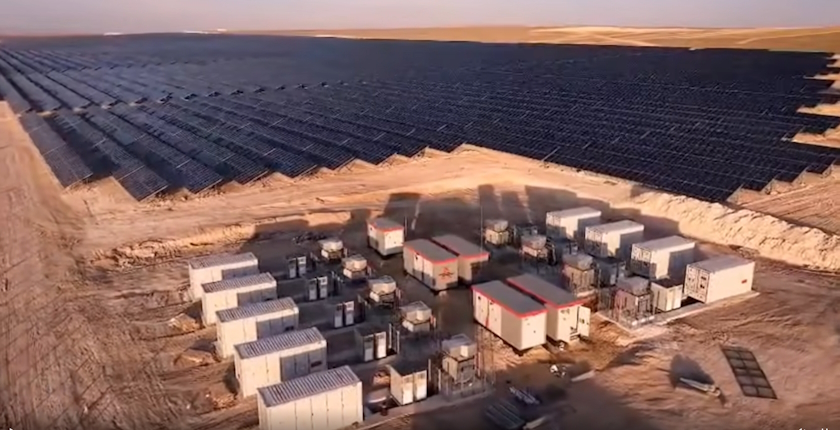
Austria-based developer and independent power producer Renalfa IPP has commenced the installation of a battery energy storage system (BESS) at its solar power plant in Oslomej, North Macedonia. The system will have an operating power of 50 MW and a storage capacity of 200 MWh, marking a significant step in enhancing grid flexibility and renewable integration.

The co-located BESS is being deployed alongside the 65.8 MW Oslomej solar power plant, which is situated on the site of a former coal mine. The project reflects ongoing efforts to repurpose legacy fossil fuel infrastructure into clean energy assets. The solar facility was developed through a public-private partnership with state-owned utility Elektrani na Severna Makedonija (ESM).

Financing for the solar plant was provided by the Green for Growth Fund, which has also committed €24 million to support the deployment of the battery storage system. The combined investment forms part of a broader initiative to transition North Macedonia’s coal-based energy complex toward sustainable generation.

In 2025, Renalfa secured a €315 million loan facility from a consortium led by the European Bank for Reconstruction and Development. The financing underpins the company’s €1.2 billion regional investment program, which targets the development of approximately 1.6 GW of renewable generation capacity and 3.3 GWh of co-located battery storage across Bulgaria, Hungary, Romania, and North Macedonia.

These assets are expected to produce around 2.3 TWh of green electricity annually—sufficient to meet the energy needs of approximately 920,000 households—while supporting grid stability through integrated storage solutions.

Beyond North Macedonia, Renalfa is also advancing a major hybrid renewable project in Hungary. The company is developing a 450 MW solar power plant in Szihalom, complemented by a BESS with an operating power of 250 MW and a capacity of 1 GWh. The battery system is being supplied by HiTHIUM.

According to Renalfa, the Szihalom project represents the largest hybrid renewable energy development undertaken in Hungary to date and ranks among the most significant such projects in Europe.

by in News

KESH partners with France’s EDF and AFD to develop Albania’s Energy Storage Roadmap

Tirana — In a decisive move toward modernizing its national grid, the Albanian state-owned power utility, KESH (Albanian Electric Power Corp), has finalized a strategic partnership with Électricité de France (EDF) and the French Development Agency (AFD). The collaboration focuses on the development of a comprehensive energy storage strategy, underpinned by a €400,000 grant earmarked by the AFD.

This initiative arrives at a critical juncture for Albania. While the country boasts a near-total reliance on renewable hydropower for domestic production, its lack of grid-scale energy storage remains a significant structural vulnerability. As the global energy transition demands higher flexibility, the partnership aims to bridge the gap between Albania’s current hydro-centric model and a diversified, resilient future.

Engineering Flexibility: The Scope of the Partnership

The primary objective of the agreement is to identify and evaluate the most effective storage technologies suited for Albania’s existing infrastructure. The resulting study will serve as a technical blueprint for the nation’s Energy Storage Strategy, focusing on several key pillars:

  • Renewable Integration: Facilitating the entry of solar and wind energy into a grid historically dominated by water power.

  • System Modernization: Increasing the security of supply and enhancing operational flexibility.

  • Climate Resilience: Improving the long-term sustainability and management of Albania’s vital water resources and assets.

The technical expertise for this transition will be provided by the French state-owned giant EDF, a global leader in low-carbon energy, while the AFD continues to expand its financial and developmental footprint across the Western Balkans.

High-Level Diplomatic Support

The signing ceremony was attended by Nicolas Forissier, the French Minister Delegate for Foreign Trade and Economic Attractiveness. Minister Forissier emphasized that this agreement underscores Albania’s status as a priority partner for France, reflecting Paris’s commitment to supporting the country’s integration into the European Union through the mobilization of technical and financial instruments.

Under the leadership of Viola Haxhiademi, who assumed the role of CEO in late December, KESH is positioning itself to manage significant future capacities. Currently, planned projects—including KESH’s pumped storage capacity in the Drin (Drim) cascade and Statkraft’s Moglica project—represent a potential 1.6 GW of storage capacity.

A Continuing Collaboration

This latest deal builds upon an existing relationship between KESH and the AFD. Last year, the two entities signed an agreement focused on the advanced management of the Drin River cascade, the backbone of Albania’s energy sector. By adding a formal storage strategy to this framework, Albania is taking a sophisticated step toward aligning its energy sector with EU standards and the exigencies of the green transition.

by in News

DAPEEP Study Signals Strong Revenue Prospects for Greece’s First Standalone Battery Projects

Standalone battery projects in Greece poised for strong revenues, says Operator of Renewable Energy Sources & Guarantees of Origin (DAPEEP), Greece, battery storage, DAPEEP, energy storage, balancing market, wholesale market, grid services, auctions, investors, 700 MW, 4.7 GW

Greece’s first standalone battery storage installations are projected to generate substantial revenues when they enter commercial operation, according to a new study by DAPEEP.

The study modelled several scenarios; its principal case assumes revenues 75% above the baseline. Under that scenario, two-hour systems running for the full year of 2026 could earn about EUR 157,057 per MW annually. Four-hour systems are estimated to yield EUR 100,885 per MW per year, although those units are expected to commence operations in the second half of 2026.

Although the projected figures assume continuous operation through 2026, the report notes they are theoretical: the earliest standalone batteries are expected to reach commercial operation from late spring. A number of installations have already been built and are awaiting final regulatory clearance. Investors have expressed frustration at delays, warning that prolonged idle time can degrade battery performance and reduce capacity.

The initial tranche from the country’s three auctions will deliver roughly 700 MW by late in the first half of 2026, DAPEEP says, followed in subsequent years by an additional 4.7 GW of unsubsidised capacity.

DAPEEP highlights a dual revenue model for standalone storage. Operating income will be derived partly from the wholesale electricity market and partly from the balancing market. The difference between minimum and maximum hourly prices in the wholesale market is identified as the principal profit driver, while balancing services provide a complementary revenue stream and system-stabilising value.

In the early phase, day-ahead and intraday trading are expected to account for roughly 65% of revenues; that share is forecast to decline to about 40% later in the year as market dynamics evolve. DAPEEP anticipates that wholesale revenues will be resilient to the initial influx of projects, but cautions that the balancing market will be more sensitive to the additional standalone storage capacity.

The study’s findings underline the commercial potential of battery storage in Greece while also highlighting operational and market-integration challenges that policymakers, regulators and investors will need to resolve to realise that potential.

by in News

Bulgaria’s Biggest Solar Plan Stalled in Court

Suhindol Solar Park Faces Legal Setback After Local and Environmental Complaints

Environmental organizations and residents in Suhindol, north-central Bulgaria, are pushing back against a planned EUR 450 million hybrid renewable energy project that would combine a 500 MW solar park with 1 GWh of battery storage. Opponents argue the development would significantly reduce available agricultural land in the municipality, while the investor says it is ready to implement environmental safeguards and a community support program.

Court Cancels Approval for Preliminary Works

Following complaints filed by environmental groups, the Administrative Court in Veliko Tarnovo overturned the approval for preliminary works on a hybrid power plant planned across 945 hectares (almost 9.5 square kilometers) near Suhindol.

The project is being led by Wabi-Sabi Alpha, a company linked to Austria-based Green Source Group. The firm had received the go-ahead two weeks earlier from the Regional Inspectorate of Environment and Water (RIEW) in Veliko Tarnovo.

500 MW Solar Park With 1 GWh Batteries

Through its project company, Wabi-Sabi Alpha plans to build a solar facility with 500 MW peak capacity, supported by battery storage designed for 250 MW operating power and 1 GWh capacity, as reported by Kapital.

If completed, it would become Bulgaria’s largest photovoltaic project, though the development is structured into five separate units. These would connect to the national transmission grid through a 400 kV substation.

The company secured municipal land under a 36-year lease, with total investment estimated at EUR 450 million.

Land Use Concerns: Arable Land and Pastures in Focus

Environmentalists, including the Bulgarian Society for the Protection of Birds (BSPB/BDZP), along with local residents, claim the investor began cutting trees and bushes before all procedures were completed.

Critics warn the project could affect:

  • Nearly 11% of the municipality’s arable land

  • Around 40% of its pastures

  • About 6% of Suhindol’s overall territory

While the hybrid power plant would physically cover about 30% of the designated project area—spread across multiple separate plots—opponents stress that the entire zone would be reclassified as industrial land.

Some local voices have also raised concerns about potential impacts on wildlife habitats, protected areas and species, and the proximity of archaeological sites. Opponents argue that the environmental assessment process was treated as a formality rather than a rigorous review.

Investor Offers Community Program and Compensation

Wabi-Sabi Alpha says it is prepared to go beyond the measures required by the environmental authorities. The firm has outlined a community program that includes:

  • Compensation for affected farmers

  • Covering electricity costs for several municipal buildings

  • Paying for street lighting, which it would also replace

  • Sponsorship support for the local football club, among other initiatives

Green Source’s Regional Footprint

Green Source Group is active across multiple markets in Central and Southeastern Europe, including Romania, Croatia, Serbia, Hungary, Slovakia, and the Czech Republic. The company established Wabi-Sabi Alpha together with LSG Group and Core Value Capital.

Wider Resistance to Large Renewable Projects

The dispute in Suhindol comes amid a broader trend in Bulgaria, where citizens and activist groups have campaigned in recent years against several large-scale renewable energy developments, often citing land use, biodiversity, and transparency concerns.

by in News

ContourGlobal enters Greece with battery projects, small PV plants purchase

KKR-owned ContourGlobal bought a group of small solar power plants in Greece, alongside a portfolio of battery storage projects totaling 500 MW in operating power and 2 GWh in capacity. It is the company’s debut in the country’s energy sector.

Right after the inauguration of its standalone battery energy storage system in Bulgaria of 202 MW and 500 MWh, ContourGlobal revealed that it entered neighboring Greece through three acquisitions. The London-based company said it acquired photovoltaic systems of 37 MW in overall peak capacity and a group of mature projects for battery energy storage systems (BESS).

There are 26 solar power plants, commissioned between 2011 and 2022. They were owned by Quest Energy, a subsidiary of Quest Holdings, listd on the Athens Stock Exchange. The assets are contracted under feed-in tariff (FiT) and feed-in premium (FiP) supporting schemes, providing both predictable and premium revenues, ContourGlobal pointed out.

Expected yearly output is 51 GWh, enough to power as many as 15,000 Greek households per year.

ContourGlobal has acquired in recent months the full ownership of six battery storage projects through two different transactions with FRV (Fotowatio Renewable Ventures) from Spain and Greek developer Zephiros, the announcement adds. They total 500 MW in capability and 2 GWh of storage capacity.

ContourGlobal is breaking ground for its first BESS plant in Greece this quarter

The ready-to-build (RtB) Taxiarches project is for 100 MW and 400 MWh, respectively. The site is in Farkadona in the Trikala regional unit in Thessaly. Construction is scheduled to begin before the end of March and commercial operation is expected by early 2027.

“Building on our experience operating large-scale BESS projects from Chile to Bulgaria and on the developments already underway in the United States, we see Greece as a key market to scale our battery storage portfolio in Europe and support the country’s energy transition,” Chief Executive Officer Antonio Cammisecra said.

All BESS projects have permits

All projects have secured environmental approvals and key permits, and have applied for grid connection, ContourGlobal stressed.

Although Greece is a relatively small power market in Europe with 24 GW of installed capacity, it is the second-largest in the Balkan region and is experiencing rapid growth in renewables, the company added.

“While historically dominated by lignite and gas, the country is accelerating renewable development, with solar and wind capacity projected to reach around 60 GW by 2060. At the end of the current decade, nearly 70% of installed capacity and electricity generation are expected to come from renewable sources, increasing the need for flexible, grid-scale storage. Moreover, the country is projected to become a net exporter of electricity from 2026,” the update reads.

Expansion ambitions for Greece, Europe

The company said it is assessing further development opportunities in Greece as part of its long-term growth strategy in renewables and battery storage.

ContourGlobal underscored that the new transactions are strengthening its European platform for further growth in renewables and battery storage, building on its established presence in Italy, Spain and Austria.

As for Southeastern Europe, Bulgaria is booming with BESS throughout, Romania is gaining momentum, while Greece is taking a long jump approach, with some administrative hurdles continuing. Turkey is commissioning its first hybrid power plants.

Of note, ContourGlobal was involved in a coal power project in Kosovo* but eventually decided to quit, citing political issues.

* This designation is without prejudice to positions onstatus and is in line with UNSCR 1244/99 and the ICJ Opinion on the Kosovo declaration of independence.
by in News

Turkey’s first large solar-BESS power plant inaugurated

Oze Grup has built a 49 MW photovoltaic facility with a 34 MWh battery storage system southwest of Ankara. It is the first such hybrid power plant in Turkey.

Energy storage systems are indispensable for grid security and price stability, according to Chairman of Turkey’s Energy Market Regulatory Authority (EMRA or EPDK) Mustafa Yılmaz. “Energy is no longer just about production. The real issue is ensuring that the electricity produced is integrated into the system at the right time, in the right place, and safely,” he said at the inauguration of the country’s first large solar power plant with energy storage, built by Oze Grup.

The site is in Sivrihisar in Eskişehir, some one hundred kilometers southwest of Ankara. The solar power plant has 49.2 MW in peak capacity. Its 29 MW grid connection matches the capability of the battery energy storage system (BESS), which has 34.1 MWh in capacity.

Oze Grup got the first project approval and the trial permit in the DGES category. The acronym is for licensed solar-storage systems, as opposed to self-consumption facilities. It was the Ankara-based construction company’s first energy project.

PVI Enerji designed and built the facility for Oze İnşaat ve Beton Sanayi. BS Distributed Energy Systems (BS DES) was involved in all stages. The other contractors are ELIN Enerji, HMK Demir Çelik, Sunroof Enerji and Solex Energy.

The chief regulator said the new hybrid power plant marks a vision change. “The sun doesn’t always shine, the wind doesn’t always blow. Renewable energy can only become a primary driver through storage,” Yılmaz stated.

He added that Turkey is now fully prepared for investments in renewable electricity plants with storage. The process has been rather slow, as the legislation for fast-tracking such projects was issued more than three years ago.

Oze Grup completed the hybrid power plant late last year. Notably, Polat Enerji received the approval from the Ministry of Energy and Natural Resources for its licensed wind-storage system (DRES), the first in Turkey.

by in News

Motor Oil’s MORE completes three battery systems in Greece

MORE, standing for Motor Oil Renewable Energy, built three standalone battery energy storage systems in Greece. The company won government support for the projects two years ago at an auction.

Oil refiner Motor Oil Hellas said its green energy arm has installed 72 MW in BESS capability, with 144 MWh in total capacity. The three standalone facilities are in Phocis (Fokida), Florina, and Boeotia (Viotia).

MORE, which is an acronym of Motor Oil Renewable Energy, completed the battery systems in just three months, the update reveals. The company pointed out they are among the first of such a scale in Greece.

“The operation of these energy storage systems will lead to a substantial further reduction in electricity prices for consumers by utilizing renewable energy that is currently being curtailed. At the same time, they will contribute to grid stability and enhance the country’s energy security,” Motor Oil added.

The three projects were selected during the second competitive process of the Regulatory Authority for Energy, Waste and Water (RAAEY or RAEWW) for energy storage systems. It was held in 2024. The investments are funded through the National Recovery and Resilience Plan Greece 2.0 and the European Union’s Recovery and Resilience Facility, under the NextGenerationEU program.

According to recent reports, new BESS facilities of 300 MW in combined operating power were waiting for approvals in Greece to be able to start operating.

Athens International Airport (AIA) Eleftherios Venizelos inaugurated a large solar-BESS hybrid power plant last month. Government-controlled Public Power Corp. – PPC Group is building three standalone battery storage systems at its coal plants.

Motor Oil is also involved in hydrogen projects, wind power and carbon capture and storage.

by in News

Motor Oil’s MORE completes three battery systems in Greece

MORE, standing for Motor Oil Renewable Energy, built three standalone battery energy storage systems in Greece. The company won government support for the projects two years ago at an auction.

Oil refiner Motor Oil Hellas said its green energy arm has installed 72 MW in BESS capability, with 144 MWh in total capacity. The three standalone facilities are in Phocis (Fokida), Florina, and Boeotia (Viotia).

MORE, which is an acronym of Motor Oil Renewable Energy, completed the battery systems in just three months, the update reveals. The company pointed out they are among the first of such a scale in Greece.

“The operation of these energy storage systems will lead to a substantial further reduction in electricity prices for consumers by utilizing renewable energy that is currently being curtailed. At the same time, they will contribute to grid stability and enhance the country’s energy security,” Motor Oil added.

The three projects were selected during the second competitive process of the Regulatory Authority for Energy, Waste and Water (RAAEY or RAEWW) for energy storage systems. It was held in 2024. The investments are funded through the National Recovery and Resilience Plan Greece 2.0 and the European Union’s Recovery and Resilience Facility, under the NextGenerationEU program.

According to recent reports, new BESS facilities of 300 MW in combined operating power were waiting for approvals in Greece to be able to start operating.

Athens International Airport (AIA) Eleftherios Venizelos inaugurated a large solar-BESS hybrid power plant last month. Government-controlled Public Power Corp. – PPC Group is building three standalone battery storage systems at its coal plants.

Motor Oil is also involved in hydrogen projects, wind power and carbon capture and storage.

by in News

KOSTT takes over land in Kosovo* for battery system in US-funded project

Transmission, System and Market Operator (KOSTT) of Kosovo* signed a contract with the Ministry of Economy and Municipality of Ferizaj, receiving 2.3 hectares of land for a 45 MW battery project. It is funded through the Millennium Challenge Compact, initiated in 2022 by the United States, acting through its Millennium Challenge Corp. (MCC), and the government in Prishtina.

Almost a year after the prequalification call for potential contractors, KOSTT received 2.3 hectares of land from the Municipality of Ferizaj (Uroševac) for a battery energy storage system (BESS).

The transmission system operator (TSO) of Kosovo* pointed out that the Ministry of Economy is part of the deal as well, within the Millennium Challenge Compact program with the United States.

KOSTT’s battery is for its automatic frequency restoration reserve

The site for the facility for KOSTT’s automatic frequency restoration reserve (aFRR) is near the Sojeva (Sojevo) village and Camp Bondsteel. Led by the US Army, it is the seat of the Kosovo Force (KFOR).

“The batteries will store energy when there is a surplus and return it to the grid when demand increases, for a more stable supply and more affordable costs. The Kosovo-US partnership is turning into another concrete result: infrastructure that makes energy more secure for citizens,” said Acting Minister of Economy Artane Rizvanolli.

Second part of project is for 125 MW, 250 MWh

The BESS project for KOSTT, funded by the US through its Millennium Challenge Corporation (MCC), aims to strengthen energy security, promote the transition to clean energy and reduce energy costs. The battery system would have 45 MW in operating power and a two-hour duration, translating to 90 MWh.

Overall, the agreement is worth USD 236.7 million, of which the Government of Kosovo* is providing USD 34.7 million.

MCC has earmarked more than USD 200 million for the BESS endeavor

Millennium Challenge Account Kosovo (MCA-K), the contracting authority, officially launched the program last year. In September it signed an agreement with KOSTT to implement the project from design to commissioning. The arrangement was initiated in 2022.

The prequalification call was published in late 2024. It included another battery project, for 125 MW and 250 MWh, at a location in Peja (Peć). It is supposed to be managed by a public entity that would provide services such as frequency restoration and energy arbitrage – buying electricity when prices are low, to be used later.

Total investment was estimated at USD 180 million, of which USD 46 million for the smaller BESS.

* This designation is without prejudice to positions onstatus and is in line with UNSCR 1244/99 and the ICJ Opinion on the Kosovo declaration of independence.
by in News

Bulgaria to host renewable electricity plants on Luxembourg’s behalf

Bulgaria joined Finland as a host country for the 2026 call through the EU Renewable Energy Financing Mechanism (RENEWFM). Luxembourg intends to fund renewable energy projects there, which will enable it to statistically attribute 80% of output to itself.

In the European Union, a member state that missed its renewable energy target can arrange a so-called statistical transfer, for a fee, from a fellow country that surpassed its own target. Another way is to fund power plant projects in another member state, via the EU Renewable Energy Financing Mechanism (RENEWFM).

In the first round, Finland agreed to host seven solar parks on behalf of Luxembourg. The grants amounted to EUR 27.5 million. Next time, also for Luxembourg, it got seven photovoltaic projects and Estonia got two for wind power. The beneficiaries won EUR 52 million in total.

This year, Bulgaria decided to participate with Finland, again on behalf of Luxembourg. Conveniently, the plan is for photovoltaic plants with battery storage in the country’s coal regions in transition: Pernik, Kyustendil and Stara Zagora. The investments are aimed at ensuring long-term employment and energy security. They complement the so-called territorial just transition plans (TJTPs) for a smooth coal phaseout.

The budget for the forthcoming round amounts to EUR 55 million

Bulgaria applied through the call that the European Commission’s Directorate-General for Energy (DG Ener) published. The overall budget is EUR 55 million.

The facilities must operate for at least 15 years. Bulgaria provides land instead of Luxembourg, which gets 80% of the green energy certificates from production.

As for Finland, solar farms are planned again, for the upcoming round.

The European Climate, Infrastructure and Environment Executive Agency (CINEA) is responsible for conducting the calls and monitoring project implementation.