by in News

Why financial risk is the real challenge for battery storage in Europe

As battery energy storage systems (BESS) move from pilot projects to core infrastructure across Europe, the conversation is changing. Technology and costs still matter, but for investors and lenders the decisive question is increasingly financial: how resilient are BESS projects when revenue is delayed, disrupted, or degraded?

Across Central and Eastern Europe as well as mature Western markets, storage projects are entering a phase of tighter margins, more complex financing structures and lower tolerance for uncertainty. In this environment, insurance is no longer just about protecting equipment; it is becoming a central tool for managing financial risk and preserving bankability.

Financial continuity defines bankability

For storage projects, technical performance is only half the equation. The other half, the one that ultimately determines financing terms, is financial continuity. Every phase of a BESS or hybrid PV+BESS project carries exposure to income loss: during transportation, construction, commissioning, and operation.

Even short disruptions can have disproportionate consequences. A damaged transformer during shipping, a fire incident during testing or a commissioning delay before grid connection can postpone the start of revenues, while debt service, contractual obligations, and operating costs continue to accrue.

This is why Renewable Energy Insurance Broker (REIB) structures insurance programs around financial outcomes, not just physical damage. The objective is simple: ensure that delays or performance issues do not automatically escalate into financial stress.

ALOP: From overlooked add-on to financing safeguard

One of the most underestimated insurance covers in the BESS sector today is Advance Loss of Profit (ALOP). Traditionally seen as optional, ALOP is rapidly becoming essential, particularly for large-scale storage and hybrid projects with tight financing schedules.

ALOP protects expected revenues when construction or commissioning is delayed due to insured physical damage. In practice, it bridges the critical gap between construction risk and future cash flow. In 2025, REIB observed multiple projects where even short delays could have triggered penalty clauses, refinancing pressure, or delayed revenue start.

When structured correctly, ALOP ensures that delays do not automatically translate into financial crises. For lenders, it increasingly functions as a bankability safeguard, providing confidence that revenue projections remain protected even if timelines slip.

DSU and logistics: When delays start before construction

Financial risk does not begin on site. For BESS projects, it often starts much earlier – during transport. Batteries, inverters and transformers travel thousands of kilometers before installation, making logistics one of the most exposed phases of the project lifecycle.

A single cargo incident can delay commissioning by months, increasing financing costs and contractual exposure. REIB addresses this risk through Delay in Start-Up (DSU) insurance combined with Cargo coverage, ensuring that if a critical shipment is damaged, stolen, or delayed, the project is compensated not only for the physical loss but also for the income lost during the resulting downtime.

For investors and lenders, this closes one of the most dangerous financial gaps in project planning: the period before operations even begin.

Construction and commissioning: The most fragile phase

The construction and commissioning stage is where technical and financial risks converge. Fires, installation accidents or testing failures can delay grid connection, pushing revenue timelines back while expenses continue.

Many traditional insurance policies either exclude this phase or cover it only partially. REIB structures construction-phase DSU coverage that runs from installation through commissioning, responding not only with repair costs but also with compensation for lost income.

This transforms insurance from a reactive instrument into a strategic financial stabilizer, keeping debt service, investor expectations, and project schedules aligned even when delays occur.

Business Interruption: Insuring the ability to earn

Once operational, BESS and hybrid projects depend on consistent performance to meet financial models. Yet standard Business Interruption (BI) insurance often fails to reflect the complexity of storage revenues.

REIB structures BI coverage around the project’s actual revenue mechanism – whether tolling, profit-sharing or hybrid arrangements. The focus is on protecting total income, not just net profit, with coverage that includes partial degradation and extended indemnity periods of up to 18 months.

In short, insurance protects the project’s ability to earn, because that is what sustains investor confidence and lender support.

Design decisions are financial decisions

Across Europe, particularly in fast-evolving markets, investors often underestimate how deeply design choices affect bankability. Decisions related to battery suppliers, container layouts, or control-system design can materially influence insurance availability, scope and pricing.

REIB’s role is to ensure these risks are identified and addressed early, when corrections are technically simpler, financially cheaper, and far more effective. Projects that integrate insurance expertise from the outset consistently achieve broader coverage and more favorable financing terms. When insurance input comes too late, exclusions, higher deductibles, or gaps in ALOP protection are far more common.

Conclusion: Financial risk will shape Europe’s storage rollout

Battery storage is no longer a technical experiment; it has become a financial asset class. Its success now depends on how effectively revenue risks are managed across the entire project lifecycle.

As Europe accelerates BESS deployment, insurance is evolving from a compliance requirement into a core element of financial structuring. By focusing on income protection, early risk assessment, and coverage aligned with real revenue models, insurance is increasingly influencing which storage projects move forward, and which stall at the financing stage.

For BESS in Europe, managing financial risk is no longer optional; it is the foundation of bankability. In 2025 alone, REIB insured more than 8 GWh of BESS capacity across Europe, demonstrating how revenue-focused risk management can turn financial uncertainty into long-term resilience.

by in News

Electrification is redefining energy: Volue appoints Stephan Sieber as CEO

Volue’s new Chief Executive Officer Stephan Sieber is responsible for the expansion and transformation ahead, to unleash the company’s expertise across data and forecasting, trading, optimization and planning, and grid operations. “Volue turns complexity into advantage, and the momentum with our customers right now is just the beginning,” he stated.

Norwegian electrification software maker Volue revealed that it has appointed Stephan Sieber as CEO and stressed that it is a pivotal moment for the energy sector. In the artificial intelligence era, the company provides real-time intelligence, automation, and optimization of assets for efficiency, precision and performance, the update adds.

“Electrification is accelerating at historic speed. Weather-dependent renewable power systems are becoming more unpredictable and data-intensive, and customers face rising operational complexity. Stephan’s mandate is to extend Volue’s market leadership and drive transformation and growth, unleashing Volue’s expertise across data and forecasting, trading, optimisation and planning, and grid operations – helping energy customers turn complexity into competitive advantage,” the announcement reads.

Market at inflection point

Europe is on track to double its electrification efforts by 2030, adding as much capacity in the next five years as in the previous three decades, Volue pointed out. It noted that the surge is driven in part by the electrification of transportation and heat, and rising digital demand from AI and data centres, fundamentally reshaping energy markets.

Power systems are no longer centralized and predictable; they are becoming distributed, volatile, and data-intensive, the company underscored. Decision windows are shrinking, markets transact continuously, and success now depends on real-time intelligence, automation, and precision, Volue said. The company has more than 800 energy customers across Europe and Japan.

Volue said it had stellar organic growth last year alongside selective mergers and acquisitions.

Stephan Sieber, CEO, Volue, said: “With electrification accelerating and system complexity rising, customers need to partner with the best technology providers. Volue turns complexity into advantage, and the momentum with our customers right now is just the beginning. I’m extremely excited about where the company, the market, and our customers are, and how quickly the impact is compounding,”

Enabling performance in volatile markets

Volue operates other companies’ assets through real-time operations intelligence, enabling market anticipation and execution, and 30% of Europe’s intraday market volume is flowing through Volue Trading solutions, the company stressed. Its AI-driven optimization is influencing decisions across 500 TWh of annual generation, representing 20% of Europe’s total power production.

The company claimed it is “the dominant partner of choice” for 40% of Europe’s independent power producers in renewables integration.

“Throughout his career, Stephan has consistently delivered exceptional results, driving growth, leading complex strategic and operational transformations, and building high-performing teams in some of the most competitive markets. He has an extraordinary ability to understand customer needs, anticipate market trends, and turn opportunities into tangible, lasting outcomes, earning him a reputation as a market-proven leader,” Chairman of Volue Pete Daffern stated.

by in News

Hidroelectrica installs battery storage facility at its Crucea Nord wind park

Hidroelectrica’s battery energy storage system (BESS) of 36 MW and 72 MWh, co-located with its Crucea Nord wind park in Romania’s southeast, is on track to come online more than a year earlier than initially planned.

The future energy hub around the village of Crucea in Romania’s Dobruja (Dobrogea) region will soon get its first hybrid power plant. Hidroelectrica, the country’s biggest electricity producer, said the BESS project at its only wind park, Crucea Nord, is 80% finished.

It means the battery storage facility is set to enter operation already in May, the state-owned hydropower plant operator said. It earlier planned to launch production in the summer of 2027.

The BESS will have 36 MW in operating power and a two-hour duration. It translates to 72 MWh in capacity. The system is co-located with a 108 MW wind park, built in 2014. Crucea Nord has been making significant losses due to unfavorable balancing obligations.

The contractors are Romania-based Prime Batteries Technology and Enevo Group

All nine units, supplied by domestic battery manufacturer Prime Batteries Technology (PBT), have been installed by December 30, Hidroelectrica revealed. The other contractor in the consortium is Enevo Group. After first setting up a small battery, the utility selected them in April through a tender.

Prime Batteries manufactures lithium-ion batteries and provides energy storage solutions for the automotive, smart grids, and industrial sectors. The startup is headquartered in Cernica near Bucharest. The other company is Romanian as well.

The deal is worth RON 79.8 million (EUR 15.7 million) excluding value-added tax.

Hidroelectrica operates 188 hydropower plants totaling 6.4 GW in capacity. According to Romania’s transmission system operator Transelectrica, the country hosts BESS facilities with an overall capability of 494 MW and a storage capacity of 913 MWh.

by in News

Why financial risk is the real challenge for battery storage in Europe

As battery energy storage systems (BESS) move from pilot projects to core infrastructure across Europe, the conversation is changing. Technology and costs still matter, but for investors and lenders the decisive question is increasingly financial: how resilient are BESS projects when revenue is delayed, disrupted, or degraded?

Across Central and Eastern Europe as well as mature Western markets, storage projects are entering a phase of tighter margins, more complex financing structures and lower tolerance for uncertainty. In this environment, insurance is no longer just about protecting equipment; it is becoming a central tool for managing financial risk and preserving bankability.

Financial continuity defines bankability

For storage projects, technical performance is only half the equation. The other half, the one that ultimately determines financing terms, is financial continuity. Every phase of a BESS or hybrid PV+BESS project carries exposure to income loss: during transportation, construction, commissioning, and operation.

Even short disruptions can have disproportionate consequences. A damaged transformer during shipping, a fire incident during testing or a commissioning delay before grid connection can postpone the start of revenues, while debt service, contractual obligations, and operating costs continue to accrue.

This is why Renewable Energy Insurance Broker (REIB) structures insurance programs around financial outcomes, not just physical damage. The objective is simple: ensure that delays or performance issues do not automatically escalate into financial stress.

ALOP: From overlooked add-on to financing safeguard

One of the most underestimated insurance covers in the BESS sector today is Advance Loss of Profit (ALOP). Traditionally seen as optional, ALOP is rapidly becoming essential, particularly for large-scale storage and hybrid projects with tight financing schedules.

ALOP protects expected revenues when construction or commissioning is delayed due to insured physical damage. In practice, it bridges the critical gap between construction risk and future cash flow. In 2025, REIB observed multiple projects where even short delays could have triggered penalty clauses, refinancing pressure, or delayed revenue start.

When structured correctly, ALOP ensures that delays do not automatically translate into financial crises. For lenders, it increasingly functions as a bankability safeguard, providing confidence that revenue projections remain protected even if timelines slip.

DSU and logistics: When delays start before construction

Financial risk does not begin on site. For BESS projects, it often starts much earlier – during transport. Batteries, inverters and transformers travel thousands of kilometers before installation, making logistics one of the most exposed phases of the project lifecycle.

A single cargo incident can delay commissioning by months, increasing financing costs and contractual exposure. REIB addresses this risk through Delay in Start-Up (DSU) insurance combined with Cargo coverage, ensuring that if a critical shipment is damaged, stolen, or delayed, the project is compensated not only for the physical loss but also for the income lost during the resulting downtime.

For investors and lenders, this closes one of the most dangerous financial gaps in project planning: the period before operations even begin.

Construction and commissioning: The most fragile phase

The construction and commissioning stage is where technical and financial risks converge. Fires, installation accidents or testing failures can delay grid connection, pushing revenue timelines back while expenses continue.

Many traditional insurance policies either exclude this phase or cover it only partially. REIB structures construction-phase DSU coverage that runs from installation through commissioning, responding not only with repair costs but also with compensation for lost income.

This transforms insurance from a reactive instrument into a strategic financial stabilizer, keeping debt service, investor expectations, and project schedules aligned even when delays occur.

Business Interruption: Insuring the ability to earn

Once operational, BESS and hybrid projects depend on consistent performance to meet financial models. Yet standard Business Interruption (BI) insurance often fails to reflect the complexity of storage revenues.

REIB structures BI coverage around the project’s actual revenue mechanism – whether tolling, profit-sharing or hybrid arrangements. The focus is on protecting total income, not just net profit, with coverage that includes partial degradation and extended indemnity periods of up to 18 months.

In short, insurance protects the project’s ability to earn, because that is what sustains investor confidence and lender support.

Design decisions are financial decisions

Across Europe, particularly in fast-evolving markets, investors often underestimate how deeply design choices affect bankability. Decisions related to battery suppliers, container layouts, or control-system design can materially influence insurance availability, scope and pricing.

REIB’s role is to ensure these risks are identified and addressed early, when corrections are technically simpler, financially cheaper, and far more effective. Projects that integrate insurance expertise from the outset consistently achieve broader coverage and more favorable financing terms. When insurance input comes too late, exclusions, higher deductibles, or gaps in ALOP protection are far more common.

Conclusion: Financial risk will shape Europe’s storage rollout

Battery storage is no longer a technical experiment; it has become a financial asset class. Its success now depends on how effectively revenue risks are managed across the entire project lifecycle.

As Europe accelerates BESS deployment, insurance is evolving from a compliance requirement into a core element of financial structuring. By focusing on income protection, early risk assessment, and coverage aligned with real revenue models, insurance is increasingly influencing which storage projects move forward, and which stall at the financing stage.

For BESS in Europe, managing financial risk is no longer optional; it is the foundation of bankability. In 2025 alone, REIB insured more than 8 GWh of BESS capacity across Europe, demonstrating how revenue-focused risk management can turn financial uncertainty into long-term resilience.

by in News

Why CEE is one of most attractive regions for investment in new energy projects

Munir Hassan and Thomas Hamerl, partners in CMS’s world-leading energy practice, discussed the most significant developments in the renewable energy market for 2026.

There is great potential for early movers in the segments of battery storage and ancillary services, according to Munir Hassan, global head of the energy and climate change at CMS (London), and Thomas Hamerl, regional head of energy and climate change at CMS Vienna.

Interconnection and interoperability with the EU’s electricity market will enhance the region’s value for established producers and increase its attractiveness for new investors, they told Balkan Green Energy News.

Beyond grid availability and tariffs, potential investors in renewables and storage focus on the target country’s policy direction and the scalability of projects, Hassan and Hamerl explained.

Investors need advisors who are familiar with international contracts and can navigate local energy markets

Potential investors in renewables and storage do not just look for efficient support with time-sensitive grid availability and network tariffs. They appreciate legal advisors who are familiar with international contracts and can also navigate local energy markets. The current policy direction of the target country and the scalability of projects are more interesting than ever, Hassan and Hamerl asserted.

CMS’s regional footprint and its global network enable it to share expertise across jurisdictions, and its local teams contribute to regulatory initiatives. With over 70 offices worldwide, including 17 offices in CEE region, CMS supports renewable energy developers and investors. The global law firm follows policy developments that are shifting from saturated markets to the CEE region, with the aim of applying best practices and overcoming challenges and bottlenecks beforehand.

Speaking to Balkan Green Energy News, Hassan and Hamerl said companies should ride the investment wave and use opportunities as legal frameworks in Southeast Europe and the wider CEE region are advancing rapidly and opening new market segments.

At CMS’s traditional annual CEE Energy Conference (CEE Energy Conference 2025), held in London in October 2025, most investors were seriously considering to add energy storage to power plants and PPAs for industrial customers.

Data center projects are adding to demand growth in green electricity

Hassan pointed to digital infrastructure as the main driver of demand, even more in SEE than the rest of the CEE region, alongside the decommissioning of coal and gas-fired power plants.

Things are starting to move with data center projects in Slovenia, Croatia and Austria, for example, Hamerl stressed.

“Usually, data center developers are international and well-experienced, bringing technical and commercial know-how. These need not be only global hyperscalers such as Amazon, Google and Microsoft. Smaller data centre operators and telecom companies are strengthening their presence in CEE. They may all seek out the expertise and networks of local infrastructure developers,” he added.

CMS is involved in major projects throughout Southeast Europe

The changes are spurring the need for more resilience in the energy sphere and national sources. It is one of the factors behind the nuclear energy program in Poland, for shielding against geopolitical shocks, according to Hassan.

There are also nuclear power projects in Romania, including an advanced one for a small modular reactor (SMR) system, and Bulgaria, and CMS is involved in all of them. It has also contributed to deals for the giant Vifor wind power endeavor in Romania. Slovenia and Serbia are next.

Financing through debt could contribute to nuclear energy and interconnector projects

Hassan said there is a notable appetite for debt financing in CEE and suggested that the model could contribute to nuclear projects including the ones for SMRs.

“Another relevant development that we see is the development of electricity networks and even interconnectors. There’s a lot of private capital that’s looking to build electricity grids in Southeast Europe and Central and Eastern Europe. But the regimes there are designed for the existing system operators to develop these projects. The difficulty, like here in the UK and other parts of the world, is that they are unable to deliver the infrastructure quickly because they don’t have the resources and financial capability,” he asserted.

Western Europe is comfortable with the idea that private companies can own and run such assets, Hassan underscored and added that transmission upgrades in general could be financed the same way. But TSOs would typically take ownership of transmission system infrastructure including interconnectors.

EU funds would have better effect as loan guarantees

Among the investment appeal factors in CEE, Hassan highlighted the grants via the European Union’s Modernization Fund and Recovery and Resilience Facility (RRF).

“Those sorts of funds are very, very important. I think the governments need to find smart ways of effectively using that money to help create conditions in which you can get private international investment into the region, rather than simply as grant funding. If you give it as a way of, let’s say, underwriting debt, in case there’s a risk issue, that’s a better way, that kind of multiplier effect,” he stressed.

Knowhow for navigating legal frameworks in emerging market segments in CEE

The United Kingdom and other parts of Western Europe are experiencing growth of the markets for new system support services. Southeast Europe and Central and Eastern Europe may follow soon. For instance, Austria is about to introduce a capacity market. Serbia is rolling out an ancillary services market in January 2026, enabling a potential revenue stream for standalone battery energy storage systems (BESS).

“It’s not a mature market yet, but market entrants with the required experience and knowhow, will find a lot of possibilities in the region. If you want to be a first mover or an early mover, you must go there now,” said Hamerl. He added it is an opportunity for battery storage, to support the grid through the flexibility market or frequency restoration and new kinds of services, instead of just arbitrage.

It is much more expensive to expand the power grid than to use energy storage capacity available in the market

Regulatory frameworks are either in place or will very soon be in place, Hamerl noted.

“Batteries play an important role in supporting the grids and saving money because building new grids is always much more expensive than storage capacity in the market. I still see a long way to go for alternatives to batteries,” he said.

The fact is that it takes several years to build a pumped storage hydropower plant, while hydrogen and ammonia production and distribution infrastructure are not sufficiently developed yet.

Photovoltaics, BESS in sharply upward trajectory

Locations for photovoltaics in Southeast Europe are much better than in most parts of Europe, Hamerl underscored, adding that the coastal areas are particularly favorable for wind power.

For instance, experts predict the total operational solar and wind capacity in Montenegro to reach 400 MW by the end of this year. For Croatia, RES generation capacity is expected to increase from 4.7 GW in 2025 to almost 12 GW by 2040.

In Bulgaria, PV capacity jumped fivefold since 2019, to 5 GW, the law firm pointed out and emphasized the surge in both co-located and standalone BESS as well. Forecasts see the segment, currently at 600 MW, to hit 5 GW by the middle of 2026.

CMS Sofia has advised on more than 50% of all installed renewable energy capacities in Bulgaria. One of the clients, Renalfa IPP, has an investment program worth EUR 1.2 billion, involving 1.6 GW in electricity generation assets and 3.3 GWh of battery storage in Bulgaria, Romania, Hungary and North Macedonia.

CMS helping optimize regulations to suit governments as well as investors

There are obviously differences in every country of Central and Eastern Europe, but there are similarities drawing investors into the region, according to Hassan.

“They want to see the revenue risk is dealt with, the technical risks are dealt with, the political risk is kind of dealt with, et cetera. So our job as lawyers is to help people understand the frameworks, but also our local teams are helping to design some of these frameworks. To that extent, we can try and design them upfront in a way that achieves not only what the countries want, the governments want, but also what the international investors will be looking for,” he asserted.

The most important factors for investors are a clear direction of law making and scalability

In his view, the most important factors are a clear direction of lawmaking and regulation – strong policy backing, and scalability, in the sense that a company can do many more projects on the back of the first one.

Hamerl said that the waiting time for grid connection remains one of the most important elements, together with network charges. Investors seek stable grid fees or at least clarity about the pace and way of growth, he stressed.

“They are always asking us about the stability of the grid and the grid usage charges. However, in some markets there is a diversity of federal, provincial, and  local laws requiring different permits. Investors ask themselves in which province it is possible to obtain permits in time. Zoning and spatial planning is crucial too. For most of our clients, it’s nice to get subsidies, but those other issues are more important,” Hamerl asserted.

by in News

ContourGlobal installs 500 MWh standalone BESS facility in Bulgaria

A standalone battery energy storage system of 202 MW and 500 MWh is fully operational and actively participating in Bulgaria’s day-ahead and intraday electricity markets. ContourGlobal built it at its Maritsa East 3 coal plant, using the grid connection of one of its former units. Acting Minister of Energy Zhecho Stankov, who attended the inauguration, said the country added 5 GWh last year and estimated that the overall BESS capacity would hit 15 GWh by mid-2026.

One of the biggest standalone battery storage installations in Eastern Europe and among the first in Bulgaria recently came online. Located within the ContourGlobal Maritsa East 3 (Maritsa iztok 3) coal power plant, the facility uses the grid connection of a former unit. Two remained in operation, supplying electricity during periods of peak demand.

The BESS has 202 MW in operating power and a duration of 2.5 hours, translating to 500 MWh, the company said. It inaugurated the battery system in the presence of Minister of Energy Zhecho Stankov.

Stankov: New BESS creates sustainable pathway for evolution of Maritsa East

The new facility is actively participating in both the day-ahead and intraday national electricity markets, supporting optimized power dispatch, improved balancing of electricity supply and demand, and the integration of renewable energy sources, while enhancing overall system stability and flexibility, the update adds.

Such projects signify how innovation and existing industrial infrastructure can work together to strengthen grid stability, improve flexibility, and accelerate the integration of renewable energy sources, Stankov stressed. The investment enhances energy security, supports market-based operation, and creates a sustainable pathway for the evolution of traditional energy hubs such as Maritsa East, in his words.

According to the acting minister, Bulgaria added 5 GWh of BESS capacity last year, nearly matching the Chaira pumped storage hydropower plant. He recalled that the overall level is set to reach 15 GWh by mid-2026.

Project materialized in under nine months

The project in Maritsa East 3 received support through the European Union’s Recovery and Resilience Facility (RRF) and the Bulgarian National Recovery and Resilience Plan (NRRP). Spanning 2.5 hectares, the installation is part of the company’s 3 GWh operational BESS portfolio. ContourGlobal is owned by KKR.

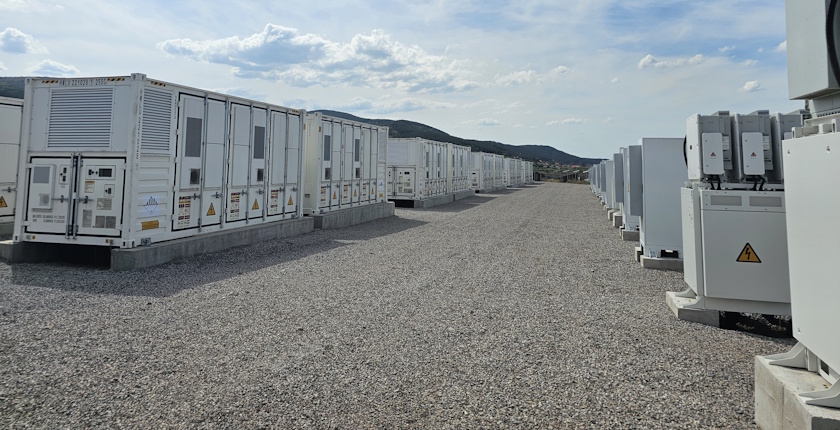
BYD supplied the 110 battery skids for the battery system, which also includes 28 power conversion system (PCS) and transformer units. ContourGlobal progressed from the final investment decision (FID) to commercial operation date (COD) in less than nine months.

The company is developing a second BESS on the same site, with a matching capability. It has a battery project in combination with a solar power plant as well.

Battery energy systems allow for the storage of electricity generated from various sources, including photovoltaic and wind power plants, during periods of low demand and its release back to the grid during peak demand, which helps balance production and consumption and the stable operation of the electricity transmission system.

Three months ago, International Power Supply (IPS) opened its Factory X1, with a capacity of 3 GWh per year. It is the first gigafactory in Bulgaria for battery energy storage systems. The same company is building another manufacturing facility.

by in News

D.Trading to offtake 200 MW of solar in PPA with Econergy in Romania

D.Trading, the pan-European trading arm of DTEK Group, signed a renewable electricity offtake deal for 200 MW of installed solar power capacity in Romania with renewable energy developer and operator Econergy. The power purchase agreement (PPA) includes the country’s largest photovoltaic plant.

D.Trading announced that it would purchase electricity from solar power plants Rătești and Părău in Romania. The deal for Econergy’s assets is for 200 MW. The PPA reflects growing market demand for structured renewable offtake products and marks an important milestone in the commercialisation of the two photovoltaic facilities, the announcement adds.

“Partnering with leading companies such as Econergy supports our long-term strategy of expanding renewable energy integration across the region. This agreement strengthens our green power portfolio and represents another step more towards becoming the leading provider of solutions for renewable assets and battery storage in Eastern Europe,” said Head of D.Trading Power Desk EU Stanislav Dudka.

The company operates in Central, Eastern, and Southeastern Europe. D.Trading is the pan-European trading arm of DTEK Group, which also owns DRI.

Econergy is planning to add a 120 MW battery energy storage system to its Rătești solar power plant

As Romania’s power market continues to evolve, shaped by price volatility, regulatory development, and the growing need for flexible solutions to support grid stability, Econergy has successfully executed multiple bankable commercial agreements, the update reads.

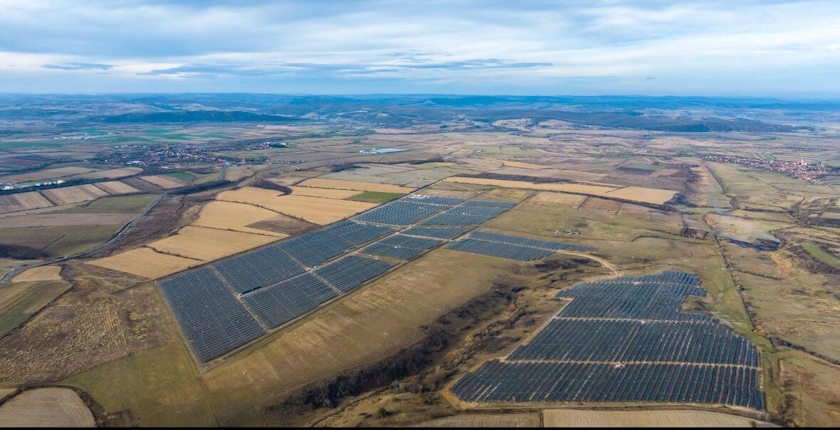
Rătești, Romania’s largest solar power plant, was completed in late 2023. The facility northwest of Bucharest, in Argeș county, has 155 MW in peak capacity. Econergy is planning to add a 120 MW battery energy storage system.

Părău was commissioned in late 2024. The PV plant of 92 MW is in Brașov county in the central part of Romania.

The Părău 2 project is for 342 MW, together with 150 MW of battery storage. It won a 15-year contract for difference (CfD) at the country’s first round of renewable energy auctions.

by in News

After adding PV unit, Slovenian gas power plant TEB launches battery project

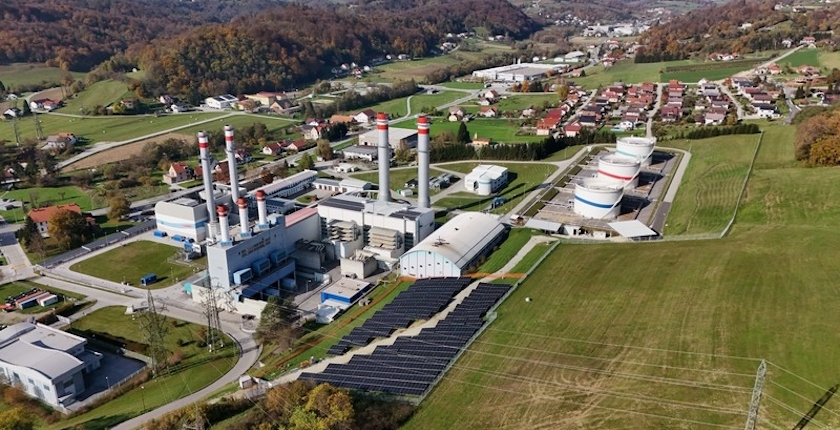
The management of the Brestanica gas power plant in Slovenia has decided to diversify its activities by installing a battery energy storage system (BESS) of 40 MW in operating power and 80 MWh in capacity. The project follows the construction of a ground-mounted solar power plant on the facility’s premises and photovoltaic units on roofs and a parking canopy.

Brestanica Thermal Power Plant – Termoelektrarna Brestanica (TEB) is contributing to the flexibility of Slovenia’s energy system with its investments, Naš stik reported. Due to preventive maintenance and rapid response, electricity output reached 35 GWh in 2025, compared to the planned 25 GWh, the report adds.

The firm issued its development strategy for 2025 to 2030 last year and, based on it, decided to launch a project for a two-hour 40 MW battery energy storage system. It translates to 80 MWh in capacity.

The project will strengthen the flexibility of the energy system, enable more efficient integration of renewable sources and confirm TEB’s focus on modern and sustainable solutions, the article adds. “With the investment in the battery storage facility, we are laying the foundations for a reliable and flexible energy future,” Brestanica Thermal Power Plant said.

Among the other priorities for this year are corporate and cybersecurity.

Brestanica Thermal Power Plant is part of state-owned GEN Group. GEN energija, their parent company, operates the Krško nuclear power plant, also known by the acronym NEK and, in Slovenian, JEK. The gas power plant is also in the municipality of Krško, near Slovenia’s border with Croatia.

TEB put into operation a ground-mounted 466 kW solar power plant on its premises last year. Before that, in 2009 and 2010, the gas plant’s operator built two rooftop PV units and one on a parking canopy. They have 170 kW in combined peak capacity.

by in News

New auction announced in Greece for 600 MW for electricity for vulnerable households

The Greek government specified terms and conditions for participation in a new kind of renewable energy auction, covering both wind and solar energy.

The auction comes as part of the Apollo initiative, aimed at reducing energy costs for vulnerable households across the country and fighting energy poverty. In total, 200 MW of solar plus batteries and 400 MW of wind will be auctioned.

Wind power projects of at least 60 kW may participate, with no limit set for photovoltaics. All applicants must have final connection terms from the distribution or transmission operator. Their remuneration will be based on a contract for difference (CfD). Investors can also gain a grant from European Union programs, the National Development Plan or other sources, according to the decree.

This will be a single-step static auction, with the offer price ceiling set at EUR 80 per MWh for wind projects and EUR 75 per MWh for photovoltaics with battery storage.

Equally important, the competition level is 40%, meaning that 60% of the offered capacity will be awarded up to a maximum of 600 MW. On top of that, at least three projects from different investors must participate in the process. Furthermore, no participant can apply for more than 25% of the total offered capacity, to ensure a level playing field.

Steep timeframe for selected projects

Concerning next steps, the Regulatory Authority for Energy, Waste and Water (RAEWW or RAAEY) is expected to officially proclaim the auction in the next few weeks, before the end of January. The regulator will also specify the letter of guarantee investors will have to submit, as well as the rest of the details. The submission of offers is expected to last by the end of February.

The ministry said the construction of solar farms with batteries must be completed by the end of 2027, while wind farms need to come online by September 2028.

Consumers who will benefit from cheaper renewable electricity will be notified via their power suppliers about their eligibility.

by in News

New auction announced in Greece for 600 MW for electricity for vulnerable households

The Greek government specified terms and conditions for participation in a new kind of renewable energy auction, covering both wind and solar energy.

The auction comes as part of the Apollo initiative, aimed at reducing energy costs for vulnerable households across the country and fighting energy poverty. In total, 200 MW of solar plus batteries and 400 MW of wind will be auctioned.

Wind power projects of at least 60 kW may participate, with no limit set for photovoltaics. All applicants must have final connection terms from the distribution or transmission operator. Their remuneration will be based on a contract for difference (CfD). Investors can also gain a grant from European Union programs, the National Development Plan or other sources, according to the decree.

This will be a single-step static auction, with the offer price ceiling set at EUR 80 per MWh for wind projects and EUR 75 per MWh for photovoltaics with battery storage.

Equally important, the competition level is 40%, meaning that 60% of the offered capacity will be awarded up to a maximum of 600 MW. On top of that, at least three projects from different investors must participate in the process. Furthermore, no participant can apply for more than 25% of the total offered capacity, to ensure a level playing field.

Steep timeframe for selected projects

Concerning next steps, the Regulatory Authority for Energy, Waste and Water (RAEWW or RAAEY) is expected to officially proclaim the auction in the next few weeks, before the end of January. The regulator will also specify the letter of guarantee investors will have to submit, as well as the rest of the details. The submission of offers is expected to last by the end of February.

The ministry said the construction of solar farms with batteries must be completed by the end of 2027, while wind farms need to come online by September 2028.

Consumers who will benefit from cheaper renewable electricity will be notified via their power suppliers about their eligibility.