by in News

Investors in standalone batteries in Greece request extension as deadline looms

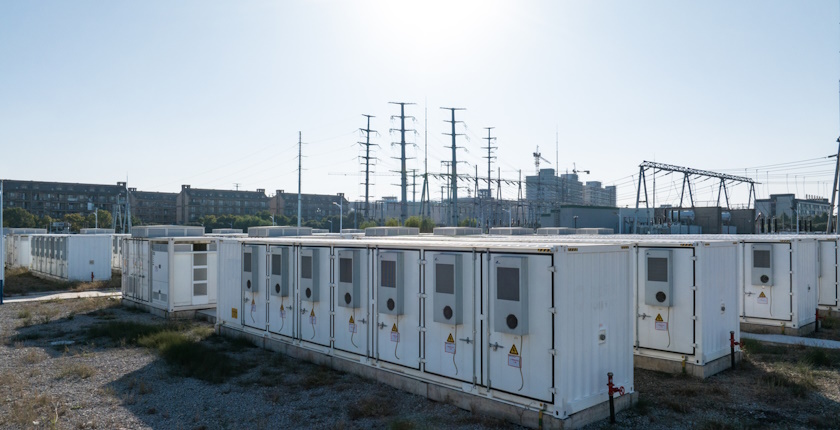
September 30 marks a crucial deadline for standalone battery projects selected through Greece’s first two auctions.

Investors in battery projects of about 700 MW in total are rushing to submit their so-called declarations of readiness to the Independent Power Transmission Operator (IPTO or ADMIE) by the end of September. After that point, the projects must become operational by the end of the year.

Investors claim that a lengthy licensing process, combined with a one year equipment procurement span, means many will be unable to reach the finish line in time. Licensing delays also caused problems with financing.

If a project breaches the deadlines, it will be subject to the loss of the letter of guarantee, resulting in losses that can even reach several million euros, depending on the capacity of the battery.

The deadline for commissioning for projects selected through the third auction, which amount to 200 MW, is April 30.

Market warns of insufficient time for batteries

The Hellenic Association of Energy Storage Systems (HAESS) has asked for more time and a new final declarations deadline, end-July 2026, for the projects selected through all three auctions. It added that the investors of the first two rounds only managed to acquire connection terms by mid-year.

The deadlines are binding to secure funding from the European Union’s Recovery and Resilience Facility (RRF), the organization explained. It means that if the timeframe is breached, selected projects will not receive support.

So far there has been no official statement about the possibility of extending the deadlines. Therefore, it remains to be seen whether the Ministry of Environment and Energy will maintain a strict stance, as Greece urgently needs storage to address ever higher curtailments.
by in News

Agios Efstratios becomes Greece’s first energy-autonomous island

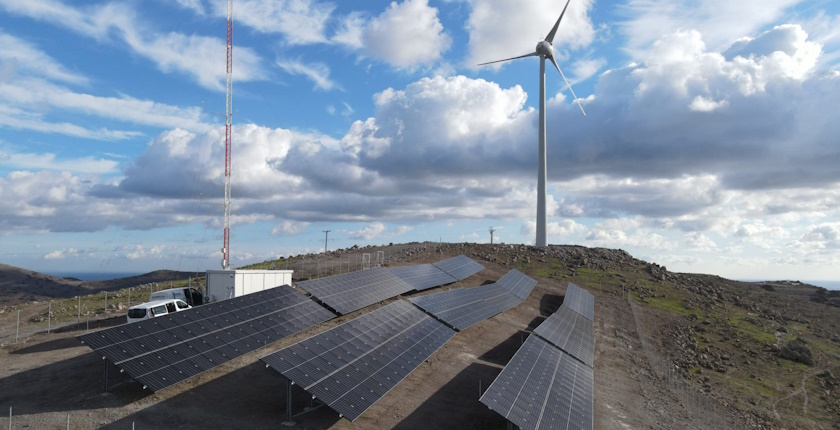
A hybrid energy project transforming Agios Efstratios into the first energy-autonomous island in Greece is in trial operation. The system consists of a wind turbine, solar power plant, batteries, electric boilers and a district heating network.

It is a benchmark for the non-interconnected islands that won’t be connected to the mainland grid with undersea power cables.

Agios Efstratios is no longer renowned only for its history and natural beauty. It is an example of energy autonomy and sustainability. The island, also known as Ai Stratis, became the first non-interconnected Greek island with a 100% electricity supply from renewables. And more.

A pioneering energy complex is in trial operation. Agios Efstratios, which has only some 250 permanent residents, is in a group of small islands undergoing transformation through projects launched at the national level and benefiting from European Union funding.

Terna Energy completed hybrid energy system in Agios Efstratios

The Centre for Renewable Energy Sources and Saving (CRES or KAPE), an independent public entity, is responsible for the endeavor, on behalf of the Municipality of Agios Efstratios. Terna Energy, owned by Masdar, is the contractor for the works in the small North Aegean island.

The new hybrid energy system includes a 900 kW Enercon E44 wind turbine and a solar power unit of 225 kW. Their combined annual output is estimated at above 3 GWh.

Excess electricity is stored. One unit is a Tesla Megapack battery energy storage system (BESS) of 1.25 MW in operating power and a two-hour duration. It means the capacity is 2.5 MWh. There is also an electric boiler facility of 1 MW with hot water storage tanks that can hold 500 cubic meters of water at 120 degrees Celsius. It corresponds to 25 MWh.

The district heating network in Agios Efstratios is four kilometers long. It will be tested in the winter.

An oil-fired generator operated by state-controlled Public Power Corp. (PPC) remains as backup. It can work alongside the hybrid power plant.

Greece is connecting many islands to mainland power grid

The solutions from Agios Efstratios can be applied in other islands or in microgrids, CRES noted and said residents are getting cheaper energy.

The government launched its Islands Decarbonization Fund last year, with financing from the European Investment Bank (EIB). Together they aim to provide at least EUR 1.6 billion, and mobilize total investments of EUR 3 billion to EUR 5 billion.

In the hot summer months, there are many non-interconnected islands that can’t meet their power demand, especially because of the tourist season. Some are also struggling with water supply, prompting the need for desalination, which requires electricity. They rely on fuel oil generators.

The country’s Independent Power Transmission Operator (IPTO or, in Greek, Admie) is investing in major interconnection projects. A link to the mainland grid has improved the living conditions in the Cyclades islands of Syros, Paros and Mykonos. Together with a project for the western part of the archipelago, the transmission system operator is planning subsea cables to the Dodecanese and the Northeast Aegean.

by in News

Prosumers in Romania are neck and neck with commercial PV plants in capacity

The latest data showed that prosumers in Romania don’t have a much larger total capacity anymore than commercial solar power plants, a segment accelerating in expansion. The share of units for self-consumption that include energy storage reached 5.8% in the first half of the year, compared to 1.2% six months earlier.

Total number of prosumers in Romania increased by 8,950 in June, to 237,252, Profit.ro reported. The installed capacity, consisting overwhelmingly of photovoltaic panels, rose by 95 MW, to 2.82 GW, the media outlet added, citing data from the National Energy Regulatory Authority (ANRE).

Total installed capacity of large, commercial solar parks is 2.77 GW, according to the article. Both segments are expanding strongly, but the latter has lately accelerated, with new utility-scale PV facilities coming online week after week. Of note, wind power and battery energy storage systems (BESS) are catching up.

On that note, 5.8% of prosumers also had batteries integrated with their self-consumption units on June 30. It compares to 1.2% at the end of last year.

Prosumers have led the energy transition for the past two years. Their overall capacity surpassed 2 GW just a year ago, translating to 37% growth in ten months.

Output in the segment amounted to 434 GWh in the first half of the year, where net domestic consumption declined 1% and net energy production surged 10%. Namely, as the duration of the daily solar radiation interval rose, prosumers in Romania drew less power from the grid and consumed more of what they generated themselves.

At the end of the first half of 2025, 210,714 households were prosumers, versus 26,538 legal entities. They had 1.34 GW and 1.48 GW installed, respectively.

by in News

Cyprus TSO favored in national battery storage tender

Pressed by the lack of electricity system flexibility, Cyprus is rushing to deploy battery storage facilities under indirect state control. Private companies are complaining that Transmission System Operator Cyprus (TSOC) is favored at a current tender for three units of 40 MW each.

EMA, the electricity market association of private companies has been trying to hinder or delay the installation of a central battery storage system within the network of state-owned Electricity Authority of Cyprus (EAC), but to no avail, philenews reported.

After several complaints, including to the European Commission, the group urged the Cyprus Energy Regulatory Authority (CERA) to reconsider the approval that it issued in June to Transmission System Operator Cyprus (TSOC). A tender is underway for the same three facilities with 400 MWh in total capacity, to be installed at three EAC’s substations.

The one in Athalassa would have 40 MW in operating power and a duration of two hours, translating to 80 MWh. The battery energy storage systems (BESS) at the substations in Anatoliko in Paphos (Pafos) and the free industrial zone in Larnaca would each have 40 MW and 160 MWh.

EU gave green light for rushed procedure

EAC owns TSOC, which has raised the issue of transparency. However, the government has obtained a derogation from the European Commission. In its request, it cited the delays in interconnecting with the European electricity grid, lack of energy storage and the instability affecting the island country’s electricity system.

The project for centralized BESS capacities on the transmission grid is an emergency measure to prevent blackouts and curtailments

The Great Sea Interconnector project for a subsea cable to Crete is late and even jeopardized due to breach deadlines. The Cypriot grid is constantly strained as it needs flexibility systems, while a huge part of solar and wind power is curtailed.

There were several major rolling outages and load-shedding events this summer on the island. One last week occurred amid a breakdown in one of the fuel oil–fired power plants, which the country relies on for baseload energy. Two new units of 400 MW overall are designed to use gas, but there is still no gas. Namely, the project for a liquefied natural gas (LNG) terminal is suffering delays as well.

BESS tender is worth EUR 41 million excluding VAT

As for the tender, applications last until September 19. The cost is estimated at EUR 41 million altogether, excluding value-added tax. The BESS facilities need to operate at least 128 months.

AEC said in the documentation that it expects the European Regional Development Fund (ERDF) to support the investment. Earlier reports suggest that EUR 30 million is available.

The government said the three battery energy storage systems are planned to be commissioned by June. EAC’s two power stations are also planned to be equipped with BESS units, it added.

In addition, the government is funding battery storage projects for renewable electricity plants, prosumers and even the army.

Power market liberalization in one month

Notably, Cyprus is liberalizing its power market on September 15 for independent producers and retail suppliers. The change is scheduled to come fully into force on October 1, the first day for transactions.

In a separate article, the same media outlet stressed that the country’s energy policy in the electricity segment is inadequate, uncoordinated and fragmented, with the cost of wrong decisions being passed on to consumers.

by in News

Battery storage investors in Romania rapidly expanding project pipeline

In an accelerating investment wave, companies in Romania are combining BESS with solar power, hydropower and wind power, or building standalone energy storage facilities. The group includes R.Power, Hidroelectrica, Engie and more big names.

Recent updates about investments in battery energy storage systems (BESS) in Romania indicate the technology is becoming another pillar of the country’s energy transition alongside wind power. For several years now, photovoltaics, and prosumers in particular – including municipal authorities, have dominated the scene. Geothermal energy is another emerging segment.

The government has provided incentives both for households and utility-scale battery storage. Companies are combining batteries with solar and wind power as well as hydropower capacity.

Investing in BESS colocated with renewable electricity plants or as standalone facilities in Southeastern Europe enables income from high spreads between wholesale power prices in daily trading. It is especially significant given the increase in the occurrence of zero and negative prices.

Notably, neighboring Bulgaria has earmarked massive funds for support to BESS investments while also focusing on pumped storage hydropower projects. Greece also held several rounds of auctions for battery storage.

R.Power to start building 127 MW standalone battery

R.Power is investing in BESS in Romania, which is one of its strategic markets, together with Poland, where it is headquartered, and Italy, Germany, Spain and Portugal. Battery storage makes up 17.5 GW or more than half of its total development pipeline in Europe.

The company said it would hybridize its existing and future PV assets and scale the integrated capacity to several gigawatts in the coming years. It has over 1.2 GW of projects for standalone BESS in Romania. “And that’s just the beginning,” R.Power said.

It obtained EUR 15 million in funding for a future 127 MW facility. It is about to start building the BESS in Scornicești in Olt county, west of Bucharest. R.Power is planning to complete it in a year. The battery energy storage system would have a duration of two hours, translating to 254 MWh in capacity. The project received funding from the National Recovery and Resilience Plan (NRRP or, in Romanian, PNRR).

Still, in the company’s view, further legislative changes are needed to fully harness the potential of the technology.

Hidroelectrica to add large battery to Iron Gate 2 hydroelectric plant

State-owned Hidroelectrica, the largest electricity producer in Romania, wants to install a battery storage system at Iron Gate 2 (Porțile de Fier 2) on the Danube. Located on the border with Serbia, it is the second-largest hydroelectric plant in the country, at 252 MW in nominal capacity. The complex, which the two countries share, is known as Đerdap in Serbian.

The BESS would have 64 MW in nominal power and a four-hour duration (256 MWh), Profit.ro reported. Hidroelectrica plans to use it for providing balancing services to the national electricity system (SEN) and adjust the time intervals of its hydropower production.

The contract for the installation of the facility is estimated at EUR 61.2 million plus value-added tax, according to the article. It would be integrated with the hydroelectric plant. The company is receiving bids from potential contractors by August 28.

French Engie has BESS projects for its existing PV plant, wind park

France-based Engie’s subsidiary in Romania intends to install a BESS at its newest solar power plant, of 37.2 MW in peak capacity, in Ariceștii Rahtivani. It commissioned the PV facility in June. The location is north of Bucharest, in Prahova county.

The battery energy storage system project is for 20 MW in operating power and 80 MWh. It would consist of 16 containers, 192 inverters and four transformer units.

The wind park in Băleni will reportedly add a small BESS facility

Engie Romania is working on another investment, through its Alizeu Eolian project firm. It plans to add batteries to a 50 MW wind park in Băleni, Galați county, which was built in 2013.

The company obtained the building permit last year. It also got clearance two months ago for connecting the BESS with a 110/20 kV transformer station via an underground line. Economica.net learned that the battery storage facility would have 5 MW and a two-hour duration, costing the firm EUR 2 million.

Engie’s project was included in the reserve list last September after a public call for support to battery storage. The Ministry of Energy selected 13 applications for grants from NRRP. Another 25 passed, but remained below the line.

Government bolstering battery investments with grants

The state aid scheme was worth EUR 103.5 million, of which EUR 79.6 million came from the European Union’s Recovery and Resilience Facility (RRF).

Among the beneficiaries are Electrica, in which the government holds just under 50%. Renovatio Trading. OMV Petrom, Public Power Corp. (PPC) and Verbund have projects on the B list.

For its 65 MWh project in Toplița in Harghita county, in eastern Transylvania, Renovatio Trading is buying the equipment from Trina Storage. The firm is part of Trina Solar.

Visual Fan is winning major contracts for the procurement and installation of batteries

Allview Energy, part of Romanian company Visual Fan, is handling the alternating current (AC) side in Renovatio Trading’s investment.

In addition, Visual Fan became the contractor for a BESS within Eurowind Energy’s Teiuș solar park.

The Danish developer intends to deploy a 117 MWh energy storage unit with lithium-iron-phosphate (LFP) batteries, within a year. It valued the project at over EUR 16.6 million. The companies said they would carry out the works in partnership with TQM Services and Voltlink. The investment includes the battery management system and liquid cooling.

In June, the ministry approved a EUR 3.4 million grant from the EU’s Modernisation Fund to Termoficare Oradea. It has a project for a 10 MW solar park with a 15 MWh storage unit, worth EUR 18.6 million altogether.

Austria’s Verbund conducting EUR 22.7 million project

Verbund has almost all the permits for a BESS project at its 226 MW wind farm in Casimcea in Tulcea county. The company headquartered in Austria said it has secured financing as well and that it is already contracting the equipment.

The wind farm was commissioned in 2012. The energy storage segment would have up to 50 MW and up to 100 MWh. It would be located at the Alpha Wind Nord section of the existing facility, of 81 MW.

Still, the basic variant’s size will be 48.3 MW, with 76 MWh in capacity, according to Profit.ro. There would be 34 containers at the site selected for the BESS.

The majority government-controlled utility values the investment at EUR 22.7 million, of which more than EUR 10.7 million is for the storage facility itself. The location spans five hectares.

After coming up short in the public call, Verbund submitted the project for a grant from the Modernisation Fund.

In mid-May, Romania hosted 240.7 MW of battery capability and a total capacity of 404.9 MWh.

by in News

Bulgaria to add batteries of up to 10,000 MWh in capacity within months – ESO

Bulgaria’s Electricity System Operator has received applications for the connection of batteries with 12 GW in total capability, according to the transmission system operator’s Executive Director Angelin Tsachev.

Bulgaria currently has 500 MW in battery energy storage systems (BESS), with a capacity of 1,300 MWh. The facilities are in private ownership.

Angelin Tsachev told Bulgarian National Radio that the Electricity System Operator (ESO) received applications for about 12,000 MW, with a capacity of 35,000 MWh.

The TSO’s technical council has considered each grid connection request. The operator issued its opinions on the possibilities for enabling network access to the batteries when the conditions are met, Tsachev pointed out.

BESS can now cover about 1.5% of the country’s daily consumption

BESS can now cover about 1.5% of the country’s daily consumption, he revealed. However, in the coming months, batteries with a combined capacity of 7,000 MWh to 10,000 MWh are expected to be installed, the official added. They would be a serious factor, Tsachev stressed.

No state-owned or private conventional power plants are currently equipped with energy storage systems, he asserted.

After the balancing methodology was changed, commercial developers of projects for intermittent power plants became more disciplined, and now there are no concerns about the balancing of the system, Tsachev said. Electricity exports in the first seven months of this year were higher than in the same period of 2024. Net exports reached almost 230,000 MWh, Tsachev noted.

Good investment opportunity

According to an earlier analysis by Rystad Energy, the best potential profits in battery storage in Europe in 2013 were in Greece and Bulgaria. The country’s city of Lovech, northeast of Sofia, hosts the strongest BESS in the Balkans.

The Ministry of Energy of Bulgaria is reportedly working on a public call for EUR 120 million in state aid for investments in battery energy storage systems of 1.5 GWh overall. In April, it granted EUR 587 million to 82 battery storage projects.

The pace of large photovoltaic projects in Bulgaria indicates that total capacity can reach 6 GW by the middle of next year.

However, the Association for Production, Storage and Trading of Electricity (APSTE) warned that the government’s disproportionately high fees for solar panels and energy storage batteries are preventing the possibility of having permanently low electricity prices in Bulgaria.

by in News

First part of Tenevo PV plant comes online, batteries are under construction

The largest hybrid power plant in Bulgaria is beginning to take shape – a joint venture of Eurowind Energy and Renalfa IPP commissioned the first segment of a solar park, and it is building a battery energy storage system (BESS). The Tenevo facility is planned to include a wind power plant as well.

Almost two years after the start of construction, a solar park in Yambol province in southeastern Bulgaria is now producing electricity. It has 69 MW in peak capacity. Project firm Tenevo Solar Technologies has a task to expand it to 237.6 MW, making it one of the biggest photovoltaic systems in the country.

Together with a battery system, of 315 MW in operating power and 760 MWh in capacity, and the planned wind farm of 250 MW, it would be the largest and most complex hybrid power plant in Bulgaria. At this moment, it would also be the first such green energy facility that doesn’t consist only of photovoltaics and batteries. The BESS part alone would probably be the biggest in Europe.

Tenevo will likely become the biggest hybrid power plant in Bulgaria and the first one with an additional source besides solar power and BESS

Tenevo operates under Eura IPP, incorporated in Bulgaria. It is an equally owned joint venture of Renalfa IPP and Eurowind Energy. The former of the two is itself a JV, founded by Vienna-based clean energy and e-mobility company Renalfa Solarpro Group, and French renewable energy infrastructure fund manager RGreen Invest.

Renalfa IPP said it has more than 650 MW in operation, over 1 GW of projects in late-stage development and a project pipeline of more than 3 GW. The company is active in Poland, Hungary, Romania, Bulgaria, and North Macedonia.

Eurowind Energy is a Danish investment and project development company in the field of renewable energy and an independent power producer. It has a global portfolio of over 60 GW, of which 1.3 GW in operation.

Second phase of Tenevo PV park to come online early next year

Together with the solar power plant, the 400 kV grid connection system started operating. The second phase of the Tenevo PV park will be put into operation in early 2026, as some of the panels were damaged by the extremely intense hailstorm in May, according to the update.

The BESS facility is under construction, Renalfa IPP revealed. EURA IPP secured a 320 MW connection to the transmission network, of which up to 213.7 MW is for the solar farm.

Raiffeisen, EBRD are main creditors

The European Bank for Reconstruction and Development (EBRD) has committed a senior secured loan of up to EUR 50 million. It includes a full or partial cover by a first loss guarantee under the EBRD InvestEU Framework, the lender’s first in Bulgaria. It valued the project at EUR 158.4 million.

Raiffeisen Bank International provided a financing facility of EUR 53 million.

The entire solar power segment of the hybrid power plant is expected to generate 332 GWh per year. The PV panels are equipped with single-axis trackers, allowing them to turn toward the sun, which boosts efficiency.

Tenevo is on the site of a former airport near an eponymous village in the municipality of Tundzha.

by in News

100,000 home batteries in California act as 500 MW power plant

More than 100,000 aggregated home batteries have recently supplied power at over 500 MW to California’s electricity system in a virtual power plant event covered by a new analysis.

The test virtual power plant (VPP) event occurred on July 29, and Brattle produced the analysis. The consultancy’s experts studied the data from the operation, called by several aggregators in California.

Residential batteries provided over 500 MW of capacity to the California power system during the event, according to Brattle.

Founder of GoPowerEV John Reister wrote on LinkedIn that 100,000 home batteries operated like a mid-sized power plant.

“On July 29, California aggregated more than 100,000 residential batteries and discharged them for two hours during the evening peak. The result: 535 MW of coordinated output, comparable to a gas peaker plant, but distributed across rooftops instead of built on a single plot of land,” Reister’s post reads.

GoPowerEV specializes in electric vehicle charging systems for multi-family apartments.

The aggregators have discharged their portfolio of batteries between 7 and 9 pm

According to the presentation on initial findings prepared by Brattle’s experts, several VPP aggregators in California discharged their portfolio of batteries between 7 and 9 pm, with an average output of 535 MW.

The aggregators conducted the event to assess the performance capability of their battery fleet heading into California’s summer peak season, when VPP grid services will be needed most.

The participants accounted for a diverse mix of battery manufacturers, aggregators, VPP programs, and geographic locations. In general, Sunrun was the largest aggregator, Tesla was the largest original equipment manufacturer, and most of the batteries were enrolled in California’s Demand-Side Grid Support (DSGS) program, the presentation reads.

Consistent supply from batteries throughout the event’s duration

The authors underlined that the batteries’ performance during the event demonstrates a significant departure from their status quo operations. It means that most of the 535 MW of battery output was additive; it would not have occurred without calling an event.

They also pointed to a relatively consistent output from the batteries throughout the event’s duration.

On peak days, using VPPs to serve CAISO’s net peak could reduce the need to invest in new generation capacity and relieve strain on the system associated with the evening load ramp, the authors added.

In their words, the batteries could help to mitigate some of the challenges associated with California’s so-called duck curve.

California Independent System Operator, or CAISO, is California’s transmission system operator.

by in News

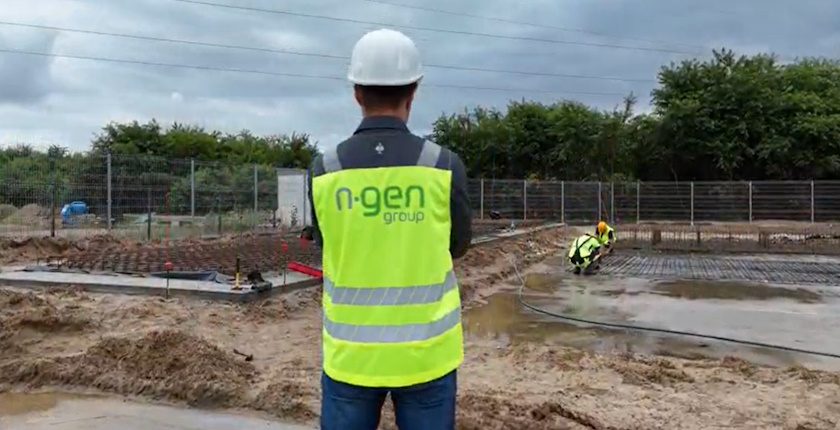
NGEN Group launches 9.4 MW battery project in Poland; more large-scale investments underway

NGEN Group, a high-tech company with a strong focus on innovation in the energy sector, particularly in the management and construction of battery storage systems, announced that it has launched an energy storage project in Poland. The initiative marks a significant step in the company’s expansion into the Polish market, where it leverages cutting-edge technology to support the country’s transition to a more sustainable and resilient energy infrastructure.

NGEN Group said it plans to undertake several similar projects across Europe in the coming year, including the development of battery systems with a total capacity of up to 1.6 GWh in countries such as Germany, Italy, Portugal, Poland, Croatia, and Austria.

The new battery energy storage system (BESS) will have a power capacity of 9.4 MW and an energy capacity of 18.8 MWh. Powered by Tesla Megapack 2XL technology, the system is designed to provide critical grid balancing services for Poland’s energy system, enhancing network flexibility and stability.

Significant environmental benefits

Beyond these operational benefits, the project is expected to deliver a significant environmental impact, saving approximately 1,800 tons of CO2 emissions annually. This aligns with broader trends in Poland.

“We are thrilled to introduce this advanced energy storage solution in Poland, which is fully aligned with our mission: ‘We are accelerating the green transition with innovative and sustainable energy solutions.’ This drives the next generation of sustainable energy,” said Roman Bernard, co-founder and CEO of NGEN Group. “By integrating Tesla Megapack technology, we are not only strengthening the reliability of the national grid but also contributing to Poland’s ambitious goals for renewable energy integration and carbon emission reduction.”

The project highlights NGEN Group’s expertise in delivering tailored, comprehensive energy solutions for businesses and energy services. As Poland continues to expand its renewable energy portfolio, initiatives like this battery storage system will play a crucial role in managing the intermittency of sources such as wind and solar, ensuring a stable electricity supply, and reducing reliance on fossil fuels.

NGEN is expanding its model across Europe

The company has already successfully collaborated on projects such as the development of a battery system for Uniper in Germany, and it aims to expand this model across Europe.

Based in Slovenia, NGEN Group, meaning Next Generation, specializes in innovative energy solutions, management, and construction of battery storage systems with intelligent balancing group management systems.

The company employs approximately 165 experts, develops proprietary software solutions, and offers customized services to promote sustainable energy practices across Europe. Its vision is a fully digitized and decentralized European energy system that keeps pace with the rapid growth of renewable energy and societal electrification.

NGEN was the technology sponsor this year of Belgrade Energy Forum, an annual conference organized by Balkan Green Energy News.

by in News

Bulgaria on track to add 1.5 GW of solar power by mid-2026

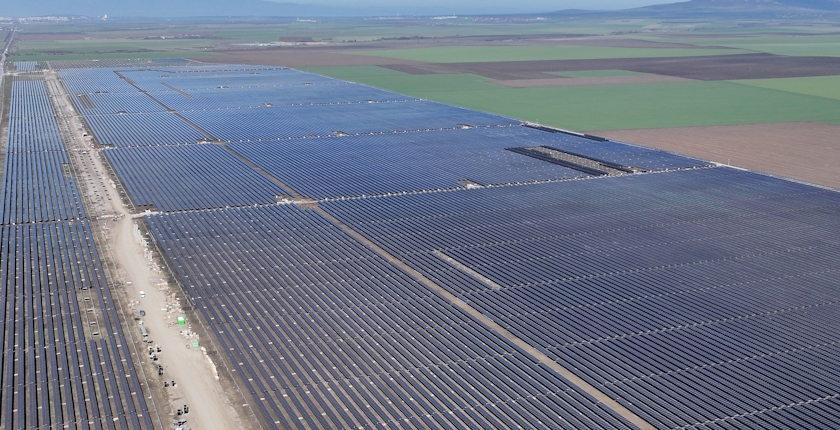
The pace of large photovoltaic projects in Bulgaria indicates that total capacity can reach 6 GW by the middle of next year. The expansion isn’t slowing down.

Investors in large solar power plants in Bulgaria don’t seem intimidated by zero and negative wholesale electricity prices eating away at their revenues. One of the factors is a surge in the construction of battery energy storage systems (BESS), which iron out the gap between intraday peak production and the power demand curve. In a new analysis, Capital.bg estimated that the country’s photovoltaic capacity is set to increase by 1.5 GW by the end of the first half of next year, only accounting for big projects.

The total would reach 6 GW. The report lists 14 projects, of which some are benefitting from BESS grants from one of Bulgaria’s past tenders.

Chinese group building largest current PV project

The biggest solar park under construction is Simeonovgrad-Polyanovo, consisting of two units of 250 MW in total. It is located in the Haskovo region in the southern part of the country.

United Energy Group bought the two projects last year. It it the first significant Chinese investment in Bulgaria, the article reads. The PV plant is expected to be put into operation early next year.

The construction of the first phase of the Tenevo hybrid power plant began almost two years ago

Next on the list is Tenevo. Almost two years ago, Eurowind Energy and Renalfa IPP marked the start of the construction of the solar segment of a hybrid power plant near Yambol. The PV park is envisaged with 237.6 MW in peak capacity and a 213.7 MW grid connection.

The largest solar power plant in Bulgaria is called Apriltsi.

St. George coming online before year-end

Czech company Rezolv Energy bought the St. George project for 229 MW two years ago and broke ground at the construction site last autumn. According to the latest data, the investment is worth almost BGN 1 billion (EUR 511 million) and it is coming online by the end of the year. The developer secured a 199 MW connection.

Greek government-controlled utility Public Power Corp. (PPC) is commissionning its Colosseum (Kolizeum) facility of 165 MW in the coming months, the update reveals. The project in Chirpan has an approved network connection of 120 MW. The company is planning to add batteries of 25 MW in capability and a capacity of 55 MWh.

The company is also building an 88 MW in Vedrare near Plovdiv. The contractor for the facility in the municipality of Karlovo is Chint Green Energy of the Chint Group. The power plant is on track to become operational early next year.

A 123 MW system will be on 400 hectares between the villages of Knizhovnik and Dolno Vojvodino in Haskovo. Austria-based Enery said it would install a BESS of 180 MWh next to its solar park.

Electrohold is testing its Maglizh PV plant, the article adds. The project for 100 MW occupies 127 hectares and the estimated investment is almost EUR 90 million. The plan was changed along the way.

Top Energy Solutions has a construction permit for its Loznitsa project in northeastern Bulgaria. The project is for a peak capacity of 115 MW and a grid connection of 99.99 MW, spanning 82.4 hectares. It is located at the villages of Vesselina and Kamenar in the Loznitsa municipality, Razgrad district.