by in News

Bulgaria preparing more BESS subsidies amid boom in construction of large facilities

The Ministry of Energy of Bulgaria is reportedly working on a public call for EUR 120 million in state aid for investments in battery energy storage systems of 1.5 GWh overall. Many projects have been stuck since the European Union suspended funding, but major deals are underway nevertheless, alongside the construction of large facilities.

Bulgaria has managed to renegotiate the terms of the National Recovery and Resilience Plan (NNRP) with the European Commission, allocating another EUR 120 million for support for battery energy storage systems (BESS). Instead of awarding the grants to the projects that didn’t meet the quota in the National Infrastructure for Storage of Electricity from Renewable Sources (RESTORE) call for standalone facilities, the Ministry of Energy is preparing a separate competitive procedure, Kapital reported.

The EUR 120 million is apparently intended for supporting 1.5 GWh, compared to EUR 587 million last time, for 9.7 GWh. The move is far-fetched, as all battery facilities under the NRRP are required to come online already by the end of March.

The EU has blocked payments to Bulgaria from its Recovery and Resilience Facility (RRF), adding to the crunch. It’s why the winners from the RESTORE procedure still haven’t signed their contracts. However, the next tranche could be released soon.

Developers, contractors counting gigawatt-hours in BESS projects in Bulgaria

Small players are stretched the most by the lack of financing. On the other hand, many projects are advancing even before or without the grants.

Sunterra Re has entered into a strategic partnership with Sungrow to add the China-based company’s BESS solutions to its largest three solar power plants in Bulgaria. Total storage capacity is envisaged at more than 1 GWh. The Bulgarian operator said it already has 300 MWh.

Sunotec has struck massive deals for the deployment of its BESS solutions in Bulgaria

The deal is for the MV-Power Titan 2.0 lithium-iron-phosphate batteries and accompanying equipment and software. Sunterra Re owns PV plants Dalgo Pole (208 MW) Galabovo (201.4 MW) Karlovo (115 MW) and Pleven (9.6 MW).

Sungrow has just achieved another massive deal, with Sunotec.

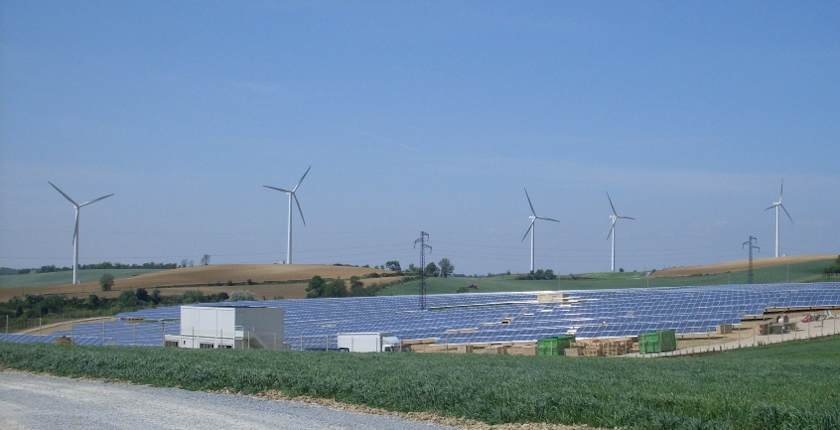
Solaris Holding, a joint venture of the Bulgarian-German Sunotec and the main shareholders of Eurohold Bulgaria (Evrohold), recently commissioned a large hybrid power plant.

Bulgaria is among EU’s strongest BESS markets

Two months ago, a BESS facility of 124.1 MW in operating power, the largest in the country, was inaugurated in Lovech. At the time, the Ministry of Energy claimed it was the biggest in the EU.

Of note, Bulgarian company International Power Supply (IPS) is opening a factory for battery energy storage systems near Sofia. However, the Association for Production, Storage and Trading of Electricity (APSTE) warned that the government’s recycling levy for the installation of photovoltaic panels and BESS is five to 10 times higher than EU averages.

Bulgaria is one of the most lucrative markets for battery storage in Europe, given its wide range between the highest and lowest intraday wholesale electricity price.
by in News

KKR to provide Greenvolt with EUR 150 million capital boost

Greenvolt Group said its majority owner KKR fully subscribed to a EUR 150 million share capital increase. The transaction will especially support investments in battery storage.

In two tranches, KKR will increase the capital of its subsidiary Greenvolt by EUR 150 million. The injection is particularly aimed for the segment of utility-scale battery energy storage systems. The transaction reflects continued confidence in Greenvolt’s execution capabilities and long-term growth potential, the statement adds.

The update revealed the first phase of the capital increase, totaling EUR 100 million, would be completed in the coming days, and that the rest is expected to be completed by September 30. The Portuguese firm’s core business segments are sustainable biomass, utility scale, and distributed generation.

Greenvolt sold renewable energy assets for EUR 528.3 million in the first half of the year

It tends to sell 70% to 80% of its large-scale projects at the ready-to-build (RtB) or commercial operation date (COD) phases. Greenvolt said two months ago that it held a 13.2 GW pipeline across 18 countries, aiming to bring at least 5.3 GW to RTB by the end of the year. The renewable energy company has a probability-weighted pipeline of 4.3 GW in BESS across nine countries, with projects under construction in Poland, the United Kingdom and Hungary.

Greenvolt said its asset rotation sales in the first half of the year reinforced its capacity to finance the next investment cycle in Europe, North America and Asia.

“This capital increase is part of the path we’ve been building alongside our shareholder and once again demonstrates its commitment to Greenvolt’s strategy,” Chief Executive Officer João Manso Neto stated.

In early June, the company said it has agreed to sell a 231 MW portfolio of wind and solar projects in Spain, through its partnership with Green Mind Ventures, to Transiziona. The deal was worth EUR 195 million. Earlier this year, Greenvolt divested of EUR 333.3 million worth of utility-scale assets in Poland, mostly wind power.

by in News

APSTE: High state fees for PV panels, energy storage batteries inhibit electricity price decrease in Bulgaria

The Association for Production, Storage and Trading of Electricity (APSTE) warned that the government’s disproportionately high fees for photovoltaic panels and energy storage batteries are preventing the possibility of having permanently low electricity prices in Bulgaria. They also threaten the implementation of key projects under the National Recovery and Resilience Plan (NRRP).

The fees that the government charges don’t reflect the real recycling cost, given that they are five to 10 times higher than the average fees in the European Union, according to APSTE.

The product fee for solar panels is currently BGN 0.90 (EUR 0.46) per kilogram – over 11 times higher than the same levy in the Netherlands.

It increases the price of panels by about 35%, which leads to about a 10% increase in the cost of turnkey solar power plants, APSTE stressed.

The fees threaten the installation of 9,000 MWh of storage capacity

The impact is similar for lithium-ion batteries. With a rate of BGN 5.50 (EUR 2.81) per kilogram, the fee makes batteries nearly 19% more expensive. Another issue is that the cost isn’t foreseen in the business models of the projects financed under the National Recovery and Resilience Plan, according to the association.

It threatens the profitability of 9,000 MWh of storage capacity set to come online by the end of 2026, putting at risk one of the most important energy reforms in the country, the organization underlined.

Of note, in April, the Ministry of Energy approved EUR 587 million in subsidies for developers of 82 standalone battery storage projects, for an overall 9.71 GWh in capacity. The scheme is part of NRRP.

Gazdov: The government artificially increases the price of a panel by 35% and that of batteries by 19% 

The fees jeopardize future investments in battery energy storage systems (BESS), which are key to the operation of the electricity system and to reducing the price of electricity for end users, according to APSTE.

“It is absurd that the state artificially increases the price of a panel by 35% and that of batteries by 19% – just when solar power plants and storage systems are starting to provide a permanently low price for electricity,” APSTE chairman Nikola Gazdov stated.

In his words, there is no economic logic for the government’s fee for recycling batteries and solar panels in Bulgaria to be 10 times higher than in Central and Western Europe.

A similar case has occurred in Croatia. E.ON Croatia raised the issue of high waste fees on solar panels of EUR 300 per ton, up to six times more than in other European Union countries.

Outdated regulation threatens technologies that provide lower bills for people and industry

APSTE stressed that Bulgaria already covers a large part of its daily electricity consumption with solar energy, tumbling wholesale power prices to extremely low levels. Now BESS is starting to transfer the effect of cheap solar electricity to the evening peak consumption, when prices are traditionally higher.

At a time when Bulgarian households and businesses need cheap energy the most, outdated regulation with unreasonably high fees threatens technologies that already provide lower bills for people and industry, APSTE noted.

The association called on the government to urgently revise the regulation on product taxes, with the aim of bringing it to average EU levels:

  • Between EUR 50 and EUR 100 (BGN 100 to BGN 200) per ton, or BGN 0.10 to BGN 0.20 per kilogram of PV panels.
  • Between EUR 600 and EUR 1,000 per ton (BGN 1,200 to BGN 2,000 per tonne), or BGN 1.2 to BGN 2 per kilogram of lithium-ion batteries.

APSTE has submitted a letter addressing the matter to the Council of Ministers, the Ministry of Energy, and the Ministry of Environment and Water.

by in News

Price of residential battery storage in Europe drops over 50% in two years

The mature residential battery storage markets in Europe are stabilizing, while policy-driven and emerging markets are gaining traction, according to EUPD Research. Its new report showed prices of home batteries slumped more than 50% between the first half of 2023 and the first half of this year.

The European residential battery storage market has remained resilient in 2025, with notable growth across mid-sized and emerging markets, according to EUPD Research’s latest Electrical Energy Storage (EES) Report. It tracked systems of up to 20 kWh.

While mature markets such as Germany and Italy began the year with more subdued figures, the overall market trajectory points to continued expansion, with over one million new residential storage systems expected to be installed across Europe this year. Although the phaseout of subsidies and adjustments to support schemes led to a weaker start in top markets, the outlook for the second half is more optimistic, the firm said.

Home batteries are overwhelmingly intended for storing electricity from household photovoltaic systems, usually installed on roofs, balconies or on canopies next to houses.

Dynamic electricity tariffs, self-consumption fueling residential battery storage push

Increasing interest in dynamic electricity tariffs and enhanced self-consumption is expected to stimulate demand for residential market storage. Mature markets are stabilizing, while policy-driven and emerging markets are gaining traction, the update showed.

The sector continues to benefit from falling battery prices. A significant drop in lithium prices, combined with intensified competition due to the influx of new market players in the past two years, has accelerated price erosion and reduced overall system costs.

The data provider’s price index more than halved between the first half of 2023 and the first half of this year. The current average selling price of residential battery storage, in the second half of 2025, came in at EUR 711 per kWh. It is 46.6% lower than in the first half of 2023.

The segment of newly installed residential battery storage in Germany is in a moderate decline

Despite a moderate decline in residential battery installations during the first half of 2025, Germany remains the strongest market in Europe, with demand expected to stay resilient throughout the year. The projected 6% year-on-year decline is mainly due to slower deployment of photovoltaics, reduced regional incentives, and a growing shift in focus toward commercial and industrial (C&I) and utility-scale storage.

Alongside Italy, Germany is estimated to account for the lion’s share of new residential storage capacity additions through 2028, despite Italy’s current slowdown amid the gradual weakening of the Superbonus scheme.

This year’s residential battery storage additions in Europe’s largest economy are seen at 4.7 GWh, compared to a projected 6.04 GW in home PV installations of up to 20 kW. Italy accounts for an expected 1.24 GWh and 1.44 GW, respectively.

Steady, robust growth in several markets

Markets such as Austria, France, the Netherlands, and the Czech Republic are demonstrating steady and robust growth, driven by rising electricity costs since 2023, increasing PV adoption, stable policy support, and increased awareness of the benefits of energy independence.

Sweden, bolstered by tax rebates and a national push toward energy self-sufficiency, has seen a record number of PV systems being installed with residential storage.

As for equipment providers, BYD maintained its top position in 2024, capturing a 20% market share, which is expected to reach 21% this year.

by in News

Faria Renewables secures financing for 49.9 MW battery project in Greece

Faria Renewables has signed a loan agreement with Attica Bank for the construction of a battery energy storage system (BESS). The project is worth EUR 28 million. In addition, Cero Generation passed a milestone toward a 250 MW battery storage investment.

A BESS project selected last year in Greece’s second battery storage auction is now a step closer to materialization, Faria Renewables revealed. The company signed a loan deal with Attica Bank for the construction of the system. It would have 49.9 MW in capability and a capacity of 134.2 MWh.

The investment is worth EUR 28 million, the company added. Its first BESS unit, for which it earlier signed a contract with Huawei, would be connected to a 150/20 kV substation, currently under construction. Construction is expected to be completed before the end of September, the update adds.

BESS project benefitting from EU funds

The project is being implemented under the National Recovery and Resilience Plan Greece 2.0, with funding from the European Union – the NextGenerationEU and its Recovery and Resilience Facility (RRF) segment.

“Our collaboration with Attica Bank for the implementation of this significant energy storage project marks another crucial step in delivering sustainable energy solutions that support the country’s energy transition goals. We share a common vision to contribute to a greener society by designing and carrying out energy solutions that combine expertise, sustainability, and innovation,” Faria Renewables’ Chair and Chief Executive Officer Thalia Valkouma stated.

The renewables and energy storage developer has a portfolio in Greece exceeding 3 GW. It said it is exploring opportunities in new markets in Europe.

One of largest energy storage investments in Greece

According to Attica Bank’s Chief of Asset and Specialized Financing Christos Iliopoulos, the new agreement is for one of the largest investments in the energy storage sector in Greece.

“Attica Bank remains strategically committed to supporting the green transition and energy security of the country by financing projects that enhance the transformation and resilience of the energy system. Our partnership with Faria Renewables for the construction of a storage project is fully aligned with this philosophy,” he said.

The investment will help the integration of renewable sources into the national grid and enhance system flexibility, the announcement reads.

Greece has held a series of three auctions for subsidizing standalone BESS to get the market segment rolling, on the path toward its 2030 target of 4.7 GW.

Cero Generation makes progress toward 250 MW battery storage investment

In other news, Cero Generation Holdings, a subsidiary of Macquarie Asset Management, won an approval from Greece’s Ministry of the Environment and Energy for five BESS stations. Each would have 50 MW in operating power and 153 MWh in effective capacity (or 170 MWh nominally).

Project firms Energy Ventures 6 and Energy Ventures 10, in which Cero Generation holds 85%, received environmental terms (AEPO) for the proposed investment in Pelinnaioi, in the municipality of Farkadona in Trikala, Thessaly.

by in News

IRENA: 91% of new renewables units are more cost-effective than fossil fuel alternatives

The fossil fuel age is crumbling, according to UN Secretary-General António Guterres. Renewables maintained their cost leadership in global power markets, the International Renewable Energy Agency said in an annual report. In 2024, onshore wind farms were the cheapest of all versus the lowest-cost fossil fuel alternatives, by 53% on average, while photovoltaic systems were 41% cheaper.

Onshore wind power was also the cheapest in levelized cost of electricity (LCOE) terms, followed by solar power. At the same time, 91% of newly commissioned utility-scale capacity was delivering power at a cost lower than for the cheapest electricity from new fossil fuel–fired units.

The Renewable Power Generation Costs in 2024 report confirmed the price advantage of renewables over fossil fuels, with cost declines driven by technological innovation, competitive supply chains and economies of scale, the International Renewable Energy Agency said. IRENA expects cost reductions to continue, but highlighted the short-term challenges.

Geopolitical shifts including trade tariffs, raw material bottlenecks, and evolving manufacturing dynamics, particularly in China, could temporarily raise costs.

Asia, Africa and South America, with stronger learning rates and high renewable potential, could see pronounced cost declines.

Higher costs are likely to persist in Europe and North America, driven by structural challenges such as permitting delays, limited grid capacity, and higher balance-of-system expenses, according to the update. In contrast, regions like Asia, Africa and South America, with stronger learning rates and high renewable potential, could see pronounced cost declines.

The organization pointed to the need for stable and predictable revenue frameworks to lower investment risk and attract capital.

“Clean energy is smart economics – and the world is following the money,” United Nations Secretary-General António Guterres stressed. In his view, the fossil fuel age is crumbling.

Capital costs inflating LCOE in developing countries

Mitigating financing risk is central to scaling renewables in both mature and emerging markets. Instruments such as power purchase agreements (PPAs) play a pivotal role in accessing affordable finance, while inconsistent policy environments and opaque procurement processes undermine investor confidence, IRENA added.

In many developing countries of the Global South, high capital costs, influenced by macroeconomic conditions and perceived investment risks, significantly inflate the levelized cost of electricity (LCOE) of renewables.

Onshore wind power production cheapest by far of all kinds of electricity

In 2024, onshore wind farms were the cheapest of all versus the lowest-cost fossil fuel alternatives, by 53% on average, while photovoltaic facilities were 41% cheaper. Of note, the cost of battery energy storage systems (BESS) declined by 93% from 2010 to 2024, to USD 192 per kWh.

Onshore wind remained the most affordable source of new renewable electricity, with a global weighted average LCOE at USD 0.034 per kWh (USD 34 per MWh), followed by new solar, at USD 0.043 per kWh, and new hydropower plants, USD 0.057 per kWh.

Again per the levelized cost of electricity, 91% of newly commissioned utility-scale renewables capacity was delivering power at a lower cost than the most affordable new fossil fuel–based units.

That said, LCOE increased slightly for solar power, by 0.6%. Onshore wind power was 3% more expensive than in 2023, compared to 4% for offshore wind and 13% for the bioenergy segment. Meanwhile, costs declined for concentrated solar power (CSP), by 46%, followed by electricity from geothermal units, 16%, and hydropower, which slipped 2%.

Solar and wind energy prices have begun to stabilize, which is a natural sign of market maturity, the authors underscored.

Photo: Renewable energy LCOE 2010-2024, in United States dollars per kilowatt-hour (IRENA)

Clear path to affordable, secure, sustainable energy

The addition of 582 GW of renewables capacity in 2024 led to significant cost savings, avoiding fossil fuel use valued at about USD 57 billion, new data shows. Looking at all renewables in operation, the avoided fossil fuel costs in 2024 reached up to USD 467 billion, IRENA’s Director-General Francesco La Camera stated.

New renewable power outcompetes fossil fuels on cost, offering a clear path to affordable, secure and sustainable energy, he pointed out.

by in News

Pexapark: PPA activity in Europe drops in first half of 2025

The number of power purchase agreements (PPAs) for renewables in Europe fell by 31% and the volume tumbled 26% in the first half of the year from the levels in the same period of 2024, Pexapark found. Germany and France registered sharp declines in the photovoltaics segment, but a surge in Italy and Spain has more than offset the drop.

The meteoric rise in deals for battery energy storage systems, BESS, is a clear sign of its maturity.

In its latest report, analytics and advisory firm Pexapark provided a detailed look into PPAs and contracts for battery energy storage systems in the first six months of 2025. It found that PPA activity shrank by more than a quarter in year-over-year terms, but not everywhere and not due to solar power.

Across 124 deals, 6.08 GW of renewable electricity capacity was contracted in the first half, which is 31% and 26% down, respectively, from the same period of 2024. Conversely, the average deal size advanced 5% to 48.2 MW.

Notably, the April-June period was much weaker than the first quarter of the year, with just 50 deals, but the volumes were almost evenly split.

The main technologies in the first half were solar power, 4.2 GW from 73 deals, onshore wind (1.4 GW and 32 PPAs), mixed technology (290 MW and nine deals) and offshore wind (134 MW and four deals). The result is proportionate to the picture from January through June 2024.

Despite concerns over saturation of demand for standalone solar, volumes have firmed. The 4.2 GW of solar capacity contracted under PPAs compares to 3.9 GW of the first half of last year. The deal count landed at 73, against 95, which is in line with the overall trend.

PPA activity in Germany plunged 84% in terms of volume

Solar offtake activity reveals a clear split in market momentum. It is slowing down in markets where cannibalization has worsened drastically and rapidly – such as Germany and France. In fact, Germany saw the largest decline in volumes – a remarkable 84% year-on-year decrease in terms of overall volumes, with 228 MW across eight deals in the last six months, versus 1.2 GW and 31 deals in last year’s equivalent.

There is stable or even upward appetite in markets which have had time to adjust to cannibalization and the lower valuation of solar production, or where cannibalization levels are still very low

Conversely, solar PPA activity in Italy and Spain spiked, more than making up for the said decline.

“These numbers support the hypothesis that there is stable, or even upward appetite in markets which have had time to adjust to cannibalization and the lower valuation of solar production – i.e., Spain, or cannibalization levels are still very low – such as Italy. Italy’s solar PPA volumes grew 184% year-on-year, with nearly an additional 700 MW procured compared to the same period last year. Corporate appetite in the country is growing, and so is deal size – with a 420 MW solar corporate deal announced in June comprising the country’s largest PPA ever recorded,” the analysis reads.

As for Southeastern Europe, OMV Petrom’s deal with Enery for their joint solar power project Gabare in Bulgaria was Europe’ third-largest PPA in June.

Flexibility monetization is opportunity for market players with right profile

In a market increasingly driven by flexibility monetization, today’s challenges – cannibalization, future capture dynamics and balancing risks – are becoming opportunities for market players with the right profile. And with corporate buyers more hesitant to pay premiums for solar, transactable prices are—perhaps for the first time in a while – closer to perceived fair value, according to the report’s authors.

Wholesale electricity prices in Sweden were negative for almost two fifths of the time in the first six months of 2025

Hourly periods with negative prices at wholesale electricity markets continued strong in the first half. Sweden maintained its top position by far, with most such events. There were 1,635 hours with negative prices from January until the end of June. It is a stunning 37.8% share of the entire period and already 63% of the tally from all last year.

The other jurisdictions that make up the top five in Europe: Finland, Germany, the Netherlands and Belgium, remained the same since 2024.

On average, European countries have already reached around 67% of the number of hours counted in 2024 as a whole. Norway hit 90%, Denmark 87% and Spain climbed to 86%, suggesting that last year’s records would fall.

Top five European markets by number of negative price hours, 2024 vs. the first half of 2025

BESS deal volumes already three times higher than in all 2024

The maturity of the BESS industry is clearly reflected in the deal count and contracted volumes over the past 18 months, with the trend increasingly pronounced in 2025.

Battery storage capacity being contracted under optimization or fixed-revenue offtake contracts (so-called floors and tolls, respectively) amounted to a total of 4.6 GW in capability and 9.2 GWh in capacity across 36 deals. It is just over three times more than in entire 2024 in both benchmarks. The deal count was 44% up from all last year.

The lion’s share of the deal count concerns BESS assets with a two-hour duration

The rapid growth was driven by a wave of new agreements in the two most advanced markets – Great Britain and Germany – alongside first-ever BESS deals emerging in Belgium, Poland, Greece, and Bulgaria. The lion’s share of the deal count concerns BESS assets with a two-hour duration, which the ratio of operating power and capacity also indicates.

Pexapark provides of price data, market intelligence, and advisory services for renewable energy. It was one of the knowledge partners at this year’s edition of Belgrade Energy Forum, organized by Balkan Green Energy News.

by in News

Bulgarian battery factory Exeron X-BESS gets EU strategic status

Bulgaria-based International Power Supply (IPS) is opening a factory for battery energy storage systems using proprietary technology. The Exeron X-BESS is one of only six strategic projects in the European Union with a designation under the Net Zero Industry Act.

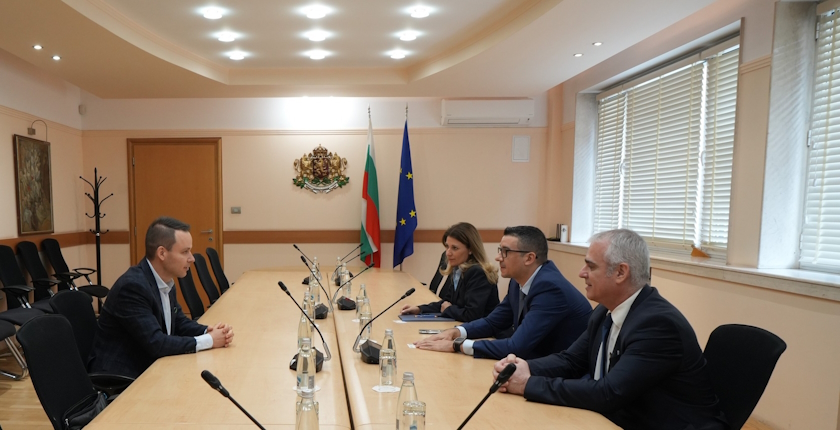
Minister of Economy and Industry of Bulgaria Petar Dilov met with Chief Executive Officer of International Power Supply (IPS) Alexander Rangelov, as the company’s investment in the production of BESS entered the EU’s public registry of strategic projects under NZIA. It is one of only six endeavors that made it to the list so far.

The Exeron X-BESS factory will put Bulgaria on the world map for the production of battery energy storage technologies, the ministry said. It is fully aligned with the NZIA goals for secure and sustainable supply of net zero emission technologies and the expansion of production capacities and supply chains, it added.

Exeron X-BESS to become key factor in EU’s clean technology chain

The government is promoting energy efficiency and the security of supply for industrial production in Bulgaria, especially in the segment of zero emission technologies, Dilov stresed. “The project is an important step towards including Bulgaria among European producers of environmental technologies and the implementation of high-tech solutions to mitigate climate change,” the minister stated.

He expressed the belief that the project would become a key factor in the clean technology chain. It is a step forward for Bulgaria’s participation in the European and global industry that is transforming the energy sector, Dilov pointed out.

The X-BESS line includes a battery management system developed by IPS

IPS has patented the entire Exeron X-BESS technology. Production should begin in the autumn. The facility is in the Hemus high-tech industrial park in Kremikovtzi (Kremikovtsi) near Sofia.

The project entails the creation of 65 jobs by the end of the year, of which a quarter would be in development and engineering. Two thirds of the employees would be technical specialists.

The majority owner of IPS, with 65.5%, is Power Technology Investment Group. It is controlled by the family of the founder Stoil Rangelov Trifonov. SIL Energy Invest has 31.5%. The Capital Investments Fund (CIFund) of the Bulgarian Development Bank holds the remaining 3%.

The company mainly uses European parts and the lithium-iron-phosphate (LFP) battery cells are from China. IPS has a proprietary battery management system (BMS) for the X-BESS line.

NZIA is fast-tracking permits for strategic projects

The NZIA designation secures a priority status at the national level for all administrative processes, faster permitting including environmental approvals, and advice on financing.

Of the six projects in the list, three are in Germany. Carbon2Business and MoReTec are for the decarbonization of a cement plant and chemicals production, respectively, while the one branded Resilience develops renewable energy technologies.

The remaining two are located in Sweden. NKT HV Cables AB is an endeavor for new electricity grid technologies including electric charging for transportation and grid digitalization solutions. The Talga Battery ANODE Refinery ONE is the only other project in the battery and energy storage segment.

by in News

Electrica sells green bonds for EUR 500 million amid record demand

Electricity supplier and distributor Electrica listed its first green bonds on the Luxembourg Stock Exchange. It was the largest issuance of its kind among Romanian companies, excluding financials.

Electrica, in which the Romanian Government controls a stake of just under 50%, issued green bonds worth up to EUR 500 million. It is using the proceeds to finance and refinance its projects, mainly for green energy production and energy storage.

The senior unsecured green bonds, maturing in five years, are now listed on the Luxembourg Stock Exchange. Admission to trading on the Bucharest Stock Exchange is estimated to take place at the beginning of August, Electrica said.

The company’s core activities are electricity distribution and supply and energy services, but it is expanding into renewables and battery storage.

Pricing reaches 2.3 percentage points above benchmark rate

Credit appraisal agency Fitch has assigned the 4.375% senior unsecured green notes a BBB- rating. It is the lowest investment grade. The projects will have a limited connection to Electrica’s 100%-owned distribution and supply subsidiaries Distribuție Energie Electrică Romania (DEER) and Electrica Furnizare, the note adds.

Electrica targets 1 GW of installed renewable energy capacity by 2030 alongside the deployment of 900 MWh of energy storage

The company’s inaugural debt securities were priced at a yield of 4.566%, according to a regulatory filing. It was 2.3 percentage points above the benchmark mid-interest rate swap. The demand from investors at the final price exceeded the supply by more than 11.5 times, marking a record oversubscription in bond issuances of Romanian companies, Electrica pointed out.

Moreover, it was the largest green bond issuance in Romania excluding financial institutions. Electrica targets 1 GW of installed capacity by 2030 alongside the deployment of 900 MWh of energy storage.

Electrica grows market capitalization by one fifth this year

Banca Comercială Română (member of Erste Group), BNP Paribas, Citi, ING, J.P. Morgan and Raiffeisen Bank International were the joint global coordinators and joint bookrunners in the transaction, while BT Capital Partners, IMI-Intesa Sanpaolo, Société Générale and UniCredit were joint bookrunners.

Electrica has EUR 1.06 billion in market capitalization. Its shares surged 21.1% since the end of last year.

by in News

Solar beats nuclear in June, becoming EU’s biggest electricity source for first time

Solar became the EU’s largest source of electricity for the first time in June 2025. National records for both photovoltaics and wind rolled in in May and June, pushing coal to an all-time low.

Solar was the largest source of electricity in the European Union for the first time last month, with multiple countries producing record amounts of solar power, Ember found. Wind power achieved the highest ever generation for the months of May and June, the think tank said.

Solar power generated 22.1% of EU electricity (45.4 TWh) in June, more than any other power source. It was a year-over-year increase of 22%. In second place was nuclear, with 21.8% (44.7 TWh), followed by wind, with 15.8% (32.4 TWh).

The big opportunity now comes from adding battery storage and flexibility to extend the use of renewable power into mornings and evenings, where fossil fuels still set high power prices, according to Ember’s Senior Energy analyst Chris Rosslowe.

At least thirteen EU countries set monthly solar records

At least thirteen countries recorded their highest-ever month of solar generation, amid an ongoing surge in photovoltaic installations. Among them were Bulgaria, Croatia, Greece, Slovenia and Romania, all the EU countries in the region that Balkan Green Energy News is focused on except Cyprus, for which there was no data for June.

Wind power reached an all-time high shares of 16.6% (33.7 TWh) and 15.8% (32.4 TWh) in May and June, respectively

Strong photovoltaic output helped the power system to handle higher levels of demand resulting from heatwaves that gripped the continent towards the end of the month, according to the report.

Wind farms generated 16.6% (33.7 TWh) and 15.8% (32.4 TWh) of EU electricity in May and June, respectively. It was an all-time high for both months. Notably, at the start of the year, wind conditions were relatively poor. They improved, and they were the main driver, though capacity has been continuously growing over the past year. Several large offshore wind farms were commissioned.

Coal falls to record low

As a result of high renewables generation in June, coal had the lowest-ever share of EU electricity. Total fossil generation was also low, but it grew in the entire first half of the year on an annual basis.

Coal generated just 6.1% (12.6 TWh) of EU electricity in June, down from the 8.8% registered in the same month of last year.

The two countries that account for the vast majority of EU coal power (79% in June) both saw record lows in June. Namely, Germany generated just 12.4% (4.8 TWh) of its power from coal, and Poland 42.9% (5.1 TWh). Four other countries recorded their lowest-ever month of coal generation in June: Czechia (17.9%), Bulgaria (16.7%), Denmark (3.3%) and Spain (0.6%), which is approaching its coal phaseout.

Fossil fuels generated 23.6% (48.5 TWh) of EU electricity in June, just above the record low of 22.9% in May 2024. Nevertheless, fossil generation in the first half of 2025 was 13% higher (by 45.7 TWh) than in the first half of 2024, mainly due to a jump in gas generation by 19% or 35.5 TWh. Lower hydropower (due to drought) and wind generation than last year, and increasing demand marked the period.

Electricity demand continued on an upward trajectory. In the first half of 2025, the EU consumed 1.31 PWh of electricity or 2.2% more than in the same period of last year.