by in News

Maja Turković: Technology is our strongest card

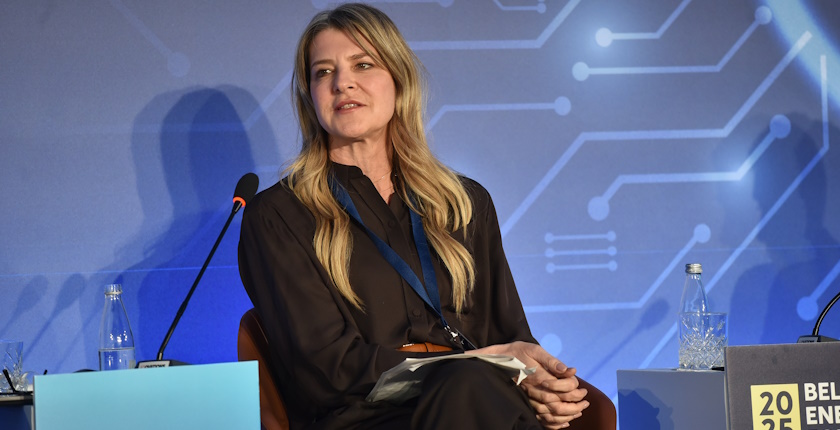
The technological solutions needed to increase the share of renewable sources in Southeast Europe are already available and accessible, according to Maja Turković, Senior Vice President of CWP Europe. Countries in the region now need to adopt regulations to boost the deployment of battery storage and hybrid power plants, she said on the sidelines of Belgrade Energy Forum 2025.

“I believe that technology is our strongest card,” said Maja Turković, adding that its cost is decreasing, as are financing costs. Speaking at the panel on the ongoing energy revolution, she suggested that more financial resources are available than there are eligible projects.

The cost of technologies is decreasing, as are financing costs

Prices of solar panels have dropped 60% over the last two years, while battery costs fell by 40% by the end of 2024 and by a further 5% this year, to under EUR 100,000 per MWh, Turković pointed out at the panel, titled Energy revolution underway – uniting efforts to deliver green, intelligent and sustainable energy solutions.

[wpcc-iframe title=”Maja Turkovic, Executive Vice President, CWP Europe at Belgrade Energy Forum 2025″ width=”500″ height=”281″ src=”https://www.youtube.com/embed/qp8wwaYre0g?feature=oembed” frameborder=”0″ allow=”accelerometer; autoplay; clipboard-write; encrypted-media; gyroscope; picture-in-picture; web-share” referrerpolicy=”strict-origin-when-cross-origin” allowfullscreen=””]

She said that integrating batteries with solar power plants is the latest trend, but that transmission system operators in the region still do not allow it. However, in some countries, a grid connection approved for solar can also be used for batteries, she noted.

Integrating solar with batteries is the latest trend

Turković expressed the hope that regulations in the region will follow the technological evolution. “We hope to improve the preparedness of countries in the region to adopt appropriate regulations and to increase the capacity of battery storage and hybrid power plants in general, which are far more desirable for the system itself,” she stressed.

Talking about CWP Europe, Turković recalled that the company is developing projects for wind power plants, solar power plants, and battery storage in nine countries, and that it has also begun diversifying into hybrid power plants. She added that the company is also developing its own battery management software for short-term power markets.

CWP Europe recently signed the largest single power purchase agreement (PPA) for a solar project with Serbia’s state-owned power utility Elektroprivreda Srbije (EPS), marking a major milestone in the country’s energy transition. The PPA was signed for the 150 MW Solarina photovoltaic park that CWP Europe is developing in eastern Serbia.
by in News

Eric Scotto: Falling storage and renewables costs will help meet rising electricity demand

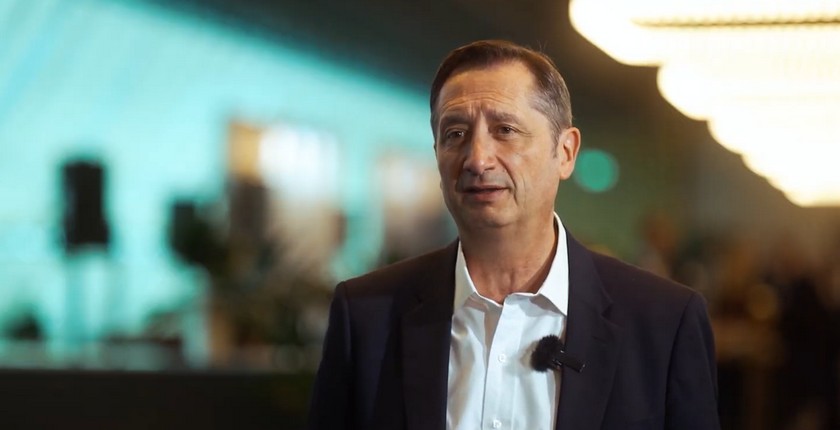
Declining energy storage costs and expanding renewables capacity will enable Europe to meet the challenge of intensified electrification and rising consumption, according to Eric Scotto, CEO of Akuo Energy. Thanks to falling costs, renewable energy has already won the race against nuclear power, he emphasized at Belgrade Energy Forum 2025.

The price of energy storage today is ten times lower than it was ten years ago, and the density of storage has tripled in the last three years, Eric Scotto said. Speaking at a panel on decarbonization in Southeast Europe, he explained that the operating power of a battery system in a standard TEU container, twenty feet or 6.1 meters long, now reaches 6 MW.

“Today, the challenge is flexibility. We know how to produce cheap, but what is important is to reconcile offer and demand… Thanks to storage, we can do that today,” Scotto said on the sidelines of the conference.

Renewables have already won the race against nuclear energy

Talking about the cost of generation from renewable sources and nuclear power, he argued that the race has already been decided. “It’s over. We won the race. Renewable is the cheapest way to produce energy,” he underscored.

[wpcc-iframe title=”Eric Scotto, CEO, Akuo Energy at the Belgrade Energy Forum” width=”500″ height=”281″ src=”https://www.youtube.com/embed/ZVg8ole0VaM?feature=oembed” frameborder=”0″ allow=”accelerometer; autoplay; clipboard-write; encrypted-media; gyroscope; picture-in-picture; web-share” referrerpolicy=”strict-origin-when-cross-origin” allowfullscreen=””]

Scotto emphasized that the Balkan region, which is lagging in the energy transition, can now enjoy the benefits of the latest and cheapest renewable energy and storage technologies. “This morning, some people were saying that we are late in the Balkans, and that’s the best news we could get this morning because renewables are the cheapest way to produce energy, so we’re going to benefit from the latest and most efficient technologies… from solar, from wind, from hydro, and storage,” claims the top man of the French renewable energy company.

The slow energy transition is good news for the Balkans

Scotto stressed the importance of collaboration among Western Balkan countries, adding that he hopes to see more of it in the coming days, weeks, and months. “We have the skills and we have the know-how in those countries. We need to share, we need to work more together, and, of course, we need more international interconnection,” he said.

Akuo Energy has secured a PPA for its Bela Anta 2 wind project in Serbia

Talking about Akuo Energy, Scotto said that it brings to the region its knowledge and experience from numerous project around the world. The France-based independent global renewable energy producer recently signed a power purchase agreement (PPA) with Serbia’s state-owned power utility Elektroprivreda Srbije (EPS) for the Bela Anta 2 wind project.

With a total installed capacity of 80 MW, Bela Anta 2 was among the awarded projects in Serbia’s second round of renewable energy auctions, held in early 2025, securing a contract for difference (CfD).

by in News

Global battery storage capacity expands by record 200 GWh in 2024

Global installed energy storage is on a steep rise and is expected to increase ninefold by 2040, to over 4 TW, driven by battery energy storage systems (BESS), which saw record growth in 2024, according to a report by Rystad Energy. In recent years, the cost of storing electricity has dropped significantly thanks to the declining cost of battery projects, coupled with technological advancements.

Last year, a record 200 GWh of new BESS projects came online globally, bringing the world’s total operational battery storage capacity to 375 GWh. China maintained its leading position, with over 100 GWh of new capacity, followed by the United States, which added 35 GWh. Germany, Australia, and the United Kingdom were among the top five.

Energy storage will play a key role in integrating renewables as power demand grows

As power demand is expected to continue its strong growth in 2025 and after, the growth rate of low-carbon energy sources is now close to covering the entire demand increase. Energy storage will play a key role in integrating the increasing share of intermittent renewable energy and providing the needed flexibility for the secure operation of the power systems, according to Rystad’s report.

The increasing share of intermittent renewables, combined with low flexibility in supply and load, creates price volatility in the liberalized power markets, making energy trading (arbitrage) a good source of revenue for BESS, according to the report.

Solar energy is projected to grow more than all other energy sources combined between 2025 and 2050, expanding tenfold over the period, Rystad noted.

The cost of BESS projects has fallen below USD 300 per kWh in recent years

The global average cost of BESS projects fell below USD 300 per kWh in 2024. If it were to decline to USD 250 per kWh, the cost of storing electricity could be as low as USD 60 per MWh, allowing BESS operators to retain a larger portion of the price spread as profit, Rystad said.

The lower costs of electricity storage are also driven by technological advancements, as battery manufacturers currently guarantee over 10,000 charge-discharge cycles and more than 80% battery health during that lifespan.

by in News

Serbia receives first two grid applications for battery energy storage systems

Serbia’s transmission system operator Elektromreža Srbije received two grid connection applications for battery energy storage systems. They are the first energy storage projects in the country.

Investments in battery energy storage systems (BESS) is ramping up around the world and Serbia is now making its first steps. Annual installations have increased more than 12 times in just four years, projects for an overall 11.5 GWh were announced in only three European countries, and last year China and Germany increased their battery capacity by 130% and 50%, respectively.

The grid connection applications in Serbia were submitted by Green BESS KV, for a 100 MW project of the same name, and MKBDP Energy, for its 50 MW project Skladište električne energije Jagodina.

Applications were submitted by Green BESS KV and MKBDP Energy

Green BESS is a special purpose vehicle (SPV) of Radiant Partners, while MKBDP Energy is part of the MK Group. Of note, there are other energy storage projects in the pipeline, but none of them are as far ahead as them. Both parent companies are registered in Serbia.

MK Group is very active in the renewable energy sector in the country. It put its Krivača wind farm into operation last year.

Serbia’s TSO Elektromreža Srbije (EMS) confirmed to Balkan Green Energy News that it has received the first applications for signing the agreement on the preparation of the connection study for standalone storage.

MKBDP Energy applied for a 50 MW facility located close to Jagodina. The site for Green BESS KV of 100 MW facility is near Kraljevo, according to EMS. Both cities are in the central part of the country.

After signing such an agreement, the TSO starts work on the study, which lasts 120 days.

The start of construction is scheduled for the first half of 2026

According to Green BESS KV, it is an SPV established by consulting firm Radiant Partners, a developer of large-scale renewable energy projects. Radiant Partners is developing one of the largest solar power projects in Serbia – Noćaj, near Sremska Mitrovica, with a capacity of 180 MW, while new solar and wind projects are in the initial phase.

“Our vision is focused on sustainability, innovation, and energy independence. The 100 MW / 200 MWh battery storage facility represents a significant step in the modernization of Serbia’s energy system, contributing to environmental protection and bringing numerous economic benefits,” CEO of Radiant Partners Nikola Ćeha told Balkan Green Energy News.

Batteries are a good market opportunity

In the next phase, the construction of a storage facility after obtaining all the permits, Radina Partners plans to cooperate with Chinese partners. The project is located in Kraljevo, in the vicinity of the TS Kraljevo 3 transformer station. The start of works is scheduled for the first half of 2026.

Asked about motives for the pioneering step, Ćeha explains there are currently no battery storage facilities in Serbia and that interest in renewable energy projects is growing.

“We see a project for supporting existing and future renewable power plants as a market opportunity, given their variability in daily production,” he stated.

Battery storage increases flexibility in the market

He stressed the importance of large-scale BESS units in Serbia, saying they are crucial for balancing production with consumption, in a situation where renewable energy production is increasing. Batteries stabilize the power grid and enable the storage of excess energy and its use in times of higher consumption or lower production.

In his words, batteries increase flexibility in the market because of their quick response to changes in energy consumption and prices, which opens up opportunities for trade and cost optimization.

Such a project attracts investments and encourages the development of energy infrastructure, which contributes to market competitiveness and technological progress, Ćeha said.

by in News

Greece awards 188.9 MW for subsidized battery storage in final auction

Greece’s third energy storage auction has been completed with nine projects selected.

It was the final auction where the state provides subsidies to build battery energy storage systems (BESS). A total of almost 800 MW in capability has been awarded through all three storage auctions.

In the latest bidding, nine projects with a four-hour storage duration have been selected for a total capacity of 188.9 MW.

HELLENiQ Energy and PPC are biggest winners

HELLENiQ Renewables and government-controlled Public Power Corp. (PPC) were the biggest winners, with two plants of 25 MW and one 50 MW plant, respectively. The rest of the list comprises Amber Energy (18 MW), Plain Solar (7.9 MW), Enercoplan (25 MW), Arkadia Storage (10 MW), Heliothema (10 MW) and Ardassa Energy (18 MW).

The facilities will be installed in the Western Macedonia region in northern Greece and in the municipalities of Megalopolis, Tripoli, Gortynia and Oichalia in the Peloponnese region. They are the country’s lignite regions, covered by the Just Transition Development Plan.

The investments will benefit from a public grant of EUR 200,000 per MW and they must now submit a letter of guarantee for EUR 35,000 per MW within the next three months.

Average price rises

As for the average price, it landed at EUR 52,589.16 per MW per year in the auction. The lowest offer was EUR 43,927 per MW, by HELLENiQ Renewables, while the highest was EUR 58,773 per MW, by Plain Solar.

The average prices in the first and second auctions were EUR 49,748 per MW and EUR 47,680 per MW.

It should be pointed out that from now on, new facilities in the sector will operate commercially and get income strictly from the market. The Ministry of Environment and Energy has already published a decree setting the rules for the installation of 4.7 GW of new battery systems until 2030.

Investors are getting ready for future auctions. They will submit their applications to the Regulatory Authority for Energy, Waste and Water (RAEWW or RAAEY). Only last month, applications in the segment reached almost 1.5 GW, showing an enormous interest.

by in News

Montenegro’s EPCG discussed BESS project with companies from US, China, Japan, region

Elektroprivreda Crne Gore, owned by the Government of Montenegro, has held discussions with several companies and financiers from the region, Europe, and the world about its project for battery energy storage systems.

Elektroprivreda Crne Gore (EPCG) said in September that it started the preparations to install battery energy storage systems (BESS).

After the Board of Directors of EPCG adopted a project task proposal and initiated a procedure for the preparation of a feasibility study and project design, the first phase of the procurement is already underway, according to the company’s Elektroprivreda magazine. The tender includes battery systems with a capacity of up to 120 MWh per location, it revealed.

A study is under development with elements of a feasibility study, addressing specific technical characteristics, according to Zoran Miljanić, a member of the Board of Directors. He added that the company extensively scanned available market options.

More than 20 meetings were held

In his words, more than 20 meetings were held with various interested parties. They were BESS manufacturers, battery integrators, financiers, co-investors, and institutions offering technical assistance.

Representatives of companies from the United States, France, China, Japan, Bosnia and Herzegovina and Montenegro participated in the discussions, he stressed. The meetings helped EPCG understand the issues related to the technical characteristics of batteries on the market, the availability of equipment, and the speed of delivery.

The aim is to choose the optimal solution for the company, Miljanić underlined.

The locations foreseen in the project task are hydropower plant Perućica, EPCG Željezara Nikšić, and thermal power plant Pljevlja. The plan is also to install a 5 MWh battery near the 5 MW Kapino Polje solar power plant, for which a project is under development.

Three locations are being considered

The locations were chosen because of free space for solar panels and the connections to the transmission network, which makes it easier and faster to install the batteries.

Miljanić emphasized that changes are possible after the study is finished but that the said options are primary.

In his words, in the first phase of development of the BESS technology, integrating batteries with photovoltaic plants seemed like a good model to balance their variable production.

However, amid the accelerated development of PCS (Power Conversion System), BMS (Battery Management System), and EMS (Energy Management System) solutions, battery projects are planned as independent and in different sizes – from residential to power distribution to industrial and large systems – connected to the transmission grid and with a capacity measured in the gigawatt-hour range.