by in News

PPC Renewables Romania Adds 60.12 MWh Battery to Sălbatica Wind Complex

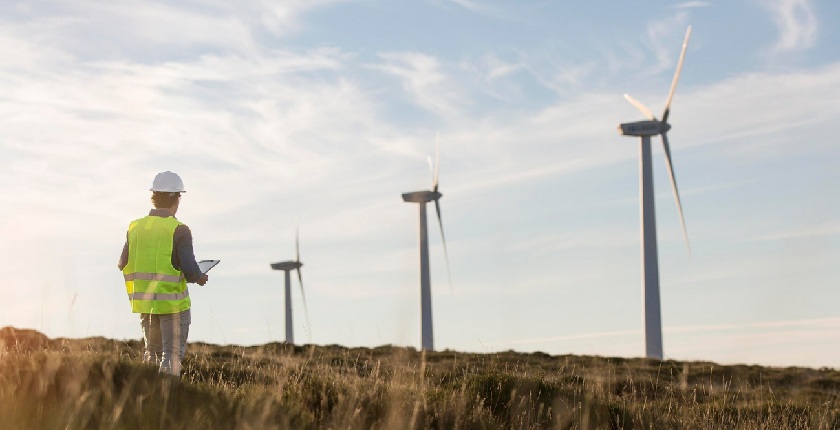
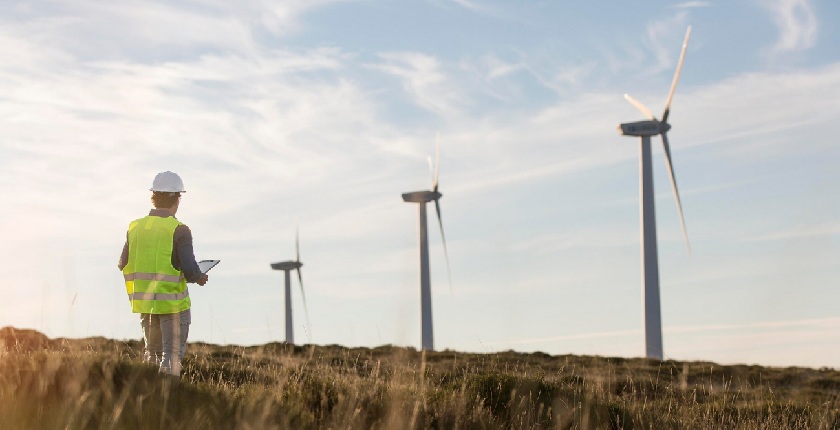
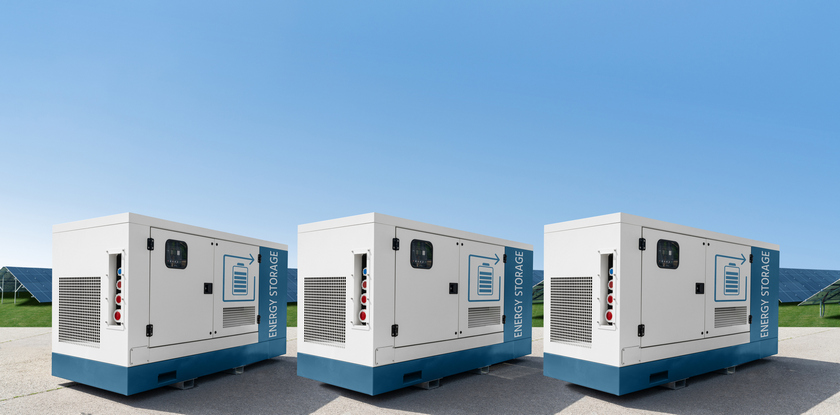
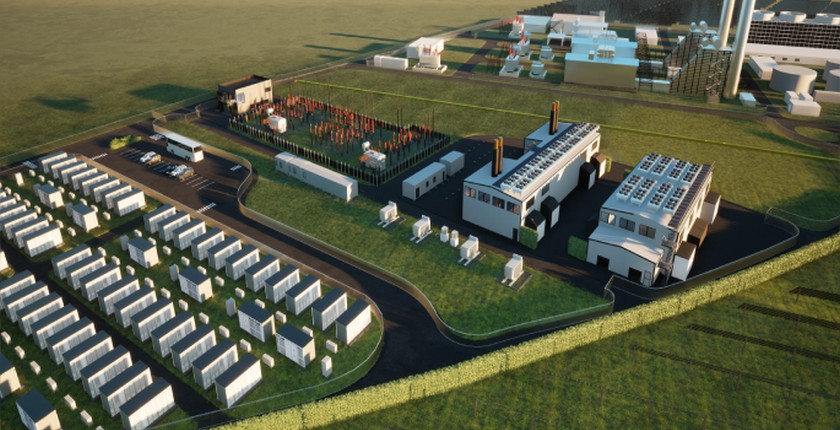
PPC Renewables Romania plans to install a battery energy storage system (BESS) with a capacity of 60.12 MWh within its Sălbatica 1 wind farm, as the company accelerates its storage rollout alongside existing renewable assets.

The storage project is valued at RON 68.2 million (EUR 13.4 million), PPC Renewables Romania said. The company operates the Sălbatica 1 and Sălbatica 2 wind farms, which together total 140 MW, located in Tulcea County in southeastern Romania.

PPC Renewables Romania is a subsidiary of Greece’s state-controlled Public Power Corporation (PPC).

Modernization Fund support of EUR 1.9 million

The BESS investment will be supported by the European Union’s Modernization Fund, through a public call aimed at financing electricity storage capacities connected to existing renewable generation facilities.

From the overall investment, RON 9.87 million (EUR 1.9 million) will come from the Modernization Fund, while the remainder will be financed by PPC Renewables Romania.

According to PPC, the battery will contribute to the development of storage capacity and improve the flexibility and efficiency of electricity produced from renewable sources.

Broader storage pipeline underway

PPC Renewables Romania is developing a series of storage projects across the country. The company plans to install:

  • 27 MWh at the Topolog wind farm,

  • 80 MWh at the Corugea wind farm, and

  • 120 MWh in total at the Nicolae Bălcescu and Târgușor wind farms.

PPC operates 1.3 GW of wind, photovoltaic, and hydropower capacity in Romania. Its 600 MW Fântânele–Cogealac–Grădina wind farm is the country’s largest wind facility and already includes a BESS installation.

Romania’s largest BESS commissioned in December 2025

Romania’s largest battery storage system was inaugurated in December 2025 by Nova Power & Gas, doubling the country’s total BESS capacity. The facility in Florești, Cluj County, has an operating power of 200 MW and an energy capacity of 400 MWh.

by in News

CWP Romania’s Largest Solar Plant Studina Goes Live, Battery Storage Next

The Studina solar power plant has entered regular commercial operation, developer CWP Europe announced. With 174 MW of peak capacity, the project is currently Romania’s largest operating photovoltaic plant, although several bigger utility-scale developments are already underway. The next milestone for Studina is the addition of battery energy storage.

Studina to Produce 245 GWh a Year in Olt County

CWP Europe estimates the Studina photovoltaic plant will generate around 245 GWh annually—enough electricity to supply more than 122,500 Romanian households. The site is located in Olt county, southwest of Bucharest.

At 174 MW nameplate capacity, Studina has taken the top spot among Romania’s operational solar facilities, surpassing Econergy’s Rătești plant (155 MW).

Bigger Solar Parks Already in the Pipeline

Studina’s lead is expected to be temporary as Romania’s solar pipeline accelerates. Nofar Energy is constructing the 282 MW Corbii Mari solar park, while the investment arm of Sweden-based Ingka Holding—the world’s largest IKEA franchisee—is developing the 300 MW Butimanu PV project, with completion targeted for April 2027.

Meanwhile, Enery is preparing to start construction on a major project of 750 MW peak capacity near Bucharest, alongside several other large-scale developments in progress.

Battery Storage Next: Permit Secured for Co-Located System

CWP Europe said Studina has also obtained a building permit for a co-located battery energy storage system, with construction planned as the next phase. The company added that the project was built in partnership with Renalfa.

EPC Partners, Contractors and Equipment

CWP Europe credited its construction team and engineering partners for delivering the project safely and on schedule. Chief Financial Officer and Chief Operating Officer Alex Sekulovic said close coordination and disciplined execution—together with EPC partners Solarpro and Eximprod—helped ensure quality standards and compliance with EHS (environmental, health and safety) requirements, with zero accidents reported during construction.

Solarpro is part of the Austria-based Renalfa Solarpro Group. Siemens Energy was among the contractors, while LONGi supplied Hi-MO 7 bifacial solar modules.

CWP Europe Executive Vice President Viktor Garbev said the project highlights the company’s ability to secure sites, build partnerships, navigate permitting, and deliver assets at scale in demanding technical and regulatory environments.

Grid Connection and Ownership: China Huadian Has Minority Stake

According to recent Romanian media updates, Studina has a 134 MW grid connection, and Chinese state-owned China Huadian Corp. holds a minority stake in the project company.

Related Deal: CCE Sells Horia 2 Project to Renalfa Solarpro

In a separate transaction, CCE sold its Horia 2 solar project to Renalfa Solarpro Group in January. The planned facility is sized at 293.3 MW peak capacity with a 269.2 MW grid connection. Located in Arad county, the site covers 349 hectares.

by in News

New auction announced in Greece for 600 MW for electricity for vulnerable households

The Greek government specified terms and conditions for participation in a new kind of renewable energy auction, covering both wind and solar energy.

The auction comes as part of the Apollo initiative, aimed at reducing energy costs for vulnerable households across the country and fighting energy poverty. In total, 200 MW of solar plus batteries and 400 MW of wind will be auctioned.

Wind power projects of at least 60 kW may participate, with no limit set for photovoltaics. All applicants must have final connection terms from the distribution or transmission operator. Their remuneration will be based on a contract for difference (CfD). Investors can also gain a grant from European Union programs, the National Development Plan or other sources, according to the decree.

This will be a single-step static auction, with the offer price ceiling set at EUR 80 per MWh for wind projects and EUR 75 per MWh for photovoltaics with battery storage.

Equally important, the competition level is 40%, meaning that 60% of the offered capacity will be awarded up to a maximum of 600 MW. On top of that, at least three projects from different investors must participate in the process. Furthermore, no participant can apply for more than 25% of the total offered capacity, to ensure a level playing field.

Steep timeframe for selected projects

Concerning next steps, the Regulatory Authority for Energy, Waste and Water (RAEWW or RAAEY) is expected to officially proclaim the auction in the next few weeks, before the end of January. The regulator will also specify the letter of guarantee investors will have to submit, as well as the rest of the details. The submission of offers is expected to last by the end of February.

The ministry said the construction of solar farms with batteries must be completed by the end of 2027, while wind farms need to come online by September 2028.

Consumers who will benefit from cheaper renewable electricity will be notified via their power suppliers about their eligibility.

by in News

New auction announced in Greece for 600 MW for electricity for vulnerable households

The Greek government specified terms and conditions for participation in a new kind of renewable energy auction, covering both wind and solar energy.

The auction comes as part of the Apollo initiative, aimed at reducing energy costs for vulnerable households across the country and fighting energy poverty. In total, 200 MW of solar plus batteries and 400 MW of wind will be auctioned.

Wind power projects of at least 60 kW may participate, with no limit set for photovoltaics. All applicants must have final connection terms from the distribution or transmission operator. Their remuneration will be based on a contract for difference (CfD). Investors can also gain a grant from European Union programs, the National Development Plan or other sources, according to the decree.

This will be a single-step static auction, with the offer price ceiling set at EUR 80 per MWh for wind projects and EUR 75 per MWh for photovoltaics with battery storage.

Equally important, the competition level is 40%, meaning that 60% of the offered capacity will be awarded up to a maximum of 600 MW. On top of that, at least three projects from different investors must participate in the process. Furthermore, no participant can apply for more than 25% of the total offered capacity, to ensure a level playing field.

Steep timeframe for selected projects

Concerning next steps, the Regulatory Authority for Energy, Waste and Water (RAEWW or RAAEY) is expected to officially proclaim the auction in the next few weeks, before the end of January. The regulator will also specify the letter of guarantee investors will have to submit, as well as the rest of the details. The submission of offers is expected to last by the end of February.

The ministry said the construction of solar farms with batteries must be completed by the end of 2027, while wind farms need to come online by September 2028.

Consumers who will benefit from cheaper renewable electricity will be notified via their power suppliers about their eligibility.

by in News

Greece reboots Apollo program against energy poverty

The Greek government has redesigned and rebooted the Apollo self-consumption program, aimed at reducing energy costs for vulnerable consumers.

Initially, Apollo was introduced to support households, municipalities, water utilities and local irrigation organizations. Each of Greece’s 13 regions, also known as peripheries, would have a green power plant, and eligible consumers who join a local energy community get discounted electricity bills.

However, the first part, which included households, was not realized in time to draw EUR 100 million from the European Union’s Recovery and Resilience Facility (RRF). It expires in June 2026.

Tsafos: Both segments set for completion

“Apollo was one of the plans that we could not carry out in time, therefore we excluded it from RRF and increased funding to other initiatives, such as energy efficiency in houses,” Deputy Minister of Environment and Energy Nikos Tsafos explained earlier in December.

Now the government announced that the first phase would be continued using different funding sources, according to the new joint ministerial decree. In fact, the number of beneficiaries is higher than in the original version. A second phase would follow to support remaining consumer categories, based on a different decree.

“Our goal remains to complete both segments and we are trying to find new funding tools”, Tsafos added.

New auctions and deadlines

Based on the new plan, auctions will take place for 400 MW in wind farms and 200 MW in solar farms, with the second category being combined with battery storage. Selected wind power projects must be completed by September 30, 2028, and the ones for photovoltaics have until the end of 2027.

The decree also stipulates that auction participants may not be selected for more than 25% of total capacity offered in each auction. Every project must be mature, with final connection terms from a network operator.

Last but not least, solar farms without storage may also participate in the auction, as long as they include a battery afterwards in their license.

by in News

Greece reboots Apollo program against energy poverty

The Greek government has redesigned and rebooted the Apollo self-consumption program, aimed at reducing energy costs for vulnerable consumers.

Initially, Apollo was introduced to support households, municipalities, water utilities and local irrigation organizations. Each of Greece’s 13 regions, also known as peripheries, would have a green power plant, and eligible consumers who join a local energy community get discounted electricity bills.

However, the first part, which included households, was not realized in time to draw EUR 100 million from the European Union’s Recovery and Resilience Facility (RRF). It expires in June 2026.

Tsafos: Both segments set for completion

“Apollo was one of the plans that we could not carry out in time, therefore we excluded it from RRF and increased funding to other initiatives, such as energy efficiency in houses,” Deputy Minister of Environment and Energy Nikos Tsafos explained earlier in December.

Now the government announced that the first phase would be continued using different funding sources, according to the new joint ministerial decree. In fact, the number of beneficiaries is higher than in the original version. A second phase would follow to support remaining consumer categories, based on a different decree.

“Our goal remains to complete both segments and we are trying to find new funding tools”, Tsafos added.

New auctions and deadlines

Based on the new plan, auctions will take place for 400 MW in wind farms and 200 MW in solar farms, with the second category being combined with battery storage. Selected wind power projects must be completed by September 30, 2028, and the ones for photovoltaics have until the end of 2027.

The decree also stipulates that auction participants may not be selected for more than 25% of total capacity offered in each auction. Every project must be mature, with final connection terms from a network operator.

Last but not least, solar farms without storage may also participate in the auction, as long as they include a battery afterwards in their license.

by in News

EU’s new power pricing interval boosts BESS profit potential – analysis

The rollout of the European Union’s new power pricing system in October, with prices set every 15 minutes, rather than every hour, has increased the profit potential of battery energy storage systems (BESS). In several countries, BESS profits now have the potential to rise by more than 15%, according to an analysis by research and energy intelligence company Rystad Energy.

Thanks to the 15-minute trading interval, arbitrage potential on the EU’s day-ahead power markets has increased by an average of 14%, with some countries, such as Austria and Slovakia, recording gains of over 20%, according to the analysis.

In Germany, quarter-hour arbitrage was 16% more profitable than hourly arbitrage, while in Lithuania, the improvement was 14%.

The new system brings the greatest benefits in countries with less flexibility

The new trading intervals, known as 15-minute Market Time Units (MTUs), bring the greatest benefits in countries with less flexibility in power generation and consumption, where a high share of intermittent renewables can cause large price swings, according to Sepehr Soltani, senior analyst for energy storage at Rystad.

Rystad estimates that if a battery earns around 20% more each year due to these price swings, its total return on investment can increase by about 3% over 20 years.

A 20% annual profit gain could raise return on investment by 3% over 20 years

In contrast, in places with a flexible electricity supply, such as Norway with hydropower and Portugal with hydropower and gas, prices are more stable over an hour, so the difference between profits from 15-minute and hourly trading is much smaller, he explained.

This is why in Portugal, Norway, and Sweden, the new system has brought only minor improvements in BESS profitability potential.

Rystad noted, however, that today’s unusually high arbitrage margins, of over USD 150 per MWh, are not expected to persist over the next 10–20 years. A more realistic long-term average is around USD 60 per MWh, according to the analysis.

by in News

Romania’s biggest battery system put into operation

Nova Power & Gas has commissioned the largest battery energy storage system in Romania, doubling the country’s total capacity. The installation in Florești, Cluj County, has an operating power of 200 MW and a capacity of 400 MWh.

Before the new facility was commissioned, Romania’s overall battery energy storage capacity was 398.8 MWh, according to data from the country’s transmission system operator, Transelectrica. Nova Power & Gas earlier said its own capacity was 240 MWh.

The company was already operating 240 MWh in batteries

The new battery energy storage system (BESS) became operational after Mayor of Florești Bogdan Pivariu signed a certificate of occupancy, Profit.ro reported.

In addition, Nova Power & Gas is building a 150 MW gas-fired power plant in Câmpia Turzii, with the first phase set to come online by December 2026.

Nova Power & Gas is developing further battery systems totaling 1,200 MWh

By 2028, the company plans to install one more gas power plant, of 200 MW, and energy storage systems of another 600 MW / 1,200 MWh overall.

“Through these investments, we aim to maintain and strengthen our leadership in energy storage, while making substantial investments in gas-fired electricity generation to support balance and flexibility in the national energy system,” Septimiu Costea, CTO of Nova Power & Gas, stated in July.

Nova Power & Gas, part of Romania-based E-Infra Group, is active across the Southeast Europe region, with subsidiaries in Bulgaria, Serbia, Hungary, and Moldova.

The company is also a major power and natural gas supplier, with over 4.6 TWh of electricity and gas delivered in 2024 and a turnover of almost RON 3 billion (EUR 589.4 million), according to Profit.ro.

by in News

Europe’s energy storage capacity to reach 100 GW this year, more than double by 2030

Energy storage in Europe has been expanding rapidly since 2020, with the total installed capacity in the European Union, the United Kingdom, Norway, and Switzerland set to reach 100 GW by the end of November. Pumped hydro storage has the largest share of the existing capacity, 50.6 GW, followed by batteries, with 44.8 GW of operating power, according to an analysis by LCP Delta and Energy Storage Europe.

All energy storage technologies combined are expected to grow by 115%, to 215 GW, by 2030, expanding at a rate of 20 GW to 25 GW per year, according to the report, titled the European Market Monitor on Energy Storage. On November 1, the cumulative figure stood at 99.3 GW.

Battery storage capacity has seen stronger growth than pumped storage hydropower plants this year, with 4 GW of new utility-scale installations, and is projected to expand to 163 GW by 2030.

Battery storage capability is expected to reach 163 GW by 2030

Of the total 44.8 GW of battery capacity, large-scale systems connected to the grid (front of the meter) account for 17 GW, and systems installed on the customer’s side (behind the meter) for 27.8 GW.

According to the report, 18 million homes have a solar system, and four million have battery storage. Residential battery sales are now stabilizing following the 2022-2023 peak, with recovery expected from 2027, supported by a rebounding PV market, rising electrification of homes and transportation, dynamic tariffs, and new financing models.

Europe has 18 million solar homes and four million homes with batteries

Germany has the largest number of home battery systems, 2.1 million, followed by Italy, with 780,000, the UK, with 280,000, Austria, with 200,000, and Belgium, with 160,000.

Jacopo Tosoni, Head of Policy at Energy Storage Europe, hailed energy storage as the fastest-growing clean technology in Europe, with the potential to become the engine of its competitiveness, according to a press release from the association.

Silvestros Vlachopoulos, Energy Storage Research Lead at LCP Delta, said that reaching the 100 GW energy storage capacity marks a key moment for the industry, setting the stage for an even faster renewable energy growth in the coming years.

LCP Delta and Energy Storage Europe believe the energy storage industry is only just getting started and will continue to make a substantial contribution to Europe’s energy transition, according to a press release from the association.

by in News

Webinar summary: How to design PV and BESS in the Balkans faster and smarter with RatedPower software

RatedPower, a leading provider of software for PV plant and BESS design and engineering, has organized a webinar to present its solutions that make it faster and easier for developers and contractors to design and build PV and battery storage facilities, helping increase their efficiency and profitability. The online event included a step-by-step demonstration of how RatedPower’s cloud-based software tool creates simulations of PV plants, battery energy storage systems (BESS), and hybrid facilities to assess costs, performance, and profitability under various scenarios. The hosts also answered questions such as whether the software can be used for rooftop solar, how it accounts for terrain, what financial aspects it considers, and how user-friendly it is for non-technical staff. A recording of the webinar is available at this link.

The webinar opened with an overview of the main challenges that solar and BESS projects face in the Balkans, but also elsewhere in the world. These include a lack of collaboration between teams, difficulty finding investors for projects in the ready-to-build stage, insufficient documentation needed for permitting, lengthy manual calculations, and poor decision-making in feasibility studies.

Addressing common challenges in the Balkans

RatedPower was created precisely to address these problems, and today it provides services for a wide range of companies in the solar and BESS market, including well-known international players, it was explained at the webinar, hosted by Emil Trepin, Account Executive at RatedPower.

The company decided to expand to the Balkans because it is one of the fastest-growing regions in Europe when it comes to renewable energy projects. This, it was explained, is thanks to energy transition efforts, grid modernization, investment momentum, and state support for renewables across the region.

Much more than an engineering tool

RatedPower, part of Enverus, a global software-as-a-service (SaaS) platform for the energy sector, offers a cloud-based tool for designing ground-mounted PV plants of 1 MW and above, and up to 3-4 GW, as well as hybrid systems (PV plus BESS) and standalone battery storage projects.

The platform creates the fastest simulations in the industry, reducing design and engineering time by up to 90%, while helping increase project profitability by about 20%. It generates over 400 pages of ready-to-use documents, including bills of quantities, single-line diagrams, business plans, and much more.

The tool reduces design and engineering time by up to 90%

RatedPower’s software is much more than an engineering tool – it is a decision-making platform that combines the simulation of technical design, energy yield, and financial analysis, according to the hosts.

A step-by-step demonstration of how the platform works

During the demonstration, Matteo Menazzi, Technical Advisor at RatedPower, explained how the platform is used in practice. Since it is cloud-based, it can be accessed from any web browser and used simultaneously by several people working on the same project or on multiple projects.

The first step is to select a location on the map, taking into account various restrictions, such as roads, forests, and archaeological sites, and then add PV arrays, BESS, and other equipment.

Equipment, such as PV modules or battery containers, is selected from a pre-filled database or uploaded manually. The software then creates a full simulation in a matter of seconds, allowing users to test different modules or equipment and compare results.

Solar modules, batteries, and other equipment can be selected from a pre-filled database

In the layout phase, users can set the distance between rows, adapt the configuration to the terrain slope, and estimate the scope and cost of necessary earthworks.

The software also allows the customization of grid connection parameters, including voltage levels and line types (underground or overhead). It then automatically estimates substation size and electrical losses, and calculates the necessary cable lengths.

It calculates the amount of electricity that can be produced and injected into the grid, as well as financial performance. In addition, a large number of documents is automatically generated – from hourly energy yield and battery performance results to lists of necessary cables, bills of quantities, and 2D and 3D drawings.

Designs can be edited and saved as templates for future projects

It is important to note that any design created with the RatedPower software can be edited by moving, adding, or removing elements. Also, all inputs can be saved as a template, which can be used for another project, saving considerable time.

Designing battery storage systems with RatedPower

When it comes to batteries, users can choose a power conversion system and battery containers from the database, define the number of BESS blocks and their layout, and adjust the distances between containers to comply with fire safety regulations. They can also customize charging and discharging efficiency and use the optimization algorithm to adjust operations for maximum profitability.

It is also possible to choose between a fixed and a variable price. For variable prices, the software will upload the day-ahead price for the relevant market or allow users to upload their own price. The tool will also recommend the most profitable time to sell electricity.

Users can also choose whether to charge the batteries only from the PV plant or from the grid as well.

The software provides project cost estimates based on standard values or the user’s input

In the financial segment, RatedPower’s software will estimate the total cost of building a PV plant or battery system, based on standard values provided by the International Renewable Energy Agency (IRENA) and the US National Renewable Energy Laboratory (NREL).

However, input values can also be fully customized by the user, based on the price of solar modules, BESS units, or cables.

If you want to know more about RatedPower’s software, request a demo today.