by in News

Romanian power distributor Electrica to build 15 battery systems totaling 1 GWh

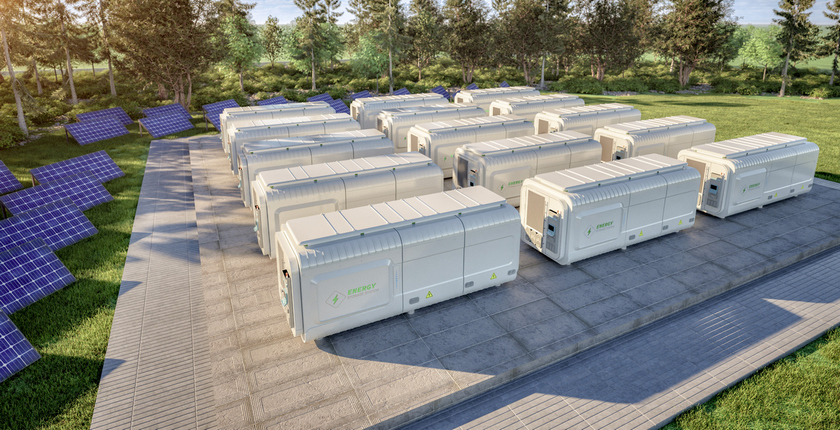
Romanian power supplier and distributor Electrica has initiated a permitting procedure for the construction of 15 battery energy storage parks, with a combined capacity of about 1 GWh, aimed at providing flexibility to the national grid and supporting the integration of renewable energy sources.

The battery energy storage systems (BESS) would boost Electrica’s ability to respond dynamically to fluctuations in consumption and production within the national energy system. It should also enable the efficient integration of growing renewable capacities in Romania, significantly reducing price volatility and dependence on imports, according to a press release from Electrica.

Electrica’s new battery capacity is expected to reduce price volatility and dependence on energy imports

“Developing this 1 GWh storage infrastructure is a strategic pillar in Electrica’s transformation into a leader of the energy transition,” the company said, adding that the battery systems would be built on Electrica’s own land, leveraging assets from its existing portfolio.

“This project is not just about technology or capacity; it is about redefining how Romania manages energy security for the decades ahead,” said Alexandru Chirița, Electrica’s CEO. He also stated that the timeline for the project was “ambitious,” according to the press release.

The BESS capacities will be distributed across Romania

The project, part of Electrica’s 2030 strategy, will be developed in phases, with BESS installations distributed across Romania. The first phase is expected to bring a significant portion of the storage capacity online already in 2025, according to a report by PVknowhow.com.

Battery energy storage is on track to become another pillar of Romania’s energy transition, as investors increasingly develop BESS capacities combined with solar, hydropower, and wind, or as standalone energy storage facilities.

Romania is supporting BESS projects for renewables integration with subsidies provided from its national recovery and resilience plan (NRRP). In September last year, the Ministry of Energy awarded grants to 13 projects.
by in News

CWP Europe gets European Commission’s backing for renewables projects in Albania, Montenegro

CWP Europe has signed a joint declaration with the European Commission, the Albanian Investment Development Agency, and the Montenegrin Investment Agency in support of its two landmark renewable energy projects – the Tropoja wind farm in Albania and the Montechevo solar farm with battery storage in Montenegro.

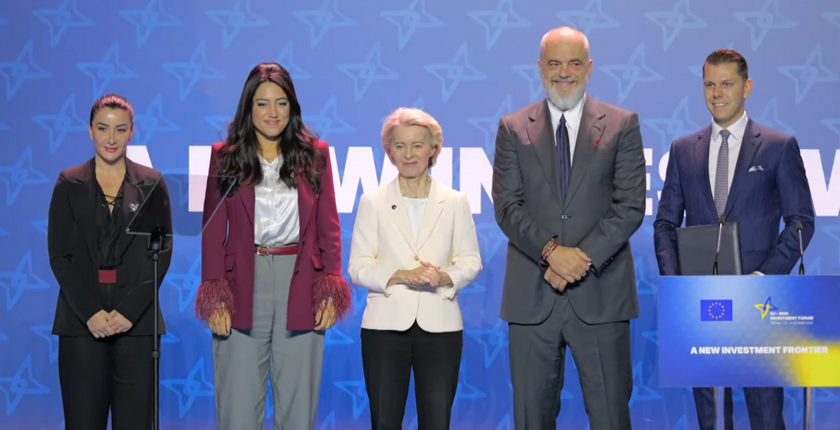
The declaration of support for CWP Europe’s projects was signed during the EU-Western Balkans Investment Forum in Albania’s capital, Tirana, in the presence of Albanian Prime Minister Edi Rama and European Commission President Ursula von der Leyen, according to a press release from CWP Europe, a leading renewable energy project developer in Southeast Europe.

The 600 MW Tropoja wind farm will advance Albania’s energy independence by providing clean, affordable electricity, supporting the country’s energy strategy, the company stressed.

The 600 MW Tropoja wind farm will boost Albania’s energy independence

In Montenegro, the 400 MW Montechevo solar farm will combine solar generation with battery storage directly connected to the country’s new 400 kV transmission grid. It will leverage Montenegro’s strategic interconnections – including the undersea power cable to Italy – to maximize the export of clean electricity and its integration into the European energy market.

A new energy backbone for the Western Balkans and Europe

Speaking at the signing ceremony, von der Leyen emphasized the Western Balkans’ increasing role in Europe’s clean energy transition.

“Today you are signing several investments that will do just that. From clean energy production in all six Western Balkan partners to energy storage in Montenegro. They will bring the cost of electricity down. And they will also contribute to our collective energy independence. You are building a new energy backbone not only for the Western Balkans. But for all of Europe,” said von der Leyen.

CWP Europe CEO Dimitar Enchev signed the declaration on behalf of the company, alongside Executive Vice Presidents Maja Turković and Viktor Garbev.

Enchev: We are unlocking the region’s immense renewable energy potential

“With Tropoja and Montechevo, we are unlocking the region’s immense renewable energy potential and strengthening cooperation across the Western Balkans. We greatly appreciate the support of the European Commission, the Albanian Investment Development Agency, and the Montenegro Investment Promotion Agency in advancing this shared vision for a clean, economically competitive and secure energy future of the region and Europe as a whole,” said Enchev.

Over the past 17 years, CWP has invested in sustainable development and the energy transition, successfully developing the largest wind farms in the region, including the largest one in Europe – the 600 MW Fântânele-Cogealac project in Romania. It is currently developing over 7 GW of renewable energy capacity, according to the statement.

by in News

Croatian IE-Energy, Slovenia’s NGEN plan virtual network of smart battery storage systems

Croatian firm IE-Energy and Slovenia’s NGEN are developing a battery system for smart energy storage, with a total operating power of 60 MW and a capacity of 120 MWh. The project, valued at 60 million, marks the first step toward creating a virtual network of battery storage systems that would connect producers and consumers of renewable energy.

The project has received a EUR 19.8 million grant from the European Union’s Modernization Fund. The funds are intended for the second and crucial phase of the project, for 50 MW, while the first phase, of 10 MW, is already in an advanced stage of implementation, Croatia’s Ministry of Economy stated following the signing of the subsidy contract.

The project, located in the Croatian city of Šibenik, is expected to be completed as early as next year, according to the statement.

IE-Energy CEO Željko Šmitran told Balkan Green Energy News it would be the first battery energy storage system in Croatia connected to the transmission grid. The project is being implemented in partnership with NGEN, which is also the main engineering, procurement, and construction (EPC) contractor.

The battery modules used are Tesla Megapacks, which enable real-time grid balancing, he added. 

The virtual smart energy storage network will connect renewable power plants, industry, and households

The project represents the first step towards creating a virtual network of smart energy storage facilities that will connect renewable energy producers, industry, and households, Šmitran explained.

The entire project is connected to NGEN’s advanced technology platform, which enables participation in the markets for ancillary services, balancing, and intraday trading, as well as electricity supply, added Šmitran.

Developing a regional smart storage network

The model developed in Croatia in collaboration with NGEN is intended to be replicated in other regional markets where grid flexibility and system stability are in high demand, including Serbia, Bosnia and Herzegovina, and North Macedonia, Šmitran said.

The objective is to build a regional model of smart battery storage facilities and energy communities that will ensure sustainable, reliable, and independent energy supply across Southeast Europe in the long term, he said.

In its statement, the Ministry of Economy also said that the project in Šibenik paves the way for advanced grid services, such as virtual inertia for grid stabilization.

by in News

Power the Balkans: Optimizing Solar & BESS projects with RatedPower – webinar announcement

RatedPower, a leading provider of software for solar plant design and optimization, is organizing a free webinar to present its solutions that boost the efficiency and profitability of PV and battery storage projects. The online event, to be held on October 13 at 3 pm CEST, comes at a time when renewables are gaining momentum in the Balkans, increasing the need for complex planning and engineering and making digital solutions essential for project optimization.

In the upcoming webinar, which you can register for using the REGISTRATION LINK,  experts will showcase how RatedPower solutions automate and streamline the design of solar power plants and battery energy storage systems (BESS), maximize efficiency and return on investment, provide accurate reports for better decision-making, and enable seamless collaboration across teams, according to an announcement from the company.

“Digital solutions are becoming essential to streamline processes – from design and engineering to operations, reporting, and collaboration. By integrating advanced software tools, developers and engineers can save time, reduce costs, and maximize the efficiency and performance of their assets,” reads the statement.

RatedPower’s advanced software tools save time, reduce costs, and maximize performance

RatedPower, part of Enverus, a global software-as-a-service (SaaS) platform for the energy sector, offers a one-stop cloud-based solution for PV plant and BESS design and engineering as well as hybrid systems. Its end-to-end platform offers integrated services that cover design, engineering, procurement, and even operational optimization, ensuring a seamless lifecycle approach.

According to the statement, users have confirmed to have doubled their portfolio, increased their profitability by over 20%, and reduced the levelized cost of energy (LCOE) by 5%.

RatedPower is not limited to traditional solar. Its model adapts to hybrid renewable energy systems, BESS integration, and smart grid optimization, positioning it as a strategic partner for the next generation of sustainable energy solutions.

By harnessing real-world performance data and predictive analytics, it helps developers, investors, and operators make smarter, more profitable decisions, mitigating risk and maximizing ROI, reads the statement. The platform enables renewable energy professionals to automatically design, simulate, and optimize PV plants and storage systems.

Unlocking the Balkans’ renewables potential with RatedPower solutions

Headquartered in Madrid, Spain, RatedPower has a portfolio of thousands of projects across Europe, the Americas, Asia, and Africa, with a client base that includes leading developers, utilities, EPC (engineering, procurement, and construction) companies, and engineering firms.

Serving more than 480 companies and 5,800 users worldwide, RatedPower has designed over 64,000 projects worldwide and produced simulations for a total of 5.1 TW of capacity. The projects are supplying green energy to 13 million households, mitigating 18 million tons of CO₂ emissions.

RatedPower has a global footprint, but it views the Balkans as a key region for renewable energy growth.

“RatedPower is committed to empowering renewable energy professionals worldwide – and the Balkans represent one of the most exciting regions for renewable growth,” said Emil Trepin, Account Executive at RatedPower.

Photo: Emil Trepin, Account Executive at RatedPower

“Our software provides the precision, efficiency, and collaboration tools needed to take PV and BESS projects from concept to completion, helping to unlock the region’s true potential,” he stressed.

by in News

New generation of sodium-ion batteries developed in Estonia

A new generation of sodium-ion batteries, developed and manufactured in Estonia, offers a safer, more sustainable, and more affordable alternative to lithium-based energy storage systems. The newly developed batteries are modular and scalable, allowing them to meet the needs of a wide range of users — from homeowners and farmers to commercial and industrial operators.

Estonian company Freen OÜ has introduced a new generation of sodium-ion battery systems. Sodium-ion batteries are presented as an alternative to lithium-based systems. Unlike lithium, sodium is one of the most abundant and widely distributed resources on Earth.

In addition to the high cost of lithium, its mining and extraction from salt flats cause significant environmental damage and deplete water reserves. In contrast, sodium can be obtained more sustainably — most commonly through the electrolysis of common salt.

Unlike lithium batteries, which are prone to overheating, Freen OÜ’s technology ensures thermal stability for sodium-ion batteries, virtually eliminating the risk of fire or explosion. The company also highlights that, unlike lithium-based systems, Freen batteries are not subject to international transportation restrictions and are cobalt-free, making them a more environmentally friendly and geopolitically secure solution.

In addition to chemical safety, Freen emphasizes the practicality of its systems. The batteries feature integrated wheels for easy handling, and their plug-and-play installation makes setup fast and straightforward.

Freen battery systems have a wide range of applications

Their modular design makes them suitable for a wide range of applications, including energy-demanding households, remote farms, telecom infrastructure, commercial facilities, EV charging stations, the oil and gas sector, and public institutions such as schools and hospitals.

“The launch of sodium-ion batteries represents a major innovation in our portfolio, following the successful development of small wind turbines. These batteries stand out for their safety, versatility, and competitive pricing — and we are ready to collaborate with partners across all sectors to accelerate the energy transition”, said Andrey Khimenkov, CEO of Freen OÜ.

Freen has developed Freen-BSH, a high-voltage system capable of storing 10.08 kWh per module, and Freen-BSL, a low-voltage system with a capacity of 7.5 kWh per module.

Freen batteries can be recharged more than 5,000 times

Both systems support over 5,000 charging cycles, offering long service life, low maintenance, and high operational safety, even under extreme weather conditions.

“Whether used for energy independence, peak shaving, or as part of a hybrid renewable energy system, Freen’s solutions deliver efficiency and reliability across a variety of scenarios,” the company noted in its statement.

Freen also highlights the potential of its batteries in the Western Balkans, where several major initiatives are driving investments in renewable energy and energy storage.

Kosovo* recently announced a EUR 1.2 billion auction for renewables and storage — one of the largest in the region. In parallel, the European Union continues to fund the green transition through instruments such as the Western Balkans Investment Framework (WBIF) and the EU Growth Plan, providing grants and technical support for projects focused on renewable energy, storage, and grid flexibility.

These initiatives create opportunities for innovative solutions, such as Freen’s sodium-ion batteries, to become an integral part of the region’s evolving energy landscape.

* This designation is without prejudice to positions onstatus and is in line with UNSCR 1244/99 and the ICJ Opinion on the Kosovo declaration of independence.
by in News

Bulgaria opens public consultation on subsidies for 1.9 GWh of battery projects

Bulgaria’s Ministry of Energy has launched a public consultation on a new round of its subsidy program for battery energy storage projects, aimed at facilitating the integration of renewable energy sources. The plan is to support the deployment of 1.9 GWh of new battery capacity with around EUR 118 million.

In the first round of the National Infrastructure for Storage of Electricity from Renewable Sources (RESTORE) program, Bulgaria approved EUR 587 million in subsidies for 82 battery energy storage system (BESS) projects totaling 9.71 GWh, with another 30 applicants falling below the threshold.

Draft application and implementation documents for RESTORE 2 will be available for comments and proposals until September 15, while a tentative date for inviting applications for grants is September 18.

The BESS systems are expected to be deployed throughout the country and connected to the transmission network or the distribution grid. A BESS system must have a minimum nominal AC capacity of 10 MW to qualify for the program.

The minimum required capacity is 10 MW

The maximum support is 50% of the eligible project costs, but not more than BGN 156,466 (EUR 80,000) per 1 MWh of usable energy capacity, according to the documents. In the previous round, the maximum support per 1 MWh was BGN 148,600 (around EUR 76,000), Economic.bg recalled.

The deadline to build and commission the BESS capacities is July 31, 2026. The battery systems selected in the first part of the program must come online by the end of March 2026.

The new round of RESTORE aims to finance projects in more advanced stages

Another difference from the previous call is that proposed projects must be in a much more advanced stage. In addition to a connection agreement, applicants must already have a construction permit or installation permit issued, a signed supply contract or orders and payments made for the equipment for the storage system, as well as secured financing for the investment, according to the draft documents.

by in News

Investors in standalone batteries in Greece request extension as deadline looms

September 30 marks a crucial deadline for standalone battery projects selected through Greece’s first two auctions.

Investors in battery projects of about 700 MW in total are rushing to submit their so-called declarations of readiness to the Independent Power Transmission Operator (IPTO or ADMIE) by the end of September. After that point, the projects must become operational by the end of the year.

Investors claim that a lengthy licensing process, combined with a one year equipment procurement span, means many will be unable to reach the finish line in time. Licensing delays also caused problems with financing.

If a project breaches the deadlines, it will be subject to the loss of the letter of guarantee, resulting in losses that can even reach several million euros, depending on the capacity of the battery.

The deadline for commissioning for projects selected through the third auction, which amount to 200 MW, is April 30.

Market warns of insufficient time for batteries

The Hellenic Association of Energy Storage Systems (HAESS) has asked for more time and a new final declarations deadline, end-July 2026, for the projects selected through all three auctions. It added that the investors of the first two rounds only managed to acquire connection terms by mid-year.

The deadlines are binding to secure funding from the European Union’s Recovery and Resilience Facility (RRF), the organization explained. It means that if the timeframe is breached, selected projects will not receive support.

So far there has been no official statement about the possibility of extending the deadlines. Therefore, it remains to be seen whether the Ministry of Environment and Energy will maintain a strict stance, as Greece urgently needs storage to address ever higher curtailments.

by in News

Turkish firm Astor Enerji to install 2 GWh of battery capacity at its solar projects in Romania

Swiss energy storage provider Energy Vault has signed an agreement to supply up to 2 GWh of battery capacity for the solar power projects of Turkey-based Astor Enerji in Romania. Astor Enerji, for its part, will provide transformers and high-voltage equipment for more than 1 GW of Energy Vault’s battery projects worldwide.

Astor Enerji recently entered the Romanian market through the acquisition of four photovoltaic projects with a total capacity of 279 MW, according to reports. The transactions, which require regulatory approval, were carried out in April through Astor Enerji’s Romanian subsidiary Astor RO Energy.

Astor Enerji has acquired 279 MW of solar projects in Romania

Under the global partnership agreement, Astor will receive battery energy storage systems (BESS) for the four grid-connected photovoltaic projects in Romania, with a total storage capacity of up to 2 GWh, according to a press release from Energy Vault.

Astor Enerji, for its part, will supply transformers and high-voltage equipment for Energy Vault’s BESS projects of over 1 GW overall, planned in the United States, Australia, and Europe.

Olcay Doğan, CFO of Astor Enerji, stated that Energy Vault’s innovative approach to energy storage makes it an ideal partner to support the Turkish company’s expansion into the battery sector.

According to Energy Vault’s chief revenue officer, Marco Terruzzin, the collaboration with Astor Enerji will help build the technology and supply chain capacity to meet surging power demand from artificial intelligence (AI) data centers and the rapid adoption of renewable energy.

Energy Vault has secured USD 300 million for BESS projects around the world

Energy Vault develops and deploys utility-scale energy storage solutions, including proprietary gravity-based storage, battery storage, and green hydrogen energy storage technologies. It recently announced a USD 300 million deal with an investment fund to finance the launch of a subsidiary that will develop, build, own, and operate energy storage assets, standalone or paired with generation facilities, around the world.

Astor Enerji supplies power transformers, distribution transformers, and high-voltage to medium-voltage switchgear to markets in Europe, Africa, Asia, and the United States.

by in News

German startup Voltfang turning used EV batteries into energy storage for solar, wind

German startup Voltfang has opened a plant to manufacture energy storage units for solar and wind from used electric vehicle batteries. The company says the facility is the largest of its kind in Europe, with annual output set to reach 250 MWh in 2026.

The plant in Aachen will produce second-life battery storage systems for commercial, industrial, and large-scale applications. Its annual output is planned to rise to 1 GWh by 2030.

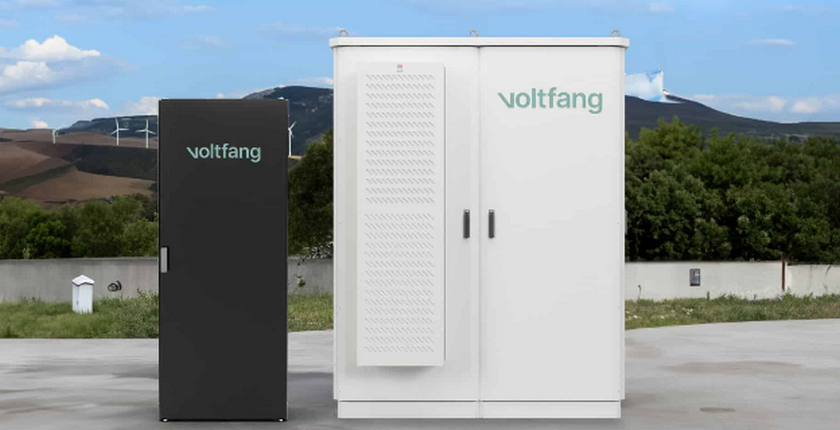
The facility will assemble fridge-sized energy storage units that households and companies can use to store excess electricity generated by solar panels or wind turbines.

Voltfang’s batteries can be used by homes and businesses to store energy from solar or wind facilities

The plant employs around 100 people, and Voltfang claims it is the largest facility in Europe for repurposing lithium-ion batteries.

David Oudsandji, co-founder and managing director of Voltfang, said the company’s goal is to develop high-performance battery storage systems for German and European industry.

Voltfang hopes to turn a profit by next year, but Oudsandji noted that the supply of used EV batteries is still small, as most such vehicles are only a few years old.

The supply of used electric vehicle batteries is still limited

Another obstacle is that new batteries, mainly from China, are becoming increasingly efficient and affordable, while refurbishing old ones is a complex process.

On the other hand, it is more sustainable and helps create a circular economy and ensure energy independence, according to Oudsandji.

by in News

Econergy’s 87 MW Oradea solar park in Romania starts commercial operation

Econergy Renewable Energy connected its 87 MW Oradea solar power plant to Romania’s national grid and began commercial operation.

Oradea solar farm, with a capacity of 87 MW, is Econergy’s fourth photovoltaic plant in Romania. With the addition, the company’s operational and ready-to-connect capacity in the country has reached 447 MW. It is building another 788 MW and expects to start building another 559 MW by the end of 2025, according to the latest update.

Econergy operates Romania’s biggest PV plant, Rătești, in an equal partnership with Nofar Energy. They inaugurated the facility with 154.7 MW in peak capacity in 2023. The other two are the Părău solar park of 92 MW in peak capacity, near Brașov, developed in a 50:50 joint venture with RGreen Invest, and the Scurtu Mare facility of 55 MW in peak capacity, where Phoenix Holdings is a minority partner.

Econergy plans to add a 68 MW co-located battery energy storage system to the Oradea project

As part of its strategy to integrate storage solutions, Econergy plans to add a 68 MW co-located battery energy storage system (BESS) to the Oradea facility. The storage system is anticipated to increase the project’s economic value by generating new revenue streams, facilitating grid balancing services, and optimizing electricity sales through price arbitrage.

The Oradea solar power plant was developed in partnership with Israeli financial services firm Phoenix Holdings, which has invested more than EUR 225 million in Econergy’s Romanian and Polish projects.

“The successful connection of Oradea marks another important milestone for Econergy in Romania. This achievement underscores our ability to deliver large-scale renewable projects while advancing our strategy of integrating storage solutions to maximize value for our stakeholders. We are proud to strengthen our partnership with Phoenix Holdings as we continue to expand our renewable energy platform across Europe”, said Eyal Podhorzer, CEO of Econergy.