by in News

100,000 home batteries in California act as 500 MW power plant

More than 100,000 aggregated home batteries have recently supplied power at over 500 MW to California’s electricity system in a virtual power plant event covered by a new analysis.

The test virtual power plant (VPP) event occurred on July 29, and Brattle produced the analysis. The consultancy’s experts studied the data from the operation, called by several aggregators in California.

Residential batteries provided over 500 MW of capacity to the California power system during the event, according to Brattle.

Founder of GoPowerEV John Reister wrote on LinkedIn that 100,000 home batteries operated like a mid-sized power plant.

“On July 29, California aggregated more than 100,000 residential batteries and discharged them for two hours during the evening peak. The result: 535 MW of coordinated output, comparable to a gas peaker plant, but distributed across rooftops instead of built on a single plot of land,” Reister’s post reads.

GoPowerEV specializes in electric vehicle charging systems for multi-family apartments.

The aggregators have discharged their portfolio of batteries between 7 and 9 pm

According to the presentation on initial findings prepared by Brattle’s experts, several VPP aggregators in California discharged their portfolio of batteries between 7 and 9 pm, with an average output of 535 MW.

The aggregators conducted the event to assess the performance capability of their battery fleet heading into California’s summer peak season, when VPP grid services will be needed most.

The participants accounted for a diverse mix of battery manufacturers, aggregators, VPP programs, and geographic locations. In general, Sunrun was the largest aggregator, Tesla was the largest original equipment manufacturer, and most of the batteries were enrolled in California’s Demand-Side Grid Support (DSGS) program, the presentation reads.

Consistent supply from batteries throughout the event’s duration

The authors underlined that the batteries’ performance during the event demonstrates a significant departure from their status quo operations. It means that most of the 535 MW of battery output was additive; it would not have occurred without calling an event.

They also pointed to a relatively consistent output from the batteries throughout the event’s duration.

On peak days, using VPPs to serve CAISO’s net peak could reduce the need to invest in new generation capacity and relieve strain on the system associated with the evening load ramp, the authors added.

In their words, the batteries could help to mitigate some of the challenges associated with California’s so-called duck curve.

California Independent System Operator, or CAISO, is California’s transmission system operator.
by in News

Romania ends double taxation of energy storage

The National Energy Regulatory Authority of Romania has approved a regulation eliminating double taxation of energy storage, to allow for faster deployment of solutions for storing electricity.

The National Energy Regulatory Authority (ANRE) announced that it has approved an order on methodological norms exempting electricity that is stored and reintroduced into the grid from the payment of regulated tariffs.

The main goal is to eliminate double taxation of stored energy, as it was a significant obstacle to the development of storage technologies, essential for balancing the energy system and integrating production from renewable sources, ANRE said.

The regulation introduces three changes. It abolishes the extraction tariff – one of the two components of the transmission tariff – as well as the distribution tariff and system services tariff.

The decision introduces three novelties

The second novelty is the exemption from paying green certificates, and the last one is a unified procedure, applicable to both concessionaire and non-concessionaire operators.

The exemption applies strictly to energy stored and reintroduced into the grid, while for the storage facility’s consumption, including technological losses, grid tariffs remain applicable, ANRE stressed.

“We cannot build a balanced and resilient energy system with rules that penalize innovation. Through this regulation, we send a clear signal to investors: Romania supports energy storage, not just as a technological option, but as a pillar of the energy transition,” said George Niculescu, ANRE President.

The regulation is aligned with ACER recommendations

According to ANRE, the regulation is aligned with European best practices and ACER recommendations, which encourage differentiated tariff treatments and incentives for network flexibility.

The ANRE decision follows the amendments introduced by Government Emergency Ordinance (GEO) 134/2024 in November 2024.

A few days ago, Romanian engineering and technology company Simtel said the current total battery energy storage capacity in Romania is 398.8 MWh.

by in News

Heatwave strains European grid, brings profit to energy storage operators

Record solar power production, backed by yet insufficient energy storage capacity, helped maintain the stability of the electricity system in Europe during the latest heatwave, Ember said. Many nuclear and other thermal power plants reduced their activity as river water temperature wasn’t low enough for efficient cooling. Intraday price spreads at European power exchanges landed a windfall for owners of battery energy storage systems and pumped storage hydropower plants.

The heatwave since late June has caused stress for European power systems, driving electricity demand and doubling daily power prices. Yet grids remained stable, fueled by record volumes of solar, think tank Ember pointed out in a report.

Outside temperatures jumped to more than 40 degrees Celsius, triggering an increase in electricity demand as the use of air conditioners soared. Outages in nuclear and thermal power plants exacerbated the challenges.

Daily electricity demand on July 1 was by up to 6% higher in Germany, 9% in France and 14% in Spain than on June 24. As for peak demand, it jumped by 12% in France, 15% in Spain, and 5% in Germany and Poland.

A bigger electricity price spread within one day means higher income for operators of battery energy storage systems

The average daily price surged 15% in Spain, 106% in Poland, 108% in France and 175% in Germany.

“Despite the huge pressure, European grids passed the stress test, and solar electricity played a major role in keeping them running. The surplus of solar energy during the day helped prevent blackouts. However, the use of energy storage is still insufficient, leading to reduced energy supply after sunset. This translated into a sharp increase in electricity prices,” said Ember’s Europe Programme Director Paweł Czyżak.

Record EU solar generation helps keep power supply stable

June saw the highest solar generation on record in the European Union – 45 TWh, which kept the grid well-supplied during daytime hours. The result was 22% up from one year before.

“Heatwaves will not go away – they will only get more severe in the future. Solutions that can help mitigate their impacts, such as battery storage, interconnection, demand flexibility and dynamic tariffs, should become a key part of grid planning and power market design,” Czyżak added. The biggest opportunity is to store solar electricity, to help power air conditioning well into the evening, he stressed.

Outages limited but still posing concern

The overheating of cables is the likely cause of power outages in Italy on July 1. With rising air and water temperatures, the cooling of thermal power plants becomes more challenging as well. It led to forced reductions in electricity generation from nuclear power plants in France and Switzerland.

The French nuclear fleet has been impacted the most, with all but one of the 18 facilities experiencing some type of capacity reduction. According to the update, up to 15% of the capacity may have been impacted.

A blackout of several hours struck large parts of the Czech Republic including Prague on July 4. However, the authorities only blamed it on a transmission cable in the country’s northwest falling, and the resulting domino effect. Notably, the air temperature was much lower than in previous days.

Sun brings power alongside heat

In the peak days of the heatwave in Germany, solar delivered 50 GW and even more, generating 33% to 39% of Germany’s electricity. The country hosts 14 GW of battery energy storage systems (BESS) and 10 GW of pumped storage, which partly bridged the gap between the peaks of production and consumption.

The rallies in electricity prices in the evenings are getting passed on to consumers, so using air conditioners gets more expensive upon sunset. It is a business case for clean flexibility solutions. Due to a high supply of solar electricity during the day, and a cooling-related demand peak in the late afternoon hours, the daily electricity price spreads skyrocketed.

The spread in Poland in the day-ahead segment almost reached EUR 500 per MWh on July 1. Namely, the daily low was EUR 21.04 per MWh below zero, and the peak amounted to EUR 471 per MWh. In Germany, the benchmark went from EUR 0.16 per MWh in negative territory to EUR 404.91 per MWh.

Storage assets charge at low prices and discharge during peak time, reducing the need for costly imported fossil fuels in the evening, and supporting the balancing of the grid, the analysts underscored.

Interconnection played a role as well. The heatwave peaked in different countries on different days, so interconnectors moved electricity to where it was needed most, dissipating the price peaks in the process.

by in News

Project underway for 99 MW Bokšić solar plant with battery storage

The Croatian Ministry of Environmental Protection and Green Transition has initiated a procedure to determine the need for an environmental impact assessment for the planned 99 MW solar power project Bokšić, which includes a battery energy storage system.

The annual electricity production of the Bokšić solar power plant is estimated at just under 120 GWh. The facility, with a planned connection power of 89 MW, would be connected to the grid through a new 110/33 kV transformer station, and then to the existing 110 kV Našice-Slatina transmission line.

The annual electricity output is estimated at just under 120 GWh

The project also includes a battery energy storage system (BESS), according to the environmental impact assessment report prepared in February and updated in June. It would be designed for an operating power of 38 MW and a capacity of 70.8 MWh, with an expected lifespan of 20 years.

Solar power plant Bokšić will have a 70.8 MWh battery system

The assessment procedure is necessary because the developer, Zagreb-based Funicula, intends to build a stand-alone photovoltaic plant, according to the ministry. The project’s site is near Bokšić, in the Đurđenovac municipality in Osijek-Baranja County.

The solar power plant is planned to occupy ​​about 123.8 hectares of land, with photovoltaic panels covering about 46 hectares. The site will be enclosed by a protective masonry fence up to two meters high, raised at least 15 centimeters above the ground to allow small animals to pass underneath, according to the ministry.

Bokšić is among the largest solar projects in Croatia

Few solar projects in Croatia are for a larger capacity than Bokšić. State power utility Hrvatska elektroprivreda (HEP) is working on the Korlat endeavor, also of 99 MW. At an auction last year, two major solar power projects were awarded market premiums – Promina, with a planned installed capacity of around 189 MW, developed by Spain-based Acciona Energia, and Obrovac Sinjski, for 144 MW, to be built by Aurelis Solis.

by in News

SolarPower Europe: EU needs ten times more battery storage by 2030 to meet renewables targets

SolarPower Europe believes that the European Union needs ten times more battery storage by 2030 to support the growth of solar and other renewable energy capacities and maintain the pace of the energy transition. To promote battery growth across the EU, SolarPower Europe has launched an initiative called the Battery Storage Europe Platform.

“Battery storage is no longer optional – it is essential. Without urgent action, the EU risks stalling its energy transition,” stated Juhi Dion Sud, the newly appointed Head of the Battery Storage Europe Platform. She added that a tenfold increase in battery storage by 2030 is vital to sustain the rapid growth of solar and other renewables, and to ensure the EU’s energy security, resilience and competitiveness.

Dion Sud: The EU needs to boost BESS capacities from 50 GWh to at least 500 GWh

The EU currently has just over 50 GWh of battery energy storage systems (BESS), but to stay on track for the 2030 renewables targets, the level must increase to between 500 GWh and 780 GWh, explained Dion Sud.

Walburga Hemetsberger, CEO of SolarPower Europe, described solar and storage as “the perfect pair,” adding that battery storage must grow at the same pace as solar installations across Europe.

The platform’s founding partners include REIB, Statkraft and Sunotec

The Battery Storage Europe Platform was launched with support from founding strategic partners, including Renewable Energy Insurance Broker (REIB), Statkraft, and Sunotec. Over 50 representatives from leading battery storage companies joined the kick-off day in Brussels.

The platform will represent the interests of the sector at the EU level, facilitating engagement with policymakers and delivering constructive legislative trade and investment frameworks for battery storage manufacturing and deployment, according to a press release from SolarPower Europe.

Participation in the platform is open to members of SolarPower Europe, with strategic partnership opportunities available for organizations interested in taking a leading role in the work of the platform, it added.

by in News

Energy storage in focus: How custom insurance solutions are fueling Southeast Europe’s green transition

Battery energy storage is becoming increasingly central to the energy transition in Southeast Europe and beyond, thanks to its key role in enabling renewables integration while ensuring grid flexibility and resilience. However, as battery energy storage systems (BESS) become more advanced and technologically complex, the risks involved exceed those of traditional renewable energy projects, making tailor-made insurance vital to their bankability, safety, and profitability. We discuss the importance of energy storage for the region’s green transition, as well as the critical role of custom-made insurance solutions in the success of BESS projects, with Delyan Iliev, Managing Director of Renewable Energy Insurance Broker (REIB), a market leader in BESS insurance in Southeast Europe.

Why storage is becoming central to Europe’s energy strategy

As Europe accelerates its energy transition, solar is leading the charge. In 2024 alone, 21.9 GWh of new battery energy storage systems (BESS) were installed across the continent, marking a 15% year-on-year growth. With storage now considered essential for grid flexibility, market stability, and renewable integration, Southeast Europe is beginning to recognize its strategic value.

“Energy storage is not a side note anymore, it’s quickly becoming a pillar of the energy system,” says Delyan Iliev, Managing Director of Renewable Energy Insurance Broker (REIB). “We’re proud to help accelerate that shift. In the first half of 2025, we’ve already insured over 5 GWh of battery projects across Europe – including in Bulgaria, Germany, and the UK. That scale shows how far the market has come, and how much trust there is in high-quality insurance.”

In Serbia, solar deployment is gaining pace, and developers are preparing for large-scale projects. Regulatory frameworks are evolving to support hybrid models that combine generation with storage. BESS is no longer just a technical upgrade; it’s a strategic enabler for grid stability, revenue optimization, and investor confidence.

What makes BESS riskier than traditional energy projects?

As storage projects become more complex, so do the risks. Unlike conventional solar or wind installations, BESS introduces specific technical and operational challenges—from thermal runaway and fire risk to cyber threats, component failure, and yield degradation. These are real risks requiring serious attention from insurers and developers alike.

Poor system design, such as insufficient spacing between battery units and PV modules, can also trigger insurance exclusions or delay permitting. “In emerging markets like Serbia, where regulations are still catching up with technology, project design and compliance can make or break an investment,” says Iliev.

This is why traditional, off-the-shelf insurance is no longer adequate. Storage requires a more nuanced approach – one that aligns with each project’s structure, revenue model, and operational realities.

REIB’s approach: Insurance that mirrors project reality

Recognizing this need, Renewable Energy Insurance Broker has created tailor-made insurance solutions designed specifically for energy storage systems. A cornerstone of its model is Business Interruption (BI) insurance – not a standard add-on, but a fully customized product. Rather than applying generic compensation formulas, REIB designs the BI structure around how each project actually earns revenue, whether through tolling agreements, profit-share arrangements, or hybrid mechanisms.

This precision ensures fair and effective compensation, not only when a system completely fails, but also when partial degradation or performance issues occur. Furthermore, the BI coverage accounts for income loss, not just profit, delivering significantly higher payouts in case of disruption. Indemnity periods can be extended up to 18 months, supporting the financial stability of a project well beyond initial damage control.

Why early-stage insurance is so critical for BESS

One of the most critical features in REIB’s offering is early-stage protection. The company insures storage projects from the installation phase, well before grid connection. This phase, often excluded by traditional policies, is one of the riskiest stages in a project’s lifecycle. By covering this early gap, REIB offers peace of mind to both developers and investors.

In addition, REIB’s policies include protection against underperformance (reduced yield), cyber risk coverage for systems managed via EMS or SCADA, and third-party liability, including sudden environmental pollution, which is increasingly relevant for permitting and compliance in European markets.

Applicable to co-located and stand-alone storage

While co-located solar + storage projects dominate the market, stand-alone BESS is gaining traction in Serbia and other Southeast European countries. These projects play a crucial role in grid balancing, frequency regulation, and capacity markets, especially in areas where renewable generation is unevenly distributed.

REIB’s insurance framework applies to both co-located and stand-alone BESS systems, adjusting coverage parameters to meet the distinct operational and revenue profiles of each. Whether tied to a solar plant or operating independently, these assets face risks that must be managed holistically.

What gives REIB its unique market perspective?

REIB is more than a broker, it’s also an investor. The company is directly involved in PV+BESS projects like the 4.1 MWp solar plant with 4MW/8 MWh BESS in Nikolichevtsi and the 5 MWp + 6MW/12 MWh BESS in Bagrentsi. “We don’t just assess risk from a distance,” says Iliev. “We experience it firsthand, and that’s what helps us design smarter coverage.”

How insurance can drive the BESS market forward

For REIB, insurance is not just a regulatory requirement; it’s a strategic lever. “Well-structured insurance improves bankability, secures investor confidence, and unlocks access to financing,” says Iliev. “In a sector like BESS, that can be the difference between stalled progress and market leadership.”

As Serbia and its neighbors move toward a new energy reality, battery systems will be central to the equation. Making them bankable, and insurable is where REIB steps in, helping to turn risk into resilience and innovation into long-term value.

For more information about tailor-made insurance solutions for BESS projects, contact the REIB team to explore how they can support your next project.

by in News

Coal power plant Maritsa East 3 plans to build solar plant, 200 MW battery system

Coal-fired power plant ContourGlobal Maritsa East 3, which operates only sporadically to ensure the stability of supply for Bulgaria’s power system, plans to repurpose the grid infrastructure of its units 1 and 2 for solar and battery storage capacities. Units 3 and 4 will remain on standby to generate electricity during peak demand periods in the summer and winter months, but the plant will need state support to cover maintenance and workforce costs.

Maritsa East 3 (Maritsa iztok 3), majority owned by the US-based ContourGlobal, plans to use the existing grid infrastructure, including transformers and switchgear, to speed up the green energy project within the complex, according to Vassil Shtonov, Executive Director of ContourGlobal Bulgaria.

The central element is a 200 MW standalone battery energy storage system (BESS), the largest of its kind in Bulgaria, which would improve the flexibility and stability of the national power system, Shtonov explained in an interview with Capital.bg.

The project involves a 200 MW standalone battery system and a solar power plant

The planned battery system at Maritsa East 3 was among 82 projects selected to receive a total of EUR 587 million in subsidies from Bulgaria’s Ministry of Energy in April this year.

“In parallel, we are considering the development of an additional hybrid solar park with a battery at the same site,” he said. This will allow for faster deployment of new clean energy capacity, while preserving all options for future use of the coal-fired plant and its original infrastructure, Shtonov added.

ContourGlobal plans to build 400MW to 500 MW of renewable energy capacity combined with batteries

ContourGlobal plans to invest hundreds of millions of euros to develop 400 MW to 500 MW of renewable energy capacity combined with storage systems, he said, adding that nearly half of this target is under construction or final approval. The company’s goal is to phase out coal by 2027 and achieve carbon neutrality by 2040, he stressed, recalling that Bulgaria’s targeted coal phaseout date is 2038.

Keeping coal plants on standby requires state support

Bulgaria’s state-owned National Electricity Co. (NEK) holds a minority stake in Maritsa East 3. After the plant’s 15-year power purchase contract with NEK expired in February 2024, it has only been able to operate on the free market for a few months a year. This year, units 3 and 4 were online from January to the end of March to maintain energy security.

Shtonov: Key coal-fired power plants should get a fixed amount from the state

However, to be on standby for system security, the plant needs to keep workers on the payroll even when it is not operating. For this reason, strategically important coal-fired power plants should receive a fixed amount from the state to cover ongoing personnel and maintenance costs, and then be switched on when necessary to protect consumers from sharp increases in electricity prices, as happened last year in July and November, according to Shtonov.

by in News

Slovenia to subsidize battery storage for businesses with EUR 17 million

Slovenia’s Ministry of the Environment, Climate and Energy, in cooperation with electricity market operator Borzen, has allocated nearly EUR 17 million in grants for businesses planning to install battery storage systems.

The grants are intended for the purchase and installation of battery storage units, hybrid inverters, and electrical installations and equipment. The subsidy can cover up to 45% of eligible investment costs, or a maximum of EUR 225 per kWh of battery storage capacity.

New batteries can be combined with existing energy storage capacities or solar power plants

Eligible applicants are companies, sole proprietors, and cooperatives. Grants can be combined with a solar power plant or existing storage units without restrictions.

The total amount of aid that can be granted to an individual beneficiary may not exceed EUR 300,000 over three years. More information will be available after a public call is announced, the ministry added in a LinkedIn post.

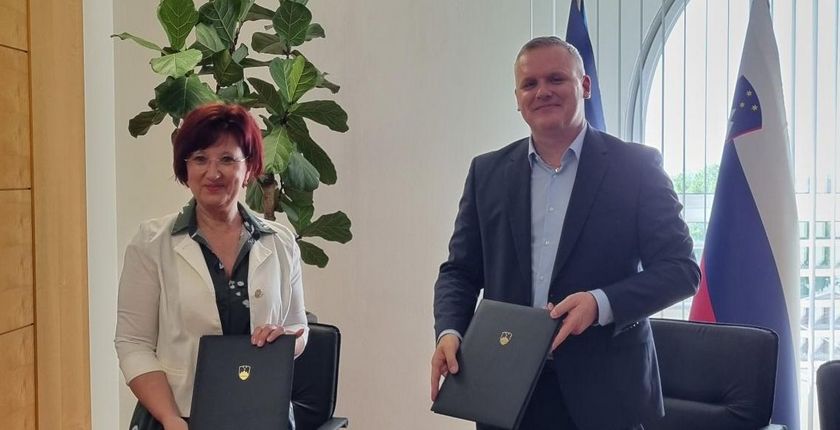
A contract on launching a public call for grants was signed by Minister of the Environment, Climate and Energy Bojan Kumer and Borzen General Manager Mojca Kert.

Slovenia is using EU funds to support new solar and wind projects, including batteries

Slovenia’s Ministry of Cohesion and Regional Development recently approved EUR 63.5 million in European Union funds for co-financing investments in new solar and wind power plants in the period until 2029. The scheme includes the possibility of storing electricity, according to the announcement.

At the same time, the ministry allocated EUR 23.5 million in EU funds for a program to tackle energy poverty in Slovenia in the 2024-2027 period.

by in News

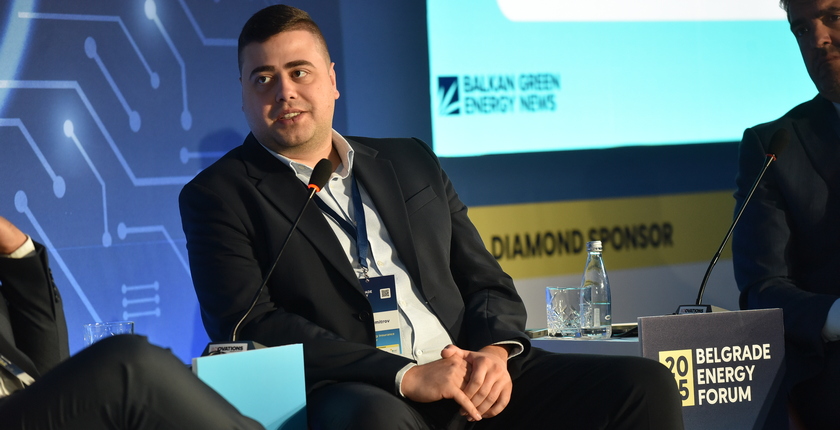
Dimitar Dimitrov: Battery developers should seek insurance in early project stages

Investors and developers of battery energy storage systems (BESS) should engage with insurers or specialized brokers as early as the development phase to effectively manage risks and ensure bankability, advised Dimitar Dimitrov, Business Development Manager at Renewable Energy Insurance Broker (REIB), during Belgrade Energy Forum 2025.

With over 4 GWh of energy storage systems across four continents, REIB offers bespoke insurance solutions tailored to the needs of utility-scale developments. Dimitrov emphasized that REIB’s portfolio includes dedicated products for BESS, covering business interruption, cyber threats, and technical malfunctions.

Speaking at the storage panel, Dimitrov underscored the importance of insuring against business interruption, especially due to outages that may compromise grid connections. He also highlighted the value of cargo insurance and robust fire protection strategies, noting these are key concerns from the insurer’s standpoint.

[wpcc-iframe title=”Dimitar Dimitrov, Business Development Manager, Renewable Energy Insurance Broker, at BEF 2025″ width=”500″ height=”281″ src=”https://www.youtube.com/embed/obGw8_zdj4U?feature=oembed” frameborder=”0″ allow=”accelerometer; autoplay; clipboard-write; encrypted-media; gyroscope; picture-in-picture; web-share” referrerpolicy=”strict-origin-when-cross-origin” allowfullscreen=””]

“As both a broker and an investor in renewable energy projects, we have first-hand knowledge of what developers go through,” said Dimitrov. “This dual perspective enables us to anticipate risk points during different phases and recommend solutions that align with actual project needs.”

REIB has developed specialized insurance products for BESS projects

REIB offers specialized insurance coverage for renewable energy and BESS projects, including tailor-made solutions for Business Interruption, Reduced Yield Coverage, Cyber Risk, and Third-Party Liability.

The company has more than 14 years of experience in renewable energy and currently insures over 60% of the PV market and more than 80% of BESS projects (installed and under construction) in Bulgaria, and cover more than 30% of the solar sector in Romania.

As an investor, REIB is familiar with all the requirements developers and contractors should meet

Having gone through the procedures of installing solar power plans and battery storage systems as an investor, REIB is familiar with all the requirements that developers, power producers, and contractors should meet. “In this way, we definitely can give the right recommendations to companies,” Dimitrov asserted.

REIB partners exclusively with A+ rated insurance companies, recognized as market leaders in both the US and Europe. This strategic approach ensures that all coverage options meet the highest standards of reliability and financial strength.

“The company also has strong exposure in the European Union market, which allows us to secure A-rated insurance policies that are fully aligned with bank requirements and enhance project bankability,” Dimitrov emphasized.

by in News

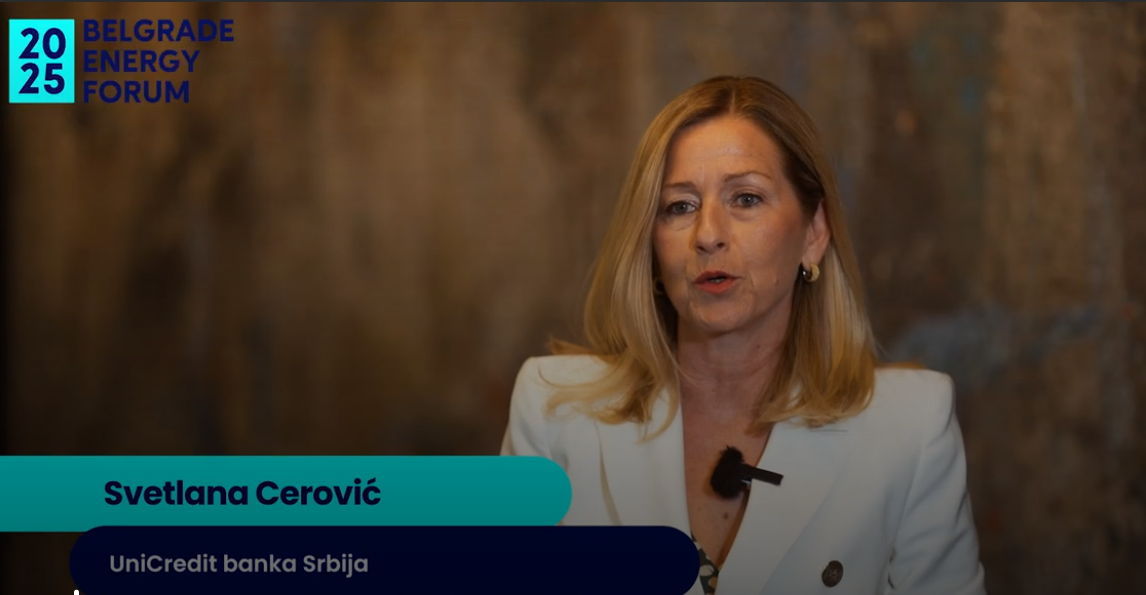
Svetlana Cerović: Serbia should consider the role of batteries in next renewables auction

Serbia is expected to finish drafting its energy storage regulations by the end of the year, completing its already strong regulatory framework for renewables, according to Svetlana Cerović, Head of Specialized Lending at UniCredit Bank Serbia. In the next auction for market premiums, Serbia should consider recognizing the contribution of projects involving energy storage, she said at Belgrade Energy Forum 2025.

The two renewable energy auctions Serbia has held so far have shown that its regulatory framework is exceptionally good, Svetlana Cerović said on the sidelines of BEF 2025, adding that it is very important for a third auction to take place to ensure the development of additional renewable energy capacities.

[wpcc-iframe title=”Svetlana Cerovic, Head of specialized lending, UniCredit Bank Serbia, at Belgrade Energy Forum 2025″ width=”500″ height=”281″ src=”https://www.youtube.com/embed/014aj5PLOx0?feature=oembed” frameborder=”0″ allow=”accelerometer; autoplay; clipboard-write; encrypted-media; gyroscope; picture-in-picture; web-share” referrerpolicy=”strict-origin-when-cross-origin” allowfullscreen=””]

Initiating and financing investments in renewable energy requires a stable, predictable, and transparent regulatory framework, she stressed.

When it comes to regulations covering energy storage, Cerović said she was encouraged to hear that they were being drafted quickly and could be finalized before the end of this year.

“When we talk about renewable energy sources, we talk about long-term financing. Most of these projects are financed through project financing without the right of recourse, and in this sense, the regulatory framework and the predictability of cash flows are very important,” she reiterated.

UniCredit, as a pioneer in the field of renewable energy financing, offers various types of services and has already supported several projects that have been awarded market premiums and guarantees, according to Cerović. “We continue to actively finance these projects and remain open to dialogue,” she said.

UniCredit has financed several projects that have won market premiums

Speaking at a panel on energy storage in Southeast Europe, Cerović said that Serbia should consider involving energy storage in the next auction for market premiums and facilitate flexibility services, adding that the first renewables projects in Serbia that are required to include energy storage are already negotiating financing.

Cerović: The state should subsidize batteries for prosumers and back smaller renewables projects

She also recommended subsidizing battery storage for prosumers as an energy efficiency measure and allocating part of the auction quota for smaller renewables projects, which find it difficult to secure long-term power purchase agreements (PPA).

Talking about BEF 2025, she said the forum had demonstrated its exceptional significance and relevance by bringing together key players in the financing and development of energy projects. The conference was extremely useful for UniCredit, allowing it to make important contacts and initiate potential partnerships, according to her.