by in News

Renewables investors are seeking tailored financing services as they add BESS, adapt to risks

Market conditions have become challenging for renewables in the CEE region, alongside uncertainties in the regulatory sphere, which calls for advanced and tailored financing solutions, according to participants in UniCredit Serbia’s workshop on navigating capital flows in the segment, including mergers and acquisitions (M&A). Investors, UniCredit’s clients, highlighted the growing importance of battery energy storage systems – and especially adding co-located storage to photovoltaics.

The renewable energy market is evolving in Central and Eastern Europe, as large players join the game and developers emerge as producers. With its surge in photovoltaic capacity and the revival in the construction of wind power plants, Romania has become a frontrunner. In neighboring Bulgaria, the first power purchase agreements (PPAs) are indicating a strong perspective, while Serbia might become more relevant soon, investors agreed at an event that UniCredit Bank Serbia organized in Belgrade.

M&A and financing trends in the region were the central topics. The idea was to have an open discussion with industry players active in the region about their investment strategies and the bank support, said the Head of Specialized Lending in UniCredit Serbia Svetlana Cerović, who moderated a panel within the conference.

A stable top line and a legal framework is the key driver for investments, with a particular emphasis on grid connections

Cerović pointed out that volatility has been on the rise for the last couple of years, after a huge wave of investments that followed the Paris Agreement and the European Green Deal. Sound and predictable regulatory framework along with stable revenues is key. To assure market flexibility and grid stability, new investments in western Europe and in the region are supported with the government programs including investments in battery energy storage systems (BESS). Thus, one of the prerequisites for the execution of future projects in local market will be certainty regarding the third auction timeline and availability of the longer term PPAs.

The participants at the workshop on navigating capital flows in renewables said a stable legal framework is the key driver for investments – grid connections especially, and permitting as a whole. On that note, developers will lean on the slowly maturing PPA market, though support from banks is necessary in the equation. Battery energy storage systems are a game changer, particularly colocated with solar parks for the optimization of the project returns.

UniCredit is strongest player in renewables financing in Serbia

UniCredit has a wide set of tailor-made project finance loans as well as a full range of services from advisory to various financing solutions, Head of Project and Structured Finance in Serbia Jelena Nestorović said.

The Italy-based bank has financed a string of major wind power and photovoltaic projects in the region, including facilities with colocated BESS, like Sunterra RE’s Galabovo in Bulgaria.

As for Serbia, it is the strongest player in the renewable energy segment. UniCredit financed six wind parks in the country, of 430 MW in total, and of which three as the sole lender. Notably, Čibuk 1 and 2 are the largest in Serbia.

UniCredit Bank Serbia is financing the country’s biggest wind power plants – Čibuk 1 and 2

Some of the participants and winners at the first two domestic auctions for contracts for difference (CfDs) are among the bank’s clients as well. Nestorović stressed that Bank is financing in total 30MW of smaller scale solar power plants .

She pointed to one of the largest industrial rooftop solar power plants in the region. UniCredit provided EUR 3.1 million facility and acts as a hedging and account bank for CWP Europe and Resalta’s project company. It built a PV system of 6 MW on a rooftop of Henkel Serbia facility in Kruševac, under an ESCO (energy service company) model.

Since 2019, the bank has participated in the financing of first waste-to-energy cogeneration plant,  located just outside of Belgrade. UniCredit is financing energy efficiency projects in the country, too.
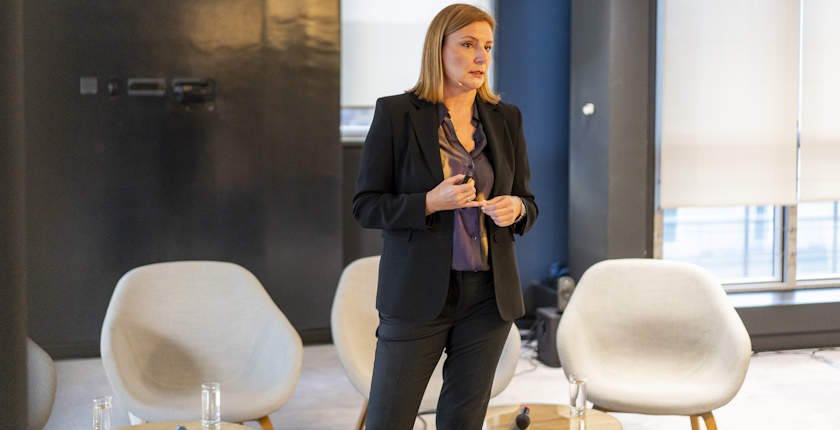
Jelena Nestorovic UniCredit Renewables investors tailored financing services BESS adapt risks
Photo: UniCredit’s Jelena Nestorović presenting

Priority in Europe shifted from energy transition to energy security

Maria Vastola, Managing Director of UniCredit’s Energy Advisory Team covering Power & Utilities across the Group’s core countries, said valuations for renewable energy stocks on public markets are strongly down compared to 2021-2022 period and below the 3Y historical average. Independent power producers (IPPs) are factoring in a great uncertainty related to the permitting process, the regulatory framework in certain countries and the macroeconomic environment, she explained.

The bottom line is the shift in the European paradigm from the energy transition to energy security, due to geopolitical tensions, Vastola underscored. On the other hand, M&A still has good valuations, she said at the panel discussion.

Investors are focusing on operational quality, meaning high-quality assets, returns and value creation, as opposed to growing at any cost, Vastola added.

“There are more investors ready to put capital in projects and in the region. Private capital flow is a good bridge and a complementary tool for banks’ balance sheets,” she asserted and placed an emphasis on large corporations, private equity and M&A.

Scale creates efficiency, and efficiency and flexibility create value in a challenging market, Vastola stressed, highlighting investments in hybrid power plants that include battery storage. Over the past few years, corporates, traders and utilities are flocking into the renewables realm in “a big shift from big oil to big energy,” she said.

Actis to invest in infrastructure projects across region

Vice President for Energy Charles Lachapelle from Actis agreed with the other panelists about the significance of hybrid power plants and underscored that the sustainable infrastructure investment firm is mostly doing very large projects as they are much more competitive.

“Definitely, for solar, I think having a BESS is a must,” he said and added that “it goes without saying at this point.” As for batteries with wind parks, they enable flexibility for offtake, Lachapelle noted.

Actis is a growth market investor in the infrastructure and energy space, best known in the region for Rezolv Energy. In Romania, the company obtained a financing package for the first phase of its giant Vifor wind farm via PPAs with companies in the commercial and industrial (C&I) sector. The second part was secured thanks to the CfD from a renewable energy auction.

The next chapter for Actis could involve more than a billion euros

Among other investments in Romania, Rezolv has the Dama Solar project for 1.2 GW in peak capacity. It would currently be one of the biggest in Europe. The company is also active in Bulgaria.

Actis is looking at a pipeline of projects across the region, including in Serbia, Lachapelle revealed. Asked about the next auction that the country is planning, he said a wind power project in the 200 MW range would be suitable.

Lachapelle specified that the next chapter may involve over EUR 1 billion and that Actis would require support in financing.

On the subject of power purchase agreements, he said the optimal tenure is longer than ten years, with more than 70% of output contracted. “However, we’ve done cross-border PPAs. We’ve looked at solutions, in the past, combining wind, solar and BESS. We can be creative on that front,” Lachapelle stated.

Regulatory stability is essential for investor-friendly countries

While the PPAs of 70% and at least 10 years are necessary for non-EU countries, banks in the EU are more risk-hungry, according to CWP Europe’s General Counsel Jovana Rubežić.

One of the most important factors is how investor-friendly a country is, she added. “When I say investor-friendly, I mean the regulatory framework… The next thing we look at is whether we can connect our project and can the power markets absorb the power,” Rubežić said.

The rules have basically stayed the same in all of CWP Europe’s key markets, except with respect to grid connection, as transmission system operators are becoming stricter, she underscored. The company is transitioning from project development to the IPP sector, Rubežić said. She pointed to the need for support in regulatory matters, especially in sleeved PPAs, both from the government and government-owned utilities such as Elektroprivreda Srbije (EPS) in Serbia.

Structured portfolio transactions are facilitating growth for companies with multiple projects

Bankers generally seem to prefer co-located batteries to standalone ones, UniCredit’s Head of Infrastructure and Export Financing Lazar Nikolić said.

The main reason is the more diversified revenue stack, as a combination of BESS and a renewable electricity plant is effectively a single asset. With global battery storage capacity on a steep growth trajectory, banks and investors will need to look for bankable solutions to enable that.

Firstcomers in the standalone battery segment may have an extremely short payoff period ahead, but the bank needs a revenue stack

Nikolić stressed that developers need advanced capital solutions such as structured portfolio transactions, saying that they pave the way for renewables platforms to grow. Namely, firstcomers in the standalone battery segment may have an extremely short payoff period ahead, however a solid revenue stack remains key for the bank to take on risk. Countries with strong state support schemes will enable standalone BESS faster, he added.

In structured portfolio financing, the client company has different BESS, power plants and projects grouped.

“The assets can be different in terms of technology, they can be different in terms of location, they can be different in terms of offtake, in terms of also the cycle of the assets. We pack them together, bundle assets and structure debt solution on top of them, significantly enhancing portfolio diversification,” Nikolić said.
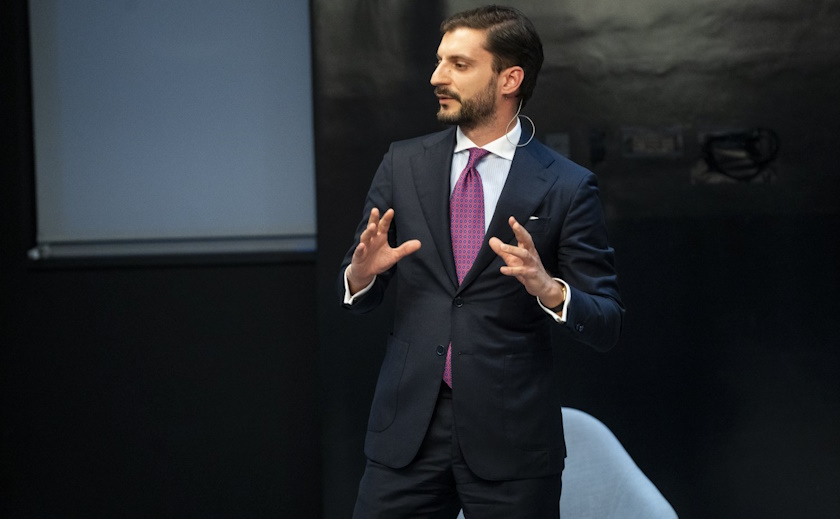
Lazar Nikolic UniCredit
Photo: UniCredit’s Lazar Nikolić presenting structured portfolio financing options

Battery storage is natural hedge for green power production

Enery, headquartered in Austria, decided at one point to add battery storage across its power plants as well as both mature and greenfield projects in Romania, Vice President for Financing Sebastian Staicu said. BESS is “a natural hedge” and it has become very cheap, he noted.

UniCredit acted as the lead bank for the company’s 230 MW portfolio of wind, photovoltaics and battery storage in the country. “That’s a smart structure where, instead of having to negotiate financing for each project, you have this wholesale facility and you just bring in new projects, which contribute to the diversification element,” Staicu said.
by in News

GGF ushers in new wave of energy transition investments in Western Balkans with eight deals

The Green for Growth Fund has signed a series of agreements on green lending and support for major solar power and energy storage projects throughout the Western Balkans. The new commitments, backed by an investment from KfW, will lift its green financing portfolio in the region by up to EUR 176 million.

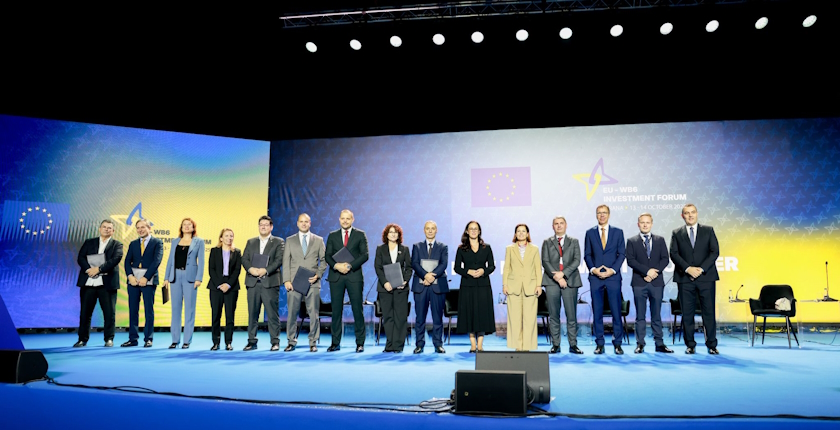
At the EU–Western Balkans Investment Forum in Tirana, held in October, GGF announced the European Union’s EUR 20 million investment in its class C shares, via Germany’s KfW Development Bank. It was accompanied by a EUR 4 million donation to the climate action fund’s capacity building and advisory facility, its advisor Finance in Motion said.

The proceeds are set to mobilize more private capital for renewable energy, energy efficiency and climate resilience across the region, the update revealed.

The Green for Growth fund signed a series of agreements at the forum for green lending, and for financing solar power and battery projects in North Macedonia, Kosovo* and Albania.

Von der Leyen: The time to invest in the Western Balkans is now

The event was attended by European Commission President Ursula von der Leyen and Albanian Prime Minister Edi Rama.

“Your economies are already set to grow rapidly in the coming years. We established the Western Balkans Growth Plan for exactly that. The EU opens sectors of its economy for your business. Together, we work on reforms for a level playing field. And alongside reforms comes investment. The Western Balkans Growth Plan aims at doubling regional GDP in the next decade. So my message to investors today is straightforward: Do not let this opportunity pass by. The time to invest in the Western Balkans is now,” Von der Leyen said.

The commitments signed within a special segment of the Tirana conference are boosting the fund’s cumulative investments into the region to more than EUR 850 million. Earlier it provided over EUR 675 million overall in green finance in the Western Balkans in support of climate action, energy security and sustainable industry.

The new commitments are expected to avoid emissions of some 175,000 tons of CO2. It is equivalent to 400,000 barrels of oil not being burnt.

Trailblazing investments ahead in photovoltaics, BESS

The Green for Growth Fund intends to provide funding for one of the first grid-scale battery projects in North Macedonia and the Western Balkans.

Renalfa IPP is about to expand its 50 MW photovoltaic plant in Oslomej, on the site of a former coal mine, with a 200 MWh battery energy storage system (BESS). GGF has already provided debt financing for the solar installation, and the two sides signed a mandate letter for EUR 24 million for the BESS investment. It is one of the investments for the transformation of the REK Oslomej coal mine and power plant complex.

Renalfa IPP’s pioneering PV plant Oslomej on coal land will get a battery facility

GGF also signed a term sheet for Quant Renewables’ solar power project in Kosovo* for 142.2 MW in peak capacity. It comprises PV plants Tucep (98.5 MW) and Veriq (43.7 MW) on land previously designated for lignite mining.

The Green for Growth Fund would support it with up to EUR 12 million in preferred equity, complementing senior debt financing led by the European Bank for Reconstruction and Development (EBRD). Set to become Kosovo’s* biggest solar park, its estimated annual output would match the electricity needs of 63,000 households.

The facility would save an estimated 168,138 tons of carbon dioxide equivalent per year (22,529 tons prorated to GGF’s investment).

The third renewables project is HD Solar Park in Albania. Through a letter of intent, GGF expressed its goal to provide up to EUR 30 million in senior debt financing. Bindi, the developer, has envisaged 60 MW of peak capacity and a co-located 120 MWh battery system. It would be one of the first large-scale solar-plus-storage initiatives in the country.

Five new deals with financial institutions for as much as EUR 110 million in total

The partner financial institutions that signed agreements with the Green for Growth Fund will channel the financing to their clients for investments in renewables, sustainable mobility, and energy and resource efficiency in buildings and industrial production.

There are five new deals for as much as EUR 110 million in credit lines and subordinated loans.

Two credit lines for partners in Kosovo*

The KRK microfinance institution in Kosovo* aims to utilize a new credit line, of EUR 5 million, for efficiency refurbishments and retrofits of the residential sector as well as small-scale renewable energy. It would be its sixth investment with the Green for Growth Fund since establishing the partnership in 2017.

BpB, the first bank in Kosovo* founded with fully local capital, finances households and small and medium-sized enterprises. Building on a previous partnership, it will channel GGF’s senior credit line of EUR 5 million into energy efficiency and renewable energy.

It will particularly benefit SMEs, including clients in the agricultural sector seeking to upgrade energy systems or invest in low-carbon vehicles, efficient equipment and modern irrigation systems, the fund added.

EUR 95 million in total for Serbian lenders

The Green for Growth Fund signed a loan agreement with UniCredit Bank Serbia for a EUR 50 million senior credit line. The focus is on commercial-scale solar and wind power, helping decarbonize Serbia’s coal-dependent electricity system.

GGF expects it to become one of the fund’s most impactful investments, by avoiding 84,550 tons of emissions in CO2 equivalent terms – equivalent to taking 44,500 cars off the road. The fund has invested EUR 115 million in UniCredit Bank Serbia to decarbonize the country’s electricity system.

Another Serbian lender in the group is AikBank, eligible for a EUR 45 million subordinated loan. The deal is for financing renewables and energy efficiency projects of corporate clients.

The bank will additionally benefit from GGF’s technical assistance for technical due diligence and environmental and social assessments, for the implementation of green energy projects in line with the best practices, the partners stressed.

ProCredit Bank in BiH is eyeing solar power projects

ProCredit Bank in Bosnia and Herzegovina is getting a subordinated loan of up to EUR 5 million, following two such facilities in 2022 and last year. The Green for Growth Fund’s investment is for maintaining the partner’s capital position and supporting the expansion of its green portfolio. The bank especially sees opportunities in solar power, where there is significant potential for BiH to catch up with regional leaders.

“We thank our investors for their continued confidence. This kind of catalytic capital drives tangible impact in Southeast Europe and shows how aligning investment with ambitious climate goals accelerates the green transition,” Finance in Motion said.

* This designation is without prejudice to positions onstatus and is in line with UNSCR 1244/99 and the ICJ Opinion on the Kosovo declaration of independence.
by in News

Revolutionising retail: power of real-time energy visibility with SolarEdge ONE for C&I

As retail evolves, supermarkets are under pressure to boost efficiency and sustainability. The key enabler of this transformation is SolarEdge ONE for C&I – a comprehensive platform that delivers real-time energy visibility and management for commercial and industrial (C&I) environments.

SolarEdge ONE for C&I integrates advanced solar PV, storage, and energy analytics, providing retailers with a unified “single pane of glass” to monitor, control, and optimize energy flows across their entire estate. This platform enables supermarkets to harness solar energy during peak hours, store excess power, and intelligently manage consumption, reducing reliance on the grid and lowering operational costs.

With the rise of electric vehicles and increasing electrification, supermarkets face growing energy demands. SolarEdge ONE for C&I addresses this by combining real-time data from solar panels, refrigeration, lighting, HVAC, and EV chargers. The result is a holistic view of energy usage, allowing retailers to identify inefficiencies, prevent asset failures, and take targeted actions to reduce waste and costs.

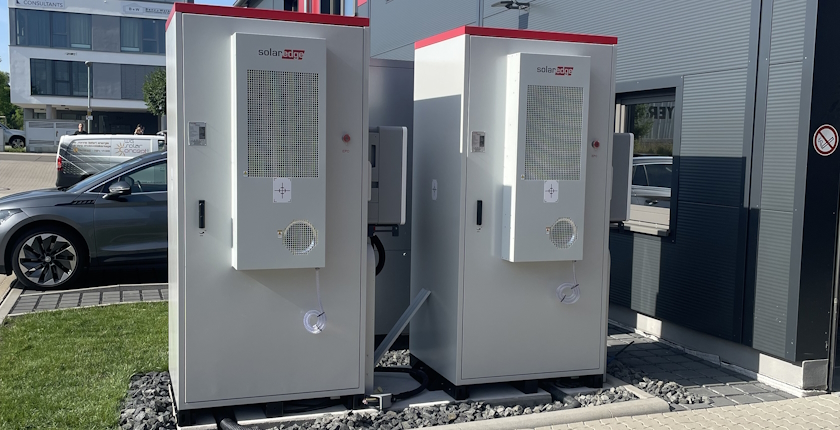
CSS-OD WG Solar Germany

Millions of sensor readings in real time

A standout feature of SolarEdge ONE for C&I is its edge-based computing, capable of processing millions of sensor readings in real time. This empowers retailers to visualize and analyze data instantly, even across hundreds of stores, warehouses, and logistics centers. The platform’s scalability means that even large retail chains can centralize energy management, ensuring consistent performance and rapid response to anomalies.

The financial benefits are significant: retailers using SolarEdge ONE for C&I have reported substantial reductions in energy costs – such as a 4.5% drop in lighting expenses – translating to millions in annual savings. The system also supports flexible energy pricing strategies, enabling retailers to shift consumption based on tariff changes, avoid penalties, and even participate in energy trading or arbitrage.

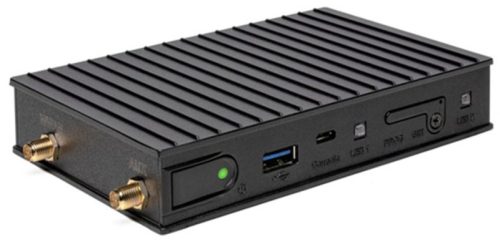
SolarEdge ONE Controller for C&I

SolarEdge ONE for C&I sets retailers on path to future

By leveraging SolarEdge ONE for C&I, supermarkets are not only meeting their sustainability goals but also gaining a competitive edge in a dynamic energy market. The platform’s advanced analytics and automation prepare retailers for the future, allowing them to optimize energy use, comply with carbon reduction targets, and unlock new revenue streams.

In summary, SolarEdge ONE for C&I is transforming retail energy management. Its real-time visibility, intelligent controls, and scalable architecture empower supermarkets to operate more efficiently, sustainably, and profitably – setting a new standard for the industry.

Find out more: SolarEdge ONE for C&I: optimizing all energy assets | SolarEdge

by in News

Germany gets applications for 661 GWh of BESS projects

Grid operators in Germany received requests for the connection of large battery energy storage systems with an operational power totaling 400 GW and capacity of 661 GWh overall. It is 174 times greater than the current capability of all the batteries in the country, and 206 times more than their capacity, respectively.

The Federal Network Agency, the national regulatory authority also known as Bundesnetzagentur or BNetzA, has for the first time published data on the applications for battery storage projects.

Germany has increased its total BESS capacity by 50% last year. The vast majority of the capacity is in households. In July, the category accounted for 11.5 GW out of 14.5 GW in overall operational power, the data showed.

Now BNetzA announced that in 2024, a total of 9,710 connection requests for BESS on the medium and higher voltage levels were submitted to the grid operators. They don’t include home storage systems.

Currently, 921 large-scale batteries are in operation in Germany

The applications have a combined planned operational power of approximately 400 GW and a storage capacity of around 661 GWh, according to the agency’s data.

Currently, 921 large-scale batteries are in operation. They have approximately 2.3 GW altogether and a storage capacity of about 3.2 GWh.

In 2024, grid operators issued approximately 3,800 connection commitments for applications submitted in 2024 and previous years, BNetzA underlined.

Germany is a hotspot for BESS optimization and offtake

The 3,800 applications are for a combined operational power of about 25 GW and a storage capacity of about 46 GWh, data showed.

The agency recalled that the connection commitments are an obligation only for the grid operator. It means not all applications have to be implemented, BNetzA pointed out.

Germany’s solar power plants have a total capacity of 112 GW.

The BESS dealmaking landscape in Europe has evolved dramatically over the past four to five years, according to Pexapark’s analysis. Germany and Netherlands have emerged as hotspots for optimization and offtake, after Great Britain’s convincing lead for several years.

In the first five months of 2025 alone, 11 BESS deals were announced in Germany, totaling 540 MWh.

by in News

Energy communities reduce power bills for members, improve electricity market

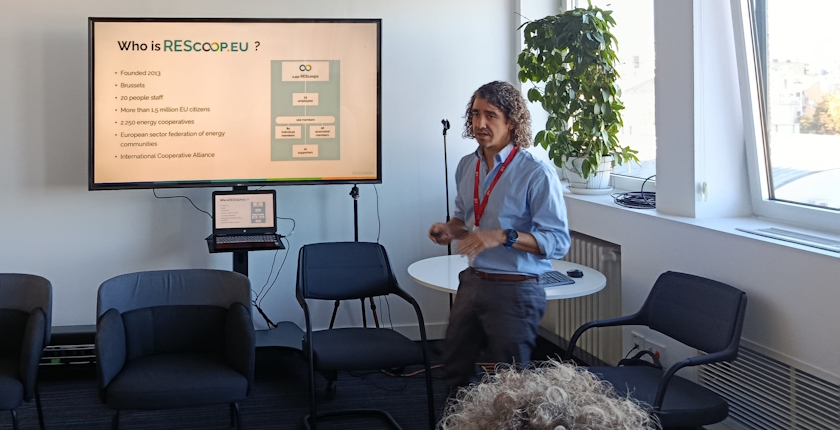
Citizen energy communities make the energy system greener and benefit society at a local level, Josh Roberts from European federation of energy communities REScoop said in his presentation, organized in Belgrade by Deutsche Gesellschaft für Internationale Zusammenarbeit (GIZ) GmbH. It is a form of association that also lowers costs for households, institutions and small firms and entrepreneurs, and contributes to the deployment of progressive technologies. Furthermore, it is a framework for democratic control.

The event included developers from the emerging segment of energy communities and cooperatives in Serbia. They outlined the current initiatives and pointed to challenges regarding market entry, financing and policies.

The establishment and operation of energy communities is arranged through the European Union’s latest legislation, as well as in Serbia and other Western Balkan countries, but they are not a new concept. For instance, such entities still accounted for almost half of wind power output in Denmark in late 1990s, according to Senior Policy Advisor Josh Roberts from REScoop, the European federation of energy communities and cooperatives.

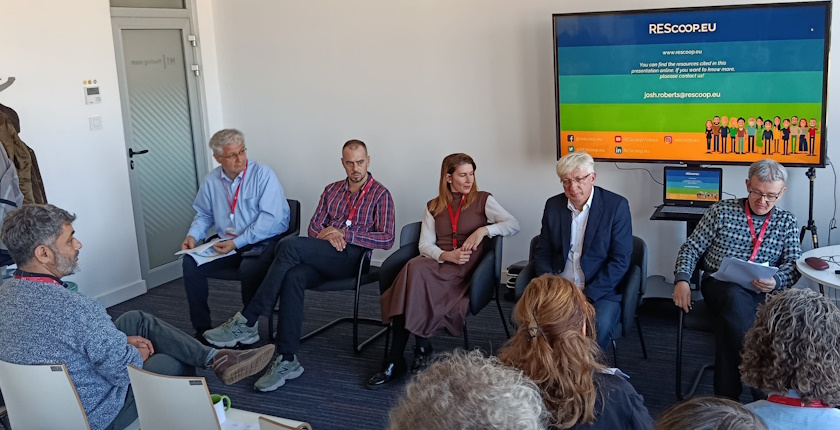
Speaking at a gathering that GIZ organized in Belgrade he pointed to the benefits for citizens, small firms and entrepreneurs and for institutions from setting up or joining energy communities. Initiatives in Serbia were also presented, and their progress in the same field, and the event included dialogue on the necessary technical solutions for connecting to the distribution grid.

Brussels-based REScoop was founded in 2013. In its membership are organizations from 22 European countries. They include Serbian energy cooperative Elektropionir. It gained the most ground regarding association and the implementation of projects.

One coal town has put up signpost for energy communities in Slovenia

Among other examples, Roberts highlighted Slovenia’s first energy community with a rooftop solar power plant for joint use. The facility is on the roof of an elementary school. The project involves aid for people living in energy poverty and it is free to join the group.

It is in the town of Hrastnik in a former coal industry area. The participants already lowered their power bills by 30%, and the gains will be even greater when they pay off the loan, Roberts said.

There are more than 1,600 energy communities in Austria

The representative of the REScoop federation stressed that municipalities in the Belgian region of Wallonia have succeeded in obtaining the right for citizens to participate in investments in green energy projects. It resulted in the foundation of a range of energy communities.

Roberts especially commended Austria’s legal framework with regard to enabling citizens to participate. The country hosts more than 1,600 energy communities.

Udruzivanje energetske zajednice smanjuje troskove trziste elektricne energije Dzos Roberts Josh REScoop GIZ

Energy community eases grid operator’s job

Energy communities are envisaged to return the invested funds to society at the local level. Subsidies are especially favorable for that, Roberts explained. Income is directed to education, infrastructure and aid against energy poverty.

The essence is that the community controls the distribution of the proceeds. In addition, grid operators can communicate more easily with one entity than with a hundred prosumers, Roberts underscored. Prosumers – or buyers-consumers, as they are formally called in Serbia, generate electricity for their own needs.

Pooling together enables providing services in the market, where energy communities can supply and store energy as well as conduct energy efficiency services, among other activities.

It means an entity of such type can ease the evening grid load, in moments of the highest demand, using energy from its batteries. That way, price peak shaving is achieved.

Registration process must be separate from defining activity

As for the procedure, Roberts said registration needs to be only for acknowledgement, rather than for approving specific activities.

“It’s about acknowledging the legal form and it’s about checking about how that legal form ensures compliance with the eligibility criteria. We have found very complex registration procedures. This does not work. It needs to be simple,” he stressed.

There are many activities that energy communities can undertake and they need to be able to enter them gradually, without complex procedures for licenses and permits

Conversely, in some jurisdictions there are simplified ways to get a supplier license. It enables an energy community to enter the activity gradually, instead of having to fulfill the requirements for all segments, even without having a comprehensive business model, the members or a business case, Roberts said.

He mentioned at the same time that one of the basic ideas is promoting inclusiveness.

“It’s already hard to set up an energy community, but it’s even harder to involve members who may have a hard time paying their bills, or have a lot less disposable income. So we found that the best models at the moment are for energy communities either to front the membership fees or for local authorities to pay for this upfront. And in energy sharing, we’re seeing more and more of energy donated to vulnerable households,” he stated.

Energy cooperatives helping improve rural areas from which people are leaving

Energy communities are giving people an opportunity for climate action and to contribute to their community, Roberts said. He added that such projects improve the area where they are conducted, stressing that it is especially important for rural areas from which many people are leaving.

A key point is that they enable participants to control their costs, production, consumption and energy sharing.

 The main challenge in Serbia is how to obtain a grid connection, alongside the matter of accessibility of incentives and loans

Importantly, energy communities are linked to the tradition of cooperatives, for which Serbia used to be known, but there is still much left to do around the legal framework.

There was word at the said gathering with representatives of institutions about the complexity of adjusting the electricity network to the production’s decentralization, as well as about the possibility to streamline the procedure for the establishment of energy communities and their operation.

Serbia is yet to address the accessibility of subsidies and financing, while currently the main issue is how to get grid connection approvals.

Energetsko zadrugarstvo smanjuje troskove trziste elektricne energije GIZ

Enterprise, association or cooperative

The speakers and other participants in the event agreed that the electricity market isn’t complete without energy communities, while that they modernize and democratize it.

When it comes to Serbian regulations, such legal entities have the right to conduct aggregation, but they need a license for it. Notably, aggregators have balancing responsibility, so they need to cover the deviations from the forecasted output.

Energy communities were introduced in the latest version of the Law on Energy. When they become regular in practice, the framework will need to be adjusted gradually to the situation. Citizens, firms and municipal authorities establish energy communities as enterprises, associations or cooperatives.

The bottom line is to enable citizens to take part in the clean energy transition and achieve local environmental, economic and social benefits, as opposed to prioritizing profits. It implies collective ownership, democratic control and reinvestment into the community with the goal of reducing energy poverty and promote energy independence.

The basic technical requirement for members is to have a smart electricity meter.

Elektropionir pioneering agrisolar in Serbia

The event’s organizers gathered the people who achieved the first steps in Serbia – from the Sunčani krovovi (Sunny Roofs) energy cooperative, created in 2019, to Platform for Energy Transition, which participated in uniting three residential buildings in Niš, which have a joint solar power plant and electric vehicle chargers. It is one of the first six prosumers in Serbia in the category of homeowner associations.

The Elektropionir energy cooperative managed through crowdfunding to install two cooperative-owned rooftop solar power systems on the territory of the City of Pirot, on the buildings of a local community council and a cultural center. As part of the Solarna Stara project, on Mt. Stara planina, the two villages receive the income from the sale of surplus electricity.

Srem is set to become the main region in Serbia for community energy

Next, the same organization built the first agrisolar power plant in Serbia. The 20 kV facility is at an organic farm, Organela, near the city of Valjevo.

Another recent undertaking is a rooftop photovoltaic unit on a school in the town of Ruma, envisaged to be the basis for an energy community. In the same area, Elektropionir is working on the installation of several prosumer power plants on house roofs and on aggregating them, inspired by the enthusiasm and the solar system of its member Nenad Maričić.

Owners and neighbors can jointly invest and they will be able to become an energy community and share energy among themselves.

Center for Sustainable Development to integrate string of energy systems of various technologies

Near Ruma, which is in the Srem (Syrmia) region, the City of Sremska Mitrovica and Regional Development Agency Srem have launched a major project. It is for the establishment of renewable energy communities (RECs), which are essentially a subset of citizen energy communities (CECs).

The local authority provided land for research and development. It is next to the regional waste landfill and a wastewater treatment plant. The plan is that the Center for Sustainable Development builds and integrates a string of energy systems.

They would include combined heat and power (CHP) production – cogeneration – from biomass, small wind turbines and a PV plant. The project also involves heat pumps and a storage facility assembled from old batteries.

There would be a facility running on biogas from the landfill within the center, and a magnet electric generator. Residents of the adjacent village of Jarak would be able to join the energy community.

Belgrade Energy Community is focused on equity, solidarity

Another group emerging in community energy is Belgrade Energy Community. It intends to apply a model of collective self-consumption in an urban area, with a focus on trust, equity and solidarity.

Its idea is to enable people to generate, share and use green energy. The plan is to map roofs and consumption and set up the first pilot installations.

According to the Belgrade Energy Community, it will donate 5% of the output to households affected by energy poverty. It consists of a cooperative, a civil society organization, two small enterprises, several prosumers and citizens.

by in News

Europe’s energy storage capacity to reach 100 GW this year, more than double by 2030

Energy storage in Europe has been expanding rapidly since 2020, with the total installed capacity in the European Union, the United Kingdom, Norway, and Switzerland set to reach 100 GW by the end of November. Pumped hydro storage has the largest share of the existing capacity, 50.6 GW, followed by batteries, with 44.8 GW of operating power, according to an analysis by LCP Delta and Energy Storage Europe.

All energy storage technologies combined are expected to grow by 115%, to 215 GW, by 2030, expanding at a rate of 20 GW to 25 GW per year, according to the report, titled the European Market Monitor on Energy Storage. On November 1, the cumulative figure stood at 99.3 GW.

Battery storage capacity has seen stronger growth than pumped storage hydropower plants this year, with 4 GW of new utility-scale installations, and is projected to expand to 163 GW by 2030.

Battery storage capability is expected to reach 163 GW by 2030

Of the total 44.8 GW of battery capacity, large-scale systems connected to the grid (front of the meter) account for 17 GW, and systems installed on the customer’s side (behind the meter) for 27.8 GW.

According to the report, 18 million homes have a solar system, and four million have battery storage. Residential battery sales are now stabilizing following the 2022-2023 peak, with recovery expected from 2027, supported by a rebounding PV market, rising electrification of homes and transportation, dynamic tariffs, and new financing models.

Europe has 18 million solar homes and four million homes with batteries

Germany has the largest number of home battery systems, 2.1 million, followed by Italy, with 780,000, the UK, with 280,000, Austria, with 200,000, and Belgium, with 160,000.

Jacopo Tosoni, Head of Policy at Energy Storage Europe, hailed energy storage as the fastest-growing clean technology in Europe, with the potential to become the engine of its competitiveness, according to a press release from the association.

Silvestros Vlachopoulos, Energy Storage Research Lead at LCP Delta, said that reaching the 100 GW energy storage capacity marks a key moment for the industry, setting the stage for an even faster renewable energy growth in the coming years.

LCP Delta and Energy Storage Europe believe the energy storage industry is only just getting started and will continue to make a substantial contribution to Europe’s energy transition, according to a press release from the association.

by in News

UAE, Montenegro establish strategic green energy partnership

A new agreement between the UAE and Montenegro will facilitate connecting the energy sector with financial technologies and artificial intelligence. The two countries are also considering to deploy solar, wind, hydropower, green hydrogen and battery projects.

The United Arab Emirates and Montenegro agreed to cooperate in the energy sector, setting up a bilateral strategic partnership for the development of renewables, modern energy infrastructure and advanced technologies. The deal envisages joint contribution to projects of strategic significance to Montenegro from solar, wind and hydropower plants to the application of battery energy storage systems and the development of the green hydrogen technology.

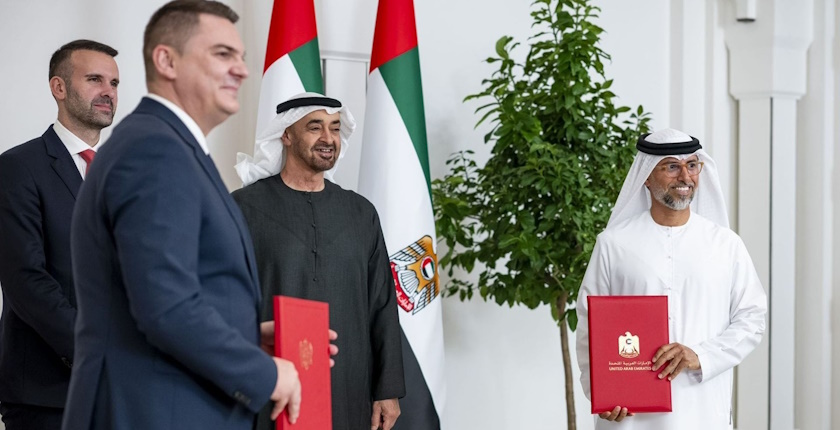
Minister of Energy and Mining Admir Šahmanović signed the agreement with UAE’s Minister of Energy and Infrastructure Suhail Mohamed Al Mazrouei. Montenegrin Prime Minister Milojko Spajić and the President of the UAE Mohamed bin Zayed al-Nahyan attended the ceremony.

Montenegro aspires to become digital hub

The agreement is especially significant for connecting the energy sector with financial technologies and artificial intelligence, the Ministry of Energy and Mining of Montenegro said. The country is aspiring to position itself as a regional hub for innovation, digital transformation and the energy transition, it added.

Within their strategic partnership, the two countries are looking to establish a fintech and AI council. It would consist of representatives of the public and private sector and work on the development of innovative solutions, attracting investments and strengthening the domestic economy through the implementation of progressive technologies.

Joint vision of sustainable development, energy security

The agreement is a new step in the partnership between Montenegro and the UAE, founded on a joint vision of sustainable development, energy security and economic progress, the ministry pointed out.

“The partnership confirms that foreign partners recognize Montenegro as a safe and attractive place for investment in energy and advanced technologies. Our goal is to, through cooperation with the United Arab Emirates, open a new chapter in the development of renewable energy sources, digital infrastructure and innovation,” Šahmanović stressed.

The agreement will facilitate faster materialization of projects strengthening energy security and contributing to the decarbonization of the economy and job creation in the sector of the future, the ministry said.

by in News

North Macedonia’s ESM needs investments of EUR 3 billion to replace coal power

Power utility Elektrani na Severna Makedonija estimated that it requires EUR 3 billion by 2040 to replace electricity from its lignite-fired power plants. According to member of the Board of Directors Ivan Stojanovski, the state-owned company is preparing investments in gas power plants, solar, wind, hydropower and energy storage. He highlighted its plans for a 300 MWh battery and the Bogdanci hybrid energy park.

North Macedonia’s utility Elektrani na Severna Makedonija (ESM), the country’s main electricity producer, generated 60% of the 2024 output in the Bitola and Oslomej coal plants.

A rough estimate is that ESM would have to invest around EUR 3 billion in the next 15 years to replace its power production from lignite, which is baseload energy, Ivan Stojanovski, a member of the Board of Directors and the company’s Chief Financial Officer, told Balkan Green Energy News on the sidelines of the International Forum on Energy for Sustainable Development (IFESD-14).

He explained that the transition to green energy is quite expensive. ESM needs to replace the 840 MW in baseload production that the Bitola and Oslomej thermal power plants provide, the executive added.

Hydropower is a domestic electricity source, unlike natural gas

The company opted for investments in diverse energy sources to achieve it, Stojanovski stressed.

Gas power plants provide baseload energy, but at the same time, they turn the spotlight on national security as well as the security of supply, in his words.

Lignite is currently mined in North Macedonia while natural gas must be imported, so gas supply interruption is possible, ESM’s CFO added.

Gas power plants are required, but it is necessary to invest in hydropower as it is a domestic resource, Stojanovski said. On the other hand, hydroelectric plants are more expensive and it takes longer to build them, he noted.

ESM launched the Bitola 3 solar power project

ESM is developing wind and solar power projects as well. Stojanovski highlighted the planned expansion of its Bogdanci wind farm. The European Bank for Reconstruction and Development (EBRD) is participating in the development of the Miravci wind power project, of at least 100 MW, he recalled.

The company is working on solar power projects Oslomej 1 (10 MW), Oslomej 2 (10 MW), Bitola 1 (20 MW) and Bitola 2 (60 MW), Stojanovski asserted. Bitola 3 endeavor is underway, too, and the financing contract is expected to be signed by the end of the year, he revealed.

The photovoltaic system will have at least 100 MW, Stojanovski asserted.

“We plan to sign a contract next year with Agence Française de Développement (AFD) for a solar power plant in Bogdanci of at least 30 MW and to create a hybrid energy park there – wind, solar, and a battery,” he stated.

According to Stojanovski, the company is developing a battery energy storage project with the EBRD, for up to 300 MWh in capacity. The site is within the REK Bitola coal complex and the facility will be a systemic solution for all the solar power plants there, he explained.

Blended financing as a solution

“EUR 1 billion to EUR 1.3 billion is needed just for solar, wind and batteries. We will need between EUR 500 million and EUR 700 million for gas power plants. Another EUR 1 billion to EUR 1.3 billion would be for large hydropower plants such as Čebren and Vardar Valley, and some smaller projects,” Stojanovski explained.

Asked how the company plans to secure financing, he pointed to blended financing – own sources combined with some participation from international financial institutions. It is important to diversify the sources by opening cooperation with as many financial institutions as possible, in Stojanovski’s view.

ESM traditionally cooperates with the EBRD and KfW. Stojanovski announced that the company would diversify financing by launching cooperation with the World Bank, Italy’s development bank Cassa Depositi e Prestiti, and AFD.

“It will enable us to access more sources and complement them with financing from local banks. We also tend to obtain support from the state budget over a longer period, 10-15 years, and state guarantees, but also additional funds. This is a financial model that can secure long-term and sustainable financing of infrastructure projects,” Stojanovski said.

by in News

Cypriot firm preparing to build several solar parks with batteries

Public consultation is underway in Cyprus for environmental impact assessment (EIA) studies for three projects for photovoltaic units, of 14.5 MW in total peak capacity, with 40 MWh in battery storage. The developer, SAOLA, plans several such investments. It is facing opposition from the local population and environmentalists.

The electricity system in Cyprus is severely strained due to the lack of interconnections and energy storage and amid a photovoltaics boom and power demand surge. Even though the installation of the required battery capacity depends on substantial grid investments as well, investors are lining up to seize the opportunity in the budding market as soon as possible. Larnaca-based SAOLA opted for a group of hybrid power plants consisting of small photovoltaic units and battery energy storage systems (BESS) with a matching operating power.

Public consultation is underway for environmental impact assessment (EIA) studies that the firm submitted to the Department of Environment for three such projects. The sites are on the territory of the Agios Theodoros community, in Larnaca district.

SAOLA has vowed to apply a range of mitigation measures

One investment would involve the installation of a solar park of 5 MW in peak capacity together with a 5 MW / 15 MWh BESS. The second project is for 5.5 MW in photovoltaic panels and a battery system with a 5.5 MW capability and 15 MWh in storage capacity. The remaining facility would have 4 MW in peak PV capacity and BESS operating power, and 10 MWh of storage capacity.

The company owns the land. Suggestions and comments will be received until November 26.

Earlier, residents from the affected area raised concerns because the facilities would be on agricultural land, as well as about the impact on the rural landscape. Environmental groups and hunters pointed out that wildlife habitats would be affected.

SAOLA has vowed to conduct mitigation measures. According to the EIA studies, it would plant trees, preserve animal migration corridors and, after decommissioning, recycle equipment and return the area to its original state.

The company is preparing several other investments in photovoltaics with BESS, including in Alaminos and Anafotia in the same district.

by in News

R.Power completing its first solar parks in Romania while more assets enter construction phase

Poland-based R.Power began work on its Lazuri photovoltaic plant of 55 MW in peak capacity in Satu Mare county in northwestern Romania. The company is energizing four solar parks of more than 23 MW overall, its first operational assets in the country. In addition, it is about to break ground on its 254 MWh Scornicești battery energy storage system.

Notably, Electrica recently commissioned its Satu Mare 2 solar power plant, of 21.7 MW.

Romania is set to appear on the map of renewable energy plants and battery energy storage systems (BESS) operated by Poland-based R.Power. The company also has such assets in its home market and Portugal and projects under development in Germany, Spain and Italy. In line with the schedule, R.Power is energizing its first photovoltaic plants in Romania – Stâlpu, Suseni, Dudești and Punghina – and is preparing to begin the construction its first BESS in the country, in Scornicești.

The four solar parks in central and eastern Romania have more than 23 MW altogether in peak capacity. R.Power’s contractors are Nomad Electric and Waldevar. The former has also just begun the construction of the Lazuri solar park in northwestern Romania for the same client.

The PV park in the commune of the same name in Satu Mare county would have 55 MW in peak capacity. The company won a 15-year contract for difference (CfD) for 48 MW in connection terms at Romania’s first renewable energy auction.

Lazuri was part of a group of five solar power projects with support approved for 73.1 MW, or 85 MW in peak capacity. Its annual output is estimated at 70 GWh, equivalent to the consumption of more than 48,000 households in the country.

Major BESS project up for sale

The Scornicești project in Olt county, west of Bucharest, is for 127 MW in operating power. The BESS would have a duration of two hours, translating to 254 MWh in capacity. The project received EUR 15 million in funding via the National Recovery and Resilience Plan (NRRP or, in Romanian, PNRR).

R.Power has sold a 49.99% stake last month to Eiffel Investment Group. The transaction follows the two companies’ previous cooperation in photovoltaic projects.

The Polish firm recently said it would divest of a ready-to-build project for a battery energy storage system of 200 MW and 400 MWh. The move is part of an asset rotation and portfolio diversification strategy, according to the update.

The company added that the future facility near Bucharest would provide flexibility for the grid. It is known as Project Tessara.

Solar-battery hybrids in project pipeline

As of August, R.Power had over 1.2 GW of projects for standalone BESS in Romania. It said it would set up PV-BESS hybrid configurations as well.

“The start of construction of the Lazuri solar farm highlights our commitment to expanding operations in Romania, which is one of our key markets. Alongside Lazuri, we are developing additional photovoltaic and battery energy storage (BESS) projects there,” the company’s Chief Executive Officer and Co-founder Przemek Pięta said.

Satu Mare county also hosts several new solar parks. Romanian power supplier and distributor Electrica recently commissioned its Satu Mare 2 unit of 27.1 MW in peak capacity, in the Botiz commune.

The company partially funded the investment, worth more than EUR 20 million, from NRRP. The project included a 110/20 kV transformer station and grid connections.