by in News

Polat Enerji completes largest wind-BESS hybrid power plant in Turkey

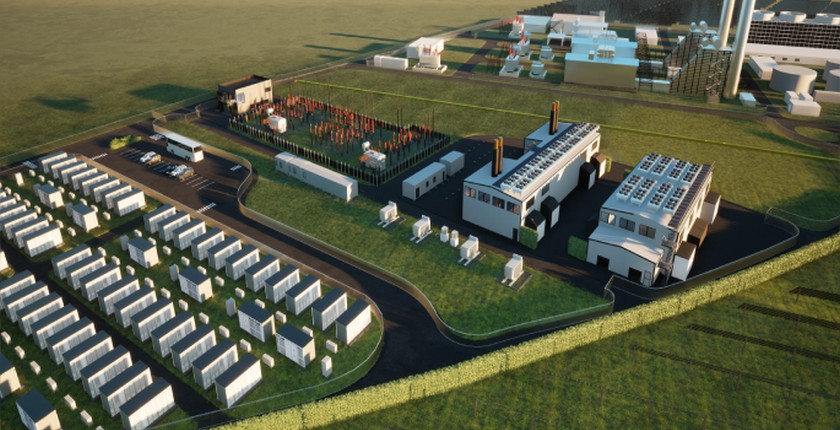
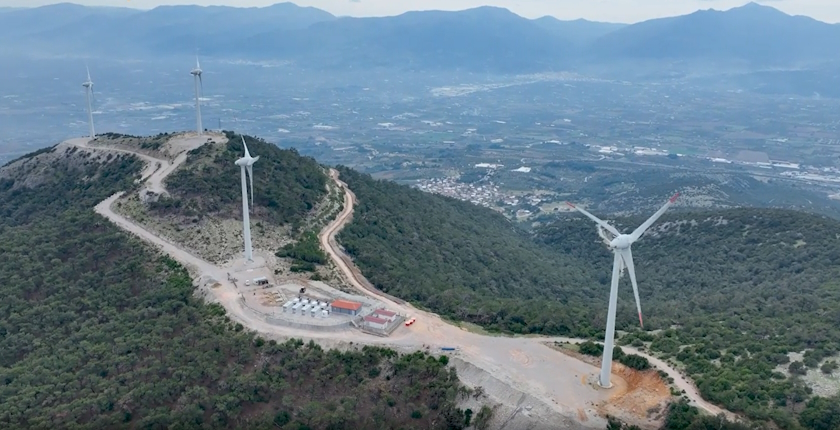
Polat Holding’s joint venture with İş Enerji has received the license for the 12.8 MW battery energy storage system (BESS) integrated with its Ege wind power plant of 15.2 MW in western Turkey. It is the largest hybrid power plant of its kind in the country.

In cooperation with SolarToday Türkiye and iNOVAT, Polat Enerji reached another milestone in combining renewable energy plants with battery storage. The Ministry of Energy and Natural Resources of Turkey has issued an approval for its BESS with 12.8 MW in operating power and a capacity of 15.2 MWh.

The facility is integrated with the company’s Ege wind power plant. They are located in the Kemalpaşa district of Izmir province in the country’s west. It is Turkey’s first DRES, an acronym for a licensed wind-storage system, of 10 MWh or more. The companies pointed out it is also the first hybrid power project of its kind to receive incentives.

Polat Enerji’s BESS consists of four 3.8 MWh units manufactured by Contemporary Amperex Technology Co. Ltd (CATL) from China. In the second phase, the capacity will reach 28.2 MWh, according to the update.

In the second phase, BESS capacity will reach 28.2 MWh

Electricity from wind turbines will be stored and delivered to the grid to cover production imbalances and stabilize the system. The companies signed the agreement about the battery project in January.

Ege was built in 2015. The wind park consists of eight turbines, of which the last two were connected almost two years ago. It has 15.2 MW in nameplate capacity and a 13 MW connection.

Earlier this month, Polat Enerji won a 160 MW project at a wind power auction under Turkey’s YEKA support mechanism. The company is a joint venture of Polat Holding and İş Enerji Yatirimlari, each holding 50%. The latter is a subsidiary of Türkiye İş Bankası, the largest private sector bank in Turkey.

The ministry said today that the country’s wind power capacity reached 14.5 GW in November, out of 121.8 GW in total. There was 24.7 GW of solar power in operation.
by in News

Greek company Aktor sets up BESS subsidiary after entering LNG trade

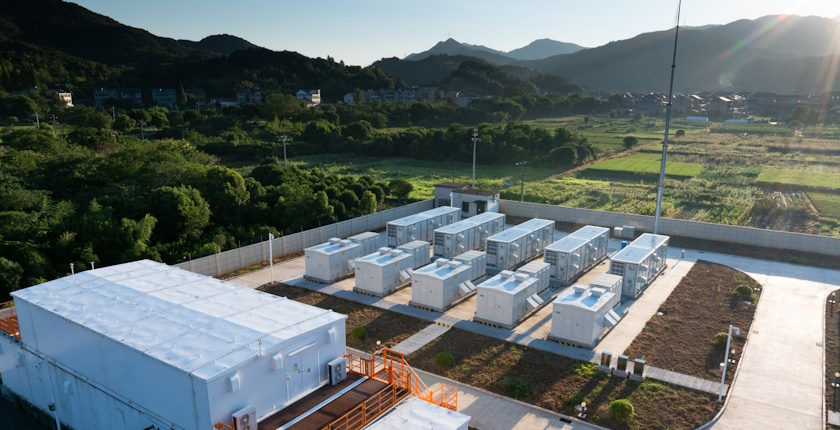
Power storage services are the core activity of Aktor’s new subsidiary Aktor BESS, but it could also build and operate renewable electricity and natural gas–fired plants and enter trade and distribution. The company earlier formed a business with DEPA Trade for liquefied natural gas (LNG).

Greek infrastructure and renewable energy developer and operator Aktor Group has formally positioned itself in the rapidly growing sector of electricity storage. Last week it established a 100% subsidiary called Aktor BESS, with an initial EUR 80,000 in capital.

The firm operates under Aktor Renewables and the main activity is providing electricity storage services. Aktor is apparently aiming to tap into the rapidly growing demand for batteries in Greece amid crippling wind and solar power curtailments.

In addition, battery energy storage systems or BESS are becoming a necessity because of the strengthening cannibalization effect. Operators of photovoltaics and wind parks require more predictable production profiles to for cost-effective pricing. They need to bridge the gaps between peak production and peak demand as well, as subsidies are gradually expiring.

Aktor BESS can benefit from the rapidly growing demand for battery storage in Greece

The statute of Aktor BESS points to a range of possible secondary activities. They include the construction and operation of renewable electricity and natural gas–fired plants as well as power trade and distribution and the development of technical studies.

The BESS facilities can be of the standalone type or colocated with the parent company’s production assets. Aktor Group’s Chairman and Chief Executive Officer Alexandros Exarchou is also the head of the new firm’s three-member board.

The company earlier established a joint venture for LNG and gas trade with DEPA Commercial, which controls 40%. It is also known as DEPA Emporias (in Greek), DEPA Commerce and DEPA Trading.

by in News

Enery obtains financing for 600 MWh battery project in Bulgaria

Austria-based Enery intends to commission a four-hour battery storage system of 150 MW in central Bulgaria by the end of the first quarter of next year. The project relies on a virtual power purchase agreement (PPA) with Vitol.

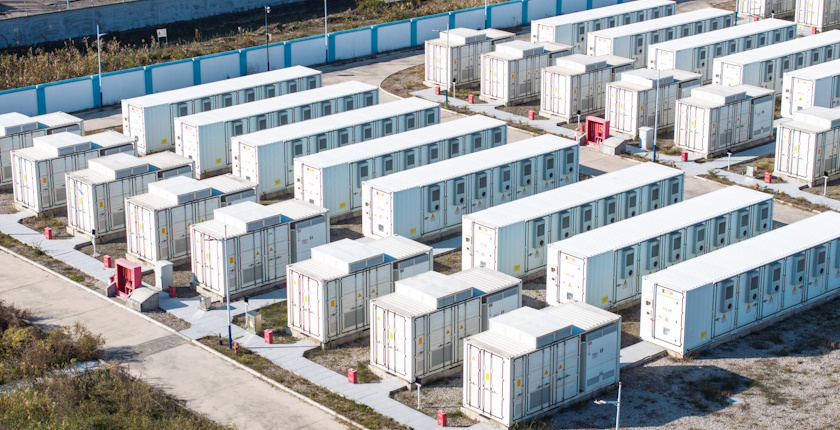
Enery said it has secured a green financing package from DSK Bank AD for its flagship 600 MWh battery energy storage system (BESS) in Nova Zagora, Bulgaria. It is one of the country’s most advanced storage financing deals to date, supporting its transition toward a more flexible and renewables-powered energy system, the update reads.

The facility would have 150 MW in capability, meaning it can operate at full power for four hours. It would be the biggest BESS in Bulgaria at this moment, according to available data, though there are larger projects underway as well.

The site is in a coal region centered on the Stara Zagora lignite basin, in the central part of the country.

Virtual PPAs, optimization services are key for bankability

Enery scheduled the commissioning for March. The BESS would feature its own substation, linked to a new 33/110 kV substation on the transmission grid.

The Austria-based independent power producer revealed that it has signed an innovative virtual power purchase agreement (PPA) with Vitol.

“Sophisticated instruments such as virtual financial deals, combined with Enery Portfolio Optimization’s best-in-class physical optimization services, are now key to unlocking bankable storage projects. This transaction demonstrates how innovative commercial structures, when paired with disciplined execution, can create long-term value for both lenders and project sponsors,” Chief Commercial Officer Severin Vartigov stated.

Vitol plans many more deals with Enery

Vitol expressed confidence that there would be many more deals with Enery. The global energy and commodity trader, headquartered in Geneva, has experience in developing, owning and optimizing BESS in Australia, Europe and the United States, the update adds.

Enery operates a diversified portfolio of 566 MW, generating 766 GWh of clean electricity per year. Its development pipeline is nearing 10
GW across 10 countries in Central and Eastern Europe.

The firm also manages more than 700 MWh of battery capacity across its own and third-party systems. In Bulgaria, it is present through its Enery Element joint venture as well.

by in News

Romania’s biggest battery system put into operation

Nova Power & Gas has commissioned the largest battery energy storage system in Romania, doubling the country’s total capacity. The installation in Florești, Cluj County, has an operating power of 200 MW and a capacity of 400 MWh.

Before the new facility was commissioned, Romania’s overall battery energy storage capacity was 398.8 MWh, according to data from the country’s transmission system operator, Transelectrica. Nova Power & Gas earlier said its own capacity was 240 MWh.

The company was already operating 240 MWh in batteries

The new battery energy storage system (BESS) became operational after Mayor of Florești Bogdan Pivariu signed a certificate of occupancy, Profit.ro reported.

In addition, Nova Power & Gas is building a 150 MW gas-fired power plant in Câmpia Turzii, with the first phase set to come online by December 2026.

Nova Power & Gas is developing further battery systems totaling 1,200 MWh

By 2028, the company plans to install one more gas power plant, of 200 MW, and energy storage systems of another 600 MW / 1,200 MWh overall.

“Through these investments, we aim to maintain and strengthen our leadership in energy storage, while making substantial investments in gas-fired electricity generation to support balance and flexibility in the national energy system,” Septimiu Costea, CTO of Nova Power & Gas, stated in July.

Nova Power & Gas, part of Romania-based E-Infra Group, is active across the Southeast Europe region, with subsidiaries in Bulgaria, Serbia, Hungary, and Moldova.

The company is also a major power and natural gas supplier, with over 4.6 TWh of electricity and gas delivered in 2024 and a turnover of almost RON 3 billion (EUR 589.4 million), according to Profit.ro.

by in News

New round of talks between Montenegro and Masdar on strategic partnership

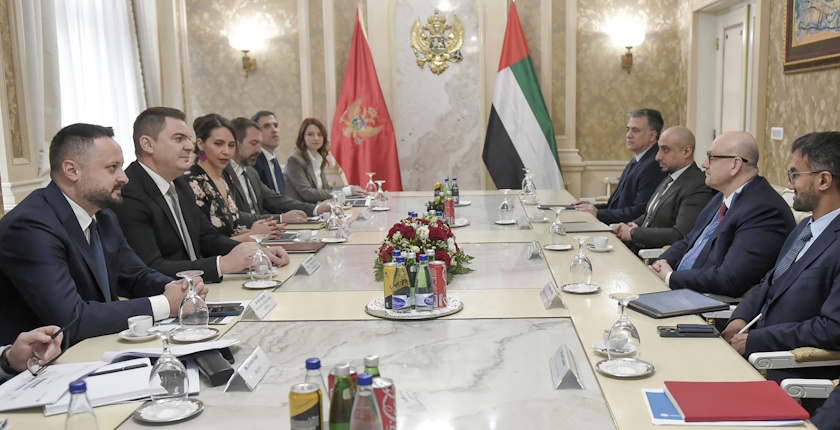
Representatives of the Government of Montenegro and Masdar discussed potential joint projects in the energy sector. The focus of the meeting was on solar energy, energy storage, and hydropower.

Minister of Energy and Mining of Montenegro Admir Šahmanović and the Minister of Public Works Majda Adžović met today at Villa Gorica in Montenegro’s capital Podgorica with Masdar CEO Mohamed Jameel Al Ramahi and his team.

It was the second meeting between Al Ramahi and Šahmanović in a short period. They met in early September.

The discussions now continued on top priority projects for the Government of Montenegro, ones that could be of mutual interest, according to the Ministry of Energy and Mining.

Priority should be given to projects that are the most technically advanced

Discussions will be intensified to define collaboration models, potential investments, and the selection of first projects to be implemented, the update reads.

Solar projects, including for floating solar power plants, alongside battery energy storage systems (BESS) and hydropower plants, have been identified as segments of special interest. These are also the areas where Masdar has significant engineering and technical experience, the ministry said.

montenegro masdar sahmanovic
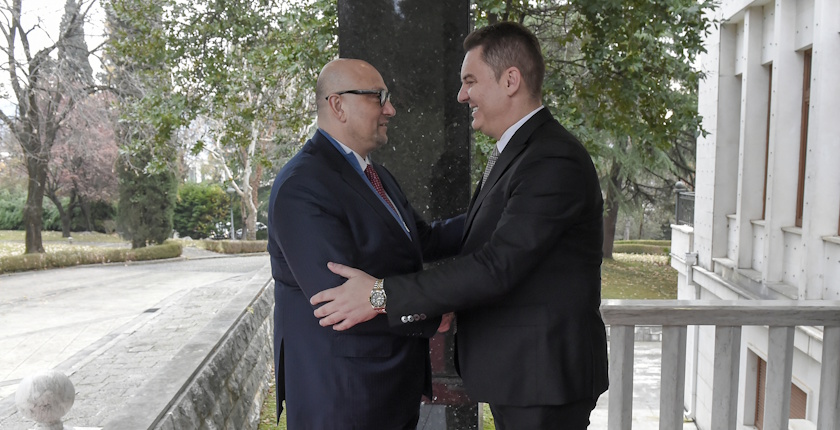
Al Ramahi and Šahmanović (photo: Government of Montenegro/Saša Matić)

The two sides agreed to focus on projects that are the most technically advanced, environmentally sustainable, and aligned with the development of the power grid, to ensure their sustainable and efficient implementation.

Šahmanović: Montenegro’s strategic and long-term goal is to establish itself as a reliable and competitive player in the European energy market

Minister Šahmanović pointed out that the country’s strategic and long-term goal is to establish itself as a reliable and competitive player in the European energy market. He underscored that the development of energy infrastructure and renewable energy sources are among the government’s key priorities.

Officials participating in the meeting praised the planned construction of a second submarine cable line with Italy. It is an extremely wise and strategic investment that ensures Montenegro a stronger and more stable position in the European electricity market, they added.
Montenegro’s vision as an energy hub is fully aligned with the government’s development plans, Šahmanović stressed.

Minister of Public Works Majda Adžović highlighted the extensive experience of the United Arab Emirates in energy and infrastructure development in the public sector. It is of great importance for Montenegro’s activities in increasing renewable energy capacities, she added.

Masdar’s expert teams will continue technical talks with the management of EPCG and CGES

Masdar’s representatives have expressed readiness to continue technical discussions with the management of power utility Elektroprivreda Crne Gore (EPCG) and transmission system operator (TSO) Crnogorski Elektroprenosni Sistem (CGES).

The company’s expert teams will aim to identify priority and mature projects for joint implementation, the ministry said.

EPCG’s CEO Zdravko Dragaš and Ivan Mrvaljević, Executive Officer of EPCG’s Directorate for Development and Engineering, pointed out that the development of green energy is the company’s top priority.

A total of 200 MW in renewable energy projects are currently in development, they added.

Ivan Asanović, CEO of CGES, presented projects that are in the final stages of implementation.

by in News

Greece to hit its 2030 goal for solar power already next year

The Greek solar sector is at a crossroads, as growth and profitability will be dictated by energy storage installations.

The levelized cost of energy (LCOE) for fixed-tilt utility-scale photovoltaics in the country is EUR 33 per MWh, among the lowest in Europe, according to Wood Mackenzie. It is expected to drop further in the following years, landing at EUR 30 per MWh in 2030, after which it would reach EUR 40 per MWh in 2040, based on projections that Research Analyst Victoria Ortega showed at a Solarplaza event in Athens.

The Greek market is expected to add 2.5 GW of solar this year, with the total reaching 12.2 GW. In fact, the country will achieve its 2030 goal of 13.5 GW during 2026, said Policy Advisor Stelios Psomas of the Hellenic Association of Photovoltaic Companies (HELAPCO).

However, profitability in the PV segment has taken a hit, as a result of low wholesale prices and curtailments. Research group Baringa estimates that investments at risk of being delayed amount to EUR 2.25 billion.

More storage needed by 2030

In order to maintain momentum, the solar market needs energy storage. Standalone battery investments are at 6.4 GW in various stages of development and the first systems are projected to come online by next spring. HELAPCO warns that 8 GW would be needed by 2030 to balance the market.

Based on data from the Independent Power Transmission Operator (IPTO), grid connection offers have been given so far for storage units of a total of 1,468 MW in operating power and a guaranteed capacity of 3,420 MWh. It translates to 2.3 hours on average.

HELAPCO estimates that more support is needed for behind-the-meter systems, where it expects 300 MW to get a green light in 2026.

The sector also needs support for residential and commercial storage.

by in News

Quota surpassed at Romania’s bonus wind power auction

Romania apparently achieved moderately lower prices at its additional wind power auction for contracts for difference (CfDs) than in the regular round. According to a media report, nine bids were approved, for seven proposed facilities, and the winners include OX2, Qair and Zen Energy Group.

All wind farm projects in Romania that obtained the right to state support at the latest renewable electricity auction need to be completed by 2028. The Ministry of Energy and transmission system operator Transelectrica have approved 315.8 MW, compared to the targeted minimum of 290 MW, Economica.net learned.

The bonus round was organized because of a weak turnout in the regular, second wind power auction. Winners are eligible for 15-year CfDs, in a EUR 3 billion scheme covered via the European Union’s Modernisation Fund.

According to the report, the prices were also more favorable for the government than in the previous auction: between EUR 59.95 per MWh and EUR 74.9 per MWh, against EUR 65.17 per MWh to EUR 79.5 per MWh. The ceiling was the same, EUR 80 per MWh.

Cheapest two lots are part of same project

Naxxar Wind Energy Project Zenon won two lots, at 64.8 MW each, for the same project – Tudor Vladimirescu in Brăila county, northeast of Bucharest. The strike prices are EUR 59.95 per MWh and EUR 61.05 per MWh.

Owners of the special purpose vehicle are Renewable Investors and Kaizer Gerhard, an individual, both from Germany.

Aukera Project Company Beta has won a CfD contract for 27.2 MW in the proposed Făurei wind farm. The price is EUR 67.12 per MWh. It is owned by AtlasInvest, headquartered in Belgium.

In Romania, it is working on the projects for the Delesti wind farm in Vaslui county and the Gura Ialomiței storage facility in Ialomița. The battery would have 250 MW in operating power and a capacity of 500 MWh.

The first phase, of 300 MWh, is under construction. The company obtained a EUR 9.9 million grant last year through the National Recovery and Resilience Plan (NRRP or, in Romanian, PNRR) and signed a loan facility of EUR 60 million with Kommunalkredit Austria for the storage system.

OX2 wins CfDs for additional capacity for its future wind farms

Brăila Green Energy qualified for 12.4 MW of its Urleasca wind power project, at EUR 69.86 per MWh. The firm is controlled by OX2, which already won a CfD for a part of the same future facility.

The Sweden-based company also snatched 25.6 MW for its Cerchezu project. It is another winner from the previous round. This time, the South Wind subsidiary secured a contract at EUR 74.49 per MWh.

Clever Power has obtained 21 MW and 14 MW by bidding EUR 69.88 per MWh and EUR 72.92 per MWh, respectively. Both lots are for the same project: Falciu wind farm, envisaged to include storage. The company is controlled by Romanian investor Barbu Cristian, the article adds, citing a businesses registry.

AZ Market Construction won just 8 MW for its Bordei Verde wind project. It is eligible for EUR 74.74 per MWh. The firm is owned by France-based Qair.

Traian Energy, a subsidiary of Zen Energy Group from Luxembourg, is getting the highest price from the bonus round. The wind park would receive EUR 74.9 per MWh for the entire 78 MW.

by in News

Turkey earns EUR 84.8 million upfront from solar power auction

Investors in photovoltaic projects were mostly willing to pay large sums at Turkey’s latest YEKA auction to secure a minimum guaranteed price for five years, followed by 20-year power purchase agreements. The government earned EUR 84.8 million overall from the secondary bidding for 650 MW, split into six areas. One zone is for a floating solar power plant.

According to Turkey’s Minister of Energy and Natural Resources Alparslan Bayraktar, domestic electricity demand is on a trajectory to triple to 1.05 PWh in the next 30 years. It follows an almost threefold jump of the last two decades, while natural gas is rising even faster, he pointed out.

The minister has urged investors to keep up the momentum, noting that the national goal for 2035 for solar and wind power is 120 GW in total.

One of the pillars of the government’s measures to incentivize such endeavors are renewable energy auctions. Notably, the obligatory domestic content rates are high, to boost manufacturing in the sector.

The latest solar power auction under the Renewable Energy Zones (REZ) state support mechanism even brought substantial earnings for Turkey, for the second time. The bidding was initiated at the ceiling price, EUR 55 per MWh, and when the floor level was reached at EUR 32.5 per MWh, the remaining competitors were switched to another auction.

They offered so-called contribution shares, starting at a stunning 10,000 per MW of planned connection capacity. The quota for the REZ SPP 2025 (YEKA GES 2025) round was 650 MW, split into eight zones. Two zones were taken off the table after the call, due to delays in permitting.

Highest fee was EUR 285,000 per MW

In total, Turkey cashed in EUR 84.8 million or EUR 130,400 per MW of connection capacity, excluding value-added tax.

The Eskişehir zone, 260 MW, went for EUR 105,000 per MW to Efor Holding. The company was successful at the previous wind power auction as well, early this year.

Stone Enerji won the Erzurum 1 segment, of 100 MW, by pledging EUR 100,000 per MW. Sertaş Turizm took Erzurum 3, at 85 MW, for EUR 120,000 per MW.

The Ministry of Energy and Natural Resources included a floating solar power plant project for the first time

The 50 MW Bolu zone went to Ecogreen Enerji. The company is paying 44,000 per MW, the least of all winners.

Kahramanmaraş, of 40 MW, was awarded to Güçlü GES Enerji. It pledged EUR 285,000 per MW, which was the highest contribution fee. Aydede Enerji has obtained the Mardin zone for EUR 208,000 per MW while Zincir GES Enerji managed to win the Van solar power project for EUR 187,000 per MW. Both are for 40 MW.

The auction also featured the first zone for a floating solar power plant. Demirköprü Yüzer GES in Manisa province, for 35 MW, was taken by a firm with the same name. It is paying EUR 225,000 per MW, the ministry has revealed.

Solar power auction facilitates USD 400 million in investments

There were 77 applications altogether, from 38 companies.

The winners will be able to sell electricity on the free market for five years. However, they are guaranteed at least their contracted price, which in all cases is the floor price – EUR 32.5 per MWh. The second period, 20 years, is with a power purchase agreement.

Bayraktar estimated that the solar power auction facilitated investments worth a combined USD 400 million. The projected annual output is equivalent to the electricity needs of half a million households.

The minister pointed out that 8 GW of solar and wind power would come online this year in total. The combined capacity on the grid from the two technologies amounts to some 39 GW out of 121 GW overall.

Also of note, the Energy Storage Industries Association (EDEDER) has forecasted that 1.5 GWh of storage capacity would be commissioned next year in Turkey.

by in News

Enery to start building Europe’s largest solar power plant in Romania

Austria-based Enery is preparing to begin construction works early next year on a photovoltaic facility of 750 MW in peak capacity just outside of Bucharest. It would currently be Europe’s largest solar power plant. A few other megaprojects are underway, too, but the Ogrezeni facility is planned with a battery energy storage system that would match its grid connection capacity.

Enery, which operates a range of wind, photovoltaic and small hydropower plants and battery storage across Romania, has only a few final steps before the start of construction of a giant solar farm in Giurgiu county, the company’s Head of Romania Liviu Gavrilă revealed to Profit.ro. The launch of the works is due early next year, he added.

With its 750 MW in peak capacity, the solar park in Ogrezeni, just west of the capital Bucharest, would be Europe’s largest at this moment. The company obtained a grid connection approval for 534 MW in 2023, the article adds.

Europe’s largest PV plant is Witznitz in Germany’s east. It has 650 MW in peak capacity. There is also an 850 MW cluster of 17 units in Spain, called Escatrón-Chiprana-Samper Solar Farm.

If the Asian part of Turkey is included, Kalyon Karapınar is at the top of the list. It has 1.35 GW in peak capacity and a 1 GW grid connection. Already one of the largest in the world outside China, the solar park is due for expansion into a complex of 1.85 GW in peak capacity.

Romania hosting two projects for Europe’s largest solar parks

Of note, Rezolv Energy and Monsson are about to build a solar farm in northwestern Romania of 1.04 GW in peak capacity. The site is in the communes of Pilu and Grăniceri in Arad. The Dama Solar system is envisaged with a battery energy storage system (BESS) of 500 MW.

But Austria-based Enery is planning a BESS with 534 MW in operating power, matching the grid connection. The unit would have a two-hour duration, translating to a storage capacity of 1.07 GWh.

Both Ogrezeni and Dama Solar are planned as hybrid power plants, with giant batteries

Both Dama Solar and Ogrezeni, also known as Baboia Solar Plant, won state support at Romania’s second solar power auction.

Spanish Iberdrola is preparing a bigger project, Fernando Pessoa in Portugal, though it has suffered delays over environmental concerns and disputed permits.

Enery to equip all its power plants in country with battery storage

Some negotiations remain to be completed before the groundbreaking, Gavrilă said. Enery is targeting a commercial operations date in the fourth quarter of 2027. In comparison, Dama Solar is scheduled to come online in the third quarter of 2028.

Enery has completed a PV plant of 54 MW in Titu, Dâmbovița county. The company is preparing it for a test run. It has 167 MW in operation in Romania, of which the Sărmășag solar park accounts for 51.4 MW in peak capacity.

“We want to install batteries for all our production capacities in Romania. But we are also active in the area of ​​stand-alone storage installations,” Gavrilă asserted.

In addition, the company manages electricity supply for others as a balance responsible party, using the SmartPulse platform.

by in News

LONGi enters energy storage market, redefining industry standards with Ultimate Safety

LONGi, the global leader in solar technology, unveiled its energy storage strategy in London, officially announcing its entry into the storage sector with the launch of the LONGi Energy Storage One-Stop Solution. This marks LONGi’s strategic evolution from a global photovoltaic leader to an integrated Solar-Storage-Hydrogen comprehensive energy solution provider.

Addressing the challenge of the projected doubling of global electricity demand by 2050, Dennis She, Vice President of LONGi, introduced for the first time the Stability Triangle energy framework centered on solar, energy storage, and hydrogen energy.

“Solar is the creator of clean energy, energy storage is the stabilizer of the power system, and hydrogen is the regulator that balances it all,” Mr. She stated to energy experts and investors from around the world. “The synergy of these three will build a truly widespread, highly resilient, and affordable zero-carbon energy system.”

From Solar to Solar-Storage-Hydrogen: building a Stability Triangle energy framework

Currently, LONGi possesses leading technologies in PV and hydrogen energy – with its HIBC cell efficiency reaching 27.81% and its ALK electrolyzer capacity ranking first globally.

This expansion into energy storage signifies the further enhancement of LONGi’s strategic layout, fully forming a closed-loop across the entire Solar-Storage-Hydrogen value chain.

Breaking new ground with Ultimate Safety: reshaping the logic of competition in energy storage

Energy storage is a crucial piece in the renewable energy system, and the industry is shifting from policy-driven to market-driven growth.

Dennis She pointed out, “The current development stage of the energy storage industry is very similar to the early days of solar – confidence-driven rapid growth, but also bringing disorderly competition. The future dimension of competition in energy storage has evolved from ‘having the technology’ to ‘value reliability.’”

He emphasized, “Safety, reliability, and stability are the yardsticks for measuring energy storage solutions, and are also the cornerstone for winning the long-term trust of the market and customers.”

To uphold the value proposition of Ultimate Safety, LONGi has chosen to engage in deep collaboration with PotisEdge, an expert in energy storage safety. Adhering to a three-pillar technical architecture of “intrinsic safety, active defense, and intelligent early warning,” and through its fully self-developed 5S energy storage system with unique BMS and iCCS designs, PotisEdge has maintained a safety record of “zero thermal runaway” incidents across more than 12 GWh of cumulative energy storage and power battery systems over the past decade. This will provide solid technical support for LONGi’s energy storage solutions.

Establishing the first Solar-Storage Technology Innovation Center in Europe

To accelerate Europe’s energy transition, LONGi officially announced the establishment of its first Solar-Storage Technology Innovation Center (Center of Excellence, CoE) in Europe. This center will integrate core functions including project consulting, technical training, O&M support, and spare parts services, dedicated to providing European customers with rapid-response, full-lifecycle localized professional services, comprehensively ensuring the safety, reliability, and long-term returns of integrated solar-storage assets.

Choosing London for this global strategy launch underscores LONGi’s high regard for the European market. “Europe’s urgent need for energy transition and its mature market mechanisms provide an ideal platform for practicing integrated Solar-Storage-Hydrogen solutions,” Mr. She stated during the launch.

The LONGi Energy Storage Solution will be deployed first in key markets such as the UK, Germany, Italy, and Spain, helping utilities and power companies build smarter and more efficient clean energy systems. In the future, LONGi will continue to explore viable pathways for the global zero-carbon transition through its Solar-Storage-Hydrogen integration strategy, working hand-in-hand with all parties towards a sustainable future powered by renewable energy.

About LONGi

Founded in 2000, LONGi is committed to being the world’s leading solar technology company, focusing on customer-driven value creation for full scenario energy transformation. Under its mission of “making the best of solar energy to build a green world”, LONGi has dedicated itself to technology innovation and established several business sectors, covering mono silicon wafers cells and modules, commercial & industrial distributed solar solutions, green energy solutions and hydrogen equipment.

The company has honed its capabilities to provide green energy and has more recently, also embraced green hydrogen products and solutions to support global zero-carbon development.