by in News

KESH partners with France’s EDF and AFD to develop Albania’s Energy Storage Roadmap

Tirana — In a decisive move toward modernizing its national grid, the Albanian state-owned power utility, KESH (Albanian Electric Power Corp), has finalized a strategic partnership with Électricité de France (EDF) and the French Development Agency (AFD). The collaboration focuses on the development of a comprehensive energy storage strategy, underpinned by a €400,000 grant earmarked by the AFD.

This initiative arrives at a critical juncture for Albania. While the country boasts a near-total reliance on renewable hydropower for domestic production, its lack of grid-scale energy storage remains a significant structural vulnerability. As the global energy transition demands higher flexibility, the partnership aims to bridge the gap between Albania’s current hydro-centric model and a diversified, resilient future.

Engineering Flexibility: The Scope of the Partnership

The primary objective of the agreement is to identify and evaluate the most effective storage technologies suited for Albania’s existing infrastructure. The resulting study will serve as a technical blueprint for the nation’s Energy Storage Strategy, focusing on several key pillars:

  • Renewable Integration: Facilitating the entry of solar and wind energy into a grid historically dominated by water power.

  • System Modernization: Increasing the security of supply and enhancing operational flexibility.

  • Climate Resilience: Improving the long-term sustainability and management of Albania’s vital water resources and assets.

The technical expertise for this transition will be provided by the French state-owned giant EDF, a global leader in low-carbon energy, while the AFD continues to expand its financial and developmental footprint across the Western Balkans.

High-Level Diplomatic Support

The signing ceremony was attended by Nicolas Forissier, the French Minister Delegate for Foreign Trade and Economic Attractiveness. Minister Forissier emphasized that this agreement underscores Albania’s status as a priority partner for France, reflecting Paris’s commitment to supporting the country’s integration into the European Union through the mobilization of technical and financial instruments.

Under the leadership of Viola Haxhiademi, who assumed the role of CEO in late December, KESH is positioning itself to manage significant future capacities. Currently, planned projects—including KESH’s pumped storage capacity in the Drin (Drim) cascade and Statkraft’s Moglica project—represent a potential 1.6 GW of storage capacity.

A Continuing Collaboration

This latest deal builds upon an existing relationship between KESH and the AFD. Last year, the two entities signed an agreement focused on the advanced management of the Drin River cascade, the backbone of Albania’s energy sector. By adding a formal storage strategy to this framework, Albania is taking a sophisticated step toward aligning its energy sector with EU standards and the exigencies of the green transition.

by in News

ContourGlobal enters Greece with battery projects, small PV plants purchase

KKR-owned ContourGlobal bought a group of small solar power plants in Greece, alongside a portfolio of battery storage projects totaling 500 MW in operating power and 2 GWh in capacity. It is the company’s debut in the country’s energy sector.

Right after the inauguration of its standalone battery energy storage system in Bulgaria of 202 MW and 500 MWh, ContourGlobal revealed that it entered neighboring Greece through three acquisitions. The London-based company said it acquired photovoltaic systems of 37 MW in overall peak capacity and a group of mature projects for battery energy storage systems (BESS).

There are 26 solar power plants, commissioned between 2011 and 2022. They were owned by Quest Energy, a subsidiary of Quest Holdings, listd on the Athens Stock Exchange. The assets are contracted under feed-in tariff (FiT) and feed-in premium (FiP) supporting schemes, providing both predictable and premium revenues, ContourGlobal pointed out.

Expected yearly output is 51 GWh, enough to power as many as 15,000 Greek households per year.

ContourGlobal has acquired in recent months the full ownership of six battery storage projects through two different transactions with FRV (Fotowatio Renewable Ventures) from Spain and Greek developer Zephiros, the announcement adds. They total 500 MW in capability and 2 GWh of storage capacity.

ContourGlobal is breaking ground for its first BESS plant in Greece this quarter

The ready-to-build (RtB) Taxiarches project is for 100 MW and 400 MWh, respectively. The site is in Farkadona in the Trikala regional unit in Thessaly. Construction is scheduled to begin before the end of March and commercial operation is expected by early 2027.

“Building on our experience operating large-scale BESS projects from Chile to Bulgaria and on the developments already underway in the United States, we see Greece as a key market to scale our battery storage portfolio in Europe and support the country’s energy transition,” Chief Executive Officer Antonio Cammisecra said.

All BESS projects have permits

All projects have secured environmental approvals and key permits, and have applied for grid connection, ContourGlobal stressed.

Although Greece is a relatively small power market in Europe with 24 GW of installed capacity, it is the second-largest in the Balkan region and is experiencing rapid growth in renewables, the company added.

“While historically dominated by lignite and gas, the country is accelerating renewable development, with solar and wind capacity projected to reach around 60 GW by 2060. At the end of the current decade, nearly 70% of installed capacity and electricity generation are expected to come from renewable sources, increasing the need for flexible, grid-scale storage. Moreover, the country is projected to become a net exporter of electricity from 2026,” the update reads.

Expansion ambitions for Greece, Europe

The company said it is assessing further development opportunities in Greece as part of its long-term growth strategy in renewables and battery storage.

ContourGlobal underscored that the new transactions are strengthening its European platform for further growth in renewables and battery storage, building on its established presence in Italy, Spain and Austria.

As for Southeastern Europe, Bulgaria is booming with BESS throughout, Romania is gaining momentum, while Greece is taking a long jump approach, with some administrative hurdles continuing. Turkey is commissioning its first hybrid power plants.

Of note, ContourGlobal was involved in a coal power project in Kosovo* but eventually decided to quit, citing political issues.

* This designation is without prejudice to positions onstatus and is in line with UNSCR 1244/99 and the ICJ Opinion on the Kosovo declaration of independence.
by in News

Turkey’s first large solar-BESS power plant inaugurated

Oze Grup has built a 49 MW photovoltaic facility with a 34 MWh battery storage system southwest of Ankara. It is the first such hybrid power plant in Turkey.

Energy storage systems are indispensable for grid security and price stability, according to Chairman of Turkey’s Energy Market Regulatory Authority (EMRA or EPDK) Mustafa Yılmaz. “Energy is no longer just about production. The real issue is ensuring that the electricity produced is integrated into the system at the right time, in the right place, and safely,” he said at the inauguration of the country’s first large solar power plant with energy storage, built by Oze Grup.

The site is in Sivrihisar in Eskişehir, some one hundred kilometers southwest of Ankara. The solar power plant has 49.2 MW in peak capacity. Its 29 MW grid connection matches the capability of the battery energy storage system (BESS), which has 34.1 MWh in capacity.

Oze Grup got the first project approval and the trial permit in the DGES category. The acronym is for licensed solar-storage systems, as opposed to self-consumption facilities. It was the Ankara-based construction company’s first energy project.

PVI Enerji designed and built the facility for Oze İnşaat ve Beton Sanayi. BS Distributed Energy Systems (BS DES) was involved in all stages. The other contractors are ELIN Enerji, HMK Demir Çelik, Sunroof Enerji and Solex Energy.

The chief regulator said the new hybrid power plant marks a vision change. “The sun doesn’t always shine, the wind doesn’t always blow. Renewable energy can only become a primary driver through storage,” Yılmaz stated.

He added that Turkey is now fully prepared for investments in renewable electricity plants with storage. The process has been rather slow, as the legislation for fast-tracking such projects was issued more than three years ago.

Oze Grup completed the hybrid power plant late last year. Notably, Polat Enerji received the approval from the Ministry of Energy and Natural Resources for its licensed wind-storage system (DRES), the first in Turkey.

by in News

Motor Oil’s MORE completes three battery systems in Greece

MORE, standing for Motor Oil Renewable Energy, built three standalone battery energy storage systems in Greece. The company won government support for the projects two years ago at an auction.

Oil refiner Motor Oil Hellas said its green energy arm has installed 72 MW in BESS capability, with 144 MWh in total capacity. The three standalone facilities are in Phocis (Fokida), Florina, and Boeotia (Viotia).

MORE, which is an acronym of Motor Oil Renewable Energy, completed the battery systems in just three months, the update reveals. The company pointed out they are among the first of such a scale in Greece.

“The operation of these energy storage systems will lead to a substantial further reduction in electricity prices for consumers by utilizing renewable energy that is currently being curtailed. At the same time, they will contribute to grid stability and enhance the country’s energy security,” Motor Oil added.

The three projects were selected during the second competitive process of the Regulatory Authority for Energy, Waste and Water (RAAEY or RAEWW) for energy storage systems. It was held in 2024. The investments are funded through the National Recovery and Resilience Plan Greece 2.0 and the European Union’s Recovery and Resilience Facility, under the NextGenerationEU program.

According to recent reports, new BESS facilities of 300 MW in combined operating power were waiting for approvals in Greece to be able to start operating.

Athens International Airport (AIA) Eleftherios Venizelos inaugurated a large solar-BESS hybrid power plant last month. Government-controlled Public Power Corp. – PPC Group is building three standalone battery storage systems at its coal plants.

Motor Oil is also involved in hydrogen projects, wind power and carbon capture and storage.

by in News

Motor Oil’s MORE completes three battery systems in Greece

MORE, standing for Motor Oil Renewable Energy, built three standalone battery energy storage systems in Greece. The company won government support for the projects two years ago at an auction.

Oil refiner Motor Oil Hellas said its green energy arm has installed 72 MW in BESS capability, with 144 MWh in total capacity. The three standalone facilities are in Phocis (Fokida), Florina, and Boeotia (Viotia).

MORE, which is an acronym of Motor Oil Renewable Energy, completed the battery systems in just three months, the update reveals. The company pointed out they are among the first of such a scale in Greece.

“The operation of these energy storage systems will lead to a substantial further reduction in electricity prices for consumers by utilizing renewable energy that is currently being curtailed. At the same time, they will contribute to grid stability and enhance the country’s energy security,” Motor Oil added.

The three projects were selected during the second competitive process of the Regulatory Authority for Energy, Waste and Water (RAAEY or RAEWW) for energy storage systems. It was held in 2024. The investments are funded through the National Recovery and Resilience Plan Greece 2.0 and the European Union’s Recovery and Resilience Facility, under the NextGenerationEU program.

According to recent reports, new BESS facilities of 300 MW in combined operating power were waiting for approvals in Greece to be able to start operating.

Athens International Airport (AIA) Eleftherios Venizelos inaugurated a large solar-BESS hybrid power plant last month. Government-controlled Public Power Corp. – PPC Group is building three standalone battery storage systems at its coal plants.

Motor Oil is also involved in hydrogen projects, wind power and carbon capture and storage.

by in News

KOSTT takes over land in Kosovo* for battery system in US-funded project

Transmission, System and Market Operator (KOSTT) of Kosovo* signed a contract with the Ministry of Economy and Municipality of Ferizaj, receiving 2.3 hectares of land for a 45 MW battery project. It is funded through the Millennium Challenge Compact, initiated in 2022 by the United States, acting through its Millennium Challenge Corp. (MCC), and the government in Prishtina.

Almost a year after the prequalification call for potential contractors, KOSTT received 2.3 hectares of land from the Municipality of Ferizaj (Uroševac) for a battery energy storage system (BESS).

The transmission system operator (TSO) of Kosovo* pointed out that the Ministry of Economy is part of the deal as well, within the Millennium Challenge Compact program with the United States.

KOSTT’s battery is for its automatic frequency restoration reserve

The site for the facility for KOSTT’s automatic frequency restoration reserve (aFRR) is near the Sojeva (Sojevo) village and Camp Bondsteel. Led by the US Army, it is the seat of the Kosovo Force (KFOR).

“The batteries will store energy when there is a surplus and return it to the grid when demand increases, for a more stable supply and more affordable costs. The Kosovo-US partnership is turning into another concrete result: infrastructure that makes energy more secure for citizens,” said Acting Minister of Economy Artane Rizvanolli.

Second part of project is for 125 MW, 250 MWh

The BESS project for KOSTT, funded by the US through its Millennium Challenge Corporation (MCC), aims to strengthen energy security, promote the transition to clean energy and reduce energy costs. The battery system would have 45 MW in operating power and a two-hour duration, translating to 90 MWh.

Overall, the agreement is worth USD 236.7 million, of which the Government of Kosovo* is providing USD 34.7 million.

MCC has earmarked more than USD 200 million for the BESS endeavor

Millennium Challenge Account Kosovo (MCA-K), the contracting authority, officially launched the program last year. In September it signed an agreement with KOSTT to implement the project from design to commissioning. The arrangement was initiated in 2022.

The prequalification call was published in late 2024. It included another battery project, for 125 MW and 250 MWh, at a location in Peja (Peć). It is supposed to be managed by a public entity that would provide services such as frequency restoration and energy arbitrage – buying electricity when prices are low, to be used later.

Total investment was estimated at USD 180 million, of which USD 46 million for the smaller BESS.

* This designation is without prejudice to positions onstatus and is in line with UNSCR 1244/99 and the ICJ Opinion on the Kosovo declaration of independence.
by in News

Austrian EET rolls out AI-powered device to simplify home electricity metering

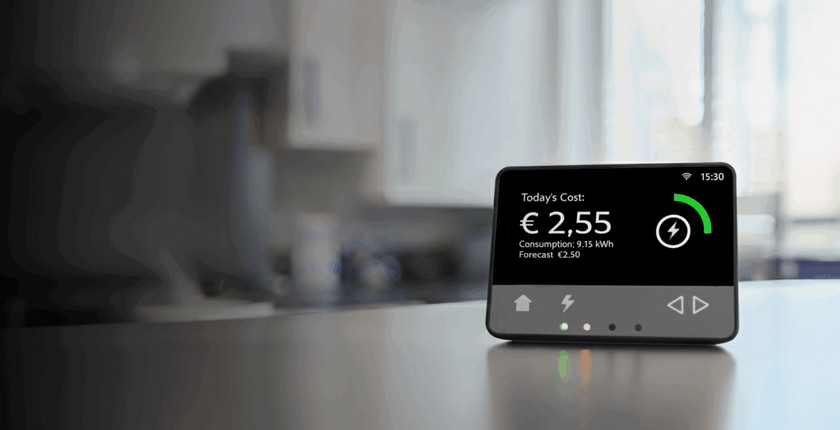
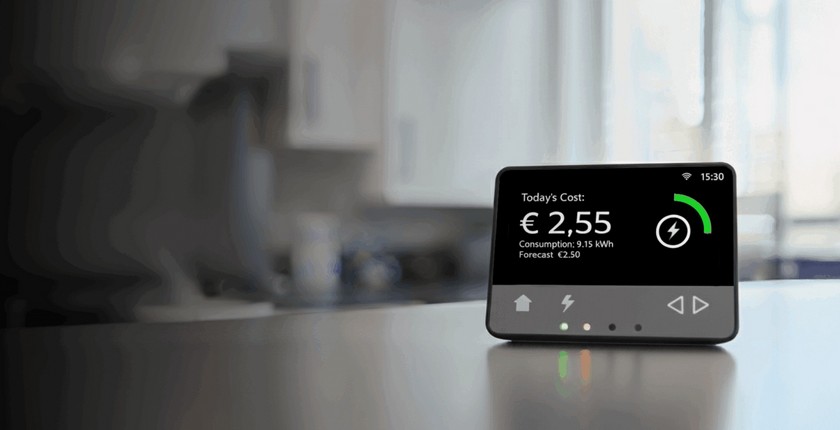
Austrian startup Efficient Energy Technology (EET) has developed an electricity metering solution called the Virtual Meter, which measures residential electricity consumption through a single connection within the home’s power network. The device, powered by artificial intelligence (AI), eliminates the need for a conventional hardwired meter, reduces system complexity for home energy storage and heat pumps, and provides real-time consumption data, the company claims.

The Virtual Meter, which can be integrated directly into any home energy device through a standard socket or any point on the home’s power network, deduces the total energy consumption accurately, reliably, and in real time, according to EET.

AI-powered Virtual Meter derives and delivers consumption data in under one second

The device uses AI-powered load identification to measure the total net electrical load of the entire home on single-phase or three-phase residential grid connections, with data delivered in under one second. It can be plugged in anywhere via a standard earthed wall socket or a wired connection, requiring a physical link to only one phase.

Instead of directly measuring current, the Virtual Meter continuously observes the voltage of one phase and detects the tiny changes that occur whenever a device switches on or off on any of the three phases of a household, the company explains. In this way, it infers the home’s total consumption.

The solution reduces the costs and complexity of home batteries and heat pumps

The Virtual Meter reduces system complexity and installation and component costs for manufacturers of devices such as home batteries, EV chargers, heat pumps, home energy management systems (HEMS), and other residential energy products, delivering a smoother, more transparent experience for end-customers.

The solution is compatible with all common grid configurations and utility meter types, and its design ensures interruption-free data availability, EET says, adding that the Virtual Meter can be integrated directly into other energy products or used as a standalone solution.

by in News

Bulgaria to host renewable electricity plants on Luxembourg’s behalf

Bulgaria joined Finland as a host country for the 2026 call through the EU Renewable Energy Financing Mechanism (RENEWFM). Luxembourg intends to fund renewable energy projects there, which will enable it to statistically attribute 80% of output to itself.

In the European Union, a member state that missed its renewable energy target can arrange a so-called statistical transfer, for a fee, from a fellow country that surpassed its own target. Another way is to fund power plant projects in another member state, via the EU Renewable Energy Financing Mechanism (RENEWFM).

In the first round, Finland agreed to host seven solar parks on behalf of Luxembourg. The grants amounted to EUR 27.5 million. Next time, also for Luxembourg, it got seven photovoltaic projects and Estonia got two for wind power. The beneficiaries won EUR 52 million in total.

This year, Bulgaria decided to participate with Finland, again on behalf of Luxembourg. Conveniently, the plan is for photovoltaic plants with battery storage in the country’s coal regions in transition: Pernik, Kyustendil and Stara Zagora. The investments are aimed at ensuring long-term employment and energy security. They complement the so-called territorial just transition plans (TJTPs) for a smooth coal phaseout.

The budget for the forthcoming round amounts to EUR 55 million

Bulgaria applied through the call that the European Commission’s Directorate-General for Energy (DG Ener) published. The overall budget is EUR 55 million.

The facilities must operate for at least 15 years. Bulgaria provides land instead of Luxembourg, which gets 80% of the green energy certificates from production.

As for Finland, solar farms are planned again, for the upcoming round.

The European Climate, Infrastructure and Environment Executive Agency (CINEA) is responsible for conducting the calls and monitoring project implementation.

by in News

IRENA: Global daily flexibility needs are quadrupling by 2050

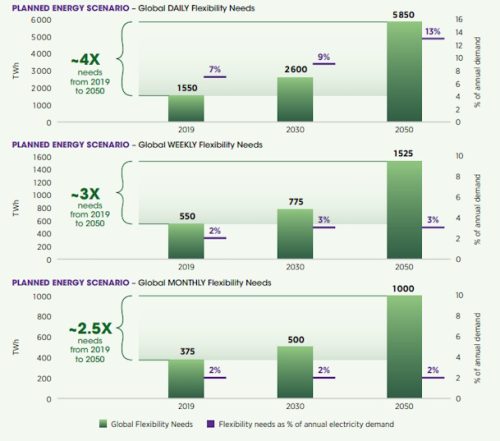
In IRENA’s Planned Energy Scenario at the global level, electricity system flexibility needs on a daily timescale are four times higher in 2050 than in 2019. In the weekly and monthly timescales, the energy required for the purpose grows by three and 2.5 times, respectively. As for the 1.5°C Scenario, implying a much higher share of renewables, the daily flexibility needs jump ten times by mid-century, versus six times for both remaining segments.

Electrification of end-use energy, large-scale deployment of distributed energy resources and the emergence of large new electricity loads from data centres are increasing demand and adding new layers of complexity. It means power systems will need stronger grids and more flexibility to ensure that electricity is available when and where needed and at the lowest possible cost, the International Renewable Energy Agency (IRENA) pointed out in a brief called Flexibility for a secure and affordable power sector transformation.

Aside from buildings and transportation, new demand is coming from the growing adoption of artificial intelligence (AI), driving the expansion of data center capacity. In 2024, data centers consumed 1.5% of electricity. The International Energy Agency expects the share to double by 2030.

The share of variable renewable energy is increasing – wind and solar power in particular. Demand patterns become more complex, so the potential for mismatches between supply and demand is likely to grow, becoming more frequent and significant. It highlights the increasing importance of system flexibility. It is the capacity to respond to expected and unexpected fluctuations in the demand for and supply of electricity in a cost-effective manner.

Some forms of flexibility act automatically to keep the system stable, while others can be scheduled and operate over hours, days or even seasons

Insufficient system flexibility can result in excessive curtailment or, in market-based systems, negative electricity prices. It can also result in shortages, jeopardising the reliable supply of electricity.

System flexibility is needed by the power system to adjust to the variability of generation and demand patterns across different timescales. Some forms of flexibility act automatically within seconds to keep the system stable, while others can be scheduled in anticipation and operate over hours, days or even seasons, through market adjustments and operational and resource planning.

Network flexibility, which isn’t covered in IRENA’s brief, is different. It is the capacity to adjust for grid availability by means of preventing or solving congestion or voltage issues.

Required flexibility depends on numerous factors

In the timescale of seconds to minutes, flexibility is needed to maintain the balance during sudden changes in demand or supply, such as the
disconnection of an interconnector or a major load or generator. The hours and days timescale has daily ups and downs of solar and wind generation alongside the peaks and troughs in demand throughout the day.

In the weeks and seasons segment, flexibility enables covering longer weather patterns caused by changes in the season or low-wind periods. In power systems mainly supplied by renewables, flexibility is also needed at inter-annual timescales. The main factors are climate-driven variations in resource availability. It especially concerns hydrology, but also wind and solar, as well as year-to-year differences in seasonal heating and cooling demand.

In power systems mainly supplied by renewables, flexibility is also needed at inter-annual timescales

Flexibility is not a single asset or function; instead it corresponds to a capability provided by a portfolio of different technologies, operational practices and market mechanisms. The required level of flexibility in a power system depends on, among other factors, the prevailing generation mix, geography, power sector structure and affected timescales.

Storage, demand-side management (DSM), interconnections and dispatchable resources each contribute differently.

Advances in forecasting and the introduction of shorter dispatch intervals, scheduled closer to real-time operation, allow more frequent and precise adjustments of generation and demand before electricity is delivered. One example are intraday markets complementing day-ahead markets.

Electricity must become main energy carrier by mid-century to keep global warming in check

In IRENA’s 1.5°C Scenario, the energy transition will be driven by the deployment of renewable energy, improvements in energy efficiency and the electrification of end-use sectors. The aim is to limit global warming to 1.5 degrees Celsius by 2100.

Electricity would need to become the main energy carrier by 2050. It would account for over half of total final energy consumption. The 2022 level was 23%.

Global electricity generation is projected to be 36% higher in 2030 and three times higher in 2050 than in 2023. Renewable resources would supply 68% of electricity in 2030 and 91% in 2050. Renewables would account for 77% of total installed power capacity in 2030 and 94% in 2050.

In the same setting, 70% of electricity generated in 2050 comes from wind and photovoltaics, taken together. In IRENA’s Planned Energy Scenario, not projecting full decarbonization, the level is 53%.

In IRENA’s 1.5°C Scenario, the share of electricity in total final energy consumption more than doubles by 2050, surpassing 50%

Flexibility needs are calculated as total cumulated annual energy deviation from the average net load (which excludes variable renewable energy generation).

In the 1.5°C Scenario, the power sector requires ten times more flexibility in 2050 than in 2019 to manage the daily variability of net load. In terms of share of annual electricity demand, the authors observed a surge to 30% from 7%. Flexibility needs for managing the variability in weekly and monthly timescales are both six times higher.

In IRENA’s Planned Energy Scenario, daily flexibility needs in 2050 are four times higher. In the weekly timescale, the level triples from 2019, and the monthly item is 2.5 times higher.

IRENA Global daily flexibility needs quadrupling by 2050
Photo: The height of bars indicates flexibility requirements in terawatt-hours per year. Purple horizontal markers show flexibility needs as a percentage of annual electricity demand. (IRENA)

Batteries perform best in daily segment

Battery energy storage is the most effective in addressing daily flexibility needs, the report finds. It is only 24% as effective at meeting weekly needs and 12% as effective for monthly needs.

Interconnections and LDES are effective on the weekly and monthly scales

Interconnections are the most effective in addressing weekly flexibility needs, but also 98% as effective for monthly needs. As for the daily segment, the coverage is just 28%.

The numbers for long-duration energy storage (LDES) solutions are similar. Compared with addressing weekly flexibility needs, LDES is 90% as effective for monthly needs and 34% as effective in the daily item.

by in News

Austrian EET rolls out AI-powered device to simplify home electricity metering

Austrian startup Efficient Energy Technology (EET) has developed an electricity metering solution called the Virtual Meter, which measures residential electricity consumption through a single connection within the home’s power network. The device, powered by artificial intelligence (AI), eliminates the need for a conventional hardwired meter, reduces system complexity for home energy storage and heat pumps, and provides real-time consumption data, the company claims.

The Virtual Meter, which can be integrated directly into any home energy device through a standard socket or any point on the home’s power network, deduces the total energy consumption accurately, reliably, and in real time, according to EET.

AI-powered Virtual Meter derives and delivers consumption data in under one second

The device uses AI-powered load identification to measure the total net electrical load of the entire home on single-phase or three-phase residential grid connections, with data delivered in under one second. It can be plugged in anywhere via a standard earthed wall socket or a wired connection, requiring a physical link to only one phase.

Instead of directly measuring current, the Virtual Meter continuously observes the voltage of one phase and detects the tiny changes that occur whenever a device switches on or off on any of the three phases of a household, the company explains. In this way, it infers the home’s total consumption.

The solution reduces the costs and complexity of home batteries and heat pumps

The Virtual Meter reduces system complexity and installation and component costs for manufacturers of devices such as home batteries, EV chargers, heat pumps, home energy management systems (HEMS), and other residential energy products, delivering a smoother, more transparent experience for end-customers.

The solution is compatible with all common grid configurations and utility meter types, and its design ensures interruption-free data availability, EET says, adding that the Virtual Meter can be integrated directly into other energy products or used as a standalone solution.