by in News

SANY International takes over large PV-BESS project in southwestern Romania

Renewable energy company Sany International (Singapore) has completed the acquisition of a project for a solar power plant of 95 MW in peak capacity combined with 218 MWh in battery storage. The location is in Romania’s Dolj county.

SANY Renewable Energy signed power purchase agreements (PPAs) and contracts for difference (CfD) earlier this year in Serbia for its wind power projects Alibunar 1 and Alibunar 2. Just before that, and through another subsidiary, SANY Group secured its entry into the European market for solar power plants with energy storage

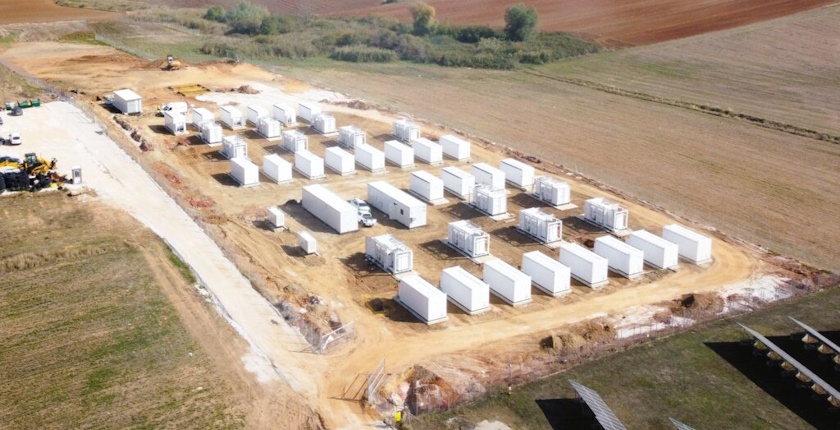
Renewable energy company SANY International (Singapore) is now the owner of a project for a solar power plant of 95 MW in peak capacity combined with 218 MWh in battery storage. The location is in Dobrești in Romania’s southwest.

Deal was signed in April

The shares transfer ceremony took place in Bucharest on October 15 in the presence of representatives of domestic developer Enero and local energy officials, the company said, as quoted by Economica.net. It is its first acquisition of such a project outside China.

SANY Singapore’s representative Xu Zhongtian signed the share purchase agreement in April. After that, the Commission for the Examination of Foreign Direct Investments (CEFDI or CEISD) approved the transaction.

Dobrești project is at ready-to-build stage

The project at a site 45 kilometers from Craiova in southwestern Romania is at a ready-to-build stage, Sany International (Singapore) revealed.

It is one of the largest hybrid projects integrating photovoltaics with a battery energy storage system (BESS) in Romania, the company added. Of note, Dolj is one of Romania’s coal regions, which are transitioning to cleaner energy sources.

“This investment reflects the growing interest in the clean energy sector in Central and Eastern Europe, in a context in which countries in the region accelerate efforts to achieve EU energy and climate targets. At the same time, SANY strengthens its strategic focus on renewable energy investments at the European level, aiming to expand its presence in fast-growing green energy markets,” the announcement reads.

SANY Group is an industrial conglomerate, established in 1989 in China. It is mostly known for construction machinery, but SANY Renewable Energy is one of the world’s biggest wind turbine manufacturers, too.
by in News

Romania’s coal town Turceni starts EUR 380 million green energy transformation

Turceni is dependent on the local coal power plant, so the municipal authority is turning to agrivoltaics, energy storage and green hydrogen to replace it. The small town in southwestern Romania is kickstarting a EUR 380 million project.

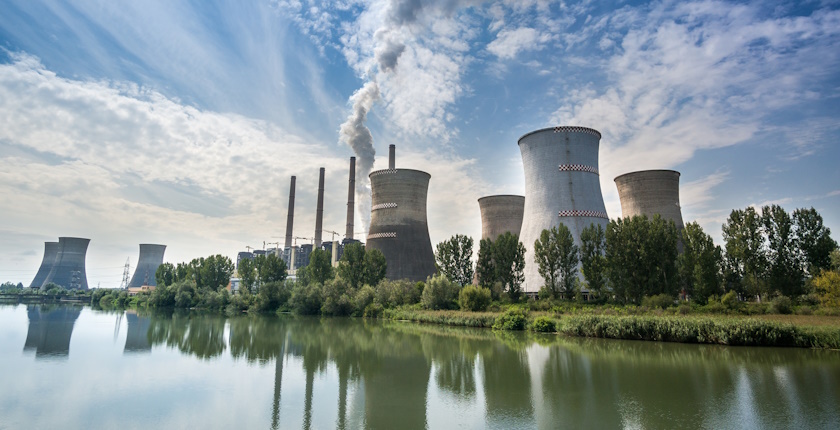
The coal plant in Turceni used to be one of the biggest in Europe, at 2.3 GW. Located next to the eponymous town in Romania’s Gorj coal region, only two units of 660 MW in total are still operational. At the same time, dozens of such facilities across Europe are shutting down ahead of schedule. The power plant and its associated mines within Complexul Energetic Turceni have been essential for the local economy, which is under threat of devastation amid the country’s coal phaseout.

As with other coal regions in the European Union, the solution is in green energy and new technologies. The town hall has signed a contract with the European Investment Bank for agrisolar parks, energy storage units and the production and storage of green hydrogen.

Turceni town hall secures municipal land for green energy projects

The project is worth a whopping EUR 380 million, Mayor Constantin Popescu revealed. Turceni and its administrative area have fewer than seven thousand inhabitants.

More than 123 hectares of municipal land (pastures) and more than 200 hectares of private land were designated for the renewable energy hub, the mayor stressed.

Bankwatch: The coal region is transitioning to a future based on innovation, sustainability and strong partnerships

Partners in the project are Bankwatch Romania and GAL Sudul Gorjului, the so-called local action group for southern Gorj. Bankwatch said over 370 hectares would be switched to clean and sustainable energy production.

“We are glad that we had an important role in developing the project plan and aligning it with European environmental policies, as well as in applying for technical assistance. For a region that has been, for decades, a pillar of coal-fired energy, this project marks a strategic transformation: a transition to a future based on innovation, sustainability and strong partnerships,” the organization added.

Investments to start in 2026

Implementation is scheduled to begin next year. The project will contribute to a just transition of the region by increasing the production of electricity from renewable energy sources, Popescu asserted. In his words, it will be complementary to the local authority’s other ongoing and future decarbonization investments.

The mayor also highlighted the plans to use geothermal energy for district heating and agriculture.

Complexul Energetic Turceni is part of state-owned Complexul Energetic Oltenia (CE Oltenia). According to the company’s restructuring and decarbonization plan, the coal business will be separated from green energy and other investments.

They include projects for CCGT (combined-cycle gas turbine) power plants of 475 MW in Turceni and 800 MW in nearby Ișalnița, as the main replacement for coal plants. Both are suffering heavy delays.

Minister of Energy Bogdan Ivan said last week that CE Oltenia’s Ișalnița coal plant in neighboring Dolj county would be closed on January 1. Romania has asked the European Commission to delay the closure of several coal plant units, scheduled for this year, until 2030.

Earlier this year, a joint venture between CE Oltenia and OMV Petrom hired contractors for four solar power plants at former coal land, with a combined capacity of about 550 MW. One of the sites is in Ișalnița.

by in News

NGEN inaugurates Austria’s most powerful battery energy storage system

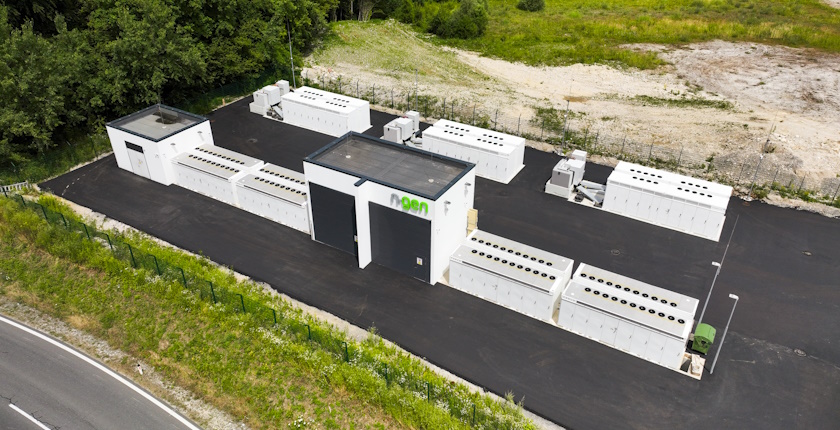
NGEN Group inaugurated its battery storage system in Austria’s Carinthia province after expanding it. At 21.9 MW in operating power and 43.8 MWh in capacity, it is again the country’s largest grid-supporting BESS.

With the official commissioning of the Arnoldstein-Gailitz battery energy storage system (BESS) in the Carinthia province, the NGEN Group has set another milestone in Austria’s energy transition. Following the completion of its second expansion phase in 2025, the facility now boasts 21.9 MW and 43.8 MWh in capacity, making it the country’s largest and most powerful grid-supporting battery storage power plant.

The project marks a significant step toward a sustainable, secure, and climate-neutral energy future and stands as a strong symbol of innovation, energy security, and technological excellence Made in Carinthia, the company stressed. NGEN is headquartered in Žirovnica in Slovenia, just across the border from Arnoldstein.

NGEN’s software contributes to grid stability, renewables deployment

NGEN Group developed the energy storage project and completed the standalone facility in 2023 as Austria’s first large-scale investment of its kind.

The company stressed that the BESS makes a crucial contribution to grid stability and the integration of renewable energy sources through its innovative software solutions. They enable peak shaving – to reduce load peaks and ease grid congestion – and the provision of balancing reserves for grid stability.

The company’s proprietary software enables trading optimization, peak shaving and balancing services

NGEN’s proprietary software also optimizes intraday and day-ahead trading on the power exchange. The Arnoldstein-Gailitz BESS enhances the security of supply by providing flexibility and helps accelerate the integration of renewables.

The company pointed out that the facility has a minimal impact on the landscape. NGEN Group offers rapid project implementation in urban environments and power supply support for charging stations, including lower electricity costs, around-the-clock availability of renewable energy and blackout resilience.

Redispatch capabilities prevent local supply bottlenecks through load flow balancing, the update adds.

Carinthia pioneering resilient, sustainable energy infrastructure

NGEN is already planning a four times larger BESS facility in Upper Austria.

“With the Arnoldstein-Gailitz battery storage power plant, we are sending a clear signal: Carinthia is becoming a pioneer of a modern, resilient, and sustainable energy infrastructure. This facility demonstrates what is possible when technology, political will, and local commitment come together. It bridges the gap between generation and consumption, makes solar energy reliably available, and ensures true energy security,” managing directors of NGEN Austria Matija Dolinar and Andreas Ljuba explained in a joint statement.

The expanded BESS underscores Carinthia’s role as a hub of innovation and demonstrates that grid-stabilizing storage technologies are decisive for the energy transition, not only in Austria but across Europe, the company said.

“Our vision is a fully digitalized and decentralized European electricity system that keeps pace with the rapid growth of renewable energy and sustainably reduces CO2 emissions,” said Chief Executive Officer and Founder of NGEN Group Roman Bernard.

Since 2019, the company has been combining its expertise in engineering, procurement and construction (EPC) services with cutting-edge storage technology and advanced energy market connectivity. NGEN Group currently employs over 200 people across nine countries, including 40 in Austria. It has an annual turnover of EUR 100 million, of which EUR 60 million in Austria.

by in News

Montenegro’s EPCG to develop floating solar, thermal batteries, high-altitude wind turbines

Montenegrin state-owned power utility Elektroprivreda Crne Gore has signed memoranda of understanding with Akuo, E2S Power AG, and wind fisher for a floating solar power plant, thermal batteries, and a pilot project for high-altitude wind turbines, respectively.

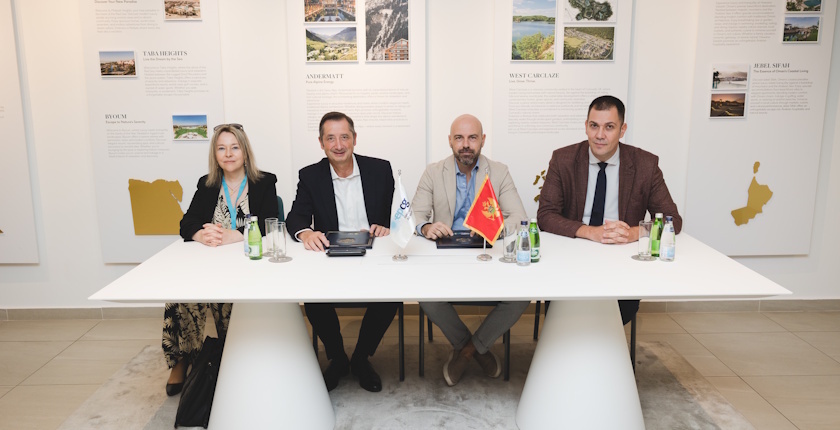
Memoranda of understanding (MoUs) were signed within the framework of the European Union – Montenegro Investment Conference. Domestic and European companies initiated 14 projects, including for wind and solar power, energy storage, and the electricity grid.

The two-day conference Smart Growth, Green Future: Accelerating Investment in Montenegro, held earlier this week in Luštica, near Tivat, was opened by European Commission President Ursula von der Leyen and Prime Minister of Montenegro Milojko Spajić.

Bulatović: We will develop three projects with Akuo

Ivan Bulatović, CEO of government-controlled Elektroprivreda Crne Gore (EPCG), told Balkan Green Energy News that the memorandum with French renewable energy company Akuo includes a 36 MW floating solar power plant on Slano lake.

The investment is estimated at EUR 60 million.

It is an innovative technology and it helps the environment by reducing water evaporation, Bulatović explained.

Scotto: Montenegro has everything it needs for the development of renewables

Another project within the deal is for a solar power plant, and the third one is for energy storage. On behalf of Akuo Energy, the memorandum was signed by CEO Eric Scotto.

He stressed that floating solar saves water and space while providing energy. Scotto revealed the possibility for the proposed onshore photovoltaic plant to be agrisolar.

Montenegro has everything it needs for the development of renewable energy sources – sun, wind and space, Scotto stressed.

Thermal batteries at TE Pljevlja

Photo: EPCG

EPCG signed its second memorandum with E2S Power AG, based in Switzerland, for the joint development, production, and application of thermal energy storage. The ceremony was attended by Montenegrin Prime Minister Milojko Spajić.

The aim of the project is to lower the domestic utility’s CO2 emissions, primarily from the Pljevlja coal power plant.

Electricity would be purchased on the market when it’s cheap, to charge the energy storage facility and later produce steam to drive the turbine and generate electricity, Bulatović explained.

He stressed that the cooperation opens up the possibility for the application of advanced technologies enabling more efficient energy use and a reduction in CO2 emissions.

Wind fisher is developing innovative high-altitude wind turbines

“Our thermal energy storage technology, TWEST, provides concrete solutions for decarbonizing thermal power plants and stabilizing power systems that are increasingly reliant on renewable sources,” E2S Power AG CEO Saša Savić said.

The memorandum with French innovative solutions firm wind fisher envisages the development of a joint pilot project for high-altitude wind turbines. Bulatović signed it with the company’s CEO Stéphane Vidaillet.

It is an innovative idea that should take off in the future, and this is a pilot project in the testing phase, Bulatović revealed.

The company, in his words, has the technology, and Montenegro has the space where it can be tested.

Photo: EPCG
by in News

Principia builds CfD-backed battery storage facility in Greece

Principia built its first battery system in just six months. The Themelio facility in Chalkidiki in northern Greece, with 49 MW in operating power, will help reduce curtailments from wind and solar power plants and contribute to grid stability.

One of the first standalone battery energy storage systems (BESS) in Greece is coming online in December. Principia said it built the Themelio facility in the Vouno area of Chalkidiki peninsula, aligned with the national plan for grid stability and electrification.

The BESS has 49 MW in capability and a two-hour duration, translating to a guaranteed capacity of 98 MWh, while the nominal capacity is 127 MWh.

Principia is an equally-owned joint venture of Italy-based Enel and funds managed by Macquarie Asset Management, headquartered in Australia. The company said the name Themelio, foundation, symbolizes the beginning of its new era, diversifying beyond renewables.

The construction of the battery system near the town of Polygyros in the Central Macedonia region began in April. It will help reduce curtailments from wind and solar plants, especially in grid-congested areas, by absorbing excess electricity and injecting it back into the system when needed, Principia explained.

The battery energy storage system features a guaranteed capacity of 98 MWh

BESS also enhances system stability by providing power during peak demand and ensuring smooth grid operation. In addition, the unit promotes energy decentralization, as it is located close to renewable energy production sites, contributing to the creation of a more flexible and intelligent energy environment, the joint venture pointed out.

Eurobank financed half of the EUR 28 million project.

The new system in northern Greece consists of 26 Sungrow battery containers, each with a maximum capacity of 5 MWh and equipped with advanced CALB 314 Ah cells. Themelio includes 13 Sungrow power stations, containing 5,140 kW transformers and 33 kV medium-voltage switchgear, as well as two medium-voltage terminal substations.

The project won government support last year, in the form of a contract for difference (CfD), in Greece’s second auction for standalone energy storage systems. Almost all other beneficiaries of the program are struggling with strict deadlines.

by in News

Renalfa IPP expands its Tenevo, Kaolinovo PV plants in Bulgaria with batteries

Vienna-based Renalfa IPP commissioned a 65 MW / 260 MWh battery energy storage system within its hybrid power plant project in Tenevo. Also in Bulgaria, the joint venture expanded its Kaolinovo solar power plant to 33 MW and added a BESS of 33 MW in operating power and 110 MWh in capacity.

One of the biggest hybrid power plants in Southeastern Europe is gradually coming together. Renalfa IPP, which last year marked the start of the BESS boom in Bulgaria, said it added a battery system of 65 MW in capability and 110 MWh in capacity to the Tenevo solar power plant.

Project firm Tenevo Solar Technologies is a joint venture with Denmark-based Eurowind Energy. Renalfa IPP, headquartered in Austria’s capital city, is itself a joint venture, established by clean energy and e-mobility company Renalfa Solarpro Group and French renewable energy infrastructure fund manager RGreen Invest.

Ultimately, the plan is to build a 250 MW wind farm at the Tenevo site, in Yambol province in Bulgaria’s southeast. The first 69 MW in peak capacity of the solar power plant came online two months ago, within a 237.6 MW project.

Tenevo BESS to grow to 315 MW

Tenevo is one of the biggest co-located BESS projects in Europe to date, according to Renalfa IPP, which added that it surpassed 1 GWh of energy storage in operation.

The firm aims to increase the battery facility to 315 MW and 760 MWh by early next year, when it expects to complete the solar park as well.

Solarpro Bulgaria builds both battery storage facilities

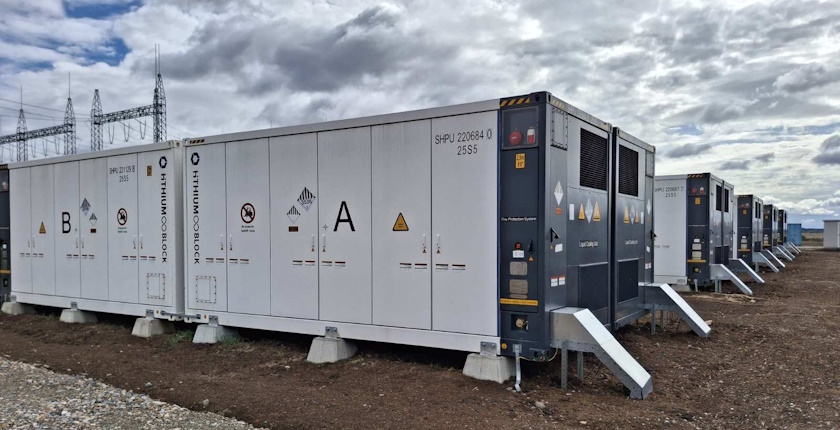
The project manager for the Tenevo BESS is Solarpro Bulgaria, part of Renalfa Solarpro Group, while Hithium and Kehua supplied the equipment. Solarpro and Hithium established cooperation two years ago and recently expanded it.

The same affiliate was the project manager and engineering, procurement and construction (EPC) contractor for the expansion of the Kaolinovo photovoltaic park in northeastern Bulgaria. Renalfa IPP said it grew to 33 MW in peak capacity from 10 MW, while a BESS of 33 MW and 110 MWh was also added. The facility was built in 2012.

Renalfa IPP is also active in Hungary, Romania, and North Macedonia, where it is about to add batteries to its Oslomej PV plant. In the last update, it said it has 554 MW in operational generating assets, BESS of 455 MW and 1.01 GWh in total, and over 1 GW of projects in late-stage development.

by in News

International Power Supply inaugurates Bulgaria’s first battery gigafactory

International Power Supply (IPS) opened its Factory X1, with a capacity of 3 GWh per year. It is the first gigafactory in Bulgaria for battery energy storage systems (BESS).

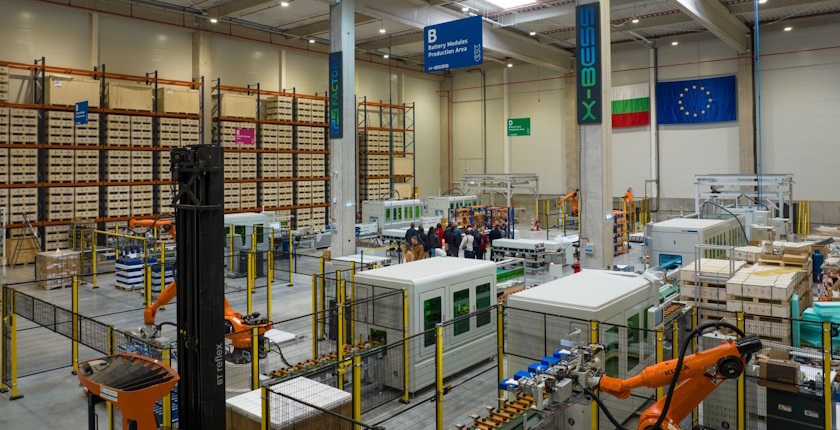
Recognized by the European Commission as a strategic project for a net zero industry, Factory X1 officially began production. International Power Supply (IPS) held the inauguration ceremony at the site in Chelopechene in the Kremikovtsi industrial district, part of the territory of Bulgaria’s capital Sofia.

The first battery energy storage gigafactory in the country is part of the Hemus high-tech industrial park. The facility will manufacture X-BESS modular systems of 8.2 MWh. Its annual capacity is 3 GW but IPS plans to lift it to 5 GW by the middle of next year.

Everything made in Europe except for battery cells

The company’s portfolio includes a proprietary battery management system (BMS). Actually, more than 70% of the supply chain is based in Europe, according to IPS. It includes distributed liquid cooling systems, mechanical structures, housings, electronics, control units, and inverters, the announcement reads.

“Made in Europe – the mission is possible. European know-how, European technology and IP, European sovereign BESS Gigafactory recognized as strategic manufacturing project from the European Commission. Today, it all starts – right here in Bulgaria,” said Chief Executive Officer Alexander Rangelov.

The lithium ion systems feature Chinese EVE and Cornex battery cells.

Power Technology Investment Group holds almost two thirds of IPS. It is controlled by the family of the founder Stoil Rangelov Trifonov. SIL Energy Invest is a minority partner.

Another factory could revive one of Bulgaria’s coal regions

Another manufacturing project is in the pipeline, worth EUR 160 million. It is for 10 GWh. IPS is seeking financial support from the European Union for the endeavor.

Locations in the vicinity of coal plants in the Maritsa East complex and Bobov Dol are under consideration, Economic.bg reported.

CEO Alexander Rangelov revealed that MM Energy decided to build a 10 GWh manufacturing facility in Poland using IPS’s technology.

by in News

North Macedonia receives applications for 4.2 GW of battery projects

North Macedonia has received requests for new wind farms, solar parks and gas power plants of 7,100 MW in total capacity, as well as for standalone batteries and ones that would be co-located with power plants, for 4,172 MW in overall operating power, Minister of Energy, Mining and Mineral Resources Sanja Božinovska revealed.

The Ministry of Energy, Mining and Mineral Resources has received an initiative for a 495 MW gas-fired cogeneration plant. Sanja Božinovska said the details are unknown as the submitted documentation is too extensive and is still being analyzed, state news agency MIA reported.

Of note, there were already proposals for gas-fired power plants in the country. The government has signed a memorandum of understanding with Kazancı Holding on projects for such facilities.

Investors intend to install standalone and co-located BESS

Investors submitted initiatives for wind farms of 1,590 MW altogether, as well as for a total of 402 MW and 1,080 MWh in battery energy storage systems (BESS) that would be co-located with wind farms.

So-called initiatives were also received for solar power projects totaling 5,052 MW and accompanying BESS of 1,174 MW in combined capability and 3,018 MWh in capacity. Investors plan to build standalone batteries of an overall 2,596 MW and 3,094 MWh, respectively.

Božinovska said it is great news, though that it’s more important whether the documentation is valid.

She recalled that the recently adopted Law on Energy introduced an annual construction plan for priority energy projects.

October 1 was the deadline for foreign investors to submit their projects

October 1 was the deadline for foreign investors interested in the construction of power plants to submit documentation, Božinovska noted. The ministry received a huge number of documents and it will take time to process them, she stressed.

Batteries became all the rage in the renewable energy sector worldwide. North Macedonia is set for a landmark achievement in its region.

YESS Power plans to commission a 60 MW BESS in the country next month. It would be the first large facility of its kind in the Western Balkans.

by in News

Karatzis, Metlen to install Greece’s largest battery in joint venture

Karatzis Group of Companies and Metlen are establishing a joint venture for a standalone battery energy storage system (BESS) of 330 MW and 790 MWh. It is the biggest project in Greece so far and one of the biggest in Europe.

Metlen said it is entering into a new strategic partnership in Greece with Karatzis Group of Companies, through a joint venture with ownership stakes of 49% and 51% respectively, for the development, construction, operation, and energy management of a BESS with 330MW in operating power and a capacity of 790 MWh. The site is in Thessaly.

The two Greek companies are building upon their cooperation in the sale and purchase of green energy. Since August 2024, it has involved the implementation of a portfolio of solar power plants with a total capacity of 262 MW in the same region, the update adds.

The partners value their BESS investment at EUR 170 million

The BESS would be the largest standalone storage unit planned to date in Greece and one of the biggest in Europe, Metlen said. Total investment amounts to some EUR 170 million.

Karatzis and Metlen expect to complete it in the second quarter of next year. The partners expect no further grants or tax reliefs for the project, according to the announcement.

Metlen is tasked with full construction, operation, and maintenance of the unit through its M Renewables segment. It has presence and projects on five continents, the company pointed out. In 2024 alone, Metlen said it completed storage projects with a total capacity of 0.7 GWh and is in the final stages of agreements for third-party projects totaling 2.2 GWh.

Karatzis, based in Crete, manufactures a variety of netting products. It has five plants. In recent years it expanded to the construction of photovoltaic plants. The Metlen conglomerate produces metals and has a vertical presence in the energy market, being one the largest producers and suppliers in Greece.

by in News

Policy changes in US will have marginal impact on global energy transition

Policy changes in the United States introduced by the administration of President Donald Trump will have only a marginal impact on the global energy transition, according to the latest Energy Transition Outlook, produced by DNV.

Norwegian consulting firm DNV pointed out in a report that energy use by artificial intelligence may seem alarming, but that it is projected to stay below booming sectors like electric vehicle (EV) charging and cooling of buildings.

“DNV’s annual Energy Transition Outlook has consistently forecast a shift from today’s 80/20 fossil/non-fossil primary energy mix to a 50/50 mix by 2050. That is still our prediction this year. Although some aspects of the transition are supercharged and progressing rapidly, other aspects have hit turbulence and are delayed. This leads to a marginally slower transition than our forecast last year,” CEO Remi Eriksen said.

According to the report, in the US, fossil fuel promotion and the reversal of clean energy support policies are slowing the nation’s transition.

However, China continues to set renewables buildout records with 390 GW of solar PV (56% share of new global capacity) and 86 GW of wind (60% share) expected to be installed this year. The country is also fueling the transition in the rest of the world with its cleantech exports.

In the meantime, Europe is seeking to balance climate action with competitiveness, the report reads.

The continent is having a slow success with harder-to-decarbonize sectors, but renewable energy buildout remains relatively strong.

In the rest of the world, most countries are embracing competitive Chinese technologies, with year-on-year growth in installations at around 25%, data showed.

Eriksen said cheap renewable electrons stored when necessary in ever-cheaper batteries are already an unstoppable force.

“We forecast that solar – both with and without storage – and wind will be 32% of the global power mix by 2030. We expect a resurgence in offshore wind by 2030, such that variable renewables will provide more than 50% of all electricity by 2040,” he stated.

Solar power is 10% of all power produced worldwide today, and DNV projected it will be 20% in 2029 and 40% in 2045. Renewables would reach 65% in the global electricity mix by 2040, the firm added.

AI’s energy demand would be lowered by efficiency effects

According to Eriksen, soaring power demand from AI data centers is placing additional strain on already congested grids, particularly in North America.

DNV ‘s analysis finds that AI’s energy demand growth is likely to become more linear over time, outpaced, for instance, by EV charging and cooling demand, even as the cognitive services of AI expand exponentially. The main reason is growing efficiency.

AI’s energy use is forecasted at only 3% of global electricity by 2040. Data center energy use will quintuple by 2040, equalling 5% of all global electricity. AI’s share would be 3%, with the remaining 2% for general purpose data centers.

The report highlighted large regional variations – AI is the biggest driver of electricity consumption growth in North America, compared to EV charging in Europe and EVs and cooling in China and India.

For the first time, this year’s analysis extends to 2060

The report noted that this year, the world reached the milestone of more than 50 million EVs on the road. Most of them, 60%, are in China, with Europe at 21%, and North America at 13%.

The point of inflection — EVs at 50% of global new passenger vehicle sales — will be reached in 2032, the report projected.

For the first time, this year’s analysis extends to 2060 to reflect the continued transformation of the energy system after 2050. The report recalled that it is now widely acknowledged that the world will not achieve net zero emissions by 2050, meaning warming would exceed 1.5 degrees Celsius.

A decarbonization of energy mix is unstoppable but too slow, setting up grave risks for future generations, Eriksen concluded.