by in News

Pexapark: PPA activity in Europe drops in first half of 2025

The number of power purchase agreements (PPAs) for renewables in Europe fell by 31% and the volume tumbled 26% in the first half of the year from the levels in the same period of 2024, Pexapark found. Germany and France registered sharp declines in the photovoltaics segment, but a surge in Italy and Spain has more than offset the drop.

The meteoric rise in deals for battery energy storage systems, BESS, is a clear sign of its maturity.

In its latest report, analytics and advisory firm Pexapark provided a detailed look into PPAs and contracts for battery energy storage systems in the first six months of 2025. It found that PPA activity shrank by more than a quarter in year-over-year terms, but not everywhere and not due to solar power.

Across 124 deals, 6.08 GW of renewable electricity capacity was contracted in the first half, which is 31% and 26% down, respectively, from the same period of 2024. Conversely, the average deal size advanced 5% to 48.2 MW.

Notably, the April-June period was much weaker than the first quarter of the year, with just 50 deals, but the volumes were almost evenly split.

The main technologies in the first half were solar power, 4.2 GW from 73 deals, onshore wind (1.4 GW and 32 PPAs), mixed technology (290 MW and nine deals) and offshore wind (134 MW and four deals). The result is proportionate to the picture from January through June 2024.

Despite concerns over saturation of demand for standalone solar, volumes have firmed. The 4.2 GW of solar capacity contracted under PPAs compares to 3.9 GW of the first half of last year. The deal count landed at 73, against 95, which is in line with the overall trend.

PPA activity in Germany plunged 84% in terms of volume

Solar offtake activity reveals a clear split in market momentum. It is slowing down in markets where cannibalization has worsened drastically and rapidly – such as Germany and France. In fact, Germany saw the largest decline in volumes – a remarkable 84% year-on-year decrease in terms of overall volumes, with 228 MW across eight deals in the last six months, versus 1.2 GW and 31 deals in last year’s equivalent.

There is stable or even upward appetite in markets which have had time to adjust to cannibalization and the lower valuation of solar production, or where cannibalization levels are still very low

Conversely, solar PPA activity in Italy and Spain spiked, more than making up for the said decline.

“These numbers support the hypothesis that there is stable, or even upward appetite in markets which have had time to adjust to cannibalization and the lower valuation of solar production – i.e., Spain, or cannibalization levels are still very low – such as Italy. Italy’s solar PPA volumes grew 184% year-on-year, with nearly an additional 700 MW procured compared to the same period last year. Corporate appetite in the country is growing, and so is deal size – with a 420 MW solar corporate deal announced in June comprising the country’s largest PPA ever recorded,” the analysis reads.

As for Southeastern Europe, OMV Petrom’s deal with Enery for their joint solar power project Gabare in Bulgaria was Europe’ third-largest PPA in June.

Flexibility monetization is opportunity for market players with right profile

In a market increasingly driven by flexibility monetization, today’s challenges – cannibalization, future capture dynamics and balancing risks – are becoming opportunities for market players with the right profile. And with corporate buyers more hesitant to pay premiums for solar, transactable prices are—perhaps for the first time in a while – closer to perceived fair value, according to the report’s authors.

Wholesale electricity prices in Sweden were negative for almost two fifths of the time in the first six months of 2025

Hourly periods with negative prices at wholesale electricity markets continued strong in the first half. Sweden maintained its top position by far, with most such events. There were 1,635 hours with negative prices from January until the end of June. It is a stunning 37.8% share of the entire period and already 63% of the tally from all last year.

The other jurisdictions that make up the top five in Europe: Finland, Germany, the Netherlands and Belgium, remained the same since 2024.

On average, European countries have already reached around 67% of the number of hours counted in 2024 as a whole. Norway hit 90%, Denmark 87% and Spain climbed to 86%, suggesting that last year’s records would fall.

Top five European markets by number of negative price hours, 2024 vs. the first half of 2025

BESS deal volumes already three times higher than in all 2024

The maturity of the BESS industry is clearly reflected in the deal count and contracted volumes over the past 18 months, with the trend increasingly pronounced in 2025.

Battery storage capacity being contracted under optimization or fixed-revenue offtake contracts (so-called floors and tolls, respectively) amounted to a total of 4.6 GW in capability and 9.2 GWh in capacity across 36 deals. It is just over three times more than in entire 2024 in both benchmarks. The deal count was 44% up from all last year.

The lion’s share of the deal count concerns BESS assets with a two-hour duration

The rapid growth was driven by a wave of new agreements in the two most advanced markets – Great Britain and Germany – alongside first-ever BESS deals emerging in Belgium, Poland, Greece, and Bulgaria. The lion’s share of the deal count concerns BESS assets with a two-hour duration, which the ratio of operating power and capacity also indicates.

Pexapark provides of price data, market intelligence, and advisory services for renewable energy. It was one of the knowledge partners at this year’s edition of Belgrade Energy Forum, organized by Balkan Green Energy News.
by in News

Bulgarian battery factory Exeron X-BESS gets EU strategic status

Bulgaria-based International Power Supply (IPS) is opening a factory for battery energy storage systems using proprietary technology. The Exeron X-BESS is one of only six strategic projects in the European Union with a designation under the Net Zero Industry Act.

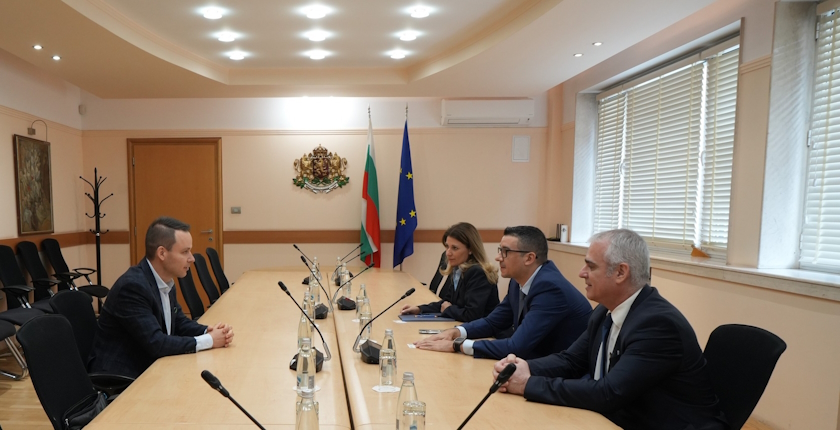
Minister of Economy and Industry of Bulgaria Petar Dilov met with Chief Executive Officer of International Power Supply (IPS) Alexander Rangelov, as the company’s investment in the production of BESS entered the EU’s public registry of strategic projects under NZIA. It is one of only six endeavors that made it to the list so far.

The Exeron X-BESS factory will put Bulgaria on the world map for the production of battery energy storage technologies, the ministry said. It is fully aligned with the NZIA goals for secure and sustainable supply of net zero emission technologies and the expansion of production capacities and supply chains, it added.

Exeron X-BESS to become key factor in EU’s clean technology chain

The government is promoting energy efficiency and the security of supply for industrial production in Bulgaria, especially in the segment of zero emission technologies, Dilov stresed. “The project is an important step towards including Bulgaria among European producers of environmental technologies and the implementation of high-tech solutions to mitigate climate change,” the minister stated.

He expressed the belief that the project would become a key factor in the clean technology chain. It is a step forward for Bulgaria’s participation in the European and global industry that is transforming the energy sector, Dilov pointed out.

The X-BESS line includes a battery management system developed by IPS

IPS has patented the entire Exeron X-BESS technology. Production should begin in the autumn. The facility is in the Hemus high-tech industrial park in Kremikovtzi (Kremikovtsi) near Sofia.

The project entails the creation of 65 jobs by the end of the year, of which a quarter would be in development and engineering. Two thirds of the employees would be technical specialists.

The majority owner of IPS, with 65.5%, is Power Technology Investment Group. It is controlled by the family of the founder Stoil Rangelov Trifonov. SIL Energy Invest has 31.5%. The Capital Investments Fund (CIFund) of the Bulgarian Development Bank holds the remaining 3%.

The company mainly uses European parts and the lithium-iron-phosphate (LFP) battery cells are from China. IPS has a proprietary battery management system (BMS) for the X-BESS line.

NZIA is fast-tracking permits for strategic projects

The NZIA designation secures a priority status at the national level for all administrative processes, faster permitting including environmental approvals, and advice on financing.

Of the six projects in the list, three are in Germany. Carbon2Business and MoReTec are for the decarbonization of a cement plant and chemicals production, respectively, while the one branded Resilience develops renewable energy technologies.

The remaining two are located in Sweden. NKT HV Cables AB is an endeavor for new electricity grid technologies including electric charging for transportation and grid digitalization solutions. The Talga Battery ANODE Refinery ONE is the only other project in the battery and energy storage segment.

by in News

Electrica sells green bonds for EUR 500 million amid record demand

Electricity supplier and distributor Electrica listed its first green bonds on the Luxembourg Stock Exchange. It was the largest issuance of its kind among Romanian companies, excluding financials.

Electrica, in which the Romanian Government controls a stake of just under 50%, issued green bonds worth up to EUR 500 million. It is using the proceeds to finance and refinance its projects, mainly for green energy production and energy storage.

The senior unsecured green bonds, maturing in five years, are now listed on the Luxembourg Stock Exchange. Admission to trading on the Bucharest Stock Exchange is estimated to take place at the beginning of August, Electrica said.

The company’s core activities are electricity distribution and supply and energy services, but it is expanding into renewables and battery storage.

Pricing reaches 2.3 percentage points above benchmark rate

Credit appraisal agency Fitch has assigned the 4.375% senior unsecured green notes a BBB- rating. It is the lowest investment grade. The projects will have a limited connection to Electrica’s 100%-owned distribution and supply subsidiaries Distribuție Energie Electrică Romania (DEER) and Electrica Furnizare, the note adds.

Electrica targets 1 GW of installed renewable energy capacity by 2030 alongside the deployment of 900 MWh of energy storage

The company’s inaugural debt securities were priced at a yield of 4.566%, according to a regulatory filing. It was 2.3 percentage points above the benchmark mid-interest rate swap. The demand from investors at the final price exceeded the supply by more than 11.5 times, marking a record oversubscription in bond issuances of Romanian companies, Electrica pointed out.

Moreover, it was the largest green bond issuance in Romania excluding financial institutions. Electrica targets 1 GW of installed capacity by 2030 alongside the deployment of 900 MWh of energy storage.

Electrica grows market capitalization by one fifth this year

Banca Comercială Română (member of Erste Group), BNP Paribas, Citi, ING, J.P. Morgan and Raiffeisen Bank International were the joint global coordinators and joint bookrunners in the transaction, while BT Capital Partners, IMI-Intesa Sanpaolo, Société Générale and UniCredit were joint bookrunners.

Electrica has EUR 1.06 billion in market capitalization. Its shares surged 21.1% since the end of last year.

by in News

Visual Fan to install BESS facility of 65 MWh for Renovatio Trading

Visual Fan will install a 65 MWh energy storage for Renovatio Trading in Toplița in Romania’s Harghita county.

The batteries market in Romania is very active these days.

The battery energy storage system  (BESS) will be built by Allview Energy, Visual Fan’s division specialized in the development of large-scale photovoltaic parks, including storage capacities.

It is the first major contract for the implementation of a power storage system, Allview said.

The contract is valued at EUR 9.2 million. It is set to be implemented in association with partners Enersec Technology and TQM Services.

The implementation period for the contract is seven months

The project includes state-of-the-art technologies in terms of batteries and energy flow control, according to Allview.

The implementation period is seven months. The deal includes all stages of the project – engineering, procurement and execution, full integration into the energy system and the successful completion and testing.

The goal is to help balance the national grid and accelerate the integration of green energy into daily consumption, Allview added.

“The signing of this contract marks a defining moment in Visual Fan’s development journey, reflecting the company’s strategic maturity and the market’s growing confidence in our skills. Since the end of 2024 and the beginning of 2025, the company has entered a new stage of consolidation and expansion, by attracting major projects, which validate the management’s strategic vision, the team’s expertise and the ability to implement complex solutions on a large scale,” said Christina Munteanu, Economic Director of Visual Fan.

Peticilă: Thec ontract is a confirmation of the active role that Visual Fan has in Romania’s energy future

According to Visual Fan CEO Lucian Peticilă, the signing of the contract is a confirmation of the company’s strategic vision and the active role it has in Romania’s energy future.

Visual Fan is happy to build this path together with Renovatio Trading, guided by the same vision: a clean, balanced and sustainable energy future for Romania, he added.

Of note, a few days ago the National Energy Regulatory Authority of Romania (ANRE) approved a regulation eliminating double taxation of energy storage, to accelerate the deployment of solutions for storing electricity.

by in News

Solar beats nuclear in June, becoming EU’s biggest electricity source for first time

Solar became the EU’s largest source of electricity for the first time in June 2025. National records for both photovoltaics and wind rolled in in May and June, pushing coal to an all-time low.

Solar was the largest source of electricity in the European Union for the first time last month, with multiple countries producing record amounts of solar power, Ember found. Wind power achieved the highest ever generation for the months of May and June, the think tank said.

Solar power generated 22.1% of EU electricity (45.4 TWh) in June, more than any other power source. It was a year-over-year increase of 22%. In second place was nuclear, with 21.8% (44.7 TWh), followed by wind, with 15.8% (32.4 TWh).

The big opportunity now comes from adding battery storage and flexibility to extend the use of renewable power into mornings and evenings, where fossil fuels still set high power prices, according to Ember’s Senior Energy analyst Chris Rosslowe.

At least thirteen EU countries set monthly solar records

At least thirteen countries recorded their highest-ever month of solar generation, amid an ongoing surge in photovoltaic installations. Among them were Bulgaria, Croatia, Greece, Slovenia and Romania, all the EU countries in the region that Balkan Green Energy News is focused on except Cyprus, for which there was no data for June.

Wind power reached an all-time high shares of 16.6% (33.7 TWh) and 15.8% (32.4 TWh) in May and June, respectively

Strong photovoltaic output helped the power system to handle higher levels of demand resulting from heatwaves that gripped the continent towards the end of the month, according to the report.

Wind farms generated 16.6% (33.7 TWh) and 15.8% (32.4 TWh) of EU electricity in May and June, respectively. It was an all-time high for both months. Notably, at the start of the year, wind conditions were relatively poor. They improved, and they were the main driver, though capacity has been continuously growing over the past year. Several large offshore wind farms were commissioned.

Coal falls to record low

As a result of high renewables generation in June, coal had the lowest-ever share of EU electricity. Total fossil generation was also low, but it grew in the entire first half of the year on an annual basis.

Coal generated just 6.1% (12.6 TWh) of EU electricity in June, down from the 8.8% registered in the same month of last year.

The two countries that account for the vast majority of EU coal power (79% in June) both saw record lows in June. Namely, Germany generated just 12.4% (4.8 TWh) of its power from coal, and Poland 42.9% (5.1 TWh). Four other countries recorded their lowest-ever month of coal generation in June: Czechia (17.9%), Bulgaria (16.7%), Denmark (3.3%) and Spain (0.6%), which is approaching its coal phaseout.

Fossil fuels generated 23.6% (48.5 TWh) of EU electricity in June, just above the record low of 22.9% in May 2024. Nevertheless, fossil generation in the first half of 2025 was 13% higher (by 45.7 TWh) than in the first half of 2024, mainly due to a jump in gas generation by 19% or 35.5 TWh. Lower hydropower (due to drought) and wind generation than last year, and increasing demand marked the period.

Electricity demand continued on an upward trajectory. In the first half of 2025, the EU consumed 1.31 PWh of electricity or 2.2% more than in the same period of last year.

by in News

Germany, Netherlands emerging as BESS optimization, offtake deal hotspots

The BESS dealmaking landscape in Europe has evolved dramatically over the past four to five years, driven by diminishing battery pack costs and the emergence of stackable revenue streams in mature markets, Pexapark said in a new brief. Germany and Netherlands have emerged as hotspots for optimization and offtake, after Great Britain’s convincing lead for several years.

Navigating the fast-paced battery energy storage system (BESS) optimization market is a new challenge for the industry, given the growing number of players, the lack of standardization, and the speed of contractual innovation, Pexapark said in its BESS Brief. To support market participants, the firm has launched the BESS Deal Tracker, which captures the vast majority of publicly disclosed optimisation and offtake deals across European markets.

The first optimization agreements emerged five to six years ago in Great Britain – the maiden European country to develop an advanced utility-scale BESS market. Of note, the electricity systems of Great Britain and Northern Ireland are separate.

Spurred by multiple revenue stacking opportunities available to BESS – from the dynamic frequency response product suite to wholesale arbitrage, the balancing mechanism, imbalance, and inertia services – Great Britain has led the way in deal activity. As of May 26, it accounted for nearly 45% of contracted capability, with almost 2.7 GW signed and 35 out of 63 deals captured by the said Deal Tracker.

Austria, Denmark, Greece, Bulgaria join market with first deals

However, driven by strong fundamentals and a sheer need for flexibility, Germany is emerging as a dealmaking hotspot. In the first five months of 2025 alone, 11 BESS deals were announced in Germany, totaling 540 MWh.

“With ancillary services defying saturation predictions, and new revenue streams – such as inertia – coming up, we expect continued momentum in Europe’s largest and most liquid power market. That said, the German optimisation market is still at an early development stage. Lenders are not yet fully comfortable, and most deals have been merchant-based and short-term,” said the brief’s author and the organization’s Senior Analyst and BESS Lead Apostolis Valassas.

Beyond GB and Germany, the Netherlands stands out with four large-scale agreements announced in the past year. In another sign of the market’s move out of infancy, several markets – including Austria, Denmark, Greece and Bulgaria – recently recorded their first-ever BESS optimisation deals.

Evolving BESS duration, size

Most BESS offtake deals announced in 2020-2022 were predominantly for one-hour assets in Great Britain. At the time, frequency response – where shorter-duration batteries excel – dominated the revenue stack and shaped asset design.

A lot has changed since then. Rising wholesale market volatility driven by increasing renewable penetration, the decline in required capital expenditures (capex), and ongoing improvements in battery energy density have driven a transition toward longer-duration systems.

More megawatts were contracted in the first five months of this year than in 2024 in total

Indeed, the average battery duration in deals tracked by Pexapark has increased from just one hour in 2020 to 2.3 hours in 2025, signalling a broader strategic shift from solely focusing on ancillaries to trading across the whole stack.

Deal sizes are also growing exponentially, from an average 75 MW across 20 deals with disclosed operating power in 2024 to 138 MW across 24 deals in 2025, as of May. It is again a function of falling capex requirements, the strategies to deploy more megawatts to capture multi-market value, and growing lender appetite to finance larger-scale BESS assets, according to the report.

Pexapark, which provides of price data, market intelligence, and advisory services for renewable energy, was one of the knowledge partners at this year’s edition of Belgrade Energy Forum, organized by Balkan Green Energy News.
by in News

Heatwave strains European grid, brings profit to energy storage operators

Record solar power production, backed by yet insufficient energy storage capacity, helped maintain the stability of the electricity system in Europe during the latest heatwave, Ember said. Many nuclear and other thermal power plants reduced their activity as river water temperature wasn’t low enough for efficient cooling. Intraday price spreads at European power exchanges landed a windfall for owners of battery energy storage systems and pumped storage hydropower plants.

The heatwave since late June has caused stress for European power systems, driving electricity demand and doubling daily power prices. Yet grids remained stable, fueled by record volumes of solar, think tank Ember pointed out in a report.

Outside temperatures jumped to more than 40 degrees Celsius, triggering an increase in electricity demand as the use of air conditioners soared. Outages in nuclear and thermal power plants exacerbated the challenges.

Daily electricity demand on July 1 was by up to 6% higher in Germany, 9% in France and 14% in Spain than on June 24. As for peak demand, it jumped by 12% in France, 15% in Spain, and 5% in Germany and Poland.

A bigger electricity price spread within one day means higher income for operators of battery energy storage systems

The average daily price surged 15% in Spain, 106% in Poland, 108% in France and 175% in Germany.

“Despite the huge pressure, European grids passed the stress test, and solar electricity played a major role in keeping them running. The surplus of solar energy during the day helped prevent blackouts. However, the use of energy storage is still insufficient, leading to reduced energy supply after sunset. This translated into a sharp increase in electricity prices,” said Ember’s Europe Programme Director Paweł Czyżak.

Record EU solar generation helps keep power supply stable

June saw the highest solar generation on record in the European Union – 45 TWh, which kept the grid well-supplied during daytime hours. The result was 22% up from one year before.

“Heatwaves will not go away – they will only get more severe in the future. Solutions that can help mitigate their impacts, such as battery storage, interconnection, demand flexibility and dynamic tariffs, should become a key part of grid planning and power market design,” Czyżak added. The biggest opportunity is to store solar electricity, to help power air conditioning well into the evening, he stressed.

Outages limited but still posing concern

The overheating of cables is the likely cause of power outages in Italy on July 1. With rising air and water temperatures, the cooling of thermal power plants becomes more challenging as well. It led to forced reductions in electricity generation from nuclear power plants in France and Switzerland.

The French nuclear fleet has been impacted the most, with all but one of the 18 facilities experiencing some type of capacity reduction. According to the update, up to 15% of the capacity may have been impacted.

A blackout of several hours struck large parts of the Czech Republic including Prague on July 4. However, the authorities only blamed it on a transmission cable in the country’s northwest falling, and the resulting domino effect. Notably, the air temperature was much lower than in previous days.

Sun brings power alongside heat

In the peak days of the heatwave in Germany, solar delivered 50 GW and even more, generating 33% to 39% of Germany’s electricity. The country hosts 14 GW of battery energy storage systems (BESS) and 10 GW of pumped storage, which partly bridged the gap between the peaks of production and consumption.

The rallies in electricity prices in the evenings are getting passed on to consumers, so using air conditioners gets more expensive upon sunset. It is a business case for clean flexibility solutions. Due to a high supply of solar electricity during the day, and a cooling-related demand peak in the late afternoon hours, the daily electricity price spreads skyrocketed.

The spread in Poland in the day-ahead segment almost reached EUR 500 per MWh on July 1. Namely, the daily low was EUR 21.04 per MWh below zero, and the peak amounted to EUR 471 per MWh. In Germany, the benchmark went from EUR 0.16 per MWh in negative territory to EUR 404.91 per MWh.

Storage assets charge at low prices and discharge during peak time, reducing the need for costly imported fossil fuels in the evening, and supporting the balancing of the grid, the analysts underscored.

Interconnection played a role as well. The heatwave peaked in different countries on different days, so interconnectors moved electricity to where it was needed most, dissipating the price peaks in the process.

by in News

Foreign renewable energy investors remain committed to Romania as large plants coming online

Renewable energy companies from abroad aren’t intimidated by negative power prices in Romania, especially with the battery storage segment accelerating. Energy giants EDP Renewables and Engie have new solar power plants, and more renewable energy facilities are coming online, while the government is disbursing European grants.

The renewable energy market in Greece is consolidating and a number of foreign investors are leaving, but some other countries in the region that Balkan Green Energy News tracks remain attractive, especially Romania and Turkey. Big names from abroad keep coming, and the established ones are commissioning facilities and committing to more projects.

Like elsewhere in Europe and beyond, the increasing occurrence of low, zero and negative power prices are impacting the sentiment in Romania. But funding from the European Union, the government’s administrative support, renewable energy auctions and bets on battery storage seemingly outweigh the current risks.

EDPR’s new photovoltaic park Albina will generate 67 GWh per year

EDP Renewables (EDPR), subsidiary of Portuguese energy giant EDP, recently inaugurated its Albina photovoltaic plant. Located in western Romania, just outside of the city of Timisoara, the renewable energy unit came online late last year.

Albina has 60 MW in peak capacity and a 48.8 MW grid connection. The company expects it to generate 67 GWh per year. EDP said that with the new plant it reinforces its commitment to Romania. It operates wind and solar power plants in the country of over 570 MW in combined capacity.

Engie praises renewable energy potential in Romania

Engie Romania commissioned the sixth photovoltaic park in its portfolio. It is located in the commune of Ariceștii Rahtivani in Prahova county. Together with the new facility, of 37.2 MW in peak capacity, French Engie’s branch in Romania now has 248 MW in renewable energy in operation.

The site covers ​​57 hectares. Estimated annual output is 57 GWh. The firm owns three wind farms of 178 MW in total while its six PV systems have 70.3 MW in overall peak capacity. Last year it built one of the first hybrid power plants in the country.

Engie Romania said the new plant strengthened its position and praised the country’s “significant potential” in the renewable energy segment. The firm targets 1 GW in the country by 2030. It also distributes natural gas and supplies both gas and electricity, and offers energy services.

Rezolv building one of largest wind power plants in Europe

The Vifor wind farm in Buzău county, northeast of Bucharest, is almost half done. Rezolv Energy plans to finish it in 2027. The first phase is for 192 MW, with a planned expansion to a colossal 461 MW.

The company purchased Vestas turbines for the wind park, which is set to become the largest in Europe and the second-largest in Romania. The developer won a fixed electricity price for 15 years in the form of a contract for difference at the country’s renewable energy auction. The wind power plant will also benefit from a power purchase agreement (PPA).

Wind farm of 99.2 MW Galaţi in to launch operations next year

OX2 is building the Green Breeze wind farm, delivering the project as a turnkey construction project for the investor, Nala Renewables. The project involves 16 Vestas V162-6.2 MW turbines, or 99.2 MW altogether. Annual production at the future wind power plant in Galaţi in the eastern part of the country is 312 GWh, according to the estimate.

The facility is on schedule for the start of operations in the first half of next year. Together with Green Breeze, OX2 is working on 620 MW in five wind power projects. The Swedish company has said it intends to grow and diversify in the country.

Enery from Austria lining up renewable electricity plants in Romania

Romania-based Enevo announced that it started building a solar park of 54.2 MW in peak capacity for Enery Development.

Also in Dâmbovița county, Enery Element, the joint venture of the Austrian company with Element Power Group, has a project for a battery-backed PV park.

Total investment is some EUR 27.5 million, of which EUR 2.4 million is from the EU’s Modernisation Fund. The solar power component is 74 MW and the battery energy storage system (BESS) would provide 10.2 MWh in capacity. The location, formally run by project firm Gura Solar Plant, is in the Gura Ocniței commune.

Ecoener, headquartered in Spain, is developing an agrivoltaic project of 11 MW

A Spanish group with an annual turnover of almost EUR 100 million wants to build the first agrisolar park in Iași county, in the commune of Țibănești. Solar panels of 11 MW in total peak capacity would be placed 1.5 meters above ground. The investor, Ecoener, established a Romanian subsidiary for the endeavor: Ecoener Țibănești.

Greece’s PPC turning its wind, PV facilities into hybrid power plants with battery storage

Greek state-controlled Public Power Corp. (PPC) is developing a BESS investment through its firm Sun Challenge, which operates the Lumina solar power project in Călugăreni, Giurgiu county. The PV facility of 63 MW in peak capacity has been online for two years now. Lumina is PPC Renewables’ largest solar power unit in Romania.

It is one in a string of the Greek company’s energy storage projects. PPC plans BESS at its wind farms Topolog (27 MWh), Corugea (80 MWh) and Sălbatica (60 MWh) in Tulcea county. It slated another 120 MWh in total storage capacity at wind power plants Nicolae Bălcescu and Târgușor in Constanța county.

PPC operates wind, photovoltaic and hydropower capacity in Romania of 1.3 GW overall

The Fântânele-Cogealac-Gradina wind farm, which PPC took over from Macquarie Asset Management, already includes a BESS facility. The 600 MW facility is the largest in Romania of its kind.

In Prahova, PPC Renewables Romania plans a 10 MWh storage system at the Berceni 1 photovoltaic park, with an installed capacity of 9.8 MW. Another storage system, of 8 MWh, would be integrated with the Colibași photovoltaic park (7 MW) in Giurgiu county.

PPC operates wind, photovoltaic and hydropower capacity in Romania of 1.3 GW overall.

Turkey-based YEO Technologies, Danish company Eurowind Energy and Solarpro, a contractor from neighboring Bulgaria, all have new investment updates, too.

by in News

EU’s Modernisation Fund disburses EUR 3.66 billion for clean energy projects in nine countries

Energy modernization projects in nine member states of the European Union will receive a total of EUR 3.66 billion from the Modernisation Fund, in the largest disbursement to date from the facility financed by carbon pricing revenues, according to a press release from the European Commission. The selected projects focus on renewable energy, grid upgrades, energy storage, and energy efficiency.

The largest beneficiary of the latest disbursement is Poland, which will receive EUR 1.33 billion for its projects, followed by the Czech Republic, with EUR 1.05 billion, and Romania, with EUR 712.3 million. Hungary will get EUR 181.3 million, Croatia EUR 170 million, and Greece EUR 113.6 million. The rest will go to Latvia (EUR 40 million), Lithuania (EUR 37 million), and Slovenia (EUR 19.7 million).

Croatia will finance renewable heat production and zero-emission transportation, and Slovenia will upgrade power grid to integrate renewables

In Croatia, EUR 80 million will be used for the production and use of heat from renewable energy sources and energy efficiency improvement in heating and cooling systems. The rest will go to investments in zero-emission transportation. In Slovenia, the funding will facilitate renewables integration through the modernization and development of the electricity transmission and distribution network.

Greece, which became a Modernisation Fund beneficiary in January 2024, intends to replace urban diesel buses with new electric buses, improve energy efficiency in municipal swimming pools, and switch the heating and cooling systems in its greenhouse infrastructure to renewables.

In Romania, the funding will help improve the energy efficiency of facilities covered by the European Union’s Emissions Trading System (EU ETS), support the contract-for-difference (CfD) scheme for onshore wind and solar, and finance the installation of solar and wind power plants for self-consumption in the agricultural and food sectors and public institutions. It is also intended for investments in new solar, wind, and hydropower capacities and to support the modernization and rehabilitation of the district heating network.

In the Czech Republic and Lihtuania, the funding will support energy storage projects

Other example projects include investments in storage capacity for renewable electricity in the Czech Republic, investments in large-scale energy storage capacities in Lithuania, and a clean air program in Poland that focuses on energy efficiency improvements and heat source replacements in single-family houses, according to the press release.

The investments will reduce greenhouse gas emissions in the energy, industry, and transportation sectors, improve energy efficiency, and help the beneficiary states meet climate and energy targets, the commission said.

The projects will also help improve people’s everyday lives, by reducing bills, improving public services, creating jobs, and making the energy transition real, fair, and beneficial for all, according to Teresa Ribera, the European Commission’s Executive Vice-President for Clean, Just and Competitive Transition.

With this latest round of funding, the total disbursements from the Modernisation Fund since January 2021 have climbed to EUR 19.1 billion. The fund is financed by revenues from the auctioning of emission allowances under the EU ETS.

by in News

Project underway for 99 MW Bokšić solar plant with battery storage

The Croatian Ministry of Environmental Protection and Green Transition has initiated a procedure to determine the need for an environmental impact assessment for the planned 99 MW solar power project Bokšić, which includes a battery energy storage system.

The annual electricity production of the Bokšić solar power plant is estimated at just under 120 GWh. The facility, with a planned connection power of 89 MW, would be connected to the grid through a new 110/33 kV transformer station, and then to the existing 110 kV Našice-Slatina transmission line.

The annual electricity output is estimated at just under 120 GWh

The project also includes a battery energy storage system (BESS), according to the environmental impact assessment report prepared in February and updated in June. It would be designed for an operating power of 38 MW and a capacity of 70.8 MWh, with an expected lifespan of 20 years.

Solar power plant Bokšić will have a 70.8 MWh battery system

The assessment procedure is necessary because the developer, Zagreb-based Funicula, intends to build a stand-alone photovoltaic plant, according to the ministry. The project’s site is near Bokšić, in the Đurđenovac municipality in Osijek-Baranja County.

The solar power plant is planned to occupy ​​about 123.8 hectares of land, with photovoltaic panels covering about 46 hectares. The site will be enclosed by a protective masonry fence up to two meters high, raised at least 15 centimeters above the ground to allow small animals to pass underneath, according to the ministry.

Bokšić is among the largest solar projects in Croatia

Few solar projects in Croatia are for a larger capacity than Bokšić. State power utility Hrvatska elektroprivreda (HEP) is working on the Korlat endeavor, also of 99 MW. At an auction last year, two major solar power projects were awarded market premiums – Promina, with a planned installed capacity of around 189 MW, developed by Spain-based Acciona Energia, and Obrovac Sinjski, for 144 MW, to be built by Aurelis Solis.