by in News

First part of Tenevo PV plant comes online, batteries are under construction

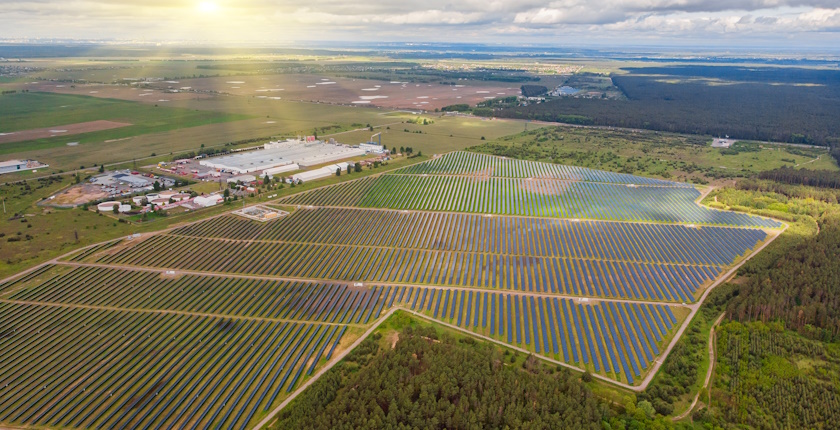
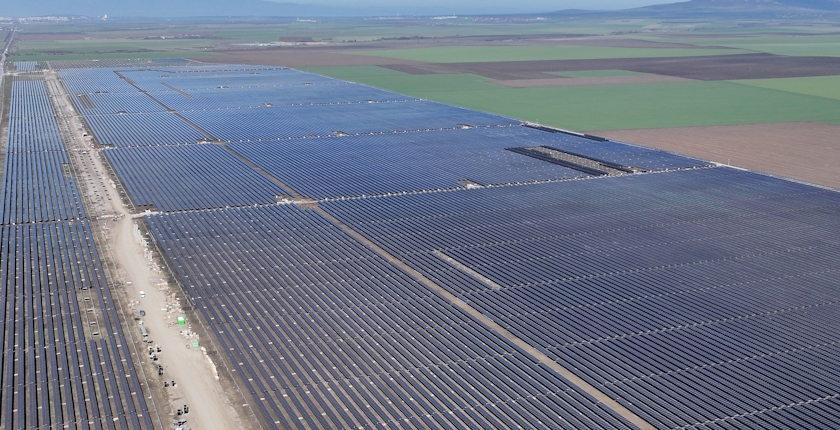
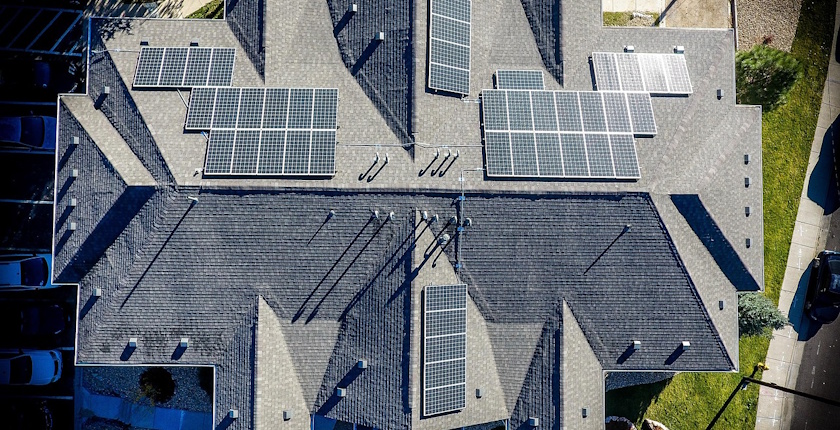
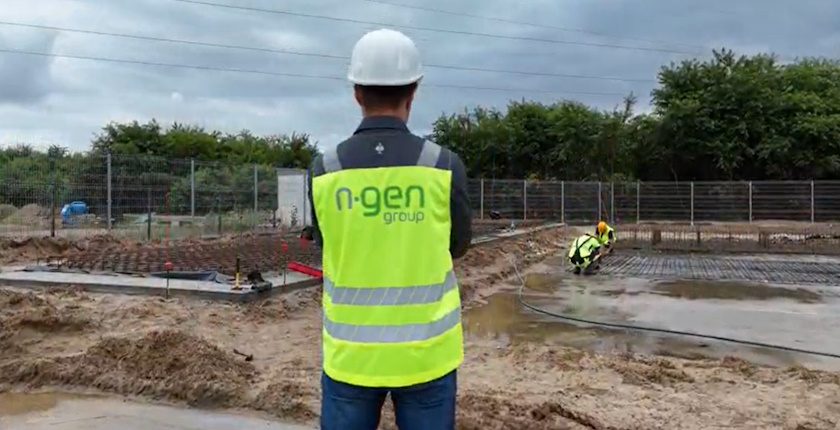
The largest hybrid power plant in Bulgaria is beginning to take shape – a joint venture of Eurowind Energy and Renalfa IPP commissioned the first segment of a solar park, and it is building a battery energy storage system (BESS). The Tenevo facility is planned to include a wind power plant as well.

Almost two years after the start of construction, a solar park in Yambol province in southeastern Bulgaria is now producing electricity. It has 69 MW in peak capacity. Project firm Tenevo Solar Technologies has a task to expand it to 237.6 MW, making it one of the biggest photovoltaic systems in the country.

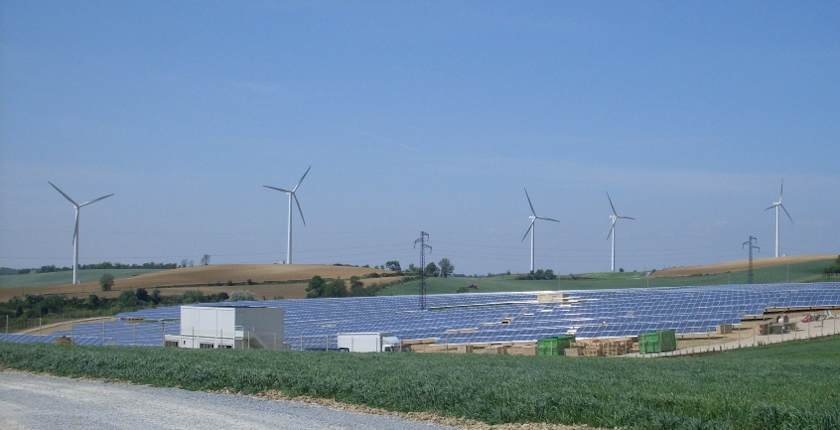
Together with a battery system, of 315 MW in operating power and 760 MWh in capacity, and the planned wind farm of 250 MW, it would be the largest and most complex hybrid power plant in Bulgaria. At this moment, it would also be the first such green energy facility that doesn’t consist only of photovoltaics and batteries. The BESS part alone would probably be the biggest in Europe.

Tenevo will likely become the biggest hybrid power plant in Bulgaria and the first one with an additional source besides solar power and BESS

Tenevo operates under Eura IPP, incorporated in Bulgaria. It is an equally owned joint venture of Renalfa IPP and Eurowind Energy. The former of the two is itself a JV, founded by Vienna-based clean energy and e-mobility company Renalfa Solarpro Group, and French renewable energy infrastructure fund manager RGreen Invest.

Renalfa IPP said it has more than 650 MW in operation, over 1 GW of projects in late-stage development and a project pipeline of more than 3 GW. The company is active in Poland, Hungary, Romania, Bulgaria, and North Macedonia.

Eurowind Energy is a Danish investment and project development company in the field of renewable energy and an independent power producer. It has a global portfolio of over 60 GW, of which 1.3 GW in operation.

Second phase of Tenevo PV park to come online early next year

Together with the solar power plant, the 400 kV grid connection system started operating. The second phase of the Tenevo PV park will be put into operation in early 2026, as some of the panels were damaged by the extremely intense hailstorm in May, according to the update.

The BESS facility is under construction, Renalfa IPP revealed. EURA IPP secured a 320 MW connection to the transmission network, of which up to 213.7 MW is for the solar farm.

Raiffeisen, EBRD are main creditors

The European Bank for Reconstruction and Development (EBRD) has committed a senior secured loan of up to EUR 50 million. It includes a full or partial cover by a first loss guarantee under the EBRD InvestEU Framework, the lender’s first in Bulgaria. It valued the project at EUR 158.4 million.

Raiffeisen Bank International provided a financing facility of EUR 53 million.

The entire solar power segment of the hybrid power plant is expected to generate 332 GWh per year. The PV panels are equipped with single-axis trackers, allowing them to turn toward the sun, which boosts efficiency.

Tenevo is on the site of a former airport near an eponymous village in the municipality of Tundzha.
by in News

100,000 home batteries in California act as 500 MW power plant

More than 100,000 aggregated home batteries have recently supplied power at over 500 MW to California’s electricity system in a virtual power plant event covered by a new analysis.

The test virtual power plant (VPP) event occurred on July 29, and Brattle produced the analysis. The consultancy’s experts studied the data from the operation, called by several aggregators in California.

Residential batteries provided over 500 MW of capacity to the California power system during the event, according to Brattle.

Founder of GoPowerEV John Reister wrote on LinkedIn that 100,000 home batteries operated like a mid-sized power plant.

“On July 29, California aggregated more than 100,000 residential batteries and discharged them for two hours during the evening peak. The result: 535 MW of coordinated output, comparable to a gas peaker plant, but distributed across rooftops instead of built on a single plot of land,” Reister’s post reads.

GoPowerEV specializes in electric vehicle charging systems for multi-family apartments.

The aggregators have discharged their portfolio of batteries between 7 and 9 pm

According to the presentation on initial findings prepared by Brattle’s experts, several VPP aggregators in California discharged their portfolio of batteries between 7 and 9 pm, with an average output of 535 MW.

The aggregators conducted the event to assess the performance capability of their battery fleet heading into California’s summer peak season, when VPP grid services will be needed most.

The participants accounted for a diverse mix of battery manufacturers, aggregators, VPP programs, and geographic locations. In general, Sunrun was the largest aggregator, Tesla was the largest original equipment manufacturer, and most of the batteries were enrolled in California’s Demand-Side Grid Support (DSGS) program, the presentation reads.

Consistent supply from batteries throughout the event’s duration

The authors underlined that the batteries’ performance during the event demonstrates a significant departure from their status quo operations. It means that most of the 535 MW of battery output was additive; it would not have occurred without calling an event.

They also pointed to a relatively consistent output from the batteries throughout the event’s duration.

On peak days, using VPPs to serve CAISO’s net peak could reduce the need to invest in new generation capacity and relieve strain on the system associated with the evening load ramp, the authors added.

In their words, the batteries could help to mitigate some of the challenges associated with California’s so-called duck curve.

California Independent System Operator, or CAISO, is California’s transmission system operator.

by in News

NGEN Group launches 9.4 MW battery project in Poland; more large-scale investments underway

NGEN Group, a high-tech company with a strong focus on innovation in the energy sector, particularly in the management and construction of battery storage systems, announced that it has launched an energy storage project in Poland. The initiative marks a significant step in the company’s expansion into the Polish market, where it leverages cutting-edge technology to support the country’s transition to a more sustainable and resilient energy infrastructure.

NGEN Group said it plans to undertake several similar projects across Europe in the coming year, including the development of battery systems with a total capacity of up to 1.6 GWh in countries such as Germany, Italy, Portugal, Poland, Croatia, and Austria.

The new battery energy storage system (BESS) will have a power capacity of 9.4 MW and an energy capacity of 18.8 MWh. Powered by Tesla Megapack 2XL technology, the system is designed to provide critical grid balancing services for Poland’s energy system, enhancing network flexibility and stability.

Significant environmental benefits

Beyond these operational benefits, the project is expected to deliver a significant environmental impact, saving approximately 1,800 tons of CO2 emissions annually. This aligns with broader trends in Poland.

“We are thrilled to introduce this advanced energy storage solution in Poland, which is fully aligned with our mission: ‘We are accelerating the green transition with innovative and sustainable energy solutions.’ This drives the next generation of sustainable energy,” said Roman Bernard, co-founder and CEO of NGEN Group. “By integrating Tesla Megapack technology, we are not only strengthening the reliability of the national grid but also contributing to Poland’s ambitious goals for renewable energy integration and carbon emission reduction.”

The project highlights NGEN Group’s expertise in delivering tailored, comprehensive energy solutions for businesses and energy services. As Poland continues to expand its renewable energy portfolio, initiatives like this battery storage system will play a crucial role in managing the intermittency of sources such as wind and solar, ensuring a stable electricity supply, and reducing reliance on fossil fuels.

NGEN is expanding its model across Europe

The company has already successfully collaborated on projects such as the development of a battery system for Uniper in Germany, and it aims to expand this model across Europe.

Based in Slovenia, NGEN Group, meaning Next Generation, specializes in innovative energy solutions, management, and construction of battery storage systems with intelligent balancing group management systems.

The company employs approximately 165 experts, develops proprietary software solutions, and offers customized services to promote sustainable energy practices across Europe. Its vision is a fully digitized and decentralized European energy system that keeps pace with the rapid growth of renewable energy and societal electrification.

NGEN was the technology sponsor this year of Belgrade Energy Forum, an annual conference organized by Balkan Green Energy News.

by in News

Bulgaria on track to add 1.5 GW of solar power by mid-2026

The pace of large photovoltaic projects in Bulgaria indicates that total capacity can reach 6 GW by the middle of next year. The expansion isn’t slowing down.

Investors in large solar power plants in Bulgaria don’t seem intimidated by zero and negative wholesale electricity prices eating away at their revenues. One of the factors is a surge in the construction of battery energy storage systems (BESS), which iron out the gap between intraday peak production and the power demand curve. In a new analysis, Capital.bg estimated that the country’s photovoltaic capacity is set to increase by 1.5 GW by the end of the first half of next year, only accounting for big projects.

The total would reach 6 GW. The report lists 14 projects, of which some are benefitting from BESS grants from one of Bulgaria’s past tenders.

Chinese group building largest current PV project

The biggest solar park under construction is Simeonovgrad-Polyanovo, consisting of two units of 250 MW in total. It is located in the Haskovo region in the southern part of the country.

United Energy Group bought the two projects last year. It it the first significant Chinese investment in Bulgaria, the article reads. The PV plant is expected to be put into operation early next year.

The construction of the first phase of the Tenevo hybrid power plant began almost two years ago

Next on the list is Tenevo. Almost two years ago, Eurowind Energy and Renalfa IPP marked the start of the construction of the solar segment of a hybrid power plant near Yambol. The PV park is envisaged with 237.6 MW in peak capacity and a 213.7 MW grid connection.

The largest solar power plant in Bulgaria is called Apriltsi.

St. George coming online before year-end

Czech company Rezolv Energy bought the St. George project for 229 MW two years ago and broke ground at the construction site last autumn. According to the latest data, the investment is worth almost BGN 1 billion (EUR 511 million) and it is coming online by the end of the year. The developer secured a 199 MW connection.

Greek government-controlled utility Public Power Corp. (PPC) is commissionning its Colosseum (Kolizeum) facility of 165 MW in the coming months, the update reveals. The project in Chirpan has an approved network connection of 120 MW. The company is planning to add batteries of 25 MW in capability and a capacity of 55 MWh.

The company is also building an 88 MW in Vedrare near Plovdiv. The contractor for the facility in the municipality of Karlovo is Chint Green Energy of the Chint Group. The power plant is on track to become operational early next year.

A 123 MW system will be on 400 hectares between the villages of Knizhovnik and Dolno Vojvodino in Haskovo. Austria-based Enery said it would install a BESS of 180 MWh next to its solar park.

Electrohold is testing its Maglizh PV plant, the article adds. The project for 100 MW occupies 127 hectares and the estimated investment is almost EUR 90 million. The plan was changed along the way.

Top Energy Solutions has a construction permit for its Loznitsa project in northeastern Bulgaria. The project is for a peak capacity of 115 MW and a grid connection of 99.99 MW, spanning 82.4 hectares. It is located at the villages of Vesselina and Kamenar in the Loznitsa municipality, Razgrad district.

by in News

Bulgaria preparing more BESS subsidies amid boom in construction of large facilities

The Ministry of Energy of Bulgaria is reportedly working on a public call for EUR 120 million in state aid for investments in battery energy storage systems of 1.5 GWh overall. Many projects have been stuck since the European Union suspended funding, but major deals are underway nevertheless, alongside the construction of large facilities.

Bulgaria has managed to renegotiate the terms of the National Recovery and Resilience Plan (NNRP) with the European Commission, allocating another EUR 120 million for support for battery energy storage systems (BESS). Instead of awarding the grants to the projects that didn’t meet the quota in the National Infrastructure for Storage of Electricity from Renewable Sources (RESTORE) call for standalone facilities, the Ministry of Energy is preparing a separate competitive procedure, Kapital reported.

The EUR 120 million is apparently intended for supporting 1.5 GWh, compared to EUR 587 million last time, for 9.7 GWh. The move is far-fetched, as all battery facilities under the NRRP are required to come online already by the end of March.

The EU has blocked payments to Bulgaria from its Recovery and Resilience Facility (RRF), adding to the crunch. It’s why the winners from the RESTORE procedure still haven’t signed their contracts. However, the next tranche could be released soon.

Developers, contractors counting gigawatt-hours in BESS projects in Bulgaria

Small players are stretched the most by the lack of financing. On the other hand, many projects are advancing even before or without the grants.

Sunterra Re has entered into a strategic partnership with Sungrow to add the China-based company’s BESS solutions to its largest three solar power plants in Bulgaria. Total storage capacity is envisaged at more than 1 GWh. The Bulgarian operator said it already has 300 MWh.

Sunotec has struck massive deals for the deployment of its BESS solutions in Bulgaria

The deal is for the MV-Power Titan 2.0 lithium-iron-phosphate batteries and accompanying equipment and software. Sunterra Re owns PV plants Dalgo Pole (208 MW) Galabovo (201.4 MW) Karlovo (115 MW) and Pleven (9.6 MW).

Sungrow has just achieved another massive deal, with Sunotec.

Solaris Holding, a joint venture of the Bulgarian-German Sunotec and the main shareholders of Eurohold Bulgaria (Evrohold), recently commissioned a large hybrid power plant.

Bulgaria is among EU’s strongest BESS markets

Two months ago, a BESS facility of 124.1 MW in operating power, the largest in the country, was inaugurated in Lovech. At the time, the Ministry of Energy claimed it was the biggest in the EU.

Of note, Bulgarian company International Power Supply (IPS) is opening a factory for battery energy storage systems near Sofia. However, the Association for Production, Storage and Trading of Electricity (APSTE) warned that the government’s recycling levy for the installation of photovoltaic panels and BESS is five to 10 times higher than EU averages.

Bulgaria is one of the most lucrative markets for battery storage in Europe, given its wide range between the highest and lowest intraday wholesale electricity price.

by in News

KKR to provide Greenvolt with EUR 150 million capital boost

Greenvolt Group said its majority owner KKR fully subscribed to a EUR 150 million share capital increase. The transaction will especially support investments in battery storage.

In two tranches, KKR will increase the capital of its subsidiary Greenvolt by EUR 150 million. The injection is particularly aimed for the segment of utility-scale battery energy storage systems. The transaction reflects continued confidence in Greenvolt’s execution capabilities and long-term growth potential, the statement adds.

The update revealed the first phase of the capital increase, totaling EUR 100 million, would be completed in the coming days, and that the rest is expected to be completed by September 30. The Portuguese firm’s core business segments are sustainable biomass, utility scale, and distributed generation.

Greenvolt sold renewable energy assets for EUR 528.3 million in the first half of the year

It tends to sell 70% to 80% of its large-scale projects at the ready-to-build (RtB) or commercial operation date (COD) phases. Greenvolt said two months ago that it held a 13.2 GW pipeline across 18 countries, aiming to bring at least 5.3 GW to RTB by the end of the year. The renewable energy company has a probability-weighted pipeline of 4.3 GW in BESS across nine countries, with projects under construction in Poland, the United Kingdom and Hungary.

Greenvolt said its asset rotation sales in the first half of the year reinforced its capacity to finance the next investment cycle in Europe, North America and Asia.

“This capital increase is part of the path we’ve been building alongside our shareholder and once again demonstrates its commitment to Greenvolt’s strategy,” Chief Executive Officer João Manso Neto stated.

In early June, the company said it has agreed to sell a 231 MW portfolio of wind and solar projects in Spain, through its partnership with Green Mind Ventures, to Transiziona. The deal was worth EUR 195 million. Earlier this year, Greenvolt divested of EUR 333.3 million worth of utility-scale assets in Poland, mostly wind power.

by in News

APSTE: High state fees for PV panels, energy storage batteries inhibit electricity price decrease in Bulgaria

The Association for Production, Storage and Trading of Electricity (APSTE) warned that the government’s disproportionately high fees for photovoltaic panels and energy storage batteries are preventing the possibility of having permanently low electricity prices in Bulgaria. They also threaten the implementation of key projects under the National Recovery and Resilience Plan (NRRP).

The fees that the government charges don’t reflect the real recycling cost, given that they are five to 10 times higher than the average fees in the European Union, according to APSTE.

The product fee for solar panels is currently BGN 0.90 (EUR 0.46) per kilogram – over 11 times higher than the same levy in the Netherlands.

It increases the price of panels by about 35%, which leads to about a 10% increase in the cost of turnkey solar power plants, APSTE stressed.

The fees threaten the installation of 9,000 MWh of storage capacity

The impact is similar for lithium-ion batteries. With a rate of BGN 5.50 (EUR 2.81) per kilogram, the fee makes batteries nearly 19% more expensive. Another issue is that the cost isn’t foreseen in the business models of the projects financed under the National Recovery and Resilience Plan, according to the association.

It threatens the profitability of 9,000 MWh of storage capacity set to come online by the end of 2026, putting at risk one of the most important energy reforms in the country, the organization underlined.

Of note, in April, the Ministry of Energy approved EUR 587 million in subsidies for developers of 82 standalone battery storage projects, for an overall 9.71 GWh in capacity. The scheme is part of NRRP.

Gazdov: The government artificially increases the price of a panel by 35% and that of batteries by 19% 

The fees jeopardize future investments in battery energy storage systems (BESS), which are key to the operation of the electricity system and to reducing the price of electricity for end users, according to APSTE.

“It is absurd that the state artificially increases the price of a panel by 35% and that of batteries by 19% – just when solar power plants and storage systems are starting to provide a permanently low price for electricity,” APSTE chairman Nikola Gazdov stated.

In his words, there is no economic logic for the government’s fee for recycling batteries and solar panels in Bulgaria to be 10 times higher than in Central and Western Europe.

A similar case has occurred in Croatia. E.ON Croatia raised the issue of high waste fees on solar panels of EUR 300 per ton, up to six times more than in other European Union countries.

Outdated regulation threatens technologies that provide lower bills for people and industry

APSTE stressed that Bulgaria already covers a large part of its daily electricity consumption with solar energy, tumbling wholesale power prices to extremely low levels. Now BESS is starting to transfer the effect of cheap solar electricity to the evening peak consumption, when prices are traditionally higher.

At a time when Bulgarian households and businesses need cheap energy the most, outdated regulation with unreasonably high fees threatens technologies that already provide lower bills for people and industry, APSTE noted.

The association called on the government to urgently revise the regulation on product taxes, with the aim of bringing it to average EU levels:

  • Between EUR 50 and EUR 100 (BGN 100 to BGN 200) per ton, or BGN 0.10 to BGN 0.20 per kilogram of PV panels.
  • Between EUR 600 and EUR 1,000 per ton (BGN 1,200 to BGN 2,000 per tonne), or BGN 1.2 to BGN 2 per kilogram of lithium-ion batteries.

APSTE has submitted a letter addressing the matter to the Council of Ministers, the Ministry of Energy, and the Ministry of Environment and Water.

by in News

Price of residential battery storage in Europe drops over 50% in two years

The mature residential battery storage markets in Europe are stabilizing, while policy-driven and emerging markets are gaining traction, according to EUPD Research. Its new report showed prices of home batteries slumped more than 50% between the first half of 2023 and the first half of this year.

The European residential battery storage market has remained resilient in 2025, with notable growth across mid-sized and emerging markets, according to EUPD Research’s latest Electrical Energy Storage (EES) Report. It tracked systems of up to 20 kWh.

While mature markets such as Germany and Italy began the year with more subdued figures, the overall market trajectory points to continued expansion, with over one million new residential storage systems expected to be installed across Europe this year. Although the phaseout of subsidies and adjustments to support schemes led to a weaker start in top markets, the outlook for the second half is more optimistic, the firm said.

Home batteries are overwhelmingly intended for storing electricity from household photovoltaic systems, usually installed on roofs, balconies or on canopies next to houses.

Dynamic electricity tariffs, self-consumption fueling residential battery storage push

Increasing interest in dynamic electricity tariffs and enhanced self-consumption is expected to stimulate demand for residential market storage. Mature markets are stabilizing, while policy-driven and emerging markets are gaining traction, the update showed.

The sector continues to benefit from falling battery prices. A significant drop in lithium prices, combined with intensified competition due to the influx of new market players in the past two years, has accelerated price erosion and reduced overall system costs.

The data provider’s price index more than halved between the first half of 2023 and the first half of this year. The current average selling price of residential battery storage, in the second half of 2025, came in at EUR 711 per kWh. It is 46.6% lower than in the first half of 2023.

The segment of newly installed residential battery storage in Germany is in a moderate decline

Despite a moderate decline in residential battery installations during the first half of 2025, Germany remains the strongest market in Europe, with demand expected to stay resilient throughout the year. The projected 6% year-on-year decline is mainly due to slower deployment of photovoltaics, reduced regional incentives, and a growing shift in focus toward commercial and industrial (C&I) and utility-scale storage.

Alongside Italy, Germany is estimated to account for the lion’s share of new residential storage capacity additions through 2028, despite Italy’s current slowdown amid the gradual weakening of the Superbonus scheme.

This year’s residential battery storage additions in Europe’s largest economy are seen at 4.7 GWh, compared to a projected 6.04 GW in home PV installations of up to 20 kW. Italy accounts for an expected 1.24 GWh and 1.44 GW, respectively.

Steady, robust growth in several markets

Markets such as Austria, France, the Netherlands, and the Czech Republic are demonstrating steady and robust growth, driven by rising electricity costs since 2023, increasing PV adoption, stable policy support, and increased awareness of the benefits of energy independence.

Sweden, bolstered by tax rebates and a national push toward energy self-sufficiency, has seen a record number of PV systems being installed with residential storage.

As for equipment providers, BYD maintained its top position in 2024, capturing a 20% market share, which is expected to reach 21% this year.

by in News

Faria Renewables secures financing for 49.9 MW battery project in Greece

Faria Renewables has signed a loan agreement with Attica Bank for the construction of a battery energy storage system (BESS). The project is worth EUR 28 million. In addition, Cero Generation passed a milestone toward a 250 MW battery storage investment.

A BESS project selected last year in Greece’s second battery storage auction is now a step closer to materialization, Faria Renewables revealed. The company signed a loan deal with Attica Bank for the construction of the system. It would have 49.9 MW in capability and a capacity of 134.2 MWh.

The investment is worth EUR 28 million, the company added. Its first BESS unit, for which it earlier signed a contract with Huawei, would be connected to a 150/20 kV substation, currently under construction. Construction is expected to be completed before the end of September, the update adds.

BESS project benefitting from EU funds

The project is being implemented under the National Recovery and Resilience Plan Greece 2.0, with funding from the European Union – the NextGenerationEU and its Recovery and Resilience Facility (RRF) segment.

“Our collaboration with Attica Bank for the implementation of this significant energy storage project marks another crucial step in delivering sustainable energy solutions that support the country’s energy transition goals. We share a common vision to contribute to a greener society by designing and carrying out energy solutions that combine expertise, sustainability, and innovation,” Faria Renewables’ Chair and Chief Executive Officer Thalia Valkouma stated.

The renewables and energy storage developer has a portfolio in Greece exceeding 3 GW. It said it is exploring opportunities in new markets in Europe.

One of largest energy storage investments in Greece

According to Attica Bank’s Chief of Asset and Specialized Financing Christos Iliopoulos, the new agreement is for one of the largest investments in the energy storage sector in Greece.

“Attica Bank remains strategically committed to supporting the green transition and energy security of the country by financing projects that enhance the transformation and resilience of the energy system. Our partnership with Faria Renewables for the construction of a storage project is fully aligned with this philosophy,” he said.

The investment will help the integration of renewable sources into the national grid and enhance system flexibility, the announcement reads.

Greece has held a series of three auctions for subsidizing standalone BESS to get the market segment rolling, on the path toward its 2030 target of 4.7 GW.

Cero Generation makes progress toward 250 MW battery storage investment

In other news, Cero Generation Holdings, a subsidiary of Macquarie Asset Management, won an approval from Greece’s Ministry of the Environment and Energy for five BESS stations. Each would have 50 MW in operating power and 153 MWh in effective capacity (or 170 MWh nominally).

Project firms Energy Ventures 6 and Energy Ventures 10, in which Cero Generation holds 85%, received environmental terms (AEPO) for the proposed investment in Pelinnaioi, in the municipality of Farkadona in Trikala, Thessaly.

by in News

IRENA: 91% of new renewables units are more cost-effective than fossil fuel alternatives

The fossil fuel age is crumbling, according to UN Secretary-General António Guterres. Renewables maintained their cost leadership in global power markets, the International Renewable Energy Agency said in an annual report. In 2024, onshore wind farms were the cheapest of all versus the lowest-cost fossil fuel alternatives, by 53% on average, while photovoltaic systems were 41% cheaper.

Onshore wind power was also the cheapest in levelized cost of electricity (LCOE) terms, followed by solar power. At the same time, 91% of newly commissioned utility-scale capacity was delivering power at a cost lower than for the cheapest electricity from new fossil fuel–fired units.

The Renewable Power Generation Costs in 2024 report confirmed the price advantage of renewables over fossil fuels, with cost declines driven by technological innovation, competitive supply chains and economies of scale, the International Renewable Energy Agency said. IRENA expects cost reductions to continue, but highlighted the short-term challenges.

Geopolitical shifts including trade tariffs, raw material bottlenecks, and evolving manufacturing dynamics, particularly in China, could temporarily raise costs.

Asia, Africa and South America, with stronger learning rates and high renewable potential, could see pronounced cost declines.

Higher costs are likely to persist in Europe and North America, driven by structural challenges such as permitting delays, limited grid capacity, and higher balance-of-system expenses, according to the update. In contrast, regions like Asia, Africa and South America, with stronger learning rates and high renewable potential, could see pronounced cost declines.

The organization pointed to the need for stable and predictable revenue frameworks to lower investment risk and attract capital.

“Clean energy is smart economics – and the world is following the money,” United Nations Secretary-General António Guterres stressed. In his view, the fossil fuel age is crumbling.

Capital costs inflating LCOE in developing countries

Mitigating financing risk is central to scaling renewables in both mature and emerging markets. Instruments such as power purchase agreements (PPAs) play a pivotal role in accessing affordable finance, while inconsistent policy environments and opaque procurement processes undermine investor confidence, IRENA added.

In many developing countries of the Global South, high capital costs, influenced by macroeconomic conditions and perceived investment risks, significantly inflate the levelized cost of electricity (LCOE) of renewables.

Onshore wind power production cheapest by far of all kinds of electricity

In 2024, onshore wind farms were the cheapest of all versus the lowest-cost fossil fuel alternatives, by 53% on average, while photovoltaic facilities were 41% cheaper. Of note, the cost of battery energy storage systems (BESS) declined by 93% from 2010 to 2024, to USD 192 per kWh.

Onshore wind remained the most affordable source of new renewable electricity, with a global weighted average LCOE at USD 0.034 per kWh (USD 34 per MWh), followed by new solar, at USD 0.043 per kWh, and new hydropower plants, USD 0.057 per kWh.

Again per the levelized cost of electricity, 91% of newly commissioned utility-scale renewables capacity was delivering power at a lower cost than the most affordable new fossil fuel–based units.

That said, LCOE increased slightly for solar power, by 0.6%. Onshore wind power was 3% more expensive than in 2023, compared to 4% for offshore wind and 13% for the bioenergy segment. Meanwhile, costs declined for concentrated solar power (CSP), by 46%, followed by electricity from geothermal units, 16%, and hydropower, which slipped 2%.

Solar and wind energy prices have begun to stabilize, which is a natural sign of market maturity, the authors underscored.

Photo: Renewable energy LCOE 2010-2024, in United States dollars per kilowatt-hour (IRENA)

Clear path to affordable, secure, sustainable energy

The addition of 582 GW of renewables capacity in 2024 led to significant cost savings, avoiding fossil fuel use valued at about USD 57 billion, new data shows. Looking at all renewables in operation, the avoided fossil fuel costs in 2024 reached up to USD 467 billion, IRENA’s Director-General Francesco La Camera stated.

New renewable power outcompetes fossil fuels on cost, offering a clear path to affordable, secure and sustainable energy, he pointed out.