by in News

New generation of sodium-ion batteries developed in Estonia

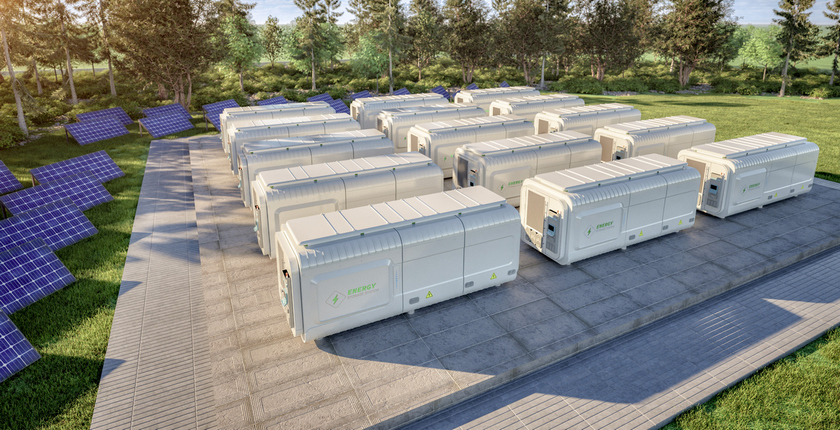
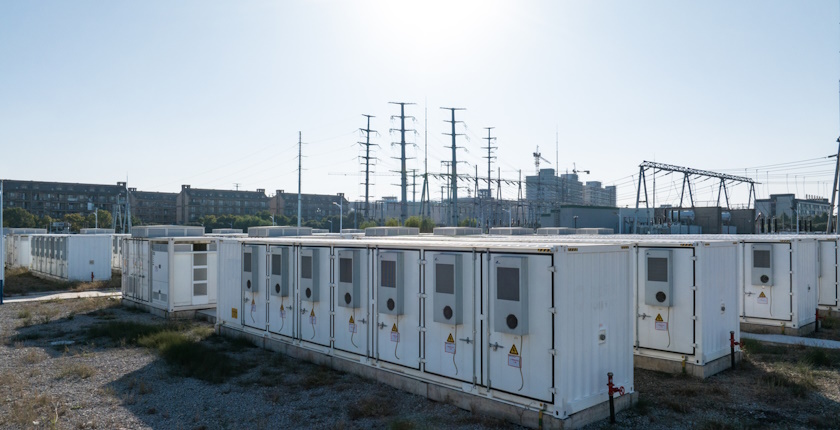
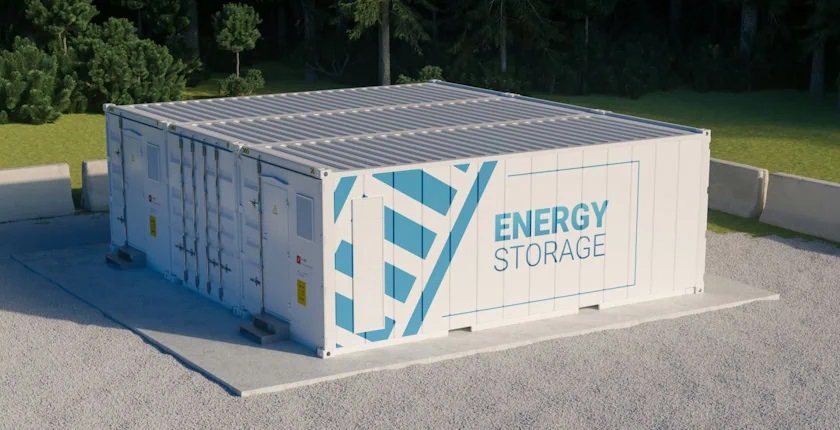
A new generation of sodium-ion batteries, developed and manufactured in Estonia, offers a safer, more sustainable, and more affordable alternative to lithium-based energy storage systems. The newly developed batteries are modular and scalable, allowing them to meet the needs of a wide range of users — from homeowners and farmers to commercial and industrial operators.

Estonian company Freen OÜ has introduced a new generation of sodium-ion battery systems. Sodium-ion batteries are presented as an alternative to lithium-based systems. Unlike lithium, sodium is one of the most abundant and widely distributed resources on Earth.

In addition to the high cost of lithium, its mining and extraction from salt flats cause significant environmental damage and deplete water reserves. In contrast, sodium can be obtained more sustainably — most commonly through the electrolysis of common salt.

Unlike lithium batteries, which are prone to overheating, Freen OÜ’s technology ensures thermal stability for sodium-ion batteries, virtually eliminating the risk of fire or explosion. The company also highlights that, unlike lithium-based systems, Freen batteries are not subject to international transportation restrictions and are cobalt-free, making them a more environmentally friendly and geopolitically secure solution.

In addition to chemical safety, Freen emphasizes the practicality of its systems. The batteries feature integrated wheels for easy handling, and their plug-and-play installation makes setup fast and straightforward.

Freen battery systems have a wide range of applications

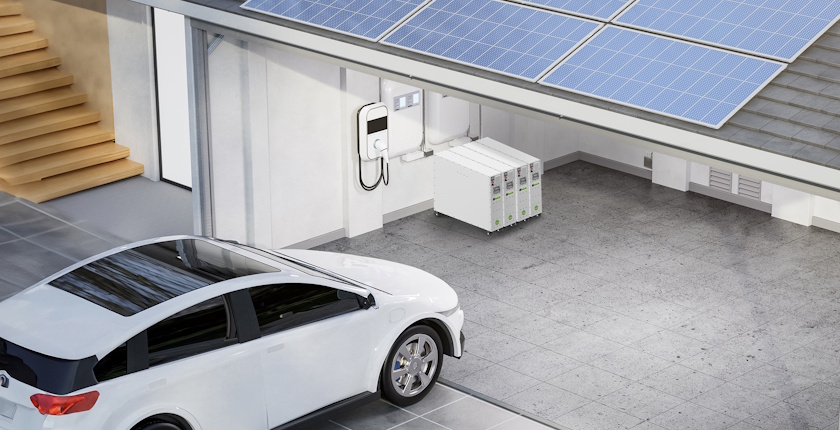
Their modular design makes them suitable for a wide range of applications, including energy-demanding households, remote farms, telecom infrastructure, commercial facilities, EV charging stations, the oil and gas sector, and public institutions such as schools and hospitals.

“The launch of sodium-ion batteries represents a major innovation in our portfolio, following the successful development of small wind turbines. These batteries stand out for their safety, versatility, and competitive pricing — and we are ready to collaborate with partners across all sectors to accelerate the energy transition”, said Andrey Khimenkov, CEO of Freen OÜ.

Freen has developed Freen-BSH, a high-voltage system capable of storing 10.08 kWh per module, and Freen-BSL, a low-voltage system with a capacity of 7.5 kWh per module.

Freen batteries can be recharged more than 5,000 times

Both systems support over 5,000 charging cycles, offering long service life, low maintenance, and high operational safety, even under extreme weather conditions.

“Whether used for energy independence, peak shaving, or as part of a hybrid renewable energy system, Freen’s solutions deliver efficiency and reliability across a variety of scenarios,” the company noted in its statement.

Freen also highlights the potential of its batteries in the Western Balkans, where several major initiatives are driving investments in renewable energy and energy storage.

Kosovo* recently announced a EUR 1.2 billion auction for renewables and storage — one of the largest in the region. In parallel, the European Union continues to fund the green transition through instruments such as the Western Balkans Investment Framework (WBIF) and the EU Growth Plan, providing grants and technical support for projects focused on renewable energy, storage, and grid flexibility.

These initiatives create opportunities for innovative solutions, such as Freen’s sodium-ion batteries, to become an integral part of the region’s evolving energy landscape.
* This designation is without prejudice to positions onstatus and is in line with UNSCR 1244/99 and the ICJ Opinion on the Kosovo declaration of independence.
by in News

Bulgaria opens public consultation on subsidies for 1.9 GWh of battery projects

Bulgaria’s Ministry of Energy has launched a public consultation on a new round of its subsidy program for battery energy storage projects, aimed at facilitating the integration of renewable energy sources. The plan is to support the deployment of 1.9 GWh of new battery capacity with around EUR 118 million.

In the first round of the National Infrastructure for Storage of Electricity from Renewable Sources (RESTORE) program, Bulgaria approved EUR 587 million in subsidies for 82 battery energy storage system (BESS) projects totaling 9.71 GWh, with another 30 applicants falling below the threshold.

Draft application and implementation documents for RESTORE 2 will be available for comments and proposals until September 15, while a tentative date for inviting applications for grants is September 18.

The BESS systems are expected to be deployed throughout the country and connected to the transmission network or the distribution grid. A BESS system must have a minimum nominal AC capacity of 10 MW to qualify for the program.

The minimum required capacity is 10 MW

The maximum support is 50% of the eligible project costs, but not more than BGN 156,466 (EUR 80,000) per 1 MWh of usable energy capacity, according to the documents. In the previous round, the maximum support per 1 MWh was BGN 148,600 (around EUR 76,000), Economic.bg recalled.

The deadline to build and commission the BESS capacities is July 31, 2026. The battery systems selected in the first part of the program must come online by the end of March 2026.

The new round of RESTORE aims to finance projects in more advanced stages

Another difference from the previous call is that proposed projects must be in a much more advanced stage. In addition to a connection agreement, applicants must already have a construction permit or installation permit issued, a signed supply contract or orders and payments made for the equipment for the storage system, as well as secured financing for the investment, according to the draft documents.

by in News

Dozens of airports in Southeastern Europe invest in solar power, energy efficiency

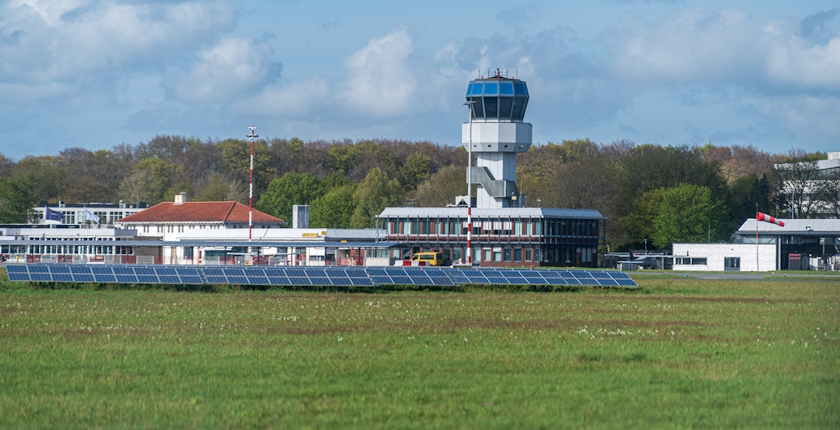
Airports in Istanbul and Athens are becoming completely self-reliant with their large solar power projects. Many other airports in Southeastern Europe are investing in photovoltaics as well. Together with energy efficiency, electric mobility and waste and wastewater management projects, they aim to decarbonize their operations and reduce their environmental impact.

Surfaces around infrastructure such as railways and motorways are convenient for solar power as there are few alternatives for their use and the technology can directly provide them with electricity. Airports, too, have embraced the global trend of introducing photovoltaics and electrifying operations, and Southeastern Europe is no exception, with several notable investments.

The largest ones in Istanbul and Athens are about to switch 100% to solar power, which would make them some of the first in the world. In addition, airports in the region are increasing energy efficiency and rolling out electric vehicle fleets. They are introducing resource, waste and wastewater management systems to decarbonize their operations and reduce their environmental impact.

Airport operator in Albania expanding to solar power market

In other recent news, the operator of Kukës International Airport Zayed in Albania’s northeast is in the process of obtaining a license to generate and trade electricity. Namely, the company, Global Technical Mechanics, received a concession five months ago in consortium with local construction firm Bami to build and operate a 12 MW solar power plant.

The location at the village of Shtiqen is in the municipality of Kukës. The airport, built with investments by Emaar Properties from the United Arab Emirates, was inaugurated in 2021. However, it ceased operations in the meantime as Wizz Air withdrew from the facility.

The entire Vlora International Airport, which is under construction, will be covered with solar panels, Albanian officials said earlier. The PV project is for 5.2 MW. A consortium led by Swiss-based Mabco Constructions is building and financing the construction. The firm is part of Mabetex Group, controlled by Behgjet Pacolli, Kosovar businessman and former president, deputy prime minister and foreign minister.

Zagreb Airport starts with small PV unit

Zagreb Airport, which installed a 250 kW photovoltaic unit this year, said it plans to expand it soon. In addition, it switched to 100% renewable energy supply.

Like other airports in the region, the main one in Croatia replaced conventional, halogen lighting with LED. The operator has committed to cutting its emissions in accordance with the recommendations from the Intergovernmental Panel on Climate Change (IPCC).

Zagreb Airport is renovating its buildings and increasingly using solar energy for heating water. Interestingly, it plans to switch from diesel-fueled generators to hydrogen-ready systems.

Athens to integrate strong battery with its arrays

Athens International Airport Eleftherios Venizelos commissioned an 8.05 MW solar park in 2011, followed by another one in 2023, with 15.8 MW in peak capacity.

This year two more units with a combined peak capacity of 35.5 MW are coming online, together with a battery energy storage system (BESS) of 82 MWh.

The operator of Turkey’s largest airport is completing a photovoltaic park of nearly 200 MW and aiming to cover almost all its energy needs from renewable sources by the end of the decade

IGA Istanbul Airport reported that its greenhouse gas emissions in 2024 were 10.5% lower than its goal. Moreover, its operator increased its 2030 renewable energy target from 50% to 90%.

Namely, it expects its Eskişehir solar farm of a whopping 199.3 MW to begin operations before the end of the year. The location spans 300 hectares and the investment amounts to EUR 212 million. The PV park will generate an estimated 340 GWh per year.

Dalaman Airport hosts world’s largest rooftop solar power plant among airport terminals

Several other airports in Turkey are also decarbonizing their electricity systems. TAV Airports Holding (TAV Havalimanları Holding), part of Groupe ADP, completed a solar power plant 6.7 MW in peak capacity at its Milas-Bodrum Airport in the country’s southwest. Within the same project for setting up PV systems at parking areas, the Izmir Adnan Menderes Airport is getting a 5.9 MW unit.

The Izmir Adnan Menderes Airport is getting a 5.9 MW solar power system at parking areas

Dalaman Airport, near Bodrum, operates a solar power plant of 8.3 MW in peak capacity. It is the world’s largest on the roof of an airport terminal building.

The facility now covers more than 55% of its consumption from solar energy. The investment was worth EUR 5.4 million. The operator, YDA Airport Investment and Management, has vowed to reach 100% in phase two. The airport has completely switched to electric vehicles.

In 2023, airports Milas-Bodrum, Gaziantep, Erzurum and Ordu-Giresun all commissioned smaller PV systems.

Romanian operators leaning on EU funds

Iași International Airport is about to expand its 1 MW solar power plant, installed in 2023. It was the first in Romania in the sector. The management intends to add 5 MW and a 2 MW energy storage unit.

The investment will reportedly be supported with a grant from the European Union’s Modernisation Fund. The hybrid power plant is supposed to cover a fifth of the electricity consumption of the facility in Romania’s far northeast.

Maramureş International Airport (AIM) is also seeking funding, for a system of 2.6 MW in peak capacity on parking canopies. It would include battery storage.

The PV unit would feature 25 inverters of 100 kW each. The project, worth EUR 12.1 million, should be complete by the end of next year, the management said. The facility is in Romania’s northwest, near the border with Ukraine and Hungary.

Cluj International Airport Avram Iancu said in December that it would install a PV system with batteries. It claimed it would make it energy independent in 2026. According to the facility’s website, the solar power project is for 2 MW.

Bacau International Airport George Enescu is another one that applied for funds. The management envisages a 1.25 MW solar power unit and a BESS of 2.1 MWh in capacity, to fully cover electricity consumption.

Sibiu International Airport is developing a project for a ground-mounted unit of 1.7 MW in peak capacity. The site is two kilometers from the terminal.

The management is expecting to cover the costs mainly with a grant via the Modernisation Fund. It said the PV park would be completed within a year and a half and suggested that it would introduce electric cars and buses and charging stations.

Notably, National Company Bucharest Airports (CNAB) has a geotermal energy project.

Hermes Airports equipped its two facilities with PV systems in 2023

Hermes Airports commissioned two solar power plants in Cyprus two years ago. The unit at Larnaka International Airport has 3.5 MW in peak capacity and the one at Pafos International Airport has 1.1 MW. They cover 25% and 30%, respectively, of the facilities’ electricity needs.

Belgrade Nikola Tesla Airport in Serbia commissioned a PV system of 1 MW in peak capacity in 2022. The facility’s concessionaire, Vinci Airports, has also set up solar-powered LED lighting.

International airports in Sarajevo and Tuzla in Bosnia and Herzegovina unveiled plans for PV systems a few years ago.

by in News

Turkish firm Astor Enerji to install 2 GWh of battery capacity at its solar projects in Romania

Swiss energy storage provider Energy Vault has signed an agreement to supply up to 2 GWh of battery capacity for the solar power projects of Turkey-based Astor Enerji in Romania. Astor Enerji, for its part, will provide transformers and high-voltage equipment for more than 1 GW of Energy Vault’s battery projects worldwide.

Astor Enerji recently entered the Romanian market through the acquisition of four photovoltaic projects with a total capacity of 279 MW, according to reports. The transactions, which require regulatory approval, were carried out in April through Astor Enerji’s Romanian subsidiary Astor RO Energy.

Astor Enerji has acquired 279 MW of solar projects in Romania

Under the global partnership agreement, Astor will receive battery energy storage systems (BESS) for the four grid-connected photovoltaic projects in Romania, with a total storage capacity of up to 2 GWh, according to a press release from Energy Vault.

Astor Enerji, for its part, will supply transformers and high-voltage equipment for Energy Vault’s BESS projects of over 1 GW overall, planned in the United States, Australia, and Europe.

Olcay Doğan, CFO of Astor Enerji, stated that Energy Vault’s innovative approach to energy storage makes it an ideal partner to support the Turkish company’s expansion into the battery sector.

According to Energy Vault’s chief revenue officer, Marco Terruzzin, the collaboration with Astor Enerji will help build the technology and supply chain capacity to meet surging power demand from artificial intelligence (AI) data centers and the rapid adoption of renewable energy.

Energy Vault has secured USD 300 million for BESS projects around the world

Energy Vault develops and deploys utility-scale energy storage solutions, including proprietary gravity-based storage, battery storage, and green hydrogen energy storage technologies. It recently announced a USD 300 million deal with an investment fund to finance the launch of a subsidiary that will develop, build, own, and operate energy storage assets, standalone or paired with generation facilities, around the world.

Astor Enerji supplies power transformers, distribution transformers, and high-voltage to medium-voltage switchgear to markets in Europe, Africa, Asia, and the United States.

by in News

German startup Voltfang turning used EV batteries into energy storage for solar, wind

German startup Voltfang has opened a plant to manufacture energy storage units for solar and wind from used electric vehicle batteries. The company says the facility is the largest of its kind in Europe, with annual output set to reach 250 MWh in 2026.

The plant in Aachen will produce second-life battery storage systems for commercial, industrial, and large-scale applications. Its annual output is planned to rise to 1 GWh by 2030.

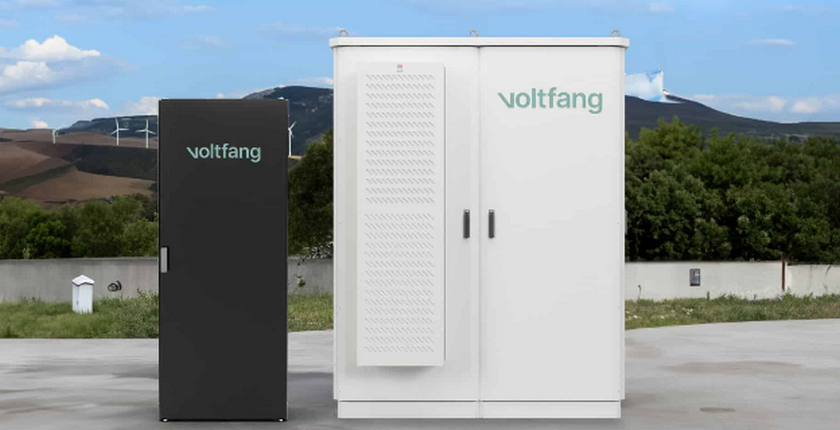
The facility will assemble fridge-sized energy storage units that households and companies can use to store excess electricity generated by solar panels or wind turbines.

Voltfang’s batteries can be used by homes and businesses to store energy from solar or wind facilities

The plant employs around 100 people, and Voltfang claims it is the largest facility in Europe for repurposing lithium-ion batteries.

David Oudsandji, co-founder and managing director of Voltfang, said the company’s goal is to develop high-performance battery storage systems for German and European industry.

Voltfang hopes to turn a profit by next year, but Oudsandji noted that the supply of used EV batteries is still small, as most such vehicles are only a few years old.

The supply of used electric vehicle batteries is still limited

Another obstacle is that new batteries, mainly from China, are becoming increasingly efficient and affordable, while refurbishing old ones is a complex process.

On the other hand, it is more sustainable and helps create a circular economy and ensure energy independence, according to Oudsandji.

by in News

Agios Efstratios becomes Greece’s first energy-autonomous island

A hybrid energy project transforming Agios Efstratios into the first energy-autonomous island in Greece is in trial operation. The system consists of a wind turbine, solar power plant, batteries, electric boilers and a district heating network.

It is a benchmark for the non-interconnected islands that won’t be connected to the mainland grid with undersea power cables.

Agios Efstratios is no longer renowned only for its history and natural beauty. It is an example of energy autonomy and sustainability. The island, also known as Ai Stratis, became the first non-interconnected Greek island with a 100% electricity supply from renewables. And more.

A pioneering energy complex is in trial operation. Agios Efstratios, which has only some 250 permanent residents, is in a group of small islands undergoing transformation through projects launched at the national level and benefiting from European Union funding.

Terna Energy completed hybrid energy system in Agios Efstratios

The Centre for Renewable Energy Sources and Saving (CRES or KAPE), an independent public entity, is responsible for the endeavor, on behalf of the Municipality of Agios Efstratios. Terna Energy, owned by Masdar, is the contractor for the works in the small North Aegean island.

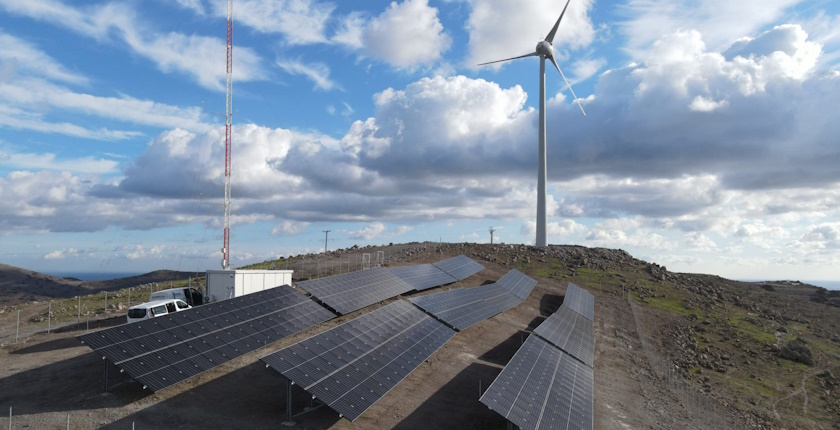
The new hybrid energy system includes a 900 kW Enercon E44 wind turbine and a solar power unit of 225 kW. Their combined annual output is estimated at above 3 GWh.

Excess electricity is stored. One unit is a Tesla Megapack battery energy storage system (BESS) of 1.25 MW in operating power and a two-hour duration. It means the capacity is 2.5 MWh. There is also an electric boiler facility of 1 MW with hot water storage tanks that can hold 500 cubic meters of water at 120 degrees Celsius. It corresponds to 25 MWh.

The district heating network in Agios Efstratios is four kilometers long. It will be tested in the winter.

An oil-fired generator operated by state-controlled Public Power Corp. (PPC) remains as backup. It can work alongside the hybrid power plant.

Greece is connecting many islands to mainland power grid

The solutions from Agios Efstratios can be applied in other islands or in microgrids, CRES noted and said residents are getting cheaper energy.

The government launched its Islands Decarbonization Fund last year, with financing from the European Investment Bank (EIB). Together they aim to provide at least EUR 1.6 billion, and mobilize total investments of EUR 3 billion to EUR 5 billion.

In the hot summer months, there are many non-interconnected islands that can’t meet their power demand, especially because of the tourist season. Some are also struggling with water supply, prompting the need for desalination, which requires electricity. They rely on fuel oil generators.

The country’s Independent Power Transmission Operator (IPTO or, in Greek, Admie) is investing in major interconnection projects. A link to the mainland grid has improved the living conditions in the Cyclades islands of Syros, Paros and Mykonos. Together with a project for the western part of the archipelago, the transmission system operator is planning subsea cables to the Dodecanese and the Northeast Aegean.

by in News

Prosumers in Romania are neck and neck with commercial PV plants in capacity

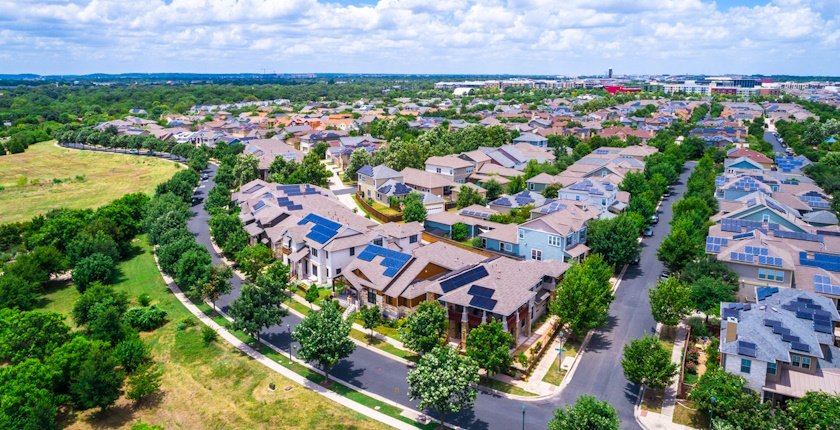
The latest data showed that prosumers in Romania don’t have a much larger total capacity anymore than commercial solar power plants, a segment accelerating in expansion. The share of units for self-consumption that include energy storage reached 5.8% in the first half of the year, compared to 1.2% six months earlier.

Total number of prosumers in Romania increased by 8,950 in June, to 237,252, Profit.ro reported. The installed capacity, consisting overwhelmingly of photovoltaic panels, rose by 95 MW, to 2.82 GW, the media outlet added, citing data from the National Energy Regulatory Authority (ANRE).

Total installed capacity of large, commercial solar parks is 2.77 GW, according to the article. Both segments are expanding strongly, but the latter has lately accelerated, with new utility-scale PV facilities coming online week after week. Of note, wind power and battery energy storage systems (BESS) are catching up.

On that note, 5.8% of prosumers also had batteries integrated with their self-consumption units on June 30. It compares to 1.2% at the end of last year.

Prosumers have led the energy transition for the past two years. Their overall capacity surpassed 2 GW just a year ago, translating to 37% growth in ten months.

Output in the segment amounted to 434 GWh in the first half of the year, where net domestic consumption declined 1% and net energy production surged 10%. Namely, as the duration of the daily solar radiation interval rose, prosumers in Romania drew less power from the grid and consumed more of what they generated themselves.

At the end of the first half of 2025, 210,714 households were prosumers, versus 26,538 legal entities. They had 1.34 GW and 1.48 GW installed, respectively.

by in News

Cyprus TSO favored in national battery storage tender

Pressed by the lack of electricity system flexibility, Cyprus is rushing to deploy battery storage facilities under indirect state control. Private companies are complaining that Transmission System Operator Cyprus (TSOC) is favored at a current tender for three units of 40 MW each.

EMA, the electricity market association of private companies has been trying to hinder or delay the installation of a central battery storage system within the network of state-owned Electricity Authority of Cyprus (EAC), but to no avail, philenews reported.

After several complaints, including to the European Commission, the group urged the Cyprus Energy Regulatory Authority (CERA) to reconsider the approval that it issued in June to Transmission System Operator Cyprus (TSOC). A tender is underway for the same three facilities with 400 MWh in total capacity, to be installed at three EAC’s substations.

The one in Athalassa would have 40 MW in operating power and a duration of two hours, translating to 80 MWh. The battery energy storage systems (BESS) at the substations in Anatoliko in Paphos (Pafos) and the free industrial zone in Larnaca would each have 40 MW and 160 MWh.

EU gave green light for rushed procedure

EAC owns TSOC, which has raised the issue of transparency. However, the government has obtained a derogation from the European Commission. In its request, it cited the delays in interconnecting with the European electricity grid, lack of energy storage and the instability affecting the island country’s electricity system.

The project for centralized BESS capacities on the transmission grid is an emergency measure to prevent blackouts and curtailments

The Great Sea Interconnector project for a subsea cable to Crete is late and even jeopardized due to breach deadlines. The Cypriot grid is constantly strained as it needs flexibility systems, while a huge part of solar and wind power is curtailed.

There were several major rolling outages and load-shedding events this summer on the island. One last week occurred amid a breakdown in one of the fuel oil–fired power plants, which the country relies on for baseload energy. Two new units of 400 MW overall are designed to use gas, but there is still no gas. Namely, the project for a liquefied natural gas (LNG) terminal is suffering delays as well.

BESS tender is worth EUR 41 million excluding VAT

As for the tender, applications last until September 19. The cost is estimated at EUR 41 million altogether, excluding value-added tax. The BESS facilities need to operate at least 128 months.

AEC said in the documentation that it expects the European Regional Development Fund (ERDF) to support the investment. Earlier reports suggest that EUR 30 million is available.

The government said the three battery energy storage systems are planned to be commissioned by June. EAC’s two power stations are also planned to be equipped with BESS units, it added.

In addition, the government is funding battery storage projects for renewable electricity plants, prosumers and even the army.

Power market liberalization in one month

Notably, Cyprus is liberalizing its power market on September 15 for independent producers and retail suppliers. The change is scheduled to come fully into force on October 1, the first day for transactions.

In a separate article, the same media outlet stressed that the country’s energy policy in the electricity segment is inadequate, uncoordinated and fragmented, with the cost of wrong decisions being passed on to consumers.

by in News

Battery storage investors in Romania rapidly expanding project pipeline

In an accelerating investment wave, companies in Romania are combining BESS with solar power, hydropower and wind power, or building standalone energy storage facilities. The group includes R.Power, Hidroelectrica, Engie and more big names.

Recent updates about investments in battery energy storage systems (BESS) in Romania indicate the technology is becoming another pillar of the country’s energy transition alongside wind power. For several years now, photovoltaics, and prosumers in particular – including municipal authorities, have dominated the scene. Geothermal energy is another emerging segment.

The government has provided incentives both for households and utility-scale battery storage. Companies are combining batteries with solar and wind power as well as hydropower capacity.

Investing in BESS colocated with renewable electricity plants or as standalone facilities in Southeastern Europe enables income from high spreads between wholesale power prices in daily trading. It is especially significant given the increase in the occurrence of zero and negative prices.

Notably, neighboring Bulgaria has earmarked massive funds for support to BESS investments while also focusing on pumped storage hydropower projects. Greece also held several rounds of auctions for battery storage.

R.Power to start building 127 MW standalone battery

R.Power is investing in BESS in Romania, which is one of its strategic markets, together with Poland, where it is headquartered, and Italy, Germany, Spain and Portugal. Battery storage makes up 17.5 GW or more than half of its total development pipeline in Europe.

The company said it would hybridize its existing and future PV assets and scale the integrated capacity to several gigawatts in the coming years. It has over 1.2 GW of projects for standalone BESS in Romania. “And that’s just the beginning,” R.Power said.

It obtained EUR 15 million in funding for a future 127 MW facility. It is about to start building the BESS in Scornicești in Olt county, west of Bucharest. R.Power is planning to complete it in a year. The battery energy storage system would have a duration of two hours, translating to 254 MWh in capacity. The project received funding from the National Recovery and Resilience Plan (NRRP or, in Romanian, PNRR).

Still, in the company’s view, further legislative changes are needed to fully harness the potential of the technology.

Hidroelectrica to add large battery to Iron Gate 2 hydroelectric plant

State-owned Hidroelectrica, the largest electricity producer in Romania, wants to install a battery storage system at Iron Gate 2 (Porțile de Fier 2) on the Danube. Located on the border with Serbia, it is the second-largest hydroelectric plant in the country, at 252 MW in nominal capacity. The complex, which the two countries share, is known as Đerdap in Serbian.

The BESS would have 64 MW in nominal power and a four-hour duration (256 MWh), Profit.ro reported. Hidroelectrica plans to use it for providing balancing services to the national electricity system (SEN) and adjust the time intervals of its hydropower production.

The contract for the installation of the facility is estimated at EUR 61.2 million plus value-added tax, according to the article. It would be integrated with the hydroelectric plant. The company is receiving bids from potential contractors by August 28.

French Engie has BESS projects for its existing PV plant, wind park

France-based Engie’s subsidiary in Romania intends to install a BESS at its newest solar power plant, of 37.2 MW in peak capacity, in Ariceștii Rahtivani. It commissioned the PV facility in June. The location is north of Bucharest, in Prahova county.

The battery energy storage system project is for 20 MW in operating power and 80 MWh. It would consist of 16 containers, 192 inverters and four transformer units.

The wind park in Băleni will reportedly add a small BESS facility

Engie Romania is working on another investment, through its Alizeu Eolian project firm. It plans to add batteries to a 50 MW wind park in Băleni, Galați county, which was built in 2013.

The company obtained the building permit last year. It also got clearance two months ago for connecting the BESS with a 110/20 kV transformer station via an underground line. Economica.net learned that the battery storage facility would have 5 MW and a two-hour duration, costing the firm EUR 2 million.

Engie’s project was included in the reserve list last September after a public call for support to battery storage. The Ministry of Energy selected 13 applications for grants from NRRP. Another 25 passed, but remained below the line.

Government bolstering battery investments with grants

The state aid scheme was worth EUR 103.5 million, of which EUR 79.6 million came from the European Union’s Recovery and Resilience Facility (RRF).

Among the beneficiaries are Electrica, in which the government holds just under 50%. Renovatio Trading. OMV Petrom, Public Power Corp. (PPC) and Verbund have projects on the B list.

For its 65 MWh project in Toplița in Harghita county, in eastern Transylvania, Renovatio Trading is buying the equipment from Trina Storage. The firm is part of Trina Solar.

Visual Fan is winning major contracts for the procurement and installation of batteries

Allview Energy, part of Romanian company Visual Fan, is handling the alternating current (AC) side in Renovatio Trading’s investment.

In addition, Visual Fan became the contractor for a BESS within Eurowind Energy’s Teiuș solar park.

The Danish developer intends to deploy a 117 MWh energy storage unit with lithium-iron-phosphate (LFP) batteries, within a year. It valued the project at over EUR 16.6 million. The companies said they would carry out the works in partnership with TQM Services and Voltlink. The investment includes the battery management system and liquid cooling.

In June, the ministry approved a EUR 3.4 million grant from the EU’s Modernisation Fund to Termoficare Oradea. It has a project for a 10 MW solar park with a 15 MWh storage unit, worth EUR 18.6 million altogether.

Austria’s Verbund conducting EUR 22.7 million project

Verbund has almost all the permits for a BESS project at its 226 MW wind farm in Casimcea in Tulcea county. The company headquartered in Austria said it has secured financing as well and that it is already contracting the equipment.

The wind farm was commissioned in 2012. The energy storage segment would have up to 50 MW and up to 100 MWh. It would be located at the Alpha Wind Nord section of the existing facility, of 81 MW.

Still, the basic variant’s size will be 48.3 MW, with 76 MWh in capacity, according to Profit.ro. There would be 34 containers at the site selected for the BESS.

The majority government-controlled utility values the investment at EUR 22.7 million, of which more than EUR 10.7 million is for the storage facility itself. The location spans five hectares.

After coming up short in the public call, Verbund submitted the project for a grant from the Modernisation Fund.

In mid-May, Romania hosted 240.7 MW of battery capability and a total capacity of 404.9 MWh.

by in News

Bulgaria to add batteries of up to 10,000 MWh in capacity within months – ESO

Bulgaria’s Electricity System Operator has received applications for the connection of batteries with 12 GW in total capability, according to the transmission system operator’s Executive Director Angelin Tsachev.

Bulgaria currently has 500 MW in battery energy storage systems (BESS), with a capacity of 1,300 MWh. The facilities are in private ownership.

Angelin Tsachev told Bulgarian National Radio that the Electricity System Operator (ESO) received applications for about 12,000 MW, with a capacity of 35,000 MWh.

The TSO’s technical council has considered each grid connection request. The operator issued its opinions on the possibilities for enabling network access to the batteries when the conditions are met, Tsachev pointed out.

BESS can now cover about 1.5% of the country’s daily consumption

BESS can now cover about 1.5% of the country’s daily consumption, he revealed. However, in the coming months, batteries with a combined capacity of 7,000 MWh to 10,000 MWh are expected to be installed, the official added. They would be a serious factor, Tsachev stressed.

No state-owned or private conventional power plants are currently equipped with energy storage systems, he asserted.

After the balancing methodology was changed, commercial developers of projects for intermittent power plants became more disciplined, and now there are no concerns about the balancing of the system, Tsachev said. Electricity exports in the first seven months of this year were higher than in the same period of 2024. Net exports reached almost 230,000 MWh, Tsachev noted.

Good investment opportunity

According to an earlier analysis by Rystad Energy, the best potential profits in battery storage in Europe in 2013 were in Greece and Bulgaria. The country’s city of Lovech, northeast of Sofia, hosts the strongest BESS in the Balkans.

The Ministry of Energy of Bulgaria is reportedly working on a public call for EUR 120 million in state aid for investments in battery energy storage systems of 1.5 GWh overall. In April, it granted EUR 587 million to 82 battery storage projects.

The pace of large photovoltaic projects in Bulgaria indicates that total capacity can reach 6 GW by the middle of next year.

However, the Association for Production, Storage and Trading of Electricity (APSTE) warned that the government’s disproportionately high fees for solar panels and energy storage batteries are preventing the possibility of having permanently low electricity prices in Bulgaria.