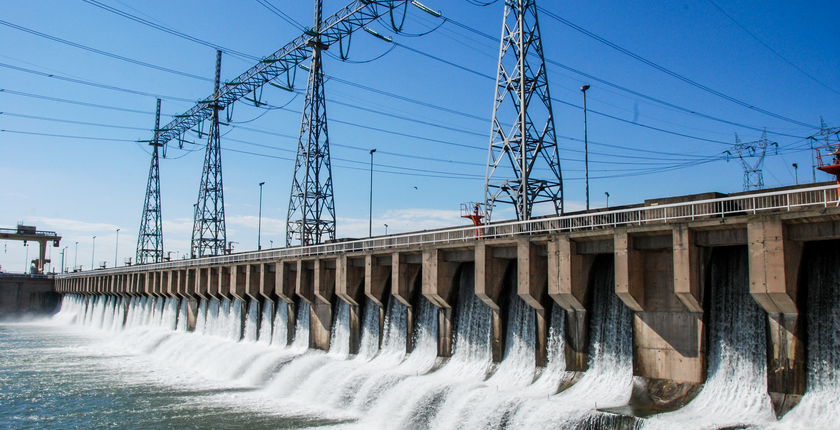
Serbia’s hydropower output drops to all-time low amid drought
Electricity production at state-owned power utility Elektroprivreda Srbije’s (EPS) hydropower plants is set to hit a historic low this year due to unfavorable hydrological conditions, caused by exceptionally low precipitation in the Drina and Danube river basins over the past 18 months.
The year-end figure will depend on whether and how well the hydrological situation improves in the coming months, EPS said. However, it is already clear that production will be about 25% lower than in 2024 and as much as 40% lower than in 2023, when EPS’ hydropower capacities generated 12.66 terawatt-hours (TWh), according to the statement.
The hydropower plants’ output will be 25% lower than last year
The projected hydropower output for this year is around 8 TWh, less than the all-time low of 8.3 TWh, recorded 36 years ago, EPS added. Since the beginning of 2025, hydropower capacities have generated about 6.5 TWh of electricity.
The average annual production at hydropower plants in the 2010-2024 period was 10.6 TWh, accounting for about 31% of EPS’s total. The total installed hydropower capacity is about 3 GW, according to the state power utility’s website.
Water levels in the Drina and Danube, where EPS’s largest hydropower plants are located, are low due to weak precipitation – both snow and rain – in Germany, Austria, Slovenia, Bosnia and Herzegovina, and Montenegro. At the same time, occasional rainy periods in Serbia this year, as well as recent rainfall, have not significantly affected water inflow to domestic hydropower plants.
The situation has not improved despite occasional rainfall and upgrades to hydropower plants
The revitalizations at the Đerdap 1, Bajina Bašta, and Zvornik hydropower plants have not helped either, even though the reconstructed units are now operating at exceptionally high efficiency, “turning every drop of water into energy.”
EPS also explained that output always depends on river inflows and that they have been far below average on both the Drina and the Danube throughout the year, so much so that there have even been periods when the Danube was not navigable.
On the other hand, the utility claims it is carefully and systematically managing water reserves in reservoirs to preserve them for the upcoming winter season.