AEA-Albania Energy Association
  • Main
  • About Us
  • Services
  • Sectors
  • News
  • EventsEvents
  • PublicationPublication
  • Contact Us
AEA-Albania Energy Association
  • Main
  • About Us
  • Services
  • Sectors
  • News
  • EventsEvents
  • PublicationPublication
  • Contact Us
AEA-Albania Energy Association
  • Home Page
  • About Us
  • Sectors
  • Our Services
  • News
  • Contact Us
October 7, 2025
by AEA in News

Software maker Volue acquires power trading, battery optimization platform smartPulse

Volue took over smartPulse, accelerating the expansion into Central and Eastern Europe, Southern Europe and Turkey, with its power trading and battery optimization capabilities.

Software maker Volue said it has completed a deal to acquire smartPulse, a full-suite short-term power trading and battery optimization platform for asset owners and aggregators across Europe. It significantly accelerates the expansion into Central and Eastern Europe (CEE), Southern Europe and Türkiye, according to the announcement.

The takeover will expand the offering with a comprehensive suite that now covers forecasting, position management, scheduling and nomination, day-ahead bidding, intraday trading, battery optimization and asset connectivity, Volue said. The company said it provides solutions and systems powering the green transition as well as insights to industries critical to society. Headquartered in Oslo, Norway, it is active in more than 40 countries.

Volue pointed out that it is strengthening its capabilities with smartPulse’s proven platform and seasoned team, adding that they bring decades of expertise in one of Europe’s fastest-growing power markets.

SmartPulse to benefit from Volue’s resources, expertise, commercial team

Founded in 2018 in Turkey, smartPulse is a certified independent software vendor (ISV) at EPEX Spot, Nord Pool and various other European energy exchanges, with more than 80 energy market specialists.

The firm expressed confidence it would benefit from Volue’s resources, expertise and commercial team to further accelerate its development and geographic expansion while also strengthening its end-to-end value proposition.

Jointly connecting assets to markets

“With this acquisition, we accelerate our expansion into new European markets and strengthen our position as a full-suite provider for renewable asset operators. The move directly enhances our battery storage and optimisation capabilities, deepens our presence across regions, and supports our ambition of becoming the leading global independent energy software player,” said Volue’s Interim Chief Executive Officer and Chief Transformation Officer Martin Vieider.

The transaction enables smartPulse to accelerate its European rollout of transmission system operator (TSO) connections and broaden its suite internationally, while giving customers the confidence of a market-leading global partner, according to CEO and co-founder Önder Akar

“We share Volue’s ambition of connecting assets to markets, and we’re excited to scale that vision together,” he stated.
Post Views:23
October 7, 2025
by AEA in News

Slovenia allocates EUR 375 million for sustainable mobility

Slovenia has allocated EUR 835 million from the Climate Fund for climate change mitigation and adaptation. The funds should be used over the period 2025-2028.

The Government of Slovenia has adopted a decree on the allocation plan for the Climate Fund for 2025-2028. The plan follows the key measures from the previous plan for the period 2023-2026 and adds funds for 2027 and 2028. The amount is determined based on expected revenues from emission allowance auctions.

Emission allowances are part of the European Union Emissions Trading System (EU ETS).

The funds will be directed to sectors addressing the main climate challenges, both in mitigation and adaptation to climate change. Measures supporting the green transition and increasing the country’s resilience to climate change will also be supported, according to the Government of Slovenia.

EUR 121 million was allocated for decarbonizing the economy

The largest chunk will go to sustainable mobility – EUR 375 million. The funds will be used for investments in public transport – purchase of new trains and buses, renovation of ticketing and information systems, co-financing of zero-emission vehicles and charging infrastructure, promotion of cycling and walking, and shifting freight transport from roads to rail.

EUR 121 million is designated for decarbonizing the economy. The government will co-finance successful European Union projects, support the introduction of a circular economy and sustainable reporting for small and medium-sized enterprises, as well as investments in industrial decarbonization.

Energy renovation of public and residential buildings, measures to reduce energy poverty, and the construction of nearly zero-energy buildings are also part of the allocation plan. There is EUR 111 million for such activities.

EUR 26 million is set for awareness raising and education

EUR 95 million is designated for renewable energy sources. The funds will be used to replace outdated household heating devices with modern ones and heat pumps, as well as for energy storage, geothermal energy, and measures to increase the energy self-sufficiency of buildings.

The Climate Fund will support additional climate change adaptation measures. The activities include reducing flood risks, preserving biodiversity, adaptation in forestry and agriculture, and strengthening the resilience of local communities. The allocated funds amount to EUR 49 million.

Slovenia has envisaged EUR 12 million for international climate change financing and EUR 26 million for awareness raising and education.

Post Views:46
October 7, 2025
by AEA in News

Econergy to assume 100% ownership of Romania’s biggest solar park, add batteries

Econergy agreed to buy out Nofar’s 50% stake in the 155 MW Rătești photovoltaic plant, the largest in Romania. The next step is to add a 120 MW battery energy storage system.

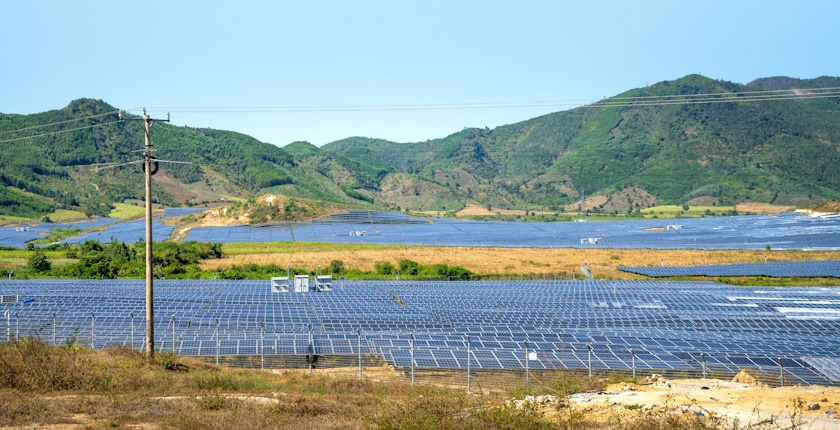
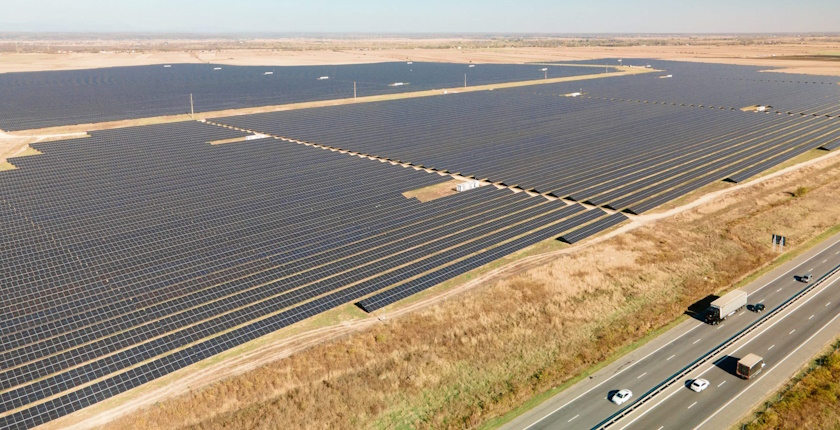
Econergy Renewable Energy said its subsidiary Econergy International, in which it holds 75.2%, has signed an agreement with Nofar Energy to acquire the partner company’s entire 50% stake in the Rătești solar power plant. The facility northwest of Bucharest, in Argeș county, is the largest in Romania. It has 155 MW in peak capacity.

Following the transaction, Econergy will hold 100% ownership and assume control of the shareholder loan previously provided by Nofar, of EUR 14.9 million, according to the update. The total consideration for the transaction is €45.6 million, payable in three instalments through June 2026.

Both companies are based in Israel. Econergy expects a capital gain of EUR 13 million from the deal. Like with some of its other investments in Romania, it plans to add a 120 MW battery energy storage system (BESS). The operator values the investment at EUR 32 million.

The battery storage facility is expected to enter commercial operation in the second quarter of next year, Econergy revealed. It would generate an additional EUR 15 million in annual revenue and EUR 12 million in earnings before interest, taxes, depreciation and amortization – EBITDA, the announcement reads.

Econergy said its portfolio of solar, wind and storage projects in Romania amounts to 3.5 GW. It includes 473 MW in operation or facilities that are ready to connect, 763 MW under construction and 395 MW scheduled to begin construction by the end of the year. Total project pipeline exceeds 14 GW.

Post Views:28
October 6, 2025
by AEA in News

City of Pirot in Serbia plans solar power plant on remediated unsanitary landfill

The City of Pirot plans to build a solar power plant on the site of a former unsanitary landfill when it is remediated. The move would strengthen its leadership position in Serbia regarding the use of renewable energy and environmental protection.

In 2013, Pirot opened a regional sanitary landfill, which cost EUR 11 million. It enabled the local authority to shut down an unsanitary landfill on the right bank of the Nišava river. However, the land still hasn’t been remediated and reclaimed.

Now the Ministry of Environmental Protection of Serbia has approved EUR 2 million for the works, Serbia’s public broadcaster RTS reported. With the completion of remediation, the possibility opens up for the six hectares of land in the country’s southeast to be repurposed.

Solar panels would be installed on three hectares

Mayor of Pirot Vladan Vasić said that the documentation for the remediation of the landfill is complete. The city intends to add EUR 500,000 to the EUR 2 million received from the government and complete the first phase. He plans for the second phase to be approved next year, to solve the decades-long issue in an environmentally acceptable way.

Vasić revealed one and a half to two hectares would be allocated for businesses, adding that the purpose of the remaining land is still under consideration.

A photovoltaic plant would be the most cost-effective solution

One idea is to install a 3 MW solar power plant that would supply electricity to the city authority, he pointed out.

Other ideas are a football stadium, a golf course, afforestation, and a park. The photovoltaic plant would be the most cost-effective solution, Vasić added.

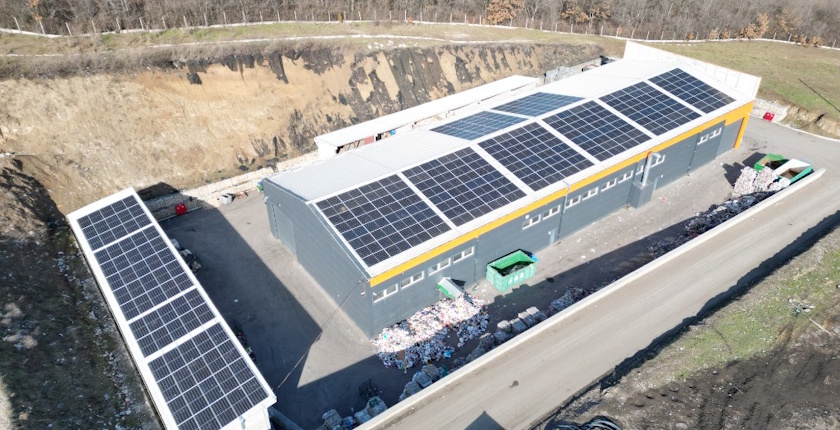
Of note, there is a solar power plant on the roof of the building of public waste utility Regional Landfill Pirot. The 150 kW facility began operating in August last year. The city officials claim it is the largest PV plant in Pirot county.

The first cooperative solar power plants in Serbia are located on the Stara Planina mountain

Pirot is also developing a regional waste management center. In 2022, the city signed a contract for the construction of the second landfill body, a composting plant, and a biogas facility.

The additional segment would extend the operation of the sanitary landfill by 20 years, while the biogas collection system would enable the collection of methane from the landfill.

A system for treating construction waste to enable material recycling is planned as well.

As for solar energy, not far from the city, the Stara Planina mountain is the home of the first cooperative solar power plants in Serbia. The local authority participated in the project. They were put into operation last year.

In mid-2023, PV projects were under development for over 125 MW in total capacity on the city’s territory. Of note, this year Pirot became the 13th local authority to join the Clean Air Regions Initiative, initiated by the Energy Community Secretariat.

Post Views:56
October 6, 2025
by AEA in News

Romanian town signs partnership for 200 MW solar park with BESS

A firm recently established by Turkish and Romanian investors has launched a public-private partnership with the local authority in Târgu Lăpuș in northern Transylvania. They are planning a hybrid power plant worth EUR 100 million.

A public-private partnership in the making in northern Romania is aimed at building a 200 MW photovoltaic plant, the largest in Transylvania, with a battery energy storage system, 2Mnews reported. Global Energy Asset, a firm founded by Turkish and Romanian investors less than half a year ago, has signed a deal with the municipal authority in Târgu Lăpuș.

The investors value the project at EUR 100 million. They intend to install the facility on 200 hectares on the territory of the town, also known as Magyarlápos. Târgu Lăpuș is in Maramureș County.

The seat of Global Energy Asset, formerly known as Global Finance Asset, is Tunari in Ilfov county near Bucharest. In addition to financial benefits and covering the costs of electricity for street lighting, its representatives offered the local authority scholarships for children and sponsorship of events and institutions, the article reveals.

The project firm’s largest shareholder reportedly has ties with Feridun Geçgel of Astor Enerji

Muhammed Ishak Çiftçi, who has Romanian citizenship, controls 48% of the project firm. According to the news outlet, he is associated with Turkish billionaire Feridun Geçgel, Chairman of the Board of Astor Enerji.

It is the largest manufacturer of transformers in Turkey. Astor Enerji entered the Romanian photovoltaic market this year by acquiring four projects for 279 MW in total.

In August, Swiss energy storage provider Energy Vault agreed to supply up to 2 GWh of battery capacity for the Turkish company’s future solar power plants in Romania. Astor Enerji is listed on the Istanbul Stock Exchange (Borsa Istanbul).

Head of Global Energy Asset, lawyer Cătălin Iulian Marin, holds 25%, and there are four more co-owners.

Approving the proposal for the public-private partnership, Târgu Lăpuș town hall cited the need for business ventures amid economic difficulties. Namely, furniture manufacturer Taparo, which supplied IKEA and was the biggest business in the area, has become insolvent.

Post Views:54
October 6, 2025
by AEA in News

Sunterra RE equips its PV plants in Bulgaria with batteries totaling 156 MW

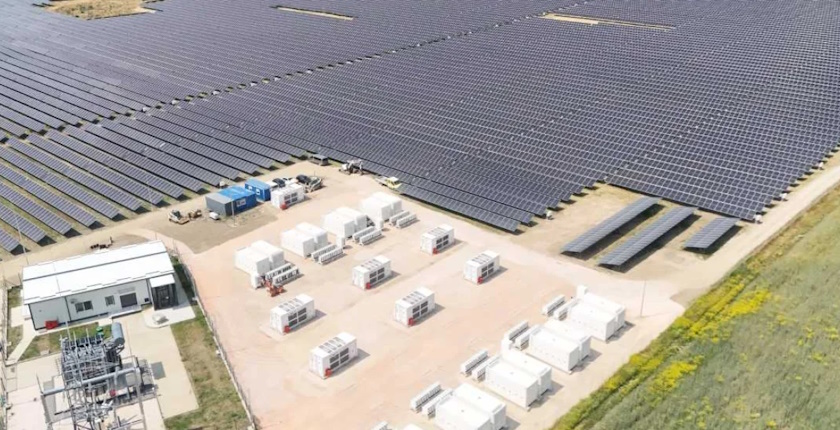
Bulgarian solar power plant operator Sunterra RE added co-located energy storage to its operational portfolio. The company’s three photovoltaic systems, with 524 MW in combined peak capacity, now also have batteries of 156 MW and 312 MWh in total.

With the ongoing solar boom in Bulgaria, investors have lately also been rushing to set up co-located and standalone battery energy storage systems (BESS). Bridging the gap between the peaks of daily photovoltaic production and power consumption is one of the key factors for the energy transition – stabilizing prices and the electricity system’s stability. Sunterra RE – Santera RE in Bulgarian – stands out with a large new operational solar and battery portfolio.

In its latest updates, the company revealed that it has put three BESS facilities into operation. They are co-located with its photovoltaic plants of 524 MW in total peak capacity.

There are 77 lithium-iron-phosphate (LFP) battery units now online. They have an overall capability of 156 MW and a duration of two hours. It translates to 312 MWh in storage capacity.

The investments received support through the National Recovery and Resilience Plan (NRRP), funded from the European Union’s Recovery and Resilience Facility – RRF. Sunterra RE said it completed them in less than a year.

Galabovo BESS accounts for half of battery operating power

The Kaloyan solar power plant of 208 MW, also known as Dalgo Pole, was the biggest in Bulgaria for a short while. It is backed with a 47 MW / 94 MWh facility, comprising 23 battery units.

The BESS investment at the site just north of Plovdiv was worth BGN 31.7 million (EUR 16.2 million).

The three subsidized battery projects were completed in less than a year

Accompanying the Galabovo solar power plant (201 MW) is a BESS with 75 MW in operating power. Sunterra RE said it consists of 37 battery containers. The Galabovo municipality is east of Plovdiv, Bulgaria’s second-largest city.

The remaining seventeen units, of 34 MW, make up the battery energy storage system at the Karlovo solar power plant. The PV facility in the eponymous municipality north of Kaloyanovo, has 115 MW.

The company’s fourth photovoltaic plant, in Pleven in the north, has only 9.6 MW.

Sunterra RE to expand its three new energy storage facilities by over 1 GWh altogether

Sunterra RE recently entered into a strategic partnership with Sungrow to expand the three BESS by more than 1 GWh in total. The deal is for the China-based partner’s MV-Power Titan 2.0 LFP units and accompanying equipment and software.

The city of Lovech, northeast of Sofia, hosts the strongest BESS in the Balkans – of 124.1 MW and 496.4 MWh. It is a standalone battery facility, part of a closed power distribution system.

Renalfa IPP and Eurowind Energy are installing a 315 MW / 760 MWh BESS at their Tenevo PV plant. They plan to turn it into the largest and most complex hybrid power plant in Bulgaria.

Post Views:41
October 6, 2025
by AEA in News

Green resilience: How Kyiv is shaping a sustainable future amid crisis

Balkan Green Energy News, the media partner of the 2025 Just Transition Young Voices Awards, is publishing the three winning articles. The Energy Community Secretariat organized the contest in collaboration with Bankwatch, CAN Europe, the CLEW Network, and the Regional Youth Cooperation Office. The aim is to promote young adults set to shape the climate, energy, and social landscape in the years ahead in the Energy Community region. 

Author: Kateryna Pereloma

Kyiv, the heart of Ukraine, is a city renowned for its golden domes, cultural depth, and enduring spirit. In recent years, especially since the full-scale invasion of Ukraine in 2022, the people of Kyiv have faced extraordinary challenges. But amid the destruction and uncertainty, a new kind of rebuilding has taken root – one that is greener, smarter, and focused on long-term sustainability.

When the war disrupted supply chains, energy infrastructure, and food systems, communities across Kyiv were forced to adapt quickly. What began as survival soon evolved into innovation. As energy security became a national priority, citizens and officials in Ukraine’s capital started reimagining what a more self-reliant and sustainable city could look like.

One of the most visible changes has been the rise of solar energy. While Ukraine had been developing renewables before the war as well, the conflict accelerated the adoption of decentralized energy sources.

In many neighborhoods, especially those affected by blackouts and grid instability, residents pooled resources to install rooftop solar panels, solar-powered water heaters, and even small-scale battery storage systems. Tenants’ associations in apartment buildings began using crowdfunding platforms to raise money for green energy upgrades. My neighbor, for example, spearheaded a project in our building to install solar panels that now help power our elevator and joint lighting systems.

Solar energy became lifeline for schools, hospitals, critical infrastructure

Schools and hospitals also embraced solar as a lifeline. Through international aid and local initiatives, dozens of Kyiv’s critical infrastructure facilities have been outfitted with renewable energy systems.

This isn’t just about environmentalism – it’s about resilience. When the power goes out during missile attacks or rolling blackouts, these systems keep vital services running. The city’s shift to green energy has become a form of defense as much as it is a commitment to sustainability.

Waste management has also undergone a transformation. Before 2022, recycling in Kyiv was limited and often inconsistent. But since the war began, grassroots recycling programs have surged. Volunteer-led sorting centers appeared in districts like Obolon, Podil, and Solomianskyi, where residents bring plastics, paper, electronics, and batteries.

These centers often operate out of garages, schoolyards, or community centers – and they’re staffed by locals determined to reduce waste and pollution. The Zero Waste Alliance Ukraine, a nonprofit that started as a small awareness campaign, has grown into a national network promoting sustainable consumption and waste reduction in cities like Kyiv.

Modernizing Kyiv’s subway system is priority

Public transportation is another area where the city has made strides. Although metro stations are damaged and they doubled as bomb shelters during attacks, Kyiv’s subway system remains one of the greenest forms of transport in the region. The city government, recognizing its importance, has prioritized its modernization.

The number of cyclists is rising, and so is the length of bike lines

Electric buses are being introduced, and there are pilot projects for low-emission zones in the city center.

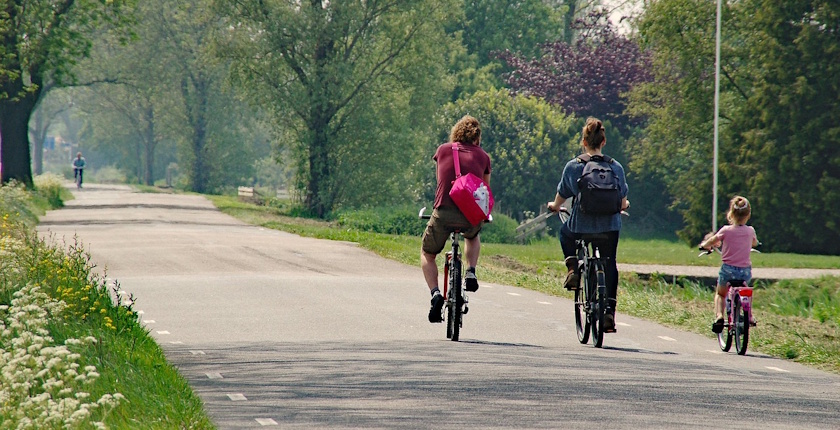
The number of bicycle commuters has also increased significantly since fuel prices soared and road conditions became more unpredictable. I started biking to work last year, and I’ve noticed more bike lanes being marked, as well as more people making the same choice – not only for convenience but for the environment.

Local communities farming strawberries between buildings

Food systems are shifting, too. With imports disrupted and many large-scale farms in occupied or war-damaged areas, Kyiv residents began to grow food in unexpected places. Urban gardening took off in parks, on balconies, and even in underground shelters.

In our district, we turned a neglected courtyard into a communal garden with tomatoes, herbs, and strawberries. It’s not a large-scale solution, but it brings people together, reduces dependence on long supply chains, and fosters a deeper connection to the land.

Green startups popping up throughout Ukraine’s capital city

Crucially, these changes are being supported by a growing culture of green entrepreneurship.

Startups focused on eco-construction, sustainable packaging, and electric mobility are popping up throughout the city. One standout example is a Kyiv-based company that makes biodegradable packaging from hemp – a plant widely grown in Ukraine.

Another startup, EcoFactor, retrofits older buildings to improve their energy efficiency, employing many internally displaced people in the process. These green businesses don’t just support the environment; they offer livelihoods and hope amid uncertainty.

Youth and students are looking toward a sustainable post-war future

Perhaps most inspiring is the role of young people in this transition. Ukrainian youth have always been politically and socially active, but the war has heightened their sense of responsibility.

Environmental clubs in Kyiv universities are organizing climate literacy workshops, cleanup events, and public advocacy campaigns – even during air raid alerts. I recently attended a student-led event called Green Rebuild, where architecture and engineering students presented ideas for post-war reconstruction using sustainable materials and passive design principles.

It struck me that the generation growing up during war is also the one leading us toward a cleaner, more conscious future.

Even amid destruction, there can be creation

Our shift toward a green local economy isn’t linear or perfect. There are still challenges with funding, access to technology, and bureaucratic delays. And yet, what’s happening here is remarkable: a city under siege is laying the foundations for a sustainable future. We are proving that even amid destruction, there can be creation – that rebuilding a nation can also mean rethinking how we live, produce, and share.

In Kyiv today, sustainability is not just a political goal or a global trend – it’s a grassroots reality. It’s neighbors coming together to plant gardens, fix solar panels, sort recyclables, and imagine better ways of living. It’s resilience not only in the face of war, but in the face of climate change, inequality, and old ways of doing things.

The capital city’s story is still unfolding. But as we rebuild, we are building green – not because it’s fashionable, but because it’s essential. And in doing so, we’re showing the world that even in the darkest moments, there is light – and sometimes, that light comes from solar panels on a Kyiv rooftop.

Post Views:45
October 3, 2025
by AEA in News

City of Osijek has highest waste separation rate in Croatia

Osijek has reached a 57.92% waste separation rate in 2024, the highest score among the four largest cities in the country.

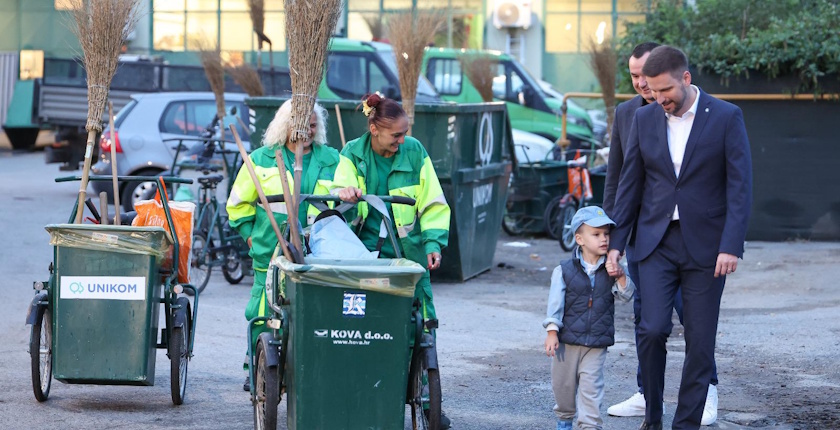
Osijek, with a share of 57.92% of separately collected waste, is again the best among large cities in Croatia, according to Mayor Ivan Radić. Because of the achievement, he visited the employees of the city’s waste utility Unikom in the early morning hours.

He stressed that the success is the result of responsible citizens who separate waste, the dedicated work of Unikom employees, and ongoing investments in infrastructure.

Osijek has four recycling yards, including a mobile one. They are able to separate 52 types of waste. There is also a composting facility. As the mayor pointed out, the local authority invests in consumer education, from kindergartens to its Eco City Waste Fest, because it aims to maintain and improve the achieved results.

Osijek is the only major Croatian city that doesn’t pay penalties for not achieving waste separation targets

Radić underlined that Osijek is the only large Croatian city that, thanks to waste separation above 50%, doesn’t pay penalties.

Municipal authorities in Croatia pay fines per ton of landfilled waste that was supposed to be separated and properly processed in line with waste management rules. The fine for 2025 was set at EUR 30 per ton. The obligatory separation rate for 2025 is 50%.

Unikom CEO Igor Pandžić highlighted that in 2024, a total of 36,000 tons of municipal waste were collected, of which nearly 21,000 tons were recyclable waste. The largest portion was biodegradable waste, thanks to the composting unit, into which the city continues to invest.

Osijek has maintained a waste separation rate above 57% for two consecutive years

Paper, plastic, glass, and metal accounted for over 9,000 tons, Pandžić said, and recalled that Osijek achieved a waste separation rate above 57% for two consecutive years.

He said more projects are underway, including the expansion of the composting facility and the establishment of a center for recycling bulky waste, which would further reduce the quantities ending up at the Lončarica Velika landfill.

In Pandžić’s words, they are important steps in terms of the circular economy. “What our fellow citizens separate, we process into a new product like compost, which then goes back into gardens and yards,” he explained.

At the meeting with the workers, the mayor and the CEO announced a 10% salary bonus as a reward for their work.

Post Views:81
October 3, 2025
by AEA in News

Serbia proposes taxes on greenhouse gas emissions, imported carbon-intensive products

The Ministry of Finance of Serbia launched public consultations on the draft Law on Greenhouse Gas Emissions Tax and Law on Carbon-Intensive Product Imports Tax, both at EUR 4 per ton of CO2 equivalent.

On January 1, importers of electricity, cement, iron and steel, aluminum, hydrogen and fertilizers to the European Union will start paying the CBAM carbon dioxide tax. If the country of origin also has a CO2 pricing system and the EU recognizes it, the sum will be deducted from CBAM.

The greenhouse gas emissions tax won’t be a new fiscal burden, but an incentive for modern and cleaner production, the Ministry of Finance of Serbia stressed in its public consultation call on what it said would be two key laws for the country’s green transition. It intends to charge producers and importers of certain goods EUR 4 per ton of CO2 equivalent.

The draft Law on Greenhouse Gas Emissions Tax and draft Law on Carbon-Intensive Product Imports Tax are intended to lower pollution, improve energy efficiency and secure a more equal position for the Serbian industry in the domestic and international markets, according to the announcement.

The public consultation process lasts until October 21, the deadline for submitting comments and suggestions. Presentations and discussions are scheduled for October 8 and October 15 in Belgrade, and online meetings are to be held on October 10 and October 17.

Both laws to enter into force on January 1, when EU also starts charging CBAM

The first of the two taxes is for big industrial emitters in the sectors of cement, fertilizers, iron and steel, aluminum and electricity. The ministry added that it is targeting January 1 for both laws to come into effect.

On the same date, the EU is set to start charging its Carbon Border Adjustment Mechanism (CBAM) tax on imported electricity, the other said goods as well as hydrogen. If the country of origin also taxes CO2 and the EU recognizes its system, the sum that was paid will be deducted from CBAM.

The CBAM tax is envisaged to rise every year until in 2034 it becomes equal as the prices of grenhouse gas emission certificates in the EU’s Emissions Trading System (EU ETS). Of note, the plan is also to expand the mechanism to other segments that EU ETS covers. The price has held above EUR 75 per ton of CO2 equivalent in the past month.

Institutional infrastructure isn’t sufficiently developed to roll out domestic ETS

The draft Law on Carbon-Intensive Product Imports Tax, envisaged as an equivalent to CBAM on the home market, doesn’t include hydrogen (and neither does the other draft), due to negligible production, while electricity wasn’t included because of technical limitations and a lack of a precise taxing methodology, the ministry explained.

The tax on imported carbon-intensive products would cover only the entities that import more than five tons of the designated products per year

Importers would be taxed based on emissions embedded in the production of the goods from abroad, but they will be able to use tax credits if an emissions levy has already been paid in the country of origin, similar to the EU system. The obligation is only for companies importing more than five tons of designated products per year.

The government opted for a tax instead of an ETS because “an emissions trading system requires a developed institutional infrastructure and market mechanisms that currently aren’t completely established,” an accompanying document reads.

Importantly, an independent verification system is under development.

The taxes would cover CO2, nitrous oxide (N2O) and perfluorocarbons (PFCs).

CO2 tax scope limited to certain larger producers

The ministry pointed out that the draft law wasn’t made to be applied extensively, but only to the firms obligated to have a license for emissions from their plants. Mostly they are large and medium-sized companies. The increase in administrative expenses would be limited, as the entities in the group already measure emissions data, in line with the Law on Climate Change, and send them to the Ministry of Environmental Protection.

The production of synthetic fertilizers and nitrogen compounds, cement, pig iron, steel and ferroalloys, aluminum and electricity accounts for over 57% of emissions in Serbia and more than 90% within the national monitoring and reporting system.

Tax deductions for large electricity producers that invest in decarbonization

A payer of the greenhouse emissions tax that predominantly generates electricity, accounting for at least 80% of its income in the previous annual tax period, is eligible for a tax credit amounting to 20% of the sum that it invested in decarbonization measures, the draft shows.

The deduction wouldn’t exceed 80% of the due tax. The government determines the said measures.

The draft greenhouse gas emissions tax envisages incentives for the taxpayers to finance green projects, the just transition and protection of vulnerable households

In addition, entities that pay the tax would be eligible for incentives, from the state budget, for financing climate and energy transformation through investing in renewables and energy efficiency, innovative low-carbon technologies, decarbonization of industrial production, green construction and support to the just transition and protection of vulnerable households.

In the short term, the new fiscal obligation can cause a moderate increase in production costs for facilities with significantly high emissions, the ministry said. Then there is a possibility, over the long term, for a moderate indirect effect on prices of some products, like construction materials and energy, but it would be limited and gradual, the law’s authors claim.

Post Views:21
October 3, 2025
by AEA in News

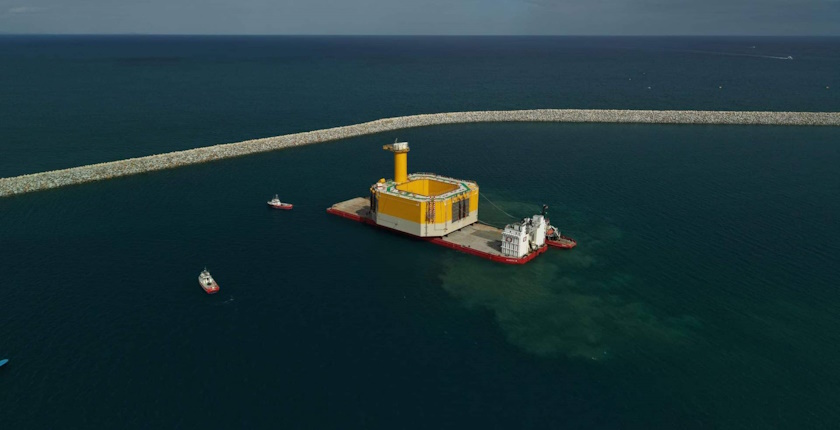
Croatian company Brodosplit delivers equipment for French floating wind farm pilot project

Croatian shipbuilding company Brodosplit has manufactured steel structures for the floating foundations of an offshore wind farm in one of the first such pilot projects in France.

The site for the EolMed project is approximately 18 kilometers from the coastal town of Gruissan in the Occitanie region of southern France.

Qair is leading the consortium, which includes oil and gas giant Total Energies and floating platform provider BW Ideol as its partners. The three 10 MW wind turbines, supplied by Vestas, are about to be installed at a spot where the sea is 55 meters deep.

According to Brodosplit, the project has entered its final phase after the successful launch of the three floating platforms in September.

It isn’t Brodosplit’s first floating wind farm project

The Croatian firm said it manufactured and delivered the metal structures for the floating foundations, in line with the highest quality and safety standards.

Before joining the EolMed project, it entered the floating wind farm segment through cooperation with Ocergie. Brodosplit has created an innovative measuring buoy, OCG-Data, for the France-based company’s Blue Oracle project.

The EolMed project received state support as part of the investments for the future program

The buoy is equipped with a LiDAR (light detection and ranging) system and advanced sensors for monitoring wind, waves, currents, and sea biodiversity, enabling the collection of crucial data for the development of floating wind farms and the preservation of the marine environment, Brodosplit pointed out.

Since EolMed’s initial design in 2016, it has been adjusted and adapted to incorporate the latest technologies. Initially comprising four wind turbines, the number has since been reduced to three for equivalent capacity.

The change also affected the choice of material for the floats – now steel instead of concrete. Construction began in April 2023, and completion is planned for this year.

The project received state support through the Investments for the Future Programme (Programme d’Investissements d’Avenir – PIA). The goal is to demonstrate the economic viability of floating wind farm technology.

Photo: Brodosplit
Post Views:22
  • 1
  • …
  • 51
  • 52
  • 53
  • 54
  • 55
  • …
  • 140

AEA – Albania Energy Association is a industry association dedicated to representing the interests of Albanian and West Balkan for energy producers and consumers. AEA works to advance the development and adoption of sustainable energy solutions in Albania and the Western Balkans, supporting the region’s transition toward a cleaner, more secure, and more competitive energy future. AEA is registered by decision of the Court of Tirana, DECISION NO. 3032, (VAT:L11827451K).

[email protected]

Address
Blv Zogu 1
Tirana
1057
ALBANIA

LinkedIn  |  Facebook
Events
May 25, 2022 Connecting Green Hydrogen Europe 2022
May 25, 2022 Energy Week Western Balkans 2022
Copyright © Albania Energy Association