AEA-Albania Energy Association
  • Main
  • About Us
  • Services
  • Sectors
  • News
  • EventsEvents
  • PublicationPublication
  • Contact Us
AEA-Albania Energy Association
  • Main
  • About Us
  • Services
  • Sectors
  • News
  • EventsEvents
  • PublicationPublication
  • Contact Us
AEA-Albania Energy Association
  • Home Page
  • About Us
  • Sectors
  • Our Services
  • News
  • Contact Us
October 3, 2025
by AEA in News

CEE Energy Conference to be held in London on October 7

Featuring a series of expert-led presentations and panel discussions, the second edition of the annual CEE Energy Conference, taking place in London on October 7, will explore the rapid evolution of the energy sector in Central and Southeast Europe.

CEE Energy Conference 2025: From Generation to Stability – Accelerating the Energy Transition in CEE is organized by international law firm CMS and is free of charge. It will bring together speakers from CMS offices across the CEE/SEE region and the UK, alongside representatives from transmission system operators (TSOs), regulators, and leading energy companies.

The conference will feature country spotlights and two panels, with speakers presenting key developments and innovations from the Czech Republic, Romania, Poland, Bulgaria, Hungary, Ukraine, Slovakia, Croatia, and Austria.

A panel titled BESS, Balancing & Grid Stability will include case studies from across the region, as the BESS market continues to attract international investors. At the second panel, PPAs & Tolling Agreements, participants will share insights into emerging and maturing markets, with perspectives from developers, investors, and legal experts.

One of the key speakers is Thomas Hamerl, an expert in renewables, energy storage, and infrastructure

One of the key speakers is Thomas Hamerl, an expert in renewables, energy storage, and infrastructure and Head of the Energy and Climate Change Group at CMS Reich-Rohrwig Hainz. He will speak at the event on regulatory developments and investment possibilities in Austria, Croatia, Montenegro and Serbia.

Participants in the second annual CMS CEE Energy Conference will have the opportunity to join industry leaders in exploring the latest trends, investment opportunities, and challenges, as well as sector developments, according to Hamerl. “On top of that, market-specific developments will be presented for Bulgaria, the Czech Republic, Croatia, Hungary, Serbia, Poland, Austria, and many more,” he stressed.

Thomas Hamerl is an attorney-at-law and a specialist in infrastructure projects, including public-private partnerships (PPP) and concessions. He is also a leading expert in energy law, public procurement law, and construction and infrastructure-related dispute resolution. CMS Reich-Rohrwig Hainz, based in Vienna, operates in Austria and the Western Balkans.
Post Views:17
October 3, 2025
by AEA in News

Europe’s Environment 2025 report: Not good

Biodiversity is declining and water stress is affecting one third of Europe’s population and territory, while the frequency and magnitude of climate-related disasters are increasing. In short, this is the message from the report Europe’s Environment 2025.

​Europe’s Environment 2025 is the most comprehensive analysis on the current state and outlook for the continent’s environment, climate, and sustainability, building on data from across 38 countries, according to the European Environment Agency (EEA).

The outlook for most environmental trends is concerning and poses major risks to Europe’s economic prosperity, security, and quality of life, the authors warned. The agency said climate change and environmental degradation pose a direct threat to Europe’s competitiveness, pointing out that it depends on natural resources.

Progress on a range of factors that enable the shift towards sustainability – such as innovation, green employment, and sustainable finance – gives cause for hope, EEA added.

​More than 80% of protected habitats are in a poor or bad state

The report shows biodiversity is declining across terrestrial, freshwater, and marine ecosystems in Europe due to persistent pressures driven by unsustainable production and consumption patterns, demonstrated most notably in the food system.

More than 80% of protected habitats are in a poor or bad state, with 60% to 70% of soils degraded, the document reads.

On a positive note, the extent of protected areas increased over the past decade – by 2022, 26.1% of the European Union’s land and 12.3% of its seas were protected. However, designating protected areas alone does not guarantee that biodiversity is effectively protected, the authors wrote.

​Water stress is affecting one third of Europe’s population and territory

The report’s findings point to severe pressure on water resources: water stress is affecting one third of Europe’s population and territory.

Only 37% of surface water bodies had a good or high ecological status in 2021, with the degradation of aquatic ecosystems threatening Europe’s water resilience. Agriculture is responsible for the most significant pressure on both surface and groundwater, data revealed.

EEA recalled that Europe is the fastest-warming continent on the planet.

Weather- and climate-related extremes caused economic losses of assets estimated at EUR 738 billion in the EU’s 27 member states over the period 1980-2023, with over EUR 162 billion in costs from 2021 to 2023 alone, the report reads.

Over 70,000 people in Europe are estimated to have died from heat in 2022.

The average annual economic losses in the 2020‑2023 period were 2.5 times as high as in the preceding decade, from 2010 to 2019, according to the report.

Downpours are increasing in severity, with several regions subject to catastrophic floods in recent years, while extreme heat, once rare, is becoming more frequent, with deadly consequences: over 70,000 people in Europe are estimated to have died from heat in 2022.

The greatest challenges call for a need to rethink the links between the economy and the natural environment, land, water and natural resources, EEA underscored.

“We cannot afford to lower our climate, environment and sustainability ambitions. Our state of environment report, co-created with 38 countries, clearly sets out the science-based knowledge and demonstrates why we need to act. In the European Union, we have the policies, the tools and the knowledge, and decades of experience in working together towards our sustainability goals. What we do today will shape our future,” EEA Executive Director Leena Ylä-Mononen said.

Bright spots

The report also highlighted the good results of environmental protection policies in Europe.

The EU has cut its domestic greenhouse gas (GHG) emissions by 37% since 1990, largely driven by reducing fossil fuel use and doubling the share of renewables since 2005.

All member states have reduced their reliance on fossil fuels and shifted towards more sustainable energy sources over the last decade, while increased energy efficiency has brought down demand.

In 2023, renewable energy sources represented over 24% of the EU’s final energy use, a record high.

The bloc’s industrial system has managed to reduce emissions by more than 35% from 2005 to 2023, while emissions from buildings fell by more than 35% between 2005 and 2023.

Significant progress has been made in reducing pollution in Europe. EU policies led to improvements in air quality and reduced premature deaths attributable to fine particulate matter from 2005 to 2022 by 45%, according to the Europe’s Environment 2025 report.

Post Views:22
October 3, 2025
by AEA in News

Croatia’s HEP to install 90 solar power plants on rooftops of its facilities

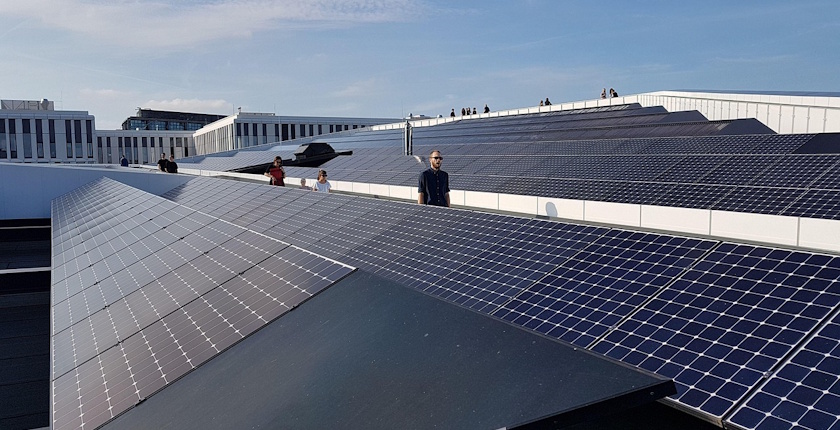
Croatia’s power utility Hrvatska Elektroprivreda intends to install 90 solar power plants on its facilities across Croatia.

HEP ESCO, a subsidiary of Hrvatska Elektroprivreda (HEP), has launched a public procurement for the installation of 90 photovoltaic plants under a design-and-build model and on a turnkey basis.

The firm develops, implements, and finances energy efficiency projects based on the ESCO model.

The investment is estimated at EUR 5.3 million, and the deadline for submitting bids is November 3.

HEP ESCO plans to sign a contract with the best bidder within 90 days after selecting it. The deadline for the completion of works will be 18 months, according to the public call.

Five groups of solar power plants

The public call is divided into five geographical groups in Croatia.

Group 1 is for Zagreb and its surroundings. Solar panels would be installed at ten locations, with an estimated investment of EUR 1.2 million. Group 2 covers hydropower plants Zavrlje, Orlovac, Peruća, and Zakučaci in the coastal region of Dalmatia, as well as power distribution facilities. The works in the segment are valued at EUR 770,000, local media reported.

Four cities in the region of Slavonia make up the third group, with 20 locations. Solar panels would be installed for EUR 1.21 million in Virovitica, Požega, Vinkovci, and Vukovar.

HEP has over 50 solar power plants on the rooftops of its buildings and facilities

A total of 15 locations in the areas of Međimurje and Zagorje and the Sisak-Moslavina county, and including hydropower plant Ozalj, all in northwestern Croatia, are in the fourth group. The estimated value is EUR 1.1 million.

The value of the investment in Istria, Primorje, and Gorski Kotar is EUR 1.03 million. It entails the Fužine hydropower plant, Rijeka, Vinodol, and electricity distribution facilities.

Of note, HEP has more than 50 solar power plants on the rooftops of its buildings and facilities.

HEP Proizvodnja, HEP’s power production arm, has 12 PV plants on administrative buildings, thermal power plants and hydropower plants. The total capacity is about 1.5 MW. HEP ODS, the country’s distribution system operator, has another 44 solar power plants with a total capacity of 1.1 MW on its roofs.

Post Views:16
October 3, 2025
by AEA in News

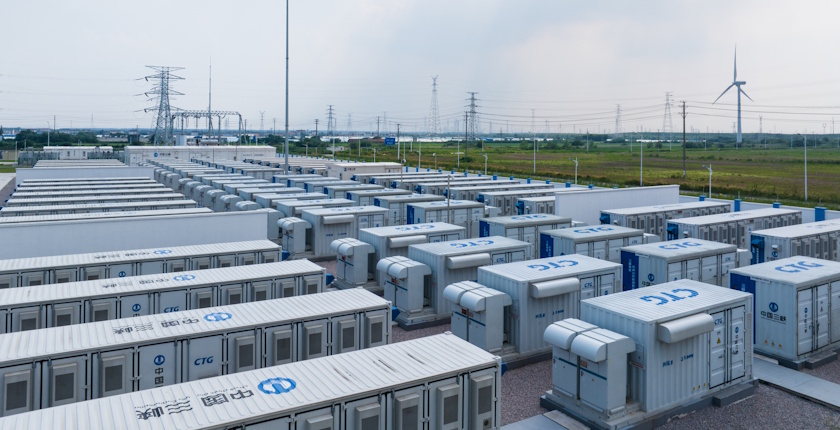
Batteries totaling 5,899 MWh in grid connection procedure in Serbia

Investors in Serbia are obtaining approvals for connecting their planned battery energy storage systems of an overall 2,021 MW and 5,899 MWh to the grid. The projects are for standalone batteries and ones that would be co-located with power plants.

Battery energy storage systems (BESS) are rapidly expanding worldwide, and Southeast Europe is no exception. European Union member states in the region such as Bulgaria and Romania are making major strides, while the other countries are trying to catch up. For example, Bosnia and Herzegovina, Montenegro, North Macedonia and Serbia.

As of September 29, Serbia’s transmission system operator (TSO) Elektromreža Srbije (EMS) received a total of 12 applications for the development of connection studies for standalone BESS, Nebojša Vučinić, manager of the Development Division of EMS, told Balkan Green Energy News.

Two applications were submitted in January for the study development interval of March 1 to June 30, 2025, and ten more were received for the current interval, which lasts from September 1 to December 31. Out of the first two applications, the one from Green BESS KV is no longer valid, because the firm didn’t submit a bank guarantee.

EMS develops connection studies every year in two intervals.

The following companies are in the process of connecting standalone BESS:

  • MKBDP Energy
  • Green Land New Energy
  • Green Mountain New Energy
  • BP WPP
  • Blue BESS KV
  • Red BESS KV
  • Yellow BESS KV
  • ENLIGHTNES PV OPERATIONS
  • ENLIGHTNES PV PARK
  • Gridflex

As for the status of their applications, MKBDP Energy has submitted a bank guarantee, and the signing of the grid connection contract is expected.

For the other ten requests, the grid connection studies are underway. They are expected to be completed by December 31.

Standalone storage facilities are planned in Valjevo, Vranje, Subotica, Kovačica, Vršac, Leskovac, Kragujevac, Kruševac, Jagodina, and Ćuprija.

A total of 55 battery projects are in the connection procedure

The 11 standalone storage projects amount to 1,072.66 MW and 2,981.98 MWh altogether, Vučinić said.

The 44 storage facilities that would be co-located with power plants utilizing variable renewable energy sources would have 948.46 MW and 2,917.31 MWh, as stipulated in the Law on the Use of Renewable Energy Sources.

All battery storage projects in the grid connection process amount to 2,021.12 MW and 5,899.29 MWh, Vučinić stressed.

MKBDP Energy’s project has advanced the most in the connection process

According to Vučinić, implementation of BESS projects depends on the progress that an investor achieves. Currently, MKBDP Energy’s investment has passed the most milestones in the connection process, he added.

EMS noted that the grid connection process for standalone battery storage is defined by the Law on Energy and bylaws.

The deployment of standalone batteries complements the integration of power plants running on variable renewable sources

The state-owned company sees no obstacles to integrating standalone BESS into the transmission system. The TSO expressed commitment to assisting investors while maintaining the safety of the entire power system’s operation.

EMS also called the increase in applications for standalone batteries a positive development.

The emergence of standalone batteries complements the integration of power plants utilizing variable renewable energy, and since a large number of such power plants are expected to be connected, the integration of standalone storage helps the power system’s flexibility and safety, Vučinić underlined.

Post Views:32
October 2, 2025
by AEA in News

European day-ahead power market rolls out 15-minute trading intervals

The Single Day-Ahead Coupling area split its hourly units into 15-minute intervals for electricity trading. The change, affecting most European markets, is aimed at enhancing the integration of renewables by making flexibility and balancing more efficient.

After delays and intensive testing, the European wholesale electricity market switched to a 15-minute market time unit (MTU) from hourly blocks within the Single Day-Ahead Coupling (SDAC) mechanism. The transition was implemented across all bidding zones and bidding zone borders, according to the All NEMOs Committee, gathering nominated electricity market operators.

Thirty transmission system operators were involved in the move, aimed at creating an integrated pan-European cross-zonal day-ahead electricity market. Only Great Britain, Switzerland, the Western Balkans, Turkey and Cyprus, the European Union’s only non-interconnected member state, are outside of the SDAC region.

The first trading sessions were held at power exchanges yesterday, for delivery today. So far there were no indications of glitches with the quarter-hourly products.

A more than a year-long testing campaign for the 15-minute MTU solution included the validation of local, regional and cross-border functionalities, verification of connectivity between parties and confirmation of overall system readiness, the Market Coupling Steering Committee, MCSC, said last month.

Also of note, Cyprus launched its electricity exchange yesterday, with day-ahead, forward and balancing markets. In spot trading, the interval is 30 minutes.

Benefits from trading blocks with shorter intervals

The European Union is pushing the electricity market to improve efficiency by matching production and consumption more accurately. With the rising shares of solar and wind power in the energy mix, the frequency and intensity of fluctuations from weather changes are growing as well.

As the energy transition and digitalization progress, market time units could get shorter and shorter

The 15-minute interval captures the changes better than the one-hour block, reducing balancing needs and costs and freeing up capacity. As the energy transition and digitalization progress, market time units could get shorter and shorter. Importantly, it implies an exponential rise in computing power.

Wind and clouds aren’t very predictable, so unmatched production forecasts cause imbalances. It can burden the intraday market, where they are corrected. Shorter intervals lower the deviations.

Opportunity for battery storage deployment

With 15-minute products, more short-term fluctuations will already be captured in the day-ahead auction, Vattenfall said in a comment.

“Generation and demand can now be mapped much more precisely. We can submit more accurate forecasts, market renewables more effectively, deploy batteries and pumped storage more efficiently, and significantly increase system flexibility,” the company’s Head of Short-Term Asset Optimization Jörg Seidel pointed out.

Consumers could also benefit, according to the Swedish energy producer and supplier. More precise price signals open new savings potential through dynamic tariffs and smart meters, enabling households to use electricity when it is cheapest, it explained. It could make heat pumps, photovoltaic systems, batteries, and electric vehicle charging more efficient and affordable.

“Flexibility is becoming the currency of the energy transition,” Seidel stressed.

Nevertheless, nothing changes for small consumers including households until they get an electricity meter that can track quarter-hourly blocks.

With higher fluctuations in shorter intervals, opportunities arise for operators of battery energy storage systems (BESS) and other storage and balancing technologies, which stabilizes the electricity system. The switch to the 15-minute MTU is mostly beneficial for aggregators as well, reducing their exposure to penalties for failing to meet forecasted levels of production.

Post Views:28
October 2, 2025
by AEA in News

EU reaches water pollution prevention deal but with deadlines of up to 20 years

The European Parliament and Council of the European Union agreed, after almost three years of negotiations, on updated rules regarding the pollution of surface and groundwater. However, the co-legislators left a timeline of up to two decades for member states to comply with some of the obligations.

The Danish presidency of the Council of the EU and the European Parliament’s representatives have reached a provisional political agreement on a directive to review and update the lists of pollutants affecting surface waters and groundwater and corresponding regulatory standards. Standards would be changed for several pollutants, and new substances added, aligning EU water policy with the latest scientific evidence.

Denmark’s Minister for Environment and Gender Equality Magnus Heunicke called the deal “a careful balance between ambition and flexibility for member states.” It safeguards the health of citizens and future generations by reducing exposure to harmful chemicals, he added.

It’s been almost three years since the European Commission proposed an update to the lists of pollutants.

Bisphenol A flagged as priority hazardous substance

New substances in priority lists would include pesticides, pharmaceuticals, bisphenols and per- and polyfluoroalkyl substances – PFAS, also known as forever chemicals. Member states would be required to improve the monitoring and transparency of water quality.

Bisphenol A or BPA was found in urine of 92% of urine samples in one study

Bisphenol A (BPA) is designated as a priority hazardous substance. A study published a few years ago showed that the chemical was found in urine samples of 92% of participants from 11 European countries.

The Water Framework Directive (WFD) already requires member states to prevent deterioration of the status of water bodies, but it was framed generally.

The deal envisages an exemption for short-term temporary deterioration, and another for cases where pollution is relocated, by moving water or sediment. There are safeguards, particularly in relation to drinking water, the council said.

Rules for some of more harmful substances to come into force by 2033

Member states will have until 2039 to achieve compliance with the new standards, but a “strictly conditioned extension” is also possible, until 2045. In the case of substances with revised and more stringent environmental quality standards in surface water, the deadline for compliance is 2033.

Member states will be required to transpose the directive by late December 2027.

The co-legislators outlined a 20-year deadline for phasing out priority hazardous substances. When the Council of the EU and European Parliament officially adopt the directive, it will enter into force. Member states would need to transpose it into national law by late December 2027.

In the EU, 46% of surface waters and 24% of groundwater don’t qualify for a good chemical status, and differences between member states are extreme, the announcement notes.

EEB: Member states managed to delay, weaken obligations

Commenting on the water pollution prevention deal, the European Environmental Bureau (EEB) said member states have managed to delay and weaken obligations.

The lists of priority pollutants for surface and groundwater should be updated every six years, but the last updates were done in 2013 and 2014, respectively, it noted. In addition, EU-wide groundwater standards for pesticides and nitrates have not been revised since the adoption of the Groundwater Directive in 2006, the network of environmental groups pointed out.

“All over Europe, our waters are polluted with TFA, a small PFAS pesticide residue that can be toxic to reproduction. By not monitoring these substances immediately in all types of water bodies, the EU misses a significant opportunity to take water and health protection with the importance and urgency it requires,” said Manon Rouby from Pesticide Action Network (PAN) Europe.

The Council of the EU said that TFA, trifluoroacetic acid, would be added to the initially proposed sum of 24 PFAS for surface water.

Post Views:28
October 2, 2025
by AEA in News

Bayraktar: Dongfang plans 2 GW wind turbine factory in Turkey

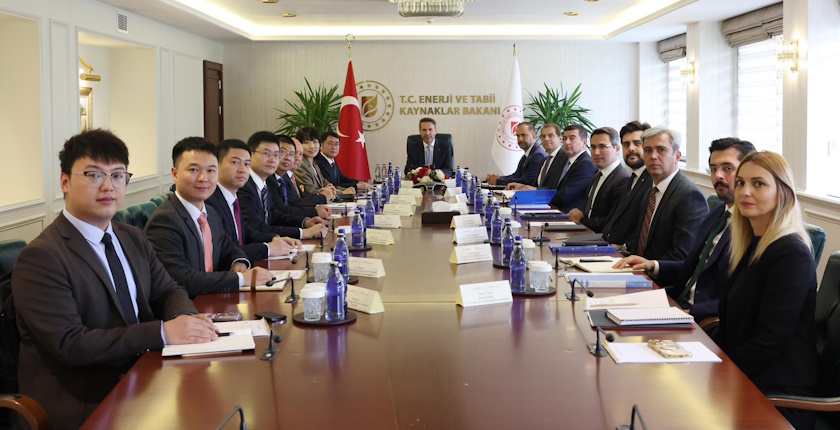
China-based Dongfang Electric plans to build a wind turbine production facility in Turkey, said Minister of Energy and Natural Resources Alparslan Bayraktar. It would have an annual capacity of 2 GW.

Turkey is pushing ahead with its ambition to reach 120 GW in combined solar and wind power capacity by 2035. Following a meeting with the top executives of Dongfang Electric Corp., Minister of Energy and Natural Resources Alparslan Bayraktar pointed out that, at the same time, the domestic manufacturing potential in the two segments needs to be increased.

“We evaluated the Chinese company’s plan to establish a wind turbine production facility with an annual capacity of 2,000 MW in our country, with an initial investment of approximately USD 250 million,” he revealed.

Dongfang Electric installed the world’s largest wind turbine last month for testing. The 26 MW behemoth is on the Bohai Sea at the coast of Shandong province in China’s east.

The company is also active in the Western Balkans. Dongfang Electric is leading the consortium reconstructing the Pljevlja coal power plant in Montenegro. In Bosnia and Herzegovina, it has built solar power plant Bileća, of 60 MW in peak capacity, and the Stanari coal plant, both for EFT.

Dongfang Electric could cover Turkey’s annual wind power capacity additions by itself with future factory

At the end of July, electricity capacity in Turkey totaled 120.2 GW. Hydropower accounted for 26.9% or 32.3 GW, compared to 23.4 GW of photovoltaics (19.5%) and 13.7 GW of wind power, translating to 11.4%.

There are 150 manufacturers of wind turbine components and accompanying gear in the country, covering 65% of the technology, according to a recent report. Data from early this year showed there were seven production facilities for towers, four plants were making blades, and another four were manufacturing generators and gearboxes.

Wind power plants of 1.3 GW in total were installed last year. The annual expansion could top 2 GW in 2026.

Government conditions renewable energy auction participants with high domestic sourcing rates

While awarding large wind and PV capacities through renewable energy auctions, the Ministry of Energy and Natural Resources requires high domestic content rates from the bidders.

As for PV panels, there were 75 active manufacturers at the beginning of 2025. Put together, their annual capacity was 44.5 GW. Three were making solar cells and their overall capacity was 6.1 GW per year.

The country is also strong in other technologies, like for geothermal power plants.

Post Views:32
October 2, 2025
by AEA in News

Electricity exchange kicks off in Cyprus with 17 participants

The liberalization of the power market in Cyprus took effect alongside the launch of the electricity exchange, with day-ahead, forward and balancing markets.

The island country is one of the most isolated energy systems of the European Union. It relies on expensive oil plants to cover its power needs. Cyprus has no electricity or gas interconnections, and the rate of curtailments of renewables is high.

It translates to the highest wholesale prices in Europe, as well as high retail tariffs for consumers. The project for the Great Sea Interconnector linking the electricity systems of Cyprus and Greece would ease the strain, but it is suffering massive delays due to geopolitical and economic factors.

With the liberalization, 17 participants can submit offers and form prices in the day-ahead, forward and balancing markets, which the Transmission System Operator of Cyprus (TSOC) operates.

Specifically, there are two conventional producers, two suppliers, nine aggregators and three renewable energy producers, according to the Cypriot Electricity Market Association (CEMA). Trading works in 30-minute intervals, instead of the monthly settlements until September 30 and today.

TSOC reported that prices in the day-ahead market for October 1 ranged from zero to 180 per MWh. The level cratered from EUR 150 per MWh to nothing for the interval for delivery from 11:00, and remained there through 14:30. The price was EUR 1 per MWh for the next half hour, only to jump to EUR 151 per MWh in the next time segment.

The daily high was registered at 19:30. Most intervals were at EUR 160 per MWh to EUR 170 per MWh.

Consumers will gain from flexible tariffs

The operator and the Ministry of Energy, Trade and Industry are hopeful that new markets would remove market distortions. Furthermore, flexible tariffs can be offered to final consumers.

“Independent suppliers can now form their own energy mix, combining conventional and renewable sources. This allows them to offer flexible tariffs with reduced prices during the hours of increased renewable production and at night,” CEMA stressed.

EAC: A chance for the green transition

“Our organization is ready and committed to continue being a reliable pillar for electricity in Cyprus… The opening of the market is not just an institutional change, but a chance for growth, for the green transition and improving everyday life for citizens,” state-owned Electricity Authority of Cyprus (AIK or EAC) said. It is the dominant producer in the island.

Post Views:21
October 1, 2025
by AEA in News

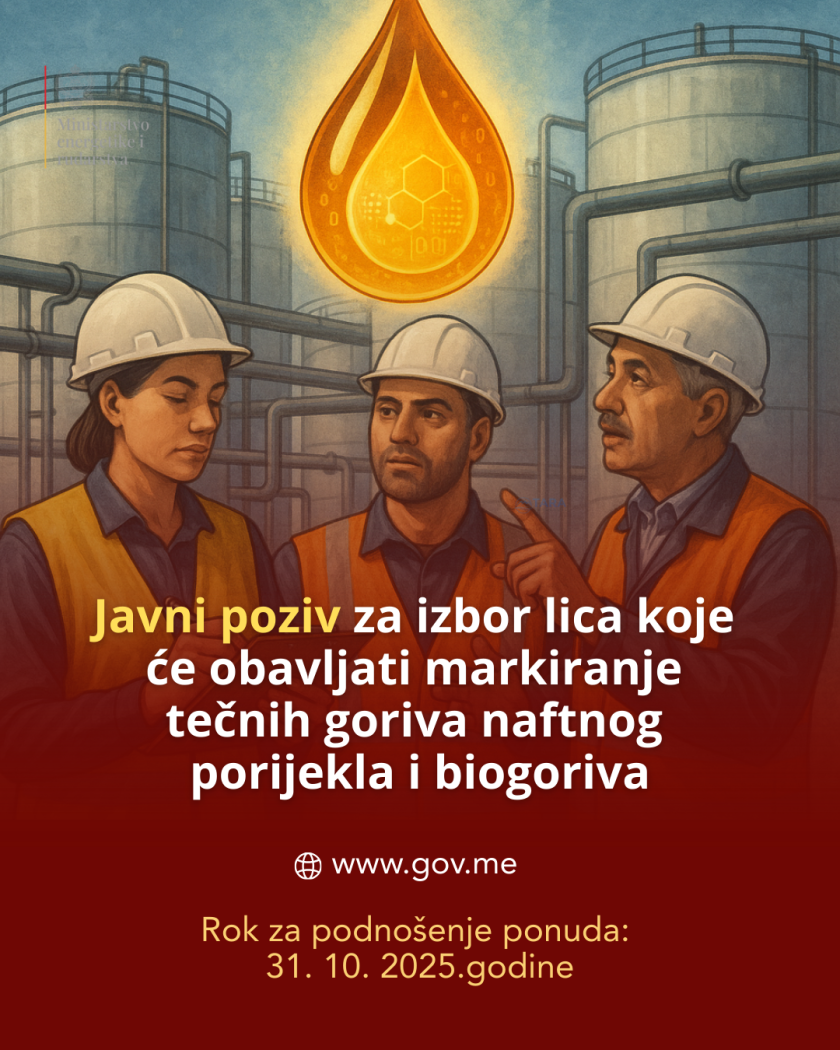
Montenegro seeks contractor for marking liquid oil-derived fuel, biofuel

With approval from the Government of Montenegro, the Ministry of Energy and Mining issued a public call for the selection of a legal person that would conduct the obligatory marking of liquid fuel and biofuel in the Montenegrin market.

The introduction of fuel marking is an important step in the fight against the gray economy and illegal trade, but also a measure strengthening fiscal discipline and the state’s energy system, according to the announcement. The ministry added that Montenegro is introducing the practice in line with its Fiscal Strategy 2024-2027, to secure greater transparency and the security of supply.

The selected legal person will be obligated to use a unique marker for the Montenegrin market – type A for fuel subject to excise tax and type B for fuel exempted from excise tax, as well as to establish an information system accessible to all relevant instutions. This is the way to secure a total control of fuel trade and consumer protection, the explanation reads.

The maximum price of the fuel marking service amounts to EUR 0.008 per liter, which is EUR 8 per 1,000 liters of fuel, the Government of Montenegro stipulated in its decision from September 18.

Offers are received every workday between 10:00 and 14:00, through October 31, 2025. The address of the Ministry of Energy and Mining is Rimski trg 46, Podgorica.

The tender documentation with all the details and criteria is available on the ministry’s website.

With the new measure, Montenegro strengthens the control over the energy market, protects citizens and the country’s budget and builds additional trust in the energy system, the update adds.

Post Views:19
October 1, 2025
by AEA in News

Corinth Pipeworks commissions Greece’s biggest industrial rooftop PV system

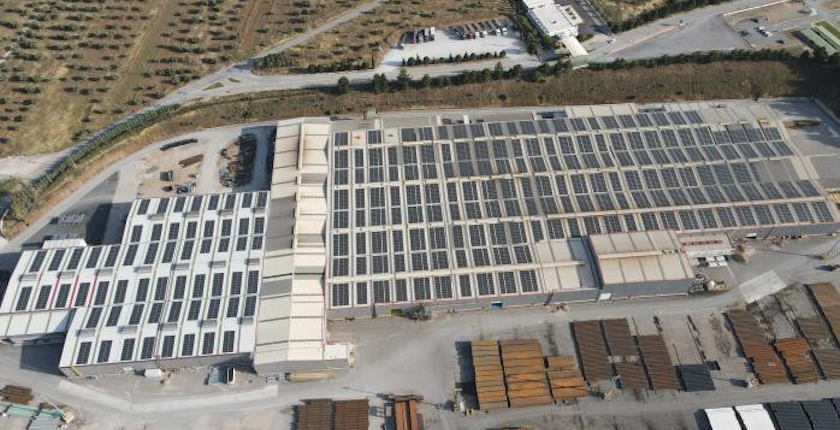
Steel pipe manufacturer Corinth Pipeworks has put into operation a 7.1 MW photovoltaic facility on its plant in the Thisvi Industrial Area. It is the largest industrial rooftop PV system in Greece, the company said.

A steel pipe factory northwest of Athens will cover an estimated 25% of its electricity needs with its new solar power plant, generating some 10 GWh per year. Corinth Pipeworks (CPW) revealed that it has commissioned the 7.1 MW system, pointing out it is the largest industrial rooftop photovoltaic facility in Greece.

The company, owned by Cenergy Holdings, conducted the endeavor under an ESCO scheme. The project was entirely designed and implemented by Survey Digital Photovoltaics. It was financed by investment firm Sirec Energy and Survey Digital Photovoltaics, in collaboration with Piraeus Bank.

Under the terms of the 10-year lease, the system will be transferred at no cost to Corinth Pipeworks. The behind-the-meter PV plant is for own consumption, injecting no electricity into the high-voltage grid.

Corinth Pipeworks surpassed its 2025 target of sourcing 80% of its energy consumption from renewables

The facility spans almost six hectares on two factories, at a height of ten meters. It consists of 12,000 solar panels.

With the photovoltaic plant and a power purchase agreement (PPA) for a wind farm, CPW surpassed its 2025 target of sourcing 80% of its energy consumption from renewables. The company’s portfolio includes pipes for hydrogen pipelines.

“This choice carries particular significance, as it comes from an organization with both the technical capacity to develop the photovoltaic system and manage the generated energy, as well as the financial capacity to finance the investment independently. Yet, it chose to move forward in collaboration with us and Survey Digital Photovoltaics, recognizing the value of strategic partnership,” said Vice President of Sirec Energy Vangelis Bardis.

A subsidiary of Viohalco, Belgium-based Cenergy Holdings also controls Hellenic Cables, which manufactures power and telecommunications cables.

Post Views:17
  • 1
  • …
  • 52
  • 53
  • 54
  • 55
  • 56
  • …
  • 140

AEA – Albania Energy Association is a industry association dedicated to representing the interests of Albanian and West Balkan for energy producers and consumers. AEA works to advance the development and adoption of sustainable energy solutions in Albania and the Western Balkans, supporting the region’s transition toward a cleaner, more secure, and more competitive energy future. AEA is registered by decision of the Court of Tirana, DECISION NO. 3032, (VAT:L11827451K).

[email protected]

Address
Blv Zogu 1
Tirana
1057
ALBANIA

LinkedIn  |  Facebook
Events
May 25, 2022 Connecting Green Hydrogen Europe 2022
May 25, 2022 Energy Week Western Balkans 2022
Copyright © Albania Energy Association