AEA-Albania Energy Association
  • Main
  • About Us
  • Services
  • Sectors
  • News
  • EventsEvents
  • PublicationPublication
  • Contact Us
AEA-Albania Energy Association
  • Main
  • About Us
  • Services
  • Sectors
  • News
  • EventsEvents
  • PublicationPublication
  • Contact Us
AEA-Albania Energy Association
  • Home Page
  • About Us
  • Sectors
  • Our Services
  • News
  • Contact Us
October 1, 2025
by AEA in News

Hydropower plant Dabar to be completed by end-2027

The Dabar hydropower plant is expected to be completed by the end of 2027, according to Petar Đokić, Minister of Energy and Mining of the Republic of Srpska.

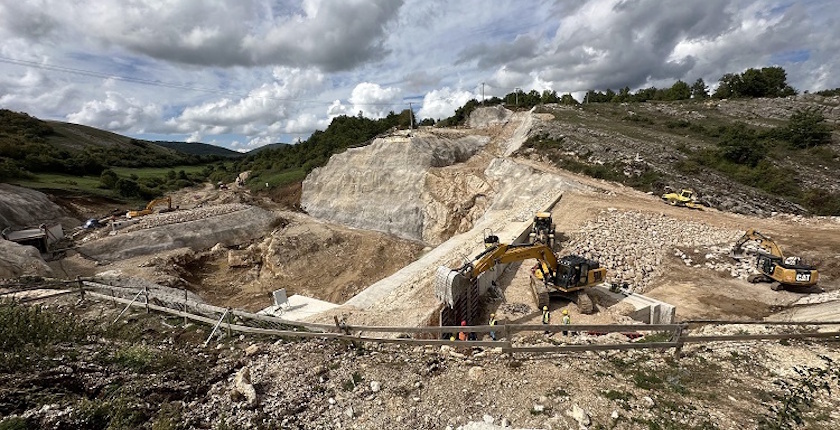
The operation of the Dabar hydropower plant, the most complex hydropower facility, in which EUR 339.5 million has been invested, will bring benefits for the entire eastern Herzegovina area, Petar Đokić said during a visit to the construction site, Srna reported.

The works on the 160 MW hydropower plant, with an expected annual production of 500 GWh, began in June 2023.

Đokić noted that the project is located in four municipalities – Nevesinje, Bileća, Berkovići, and Ljubinje – spanning 40 kilometers. As a key part of the project, Đokić highlighted a 12-kilometer tunnel, which is nearly finished.

Đokić: It is an exceptional construction undertaking, the first of its kind in the world in the 21st century

It is an exceptional construction undertaking, the first of its kind in the world in the 21st century, the minister said and added that he is proud to be part of the project from the beginning of its implementation.

Photo: Ministry of Energy and Mining

He spoke with the representatives of China-based Gezhouba Group Co., the main contractor, and Integral and Elnos, its domestic subcontractors.

Đokić stressed that some issues regarding the construction were discussed. HPP Dabar is a financially demanding project, he noted.

Photo: Ministry of Energy and Mining

Wind farm Grebak will be completed by 2027

Minister Đokić recalled that projects for solar power plants and wind farms with a capacity of 680 MW are under development in the territory of Nevesinje municipality, with investments estimated at an overall EUR 409 million.

He underlined that one of the projects, the Grebak wind farm, has experienced delays. Numerous companies, including the investor in the Grebak project, are hostages to the European policies mistrustful of Bosnia and Herzegovina, Đokić claimed.

Of note, the Republic of Srpska is one of the two political entities of BiH. The concession for the Grebak wind farm was granted in April 2019.

The minister expressed hope that the investor would overcome the challenges, conclude a financing agreement, secure equipment, and start construction work, expected to be finished by late 2026 or early 2027.

Investors in solar projects in Nevesinje are currently preparing documentation and purchasing equipment, Đokić said.
Post Views:24
October 1, 2025
by AEA in News

Montenegro to produce coal until 2050

The Pljevlja coal mine has been granted a concession for coal production for 24.5 years, extending the extraction of the solid fossil fuel until 2050.

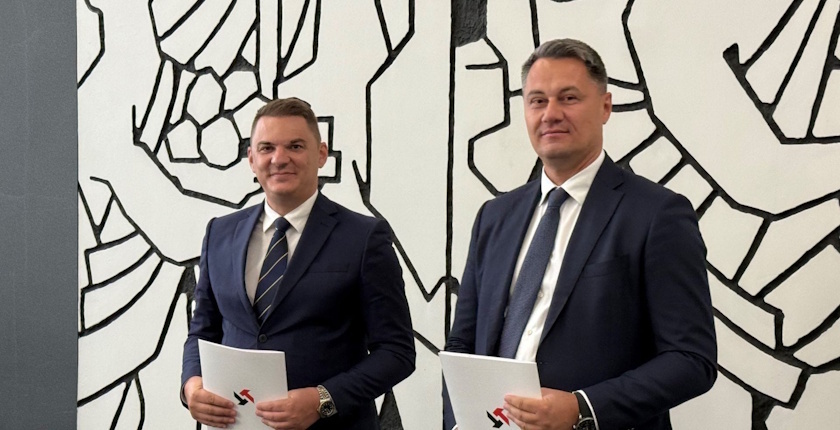
Admir Šahmanović, Minister of Energy and Mining, and Nemanja Laković, CEO of coal mine operator Rudnik uglja Pljevlja (RUP), exchanged concession agreements for the period up to 2050.

They spoke at a ceremony in Pljevlja marking Miner’s Day, September 24, and the 73rd anniversary of the mine’s operation.

The signing of the concession agreement enables the long-term use of significant coal reserves in the Pljevlja municipality, which is one of the key steps in further valorizing the mining potential of northern Montenegro, according to the Ministry of Mining and Energy.

The coal extraction concession is granted for 24.5 years

“Our joint mission is for mining in Montenegro to continue developing responsibly, and in line with the highest standards. Our special focus will be on the development and future of this sector, having in mind the changes introduced by a just transition,” Šahmanović stated.

In late June, the Government of Montenegro decided to grant the concession to the mine for the excavation of lignite deposits at the sites Potrlica, Kalušići, Grevo, and Rabitlje in the Pljevlja coal basin.

The duration of the contract is 24.5 years, the government said. The mine is obliged to produce at least 1.65 million tons of lignite annually.

The Pljevlja coal power plant is planned for closing in 2041

The concession fee amounts to 4% of the market value of the excavation reserves.

Of note, almost the entire production of the mine is for the Pljevlja thermal power plant – the country’s only coal plant and the largest electricity producer.

The draft National Energy and Climate Plan (NECP) of Montenegro proposes 2041 as the provisional date for closing the Pljevlja coal plant.

The timeline primarily depends on the success of the just transition process and maintaining the security of the electricity supply, the document reads.

Post Views:20
October 1, 2025
by AEA in News

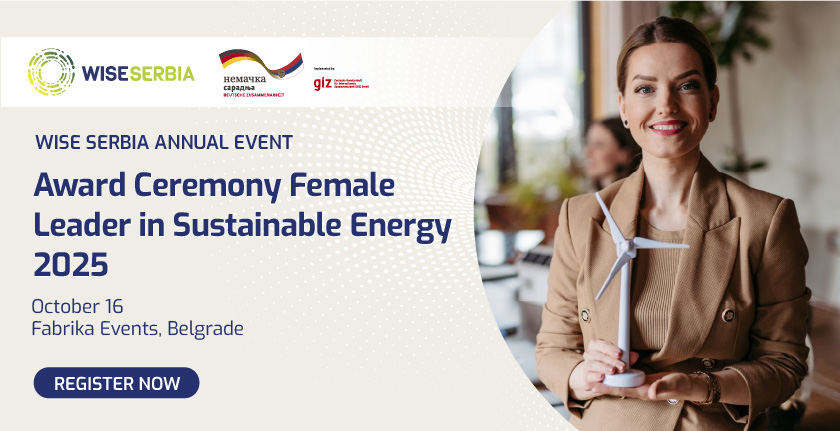
WISE Serbia Annual Women’s Network Event – October 16 in Belgrade

The Center for the Promotion of Sustainable Development and Deutsche Gesellschaft für Internationale Zusammenarbeit (GIZ) GmbH are organizing the annual WISE Serbia Women’s Network event, which will take place on October 16 at Fabrika Events in Belgrade.

The WISE Serbia Women’s Network in sustainable energy, climate action, and environmental protection has been in existence since 2018 and is one of the first networks of its kind worldwide. WISE Serbia brings together over 250 female experts from the energy sector and related fields, promoting their role in the energy transition, as well as in the democratization and decentralization of the energy sector. The network is recognized as a platform that connects knowledge, experience, and vision of women shaping a sustainable energy and climate future in Serbia.

Registration is open until October 10 or until places are filled via this LINK. The program begins at 4:30 PM at Fabrika Events, Poenkareova 32, Belgrade. Participation in the event is free of charge.

This year, 10 outstanding women have been nominated for the Female Leader in Sustainable Energy 2025 award. Voting is open until October 10 on the WISE Serbia website. Take the opportunity to support the woman you believe deserves the title of leader in sustainable energy.

“This is the third edition of the Female Leader in Sustainable Energy award. Year after year, we celebrate exceptional women professionally engaged in the energy sector, climate action, and environmental protection. Each nominee could rightfully earn the title of leader. Their biographies and professional achievements speak for themselves. They are recognized in their teams as women who drive change and serve as inspiration and motivation for all of us to continue building a sustainable present and future,” emphasized Branislava Jovičić, cofounder of the WISE Serbia Women’s Network.

Photo: Branislava Jovičić, co-founder of the WISE Serbia women’s network, and Svetlana Cervovic, last year’s winner of the Female Leader in Sustainable Energy award.

The event will be officially opened by H.E. Anke Konrad, Ambassador of the Federal Republic of Germany, and Jovana Joksimović, Assistant Minister for International Cooperation, European Integration, and Project Management at the Ministry of Mining and Energy.

The program will continue with a panel discussion moderated by Maja Turković, Executive Vice President at CWP Europe and the 2023 Leader in Sustainable Energy awardee.

Following the panel discussion, the finalists for the Leader in Sustainable Energy award will be announced, followed by the winner’s presentation and the ceremonial award presentation.

The media sponsor of the event is Balkan Green Energy News.

Post Views:22
September 30, 2025
by AEA in News

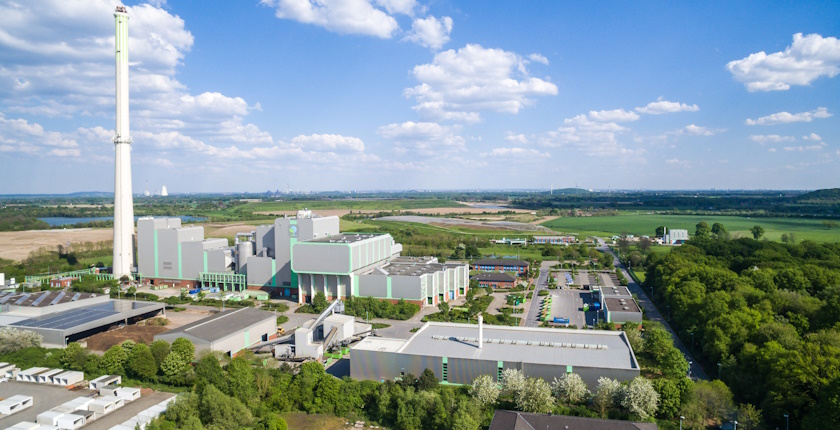
Race against time to secure EU funding for waste-to-energy plants in Greece

Hostile reactions from citizens and the opposition by municipal authorities threaten to derail Greece’s efforts to build six waste-to-energy plants. Moreover, time is running out to secure EUR 800 million in European funding.

The Ministry of Environment and Energy is expected to publish a call for waste-to-energy projects planned in Attica, Western Macedonia, Rodopi, Peloponnese, Boeotia (Viotia) and Crete. Total investment would amount to EUR 1 billion, for 1.19 million tons in capacity. However, time is running out to secure EUR 800 million in European funding set aside for them and the accompanying recycling plants.

Greece has been warned several times by the European Commission and fined for failing to fulfil its obligations in waste management. The country still relies mostly on landfills to handle municipal waste, instead of modern solutions. Ideally, useful materials should be sorted for recycling before the waste gets burned in incinerators to produce energy.

Two of the proposed units, the ones in Rodopi and Western Macedonia, are expected to provide district heating. The Ptolemaida 5 lignite-fired plant supplies district heating in the coal region of Western Macedonia in the country’s north, but it is scheduled to be decommissioned by 2028 at the latest.

Its owner, Public Power Corporation (PPC or DEI) aims to complete a waste-to-energy plant by then. Other prospective investors include GEK Terna, Metlen, Aktor and Motor Oil Hellas, all big players in the country’s energy market.

High fees and pollution worry municipalities

Many local authorities have expressed their objections to hosting these plants, fearing a rise in municipal fees and pollution. A discussion is underway in numerous municipal councils. They could lodge appeals to the Supreme Court and delay the process.

Amanatidis: Cancel all waste-to-energy plans

The regional council of Western Macedonia recently voted overwhelmingly to reject the plan for PPC’s planned unit from the ministry’s strategic environmental assessment (SEA). Governor Giorgos Amanatidis called on the government to withdraw the study and cancel the project. Municipalities in the same region and other institutions are also against an incinerator.

European funding through the National Strategic Reference Framework (NSRF) ends in 2027. The government and investors have until mid-2026 for implementation, Newmoney reported, adding that waste-to-energy projects take two to three years to complete.

Recently, another initiative, the Apollo program, for investments in renewable energy to lower energy costs for vulnerable consumers, lost EUR 100 million from the EU’s Recovery and Resilience Facility (RRF).

Post Views:108
September 30, 2025
by AEA in News

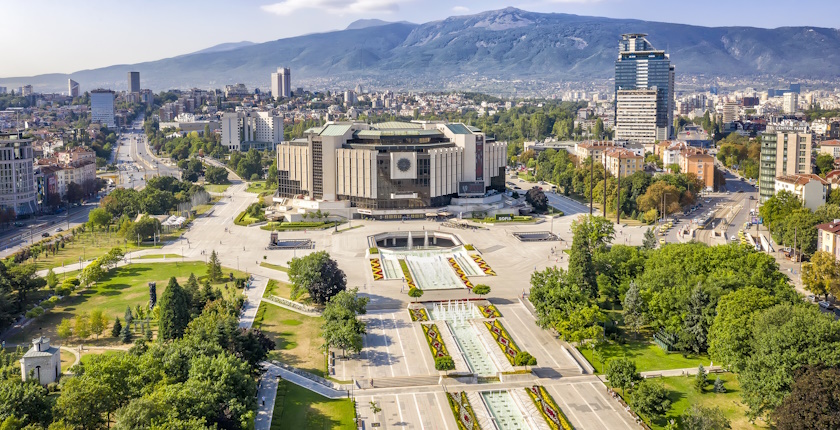
Bulgarian capital Sofia to create its first energy community in Vitosha district

Citizens and businesses in Sofia will be able to invest in a photovoltaic system on a school rooftop as part of the first energy community. It would be a partnership between the city’s Vitosha District, individuals and legal entities.

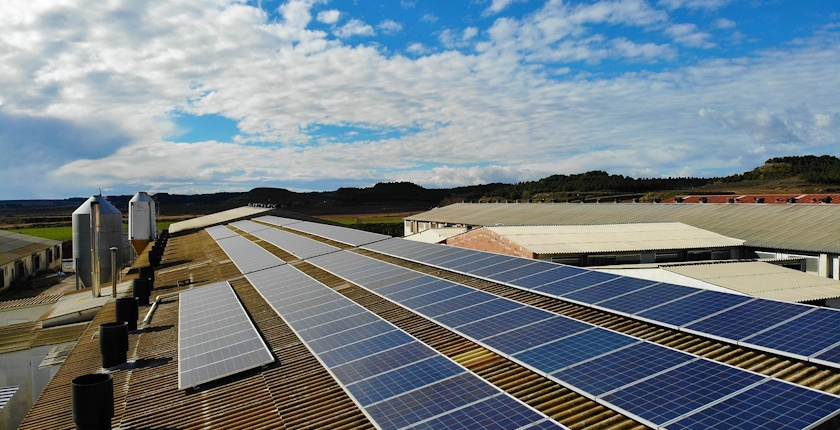
Following a few early initiatives in Bulgaria, the capital city decided to establish its first energy community. The Sofia Municipal Council voted to call on individuals and firms to invest in the installation of a rooftop solar power plant of 74.8 kW in peak capacity.

The system, expected to become operational within a few months, would be on the Acad. Emilian Stanev secondary school in the district of Vitosha. The plan is to use the electricity for the building’s needs and for other municipal facilities.

Participants can invest EUR 260 to EUR 2,600 each

The project is worth BGN 90,000 (EUR 46,000), including value-added tax, according to the local authority. The Vitosha District has earmarked just over EUR 1,000 for the endeavor. Citizens and businesses in Sofia would be invited to invest between EUR 260 and EUR 2,600 per participant in the energy cooperative.

Dzhambazov: I believe that local government should be the driver for decentralized energy

“I believe that local government should be the driver for decentralized energy,” Deputy District Mayor Krasimir Dzhambazov said. There are 24 districts under the Sofia Municipality, also known as Stolichna (capital) Municipality. It provided the school roof free of charge.

After ten years, the city administration becomes the owner of the PV system. It unveiled the project almost a year ago. Bulgarian-Austrian Consulting Co. (BACC) and the Sofia Energy Agency (SOFENA) are consultants in the endeavor.

Vitosha energy community may integrate planned PV self-consumption systems for kindergartens

As 11 more units are about to be installed in Vitosha for self-consumption for kindergartens, including them in the energy community is under consideration, the update reveals.

Earlier this year, the Ministry of Energy, Electricity System Operator (ESO) and the Bulgarian Development Bank (BDB) agreed to introduce a solar power program for municipalities, schools, kindergartens, hospitals and small businesses, without any upfront costs. Minister of Energy Zhecho Stankov said the aim was to create the largest energy community in Europe.

Gabrovo and Burgas have launched the most notable municipal energy community initiatives in Bulgaria. The concept is gaining popularity across the European Union and beyond as an essential segment of the energy transition. In addition, households, small firms and local authorities, utilities and institutions can benefit from energy sharing or becoming prosumers.

Moreover, municipal and regional administrations have the opportunity to strengthen their energy self-sufficiency and achieve savings without burdening their public finances.

Post Views:42
September 30, 2025
by AEA in News

Neptune energy confirms huge lithium carbonate reserves in Germany

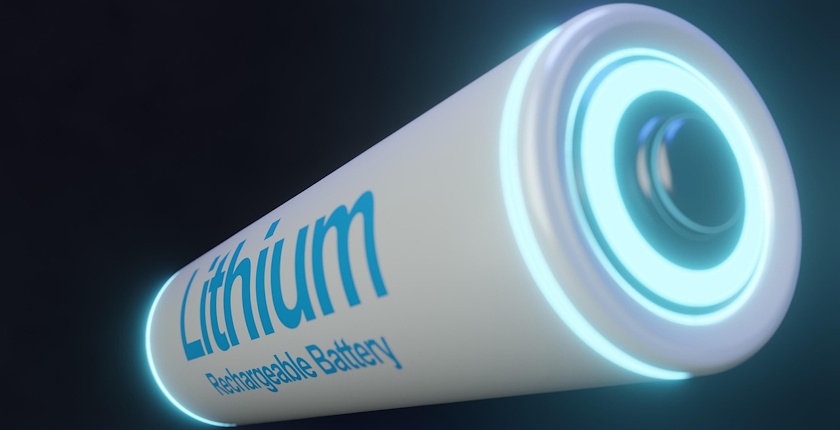
Neptune Energy, a German company known for oil and gas exploration and production, obtained the country’s first lithium production license last year, and now it has confirmed resources of 43 million tons of lithium carbonate equivalent (LCE) in the Altmark region of Saxony-Anhalt. It could reshape the outlook for battery raw material supply in Germany and Europe.

Primarily engaged in oil and gas exploration and production, Neptune Energy has been investing increasingly in low-carbon and renewable energy projects.

The company was the first in Germany to obtain a production permit for lithium. It also holds three exploration licenses for lithium in the Altmark region of the state of Saxony-Anhalt.

Natural gas has been produced in the Altmark region for more than half a century. Numerous old and active wells still provide access to deep underground layers including saltwater.

In November last year, Neptune Energy started a pilot project for lithium extraction from such brine with French technology partner Geolith. The company uses an environmentally friendly process known as direct lithium extraction (DLE) from brine. It involves no open pit mining, no evaporation ponds, and minimal land requirements.

The company has launched its third pilot project for direct lithium extraction from brine

In June, the company commissioned a second pilot plant, supplied by California-based Lilac Solutions, producing battery-grade lithium using an ion exchange process. The second pilot was completed in August, ahead of its original schedule to run until 2026.

A third pilot project has been underway since mid-September to evaluate an adsorption process. Subject to further mining permits, a demonstration phase with a fully integrated extraction plant will follow as the next step toward commercial production, the company said.

Altmark holds reserves of 43 million tons of lithium carbonate equivalent

Neptune Energy’s initial internal estimate was that the Altmark region hosted 70 million tons of lithium carbonate, enough to extract 25,000 tons annually – sufficient for batteries for about 500,000 electric vehicles. An independent evaluation by Sproule ERCE confirmed resources of 43 million tons of LCE. Although lower than the original estimate, northern Saxony-Anhalt still hosts one of the world’s largest project-based lithium resources.

Since lithium is a key raw material for electric-vehicle batteries and energy storage, and Germany, with its strong automotive industry, currently depends on imports, information about lithium reserves in Altmark could have a significant impact on the domestic and European markets.

“This new assessment underscores the great potential of our license areas in Saxony-Anhalt. This enables us to contribute significantly to the German and European supply market for the critical raw material lithium,” said Andreas Scheck, Neptune Energy’s CEO.

Post Views:84
September 29, 2025
by AEA in News

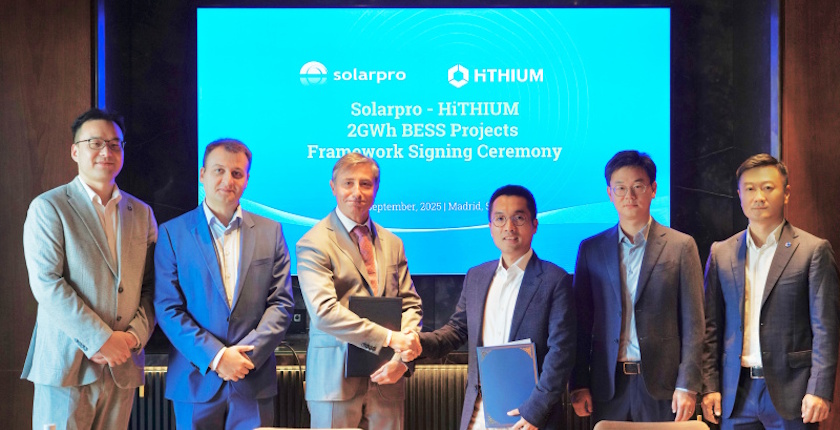
HiTHIUM, Solarpro partner to develop long-duration energy storage in Eastern Europe

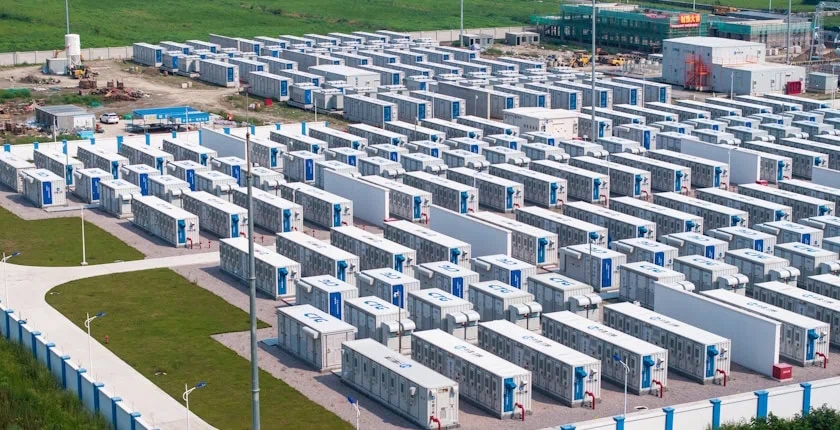
China-based HiTHIUM and Solarpro Holding have signed a 2 GWh master supply agreement for battery energy storage systems.

HiTHIUM is a global provider of long-duration energy storage (LDES) technology, while Solarpro Holding is an EPC provider of photovoltaic and battery energy storage systems (BESS) in Europe.

The agreement will support multiple utility-scale projects across Eastern Europe, including but not limited to Bulgaria, Hungary, Romania, and North Macedonia – which are accelerating renewable deployment as part of their energy transition strategies, according to HiTHIUM.

HiTHIUM will supply its bespoke DC block solutions

Under the agreement, HiTHIUM will supply its bespoke direct current (DC) block solutions, applying the ∞Power 6.25 MWh BESS with high-performance batteries of 1,175 Ah and 587 Ah.

The devices will be deployed exclusively in several utility-scale projects across Europe, HiTHIUM stressed.

DC block is the basic unit of a large BESS and a ready-to-deploy solution.

HiTHIUM expressed the opinion that intraday market volatility and cannibalization of photovoltaics can be addressed mostly by LDES solutions.

Li: We will deliver projects that turn renewables generation into dispatchable, flexible, and reliable resources

According to Kelson Li, HiTHIUM Europe Senior Director of Sales, Eastern Europe’s energy transformation requires energy storage solutions that go beyond short-term balancing.

“By combining HiTHIUM’s industry-leading long-duration energy storage technology with Solarpro’s deep regional experience in large-scale renewable energy integration, we will deliver projects that turn renewable generation into dispatchable, flexible, and reliable resources, advancing the region’s clean energy transition,” he underlined.

Nenov: LDES is a next critical technology upgrade of Europe’s electricity generation mix

Konstantin Nenov, Solarpro Chairman, said his company sees LDES as the next critical technology upgrade of Europe’s electricity generation mix.

“Partnering with HiTHIUM allows us to combine their advanced BESS technology with our proven track record in designing, integration and delivering complex renewable and storage projects across the region,” he stated.

HiTHIUM and Solarpro have already collaborated on landmark projects in Bulgaria and Hungary that were commissioned in 2024 and 2025.

Post Views:27
September 29, 2025
by AEA in News

DRI acquires 112 MW battery storage project in Poland from Greenvolt

DRI expanded its activities in Poland with the acquisition of rights to build a battery energy storage system (BESS) in Kozienice, located in the east-central part of the country. The investment will also strengthen Ukraine’s grid, according to the update.

DRI, DTEK’s renewables arm in the European Union, acquired a BESS project for 112 MW in capability from Greenvolt Group. The battery system would have a four-hour duration, translating to a capacity of 448 MWh. The project is in a ready-to-build (RTB) stage, with all necessary administrative approvals, permits, and grid connection agreements in place for immediate construction, the two companies said.

The site is in Kozienice in the east-central part of Poland. In addition to making the country’s electricity grid more stable, the project will progressively strengthen Ukraine’s grid as the country’s energy network is integrated into a single European system, DRI pointed out.

The ambition is part of DTEK’s broader drive to prioritise energy security for Ukraine and the rest of Europe, the announcement reads.

DRI lifts battery storage project portfolio in Poland to 245 MW

With the new agreement, DRI is consolidating its position in the Polish energy market, and more broadly, in Europe’s energy transition, said DRI’s new Chief Executive Officer Murat Çinar.

Battery energy storage systems will be at the heart of the power grid of the future, DRI’s CEO Murat Çinar underscored

“By adding a second battery storage project to our portfolio, the acquisition of the Kozienice BESS will increase our total storage capacity available to the Polish grid to 245 MW. This technology will play a vital role in Europe’s transition towards a renewables-based system, enhancing grid stability and reducing the risk of outages during periods of system stress. Battery energy storage systems will be at the heart of the power grid of the future,” he stated.

Alongside its two battery storage projects in Poland, Amsterdam-based DRI is advancing fifteen solar and onshore wind projects at various stages of development in Croatia, Italy and Romania. The company said its mission is to work in underserved markets in Europe to achieve their net zero goals.

Its parent DTEK Group is the biggest private investor in Ukraine’s energy sector.

Greenvolt delivers high-impact BESS project

Greenvolt is one of the largest developers of energy storage in Europe, a technology that stands as a key pillar of the energy transition, the group’s CEO João Manso Neto said.

“This agreement fully aligns with our strategic objective to deliver high-impact projects that drive the ongoing transformation of the European energy landscape and attract strong market interest,” he stressed.

Greenvolt Group is a company within KKR’s portfolio. Through Greenvolt Power, it develops utility-scale wind, solar, and energy storage projects across 18 markets in Europe, North America, and Asia.

Post Views:32
September 29, 2025
by AEA in News

Serbia to sign agreement on gas power plant with Azerbaijan

Serbia has completed the negotiations with Azerbaijan on the construction of a natural gas power plant near the city of Niš, according to Ana Brnabić, the Speaker of the National Assembly. She also said an agreement has been reached on additional quantities of gas that would be supplied to Serbia from the Caucasian country.

The negotiations for the construction of a gas power plant in Niš have been completed, Ana Brnabić said. She added that the facility would be a joint project between Azerbaijan and Serbia, RTS reported.

In mid-November last year President of Serbia Aleksandar Vučić revealed that the government was starting talks with Azerbaijan on a possible joint construction of a 1 GW gas power plant in Niš, or two smaller units.

The agreement would likely be signed during the first meeting of the strategic cooperation council

Speaking during her visit to Azerbaijan, Ana Brnabić underlined that the signing of the gas power plant agreement would likely occur in the first meeting of the bilateral strategic cooperation council, when it is most convenient for the presidents, Aleksandar Vučić and Ilham Aliyev.

The investment near Niš would serve as an additional, significant stimulus and guarantee for Serbia’s energy security and stability, she stressed. The gas power plant will have a capacity of around 500 MW, which is of huge significance for Serbia, according to Brnabić.

The investment is estimated at EUR 600 million, she added.

An agreement reached on additional quantities of natural gas will be signed in the coming weeks

The country’s draft 2040 energy strategy includes a plan for a gas-fired cogeneration plant in Niš of 150 MW in electricity capacity and another 100 MW for heat. Another one would be built in Novi Sad. It is envisaged at 350 MW and 100 MW, respectively.

Earlier, Serbia’s Minister of Mining and Energy Dubravka Đedović Handanović stressed that the gas power plant project is important for generating baseload energy and providing the security of supply.

Brnabić also said an agreement on additional quantities of gas has been reached and that the plan was to sign it in the coming weeks. Serbia already has quantities contracted with Azerbaijan, but additional amounts have been secured at the request of President Aleksandar Vučić for the winter months, she explained.

Post Views:31
September 29, 2025
by AEA in News

Celje, Šoštanj among Slovenian municipal authorities pursuing energy independence

The City of Celje in Slovenia plans to install 11 solar power plants on its public buildings, and the Municipality of Šoštanj agreed contracted four such units. The photovoltaic systems would be part of energy communities. Šoštanj expects to save EUR 70,000 per year while Celje is counting on EUR 200,000.

Novo Mesto, another municipality in Slovenia, recently made a similar move toward achieving energy independence.

The total capacity of the solar power plants in Celje and Šoštanj is 1.9 MW. They have signed contracts with ECE, a subsidiary of state-owned power utility Holding Slovenske Elektrarne (HSE). The projects are funded from the National Recovery and Resilience Plan (NRRP) and by the two municipal authorities.

Šoštanj is set to get solar power plants with a capacity of 500 kW altogether, at four locations: the sports hall of the Karel Destovnik Kajuh elementary school, a music school, health center, and the Pilon Center.

The total investment is EUR 500,000, with the local authority receiving a EUR 450,000 grant via the NRRP.

Both municipal authorities now have energy communities

In Celje, approximately 1.4 MW would be installed at several locations including the Z’dežele Stadium, Celje Summer Pool, Celje Health Center, elementary schools and kindergartens.

The City of Celje secured a EUR 1 million grant from NRRP, and the total investment is estimated at EUR 1.4 million.

Sebastijan Roudi and Boris Goličnik (photo: Municipality of Šoštanj)

In addition to building solar power plants, the contract includes five years of maintenance, offtaking surplus electricity production, and supply during insufficient power generation. It also involves managing the energy community.

In Šoštanj, the energy community would involve more than 15 public buildings, and the one in the City of Celje would consist of PV units on more than 40 public buildings.

The two projects are scheduled for completion in December and November, respectively.

Šoštanj aims to produce 70% of the electricity consumed by its public buildings

When the power plants are built, the municipality expects to cover 70% of the consumption of all public buildings, and the third-largest city in Slovenia aims for a 15% share.

The Šoštanj project is envisaged for 500 MWh of clean electricity output per year, reducing electricity costs by about EUR 70,000. Total savings over the entire lifespan of the solar power systems is seen at EUR 2 million.

Celje’s PV plants would produce 1,462 MWh of energy annually and save approximately EUR 200,000, translating to around EUR 5 million throughout their service life.

Investment for the long-term benefit of the community

Mayor of Šoštanj Boris Goličnik said the contract signifies the continuation of the municipality’s vision of energy independence.

“This is an investment in the future, in the green transition, and for a permanent benefit of our community,” he stated.

According to Celje’s Mayor Matija Kovač, it is a strategic decision on managing energy, costs, and the environment in the future. He said the planned PV units are just the beginning.

Sebastijan Roudi, ECE CEO, asserted that as part of the HSE group, the firm places grea t emphasis on demanding energy projects, developing new billing models, and seeking ways to accelerate the green transition.

Post Views:33
  • 1
  • …
  • 53
  • 54
  • 55
  • 56
  • 57
  • …
  • 140

AEA – Albania Energy Association is a industry association dedicated to representing the interests of Albanian and West Balkan for energy producers and consumers. AEA works to advance the development and adoption of sustainable energy solutions in Albania and the Western Balkans, supporting the region’s transition toward a cleaner, more secure, and more competitive energy future. AEA is registered by decision of the Court of Tirana, DECISION NO. 3032, (VAT:L11827451K).

[email protected]

Address
Blv Zogu 1
Tirana
1057
ALBANIA

LinkedIn  |  Facebook
Events
May 25, 2022 Connecting Green Hydrogen Europe 2022
May 25, 2022 Energy Week Western Balkans 2022
Copyright © Albania Energy Association