AEA-Albania Energy Association
  • Main
  • About Us
  • Services
  • Sectors
  • News
  • EventsEvents
  • PublicationPublication
  • Contact Us
AEA-Albania Energy Association
  • Main
  • About Us
  • Services
  • Sectors
  • News
  • EventsEvents
  • PublicationPublication
  • Contact Us
AEA-Albania Energy Association
  • Home Page
  • About Us
  • Sectors
  • Our Services
  • News
  • Contact Us
October 14, 2025
by AEA in News

Croatian IE-Energy, Slovenia’s NGEN plan virtual network of smart battery storage systems

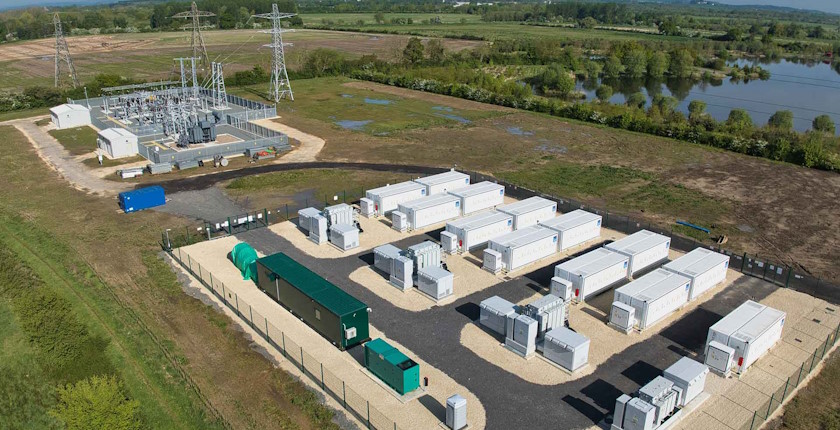
Croatian firm IE-Energy and Slovenia’s NGEN are developing a battery system for smart energy storage, with a total operating power of 60 MW and a capacity of 120 MWh. The project, valued at 60 million, marks the first step toward creating a virtual network of battery storage systems that would connect producers and consumers of renewable energy.

The project has received a EUR 19.8 million grant from the European Union’s Modernization Fund. The funds are intended for the second and crucial phase of the project, for 50 MW, while the first phase, of 10 MW, is already in an advanced stage of implementation, Croatia’s Ministry of Economy stated following the signing of the subsidy contract.

The project, located in the Croatian city of Šibenik, is expected to be completed as early as next year, according to the statement.

IE-Energy CEO Željko Šmitran told Balkan Green Energy News it would be the first battery energy storage system in Croatia connected to the transmission grid. The project is being implemented in partnership with NGEN, which is also the main engineering, procurement, and construction (EPC) contractor.

The battery modules used are Tesla Megapacks, which enable real-time grid balancing, he added. 

The virtual smart energy storage network will connect renewable power plants, industry, and households

The project represents the first step towards creating a virtual network of smart energy storage facilities that will connect renewable energy producers, industry, and households, Šmitran explained.

The entire project is connected to NGEN’s advanced technology platform, which enables participation in the markets for ancillary services, balancing, and intraday trading, as well as electricity supply, added Šmitran.

Developing a regional smart storage network

The model developed in Croatia in collaboration with NGEN is intended to be replicated in other regional markets where grid flexibility and system stability are in high demand, including Serbia, Bosnia and Herzegovina, and North Macedonia, Šmitran said.

The objective is to build a regional model of smart battery storage facilities and energy communities that will ensure sustainable, reliable, and independent energy supply across Southeast Europe in the long term, he said.

In its statement, the Ministry of Economy also said that the project in Šibenik paves the way for advanced grid services, such as virtual inertia for grid stabilization.
Post Views:99
October 13, 2025
by AEA in News

Đokić: We expect EU to accept request to postpone CBAM implementation

Minister of Energy and Mining of the Republic of Srpska Petar Đokić expressed belief that the European Commission would postpone the implementation CBAM, set for January 1, 2026.

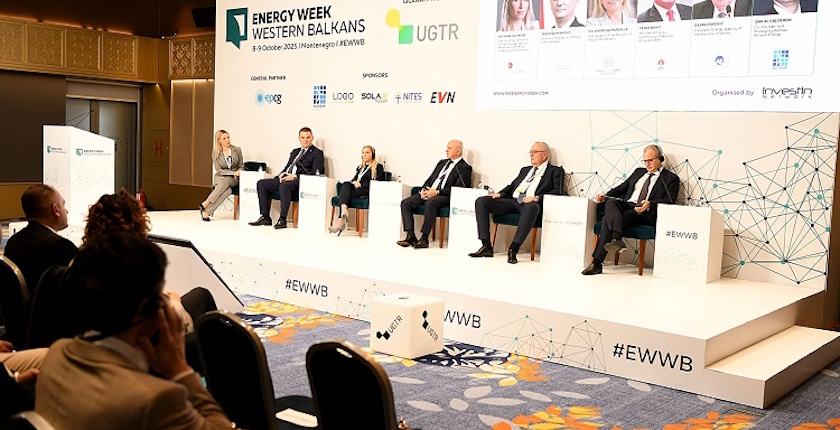
Minister Petar Đokić participated in the Energy Week Western Balkans 2025 conference, where he recalled that the Republic of Srpska has signed several contracts with domestic and foreign partners for the construction of renewable power plants totalling 2,170 MW. The investments are estimated at BAM 5 billion (EUR 2.56 billion).

Đokić noted that the construction of two hydropower plants, of 159 MW and 34 MW, is underway, as well as of the Buk Bijela hydropower plant, in cooperation with Serbia.

Đokić: The rest of the world no longer follows European politics

So far, two contracts have been signed for the construction of wind farms, of which one is in an advanced stage of construction, he underlined. The plan is to complete all contracted projects within three years, according to Đokić.

It will further increase the share of clean energy in total production.

He highlighted the challenges posed by the European Union’s policies, including the Carbon Border Adjustment Mechanism (CBAM), a cross-border emissions tax. Its application could have a very negative impact on the local economy, Đokić noted.

As the rest of the world no longer follows European policies, the question arises whether Europe has the right to impose new obligations on its members, especially if such obligations cause economic disruptions, he claimed.

Đokić: The request of the Republic of Srpska to postpone the implementation of CBAM is justified

Đokić said that the request of the Republic of Srpska to postpone the implementation of CBAM is justified. According to him, Bosnia and Herzegovina has fulfilled the last condition, the adoption of the law on the electricity regulator, transmission, and market, as it is now in parliamentary procedure.

CBAM brings fees on the CO2 emissions of goods imported to the EU from countries that don’t have equivalently priced carbon schemes. They include the Western Balkans.

The tax will cover cement, iron and steel, aluminum, fertilizers, electricity, and hydrogen.

Serbia, which is also part of the Western Balkans region, launched public consultations last week on its draft Law on Greenhouse Gas Emissions Tax and the Law on Carbon-Intensive Product Imports Tax.

Đokić spoke at a panel with Minister of Energy and Mining of Montenegro Admir Šahmanović, Ambassador of Italy to Montenegro Andreina Marsella, President of the Energy Agency of the Republic of Serbia (AERS) Dejan Popović, and co-founder and managing partner of Alcazar Energy Daniel Calderon.

Post Views:62
October 13, 2025
by AEA in News

North Macedonia receives applications for 4.2 GW of battery projects

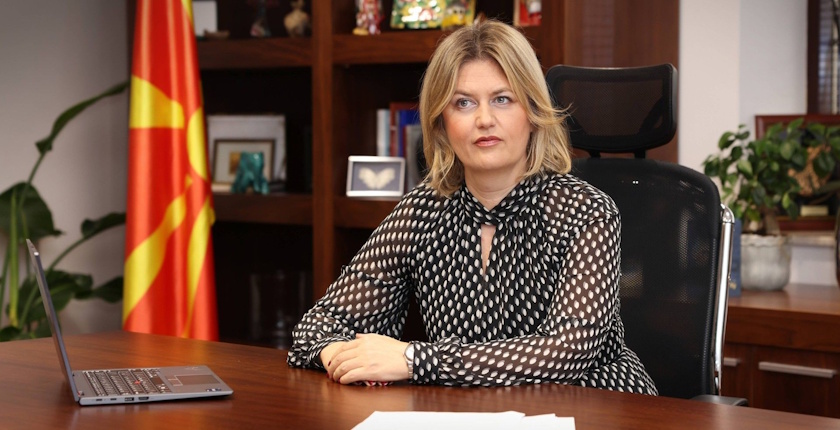
North Macedonia has received requests for new wind farms, solar parks and gas power plants of 7,100 MW in total capacity, as well as for standalone batteries and ones that would be co-located with power plants, for 4,172 MW in overall operating power, Minister of Energy, Mining and Mineral Resources Sanja Božinovska revealed.

The Ministry of Energy, Mining and Mineral Resources has received an initiative for a 495 MW gas-fired cogeneration plant. Sanja Božinovska said the details are unknown as the submitted documentation is too extensive and is still being analyzed, state news agency MIA reported.

Of note, there were already proposals for gas-fired power plants in the country. The government has signed a memorandum of understanding with Kazancı Holding on projects for such facilities.

Investors intend to install standalone and co-located BESS

Investors submitted initiatives for wind farms of 1,590 MW altogether, as well as for a total of 402 MW and 1,080 MWh in battery energy storage systems (BESS) that would be co-located with wind farms.

So-called initiatives were also received for solar power projects totaling 5,052 MW and accompanying BESS of 1,174 MW in combined capability and 3,018 MWh in capacity. Investors plan to build standalone batteries of an overall 2,596 MW and 3,094 MWh, respectively.

Božinovska said it is great news, though that it’s more important whether the documentation is valid.

She recalled that the recently adopted Law on Energy introduced an annual construction plan for priority energy projects.

October 1 was the deadline for foreign investors to submit their projects

October 1 was the deadline for foreign investors interested in the construction of power plants to submit documentation, Božinovska noted. The ministry received a huge number of documents and it will take time to process them, she stressed.

Batteries became all the rage in the renewable energy sector worldwide. North Macedonia is set for a landmark achievement in its region.

YESS Power plans to commission a 60 MW BESS in the country next month. It would be the first large facility of its kind in the Western Balkans.

Post Views:140
October 11, 2025
by AEA in News

Greek regulator steps in to prevent energy communities misuse

Legitimate energy communities have suffered in Greece, as private investors have been taking advantage of the status to promote disguised commercial projects.

Normally, energy communities are set up to help citizens, businesses and other special consumer groups to benefit from lower energy costs using renewable energy.

There are two categories: renewable energy communities (RECs) and citizens energy communities (CECs). They have priority in obtaining licenses compared to commercial investments. They are exempt from letters of guarantee and have access to national and European funding and a higher feed-in tariff.

A law was adopted in 2023 to restrict production licenses for energy communities. It also had the goal of excluding other market actors from participating. However, it appears that the attempt was unsuccessful.

A gap in the regulatory framework allowed private companies and individuals to create energy communities and benefit from the various licensing and financial benefits to promote projects that would otherwise not be eligible. In short, such investors appear as legitimate small participants, while actually representing larger private companies.

Psomas: Just 2.8% of installations are for self-consumption

By April 2025, energy communities installed facilities totaling 2.24 GW, of which just 62 MW (or 2.8%) for self-consumption. They also held about 22% of total licensed capacity for photovoltaics in the country, according to energy consultant Stelios Psomas.

The law stipulates that legal entities participating in REC and CEC management boards must be mutually independent and not connected directly or indirectly through other businesses or natural persons.

According to the Regulatory Authority for Energy, Waste and Water (RAAEY or RAEWW), the minimum of 15 legal entities to set up a community refers to 15 independent entities. Otherwise, there is no guarantee they would act towards the benefit of local communities and not as a vehicle to promote the commercial interests of individuals or business groups, it pointed out.

RAAEY said it would intervene to enforce the essence of the law more aggressively. It added that if irregularities are discovered, an energy community may lose its production license. The regulator revealed it would conduct investigations both due to complaints and on its own.

Greece downgraded because of lost EU funds

The government recently lost of EUR 100 million from the European Union’s Recovery and Resilience Facility (RRF), aimed at promoting self-consumption for vulnerable households through forming an energy community.

The loss of funds for the Apollo program triggered a downgrade by REScoop, the European federation of energy communities. It said there were no more dedicated European funds to support energy communities in Greece.

EECF to provide a second chance

Greek energy communities may gain another source of European funding through the European Energy Communities Facility (EECF).

More than 140 of them across Europe will be supported through the program with EUR 45,000 per project. Greece submitted 29 proposals in the recent first call that took place at the end of September. The final list of beneficiaries will be announced in December, with a second call expected in May 2026.

Post Views:35
October 10, 2025
by AEA in News

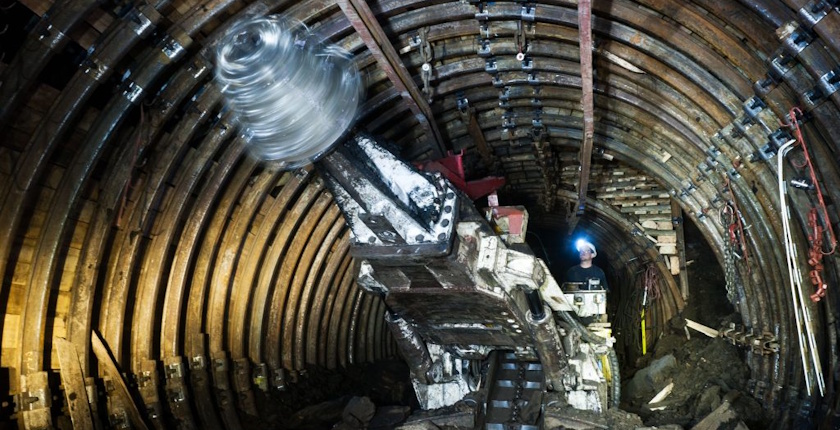
Slovenia begins preparations for closure of Velenje coal mine

Slovenian Prime Minister Robert Golob visited the Savinja and Šalek region and the Velenje coal mine to present a draft law on the gradual closure of the mine. The event marked the beginning of a public debate on the document. Its implementation is estimated at EUR 1.1 billion. The trade union has raised concerns about the plan.

The Government of Slovenia has initiated a coal phaseout by assuming direct ownership of the Šoštanj coal power plant and coal mine Velenje from state-owned power utility Holding Slovenske Elektrarne (HSE). The first steps towards the closure of Termoelektrarna Šoštanj (TEŠ) have begun, and the decision makers have turned to Premogovnik Velenje.

Slovenia earlier closed the Trbovlje-Hrastnik mine in Zasavje. Zasavje and Savinja and Šalek (in Slovenian language: Savinjsko-šaleška regija – SAŠA) are two of 31 coal regions in the European Union.

Prime Minister Robert Golob held several meetings with representatives of local authorities in the towns of Šoštanj and Velenje, as well as with the management of the mine, union representatives, and businesspeople.

Golob: We have to take care of you because you took care of us

During the discussions, he emphasized that after the first reading of the draft law in the government, the document would be analyzed by the Economic and Social Council.

“We have to take care of you because you took care of us for so many years,” Golob said, as quoted by his government.

The government will, in his words, strive to protect the social security and jobs of miners and their families. Its goal is to reduce the uncertainty linked with the closure of the coal mine and the restructuring of the region, the prime minister added.

Golob: We have become aware of the workers’ concerns

Golob told workers’ representatives and mine management that the law on the coal mine closure would ensure they have a safe future and security, according to the update. He informed them that the law should enter parliamentary procedure by the end of the year.

“I understand the employees’ concerns, which is why I also attended the meeting with them. We became aware of their concerns before the government adopted the law,” he stated.

Golob claimed that solutions were found for 80% of workers’ demands, and that they would be included in the bill. He expressed confidence that the remaining 20% would be resolved at the Economic and Social Council in the coming weeks.

Trade union: The law must define what happens with employees and associated companies

Minister of Natural Resources and Spatial Planning Jože Novak explained that the government agrees with the management of the coal mine on all key elements, while negotiations with the unions are still ongoing, Naš Stik reported.

The management will prepare a twenty-year program for closure and remediation, Novak noted, and added that EUR 1.1 billion is necessary to implement the law.

According to the General Manager of Premogovnik Velenje Marko Mavec, the technical part of the draft law is appropriate, while the social aspect requires additional coordination.

The SPESS trade union President Simon Lamot pointed to controversial issues including the possibility of selling the HTZ Velenje subsidiary and uncertainties regarding early retirement.

The law must clearly define what happens to employees and associated companies – without that, there can be no talk of a just transition, Lamot stressed.

Post Views:32
October 10, 2025
by AEA in News

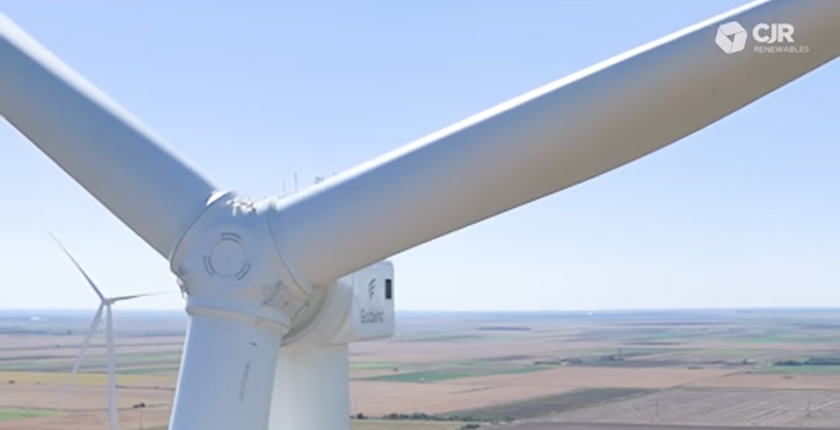
CJR Renewables completes construction of 102 MW Urleasca wind farm in Romania

The Urleasca wind farm in Brăila county in eastern Romania is complete, contractor CJR Renewables said. The 102 MW facility owned by BIG Mega Renewable Energy will generate an estimated 277 GWh.

Wind power investments are returning to full speed in Romania, following a decade-long break and a stellar expansion in the photovoltaics segment over the past several years. Portugal-based CJR Renewables, the contractor in the Urleasca project, announced that the 102 MW facility is complete.

Urleasca is a village in Traian commune, in the vicinity of the city of Brăila, northeast of Bucharest. The developer, BIG Mega Renewable Energy, secured EUR 92 million in financing last year from the European Bank for Reconstruction and Development (EBRD) and OTP Bank. It earlier valued the investment at EUR 109 million,

The Israeli firm achieved a deal in 2021 to purchase the project in Romania. CJR Renewables pointed out that the wind farm would generate an estimated 277 GWh per year, which would displace 115,000 tons of CO2 emissions.

Urleasca consists of 17 wind turbines, Goldwind GW 165-6.0, each of 6 MW. The contractor also built 20.2 kilometers of internal and local roads.

BIG Mega Renewable Energy is fully owned by BIG Energia Holdings, established in Hungary, which is in turn a subsidiary of BIG Shopping Centers and Mega OR.

A different wind power project for a site in Urleasca won state support in August at Romania’s second renewable energy auction.

Post Views:38
October 10, 2025
by AEA in News

Karatzis, Metlen to install Greece’s largest battery in joint venture

Karatzis Group of Companies and Metlen are establishing a joint venture for a standalone battery energy storage system (BESS) of 330 MW and 790 MWh. It is the biggest project in Greece so far and one of the biggest in Europe.

Metlen said it is entering into a new strategic partnership in Greece with Karatzis Group of Companies, through a joint venture with ownership stakes of 49% and 51% respectively, for the development, construction, operation, and energy management of a BESS with 330MW in operating power and a capacity of 790 MWh. The site is in Thessaly.

The two Greek companies are building upon their cooperation in the sale and purchase of green energy. Since August 2024, it has involved the implementation of a portfolio of solar power plants with a total capacity of 262 MW in the same region, the update adds.

The partners value their BESS investment at EUR 170 million

The BESS would be the largest standalone storage unit planned to date in Greece and one of the biggest in Europe, Metlen said. Total investment amounts to some EUR 170 million.

Karatzis and Metlen expect to complete it in the second quarter of next year. The partners expect no further grants or tax reliefs for the project, according to the announcement.

Metlen is tasked with full construction, operation, and maintenance of the unit through its M Renewables segment. It has presence and projects on five continents, the company pointed out. In 2024 alone, Metlen said it completed storage projects with a total capacity of 0.7 GWh and is in the final stages of agreements for third-party projects totaling 2.2 GWh.

Karatzis, based in Crete, manufactures a variety of netting products. It has five plants. In recent years it expanded to the construction of photovoltaic plants. The Metlen conglomerate produces metals and has a vertical presence in the energy market, being one the largest producers and suppliers in Greece.

Post Views:32
October 10, 2025
by AEA in News

Policy changes in US will have marginal impact on global energy transition

Policy changes in the United States introduced by the administration of President Donald Trump will have only a marginal impact on the global energy transition, according to the latest Energy Transition Outlook, produced by DNV.

Norwegian consulting firm DNV pointed out in a report that energy use by artificial intelligence may seem alarming, but that it is projected to stay below booming sectors like electric vehicle (EV) charging and cooling of buildings.

“DNV’s annual Energy Transition Outlook has consistently forecast a shift from today’s 80/20 fossil/non-fossil primary energy mix to a 50/50 mix by 2050. That is still our prediction this year. Although some aspects of the transition are supercharged and progressing rapidly, other aspects have hit turbulence and are delayed. This leads to a marginally slower transition than our forecast last year,” CEO Remi Eriksen said.

According to the report, in the US, fossil fuel promotion and the reversal of clean energy support policies are slowing the nation’s transition.

However, China continues to set renewables buildout records with 390 GW of solar PV (56% share of new global capacity) and 86 GW of wind (60% share) expected to be installed this year. The country is also fueling the transition in the rest of the world with its cleantech exports.

In the meantime, Europe is seeking to balance climate action with competitiveness, the report reads.

The continent is having a slow success with harder-to-decarbonize sectors, but renewable energy buildout remains relatively strong.

In the rest of the world, most countries are embracing competitive Chinese technologies, with year-on-year growth in installations at around 25%, data showed.

Eriksen said cheap renewable electrons stored when necessary in ever-cheaper batteries are already an unstoppable force.

“We forecast that solar – both with and without storage – and wind will be 32% of the global power mix by 2030. We expect a resurgence in offshore wind by 2030, such that variable renewables will provide more than 50% of all electricity by 2040,” he stated.

Solar power is 10% of all power produced worldwide today, and DNV projected it will be 20% in 2029 and 40% in 2045. Renewables would reach 65% in the global electricity mix by 2040, the firm added.

AI’s energy demand would be lowered by efficiency effects

According to Eriksen, soaring power demand from AI data centers is placing additional strain on already congested grids, particularly in North America.

DNV ‘s analysis finds that AI’s energy demand growth is likely to become more linear over time, outpaced, for instance, by EV charging and cooling demand, even as the cognitive services of AI expand exponentially. The main reason is growing efficiency.

AI’s energy use is forecasted at only 3% of global electricity by 2040. Data center energy use will quintuple by 2040, equalling 5% of all global electricity. AI’s share would be 3%, with the remaining 2% for general purpose data centers.

The report highlighted large regional variations – AI is the biggest driver of electricity consumption growth in North America, compared to EV charging in Europe and EVs and cooling in China and India.

For the first time, this year’s analysis extends to 2060

The report noted that this year, the world reached the milestone of more than 50 million EVs on the road. Most of them, 60%, are in China, with Europe at 21%, and North America at 13%.

The point of inflection — EVs at 50% of global new passenger vehicle sales — will be reached in 2032, the report projected.

For the first time, this year’s analysis extends to 2060 to reflect the continued transformation of the energy system after 2050. The report recalled that it is now widely acknowledged that the world will not achieve net zero emissions by 2050, meaning warming would exceed 1.5 degrees Celsius.

A decarbonization of energy mix is unstoppable but too slow, setting up grave risks for future generations, Eriksen concluded.

Post Views:49
October 9, 2025
by AEA in News

Bulgaria’s BEH wants direct link to future Black Sea cable to participate in project

Executive Director of Bulgarian Energy Holding (BEH) Valentin Nikolov hinted that the country would opt for the alternative electricity corridor to the Caucasus, via Turkey, if the proposed interconnector under the Black Sea doesn’t include a direct link to the Bulgarian grid.

Turkey, Azerbaijan, Georgia and Bulgaria formalized an initiative in April for an electricity corridor that would run through Turkey. It appeared to rival the Black Sea Submarine Cable (BSSC) project for a submarine cable between Georgia and Romania. The investment is managed by the Green Energy Corridor Power Co. (GECO), founded by transmission system operators of Romania, Georgia, Azerbaijan and Hungary.

Bulgaria has expressed the intention to join the project for the link under the Black Sea. However, state-owned BEH wants a direct connection to the country’s grid, Executive Director Valentin Nikolov says, hinting that otherwise Bulgaria wouldn’t participate.

Nikolov: Political interests are beginning to prevail

The options are for the cable to branch out and land in both countries or only in Romania, Economic.bg reported.

It is important for deciding whether to participate in the project, Nikolov pointed out. “There is no great interest” for Bulgaria if the interconnector enters Romania and extends to Bulgaria from there, and to Hungary, he claimed. Then it is better to go through Turkey, the power utility’s CEO said.

Route through Bulgaria would enable access to European funds for national grid

The feasibility study underway will lay out options and information on where it would be most profitable to lay the cable. According to Nikolov, it is through Bulgaria.

“If we want to develop our grid and use European funding, it must go through Bulgaria, and the connection with Romania can be paid for with European funds,” he added.

“Political interests are beginning to prevail,” in his words.

Black Sea interconnector to consist of three cables

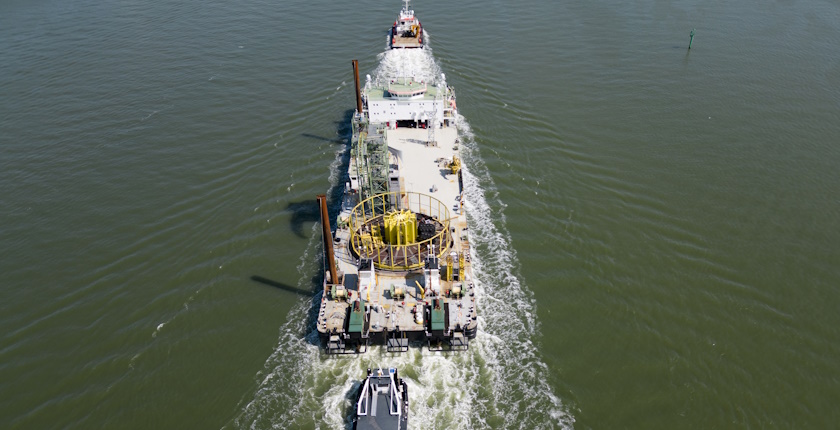
Azerbaijan is planning to export 4 GW through the corridor from the Caspian Sea via the Black Sea to Europe. The idea is for the link to consist of three cables, in fact, the article reads. Only a handful of manufacturers in the world can manufacture them for depths of up to 2,000 meters, and the number of ships that can lay them is limited, the news website added.

Kazakhstan and Turkmenistan and other Central Asian countries are interested in producing renewable electricity for exports to Europe, too.

The Black Sea submarine link project is valued at EUR 3.5 billion and it is expected to require up to four years, the media outlet noted. The European Commission is considering to fund the investment with EUR 2.3 billion.

Post Views:19
October 9, 2025
by AEA in News

Turkey’s TEİAŞ signs USD 750 million loan contract with World Bank

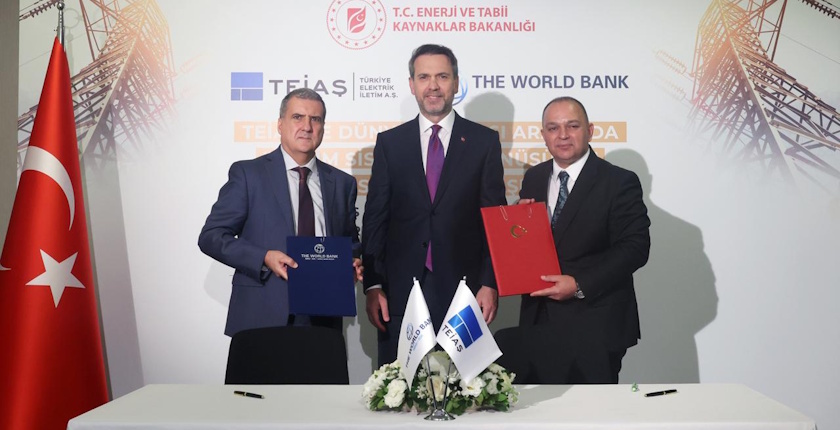
Turkish Electricity Transmission Corporation and the World Bank signed a USD 750 million loan agreement.

A USD 750 million loan will be used for the Transforming Power Transmission System Project. It would make the country’s energy future more reliable and efficient, Turkey’s transmission system operator (TSO) TEİAŞ said.

The agreement was signed in Istanbul vby the bank’s Country Director Humberto Lopez and Orhan Kaldırım, the company’s Chairman of the Board, in the presence of Minister of Energy and Natural Resources Alparslan Bayraktar, at the 11th Energy Efficiency Forum and Exhibition.

Bayraktar: Turkey plans to invest USD 28 billion in the transmission grid

“The World Bank and international financial institutions have a significant interest in Turkey’s energy infrastructure, particularly its electricity and natural gas sectors. Turkey is a hub country,” Bayraktar stated.

He recalled that the country plans to invest USD 28 billion in electricity transmission infrastructure by 2035.

The minister revealed that discussions on such projects are ongoing with financial institutions from both Asia and the West. Financing agreements can be expected in the foreseeable future, he added.

Lopez: The transition requires reliable transmission

World Bank Country Director Humberto Lopez stressed that Turkey’s clean energy ambitions depend on strong transmission infrastructure.

“Turkey has one of the most ambitious renewable energy plans, and this transition requires reliable transmission,” he said, as quoted by Anadolu Agency.

Lopez explained that it is very difficult for a new company to install solar or wind power facilities without a transmission grid connection secured. The USD 750 million investment aims to address the need and it is central to the government’s energy transition plan, he underlined.

The Transforming Power Transmission System Project marks the first phase of a USD 1.5 billion financing package aimed at expanding grid capacity, enhancing digital management, and accelerating the integration of renewable energy.

It will include feasibility studies for Turkey’s first high-voltage direct current (HVDC) transmission line, according to the article.

Post Views:30
  • 1
  • …
  • 49
  • 50
  • 51
  • 52
  • 53
  • …
  • 140

AEA – Albania Energy Association is a industry association dedicated to representing the interests of Albanian and West Balkan for energy producers and consumers. AEA works to advance the development and adoption of sustainable energy solutions in Albania and the Western Balkans, supporting the region’s transition toward a cleaner, more secure, and more competitive energy future. AEA is registered by decision of the Court of Tirana, DECISION NO. 3032, (VAT:L11827451K).

[email protected]

Address
Blv Zogu 1
Tirana
1057
ALBANIA

LinkedIn  |  Facebook
Events
May 25, 2022 Connecting Green Hydrogen Europe 2022
May 25, 2022 Energy Week Western Balkans 2022
Copyright © Albania Energy Association