AEA-Albania Energy Association
  • Main
  • About Us
  • Services
  • Sectors
  • News
  • EventsEvents
  • PublicationPublication
  • Contact Us
AEA-Albania Energy Association
  • Main
  • About Us
  • Services
  • Sectors
  • News
  • EventsEvents
  • PublicationPublication
  • Contact Us
AEA-Albania Energy Association
  • Home Page
  • About Us
  • Sectors
  • Our Services
  • News
  • Contact Us
October 15, 2025
by AEA in News

Renalfa IPP expands its Tenevo, Kaolinovo PV plants in Bulgaria with batteries

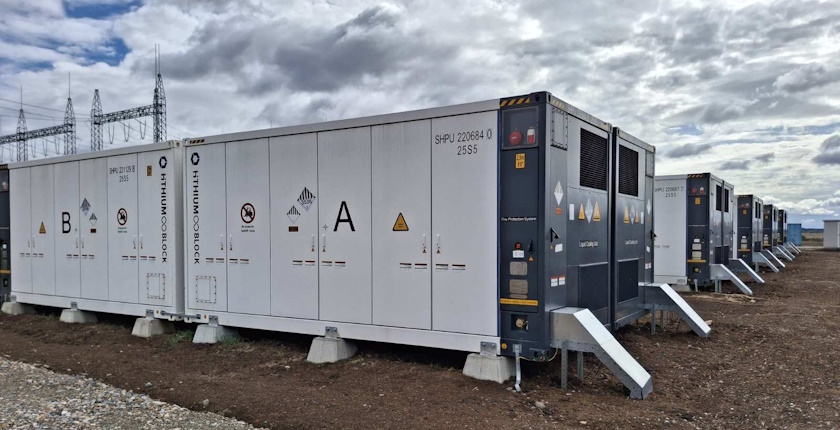
Vienna-based Renalfa IPP commissioned a 65 MW / 260 MWh battery energy storage system within its hybrid power plant project in Tenevo. Also in Bulgaria, the joint venture expanded its Kaolinovo solar power plant to 33 MW and added a BESS of 33 MW in operating power and 110 MWh in capacity.

One of the biggest hybrid power plants in Southeastern Europe is gradually coming together. Renalfa IPP, which last year marked the start of the BESS boom in Bulgaria, said it added a battery system of 65 MW in capability and 110 MWh in capacity to the Tenevo solar power plant.

Project firm Tenevo Solar Technologies is a joint venture with Denmark-based Eurowind Energy. Renalfa IPP, headquartered in Austria’s capital city, is itself a joint venture, established by clean energy and e-mobility company Renalfa Solarpro Group and French renewable energy infrastructure fund manager RGreen Invest.

Ultimately, the plan is to build a 250 MW wind farm at the Tenevo site, in Yambol province in Bulgaria’s southeast. The first 69 MW in peak capacity of the solar power plant came online two months ago, within a 237.6 MW project.

Tenevo BESS to grow to 315 MW

Tenevo is one of the biggest co-located BESS projects in Europe to date, according to Renalfa IPP, which added that it surpassed 1 GWh of energy storage in operation.

The firm aims to increase the battery facility to 315 MW and 760 MWh by early next year, when it expects to complete the solar park as well.

Solarpro Bulgaria builds both battery storage facilities

The project manager for the Tenevo BESS is Solarpro Bulgaria, part of Renalfa Solarpro Group, while Hithium and Kehua supplied the equipment. Solarpro and Hithium established cooperation two years ago and recently expanded it.

The same affiliate was the project manager and engineering, procurement and construction (EPC) contractor for the expansion of the Kaolinovo photovoltaic park in northeastern Bulgaria. Renalfa IPP said it grew to 33 MW in peak capacity from 10 MW, while a BESS of 33 MW and 110 MWh was also added. The facility was built in 2012.

Renalfa IPP is also active in Hungary, Romania, and North Macedonia, where it is about to add batteries to its Oslomej PV plant. In the last update, it said it has 554 MW in operational generating assets, BESS of 455 MW and 1.01 GWh in total, and over 1 GW of projects in late-stage development.
Post Views:29
October 14, 2025
by AEA in News

Rooftop solar on public buildings gains momentum in Slovenia

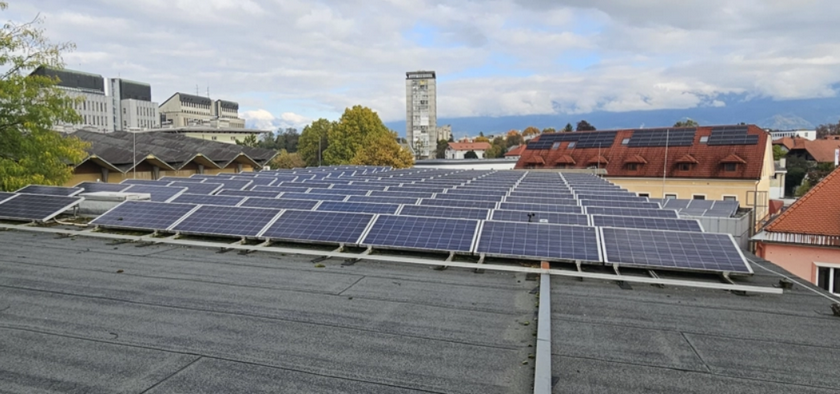
The trend of installing rooftop solar on public buildings to create energy communities is gaining momentum in Slovenia, with two more cities, Velenje and Kranj, joining the initiative. Similar projects were recently announced in Celje, Šoštanj, and Novo Mesto.

Velenje plans to install solar power plants on 13 public buildings in cooperation with ECE, a subsidiary of state power utility Holding Slovenske Elektrarne (HSE). The total capacity of the proposed installations is about 1.97 MW, with an estimated annual electricity output of more than 2.1 GWh.

The project, valued at EUR 1.97 million, is expected to save the municipality over EUR 157,000 in electricity costs annually. Financing is provided through the European Union’s Recovery and Resilience Facility (RRF) and the National Recovery and Resilience Plan. The municipality itself is contributing EUR 530,755.

This model involves the internal exchange of produced electricity, enabling municipalities to optimize consumption and reduce dependence on the market. Photovoltaic plants are installed on the roofs of structures such as sports facilities, administrative buildings, health centers, bus stations, schools, and kindergartens.

Energy communities help municipalities increase energy independence

In Kranj, 16 rooftop solar power plants, with a total capacity of 2 MW, will be installed on public buildings, in a EUR 1.5 million public-private partnership project carried out in cooperation with GEN-I. The municipality has obtained a state subsidy of EUR 700,000, while the remaining amount will be provided by the private partner.

The new solar power plants should be installed by next summer. They are expected to provide electricity for a total of 22 public buildings, cutting their electricity bills in half, according to a statement from the local authority. Kranj already has two rooftop solar plants on public buildings, installed in 2012 and 2013 respectively, it recalled.

In September, contracts were signed in Celje, Šoštanj, and Novo Mesto to install rooftop solar power plants on public facilities.

The project in Celje involves 11 installations with a total capacity of 1.4 MW, which is expected to bring about EUR 200,000 in annual savings. The contract in Šoštanj is for power plants at four public facilities, totaling 500 kW, with expected annual savings of EUR 70,000. In Novo Mesto, a private partner plans to build and operate ten new solar power plants on municipal land and structures.

Post Views:23
October 14, 2025
by AEA in News

EU, Serbia to support ElevenEs in battery cell manufacturing expansion

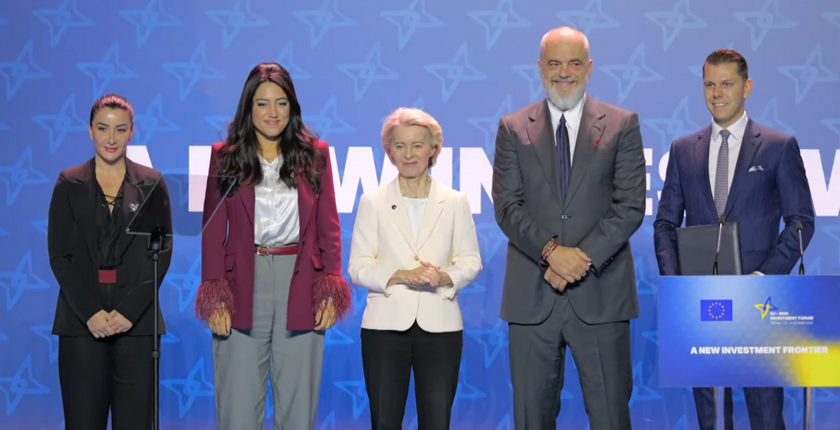
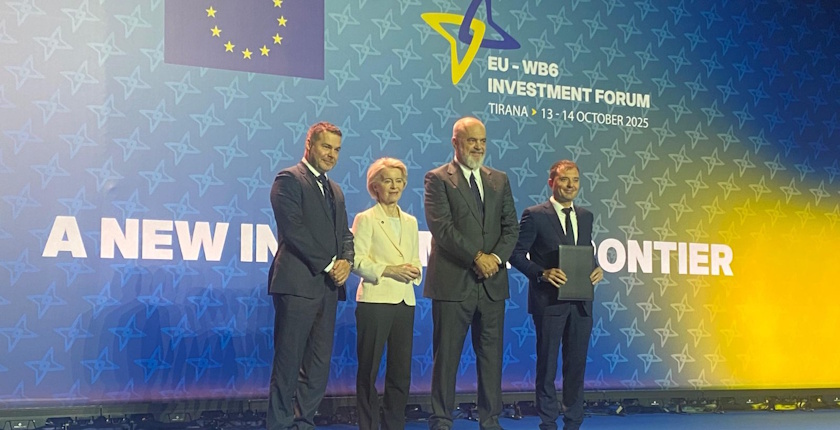
At the EU–Western Balkans Investment Forum in Tirana, Serbian company ElevenEs signed a joint declaration of support with representatives of the European Commission and the Development Agency of Serbia, marking a major step toward expanding battery cell manufacturing in the region.

ElevenEs CEO Nemanja Mikać signed the document in the presence of European Commission President Ursula von der Leyen. The joint declaration of support recognizes the company’s battery manufacturing expansion as a project aligned with the European Green Deal and Global Gateway strategy. The initiative highlights ElevenEs’s role in supporting the European Union’s decarbonization goals across the energy, transport, and industrial sectors.

The signing ceremony took place on the first day of the inaugural EU–Western Balkans Investment Forum, which is supported by the European Commission and aims to enhance economic cooperation and investment opportunities between European Union member states and Western Balkan partners.

“Signing this joint declaration of support with the European Commission and the Serbian Development Agency is an important recognition of the quality of the prismatic LFP blade cells battery we produce, and ElevenEs’s upcoming contribution to the EU’s decarbonization efforts, and the economic and industrial development across the region”, Mikać said.

With a EUR 700 million investment in two phases, ElevenEs will create roughly 1,000 jobs in Serbia

Mikać said the Western Balkans have the potential to become a key location for Europe’s energy storage industry, emphasizing that his company’s technological expertise and commitment to innovation demonstrate the region’s capability to be a reliable partner for the EU’s battery supply chain.

With an investment of EUR 700 million planned in two phases, ElevenEs aims to establish Serbia and the Western Balkans as a key hub for LFP (lithium-iron-phosphate) battery cell production, creating around 1,000 new jobs. The company’s LFP blade cells are designed to meet Europe’s growing demand for batteries used in electric vehicles and stationary energy storage systems.

Founded in 2022 as a spin-out from Al Pack Group, ElevenEs is building Europe’s first LFP gigafactory in Subotica. The company leverages three decades of electrode manufacturing expertise to produce long-lasting, cost-efficient batteries that support the continent’s clean energy transition.

Post Views:25
October 14, 2025
by AEA in News

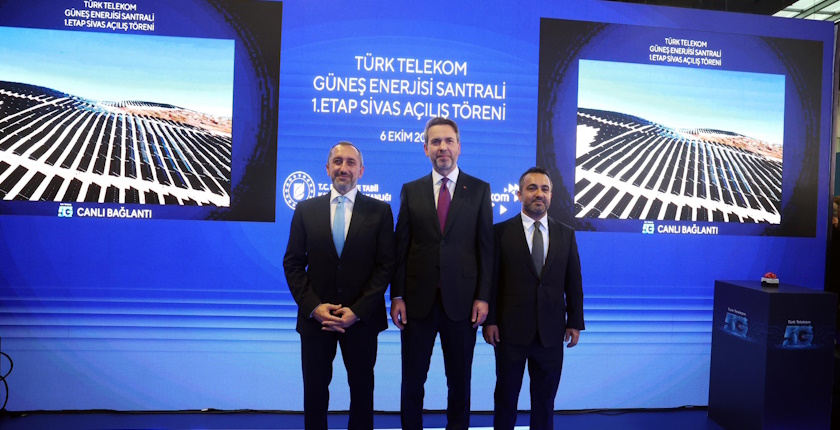
Türk Telekom puts solar power plant into operation as part of 530 MW project

Telecommunications operator Türk Telekom has inaugurated the first part of a solar power plant of 128 MW in peak capacity. The facility in Sivas province in Central Anatolia is one of the company’s three planned photovoltaic systems, totaling 530 MW.

Solar power, affordable and easy to install, is cost-effective for nearly all social and economic activity. In Southeastern Europe and beyond, it has become a mainstream technology, from municipal authorities and local institutions to industrial production. Türk Telekom stands out in the region as a major telecommunications company investing massively in photovoltaics.

The Turkish state-owned firm commissioned the first part of a solar power plant of 128 MW in peak capacity. Earlier it integrated 1.2 MW of solar energy with its 370 base stations and reached 5.5 MW overall.

The new solar park is on 130 hectares in the Zara district in Sivas province, Central Anatolia. When completed, it will cover 15% of the company’s consumption with its estimated annual output of 196 GWh.

Bayraktar: Many companies transformed from energy consumers to producers

At a ceremony at the 11th Energy Efficiency Forum and Exhibition in Istanbul, Minister of Energy and Natural Resources Alparslan Bayraktar put the completed segment into operation using a remote-controlled 5G wireless system. The energy revolution in Turkey has transformed many companies from energy consumers to producers, he pointed out.

Recalling that renewable electricity plants of more than 6 GW in total were completed last year, the minister expressed confidence that 2025 would be a record year. Turkey is heading toward 9 GW or 10 GW, striving to increase the newly installed capacity every year, Bayraktar said.

Türk Telekom to cover two thirds of its electricity needs with photovoltaics

ZTE won the tender late last year for the 128 MW project. The contractor installed mono-crystalline bifacial double-glass N-type PV panels and 350 kW inverters.

According to Türk Telekom’s Chief Executive Officer Ümit Önal, the Sivas plant and two other future solar parks, in Malatya and Ağrı, would meet 65% of the company’s electricity demand. Spanning 600 hectares, they would have 530 MW in combined peak capacity and generate an estimated 800 GWh per year.

Together with its affiliate TT Ventures, Türk Telekom has set up 114 electric vehicle charging units in 40 locations in 11 provinces. The number, within their E4 Charging project, is estimated to grow to more than two hundred this year, at more than 90 sites in 33 provinces.

Post Views:28
October 14, 2025
by AEA in News

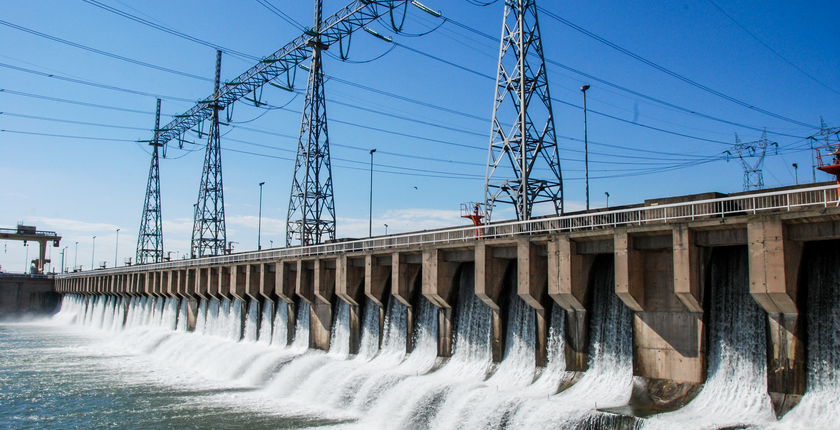
Serbia’s hydropower output drops to all-time low amid drought

Electricity production at state-owned power utility Elektroprivreda Srbije’s (EPS) hydropower plants is set to hit a historic low this year due to unfavorable hydrological conditions, caused by exceptionally low precipitation in the Drina and Danube river basins over the past 18 months.

The year-end figure will depend on whether and how well the hydrological situation improves in the coming months, EPS said. However, it is already clear that production will be about 25% lower than in 2024 and as much as 40% lower than in 2023, when EPS’ hydropower capacities generated 12.66 terawatt-hours (TWh), according to the statement.

The hydropower plants’ output will be 25% lower than last year

The projected hydropower output for this year is around 8 TWh, less than the all-time low of 8.3 TWh, recorded 36 years ago, EPS added. Since the beginning of 2025, hydropower capacities have generated about 6.5 TWh of electricity.

The average annual production at hydropower plants in the 2010-2024 period was 10.6 TWh, accounting for about 31% of EPS’s total. The total installed hydropower capacity is about 3 GW, according to the state power utility’s website.

Water levels in the Drina and Danube, where EPS’s largest hydropower plants are located, are low due to weak precipitation – both snow and rain – in Germany, Austria, Slovenia, Bosnia and Herzegovina, and Montenegro. At the same time, occasional rainy periods in Serbia this year, as well as recent rainfall, have not significantly affected water inflow to domestic hydropower plants.

The situation has not improved despite occasional rainfall and upgrades to hydropower plants

The revitalizations at the Đerdap 1, Bajina Bašta, and Zvornik hydropower plants have not helped either, even though the reconstructed units are now operating at exceptionally high efficiency, “turning every drop of water into energy.”

EPS also explained that output always depends on river inflows and that they have been far below average on both the Drina and the Danube throughout the year, so much so that there have even been periods when the Danube was not navigable.

On the other hand, the utility claims it is carefully and systematically managing water reserves in reservoirs to preserve them for the upcoming winter season.

Post Views:35
October 14, 2025
by AEA in News

Greece’s energy transition at risk amid gridlock with batteries, new tech

An overreliance on photovoltaics, combined with slow growth in the deployment of new technologies and storage, threatens Greece’s renewable energy future.

The country achieved rapid growth in renewable energy in the past five years, and penetration has surpassed 50% of the electricity mix.

However, the very success of the energy policies also led to significant issues that the government must address to achieve its 2030 goals.

Curtailments slashing profits as storage lags

This year, curtailments doubled from 2024, alongside a rising number of hours of zero or negative prices in the day-ahead market (DAM). It means that producers are subject to a loss of profits. Some investors have exited the Greek market as a result of worsening conditions.

At the same time, there is a huge licensing queue, as more than 15 GW of projects have acquired connection terms from the network operators. This is more than enough to cover the country’s 2030 goal and even beyond.

Energy storage is expected to provide a solution to curtailments and zero pricing. However, the first standalone battery projects have been pushed back nine months, as the original deadline was deemed too strict. Developers are competing against time to secure European funding through the Recovery and Resilience Facility (RRF), via the National Recovery and Resilience Plan Greece 2.0.

Energy mix diversification needed

Photovoltaics dominate the energy mix and this year they are expected to surge by 2 GW. There is growth in every segment of the solar market, although small investors complain of a preferential policy towards larger players. This is especially evident in the case of energy communities and farmers‘ photovoltaics, where such issues are abundant.

Wind installations have stalled in recent years and the offshore wind program has not made any progress towards the 2030 goal. The European Commission warned that investments in carbon capture and storage (CCS) are in danger of losing RRF funding at the current pace. Pilot projects in hydrogen are advancing, but it remains uncertain when they will become operational and at what scale.

The special renewables account turned red this summer, with an ever-growing deficit. There is also uncertainty surrounding projections about the country’s future electricity demand. Sales of electric cars and heat pumps are lagging behind the European average, while large data centers are seen as a way to increase consumption and support more power production.

All these issues mean that Greece may not achieve all its 2030 goals from the final National Energy and Climate Plan (NECP). The country initially presented a highly ambitious first version, but later reduced it to keep costs low for consumers.

Post Views:57
October 14, 2025
by AEA in News

CWP Europe gets European Commission’s backing for renewables projects in Albania, Montenegro

CWP Europe has signed a joint declaration with the European Commission, the Albanian Investment Development Agency, and the Montenegrin Investment Agency in support of its two landmark renewable energy projects – the Tropoja wind farm in Albania and the Montechevo solar farm with battery storage in Montenegro.

The declaration of support for CWP Europe’s projects was signed during the EU-Western Balkans Investment Forum in Albania’s capital, Tirana, in the presence of Albanian Prime Minister Edi Rama and European Commission President Ursula von der Leyen, according to a press release from CWP Europe, a leading renewable energy project developer in Southeast Europe.

The 600 MW Tropoja wind farm will advance Albania’s energy independence by providing clean, affordable electricity, supporting the country’s energy strategy, the company stressed.

The 600 MW Tropoja wind farm will boost Albania’s energy independence

In Montenegro, the 400 MW Montechevo solar farm will combine solar generation with battery storage directly connected to the country’s new 400 kV transmission grid. It will leverage Montenegro’s strategic interconnections – including the undersea power cable to Italy – to maximize the export of clean electricity and its integration into the European energy market.

A new energy backbone for the Western Balkans and Europe

Speaking at the signing ceremony, von der Leyen emphasized the Western Balkans’ increasing role in Europe’s clean energy transition.

“Today you are signing several investments that will do just that. From clean energy production in all six Western Balkan partners to energy storage in Montenegro. They will bring the cost of electricity down. And they will also contribute to our collective energy independence. You are building a new energy backbone not only for the Western Balkans. But for all of Europe,” said von der Leyen.

CWP Europe CEO Dimitar Enchev signed the declaration on behalf of the company, alongside Executive Vice Presidents Maja Turković and Viktor Garbev.

Enchev: We are unlocking the region’s immense renewable energy potential

“With Tropoja and Montechevo, we are unlocking the region’s immense renewable energy potential and strengthening cooperation across the Western Balkans. We greatly appreciate the support of the European Commission, the Albanian Investment Development Agency, and the Montenegro Investment Promotion Agency in advancing this shared vision for a clean, economically competitive and secure energy future of the region and Europe as a whole,” said Enchev.

Over the past 17 years, CWP has invested in sustainable development and the energy transition, successfully developing the largest wind farms in the region, including the largest one in Europe – the 600 MW Fântânele-Cogealac project in Romania. It is currently developing over 7 GW of renewable energy capacity, according to the statement.

Post Views:79
October 14, 2025
by AEA in News

Greek offshore wind farm program at standstill for more than one year

More than three years after the first offshore wind law, Greece made little progress toward achieving the national goal.

According to the National Energy and Climate Plan (NECP), the country should have its first 1.9 GW of offshore wind farms by 2030.

However, the entire program seems to be on hold. No government official has mentioned it within the past year.

The next steps in the process should be the approval of the National Offshore Wind Program through a joint ministerial decree. According to Insider.gr, the decree has been ready for more than a year now, waiting for the signature. It sent a message to investors that the pace is slow.

Companies selected in the initial auctions would conduct exploration in each allocated offshore zone. The main auctions would follow, for the winners to install the wind power plants.

Exploration permits have so far been provided only to Public Power Corporation (PPC), Terna Energy and Motor Oil Hellas, for a zone in the northeast, offshore Alexandroupolis. It is for pilot projects totaling 600 MW. The wind parks are supposed to become operational by 2029, but the Ministry of Environment and Energy has not yet requested approval from the European Commission for a support mechanism through contracts for difference (CfDs).

More wind needed for the energy mix

It should be noted that the government has acknowledged the need for more wind energy in the country’s renewables mix. Currently, it is dominated by photovoltaics, leading to an imbalance and ever-higher curtailments.

Offshore wind farms are seen more as a source of baseload electricity than solar and onshore wind power, given their high capacity factor, at around 50%.

Advisory firm Ricardo said recently that the Greek NECP is likely going to fail, partly as a result of missing its offshore wind goal.

Post Views:100
October 14, 2025
by AEA in News

Serbia’s economy in uncharted territory amid imminent US sanctions against oil company NIS

For NIS in Serbia, doing business will become exceptionally difficult from tomorrow, when the United States imposes sanctions, starting with payment systems. The same goes for any enterprise cooperating with the oil refiner and distributor, majority owned by Russia’s Gazprom Neft and another firm controlled by Gazprom.

Nine months after the US announced sanctions against NIS, which were postponed several times, they are coming into force tomorrow morning. Apparently, the American Office of Foreign Assets Control (OFAC) is imposing restrictive measures for Serbia’s national oil importer, refiner and operator of a chain of service stations. Croatian company Jadranski naftovod (JANAF), which depends to a great extent on supplying NIS, said the deliveries can last until October 15.

The US and the United Kingdom announced sanctions early this year against Russian state-owned Gazprom Neft, which at the time held 50% of ownership, while its parent Gazprom controlled another 6.2%. After a reshuffle, Gazprom Neft now has 44.9% of NIS, and Intelligence, a firm within Gazprom’s system, owns 11.3%. Serbia’s stake is 29.9%.

Plan B has numerous unknowns

The oil refinery in Pančevo is the only diesel and gasoline producer in Serbia and it dominates the market by far. According to media reports, NIS has considered switching to cash payments, with the exception of the domestic currency system DinaCard, and transferring all its accounts to the state-owned Postal Savings Bank.

It is unlikely that the company would be able to cover all the logistics and finances that way. At the same time, the entire Serbian economy is at risk, together with basic services for citizens. Organizing fuel imports will take time, which may lead to shortages and price hikes. Officials and the representatives of the oil sector claim that the current stockpiles can last several months.

Forced nationalization may switch energy crisis to gas supply from Russia

Back in January, President of Serbia Aleksandar Vučić immediately estimated that Russia would have to completely and urgently exit ownership. There was no success in the meantime in talks with the Kremlin and Gazprom.

“There is one possibility. If I said: I may seek nationalization of the property tomorrow. That is the last thing i would say, if I had to. I don’t want that,” Vučić stated late last week.

In case of a forced purchase of the Russian stake, the focus would turn to the supply of Russian gas through the Balkan Stream pipeline, an extension of TurkStream. Serbia still hasn’t signed a long-term contract with the Russian side, and the previous one expired in May.

To make matters worse, Bulgaria said it would end the transit of Russian gas, through Balkan Stream, for short-term arrangements. The move is part of the European Union’s measures to end the purchases of Russian fossil fuels. A total halt is scheduled for 2028. If the supply chain isn’t drastically changed, it would heavily impact Hungary, Slovakia and Serbia, together with Bosnia and Herzegovina and North Macedonia.

Post Views:133
October 14, 2025
by AEA in News

International Power Supply inaugurates Bulgaria’s first battery gigafactory

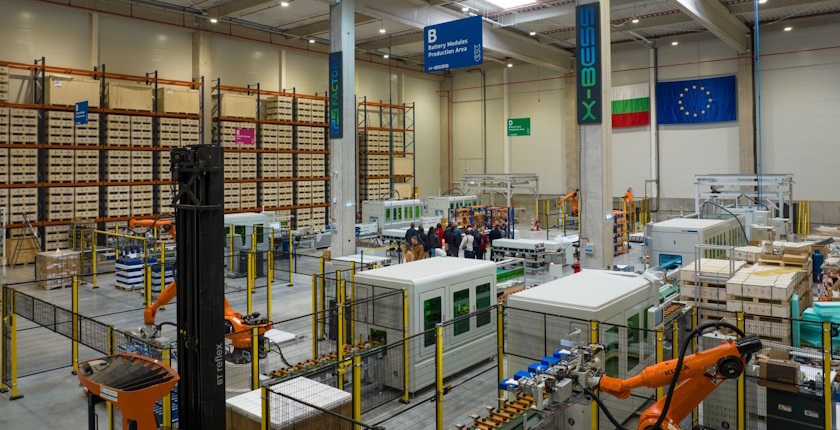
International Power Supply (IPS) opened its Factory X1, with a capacity of 3 GWh per year. It is the first gigafactory in Bulgaria for battery energy storage systems (BESS).

Recognized by the European Commission as a strategic project for a net zero industry, Factory X1 officially began production. International Power Supply (IPS) held the inauguration ceremony at the site in Chelopechene in the Kremikovtsi industrial district, part of the territory of Bulgaria’s capital Sofia.

The first battery energy storage gigafactory in the country is part of the Hemus high-tech industrial park. The facility will manufacture X-BESS modular systems of 8.2 MWh. Its annual capacity is 3 GW but IPS plans to lift it to 5 GW by the middle of next year.

Everything made in Europe except for battery cells

The company’s portfolio includes a proprietary battery management system (BMS). Actually, more than 70% of the supply chain is based in Europe, according to IPS. It includes distributed liquid cooling systems, mechanical structures, housings, electronics, control units, and inverters, the announcement reads.

“Made in Europe – the mission is possible. European know-how, European technology and IP, European sovereign BESS Gigafactory recognized as strategic manufacturing project from the European Commission. Today, it all starts – right here in Bulgaria,” said Chief Executive Officer Alexander Rangelov.

The lithium ion systems feature Chinese EVE and Cornex battery cells.

Power Technology Investment Group holds almost two thirds of IPS. It is controlled by the family of the founder Stoil Rangelov Trifonov. SIL Energy Invest is a minority partner.

Another factory could revive one of Bulgaria’s coal regions

Another manufacturing project is in the pipeline, worth EUR 160 million. It is for 10 GWh. IPS is seeking financial support from the European Union for the endeavor.

Locations in the vicinity of coal plants in the Maritsa East complex and Bobov Dol are under consideration, Economic.bg reported.

CEO Alexander Rangelov revealed that MM Energy decided to build a 10 GWh manufacturing facility in Poland using IPS’s technology.

Post Views:46
  • 1
  • …
  • 48
  • 49
  • 50
  • 51
  • 52
  • …
  • 140

AEA – Albania Energy Association is a industry association dedicated to representing the interests of Albanian and West Balkan for energy producers and consumers. AEA works to advance the development and adoption of sustainable energy solutions in Albania and the Western Balkans, supporting the region’s transition toward a cleaner, more secure, and more competitive energy future. AEA is registered by decision of the Court of Tirana, DECISION NO. 3032, (VAT:L11827451K).

[email protected]

Address
Blv Zogu 1
Tirana
1057
ALBANIA

LinkedIn  |  Facebook
Events
May 25, 2022 Connecting Green Hydrogen Europe 2022
May 25, 2022 Energy Week Western Balkans 2022
Copyright © Albania Energy Association