AEA-Albania Energy Association
  • Main
  • About Us
  • Services
  • Sectors
  • News
  • EventsEvents
  • PublicationPublication
  • Contact Us
AEA-Albania Energy Association
  • Main
  • About Us
  • Services
  • Sectors
  • News
  • EventsEvents
  • PublicationPublication
  • Contact Us
AEA-Albania Energy Association
  • Home Page
  • About Us
  • Sectors
  • Our Services
  • News
  • Contact Us
September 2, 2015
by AEA in News

Tirex Signs Agreement with Albanian Geological Survey

Tirex AlbaniaTirex Resources Ltd. (Tirex) is pleased to announce that it has signed an agreement with the Albanian Geological Survey (“AGS”) to collaborate in the metallurgical studies of the zinc-rich copper deposit at Koshaj.

– Tirex to collaborate with the Albanian Geological Survey at Koshaj

– Work to include re-opening underground workings for sampling and metallurgical tests

– Tirex and AGS focus will include gold, silver and zinc in addition to copper

This collaboration will include the re-opening of the underground workings in Koshaj, and the collection and shipment of samples to an international laboratory for metallurgical tests. As Tirex does not have technical specialists relating to this specific work based in-country, under the agreement AGS will provide technical supervision in the re-opening of the underground workings, collect the samples and ensure workplace safety. Tirex personnel will decide where the samples will be taken and will oversee sample collection.

Tirex, AGS and Ministry of Energy and Industry of Albania anticipate that the results of the tests may pave the way for exploitation of zinc-rich copper deposits in the country as zinc minerals has never been recovered from historic mining operations.

This collaboration with AGS follows the signing of a Memorandum of Understanding (“MOU”) between Tirex and Sinomine Resource Exploration Co., Ltd. (“Sinomine”) with regards to Tirex’s exploration and development activities in Albania whereby Sinomine, through its mining operations in Albania, will purchase mineralized materials that will be produced from Koshaj (see Tirex news release of August 25, 2015). Metallurgical testing of Koshaj mineralized materials is required by Sinomine in the MOU for its participation in the development of Koshaj as an additional source of mill feed for a processing plant it plans to build in Albania.

Koshaj is a zinc-rich volcanogenic massive sulfide copper deposit located in the historic copper producing Mirdita District of northern Albania. Although the mine was fully developed and ready for mining in the 1990s, no actual mining took place. Koshaj is reported to have a historic resource of 707,592 tonnes at 0.98% copper, 3.88% zinc and 0.71 g/t gold with a high grade copper and zinc zone of 388,164 tonnes grading 4.21% zinc, 1.19% copper and 0.95g/t gold. The deposit remains open for expansion.

All of the above stated resources and grade estimates are historic in nature; were obtained from information provided by the Albanian government; are not the subject of an NI 43-101 compliant report; and have not been verified by Tirex. No qualified person has done sufficient work to classify the historical estimates as current mineral resources; and Tirex is not treating the historical estimates as current mineral resources. Tirex is including the historical estimates for information purposes only, and offers no assurances as to the reliability of the estimates. Tirex will need to undertake a comprehensive review of available data, and in all likelihood a drill program, to verify the historic estimates and classify them as current resources.

Mr. Fred Tejada, P.Geo., Tirex President, and a Qualified Person under the meaning of Canadian National Instrument 43-101, is responsible for the technical content of this news release.

On Behalf of Management,

Fred Tejada, President

Forward-Looking Statements. This Tirex News Release may contain certain “forward-looking” statements and information relating to Tirex. Such statements include but are not limited to statements about a possible business transaction with Sinomine and the technical cooperation with AGS. Often forward-looking statements or information include words such as “plans”, expects”, “intends”, “anticipates”, “estimates” “forecasts”, or variations of such words and phrases or statements that certain actions, events or results “may”, “could”, “would”, “might” or will be taken occur or be achieved. Although forward-looking statements and information contained in this release are based on the beliefs of Tirex management, which we consider to be reasonable, as well as assumptions made by and information currently available to Tirex management, there is no assurance that the forward-looking statement or information will prove to be accurate. Specifically, there is no assurance Tirex will be able to finalize a business transaction with Sinomine on terms acceptable to Tirex, or at all. The forward-looking statements and information contained in this release are subject to current risks, uncertainties and assumptions related to certain factors including, without limitations, obtaining all necessary approvals, feasibility of mine and plant development, exploration and development risks, expenditure and financing requirements, title matters, operating hazards, metal prices, political and economic factors, competitive factors, general economic conditions, relationships with vendors and strategic partners, governmental regulation and supervision, seasonality, technological change, industry practices, and one-time events as well as risks, uncertainties and other factors discussed in our quarterly and annual and interim management’s discussion and analysis. Should any one or more of these risks or uncertainties materialize or change, or should any underlying assumptions prove incorrect, actual results and forward-looking statements and information may vary materially from those described herein. Accordingly, readers should not place undue reliance on forward-looking statements and information contained in this release. We undertake no obligation to update forward-looking statements or information except as required by law. All resource estimates quoted in this news release are historical, uncategorized and not NI 43-101 compliant and should not be relied upon. Tirex has not verified these historical resources and has not reviewed the assumptions, parameters and methods used to prepare the historical resource estimate. No Qualified Person has done sufficient work to classify the historical estimates as current and Tirex is not treating the historical estimates as current mineral resources or reserves but considers them as historically relevant and material information. A feasibility study has not been completed and there is no certainty the proposed operation will be economically viable.

“Neither the TSX Venture Exchange nor its Regulation Services Provider (as that term is defined in the policies of the TSX Venture Exchange) accepts responsibility for the adequacy or accuracy of this news release.”

September 2, 2015
by AEA in News

Petronas Said to Consider Buying Statoil’s Stake in TAP Project

petronas tapMalaysia’s state-owned energy company is considering acquiring Statoil ASA’s stake in a gas pipeline into Europe from the Caspian basin, two people with knowledge of the matter said.

Petroliam Nasional Bhd, also known as Petronas, may buy the Norwegian company’s 20 percent stake in the project, said the people, who asked not to be identified as the process is confidential. No final decision has been made and Petronas may choose not to pursue the acquisition, they said.

Statoil plans to exit the Trans Adriatic Pipeline project, known as TAP, Rovnaq Abdullayev, the president of State Oil Company of Azerbaijan, told Azeri TV channel ANS on July 20. The Oslo-based company declined to comment at the time.


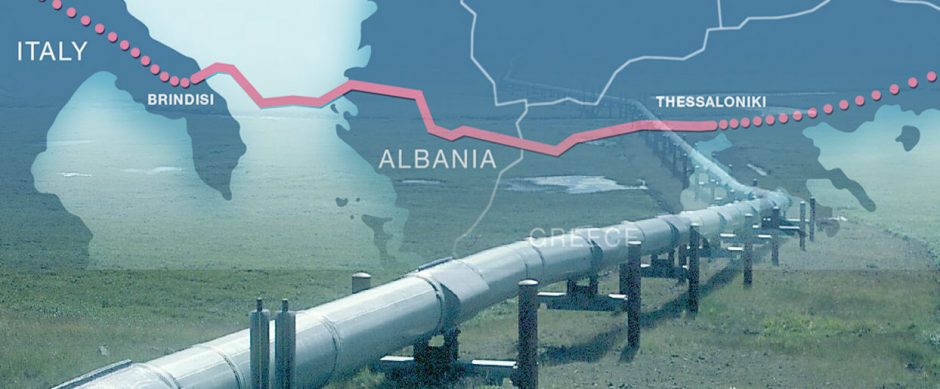
From 2018 the 870-kilometer (541-mile) TAP project will initially deliver 10 billion cubic meters of gas annually from the Shah Deniz fields through Greece and Albania to Italy. The pipeline, which should eventually be able to deliver 20 bcm of gas a year, will connect to Tanap, a pipeline that will stretch 1,841 kilometers into Turkey.

TAP’s other shareholders include BP Plc and Socar, which each hold 20 percent, as well as Fluxys Belgium with 19 percent, Enagas SA of Spain with 16 percent and Axpo with five percent, according to the Baar, Switzerland-based company’s website.

A spokeswoman for TAP declined to comment via e-mail on potential changes to shareholdings in the project. Representatives for Statoil and Petronas didn’t immediately respond to requests for comment.

By  Ercan Ersoy  and Elffie Chew

August 31, 2015
by AEA in News

Gas diplomacy in the Balkans…

gas diplomacy in the balkansNatural gas diplomacy in the Balkans is set to intensify, the result of more initiatives put forward by the United States and Russia. 

In Greece, which has just entered yet another pre-election period, Energy Minister Panagiotis Skourletis met with U.S. Ambassador David Pearce to discuss proposed energy infrastructure projects in the region, namely the Interconnector Greece-Bulgaria (IGB) and the Trans-Adriatic Pipeline (TAP). 

Sources say both sides agreed to speed up the approval process for each project bringing Greece’s proposal to become an energy hub, with increased imports and redistribution of Azeri gas, one step closer to reality. The U.S. diplomat also arranged a meeting between Skourletis and Amos Hochstein, Special Envoy and Coordinator for International Energy Affairs leading the Bureau of Energy Resources (ENR) at the U.S. Department of State. Hochstein is known for spending considerable amounts of time meeting policy makers in Southeast Europe and promoting U.S. energy interests from a national security perspective, which is clearly a geopolitical concern and not one influenced by market forces or business logic. 

From this perspective, the upcoming visit to Athens all but guarantees a new round of discussions between the Americans and Greeks. At a May meeting with former Greek Energy Minister Panagiotis Lafazanis, Hochstein publicly disapproved of the proposed Turkish Stream and the envisaged Greek stream offshoot, which would deliver Gazprom’s commodity via the Southern Balkans. He also said the Southern Corridor projects (TANAP & TAP) were realistic while Turkish Stream was not. Sources suggest the State Department is worried about continuous delays to the IGB project, the result of slow decision-making processes in Greece and Bulgaria. Additionally, the American side is also interested in achieving greater understanding of Greece’s energy relations, especially with Moscow. 

Nonetheless, the Vedomosti newspaper reported that Greece, FYROM, Serbia, and Hungary are on the verge of signing a joint memorandum of cooperation on Turkish Stream and its Balkan route. Serbian media have already named part of the route as the “Tesla Pipeline” in an obvious attempt to “nationalize” the section that will pass through Serbia. Insiders suggest the Greek, Serbian, and Hungarian foreign ministers will meet in Belgrade in September to announce an agreement that will see the exact route formalized. It should be noted the foreign ministers, not energy ministers, have taken the lead on this file. This is especially relevant to Greece where a schism exists between Skourletis and Foreign Minister Nikos Kotzias in terms of which project should be favoured more. 

Meanwhile, Bulgarian Energy Minister Temenuzhka Petkova has announced new efforts to push forward with South Stream, recently telling local media the project still remains a major goal for the country. Kiril Domuschiev, head of the Confederation of Employers and Industrialists in Bulgaria, noted that pipework for South Stream could also be used for Turkish Stream or any other project involving both Bulgaria and Gazprom. He added that no one would stop Bulgaria from doing business with Russia. 

All in all, a new round of diplomatic bras de fer commences in the Balkans between the U.S. and Russia whilst the real players, the consumers in major EU markets, eagerly await the completion of their own projects.

August 31, 2015
by AEA in News

Europe to Fund Balkan Transport, Energy Projects

western balkan summit mapFollowing the Vienna summit, the Western Balkans has been promised 200 million euro in co-financing for 10 transport and energy projects, to improve growth and energy security.

After the Western Balkans summit, which took place in Vienna on August 27, it has been announced that European institutions will grant around 200 million euro for 10 transport and energy infrastructure projects in six Western Balkans countries.

The total value of the agreed projects is around 600 million euro and they are to be conducted in Serbia, Montenegro, Macedonia, Albania, Kosovo and Bosnia.

The projects will be co-financed under the 2015 Instrument for Pre-Accession programme, IPA, and Western Balkans Investments Framework and by European financial institutions such as the European Investment Bank, European Bank for Reconstruction and Development, EBRD, and the German government-owned development bank, KfW.

The Western Balkans Investments Framework was developed jointly with the European Commission, the EBRD and the Council of Europe development bank, as well as by EU member states and Western Balkan countries themselves.

Among the projects to be developed with EU financial help are the Albania-Macedonia power interconnection and the grid section of Trans-Balkan Electricity Corridor in Montenegro and Serbia.

Twenty-four different other infrastructure projects were confirmed as of great importance for the region.

Completion of these projects should stimulate GDP growth by 1 per cent in each Western Balkan country and create around 200,000 new jobs in total, Serbian media reported.

Among the so-called “pre-identified” projects are the highway from Nis in Serbia to the Albanian coastal city of Durres through to the Kosovo capital of Pristina and the highway from Croatia to the Greek border via Montenegro and Albania.

The EU will also co-finance the Bosnia-Croatia road interconnection on the Mediterranean corridor as well as the rail interconnection between Serbia and Macedonia.

Western Balkans officials voiced satisfaction with the offer.

Milo Djukanovic, the Montenegrin Prime Minister, said his country stood to get 45 million euro from the EU for improving rail transport and electric transmission.

He said that without economic support from European institutions, the Western Balkans could not truly develop and provide a better life for its citizens.

“I consider this a very valuable contribution of the EU to the further improvement of transport and railway infrastructure,” Djukanovic said.

Mijat Lakicevic, a Belgrade-based economist, said it was a good news that the EU will co-finance some projects since regional transport infrastructure is worse now than it was 20 or 30 years ago. “Infrastructure is a precondition for development,” Lakicevic told BIRN.

On the other hand, he warned that 200 million euro was not enough to go round the entire region.

“We also have a problem with the quality of proposed projects and the region is already faced with unsuccessful and unfinished projects,” Lakicevic said.

The summit in Vienna is a part of the Berlin Process, a five-year process started last August and marked by yearly summits in order to underline the EU’s commitment to enlargement.

The focus of the initiative is on the six Balkan countries that are not yet EU members: Albania, Bosnia, Kosovo, Macedonia, Montenegro and Serbia. The next summit is scheduled for France next year.

August 28, 2015
by AEA in News

EU Western Balkans boost energy ties

BELGIUM EU COMMISSION ENERGY UNIONAt the Western Balkans Summit in Vienna, European Commission Vice-President for Energy Union Maroš Šefčovič was expected to look for ways to boost energy infrastructure and connectivity as well as regional cooperation. Non-EU members Albania, Bosnia and Herzegovina, Kosovo, FYROM, Montenegro and Serbia are looking to integrate with the European Union’s energy system.

A European Commission spokeswoman told New Europe on August 27 that the member states agree and endorse five projects, which have been pre-selected by the energy ministers of the Western Balkan countries already, and this list of priority projects will now be consorted on highest level.

These projects are: Albania – FYROM electricity interconnection, Serbia – Montenegro – Bosnia and Herzegovina electricity interconnection, Serbia – Romania electricity interconnection, Trans-Balkan electricity corridor in Serbia and the Serbia-Bulgaria gas interconnection which is linked to the Interconnection Pipeline from Nis in Serbia to Dimitrovgrad in Bulgaria.

“It’s a selection of key projects which are important for the Western Balkan region to interconnect the Western Balkans with the internal markets and to adapt the necessary infrastructure. These are the projects on the table now,” the spokeswoman said, adding that Šefčovič was expected to discuss the energy infrastructure projects on the level of the energy/economic ministers meeting on August 27.

“The energy union does not stop at the Union’s borders. That’s why we spare no effort to better connect the Western Balkans to our own energy systems,” Šefčovič has said.

Independent consultant Peter Poptchev, a long-time Bulgarian ambassador-at-large for energy security, told New Europe on August 27 that the Bulgaria-Serbia Interconnector is vitally important to a fully functioning energy market in Southeast Europe and to the Energy Union in the region.

“This would be the interconnection that would maximise the ‘market opening’ effect of IGB [Interconnector Greece Bulgaria], new LNG terminals in Greece and Croatia and any new long-haul trans-border pipelines like TAP [Trans Adriatic Pipeline], South Stream, Turkish Stream or Eastring. The BSI and other such interconnectivity infrastructure, including, preferably, jointly-owned storage facilities, would help the countries n SEE to move from the present declaratory to a cooperation and gradual integration of substance,” Poptchev said. He added that he favours expanding the capacity of the projected pipeline, which is planned to carry about 1.8 billion cubic metres of gas annually in both directions.

While in Vienna, Šefčovič was also expected to meet Ukrainian Energy Minister Volodymyr Demchyshyn to discuss the resumption of gas talks between Kiev and Moscow, mediated by Brussels. Ukraine wants to top up its gas storage before the start of winter, while Gazprom is under growing pressure due to falling gas and oil prices as well as an anti-trust probe launched by the European Commission against the Russian gas giant.

Šefčovič will meet the Ukrainian Energy Minister later on August 27. “The bilateral gas talks will start very late afternoon and depending on the outcome and the discussions we will issue late night statement on the Ukrainian situation,” the Commission spokeswoman said.

“We don’t have a date for the trilateral yet. The idea is that we talk with the Ukrainian side today. We have a second bilateral with the Russian side on September 11 and only then we will be able to see if there is enough political will to come together in a trilateral meeting. We don’t have a date yet,” she said.

August 28, 2015
by AEA in News

EU urged to help Western Balkans phase out coal

kosovo-a-600x337As leaders meet in Vienna to discuss closer cooperation, they must address the energy transition, argues CAN Europe 

The EU should use its influence with Western Balkan states to wean them off coal.

That was the message of Climate Action Network Europe in a report issued to coincide with a summit in Vienna on Thursday.

German chancellor Angela Merkel and EU foreign affairs chief Federica Mogherini assured leaders of the six countries of their commitment to closer integration.

“I see strong political will, both in the region and in Europe, to make this happen,” Mogherini said at the summit.

Coming as at least 20 migrants were found dead in a lorry in Austria, the meeting prioritised efforts to manage the flows of people escaping conflict-hit states in the Middle East and Africa.

But Maros Sefcovic, vice president of “energy union” at the European Commission, was also there to promote cooperation on energy matters.

Membership conditions

Albania, Bosnia and Herzegovina, Kosovo, Macedonia, Montenegro and Serbia are home to 20 million people and have relatively carbon-intensive economies.

All are seeking EU membership, but first they must meet economic and political conditions, including cleaning up their act on human rights.

Brussels should make sure climate action is on the list, CAN argued, to make sure Western Balkan states do not stay locked into polluting coal-based energy systems.

“Recent lack of tangible progress in the accession talks results in the Western Balkan countries losing appetite for much needed energy system reforms,” said Dragana Mileusnic, the NGO’s energy policy coordinator for South East Europe.

“They are locking their dirty energy systems into outdated and heavily polluting coal infrastructure for decades to come.

“Moreover, the EU’s influence in the region is taken over by Chinese investors, participating in nearly every new coal project planned.”

Coal’s share of energy and electricity production in the Western Balkans, EU and OECD (Source: IEA)

Coal’s share of energy and electricity production in the Western Balkans, EU and OECD (Source: IEA)

All the states except Albania depend on coal for more than half of their electricity generation, with stark health, economic and climate consequences.

Air pollution knocks a third off Serbia’s GDP, according to the World Health Organization, based on the cost of related death and disease.

Yet the country is planning 2.5 gigawatts of coal power plants, more than half its electricity generation pipeline. Across the region, 6GW of power stations are due to be built by 2030.

Many have attracted Chinese investment, while the World Bank is reportedly backing a plant in Kosovo, despite its policy of phasing out coal support. 

Share of coal in planned electricity generation capacity (Source: Energy Community, CEE Bankwatch)

Share of coal in planned electricity generation capacity (Source: Energy Community, CEE Bankwatch)

As part of its energy union strategy, Brussels is seeking to coordinate with neighbouring states.

While it is supposed to line up with the bloc’s climate policy, the focus has been on energy security and reducing reliance on Russian gas.

On Poland’s insistence, this included a push for “indigenous fuel” such as coal and gas, as well as diversifying gas supply routes.

That dismayed environmentalists, who argued energy efficiency and renewables were the way to go.

Mileusnic of CAN Europe called on Sefcovic to use the Vienna summit to make “more than a cosmetic change” to energy systems in the region.

Report: Europe’s “energy union” leader talks tough on Russia

It should also be pressing Western Balkan states to commit to greenhouse gas emissions cuts in line with EU ambition, CAN said.

National contributions are to form the backbone of a global carbon-cutting deal due in Paris this December.

To date, only Serbia has submitted a climate pledge to the UN, promising to cut emissions 9.8% by 2030 on 1990 levels.

Sefcovic hailed the move as “an exemplary step” on the path to EU membership.

But CAN said the figure was “far too low” and not compatible with the rest of the continent.

The EU is committed to 40% cuts, with even the poorest member states targeting at least 25% as their share.

By Megan Darby

August 27, 2015
by AEA in News

Bulgaria seeks to attract Azerbaijani investment in energy sector.

emil_karimov_ambassadorBulgaria intends to attract Azerbaijani investment in its energy sector. The Bulgarian government has delivered a package of energy cooperation projects to Azerbaijan, Emil Karimov said.

The Azerbaijani ambassador to Bulgaria told Trend on August 26 that the Azerbaijani side was offered to participate in the construction of filling stations, to invest in the construction of oil and gas storage facilities, and refineries.

“Currently, the Azerbaijani side is examining these projects and their profitability,” he said.

The ambassador went on to add that the energy cooperation is one of important areas of cooperation between Bulgaria and Azerbaijan.

“Bulgaria is interested in purchasing Azerbaijani gas. The government plans to purchase gas in the volume of one billion cubic meters a year. In the future, these volumes can be increased,” he said.

Currently, the negotiations on the Azerbaijani gas supply through the Greece-Bulgaria Interconnector are underway.

“Bulgaria intends to build a pipeline, which will be connected with the Trans-Adriatic Pipeline) in the future,” he said. “Azerbaijani gas will be delivered to Europe via this pipeline. Thus, Bulgaria will be able to receive gas from Azerbaijan.”

The Greece-Bulgaria Interconnector is a gas pipeline that will allow Bulgaria to receive Azerbaijani gas, mostly from the second stage of development of Azerbaijan’s Shah Deniz gas and condensate field.

The IGB will connect to the Trans-Adriatic pipeline, providing a steady flow of natural gas from Shah Deniz in the Caspian to European markets.

In January 2014, TAP and the Interconnector Greece-Bulgaria Company – which is in charge of the development, financing, and construction of the IGB – signed a memorandum of understanding and cooperation.

The MoU will allow cooperation between the two companies who will work together on finding a possible connection point in the vicinity of Komotini, Greece. This will enable new gas supplies to flow into the Bulgarian gas network and further into South Eastern Europe.

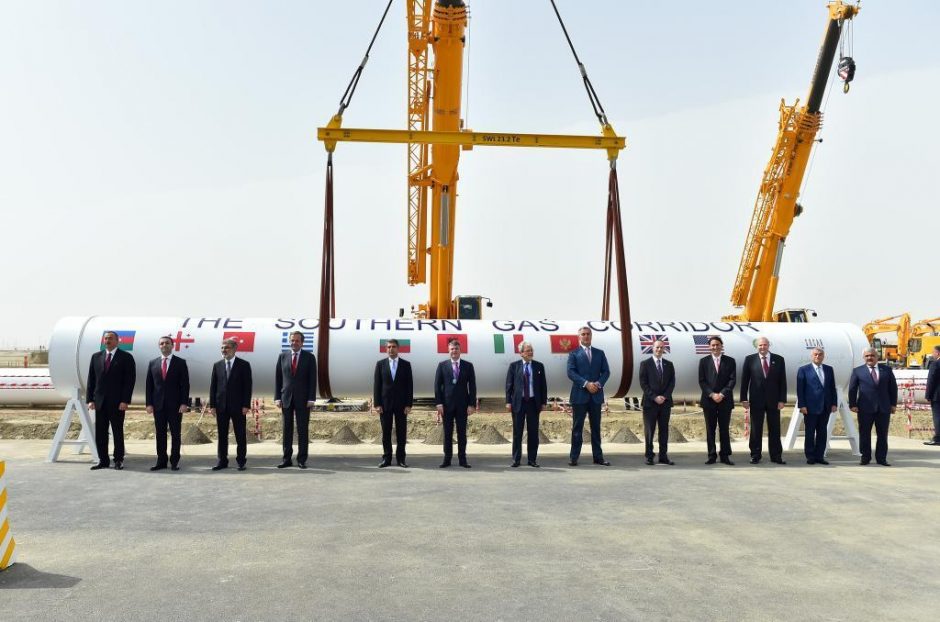
The TAP project is a part of the Southern Gas Corridor that allows Europe to diversify its hydrocarbon supply sources and strengthen energy security.

TAP will transport natural gas from the giant Shah Deniz II field in Azerbaijan to Europe. The approximately 870 km-long pipeline will connect to the Trans-Anatolian Pipeline at the Turkish-Greek border in the city of Kipoi, cross Greece, Albania, and the Adriatic Sea, before coming ashore in Southern Italy.

Azerbaijan and Bulgaria have developed friendly relations after Bulgaria recognized the independence of Azerbaijan in January 1992.

Diplomatic relations between the two countries were established in June 1992 and the Embassy of Bulgaria in Azerbaijan was opened in December 1999.

Bulgaria and Azerbaijan have the potential for a much greater trade turnover than current figures show. In 2014, the Azerbaijan State Statistics Committee reported that trade between the two countries amounted to $124.596 million.

By Aynur Karimova

August 20, 2015
by AEA in News

Operators planning more than 6,500 miles of offshore pipelines through 2019

gas-pipelines-EuropeOperators and developers are studying, planning, and building just over 6,577 mi (10,582 km) of oil and gas pipelines to bring these supplies from offshore fields to onshore markets. The total reflects a decrease from last year’s offshore pipeline construction survey, which showed a total of 7,057 mi (11,355 km). This year’s total represents a 6.8% decrease over last year.

The decrease is largely driven by the removal of the long-planned (and long-delayed) White Stream project from the survey, and the cancellation of the South Stream project in the Black Sea. The White Stream project, first presented by Ukrainian officials in 2005, had called for 635 mi (1,021 km) of 20, 24 and 42-in. pipe to move natural gas from Georgia to Ukraine and Romania via the Black Sea. The lack of progress on this project for many years led to its removal from the survey.

The cancellation of the South Stream pipeline project also decreased the survey numbers. The project was dropped by Russia’s Gazprom last December following numerous obstacles placed on the project by Bulgaria and the EU; the Crimean crisis; and the imposition of western sanctions on Russia. South Stream had called for four 578-mi (930-km) pipelines to move natural gas from Russia to Europe via the Black Sea.

That same December, officials from Gazprom and Turkey’s Botas Petroleum Pipeline Corp. signed a memorandum of understanding to construct an offshore gas pipeline across the Black Sea to Turkey. The Turkish Stream system, which calls for four 565-mi offshore pipelines, will now replace the South Stream pipeline project. Thus the shift from South Stream to Turkish Stream also led to another (albeit small) decrease in the survey numbers.

In January, Gazprom held talks with the Turkish Ministry of Energy and Natural Resources on the proposed pipeline. Gazprom will submit a notice requesting execution of front-end engineering and design operations for the new Turkish offshore section. It will be solely responsible for construction of the offshore section, while the Turkish gas transportation facilities will be built jointly. Current plans call for the first string of Turkish stream to come online in December 2016.

Even with all these changing project plans in the Black Sea, Europe remains the leader with offshore pipelines under consideration, with some 3,549 mi being built and planned.

Development of the Trans Adriatic Pipeline (TAP) continues to make slow but steady progress. In March, developers launched two prequalification contracts for construction of the 65-mi (105-km) offshore pipeline section under the Adriatic Sea. The first prequalification comprises engineering, procurement, construction, and installation (EPCI) for the offshore section of the 36-in. pipeline between the coastlines of Albania and southern Italy. The EPCI scope of work includes associated landfall civil works at the landfalls in both Albania and Italy, as well as survey, seabed, and pre-commissioning activities. The second prequalification process is for supply of offshore line pipes and coating. Following the selection stage, TAP is expected to issue the related invitations to tender for offshore construction this summer.

In the Norwegian Sea, pipelay has commenced on the Polarled gas pipeline, the first pipeline to extend Norway’s gas infrastructure into the Arctic Circle. The Allseas pipelay vessel Solitaire began pipelay activities in March, and is working toward a late August completion. The 298-mi, 36-in. pipeline will transport gas from the Aasta Hansteen field in the Norwegian Sea to the terminal at Nyhamna in western Norway. Laying will extend to water depths of up to 1,265 m (4,150 ft), a record for a pipeline of this diameter, Statoil claims.

The Middle East comes in second in the survey with 1,405 mi being built and planned. In the Persian Gulf, Pars Oil and Gas Co. (POGC) has started subsea pipelay for phases 20 and 21 of the South Pars gas field in the Persian Gulf. The 65-mi (105-km) long pipelines will deliver sour gas to the onshore refining facilities in Assaluyeh in southern Iran. To date, some 25 mi (40 km) of Phase 21’s pipes have been laid. Once pipelay has finished, POGC will install the new platforms for the two phases.

The South Pacific comes in third in this year’s survey with 853 mi of pipe being planned and built. Most notable here is the 552-mi (889-km), 42-in. gas export pipeline that will form part of the Ichthys LNG project offshore Australia. Pipelay has been under way for months on this project, with the Saipem vessel Castorone undertaking the 446 mi of pipelay called for in the deepwater portion of this project. Saipem’s SEMAC-1 has completed the 102-mi (164-km) shallow-water portion.Deepwater pipelay is scheduled for completion late this year.

South America comes in fourth in the survey with some 515 mi of pipelines planned for construction offshore Brazil. Saipem has won a number of EPCI contracts for this work, but, according to reports, the ongoing Petrobras scandal has resulted in late payments to Saipem and other contractors, and the delay of these projects seems likely.

The US comes in fifth in the survey with almost 165 mi of pipe planned for construction over the next few years. Perhaps the most notable of these is Shell’s recently-announced Mattox pipeline. It calls for a 90-mi, 24-in. pipeline to transport crude oil from the Appomattox platform to an existing offshore structure in the South Pass area. No completion date has been announced.

August 20, 2015
by AEA in News

New Onshore Oil & Gas Blocks in Albania, 15th October – Bidding Deadline

Albania’s Government Officials from the Ministry of Energy & Industry of Albania and AKBN will join IRN’s 4th Balkans Oil & Gas Summit to share more information on these rounds and other upcoming developments.

London, UK (PRWEB UK) 19 August 2015

The Ministry of Energy & Industry of Albania, recently announced that the oil and gas exploration bidding round deadline is 15th October for onshore blocks Panaja, C and 5 (map is availablehere), and is already in negotiations with the oil companies that submitted offers for onshore Blocks 4‎ and Dumrea.

Albania’s Government Officials from the Ministry of Energy & Industry of Albania and AKBN will join IRN’s 4th Balkans Oil & Gas Summit to share more information on these rounds and other upcoming developments.

oil map albania

Amongst experts to speak about Albania’s hydrocarbons industry will be:

  • Dorian Ducka, Deputy Minister of Energy and Industry, Albania
  • Dritan Spahiu, Director of Policies and Development of Hydrocarbons, Ministry of Energy and Industry, Albania
  • Dael Dervishi, Executive Director, National Agency of Natural Resources (AKBN), Albania
  • Dorina Cinari, Director, Extractive Industries Transparency Initiative (EITI), Albania
  • David French, CEO, Bankers Petroleum

The Summit will be held at the Sheraton Dubrovnik Riviera Hotel in Croatia on 23-25th September and will be attended by senior executives from oil and gas companies as well as energy Government Officials from all Balkans countries. A workshop day will also follow the Summit, with two workshops focusing on Adriatic and Black Sea prospects.

Highlights of last year’s Summit can be viewed at the official YouTube Channel of the organiser.

More information about the Summit is available on the website: http://www.balkanssummit.com and released bimonthly in the Summit’s newsletter to which someone can subscribe here.

August 18, 2015
by AEA in News

TAP’s Managing Director: No proposal was put forward on Iran’s joining this project

Vusal NabiyevThe project has always been open to all companies which bring strategic value to it.

Baku. Vusal Nabiyev – APA-Economics. No discussion was conducted on Iran’s joining to Trans Adriatic Pipeline (TAP) and no proposal was put forward in this regard.

TAP’s Managing Director Ian Bradshaw told the aforesaid, APA reports quoting Anadolu agency. According to him, this project, which is part of the Southern Gas Corridor, is of strategic importance for the European market. TAP’s Managing Director said that the project offers new natural gas reserves to the region and thus increases energy security

“The project plans to deliver 10 billion cubic metres of gas per year to Europe, and possibly double that in the long-term future. Therefore, additional compressor modules and stations will be built. Moreover, the project will ensure gas transport in the opposite direction. Thus, these opportunities will be evaluated in case of excessive increase in urgent need and demand. In particular, there are many countries in South-East European region which will be able to benefit from the Southern Gas Corridor and TAP”, I.Bradshaw stressed.

Ian Bradshaw noted that the project would be completed in Italy, connecting pipelines offer many opportunities in gas transmission to Switzerland, Austria, France, Germany, Belgium and the UK and he said that Shahdeniz-2 gas would play an important role in supplying Bulgaria and Greece. Bradshaw also touched on the issue of transporting Iranian gas to Europe via TAP:

“TAP envisages only transportation of Azerbaijani gas to Italy through Greece and Albania. TAP is not competing with other gas pipeline projects in the region. We didn’t have any contact with Iran or propose the country to join the project. TAP is acting in accordance with EU legislation and related sanctions. Thus, the project has always been open to all companies that could bring strategic value to it,” he said.

  • 1
  • …
  • 129
  • 130
  • 131
  • 132
  • 133
  • …
  • 140

AEA – Albania Energy Association is a industry association dedicated to representing the interests of Albanian and West Balkan for energy producers and consumers. AEA works to advance the development and adoption of sustainable energy solutions in Albania and the Western Balkans, supporting the region’s transition toward a cleaner, more secure, and more competitive energy future. AEA is registered by decision of the Court of Tirana, DECISION NO. 3032, (VAT:L11827451K).

[email protected]

Address
Blv Zogu 1
Tirana
1057
ALBANIA

LinkedIn  |  Facebook
Events
May 25, 2022 Connecting Green Hydrogen Europe 2022
May 25, 2022 Energy Week Western Balkans 2022
Copyright © Albania Energy Association