AEA-Albania Energy Association
  • Main
  • About Us
  • Services
  • Sectors
  • News
  • EventsEvents
  • PublicationPublication
  • Contact Us
AEA-Albania Energy Association
  • Main
  • About Us
  • Services
  • Sectors
  • News
  • EventsEvents
  • PublicationPublication
  • Contact Us
AEA-Albania Energy Association
  • Home Page
  • About Us
  • Sectors
  • Our Services
  • News
  • Contact Us
April 2, 2025
by AEA in News

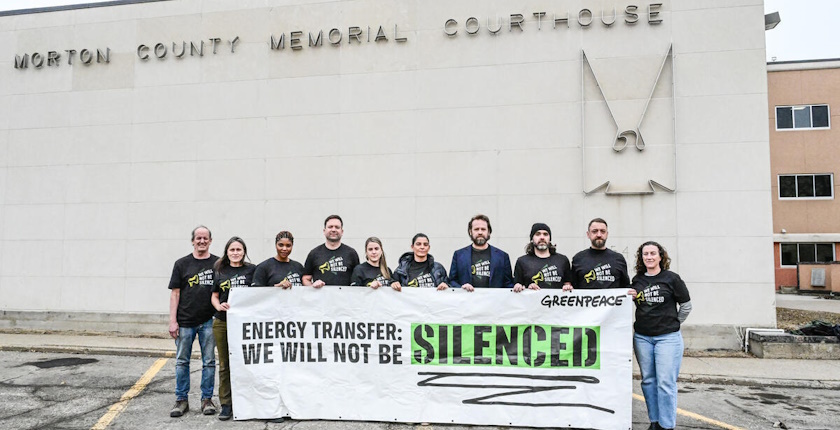
US court rules Greenpeace must pay over USD 660 million to oil pipeline operator

A North Dakota state court in Morton county found Greenpeace liable for more than USD 660 million in damages to Energy Transfer, which controls the Dakota Access Pipeline (DAPL). The environmentalist network, now facing bankruptcy, said it would appeal and that the ruling is part of a renewed push by corporations to weaponize courts to silence dissent.

Free speech and the right to protest are on the line in the United States, according to Greenpeace. A court in Morton county, North Dakota, reached a verdict in Energy Transfer’s lawsuit against the organization’s entities in the US – Greenpeace Inc. and Greenpeace Fund – and Greenpeace International.

It found them liable for more than USD 660 million for defamation, trespassing and other accounts, including even civil conspiracy. The company controls and operates the Dakota Access Pipeline (DAPL), which was put into operation in 2017.

Greenpeace said it would appeal. Energy Transfer brought a “meritless SLAPP.” it added. The acronym stands for “strategic lawsuit against public participation.”

The ruling is part of a renewed push by corporations to weaponize courts to silence dissent, according to the global environmentalist network.

Reckless behavior putting fossil fuel profits over public health, livable planet

The underground pipeline, also called Bakken, runs to Illinois. The suit concerned Greenpeace’s role in protests held in 2016 and 2017.

“We are witnessing a disastrous return to the reckless behaviour that fuelled the climate crisis, deepened environmental racism and put fossil fuel profits over public health and a liveable planet. The previous Trump administration spent four years dismantling protections for clean air, water and Indigenous sovereignty, and now along with its allies wants to finish the job by silencing protest. We will not back down. We will not be silenced,” said Greenpeace International’s Executive Director Mads Christensen.

Christensen: The previous Trump administration spent four years dismantling protections for clean air, water and Indigenous sovereignty, and now along with its allies wants to finish the job by silencing protest

The case should alarm everyone, no matter their political inclinations, according to the interim head of the two US branches Sushma Raman.

“We should all be concerned about the future of the First Amendment, and lawsuits like this aimed at destroying our rights to peaceful protest and free speech. These rights are critical for any work toward ensuring justice – and that’s why we will continue fighting back together, in solidarity,” she stressed.

Countersuit filed in Netherlands

Energy Transfer’s lawsuits are clear-cut examples of SLAPPs — attempting to bury nonprofits and activists in legal fees, push them towards bankruptcy and ultimately silence dissent, the group warned.

The company first turned to a federal court, which dismissed the case.

In February 2024, Greenpeace International initiated the first test of the European Union’s Anti-SLAPP Directive by filing a lawsuit in Dutch court against the same company.

IEN: Energy Transfer couldn’t defeat Indigenous movement, so it went after Greenpeace instead

In the US trial, the organization said it only helped the protest through training for nonviolent direct action. It argued that the events were led by local leaders of Indigenous peoples.

Following the ruling, the Indigenous Environmental Network (IEN) attributed the opposition to the pipeline project to environmental concerns issues and Indigenous rights violations. The verdict sets a troubling precedent for grassroots and Indigenous resistance movements, it added.

IEN’s Program Director Kandi White claims the courtroom was not a place for truth

“This trial was nothing short of a farce – an unfair process with a biased jury and a judge who was out of his league, the 14th one assigned after the rest had to recuse themselves. Almost every time Greenpeace raised an objection, it was overruled, while Energy Transfer’s witnesses were allowed to ramble far beyond the scope of the case. It was clear from the start that this courtroom was not a place for truth. The truth is that Indigenous peoples organized a movement that sparked nations to rise up and defend Mother Earth. And because ET couldn’t defeat us, they went after Greenpeace instead – an organization that proved in court that their involvement had nothing to do with the power of that movement,” IEN’s Program Director Kandi White said.

Energy Transfer intentionally desecrated sacred sites and its pipeline has already leaked at least five times, she added.
Post Views:99
April 2, 2025
by AEA in News

Serbia’s Vučić claims EU to designate lithium project Jadar as strategic – activists vow to appeal

President of Serbia Aleksandar Vučić said in Brussels that the European Commission would award “in seven or eight days” a strategic status to Rio Tinto’s Jadar project in Serbia for mining and processing a lithium ore. Marš sa Drine, together with a number of other environmentalist groups in Europe, stressed they would contest such a designation as well as several projects that were just approved in the European Union. They include proposals for lithium mines in Portugal and Spain and the Rovina copper and gold mine in Romania.

The European Commission has approved the first 47 strategic projects in EU territory yesterday, for the production of critically important raw materials. Most are used for manufacturing batteries. According to the announcement, “the decision on the potential selection” of proposals for facilities in third countries “will be adopted at a later stage.” The EU’s Critical Raw Materials Act (CRMA) stipulates that such strategic projects are eligible for administrative and financial support.

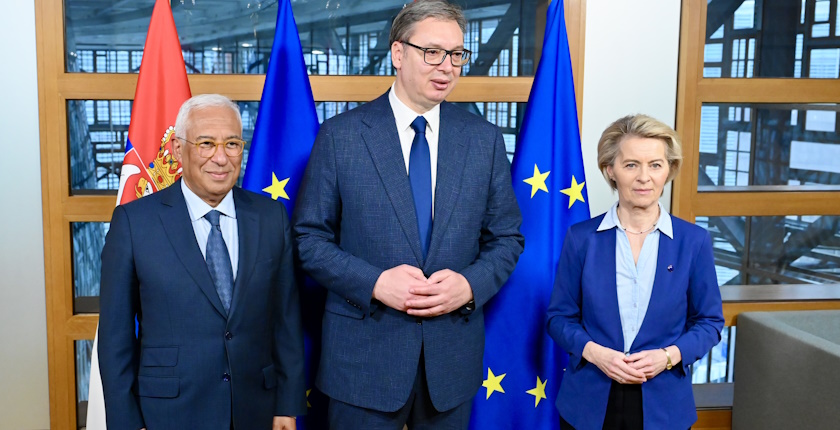
Serbian President Aleksandar Vučić is convinced that “in seven or eight days” the EU would declare that the Jadar lithium project in his country’s west is strategic. He made the claim the same evening in Brussels, where he met with the bloc’s top officials. The proposal is for Rio Tinto’s underground mine and processing unit near the city of Loznica, including mining waste dumps.

The controversies around project Jadar, centered around a unique mineral called jadarite, have sparked several waves of massive protests since 2021. Balkan Green Energy News has a chronological overview of the most important events since 2001, when Rio Tinto established a subsidiary in Serbia.

Novaković: We are no playground for mining mafia

Together with nongovernmental organizations and community associations from Romania, Germany, Spain and Portugal, the Marš sa Drine group from Serbia reacted to the European Commission’s decision, and later also to Vučić’s statement. They said they would legally challenge the strategic status designation for disputed mining projects. Locals and environmentalists alike have long contested them, the note reads.

They highlighted Jadar, lithium mines Mina do Barroso and Mina do Romano in Portugal and Mina Doade and Mina Las Navas in Spain as well as the plan for the Rovina copper and gold mine in Romania.

Environmentalist groups have hired lawyers to legally dispute the designation of several mining projects as strategic

“We are not a playground for the mining mafia. Our lawyers in Europe are completing legal complaints for annulling this decision. Rio Tinto has shown disregard for the rule of law in Serbia,” said Bojana Novaković from Marš sa Drine. She accused the EU of supporting environmental destruction and corruption because of lithium. Marš sa Drine is part of the Association of Environmental Organizations of Serbia (SEOS).

Extraction of cheap raw materials for the automotive industry in Germany and elsewhere jeopardizes the way of life of people in the area of Covas do Barroso in north Portugal, local activist Nelson Gomes said.

“We, who live from sustainable livestock farming and depend on clean rivers and green pastures, would only experience disadvantages. The proposal is far from a just transition – mining in Portugal does not abide by the rules and the authorities do nothing,” he underscored.

The Rovina gold-copper open cast mine will destroy pristine nature and displace communities and the European Commission’s designation legitimizes a project deemed illegal by courts in Romania, activist Roxana Pencea Brădățan pointed out.

Lithium mining on both sides of German-Czech border

The environmentalists also listed the Zinnvald lithium mining project in Germany, even though it hasn’t (yet) been labeled strategic. Notably, the location is in the same area as the Cínovec strategic litium mining project, right across the border in the Czech Republic.

“The cumulative impact of these two large mines on protected sites and on adjacent villages and towns is not being considered. From our region’s past, we know that the larger the mines, the greater the harm. We will not allow this again,“ said Anja Weber, a local from Bärenstein, near the Zinnvald site.

Amid tightening geopolitical pressure, the EU strives to unlock partnerships with third countries for minerals and to bolster the domestic mining of metals for the energy transition, according to the document, signed by Marš sa Drine, Bürgerinitiative Bärenstein, MiningWatch Romania, MiningWatch Portugal and Iberian Mining Observatory.

CRMA enables overriding public interest, they added. Activists and affected communities have been warning since the act’s drafting of its incompatibility with, for instance, the EU’s Habitats Directive, the Water Framework Directive and the Birds Directive.

Post Views:169
April 2, 2025
by AEA in News

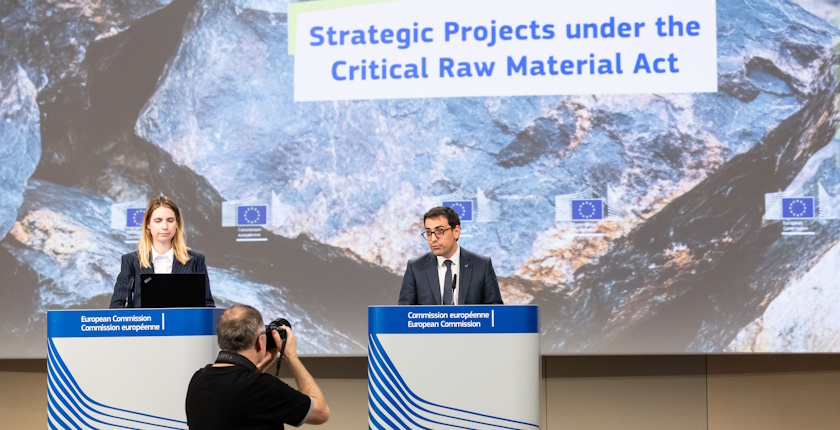
EU selects first group of strategic projects for raw materials

The European Commission adopted a list of strategic projects to boost domestic raw material capacities. Sites for the entire first group are in European Union member states and the ones in third countries are set to be declared later. Metlen, Imerys, Vulcan Energy, Fortum and Northvolt are among the companies that got their proposals designated.

Of all 47 projects, 18 involve lithium and seven are proposed investments for mining the alkali metal.

In line with the Critical Raw Material Act (CRMA), the European Commission revealed the first 47 strategic projects that it expects to contribute to the green and digital transitions and support the defense and aerospace industries. The aim is to boost domestic capacities for strategic raw materials, strengthen the domestic value chain and diversify sources of supply in the sector.

The EU is striving to cover 10% of its demand by extraction and 25% from recycling as well as to reach a rate of processing of 40% of its consumption, all by 2030.

The European Commission plans the next call in late summer

By the call deadline in August, 170 applications were received, of which 49 from outside the EU. In the list, 77 are focused on extraction, 58 on processing, 30 on recycling and five on substitution. The European Commission plans the next call in late summer.

Locations for the selected batch are all in EU member states while “the decision on the potential selection” of the ones in third countries “will be adopted at a later stage,” the update reads. The sites are in 13 countries: Belgium, France, Italy, Germany, Spain, Estonia, Czechia, Greece, Sweden, Finland, Portugal, Poland and Romania.

Notably, one of the candidates is Rio Tinto’s disputed Jadar project in Serbia. The mining giant is planning underground exploitation of lithium and the construction of a processing facility.

Lithium mining projects are in Spain, Portugal, Czechia, France, Finland

Most projects promoted today focus on battery materials, though they have various other uses, too. Eighteen involve battery-grade lithium, though only seven are for mines or for both mining and processing. Two are in Portugal – Barroso Lithium Project and Romano Mine, and two in Spain. Las Navas was developed by Lithium Iberia while Mina Doade belongs to Recursos Minerales de Galicia (RMG), a subsidiary of SAMCA Group.

Vulcan Energy Resources and Eramet made it to the list with their proposed investments in the extraction of lithium from geothermal waters

The remaining three projects are Cínovec in the Czech Republic (by Geomet), Emili in France (by Imerys) and Keliber in Finland, developed by Keliber Technology. It is a subsidiary of precious metals producer and refiner Sibanye-Stillwater.

The European Commission also picked two projects for the extraction of lithium from geothermal waters. One is Zero Carbon Lithium of Vulcan Energy Resources, in Germany. French firm Eramet made it to the list with its AGeLi (Alsace Géothermie Lithium) endeavor.

Northvolt, Fortum to obtain battery materials through recycling

Four strategic projects are for processing lithium alone and five are just for recycling it.

Bankrupt electric vehicle battery manufacturer Northvolt managed to enter the list, via its firm Northvolt Revolt. Their NorthCycle recycling project in Sweden is for manganese, lithium, graphite, nickel and cobalt.

Another notable beneficiary is Finnish energy giant Fortum. Project Fortum Hydromet, developed by Fortum Battery Recycling, is for lithium, graphite, copper, nickel and cobalt.

There are three mining projects for cobalt: two in Finland and one in Spain. One adopted proposal, in Sweden, is for the extraction of rare earth elements for magnets and a processing unit.

Romania’s national salt company to mine graphite

As for the region that Balkan Green Energy News covers, all four locations are for mines. Romania hosts one for copper, one for magnesium and one for battery-grade graphite. The last one, Salrom Baia de Fier, was submitted by state-owned salt producer Societatea Națională a Sării (Salrom). The site is in Gorj county in central Romania.

Metlen Energy and Metals, formerly called Mytilineos, and its subsidiary European Bauxites were selected with their project in Greece. It is for a mine called Baux-EU and processing units Gallent and Leader. The company intends to extract bauxite and produce alumina, aluminum and gallium.

Selected projects for strategic raw materials sufficient to meet 2030 targets for lithium, cobalt

The chosen proposals will ensure that the EU can fully meet its extraction, processing and recycling 2030 benchmarks for lithium and cobalt, while making substantial progress for graphite, nickel and manganese, the European Commission claimed.

The chosen proposals imply EUR 22.5 billion in combined investment to become operational

“At the very start of our most strategic supply chains, are raw materials. They are also indispensable to the decarbonisation of our continent. But Europe currently depends on third countries for many of the raw materials it needs the most. We must increase our own production, diversify our external supply, and make stockpiles,” said the European Commission’s Executive Vice-President for Prosperity and Industrial Strategy Stéphane Séjourné.

To become operational, the strategic projects require EUR 22.5 billion in overall capital investment. They are eligible for support by the European Commission, member states and financial institutions. CRMA limits permitting to 27 months for extraction projects and 15 months for others. Currently, permitting processes can last five or even ten years, the update notes.

Post Views:269
April 2, 2025
by AEA in News

Serbia signs MoU on nuclear energy with China

China will be Serbia’s yet another partner in developing nuclear energy. So far, contacts have also been made with Russia, France and Slovenia.

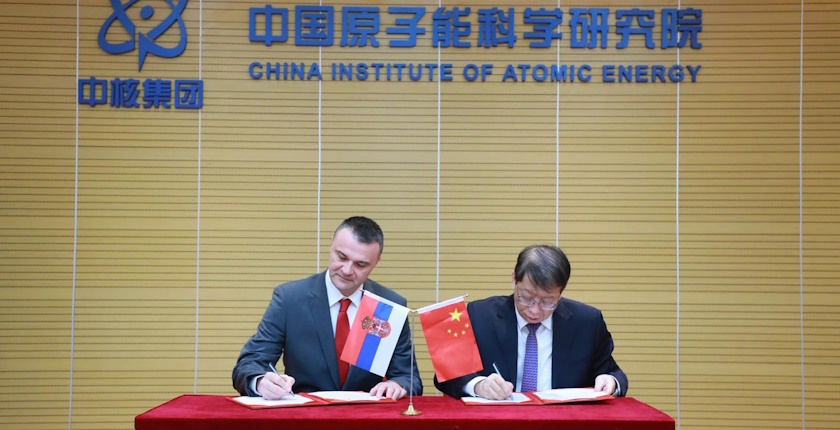
State-owned Nuclear Facilities of Serbia has signed a memorandum of understanding with the China Institute of Atomic Energy (CIAE).

The document was signed in Beijing by Dalibor Arbutina, CEO of Nuclear Facilities of Serbia, and Yang Hongyi, Director General of CIAE.

The memorandum envisages strengthening cooperation between the two countries in decommissioning a heavy-water research reactor, radioactive waste management, radiation protection, and the exchange of knowledge and experience, local media reported.

The document enables the implementation of joint projects, staff training

The agreement creates conditions for joint projects, staff training, and technical support.

It is part of bilateral cooperation between the only Serbian nuclear operator and China’s largest nuclear institute. The memorandum aims to strengthen technical cooperation and connect Nuclear Facilities of Serbia with the most important global partners in the nuclear energy and environmental protection sectors.

In November of last year, Serbia adopted the changes to the Law on Energy and lifted the ban on the construction of nuclear power plants, introduced in 1989. The idea to introduce nuclear energy in Serbia was announced by President Aleksandar Vučić in 2021.

A few months later, in November, Vučić met with Director General of Rosatom Alexey Likhachev. One of the topics discussed was the possibility of building a nuclear power plant, according to the president.

A memorandum was signed with EDF

In April 2024, a memorandum of cooperation was signed with French state-owned energy company Electricite de France (EDF). It envisages nuclear energy as one of the areas of cooperation.

A few months later, the Government of Serbia awarded a contract to EDF and Egis Industries for a preliminary technical study considering the peaceful use of nuclear energy.

Two months ago, Minister of Mining and Energy of Serbia Dubravka Đedović Handanović met with Ambassador of Slovenia Damjan Bergant to discuss potential cooperation in the field of nuclear energy.

Photo: Dalibor Arbutina/LinekdIn
Post Views:126
April 2, 2025
by AEA in News

Šušnjar: Croatia, Italy mull subsea power cable

Croatia plans to install an electricity interconnector under the Adriatic Sea to Italy, but also to build a nuclear power plant, according to Minister of Economy Ante Šušnjar. In his words, nuclear and geothermal energy are crucial for the country’s energy security.

Economy Minister Ante Šušnjar highlighted the importance of connecting the power grids of Croatia and Italy. The two countries are discussing an underwater power link between Dalmatia and the Italian coast, he underlined.

A subsea power cable would significantly relieve the Croatian network during periods of peak loads on the coast, and at the same time open up the possibility of two-way transmission of electricity, including the export of electricity to Italy – one of the largest European consumers, Šušnjar pointed out at the Energy Revolution – Road to a Sustainable Future conference, organized by Poslovni Dnevnik.

It is unfortunate that Croatia doesn’t have a power link with Italy, like Montenegro and Albania

He expressed the belief that the cable would solve the problems that Croatia’s coastal areas have from generating power with solar power plants and wind farms.

Technical plans for the project already exist, but it is difficult to talk about deadlines, he said. Once the political and market conditions are met, the cable could be installed in no time, the minister claimed.

In his words, Croatia sadly doesn’t have a power link with Italy, like Montenegro and Albania, Telegram.hr reported. Of note, the Montenegro-Italy cable has been operational since 2019, while Albania and Italy recently announced plans to install one.

Croatia intends to build a nuclear power plant

He recalled the importance of diversifying energy sources, highlighting geothermal as a stable, year-round renewable source with great potential, especially in the Croatian part of the Pannonian Basin.

In addition to geothermal, Croatia is considering the role of nuclear energy. It has established a working group to analyze options including an extension of the operation of the Krško nuclear power plant, construction of new capacities, and development of small modular reactors (SMRs).

Geothermal and nuclear energy are opportunities for sustainability, technological progress, and greater energy security, Šušnjar underscored.

He stressed Croatia’s intention to install a nuclear power plant and hinted at the SMR technology.

Post Views:93
April 2, 2025
by AEA in News

Greek renewable energy investments viable in long term, says Aurora Energy

Aurora Energy published a long-term outlook about prices and renewable energy investments in Greece.

Baseload power prices in the country are expected to peak in 2025 due to higher demand and gas volatility, says Aurora, then drop as renewable energy expand and gas markets stabilize.

Renewable energy projects’ capture prices decline after 2030, especially for solar. However, compared with the levelized cost of electricity (LCOE), they are expected to provide investable returns in the long run.

From 2031 onwards, the analysts see onshore wind capture prices declining by an average of 1% annually, following the trend in the baseload segment.

From 2031 to 2060, solar capture prices are anticipated to be, on average, 54% lower than baseload prices, surpassing wind due to higher capacities and increased synchronous solar generation, which leads to greater price cannibalization.

As for energy storage, Aurora highlighted the importance of the average spread between the lowest and highest prices within the day. It expects an increase of 20% from 2026 to 2040. Namely, high solar and wind output during low demand periods lowers prices, while high demand and low renewables push prices up, with hydropower and gas-fired plants setting prices amid higher gas and carbon costs, the firm explained.

Aurora expressed the belief that when it comes to merchant battery projects, their viability would depend on their entry year, as well as the hourly storage duration. Early investments are expected to capture higher returns than later ones.

Negative prices introduced

Except the said long-term trends, a change in the Greek power market will soon affect renewable energy producers.

Ahead of Greece’s entrance into the PICASSO balancing energy platform, the Independent Power Transmission Operator (IPTO or ADMIE) opened the door for negative prices in the balancing market, at a maximum of EUR 50 per MWh. The change will be applied sometime within the next few months.

It is only the first step and the limit would gradually increase to EUR 15,000 per MWh below zero. Owners of renewable electricity plants of certain categories would be impacted because until now, prices in the wholesale market rarely went below EUR 0.04 per MWh.

Even at such a low level, producers are still able to get paid fully based on their contracts for difference (CfDs). However, if there are two consecutive zero or negative hourly prices, they would receive nothing and may even have to pay to produce in such periods.

During the recent Power & Gas Forum held in Athens, Aristotle University of Thessaloniki Professor Stavros Papathanasiou warned that negative prices would become a much stronger threat to investments in renewables.

Post Views:38
April 1, 2025
by AEA in News

Greece starts EUR 223 million program to support solar heaters and heat pumps

A new support program has been launched in Greece to help households install new solar heaters or heat pumps.

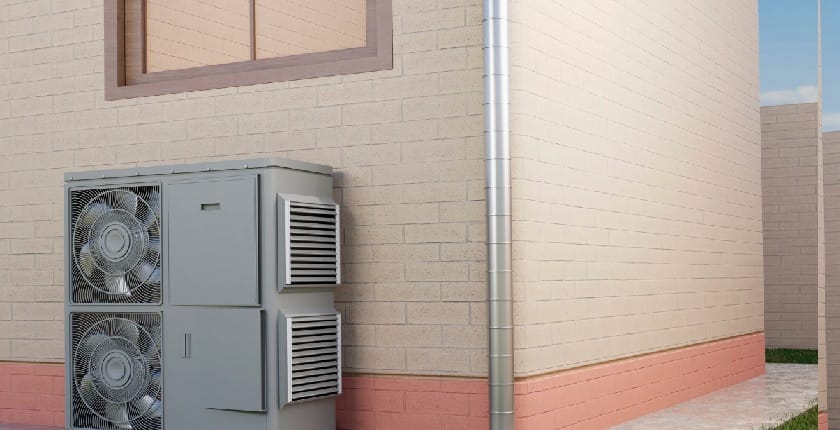
The government has announced a new EUR 223.2 million support program to facilitate the use of green heating systems for households, such as rooftop solar heaters and heat pumps. It takes place under the RePowerEU policy initiative and the National Recovery and Resilience Plan Greece 2.0. They are financed from the EU’s NextGenerationEU package for economic recovery from the COVID-19 pandemic.

The program supports the purchase of new solar heaters, covering 50% to 60%, depending on the applicant’s income. Eligible costs for heat pumps amount to 50%, while installation works are also covered with 50% to 60%.

The systems can be installed in primary or secondary residences. The program also takes into account the number of children, the location of the house and the local climate to determine the extent of the support. In previous programs, the condition of the house and its energy label were the primary considerations.

Households can apply until the end of March.

More programs for houses, water utilities and schools

Another significant program running this year is for energy saving in houses with a budget of EUR 434 million. Its goal is to reduce energy consumption by a minimum of 30% and lift the energy class by at least three grades. Houses in Evrytania, Kozani, Florina, Imathia and Kastoria have priority as the coldest areas in the country.

In addition, the Ministry of Environment and Energy prepared a program to upgrade schools, water utilities and hotels in mountainous regions. It earmarked EUR 49.6 million, EUR 40 million and EUR 10 million, respectively.

While the grant schemes are vast, a major question is whether the state will pay beneficiaries on time. During previous energy saving schemes, big delays were reported and many citizens and businesses have not received the money yet. In any case, Minister of Environment and Energy Thodoros Skylakakis said the application deadlines wouldn’t be extended.

April 1, 2025
by AEA in News

What do you do when your bathtub leaks? Do you open the tap wider – or do you fix the leak?

By Nathalie Hemeleers – Director of EU Affairs at the Solar Impulse Foundation, one of EUSEW’s partner organizations,highlighting the critical role of energy efficiency, emphasizing its importance in driving decarbonization, competitiveness, and resource optimization, innovative solutions, and supportive financing and policies.

Decarbonizing our energy supply through renewable sources of energy is absolutely key. But if the current wasteful practices continue, renewable energy consumption will just add to the current fossil fuels consumption, instead of replacing it. Investing in a more efficient energy system is key to decarbonization but also to competitiveness and security.

A world stuck in the past.

The world we live in is stuck in the past. The technologies allowing us to exploit resources have remained largely unchanged since the Industrial Revolution. Our economy is characterized by waste and inefficiency.

Consider that internal combustion engines lose more than two-thirds of the energy we create, and more than a quarter of our drinking water is lost every year due to preventable and treatable leaks in the distribution network. Or consider that a third of the food we produce is thrown away – wasting not just the final product but all the energy and resources needed to produce it and get it to where it is meant to be. We can do so much better.

The value of energy efficiency

Energy efficiency is not a new concept, especially for EU lawmakers. It does not only allow us to save resources but also (and maybe more importantly for many?) money. It has been estimated that around $4.5 trillion could be saved annually thanks to energy efficiency.

Also, energy efficiency in buildings alone can almost halve seasonal peak demand (up to 49.5% reduction) every year by 2050, avoiding stranded assets and unnecessary investments in grids. €44.2 billion could be saved every year, making the much-needed investments in the EU’s distribution grid more cost-effective!

Why is it so difficult to implement?

Energy efficiency is still seen by many as a restriction of business opportunities. We need to change that narrative.

In a time where competitiveness is at the top of policy-makers’ attention, efficiency should be seen as a close ally. By investing in efficient production systems, costs are reduced giving businesses a double competitive advantage of producing at a lower cost and in a cleaner way.

Solutions are within reach

And good news, innovative efficient solutions exist! The Solar Impulse Foundation has identified and labeled more than 1,500 existing solutions that can make this paradigm shift a reality, in virtually any sector of society.

They are available today, open source, on www.solarimpulse.com. These are just a few among the many already existing, showing that the shift we are calling for is realistic and within reach.

Financing efficient solutions

Now, mobilizing public and private capital to invest in clean and efficient solutions and modernize our economies will be key.

New business models have to emerge, those that reward efficiency. EU institutions and financial stakeholders have to propose new financing tools that will tackle the double challenge of high CAPEX and higher risk for businesses, especially SMEs.

A modernized economy based on efficiency is a qualitative economy that has as a key driver the continuous optimization of resources.

Efficiency as the cornerstone of progress

The fundamental goal is to achieve heightened efficiency in various sectors, prioritizing sustainable practices and minimizing waste. Basically, accomplishing more (and better) with fewer resources, thereby contributing to a reduced environmental footprint.

Decarbonization is no longer the end goal but becomes a consequence of a modernization process, one that creates jobs and economic activity.

This opinion editorial is produced in co-operation with the European Sustainable Energy Week 2025. See ec.europa.eu/eusew for open calls.

Post Views:274

By Nathalie Hemeleers – Director of EU Affairs at the Solar Impulse Foundation, one of EUSEW’s partner organizations,highlighting the critical role of energy efficiency, emphasizing its importance in driving decarbonization, competitiveness, and resource optimization, innovative solutions, and supportive financing and policies.

Decarbonizing our energy supply through renewable sources of energy is absolutely key. But if the current wasteful practices continue, renewable energy consumption will just add to the current fossil fuels consumption, instead of replacing it. Investing in a more efficient energy system is key to decarbonization but also to competitiveness and security.

A world stuck in the past.

The world we live in is stuck in the past. The technologies allowing us to exploit resources have remained largely unchanged since the Industrial Revolution. Our economy is characterized by waste and inefficiency.

Consider that internal combustion engines lose more than two-thirds of the energy we create, and more than a quarter of our drinking water is lost every year due to preventable and treatable leaks in the distribution network. Or consider that a third of the food we produce is thrown away – wasting not just the final product but all the energy and resources needed to produce it and get it to where it is meant to be. We can do so much better.

The value of energy efficiency

Energy efficiency is not a new concept, especially for EU lawmakers. It does not only allow us to save resources but also (and maybe more importantly for many?) money. It has been estimated that around $4.5 trillion could be saved annually thanks to energy efficiency.

Also, energy efficiency in buildings alone can almost halve seasonal peak demand (up to 49.5% reduction) every year by 2050, avoiding stranded assets and unnecessary investments in grids. €44.2 billion could be saved every year, making the much-needed investments in the EU’s distribution grid more cost-effective!

Why is it so difficult to implement?

Energy efficiency is still seen by many as a restriction of business opportunities. We need to change that narrative.

In a time where competitiveness is at the top of policy-makers’ attention, efficiency should be seen as a close ally. By investing in efficient production systems, costs are reduced giving businesses a double competitive advantage of producing at a lower cost and in a cleaner way.

Solutions are within reach

And good news, innovative efficient solutions exist! The Solar Impulse Foundation has identified and labeled more than 1,500 existing solutions that can make this paradigm shift a reality, in virtually any sector of society.

They are available today, open source, on www.solarimpulse.com. These are just a few among the many already existing, showing that the shift we are calling for is realistic and within reach.

Financing efficient solutions

Now, mobilizing public and private capital to invest in clean and efficient solutions and modernize our economies will be key.

New business models have to emerge, those that reward efficiency. EU institutions and financial stakeholders have to propose new financing tools that will tackle the double challenge of high CAPEX and higher risk for businesses, especially SMEs.

A modernized economy based on efficiency is a qualitative economy that has as a key driver the continuous optimization of resources.

Efficiency as the cornerstone of progress

The fundamental goal is to achieve heightened efficiency in various sectors, prioritizing sustainable practices and minimizing waste. Basically, accomplishing more (and better) with fewer resources, thereby contributing to a reduced environmental footprint.

Decarbonization is no longer the end goal but becomes a consequence of a modernization process, one that creates jobs and economic activity.

This opinion editorial is produced in co-operation with the European Sustainable Energy Week 2025. See ec.europa.eu/eusew for open calls.

Post Views:274
April 1, 2025
by AEA in News

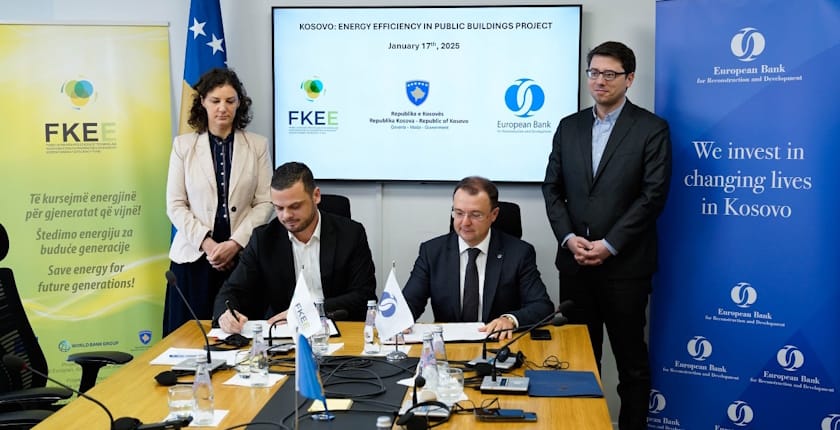
Kosovo* to invest EUR 86 million to save energy in 400 public buildings

Kosovo* has secured a EUR 50 million loan for energy efficiency measures in public buildings. The project, the largest ever for energy efficiency in Kosovo*, is worth EUR 86 million.

The EUR 50 million loan provided by the European Bank For Reconstruction and Development (EBRD) would be on-lent to the Kosovo Energy Efficiency Fund (KEEF).

It would use it for energy efficiency measures in up to 400 public buildings including administrative, education and healthcare facilities at central and municipal levels, and publicly-owned enterprises, according to the project.

The endeavor will be co-funded with EUR 12.6 million from the Government of Kosovo*, a EUR 7 million grant from the European Union through the Regional Energy Efficiency Programme (REEP) for the Western Balkans, and EUR 3 million from the Danish Fund for Kosovo.

The rest will be provided through technical cooperation funds, according to the EBRD.

The project would bring average energy savings of 30% to 50%

The measures include adding thermal insulation, upgrading or replacing various systems (heating, lighting and electrical), replacing doors and windows, and applying any other necessary structural and comfort measures.

It is expected that the project would bring average energy savings of 30% to 50%, EBRD said.

Phot: Sergiy Maslichenko/LinkedIn

The project would also improve the energy performance of the renovated buildings by at least two Energy Performance Certificate classes, and comfort in the renovated buildings.

Maslichenko: Improving the energy efficiency of buildings stands as a vital priority in the Western Balkans and the EU

According to Sergiy Maslichenko, EBRD Head of Kosovo, improving the energy efficiency of buildings is a vital regional priority in the Western Balkans and across the European Union, reflecting collective commitment to sustainability.

Minister of Economy Artane Rizvanolli said she is delighted that the project would not only help Kosovo* improve the energy efficiency and quality of 400 buildings, but also update and improve its database on the condition of the entire public building stock in Kosovo.

“The largest-ever energy efficiency program will start this year,” she added.

The signing of the loan agreement was also attended by Minister of Finance Hekuran Murati and KEEF’s manager Driton Hetemi.

Post Views:287
* This designation is without prejudice to positions onstatus and is in line with UNSCR 1244/99 and the ICJ Opinion on the Kosovo declaration of independence.

Kosovo* has secured a EUR 50 million loan for energy efficiency measures in public buildings. The project, the largest ever for energy efficiency in Kosovo*, is worth EUR 86 million.

The EUR 50 million loan provided by the European Bank For Reconstruction and Development (EBRD) would be on-lent to the Kosovo Energy Efficiency Fund (KEEF).

It would use it for energy efficiency measures in up to 400 public buildings including administrative, education and healthcare facilities at central and municipal levels, and publicly-owned enterprises, according to the project.

The endeavor will be co-funded with EUR 12.6 million from the Government of Kosovo*, a EUR 7 million grant from the European Union through the Regional Energy Efficiency Programme (REEP) for the Western Balkans, and EUR 3 million from the Danish Fund for Kosovo.

The rest will be provided through technical cooperation funds, according to the EBRD.

The project would bring average energy savings of 30% to 50%

The measures include adding thermal insulation, upgrading or replacing various systems (heating, lighting and electrical), replacing doors and windows, and applying any other necessary structural and comfort measures.

It is expected that the project would bring average energy savings of 30% to 50%, EBRD said.

Phot: Sergiy Maslichenko/LinkedIn

The project would also improve the energy performance of the renovated buildings by at least two Energy Performance Certificate classes, and comfort in the renovated buildings.

Maslichenko: Improving the energy efficiency of buildings stands as a vital priority in the Western Balkans and the EU

According to Sergiy Maslichenko, EBRD Head of Kosovo, improving the energy efficiency of buildings is a vital regional priority in the Western Balkans and across the European Union, reflecting collective commitment to sustainability.

Minister of Economy Artane Rizvanolli said she is delighted that the project would not only help Kosovo* improve the energy efficiency and quality of 400 buildings, but also update and improve its database on the condition of the entire public building stock in Kosovo.

“The largest-ever energy efficiency program will start this year,” she added.

The signing of the loan agreement was also attended by Minister of Finance Hekuran Murati and KEEF’s manager Driton Hetemi.

Post Views:287
* This designation is without prejudice to positions onstatus and is in line with UNSCR 1244/99 and the ICJ Opinion on the Kosovo declaration of independence.
April 1, 2025
by AEA in News

Mechanisms and opportunities for trading energy savings in Croatia: A guide to the SMiV system and white certificates

Author: Ana Slovenec, Senior Associate at Bardek, Lisac, Mušec, Skoko and partners in cooperation with CMS Reich-Rohrwig Hainz

Croatia’s energy savings trading system, governed by the Energy Efficiency Act and supported by the SMiV platform, provides a structured approach to tracking, verifying, and monetizing energy efficiency measures. The system enables participants to trade energy savings through a mechanism of so-called white certificates, while defining clear roles for obligated and voluntary actors. Staying informed about the system’s requirements and processes is the first step toward turning energy efficiency into a revenue stream, as recent updates include an increase in national energy savings targets, advancements in verification methodologies, and evolving opportunities in the Croatian energy savings market.

How to generate income from trading energy savings in Croatia?

In an era where energy efficiency has become an increasingly important priority, monetizing energy savings offers a unique opportunity to turn environmental efforts into financial gains. Thanks to energy efficiency certificates, legally recognized in Croatia as “energy savings” and commonly as “white certificates” individuals and organizations can now participate in a system that tracks, verifies, and potentially capitalizes these savings.

At the heart of this process lies the System for Monitoring, Measurement, and Verification of Energy Savings (SMiV), a centralized web platform designed to systematically track energy savings resulting from energy efficiency measures and ensuring that they are accurately recorded and transferred. SMiV allows participants to verify their savings acquired on the market. It is open for participation to market participants that are, by operation of law, obliged to achieve energy savings (“obliged parties” or “OPs”), those required to register data in the SMiV, but also to all other market participants that have no such obligations but wish to earn gains on energy savings they have voluntarily achieved.  This system, regulated by the Energy Efficiency Act and the Regulation on the System for Monitoring, Measuring, and Verification of Energy Savings is managed by the Croatian Ministry of Economy through its Directorate for Energy, Service for Energy Efficiency and New Technologies acting as the National Coordination Body.

Mandatory cumulative energy savings target in final energy consumption

For the period spanning from the beginning of 2021 to the end of 2030, the Energy Efficiency Act set the target for mandatory cumulative energy savings in final energy consumption at 2,993.7 kton. This target is designed to contribute to achieving the national energy efficiency objectives outlined in the Integrated National Energy and Climate Plan of Croatia for 2021–2030. The target is aimed to be achieved, among other, by mandatory energy savings imposed on obliged parties. Obliged parties can either achieve energy savings by their own energy savings measures, or by buying energy savings from other parties, either other obliged parties, or more frequently, from parties that voluntarily achieved and now wish to sell them.

In line with Directive (EU) 2023/1791, Croatia has recently recalculated its cumulative energy savings target and submitted the updated figure to the European Commission as part of the draft revised National Energy and Climate Plan. The total cumulative savings target for the 2021–2030 period has been increased by 44%, from 2,993.7 kton to 4,313.6 kton. To align with this update, amendments to the Energy Efficiency Act are currently in progress.

Who participates in the SMiV system by default and who can participate by choice?

Mandatory participants of the SMiV system are obliged parties and reporting parties. These entities will be penalised should they fail to submit data on achieved energy savings to the system.

Obliged parties are energy suppliers and all their associated entities that are energy suppliers, provided that in the year preceding the last year, they supplied more than 50 GWh of energy to final customers or to distribution stations selling energy to final customers. These parties must compensate the Environmental Protection and Energy Efficiency Fund for any unmet portion of their energy savings obligation, whether achieved directly or acquired from other participants.

Reporting parties are public sector bodies, energy service providers, subsidy providers, and transmission and distribution system operators. Both entities are required to enter the data in the SMiV as soon as the energy efficiency improvement measure has been implemented, and no later than 15 February of the current year for all measures implemented in the previous year, or always upon the request of the National Coordination Body. Additionally, they must appoint at least one person responsible for data entry and notify the National Coordination Body of this appointment.

Participants other than the obliged parties and reporting parties participate in the SMiV platform by choice. These participants independently financed and implemented energy efficiency improvement measures or acquired energy savings from another party without having statutory obligation to achieve savings and now wish to sell them or transfer them to obliged parties and/or reporting parties.

How are energy savings demonstrated and what can be considered an energy efficiency improvement measure?

The methodology for assessing the expected impacts of individual energy efficiency measures follows a bottom-up (BU) approach to evaluating energy savings. This approach uses mathematical formulas to calculate unit energy savings (UFES), which are expressed per unit relevant to the specific energy efficiency measure being considered. Total energy savings in final consumption (FES) are calculated by multiplying the UFES value by the relevant influencing factor for the period under review and summing the results of all individual projects within a given measure.

The calculation of UFES is based on the difference in specific energy consumption “before” and “after” implementing the energy efficiency improvement measure. When determining how much savings from implemented measures contribute to achieving national energy savings targets, the measure’s lifespan is critical. The lifespan represents the number of years during which the calculated annual energy savings remain valid and can be counted toward the national target.

Energy savings are demonstrated by the Energy Savings Study, which is prepared and signed by authorized professionals in the field of architecture, construction, mechanical engineering, electrical engineering, or those qualified to conduct energy audits and certify energy efficiency for buildings or large enterprises. Authorized professionals must be from the field relevant to the specific energy efficiency improvement measure for which the study is being prepared. By signing the Energy Savings Study, they guarantee the accuracy of the energy savings calculations and the validity of the submitted supporting evidence.

Any energy efficiency improvement measure is acceptable as long as the methodology for calculating savings and the outline of the new annual and cumulative energy savings can be provided in the Energy Savings Study. The Regulation on the System for Monitoring, Measuring, and Verification of Energy Savings provides prescribed formulas for calculating energy savings from specific measures. These measures include informational measures (such as educational campaigns on energy efficiency, renewable energy, and energy-efficient appliances), organizational measures (such as implementing smart metering systems for monitoring electricity, heating, gas, and water consumption), measures in centralized heating systems, transportation, industry, and measures in residential and non-residential buildings. Examples of the latter include installing photovoltaic solar modules, solar thermal systems for hot water heating, heat pumps, and automated systems for regulating heating, lighting, and electricity consumption in buildings, etc.

The Energy Savings Study is submitted electronically to the SMiV, where it is verified by the National Coordination Body to ensure transparency and accountability. Following the verification, the National Coordination Body confirms that the energy savings have been achieved and are attributed to the energy savings holder.

Trading energy savings: current opportunities and limitations

Although the SMiV currently serves as a repository for verified energy savings, it has not yet been designed to operate as a functional energy savings exchange platform. However, this does not mean that energy savings cannot be traded. Trading takes place outside the SMiV, through private transactions for the purchase and/or transfer of savings. Once the transaction is completed, the details are submitted to the National Coordination Body for registration in the SMiV. The transfer of savings to the new holder is finalized at the moment of registration in the SMiV.

The system then adjusts the savings balance for both the transferring and receiving parties accordingly. Each energy savings holder can monitor their verified savings through their profile in the SMiV.

The free market for energy savings

Under current regulations, energy savings can be bought and sold in a free market, with prices being privately negotiated between the involved parties. While these agreements are submitted to the SMiV for record-keeping, their financial details are typically redacted to ensure confidentiality while maintaining regulatory compliance.

Unlocking the potential of energy savings trading

As regulations evolve and awareness increases, the SMiV platform is expected to incorporate additional features that will facilitate the direct exchange of energy savings between various players, thereby expanding and enhancing the market. For those looking to capitalize on this opportunity, staying informed about the system’s requirements and processes is the first step toward turning energy efficiency into a revenue stream.

Post Views:896

Author: Ana Slovenec, Senior Associate at Bardek, Lisac, Mušec, Skoko and partners in cooperation with CMS Reich-Rohrwig Hainz

Croatia’s energy savings trading system, governed by the Energy Efficiency Act and supported by the SMiV platform, provides a structured approach to tracking, verifying, and monetizing energy efficiency measures. The system enables participants to trade energy savings through a mechanism of so-called white certificates, while defining clear roles for obligated and voluntary actors. Staying informed about the system’s requirements and processes is the first step toward turning energy efficiency into a revenue stream, as recent updates include an increase in national energy savings targets, advancements in verification methodologies, and evolving opportunities in the Croatian energy savings market.

How to generate income from trading energy savings in Croatia?

In an era where energy efficiency has become an increasingly important priority, monetizing energy savings offers a unique opportunity to turn environmental efforts into financial gains. Thanks to energy efficiency certificates, legally recognized in Croatia as “energy savings” and commonly as “white certificates” individuals and organizations can now participate in a system that tracks, verifies, and potentially capitalizes these savings.

At the heart of this process lies the System for Monitoring, Measurement, and Verification of Energy Savings (SMiV), a centralized web platform designed to systematically track energy savings resulting from energy efficiency measures and ensuring that they are accurately recorded and transferred. SMiV allows participants to verify their savings acquired on the market. It is open for participation to market participants that are, by operation of law, obliged to achieve energy savings (“obliged parties” or “OPs”), those required to register data in the SMiV, but also to all other market participants that have no such obligations but wish to earn gains on energy savings they have voluntarily achieved.  This system, regulated by the Energy Efficiency Act and the Regulation on the System for Monitoring, Measuring, and Verification of Energy Savings is managed by the Croatian Ministry of Economy through its Directorate for Energy, Service for Energy Efficiency and New Technologies acting as the National Coordination Body.

Mandatory cumulative energy savings target in final energy consumption

For the period spanning from the beginning of 2021 to the end of 2030, the Energy Efficiency Act set the target for mandatory cumulative energy savings in final energy consumption at 2,993.7 kton. This target is designed to contribute to achieving the national energy efficiency objectives outlined in the Integrated National Energy and Climate Plan of Croatia for 2021–2030. The target is aimed to be achieved, among other, by mandatory energy savings imposed on obliged parties. Obliged parties can either achieve energy savings by their own energy savings measures, or by buying energy savings from other parties, either other obliged parties, or more frequently, from parties that voluntarily achieved and now wish to sell them.

In line with Directive (EU) 2023/1791, Croatia has recently recalculated its cumulative energy savings target and submitted the updated figure to the European Commission as part of the draft revised National Energy and Climate Plan. The total cumulative savings target for the 2021–2030 period has been increased by 44%, from 2,993.7 kton to 4,313.6 kton. To align with this update, amendments to the Energy Efficiency Act are currently in progress.

Who participates in the SMiV system by default and who can participate by choice?

Mandatory participants of the SMiV system are obliged parties and reporting parties. These entities will be penalised should they fail to submit data on achieved energy savings to the system.

Obliged parties are energy suppliers and all their associated entities that are energy suppliers, provided that in the year preceding the last year, they supplied more than 50 GWh of energy to final customers or to distribution stations selling energy to final customers. These parties must compensate the Environmental Protection and Energy Efficiency Fund for any unmet portion of their energy savings obligation, whether achieved directly or acquired from other participants.

Reporting parties are public sector bodies, energy service providers, subsidy providers, and transmission and distribution system operators. Both entities are required to enter the data in the SMiV as soon as the energy efficiency improvement measure has been implemented, and no later than 15 February of the current year for all measures implemented in the previous year, or always upon the request of the National Coordination Body. Additionally, they must appoint at least one person responsible for data entry and notify the National Coordination Body of this appointment.

Participants other than the obliged parties and reporting parties participate in the SMiV platform by choice. These participants independently financed and implemented energy efficiency improvement measures or acquired energy savings from another party without having statutory obligation to achieve savings and now wish to sell them or transfer them to obliged parties and/or reporting parties.

How are energy savings demonstrated and what can be considered an energy efficiency improvement measure?

The methodology for assessing the expected impacts of individual energy efficiency measures follows a bottom-up (BU) approach to evaluating energy savings. This approach uses mathematical formulas to calculate unit energy savings (UFES), which are expressed per unit relevant to the specific energy efficiency measure being considered. Total energy savings in final consumption (FES) are calculated by multiplying the UFES value by the relevant influencing factor for the period under review and summing the results of all individual projects within a given measure.

The calculation of UFES is based on the difference in specific energy consumption “before” and “after” implementing the energy efficiency improvement measure. When determining how much savings from implemented measures contribute to achieving national energy savings targets, the measure’s lifespan is critical. The lifespan represents the number of years during which the calculated annual energy savings remain valid and can be counted toward the national target.

Energy savings are demonstrated by the Energy Savings Study, which is prepared and signed by authorized professionals in the field of architecture, construction, mechanical engineering, electrical engineering, or those qualified to conduct energy audits and certify energy efficiency for buildings or large enterprises. Authorized professionals must be from the field relevant to the specific energy efficiency improvement measure for which the study is being prepared. By signing the Energy Savings Study, they guarantee the accuracy of the energy savings calculations and the validity of the submitted supporting evidence.

Any energy efficiency improvement measure is acceptable as long as the methodology for calculating savings and the outline of the new annual and cumulative energy savings can be provided in the Energy Savings Study. The Regulation on the System for Monitoring, Measuring, and Verification of Energy Savings provides prescribed formulas for calculating energy savings from specific measures. These measures include informational measures (such as educational campaigns on energy efficiency, renewable energy, and energy-efficient appliances), organizational measures (such as implementing smart metering systems for monitoring electricity, heating, gas, and water consumption), measures in centralized heating systems, transportation, industry, and measures in residential and non-residential buildings. Examples of the latter include installing photovoltaic solar modules, solar thermal systems for hot water heating, heat pumps, and automated systems for regulating heating, lighting, and electricity consumption in buildings, etc.

The Energy Savings Study is submitted electronically to the SMiV, where it is verified by the National Coordination Body to ensure transparency and accountability. Following the verification, the National Coordination Body confirms that the energy savings have been achieved and are attributed to the energy savings holder.

Trading energy savings: current opportunities and limitations

Although the SMiV currently serves as a repository for verified energy savings, it has not yet been designed to operate as a functional energy savings exchange platform. However, this does not mean that energy savings cannot be traded. Trading takes place outside the SMiV, through private transactions for the purchase and/or transfer of savings. Once the transaction is completed, the details are submitted to the National Coordination Body for registration in the SMiV. The transfer of savings to the new holder is finalized at the moment of registration in the SMiV.

The system then adjusts the savings balance for both the transferring and receiving parties accordingly. Each energy savings holder can monitor their verified savings through their profile in the SMiV.

The free market for energy savings

Under current regulations, energy savings can be bought and sold in a free market, with prices being privately negotiated between the involved parties. While these agreements are submitted to the SMiV for record-keeping, their financial details are typically redacted to ensure confidentiality while maintaining regulatory compliance.

Unlocking the potential of energy savings trading

As regulations evolve and awareness increases, the SMiV platform is expected to incorporate additional features that will facilitate the direct exchange of energy savings between various players, thereby expanding and enhancing the market. For those looking to capitalize on this opportunity, staying informed about the system’s requirements and processes is the first step toward turning energy efficiency into a revenue stream.

Post Views:896
  • 1
  • …
  • 114
  • 115
  • 116
  • 117
  • 118
  • …
  • 140

AEA – Albania Energy Association is a industry association dedicated to representing the interests of Albanian and West Balkan for energy producers and consumers. AEA works to advance the development and adoption of sustainable energy solutions in Albania and the Western Balkans, supporting the region’s transition toward a cleaner, more secure, and more competitive energy future. AEA is registered by decision of the Court of Tirana, DECISION NO. 3032, (VAT:L11827451K).

[email protected]

Address
Blv Zogu 1
Tirana
1057
ALBANIA

LinkedIn  |  Facebook
Events
May 25, 2022 Connecting Green Hydrogen Europe 2022
May 25, 2022 Energy Week Western Balkans 2022
Copyright © Albania Energy Association