AEA-Albania Energy Association
  • Main
  • About Us
  • Services
  • Sectors
  • News
  • EventsEvents
  • PublicationPublication
  • Contact Us
AEA-Albania Energy Association
  • Main
  • About Us
  • Services
  • Sectors
  • News
  • EventsEvents
  • PublicationPublication
  • Contact Us
AEA-Albania Energy Association
  • Home Page
  • About Us
  • Sectors
  • Our Services
  • News
  • Contact Us
April 1, 2025
by AEA in News

On the path to a green future: the importance of bottom-up initiatives in cities

By Bettina Päri, EUSEWYoung Energy Ambassador highlights the importance of citizen engagement in the energy transition, focusing on the European Youth Energy Forum’s bottom-up.

Active citizen participation in the energy transition receives attention in the sustainable energy sector. However, when it comes to broader public awareness, the topic gets notably less limelight, and citizen participation in bottom-up projects is still considerably low. What is the reason for that and how do we address this problem?

To achieve the 100 Net-Zero-Cities target by 2030, applying bottom-up initiatives is necessary for a full-scale change. Solely implementing top-down initiatives might leave people feeling dismissed, whereas bottom-up projects offer a direct channel for people to engage, hence motivating them to initiate changes. This is important, not only in the context of cities. By implementing these, the energy transition can be done with the citizens, not to the citizens. One such bottom-up initiative I have had the chance to be involved in is the European Youth Energy Forum.

The outcomes of the European Youth Energy Forum

This October, 50 young professionals and students were selected to gather at the European Youth Energy Forum (EYEF). The Forum is organised by the European Youth Energy Network and brings together young people and other energy stakeholders to discuss the energy transition. For two months, six teams met online every week to work on six policy proposals centred around the role of cities in the energy transition. According to the participants, the most critical issues to tackle were energy poverty, community engagement and interdisciplinary collaboration, residential energy optimisation, electric mobility, financing mechanisms in the energy sector, and energy-efficient urban planning. The event itself is an example of a bottom-up initiative involving the public.

As a concrete example, during the work on the community engagement and interdisciplinary collaboration proposal, a programme was suggested, in which a position for a community energy ambassador would be created. This person would help citizens make sustainable decisions on an individual level by acting as an informative body inside the community.

Young ambassadors would help bridge the information gap between citizens and technical energy topics

Therefore, these ambassadors would help bridge the information gap between citizens and technical energy topics. This initiative specifically shows how people outside the green energy sector could participate in the transition, given also that the ambassador is chosen from within the community itself. Apart from this initiative on Community Energy Ambassadors, other proposals were focusing on: green commuting, more opportunities for residential participation, University-Powered Energy Communities, the impact potential of small cities and on sustainable urban actions. Take a closer look at all of the proposals.

As a result of this event, a position paper came to daylight. Gathering the six proposals, it was published with the title: Sustainable Cities of the Future. This report presents concrete, bottom-up solutions that can be implemented in various contexts. All six proposals were presented at this year’s Conference of Parties in Baku.

The outcomes of the Youth Energy Forum underline that to achieve net-zero cities, and to ensure a successful energy transition, we need the citizens on board. The aforementioned report is one example of how to do this in practice, but there are numerous other success-stories, as is highlighted below. By taking initiative on the grassroot level, and by involving all citizens, we take yet another step towards creating a more sustainable future for all.

This opinion editorial is produced in co-operation with the European Sustainable Energy Week 2025. See ec.europa.eu/eusew for open calls.
Post Views:242

By Bettina Päri, EUSEWYoung Energy Ambassador highlights the importance of citizen engagement in the energy transition, focusing on the European Youth Energy Forum’s bottom-up.

Active citizen participation in the energy transition receives attention in the sustainable energy sector. However, when it comes to broader public awareness, the topic gets notably less limelight, and citizen participation in bottom-up projects is still considerably low. What is the reason for that and how do we address this problem?

To achieve the 100 Net-Zero-Cities target by 2030, applying bottom-up initiatives is necessary for a full-scale change. Solely implementing top-down initiatives might leave people feeling dismissed, whereas bottom-up projects offer a direct channel for people to engage, hence motivating them to initiate changes. This is important, not only in the context of cities. By implementing these, the energy transition can be done with the citizens, not to the citizens. One such bottom-up initiative I have had the chance to be involved in is the European Youth Energy Forum.

The outcomes of the European Youth Energy Forum

This October, 50 young professionals and students were selected to gather at the European Youth Energy Forum (EYEF). The Forum is organised by the European Youth Energy Network and brings together young people and other energy stakeholders to discuss the energy transition. For two months, six teams met online every week to work on six policy proposals centred around the role of cities in the energy transition. According to the participants, the most critical issues to tackle were energy poverty, community engagement and interdisciplinary collaboration, residential energy optimisation, electric mobility, financing mechanisms in the energy sector, and energy-efficient urban planning. The event itself is an example of a bottom-up initiative involving the public.

As a concrete example, during the work on the community engagement and interdisciplinary collaboration proposal, a programme was suggested, in which a position for a community energy ambassador would be created. This person would help citizens make sustainable decisions on an individual level by acting as an informative body inside the community.

Young ambassadors would help bridge the information gap between citizens and technical energy topics

Therefore, these ambassadors would help bridge the information gap between citizens and technical energy topics. This initiative specifically shows how people outside the green energy sector could participate in the transition, given also that the ambassador is chosen from within the community itself. Apart from this initiative on Community Energy Ambassadors, other proposals were focusing on: green commuting, more opportunities for residential participation, University-Powered Energy Communities, the impact potential of small cities and on sustainable urban actions. Take a closer look at all of the proposals.

As a result of this event, a position paper came to daylight. Gathering the six proposals, it was published with the title: Sustainable Cities of the Future. This report presents concrete, bottom-up solutions that can be implemented in various contexts. All six proposals were presented at this year’s Conference of Parties in Baku.

The outcomes of the Youth Energy Forum underline that to achieve net-zero cities, and to ensure a successful energy transition, we need the citizens on board. The aforementioned report is one example of how to do this in practice, but there are numerous other success-stories, as is highlighted below. By taking initiative on the grassroot level, and by involving all citizens, we take yet another step towards creating a more sustainable future for all.

This opinion editorial is produced in co-operation with the European Sustainable Energy Week 2025. See ec.europa.eu/eusew for open calls.
Post Views:242
April 1, 2025
by AEA in News

IFC is building Western Balkans Green Growth Alliance

The International Finance Corporation is spearheading the establishment of the Western Balkans Green Growth Alliance. It aims to build knowledge and capacity for decarbonization and sustainability in manufacturing and industrial production, tourism, and agricuture and related services. The other goal is providing access to financial instruments that enable circular business models and sustainable practices, especially to steel and cement and other hard-to-abate sectors.

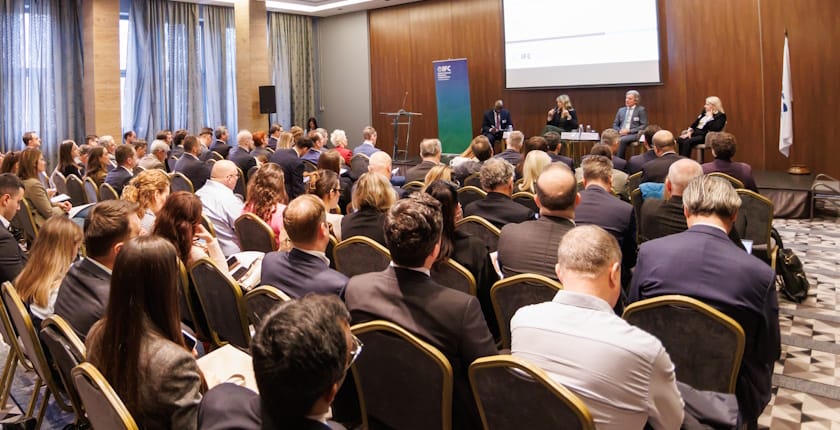
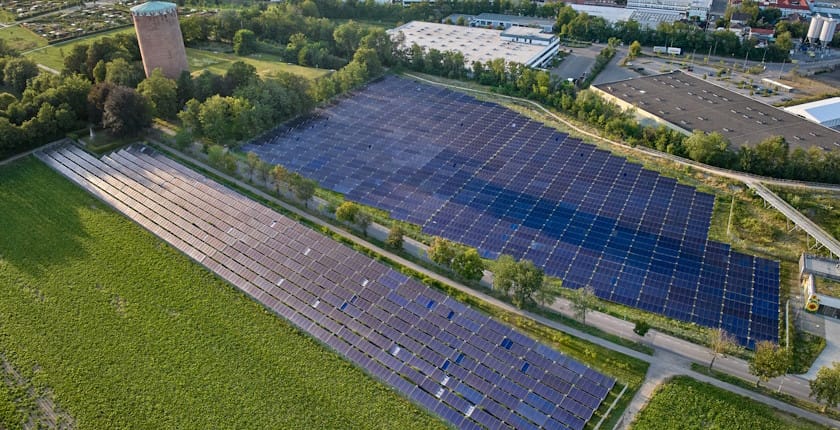
At the launch event for the Western Balkans Green Growth Alliance in Belgrade, the International Finance Corporation (IFC) gathered perspective partners and beneficiaries of the future program’s offerings. Top managers from cement, steel and other industries that are hard to decarbonize revealed they are working on introducing alternative raw materials and fuels and projects for solar power for self-consumption.

Representatives of producers, commercial lenders and international financial institutions agree that policy adjustment is one of the necessary elements to facilitate the energy transition in the region. In addition, they expressed the belief that the green transition in Europe and the Western Balkans would continue along the current trajectory despite indications that it would be revised.

Rocha: IFC to enable tailored, transaction-based advisory services

The initiative envisages setting up a community interested in driving sustainability, said Regional Director for Europe in IFC Ines Rocha. “By embracing solutions like sustainable energy, innovative processes, material efficiencies, circular business models, the Western Balkans can unlock significant potential, strengthen international competitiveness and build a sustainable future. Not just for the businesses, but also for the communities,” she pointed out in her opening remarks.

The event was organized to identify specific requirements that would be met with suitable support measures. They would accelerate decarbonization and the alignment with the European Union’s regulations, while leading to growth opportunities.

“We hope to open the door for companies to tap into financial instruments that enable circular business models and sustainable practices,” the International Finance Corporation’s European chief said at the conference in Serbia’s capital city

One goal is to build knowledge and capacity in three target sectors, Rocha explained. The key aspect is manufacturing including hard-to-abate industries. The other two are tourism, and agribusiness and services. The idea is for the alliance to equip companies with tools, guidance and resources, she underscored.

The second objective is to provide access to financing. “We believe that through tailored and transaction-based advisory services, we can work directly with businesses to address their challenges, but also the ambitions,” Rocha said.

Many industries that are hard to abate, particularly steel and cement, face significant reinvestment needs and a long lifespan for productive assets, often ranging from 20 to 30 years, she asserted. “In the IFC we hope to open the door for companies to tap into financial instruments that enable circular business models and sustainable practices,” the official stressed.

Reducing CO2 emissions bolsters potential for exports to EU

Ambassador of Austria in Serbia Christian Ebner said sustainability and the effects of climate change are more relevant than ever. He added his country registered its warmest year in 2024 since measurements began 257 years ago.

“Climate change is one of the greatest systemic threats to the economy and business profitability worldwide, and the more vulnerable parts of our societies, of course, suffer the most from the effects of climate change,” in the envoy’s words. He noted that the green transition is challenging for businesses and governments, especially in a globalized economy.

The green transition is challenging for businesses and governments, especially in a globalized economy, Ambassador Ebner told the participants at the event

According to a survey, two thirds of international companies view the Balkans as a promising region for green investment, Ebner said. Reducing carbon dioxide emissions brings huge potential for increasing exports to the EU, he added in a speech at the start of the event organized by IFC.

“Austria is strongly convinced that in order to reach our common targets under the Paris Agreement, it is a fundamental prerequisite to create the right investment climate. First, by ensuring a regulatory environment which is conducive for profitable green investments. Second, by fostering the right expertise of financial institutions and businesses to prepare them to finance and implement projects which at the same time increase competitiveness and profitability. And third, by offering opportunities to ensure that the transition to low-carbon economy is managed in a sustainable manner and taking into account vulnerable parts of our society,” Ebner stated.

Construction waste is resource for low-carbon building materials

Lacking a policy and regulatory reform to drive decarbonization, so far there have only been isolated efforts by companies that belong to international groups, as they have internal CO2 targets, said General Manager of Titan Serbia Miroslav Gligorijević. The firm’s plant in Kosjerić in the country’s west is part of Titan Cement Group.

One opportunity completely missing in Serbia is the utilization of construction waste, now only beginning, Gligorijević stressed. In cooperation with authorities and stakeholders, it could enable the production of low-carbon materials in the sector, he said. As another major obstacle, the executive pointed to the ban on importing fuel produced from waste, arguing that domestic sources aren’t sufficient.

Even without regulatory obligations, sustainability makes economic sense

The Development Bank of Austria (OeEB) is eager to participate in the Western Balkans Green Growth Alliance. “Even if some sustainability investments are not required on a regulatory side, companies realize more and more that it also makes economic sense. And therefore this is something companies more and more strive to do,” its Managing Director and Head of Investment Finance Clemens Stadler said at the conference.

Businesses need to be patient as results will come in the medium and long term and development banks are there to support them, he underscored. Stadler said OeEB is trying to be active only if commercial banks cannot alone provide the structural elements of financing for a company.

Post Views:370

The International Finance Corporation is spearheading the establishment of the Western Balkans Green Growth Alliance. It aims to build knowledge and capacity for decarbonization and sustainability in manufacturing and industrial production, tourism, and agricuture and related services. The other goal is providing access to financial instruments that enable circular business models and sustainable practices, especially to steel and cement and other hard-to-abate sectors.

At the launch event for the Western Balkans Green Growth Alliance in Belgrade, the International Finance Corporation (IFC) gathered perspective partners and beneficiaries of the future program’s offerings. Top managers from cement, steel and other industries that are hard to decarbonize revealed they are working on introducing alternative raw materials and fuels and projects for solar power for self-consumption.

Representatives of producers, commercial lenders and international financial institutions agree that policy adjustment is one of the necessary elements to facilitate the energy transition in the region. In addition, they expressed the belief that the green transition in Europe and the Western Balkans would continue along the current trajectory despite indications that it would be revised.

Rocha: IFC to enable tailored, transaction-based advisory services

The initiative envisages setting up a community interested in driving sustainability, said Regional Director for Europe in IFC Ines Rocha. “By embracing solutions like sustainable energy, innovative processes, material efficiencies, circular business models, the Western Balkans can unlock significant potential, strengthen international competitiveness and build a sustainable future. Not just for the businesses, but also for the communities,” she pointed out in her opening remarks.

The event was organized to identify specific requirements that would be met with suitable support measures. They would accelerate decarbonization and the alignment with the European Union’s regulations, while leading to growth opportunities.

“We hope to open the door for companies to tap into financial instruments that enable circular business models and sustainable practices,” the International Finance Corporation’s European chief said at the conference in Serbia’s capital city

One goal is to build knowledge and capacity in three target sectors, Rocha explained. The key aspect is manufacturing including hard-to-abate industries. The other two are tourism, and agribusiness and services. The idea is for the alliance to equip companies with tools, guidance and resources, she underscored.

The second objective is to provide access to financing. “We believe that through tailored and transaction-based advisory services, we can work directly with businesses to address their challenges, but also the ambitions,” Rocha said.

Many industries that are hard to abate, particularly steel and cement, face significant reinvestment needs and a long lifespan for productive assets, often ranging from 20 to 30 years, she asserted. “In the IFC we hope to open the door for companies to tap into financial instruments that enable circular business models and sustainable practices,” the official stressed.

Reducing CO2 emissions bolsters potential for exports to EU

Ambassador of Austria in Serbia Christian Ebner said sustainability and the effects of climate change are more relevant than ever. He added his country registered its warmest year in 2024 since measurements began 257 years ago.

“Climate change is one of the greatest systemic threats to the economy and business profitability worldwide, and the more vulnerable parts of our societies, of course, suffer the most from the effects of climate change,” in the envoy’s words. He noted that the green transition is challenging for businesses and governments, especially in a globalized economy.

The green transition is challenging for businesses and governments, especially in a globalized economy, Ambassador Ebner told the participants at the event

According to a survey, two thirds of international companies view the Balkans as a promising region for green investment, Ebner said. Reducing carbon dioxide emissions brings huge potential for increasing exports to the EU, he added in a speech at the start of the event organized by IFC.

“Austria is strongly convinced that in order to reach our common targets under the Paris Agreement, it is a fundamental prerequisite to create the right investment climate. First, by ensuring a regulatory environment which is conducive for profitable green investments. Second, by fostering the right expertise of financial institutions and businesses to prepare them to finance and implement projects which at the same time increase competitiveness and profitability. And third, by offering opportunities to ensure that the transition to low-carbon economy is managed in a sustainable manner and taking into account vulnerable parts of our society,” Ebner stated.

Construction waste is resource for low-carbon building materials

Lacking a policy and regulatory reform to drive decarbonization, so far there have only been isolated efforts by companies that belong to international groups, as they have internal CO2 targets, said General Manager of Titan Serbia Miroslav Gligorijević. The firm’s plant in Kosjerić in the country’s west is part of Titan Cement Group.

One opportunity completely missing in Serbia is the utilization of construction waste, now only beginning, Gligorijević stressed. In cooperation with authorities and stakeholders, it could enable the production of low-carbon materials in the sector, he said. As another major obstacle, the executive pointed to the ban on importing fuel produced from waste, arguing that domestic sources aren’t sufficient.

Even without regulatory obligations, sustainability makes economic sense

The Development Bank of Austria (OeEB) is eager to participate in the Western Balkans Green Growth Alliance. “Even if some sustainability investments are not required on a regulatory side, companies realize more and more that it also makes economic sense. And therefore this is something companies more and more strive to do,” its Managing Director and Head of Investment Finance Clemens Stadler said at the conference.

Businesses need to be patient as results will come in the medium and long term and development banks are there to support them, he underscored. Stadler said OeEB is trying to be active only if commercial banks cannot alone provide the structural elements of financing for a company.

Post Views:370
April 1, 2025
by AEA in News

Termokos opens tender for solar thermal system for Prishtina heating

District heating utility Termokos is seeking a contractor to build a 30 MW solar thermal facility outside Prishtina in Kosovo*. The estimated time for completion is 30 months plus a six-month commissioning phase.

After several years of preparation, Kosovo* is moving ahead with the largest solar thermal project for district heating in the Western Balkans. The operator, Termokos, is owned by the Municipality of Prishtina, the capital city. They secured most of the funds for Solar4Kosovo 2 – Solar District Heating through the European Union’s Western Balkans Investment Framework (WBIF), Germany’s KfW Development Bank and the European Bank for Reconstruction and Development.

The entire project is estimated at EUR 81.7 million, of which Termokos is providing EUR 4.4 million. EBRD approved a loan of up to EUR 23.2 million more than two years ago while KfW lended EUR 31.6 million. The remaining EUR 22.5 million is a grant via WBIF.

Termokos is receiving applications until the end of this month from potential contractors, for the first lot. It envisages the construction of a 30 MW solar thermal plant near the village of Shkabaj (Orlović). The facility in Obiliq (Obilić) municipality is for the district heating system in Prishtina.

The prequalification call comprises a seasonal water pit thermal energy storage, a solar thermal collector field, a heating plant with an absorption heat pump driven by combined heat and power (CHP), pumps and a supervisory control and data acquisition (SCADA) system.

Heat pump takes over when temperature in water pit is lower than in network return

The solar thermal collector field would feed thermal energy into the pit during the non-heating period. With the beginning of the heating season, the solar heat is then fed into the network if the temperature in the pit is higher than the return temperature in the network. When the temperature in storage falls below the threshold, the heat pump takes over.

The project is carried out in accordance with the conditions of contract for plant and design build – FIDIC Yellow Book of the International Federation of Consulting Engineers. The estimated time for completion is 30 months plus a six-month commissioning phase.

The other part of the Solar4Kosovo 2 – Solar District Heating project is for a network extension with 20 MW more heat from a coal-fired power plant

Pre-qualification documents can be requested from the tender agent via email at [email protected].

It is the only solar thermal project for district heating in the Balkans and the second-largest in Europe, according to the local authority in Prishtina. It will benefit 32,000 citizens in the neighborhoods of Tophane, Prishtina e Vjetër, Lakrishte, Kalabria and Mahalla e Muhaxherëve, the announcement reads.

The solar collectors will span 6.3 hectares in total while the storage pit will hold 380,000 cubic meters of water, the municipality added.

Project includes 20 MW extension of system with heat from coal plant

The other part of Solar4Kosovo 2 – Solar District Heating is for a 20 MW network extension, with supply from the existing CHP or cogeneration facility at the coal-fired Kosovo B power plant. It is in Obiliq as well. No increase in coal consumption is expected, the documentation reads. A further 20 MW network extension would be considered at a later stage.

Separately, Solar4Kosovo – Photovoltaic Plant is a project for a solar power system on a former coal ash dump near Prishtina. It would have a grid connection of up to 100 MW, translated to 120 MW in peak capacity.

In 2023, government-owned power utility Kosovo Energy Corp. (KEK) generated over 327 GWh for heating purposes within the cogeneration project with Termokos

Five other solar thermal projects are currently in the pipeline in the region. All the locations are actually in Serbia: Belgrade, Bor, Niš, Novi Sad and Pančevo, where the only operational solar thermal system is located.

Post Views:232
* This designation is without prejudice to positions onstatus and is in line with UNSCR 1244/99 and the ICJ Opinion on the Kosovo declaration of independence.

District heating utility Termokos is seeking a contractor to build a 30 MW solar thermal facility outside Prishtina in Kosovo*. The estimated time for completion is 30 months plus a six-month commissioning phase.

After several years of preparation, Kosovo* is moving ahead with the largest solar thermal project for district heating in the Western Balkans. The operator, Termokos, is owned by the Municipality of Prishtina, the capital city. They secured most of the funds for Solar4Kosovo 2 – Solar District Heating through the European Union’s Western Balkans Investment Framework (WBIF), Germany’s KfW Development Bank and the European Bank for Reconstruction and Development.

The entire project is estimated at EUR 81.7 million, of which Termokos is providing EUR 4.4 million. EBRD approved a loan of up to EUR 23.2 million more than two years ago while KfW lended EUR 31.6 million. The remaining EUR 22.5 million is a grant via WBIF.

Termokos is receiving applications until the end of this month from potential contractors, for the first lot. It envisages the construction of a 30 MW solar thermal plant near the village of Shkabaj (Orlović). The facility in Obiliq (Obilić) municipality is for the district heating system in Prishtina.

The prequalification call comprises a seasonal water pit thermal energy storage, a solar thermal collector field, a heating plant with an absorption heat pump driven by combined heat and power (CHP), pumps and a supervisory control and data acquisition (SCADA) system.

Heat pump takes over when temperature in water pit is lower than in network return

The solar thermal collector field would feed thermal energy into the pit during the non-heating period. With the beginning of the heating season, the solar heat is then fed into the network if the temperature in the pit is higher than the return temperature in the network. When the temperature in storage falls below the threshold, the heat pump takes over.

The project is carried out in accordance with the conditions of contract for plant and design build – FIDIC Yellow Book of the International Federation of Consulting Engineers. The estimated time for completion is 30 months plus a six-month commissioning phase.

The other part of the Solar4Kosovo 2 – Solar District Heating project is for a network extension with 20 MW more heat from a coal-fired power plant

Pre-qualification documents can be requested from the tender agent via email at [email protected].

It is the only solar thermal project for district heating in the Balkans and the second-largest in Europe, according to the local authority in Prishtina. It will benefit 32,000 citizens in the neighborhoods of Tophane, Prishtina e Vjetër, Lakrishte, Kalabria and Mahalla e Muhaxherëve, the announcement reads.

The solar collectors will span 6.3 hectares in total while the storage pit will hold 380,000 cubic meters of water, the municipality added.

Project includes 20 MW extension of system with heat from coal plant

The other part of Solar4Kosovo 2 – Solar District Heating is for a 20 MW network extension, with supply from the existing CHP or cogeneration facility at the coal-fired Kosovo B power plant. It is in Obiliq as well. No increase in coal consumption is expected, the documentation reads. A further 20 MW network extension would be considered at a later stage.

Separately, Solar4Kosovo – Photovoltaic Plant is a project for a solar power system on a former coal ash dump near Prishtina. It would have a grid connection of up to 100 MW, translated to 120 MW in peak capacity.

In 2023, government-owned power utility Kosovo Energy Corp. (KEK) generated over 327 GWh for heating purposes within the cogeneration project with Termokos

Five other solar thermal projects are currently in the pipeline in the region. All the locations are actually in Serbia: Belgrade, Bor, Niš, Novi Sad and Pančevo, where the only operational solar thermal system is located.

Post Views:232
* This designation is without prejudice to positions onstatus and is in line with UNSCR 1244/99 and the ICJ Opinion on the Kosovo declaration of independence.
April 1, 2025
by AEA in News

GGF provides loan to Lovćen banka in Montenegro for its green portfolio

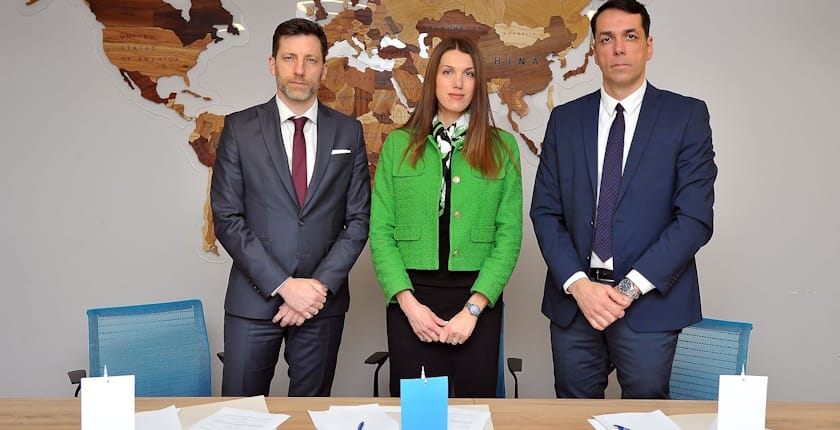
The Green for Growth Fund (GGF) has established a partnership with Lovćen banka in Montenegro by signing a loan agreement of EUR 3 million.

A new loan facility will enable Lovćen banka to expand its green lending portfolio, providing dedicated financing to businesses investing in sustainable practices and smaller-scale renewable energy projects, GGF said. The partnership marks the engagement of the fund’s new investee, boosting the region’s resilience and energy independence, the announcement reads.

GGF added that the signing of a loan agreement of EUR 3 million is highlighting its commitment to fostering new relationships. Additionally, it said, the strategic deal expands its investee partnerships within its mandate region, further solidifying its presence and impact in promoting sustainable development.

“We are pleased to welcome Lovćen banka as a new partner. This investment aligns perfectly with our goals on climate action and sustainable development. By supporting businesses in their efforts to adopt greener practices and renewable energy solutions, we are making meaningful strides towards a more sustainable future,” Chairperson of the Board of GGF Simon Gupta stated.

Lovćen banka joining GGF’s mission

President of the Board of Directors of Lovćen banka Miloš Miketić said the lender is joining the fund’s mission. “By stipulating the cooperation with GGF, Lovćen banka will enhance the efforts in supporting sustainable development of businesses in Montenegro helping them to continue with developing green solutions and improving the renewable energy projects,” he asserted.

The Green for Growth Fund promotes energy efficiency and renewable energy in Southeast Europe, the Caucasus, the Middle East, and North Africa. By providing refinancing to local financial institutions, the fund helps businesses and households access sustainable energy solutions, fostering energy efficiency and reducing carbon emissions.

GGF was initiated as a public-private partnership by the European Investment Bank and Germany’s KfW Development Bank, with financial support from the European Union, the German Federal Ministry for Economic Cooperation and Development (BMZ) and international investors.

Finance in Motion’s funds are all classified as article 9 of EU’s SFDR

Finance in Motion, based in Germany, serves as GGF’s advisor. It structures, manages, and advises almost EUR 4 billion across nine funds They are all classified as article 9 of the European Union’s Sustainable Finance Disclosure Regulation (SFDR), which stipulates comprehensive requirements for funds with a sustainable investment objective.

The said private market funds drive impact for people and planet through regional financial intermediaries, direct investments, advisory and capacity building, GGF said. Founded in Germany, with local expertise from Latin America to Central and Eastern Europe, the fund has been investing in emerging markets for over 15 years.

Lovćen banka said it focuses on improving small and medium businesses in Montenegro with tailor-made solutions to support their development, adding that it is establishing long-term relationships and is quick in decision making,

Post Views:227

The Green for Growth Fund (GGF) has established a partnership with Lovćen banka in Montenegro by signing a loan agreement of EUR 3 million.

A new loan facility will enable Lovćen banka to expand its green lending portfolio, providing dedicated financing to businesses investing in sustainable practices and smaller-scale renewable energy projects, GGF said. The partnership marks the engagement of the fund’s new investee, boosting the region’s resilience and energy independence, the announcement reads.

GGF added that the signing of a loan agreement of EUR 3 million is highlighting its commitment to fostering new relationships. Additionally, it said, the strategic deal expands its investee partnerships within its mandate region, further solidifying its presence and impact in promoting sustainable development.

“We are pleased to welcome Lovćen banka as a new partner. This investment aligns perfectly with our goals on climate action and sustainable development. By supporting businesses in their efforts to adopt greener practices and renewable energy solutions, we are making meaningful strides towards a more sustainable future,” Chairperson of the Board of GGF Simon Gupta stated.

Lovćen banka joining GGF’s mission

President of the Board of Directors of Lovćen banka Miloš Miketić said the lender is joining the fund’s mission. “By stipulating the cooperation with GGF, Lovćen banka will enhance the efforts in supporting sustainable development of businesses in Montenegro helping them to continue with developing green solutions and improving the renewable energy projects,” he asserted.

The Green for Growth Fund promotes energy efficiency and renewable energy in Southeast Europe, the Caucasus, the Middle East, and North Africa. By providing refinancing to local financial institutions, the fund helps businesses and households access sustainable energy solutions, fostering energy efficiency and reducing carbon emissions.

GGF was initiated as a public-private partnership by the European Investment Bank and Germany’s KfW Development Bank, with financial support from the European Union, the German Federal Ministry for Economic Cooperation and Development (BMZ) and international investors.

Finance in Motion’s funds are all classified as article 9 of EU’s SFDR

Finance in Motion, based in Germany, serves as GGF’s advisor. It structures, manages, and advises almost EUR 4 billion across nine funds They are all classified as article 9 of the European Union’s Sustainable Finance Disclosure Regulation (SFDR), which stipulates comprehensive requirements for funds with a sustainable investment objective.

The said private market funds drive impact for people and planet through regional financial intermediaries, direct investments, advisory and capacity building, GGF said. Founded in Germany, with local expertise from Latin America to Central and Eastern Europe, the fund has been investing in emerging markets for over 15 years.

Lovćen banka said it focuses on improving small and medium businesses in Montenegro with tailor-made solutions to support their development, adding that it is establishing long-term relationships and is quick in decision making,

Post Views:227
April 1, 2025
by AEA in News

KEY – The Energy Transition Expo to be held from March 5 to 7 in Rimini

From March 5 to 7, Rimini Expo Centre will host the third edition of KEY – The Energy Transition Expo, an event dedicated to the energy transition. Powered by the Italian Exhibition Group (IEG), it will bring together experts, companies, and institutions from Europe, Africa, and the Mediterranean to discuss key topics and innovations in the renewable energy sector.

Spanning over 90,000 square meters in 20 halls in Rimini, Italy, this year’s KEY – The Energy Transition Expo will break its record number of exhibitors, according to the organizers. Last year there were 837 from 25 countries, covering a total exhibition area of 78,500 square meters. The gathering included 123 expert sessions. The fair was visited by 53,157 people.

Over a thousand exhibitors will showcase the latest technologies and solutions in renewable energy and energy efficiency.

The exhibition space will be divided into seven sectors: solar energy, wind energy, energy storage, hydrogen energy, energy efficiency, electric mobility, and sustainable cities.

In addition to the exhibition sections, special thematic areas will be organized. One of them, named Su.port – Sustainable Ports for Energy Transition, will be dedicated to the electrification of port docks and the development of offshore wind energy.

In addition to the exhibition, visitors will have the opportunity to participate in numerous events

In addition to the exhibition, visitors will be able to participate in numerous panels, discussions, workshops, and other interactive events covering a wide range of topics related to the energy transition.

Artificial intelligence in the energy sector, smart cities, electric mobility, and hydrogen as the fuel of the future will be some of the topics discussed at the panels.

A new feature at this year’s fair is the Green Jobs and Skills initiative, aimed at connecting companies and young talent in the green economy sector.

Additionally, for the first time, the KEY initiative for scientific paper submissions will be organized, enabling researchers, academics, and experts to present their scientific achievements in the field of renewable energy and energy efficiency.

This year, as in previous ones, the Chamber of Commerce of Serbia – Center for Circular Economy, in collaboration with the Italian Exhibition Group, will organize a visit of a Serbian business delegation to the KEY Expo. The delegation will consist of around 40 representatives from 30 companies.

Post Views:233

From March 5 to 7, Rimini Expo Centre will host the third edition of KEY – The Energy Transition Expo, an event dedicated to the energy transition. Powered by the Italian Exhibition Group (IEG), it will bring together experts, companies, and institutions from Europe, Africa, and the Mediterranean to discuss key topics and innovations in the renewable energy sector.

Spanning over 90,000 square meters in 20 halls in Rimini, Italy, this year’s KEY – The Energy Transition Expo will break its record number of exhibitors, according to the organizers. Last year there were 837 from 25 countries, covering a total exhibition area of 78,500 square meters. The gathering included 123 expert sessions. The fair was visited by 53,157 people.

Over a thousand exhibitors will showcase the latest technologies and solutions in renewable energy and energy efficiency.

The exhibition space will be divided into seven sectors: solar energy, wind energy, energy storage, hydrogen energy, energy efficiency, electric mobility, and sustainable cities.

In addition to the exhibition sections, special thematic areas will be organized. One of them, named Su.port – Sustainable Ports for Energy Transition, will be dedicated to the electrification of port docks and the development of offshore wind energy.

In addition to the exhibition, visitors will have the opportunity to participate in numerous events

In addition to the exhibition, visitors will be able to participate in numerous panels, discussions, workshops, and other interactive events covering a wide range of topics related to the energy transition.

Artificial intelligence in the energy sector, smart cities, electric mobility, and hydrogen as the fuel of the future will be some of the topics discussed at the panels.

A new feature at this year’s fair is the Green Jobs and Skills initiative, aimed at connecting companies and young talent in the green economy sector.

Additionally, for the first time, the KEY initiative for scientific paper submissions will be organized, enabling researchers, academics, and experts to present their scientific achievements in the field of renewable energy and energy efficiency.

This year, as in previous ones, the Chamber of Commerce of Serbia – Center for Circular Economy, in collaboration with the Italian Exhibition Group, will organize a visit of a Serbian business delegation to the KEY Expo. The delegation will consist of around 40 representatives from 30 companies.

Post Views:233
April 1, 2025
by AEA in News

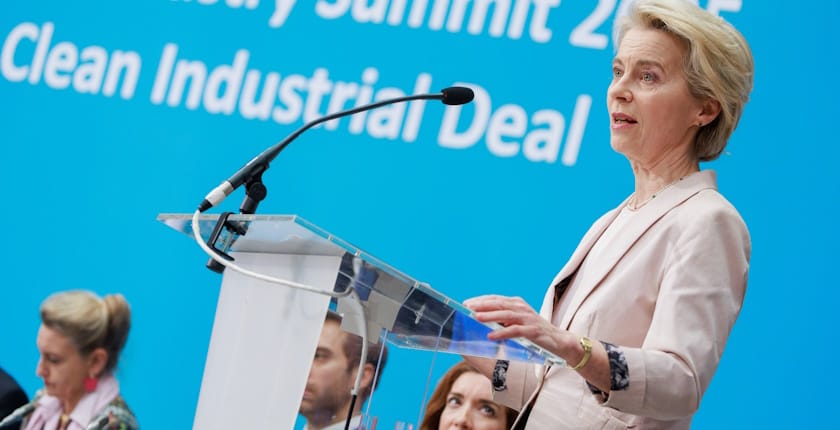
EU Clean Industrial Deal envisages EUR 100 billion Industrial Decarbonisation Bank

Unveiling its Clean Industrial Deal initiative, the European Commission vowed to raise as much as EUR 100 billion within ten years for its Industrial Decarbonization Bank scheme. It would also mobilize over EUR 100 billion in the short term to support domestic clean manufacturing. Proposed measures from one of the deal’s pillars, the Action Plan for Affordable Energy, could bring annual savings estimated at up to EUR 260 billion by 2040.

Following the European Green Deal, the NextGenerationEU investment package and the Green Deal Industrial Plan from the first mandate, European Commission President Ursula von der Leyen launched the first major legislative push since her reelection. The Clean Industrial Deal is aimed at providing the means for reindustrialization in parallel to faster decarbonization, supporting competitiveness and resilience and retaining talent.

The first batch of proposals involves the simplification of the Carbon Border Adjustment Mechanism (CBAM) and sustainability reporting rules including delays to relieve businesses.

Member states are responsible for electricity affordability action

Another pillar is the new Action Plan for Affordable Energy. It is a set of short-term measures to lower energy costs, complete the Energy Union, attract investments and be better prepared for potential energy crises. Outlining the proposal, the European Commission estimated potential annual savings for households and companies at up to EUR 260 billion by 2040.

However, for now the only tangible move is a call to member states to lower electricity taxes and network charges. At the same time, hundreds of billions of euros are required to strengthen and expand the grid.

The EU is preparing a EUR 500 million pilot program for financial guarantees for offtakers in PPAs

In line with an existing strategy, the plan should help ensure that retail electricity bills are not dictated by high and volatile gas prices thanks to a broader uptake of long-term contracts for clean power. On that note, a EUR 500 million pilot program is in the works for financial guarantees for offtakers in power purchase agreements (PPAs). The focus is on small and medium-sized enterprises and energy-intensive industry.

New rules would ensure that consumers can utilize the flexibility that demand response enables. In short, electricity needs to be used when it is cheaper, while consumption should be adjusted when power supply is weak.

In cooperation with the European Investment Bank, the commission will explore setting up a guarantee scheme to support financing models that alleviate initial costs for energy efficiency services.

Von der Leyen: We must turn the tide

In the short term, the Clean Industrial Deal will mobilize over EUR 100 billion to support clean manufacturing in the European Union, according to the announcement.

“We know all too well that production costs have increased, specifically for energy-intensive industries. The demand for clean products has dipped, and some investments have moved to other regions. So, we must turn the tide. And this is the central goal of the Clean Industrial Deal,” Von der Leyen stated.

Greenhouse gas emissions from the energy sector fell almost 10% last year while energy consumption grew by 1%, she noted. “We are on track to achieve our 55% emission reduction target for 2030. And this gives you the predictability you need to plan your investments,” said the chief of the EU’s executive arm.

More than 50% of steel, iron, zinc and platinum in the EU are made from scrap

Europe is home to 30% of all innovative companies in electrolyzer technologies, 20% for carbon capture and storage and 40% for wind and heat pump technology, she stressed. “This is where we can really beat global competition,” Von der Leyen added.

One of the segments of the Clean Industrial Deal is circularity. More than 50% of steel, iron, zinc and platinum in the EU are made from scrap, Von der Leyen pointed out. It covers more than 25% of European consumption, she asserted.

“But we need to go faster and further. For instance, China controls 80% of the global battery recycling capacity. And we still send huge volumes of precious waste back to China. Instead, end-of-life batteries could provide almost 15% of the lithium we need already in 2030. That is enough to produce two million batteries for electric vehicles,” Von der Leyen said.

The European Commission said it would soon present action plans for the automotive industry and steel and other metals. The chemicals and clean technology industries would follow.

Industrial Decarbonization Bank concept is based upon European Hydrogen Bank

The Clean Industrial Deal includes the Industrial Decarbonization Bank project. The idea is to operate it like the European Hydrogen Bank.

European Commissioner for Climate, Net Zero and Clean Growth Wopke Hoekstra said the new instrument could raise up to EUR 100 billion in the next ten years. Funding would come from the Innovation Fund, parts of the EU’s Emissions Trading System (EU ETS) and a revision of the InvestEU program.

“But then if you leverage that, if you put private sector money next to that you could easily add up to EUR 400 billion. With this plan, we are aiming to decrease industrial emissions by up to 30%,” Hoekstra asserted.

Adding sustainability, resilience, European preference to public procurement criteria

The European Commission’s Executive Vice President Stéphane Séjourné, in charge of prosperity and industrial strategy, warned there is not enough demand for materials such as clean steel and clean cement. The low carbon market needs stimulation on that side, he argued.

The plan is to reshape public procurement away from just the price criterion, the top official added. EU is adding sustainability, resilience and European preference, he recalled.

“Over the years we have created many new obligations. Sometimes in silos. Sometimes redundant. Sometimes, without taking into account the daily life of companies. This has blurred the objectives,” Séjourné acknowledged.

Among the 2030 goals highlighted in the presentation of the Clean Industrial Deal are increasing the economy-wide electrification rate to 32% from 21.3% and installing 100 GW of renewable electricity capacity every year. The EU is also aiming for the largest possible share of the global market for clean technologies. It valued it at USD 2 trillion in 2035.

Post Views:272

Unveiling its Clean Industrial Deal initiative, the European Commission vowed to raise as much as EUR 100 billion within ten years for its Industrial Decarbonization Bank scheme. It would also mobilize over EUR 100 billion in the short term to support domestic clean manufacturing. Proposed measures from one of the deal’s pillars, the Action Plan for Affordable Energy, could bring annual savings estimated at up to EUR 260 billion by 2040.

Following the European Green Deal, the NextGenerationEU investment package and the Green Deal Industrial Plan from the first mandate, European Commission President Ursula von der Leyen launched the first major legislative push since her reelection. The Clean Industrial Deal is aimed at providing the means for reindustrialization in parallel to faster decarbonization, supporting competitiveness and resilience and retaining talent.

The first batch of proposals involves the simplification of the Carbon Border Adjustment Mechanism (CBAM) and sustainability reporting rules including delays to relieve businesses.

Member states are responsible for electricity affordability action

Another pillar is the new Action Plan for Affordable Energy. It is a set of short-term measures to lower energy costs, complete the Energy Union, attract investments and be better prepared for potential energy crises. Outlining the proposal, the European Commission estimated potential annual savings for households and companies at up to EUR 260 billion by 2040.

However, for now the only tangible move is a call to member states to lower electricity taxes and network charges. At the same time, hundreds of billions of euros are required to strengthen and expand the grid.

The EU is preparing a EUR 500 million pilot program for financial guarantees for offtakers in PPAs

In line with an existing strategy, the plan should help ensure that retail electricity bills are not dictated by high and volatile gas prices thanks to a broader uptake of long-term contracts for clean power. On that note, a EUR 500 million pilot program is in the works for financial guarantees for offtakers in power purchase agreements (PPAs). The focus is on small and medium-sized enterprises and energy-intensive industry.

New rules would ensure that consumers can utilize the flexibility that demand response enables. In short, electricity needs to be used when it is cheaper, while consumption should be adjusted when power supply is weak.

In cooperation with the European Investment Bank, the commission will explore setting up a guarantee scheme to support financing models that alleviate initial costs for energy efficiency services.

Von der Leyen: We must turn the tide

In the short term, the Clean Industrial Deal will mobilize over EUR 100 billion to support clean manufacturing in the European Union, according to the announcement.

“We know all too well that production costs have increased, specifically for energy-intensive industries. The demand for clean products has dipped, and some investments have moved to other regions. So, we must turn the tide. And this is the central goal of the Clean Industrial Deal,” Von der Leyen stated.

Greenhouse gas emissions from the energy sector fell almost 10% last year while energy consumption grew by 1%, she noted. “We are on track to achieve our 55% emission reduction target for 2030. And this gives you the predictability you need to plan your investments,” said the chief of the EU’s executive arm.

More than 50% of steel, iron, zinc and platinum in the EU are made from scrap

Europe is home to 30% of all innovative companies in electrolyzer technologies, 20% for carbon capture and storage and 40% for wind and heat pump technology, she stressed. “This is where we can really beat global competition,” Von der Leyen added.

One of the segments of the Clean Industrial Deal is circularity. More than 50% of steel, iron, zinc and platinum in the EU are made from scrap, Von der Leyen pointed out. It covers more than 25% of European consumption, she asserted.

“But we need to go faster and further. For instance, China controls 80% of the global battery recycling capacity. And we still send huge volumes of precious waste back to China. Instead, end-of-life batteries could provide almost 15% of the lithium we need already in 2030. That is enough to produce two million batteries for electric vehicles,” Von der Leyen said.

The European Commission said it would soon present action plans for the automotive industry and steel and other metals. The chemicals and clean technology industries would follow.

Industrial Decarbonization Bank concept is based upon European Hydrogen Bank

The Clean Industrial Deal includes the Industrial Decarbonization Bank project. The idea is to operate it like the European Hydrogen Bank.

European Commissioner for Climate, Net Zero and Clean Growth Wopke Hoekstra said the new instrument could raise up to EUR 100 billion in the next ten years. Funding would come from the Innovation Fund, parts of the EU’s Emissions Trading System (EU ETS) and a revision of the InvestEU program.

“But then if you leverage that, if you put private sector money next to that you could easily add up to EUR 400 billion. With this plan, we are aiming to decrease industrial emissions by up to 30%,” Hoekstra asserted.

Adding sustainability, resilience, European preference to public procurement criteria

The European Commission’s Executive Vice President Stéphane Séjourné, in charge of prosperity and industrial strategy, warned there is not enough demand for materials such as clean steel and clean cement. The low carbon market needs stimulation on that side, he argued.

The plan is to reshape public procurement away from just the price criterion, the top official added. EU is adding sustainability, resilience and European preference, he recalled.

“Over the years we have created many new obligations. Sometimes in silos. Sometimes redundant. Sometimes, without taking into account the daily life of companies. This has blurred the objectives,” Séjourné acknowledged.

Among the 2030 goals highlighted in the presentation of the Clean Industrial Deal are increasing the economy-wide electrification rate to 32% from 21.3% and installing 100 GW of renewable electricity capacity every year. The EU is also aiming for the largest possible share of the global market for clean technologies. It valued it at USD 2 trillion in 2035.

Post Views:272
April 1, 2025
by AEA in News

Improving energy efficiency and decarbonization in three Serbian municipalities through public-private partnership

During 2024, a total of 64 boiler rooms burning fuel oil, heating oil, or coal were shut down in Serbia’s municipalities of Apatin, Odžaci, and Šid. As part of a public-private partnership project with Negawatt Solutions and B&S Immobilien, members of the EnergyNet group, boiler rooms using high-emission energy sources switched to a cleaner energy source – natural gas – greatly contributing to lower emissions, better air quality, and improved efficiency in the heating systems of public buildings in these municipalities.

The collaboration with the consortium of Negawatt Solutions and B&S Immobilien (members of the EnergyNet group) resulted in the implementation of a major project to improve energy efficiency and decarbonize heating systems at public buildings in the municipalities of Apatin, Odžaci, and Šid.

Over just 14 months, as many as 64 boiler rooms that were using fuel oil, heating oil, or coal were shut down, and new heating systems fueled by a much cleaner energy source – natural gas – were introduced at 29 elementary and high schools, 8 kindergartens, as well as other important public institutions, such as libraries, cultural centers, sports halls, and local community centers.

In just 14 months, 64 boiler rooms that used fuel oil, heating oil, and coal were shut down

Representatives of Negawatt Solutions and EnergyNet, the companies that implemented the project in partnership with the three municipalities, stated: “Thanks to the synergy we achieved by recognizing the importance of this project, obtaining more than 450 permits for connecting all these facilities to the gas distribution network and installing gas boilers was not an impossible mission. On the contrary, through our joint efforts, we accomplished it in just 14 months, sending 64 heating oil and coal boilers into history and making both society and the environment a better place.”

The project to boost energy efficiency and decarbonization was implemented through three separate public-private partnership projects with each of these municipalities. As the private partner in the projects, the Negawatt Solutions – Energy Net consortium undertook the financing, design, and construction of the infrastructure, including installing the gas generators and connecting the facilities to the gas network.

Photo: The building of the Odžaci municipality, in the photograph, the president of the Odžaci municipality Irena Djaković and the technical director of Negawatt Solutions Vladimir Nikolić with the new Remeha 320kW gas generator

The private partner is responsible for implementing all agreed energy efficiency measures

Ankica Barbulov, co-founder and director of Negawatt Solutions, explains that in addition to financing and performing the works, the private partner also had the obligation to prepare all project and technical documentation, as well as to carry out all the procedures for obtaining the necessary permits and approvals, which numbered in the hundreds given the nature and scope of the project.

Barbulov stated: “That is one of the advantages of a public-private partnership. While the private partner assumes full responsibility for the implementation of all agreed energy efficiency measures, municipalities, as the public partner, can more easily focus on their other strategic goals.”

The private partner will be responsible for the long-term management of the project

After the first phase of the project’s implementation, the private partner will be responsible for the long-term management of the project. This includes handling fuel procurement, producing thermal energy, and supplying public buildings with thermal energy based on the public partner’s needs over the next 15 years, which is the duration of the contract. During this period, the private partner will also be fully responsible for the proper functioning of the gas generators and related equipment.

Vladimir Nikolić, co-founder and technical director at Negawatt Solutions, described the undertaking as “a project to improve energy efficiency and conserve energy, which has helped save as much as 20% of energy in each of these three municipalities. This is particularly significant in terms of conserving natural resources. However, what is perhaps even more important for the local community is its contribution to environmental protection and cleaner air.”

Local contribution to national goals

One of the key benefits of this project is its contribution to achieving both local and national climate goals. According to its Nationally Determined Contributions (NDCs) – targets for reducing harmful emissions submitted to the United Nations Framework Convention on Climate Change (UNFCCC) every five years – Serbia aims to reduce greenhouse gas emissions by 33.33% compared to the 1990 levels. Undoubtedly, the results of this project support the UN Sustainable Development Goals within the 2030 Agenda and serve as a good example to be followed.

The shutdown of heating oil boilers reduces emissions of CO2 and other harmful gases

Thanks to this project, CO2 emissions have been reduced by about 15% (116 tons per year) in public facilities in the municipality of Apatin, by about 36% (540 tons per year) in facilities in the municipality of Odžaci, and by about 13% (83 tons per year) in facilities in the municipality of Šid. In addition to cutting CO2 emissions, the shutdown of heating oil boilers has also led to reduced emissions of other harmful gases (NOx by 27% and SOx by 100%), as well as lower emissions of PM10 particles, by 85%, and PM2.5 particles, by 85%, in all three municipalities.

Negawatt Solutions supports efficient energy production for clients

Negawatt Solutions is an energy service company (ESCO) established in 2021, which aims to utilize its expertise and commitment to contribute to more efficient and sustainable energy generation and consumption for its clients. By applying innovative ESCO and PPP financing models, the company stands out as a leader in the development of energy efficiency projects. To date, Negawatt Solutions has helped numerous clients cut their energy costs, decarbonize operations, deploy renewable energy sources, and significantly reduce their environmental footprint, while offering a full range of consulting and engineering services.

EnergyNet provides the market with top-quality equipment

EnergyNet is a company with more than 30 years of experience, boasting a line of top-quality, energy-efficient equipment for heating, cooling, ventilation, electric charging, and energy storage. With reliable products and comprehensive solutions, the company offers tailor-made systems for heating, cooling, ventilation, and energy generation from renewable sources, catering to both homes and businesses. In addition to offering consulting and installation services, EnergyNet handles the commissioning of equipment and provides support through preventive maintenance and repairs, ensuring maximum efficiency and long-term customer satisfaction.

Benefits of public-private partnerships

A public-private partnership is an exceptional opportunity for municipalities to mobilize private capital for the development of public infrastructure and investments of public interest. In addition to private capital, this model brings valuable know-how and experience of private-sector employees, making them available to the public sector. While preventing additional public debt, this concept also addresses the shortage of sufficiently qualified professional staff by facilitating continuous education for the involved parties and the exchange of know-how.

This project confirms that good teamwork is key to success: public-private partnerships and companies like EnergyNet and Negawatt Solutions offer an innovative financing model, where the private partner finances the entire investment, which is then repaid over the contractual period from savings on the cost of the new energy source compared to the previous, more expensive one. This financing model is therefore not treated as public debt, making it a particularly attractive way of addressing financing challenges, with all debt to the private partner repaid from achieved savings.

Post Views:187

During 2024, a total of 64 boiler rooms burning fuel oil, heating oil, or coal were shut down in Serbia’s municipalities of Apatin, Odžaci, and Šid. As part of a public-private partnership project with Negawatt Solutions and B&S Immobilien, members of the EnergyNet group, boiler rooms using high-emission energy sources switched to a cleaner energy source – natural gas – greatly contributing to lower emissions, better air quality, and improved efficiency in the heating systems of public buildings in these municipalities.

The collaboration with the consortium of Negawatt Solutions and B&S Immobilien (members of the EnergyNet group) resulted in the implementation of a major project to improve energy efficiency and decarbonize heating systems at public buildings in the municipalities of Apatin, Odžaci, and Šid.

Over just 14 months, as many as 64 boiler rooms that were using fuel oil, heating oil, or coal were shut down, and new heating systems fueled by a much cleaner energy source – natural gas – were introduced at 29 elementary and high schools, 8 kindergartens, as well as other important public institutions, such as libraries, cultural centers, sports halls, and local community centers.

In just 14 months, 64 boiler rooms that used fuel oil, heating oil, and coal were shut down

Representatives of Negawatt Solutions and EnergyNet, the companies that implemented the project in partnership with the three municipalities, stated: “Thanks to the synergy we achieved by recognizing the importance of this project, obtaining more than 450 permits for connecting all these facilities to the gas distribution network and installing gas boilers was not an impossible mission. On the contrary, through our joint efforts, we accomplished it in just 14 months, sending 64 heating oil and coal boilers into history and making both society and the environment a better place.”

The project to boost energy efficiency and decarbonization was implemented through three separate public-private partnership projects with each of these municipalities. As the private partner in the projects, the Negawatt Solutions – Energy Net consortium undertook the financing, design, and construction of the infrastructure, including installing the gas generators and connecting the facilities to the gas network.

Photo: The building of the Odžaci municipality, in the photograph, the president of the Odžaci municipality Irena Djaković and the technical director of Negawatt Solutions Vladimir Nikolić with the new Remeha 320kW gas generator

The private partner is responsible for implementing all agreed energy efficiency measures

Ankica Barbulov, co-founder and director of Negawatt Solutions, explains that in addition to financing and performing the works, the private partner also had the obligation to prepare all project and technical documentation, as well as to carry out all the procedures for obtaining the necessary permits and approvals, which numbered in the hundreds given the nature and scope of the project.

Barbulov stated: “That is one of the advantages of a public-private partnership. While the private partner assumes full responsibility for the implementation of all agreed energy efficiency measures, municipalities, as the public partner, can more easily focus on their other strategic goals.”

The private partner will be responsible for the long-term management of the project

After the first phase of the project’s implementation, the private partner will be responsible for the long-term management of the project. This includes handling fuel procurement, producing thermal energy, and supplying public buildings with thermal energy based on the public partner’s needs over the next 15 years, which is the duration of the contract. During this period, the private partner will also be fully responsible for the proper functioning of the gas generators and related equipment.

Vladimir Nikolić, co-founder and technical director at Negawatt Solutions, described the undertaking as “a project to improve energy efficiency and conserve energy, which has helped save as much as 20% of energy in each of these three municipalities. This is particularly significant in terms of conserving natural resources. However, what is perhaps even more important for the local community is its contribution to environmental protection and cleaner air.”

Local contribution to national goals

One of the key benefits of this project is its contribution to achieving both local and national climate goals. According to its Nationally Determined Contributions (NDCs) – targets for reducing harmful emissions submitted to the United Nations Framework Convention on Climate Change (UNFCCC) every five years – Serbia aims to reduce greenhouse gas emissions by 33.33% compared to the 1990 levels. Undoubtedly, the results of this project support the UN Sustainable Development Goals within the 2030 Agenda and serve as a good example to be followed.

The shutdown of heating oil boilers reduces emissions of CO2 and other harmful gases

Thanks to this project, CO2 emissions have been reduced by about 15% (116 tons per year) in public facilities in the municipality of Apatin, by about 36% (540 tons per year) in facilities in the municipality of Odžaci, and by about 13% (83 tons per year) in facilities in the municipality of Šid. In addition to cutting CO2 emissions, the shutdown of heating oil boilers has also led to reduced emissions of other harmful gases (NOx by 27% and SOx by 100%), as well as lower emissions of PM10 particles, by 85%, and PM2.5 particles, by 85%, in all three municipalities.

Negawatt Solutions supports efficient energy production for clients

Negawatt Solutions is an energy service company (ESCO) established in 2021, which aims to utilize its expertise and commitment to contribute to more efficient and sustainable energy generation and consumption for its clients. By applying innovative ESCO and PPP financing models, the company stands out as a leader in the development of energy efficiency projects. To date, Negawatt Solutions has helped numerous clients cut their energy costs, decarbonize operations, deploy renewable energy sources, and significantly reduce their environmental footprint, while offering a full range of consulting and engineering services.

EnergyNet provides the market with top-quality equipment

EnergyNet is a company with more than 30 years of experience, boasting a line of top-quality, energy-efficient equipment for heating, cooling, ventilation, electric charging, and energy storage. With reliable products and comprehensive solutions, the company offers tailor-made systems for heating, cooling, ventilation, and energy generation from renewable sources, catering to both homes and businesses. In addition to offering consulting and installation services, EnergyNet handles the commissioning of equipment and provides support through preventive maintenance and repairs, ensuring maximum efficiency and long-term customer satisfaction.

Benefits of public-private partnerships

A public-private partnership is an exceptional opportunity for municipalities to mobilize private capital for the development of public infrastructure and investments of public interest. In addition to private capital, this model brings valuable know-how and experience of private-sector employees, making them available to the public sector. While preventing additional public debt, this concept also addresses the shortage of sufficiently qualified professional staff by facilitating continuous education for the involved parties and the exchange of know-how.

This project confirms that good teamwork is key to success: public-private partnerships and companies like EnergyNet and Negawatt Solutions offer an innovative financing model, where the private partner finances the entire investment, which is then repaid over the contractual period from savings on the cost of the new energy source compared to the previous, more expensive one. This financing model is therefore not treated as public debt, making it a particularly attractive way of addressing financing challenges, with all debt to the private partner repaid from achieved savings.

Post Views:187
April 1, 2025
by AEA in News

Belgrade Energy Forum 2025 – where the leaders of energy transition in SEE meet (May 14-15)

The third Belgrade Energy Forum will take place on May 14 and 15, bringing together key players in Southeast Europe’s energy transition. Organized by Balkan Green Energy News, the region’s leading energy news portal, this conference will serve as a hub for representatives from regional and international institutions, organizations, and the business community from the region, Europe, and beyond.

Given the current geopolitical landscape, engaging in dialogue and networking with those who have a deep understanding of the markets and trends is more important than ever. To achieve the region’s energy and climate goals, it is essential to exchange information, knowledge, and experiences. Don’t miss this exceptional opportunity to connect with industry leaders and collectively shape the energy landscape!

The Belgrade Energy Forum is a regional energy conference organized by Balkan Green Energy News, the leading energy portal in Southeast Europe and one of the top 50 energy news websites in 2025.

In 2023 and 2024, the Belgrade Energy Forum attracted nearly 1,000 participants from over 30 countries. This included five energy ministers from the Southeast Europe region and more than 120 prominent speakers on energy transition from Europe and beyond

Petar Đokić, Minister of Energy and Mining of the Republic of Srpska, Dubravka Đedović Handanović, Minister of Mining and Energy of Serbia, and Saša Mujović, Minister of Energy of Montenegro, at the opening of Belgrade Energy Forum 2024

The diverse conference agenda includes eight panel discussions, keynote speeches, and presentations. The conference, taking place at Belgrade’s Crowne Plaza Hotel (special accommodation rates are available at the hotel by April 1 and the nearby Hyatt Regency), will feature an exhibition floor with stands.

At the end of day one, European wind turbine manufacturer Nordex, the silver sponsor of Belgrade Energy Forum 2025 (BEF 2025), will host a large party for conference participants to celebrate its 40th anniversary.

This year’s conference will introduce a networking and meeting-scheduling app, which will be launched soon. The conference director, Branislava Jovičić, stated:

“In addition to our well-recognized quality program, the Belgrade Energy Forum also acts as an excellent networking platform for individuals already conducting business in the region, as well as those planning to enter the market. To achieve your business goals more effectively, it’s essential to understand your stakeholders, and that’s exactly what we offer as a news portal and conference organizer. We provide our partners from the region and around the world the opportunity to connect with key stakeholders in one place. Furthermore, Balkan Green Energy News is available year-round to our clients and partners, supporting their business and helping them share news about their achievements. This is our competitive advantage over other events.”

The list of confirmed speakers includes a number of key players in the region’s energy transition, with several important names standing out.

Keynote speeches by energy transition leaders

Borislav Kostadinov, Fund Director for the Green for Growth Fund (GGF) at Finance in Motion, will talk about the importance of the energy transition and the financing of green projects. The GGF is one of the world’s most significant climate action funds in developing markets, including 19 markets in the European Union (EU) neighborhood, with a significant role in the Western Balkans.

Borislav Kostadinov, Fund Director for the Green for Growth Fund (GGF) at Finance in Motion, addresses BEF 2024

Christian Zinglersen, Director of the EU Agency for the Cooperation of Energy Regulators (ACER), will address the conference on May 14. His participation in BEF 2025 comes at a critical time for the Energy Community contracting parties, the transposition of EU energy regulations into national laws, and the integration into the EU’s single market.

Traditional support from institutional partners

The traditional institutional partners of BEF 2025 are the Ministry of Mining and Energy of the Republic of Serbia, the Ministry of Energy and Mining of the Republic of Srpska, the Serbian Chamber of Commerce, and Confindustria Serbia.

Petar Đokić, Minister of Energy and Mining of the Republic of Srpska, has stated that the ministry’s role as an institutional partner reflects its commitment to promoting energy sustainability, improving regional cooperation, and attracting investments in the energy sector.

“The Ministry of Energy and Mining of the Republic of Srpska, along with my personal involvement, has been actively engaged in the Belgrade Energy Forum since its inception. This Forum brings together key stakeholders in the energy sector, serving as a platform that encourages the exchange of ideas and experiences. The insights gained from these discussions help identify practical solutions to the energy industry’s challenges,” Đokić stressed.

He is convinced that through our collective efforts, we can build an energy future that is economically stable, environmentally sustainable, and socially responsible.

Last year’s panel titled Accelerating battery storage in South Eastern Europe: Challenges, Solutions, Outlook

Golden support for BEF from Serbia’s auction winner

A pioneer in renewable energy development in Southeast Europe, the Netherlands-based WV International is the gold sponsor of the conference. Recently, the company ranked second and third in Serbia’s second auction for market premiums for renewables, bidding with wind farm projects Alibunar 1 and Alibunar 2, which SANY Renewable Energy then acquired. This Chinese company, which manufactures wind turbines, is participating in this year’s BEF for the first time and will have an exhibition stand.

Neda Lazendić, WV International’s Country Manager for Serbia, said: “It is our great pleasure to support Belgrade Energy Forum for the third consecutive year as the largest and most important energy conference in our region. Following recent auction wins, WV International continues to work on developing a 571 MW portfolio, and we are also developing a 125 MW hybrid power plant that will combine wind and solar.”

Nordex Group, Adex Group, and the Green for Growth Fund (GGF) are the conference’s silver sponsors. Other sponsors will be announced soon.

Nordex Group, a European manufacturer of wind turbines, celebrates its 40th anniversary this year. In 2016, Germany-based Nordex merged with Spain’s Acciona Windpower. In this region, the silver sponsor of the conference shines with a golden glow, recording outstanding results – its current portfolio includes 1,000 MW of wind farms already generating electricity in Serbia and Croatia as well as projects under development in the two countries. Recently, the company signed an agreement on the Gvozd wind farm, which is being developed by Montenegro’s state power utility Elektroprivreda Crne Gore (EPCG).

Ibrahim Özarslan: Nordex has a strategic interest in the Balkans

Ibrahim Özarslan, CEO of Nordex Group’s Division Europe, said at the signing of the agreement with EPCG that Nordex had a strategic interest in the Balkans.

Adex – the first regional electricity exchange

Adex Group sponsors the panel titled Integration of Western Balkans electricity markets into internal European market through market coupling. In December last year, Adex Group completed a merger with the Hungarian Power Exchange (HUPX). In this way, HUPX joined the Slovenian BSP exchange and Serbia’s SEEPEX, forming a Central, Eastern, and Southeastern European hub.

The company said at the time that the transaction positioned it as the premier power trading hub for Central and Eastern Europe and Southeastern Europe.

GGF – a key financial link in the Western Balkans

The Green for Growth Fund (GGF) is a financial link without which many regional renewable energy projects would not have been realized. These include the Bogoslovec wind farm in North Macedonia, which was put into operation last year. GGF said at the time that Bogoslovec was its first equity investment and a model for future renewable energy projects.

The fund, also known for cooperating with commercial banks in the region, recently approved additional funds for Montenegro’s Lovćen banka and Serbia’s AIK Banka.

For the first time, Switzerland-based Pexapark, a leading provider of price data, market intelligence, and advisory services for renewable energy, will attend the conference in the capacity of the conference Knowledge partner.

Friends of the conference are Elektroprivreda Srbije and Energy Institute Hrvoje Požar

Friends of the conference are Serbia’s state power utility Elektroprivreda Srbije (EPS) and Croatia’s Energy Institute Hrvoje Požar, with their respective directors, Dušan Živković and Dražen Jakšić, taking part together in the panel on decarbonizing the region’s electricity sector.

Energy Institute Hrvoje Požar (EIHP), a leading energy think-tank in the region, continues to provide much-needed logistics for the energy transition across the Balkans and Europe. The institute has developed a biodiversity conflict map for solar and wind power plants in Croatia. The map represents a crucial tool for balancing the energy transition and nature conservation, and it also serves as an example for the innovative application of digital technologies to support sustainable development.

In addition to providing consultancy services, EIHP has also strived to lead by example. In October 2024, it officially opened its National Training Center for Nearly Zero Energy Buildings (nZEB). This marked the completion of a project of the same name, which included the first phase of renovating EIHP’s office building to meet nearly zero energy standards.

Belgrade Energy Forum provides an excellent networking opportunity. Register and connect with the leaders of the energy transition in Southeast Europe.

Get ready for eight great panel discussions:

  • High-level ministerial panel on SEE regional cooperation and energy transition strategies
  • Decarbonization strategies for power generation in Southeast Europe 2040/2050
  • Addressing carbon pricing in the Western Balkans – Turning decarbonization challenges into opportunities through collaboration, innovation, and competitiveness
  • Integration of Western Balkans electricity markets into the internal European market through market coupling
  • Transformative power of digitalisation and AI in the energy sector
  • Energy storage system market in SEE: trends and forecasts
  • PPAs as a key to renewable energy growth in SEE
  • Energy system flexibility – vital role in ensuring a stable, efficient, and sustainable power grid
Post Views:660

The third Belgrade Energy Forum will take place on May 14 and 15, bringing together key players in Southeast Europe’s energy transition. Organized by Balkan Green Energy News, the region’s leading energy news portal, this conference will serve as a hub for representatives from regional and international institutions, organizations, and the business community from the region, Europe, and beyond.

Given the current geopolitical landscape, engaging in dialogue and networking with those who have a deep understanding of the markets and trends is more important than ever. To achieve the region’s energy and climate goals, it is essential to exchange information, knowledge, and experiences. Don’t miss this exceptional opportunity to connect with industry leaders and collectively shape the energy landscape!

The Belgrade Energy Forum is a regional energy conference organized by Balkan Green Energy News, the leading energy portal in Southeast Europe and one of the top 50 energy news websites in 2025.

In 2023 and 2024, the Belgrade Energy Forum attracted nearly 1,000 participants from over 30 countries. This included five energy ministers from the Southeast Europe region and more than 120 prominent speakers on energy transition from Europe and beyond

Petar Đokić, Minister of Energy and Mining of the Republic of Srpska, Dubravka Đedović Handanović, Minister of Mining and Energy of Serbia, and Saša Mujović, Minister of Energy of Montenegro, at the opening of Belgrade Energy Forum 2024

The diverse conference agenda includes eight panel discussions, keynote speeches, and presentations. The conference, taking place at Belgrade’s Crowne Plaza Hotel (special accommodation rates are available at the hotel by April 1 and the nearby Hyatt Regency), will feature an exhibition floor with stands.

At the end of day one, European wind turbine manufacturer Nordex, the silver sponsor of Belgrade Energy Forum 2025 (BEF 2025), will host a large party for conference participants to celebrate its 40th anniversary.

This year’s conference will introduce a networking and meeting-scheduling app, which will be launched soon. The conference director, Branislava Jovičić, stated:

“In addition to our well-recognized quality program, the Belgrade Energy Forum also acts as an excellent networking platform for individuals already conducting business in the region, as well as those planning to enter the market. To achieve your business goals more effectively, it’s essential to understand your stakeholders, and that’s exactly what we offer as a news portal and conference organizer. We provide our partners from the region and around the world the opportunity to connect with key stakeholders in one place. Furthermore, Balkan Green Energy News is available year-round to our clients and partners, supporting their business and helping them share news about their achievements. This is our competitive advantage over other events.”

The list of confirmed speakers includes a number of key players in the region’s energy transition, with several important names standing out.

Keynote speeches by energy transition leaders

Borislav Kostadinov, Fund Director for the Green for Growth Fund (GGF) at Finance in Motion, will talk about the importance of the energy transition and the financing of green projects. The GGF is one of the world’s most significant climate action funds in developing markets, including 19 markets in the European Union (EU) neighborhood, with a significant role in the Western Balkans.

Borislav Kostadinov, Fund Director for the Green for Growth Fund (GGF) at Finance in Motion, addresses BEF 2024

Christian Zinglersen, Director of the EU Agency for the Cooperation of Energy Regulators (ACER), will address the conference on May 14. His participation in BEF 2025 comes at a critical time for the Energy Community contracting parties, the transposition of EU energy regulations into national laws, and the integration into the EU’s single market.

Traditional support from institutional partners

The traditional institutional partners of BEF 2025 are the Ministry of Mining and Energy of the Republic of Serbia, the Ministry of Energy and Mining of the Republic of Srpska, the Serbian Chamber of Commerce, and Confindustria Serbia.

Petar Đokić, Minister of Energy and Mining of the Republic of Srpska, has stated that the ministry’s role as an institutional partner reflects its commitment to promoting energy sustainability, improving regional cooperation, and attracting investments in the energy sector.

“The Ministry of Energy and Mining of the Republic of Srpska, along with my personal involvement, has been actively engaged in the Belgrade Energy Forum since its inception. This Forum brings together key stakeholders in the energy sector, serving as a platform that encourages the exchange of ideas and experiences. The insights gained from these discussions help identify practical solutions to the energy industry’s challenges,” Đokić stressed.

He is convinced that through our collective efforts, we can build an energy future that is economically stable, environmentally sustainable, and socially responsible.

Last year’s panel titled Accelerating battery storage in South Eastern Europe: Challenges, Solutions, Outlook

Golden support for BEF from Serbia’s auction winner

A pioneer in renewable energy development in Southeast Europe, the Netherlands-based WV International is the gold sponsor of the conference. Recently, the company ranked second and third in Serbia’s second auction for market premiums for renewables, bidding with wind farm projects Alibunar 1 and Alibunar 2, which SANY Renewable Energy then acquired. This Chinese company, which manufactures wind turbines, is participating in this year’s BEF for the first time and will have an exhibition stand.

Neda Lazendić, WV International’s Country Manager for Serbia, said: “It is our great pleasure to support Belgrade Energy Forum for the third consecutive year as the largest and most important energy conference in our region. Following recent auction wins, WV International continues to work on developing a 571 MW portfolio, and we are also developing a 125 MW hybrid power plant that will combine wind and solar.”

Nordex Group, Adex Group, and the Green for Growth Fund (GGF) are the conference’s silver sponsors. Other sponsors will be announced soon.

Nordex Group, a European manufacturer of wind turbines, celebrates its 40th anniversary this year. In 2016, Germany-based Nordex merged with Spain’s Acciona Windpower. In this region, the silver sponsor of the conference shines with a golden glow, recording outstanding results – its current portfolio includes 1,000 MW of wind farms already generating electricity in Serbia and Croatia as well as projects under development in the two countries. Recently, the company signed an agreement on the Gvozd wind farm, which is being developed by Montenegro’s state power utility Elektroprivreda Crne Gore (EPCG).

Ibrahim Özarslan: Nordex has a strategic interest in the Balkans

Ibrahim Özarslan, CEO of Nordex Group’s Division Europe, said at the signing of the agreement with EPCG that Nordex had a strategic interest in the Balkans.

Adex – the first regional electricity exchange

Adex Group sponsors the panel titled Integration of Western Balkans electricity markets into internal European market through market coupling. In December last year, Adex Group completed a merger with the Hungarian Power Exchange (HUPX). In this way, HUPX joined the Slovenian BSP exchange and Serbia’s SEEPEX, forming a Central, Eastern, and Southeastern European hub.

The company said at the time that the transaction positioned it as the premier power trading hub for Central and Eastern Europe and Southeastern Europe.

GGF – a key financial link in the Western Balkans

The Green for Growth Fund (GGF) is a financial link without which many regional renewable energy projects would not have been realized. These include the Bogoslovec wind farm in North Macedonia, which was put into operation last year. GGF said at the time that Bogoslovec was its first equity investment and a model for future renewable energy projects.

The fund, also known for cooperating with commercial banks in the region, recently approved additional funds for Montenegro’s Lovćen banka and Serbia’s AIK Banka.

For the first time, Switzerland-based Pexapark, a leading provider of price data, market intelligence, and advisory services for renewable energy, will attend the conference in the capacity of the conference Knowledge partner.

Friends of the conference are Elektroprivreda Srbije and Energy Institute Hrvoje Požar

Friends of the conference are Serbia’s state power utility Elektroprivreda Srbije (EPS) and Croatia’s Energy Institute Hrvoje Požar, with their respective directors, Dušan Živković and Dražen Jakšić, taking part together in the panel on decarbonizing the region’s electricity sector.

Energy Institute Hrvoje Požar (EIHP), a leading energy think-tank in the region, continues to provide much-needed logistics for the energy transition across the Balkans and Europe. The institute has developed a biodiversity conflict map for solar and wind power plants in Croatia. The map represents a crucial tool for balancing the energy transition and nature conservation, and it also serves as an example for the innovative application of digital technologies to support sustainable development.

In addition to providing consultancy services, EIHP has also strived to lead by example. In October 2024, it officially opened its National Training Center for Nearly Zero Energy Buildings (nZEB). This marked the completion of a project of the same name, which included the first phase of renovating EIHP’s office building to meet nearly zero energy standards.

Belgrade Energy Forum provides an excellent networking opportunity. Register and connect with the leaders of the energy transition in Southeast Europe.

Get ready for eight great panel discussions:

  • High-level ministerial panel on SEE regional cooperation and energy transition strategies
  • Decarbonization strategies for power generation in Southeast Europe 2040/2050
  • Addressing carbon pricing in the Western Balkans – Turning decarbonization challenges into opportunities through collaboration, innovation, and competitiveness
  • Integration of Western Balkans electricity markets into the internal European market through market coupling
  • Transformative power of digitalisation and AI in the energy sector
  • Energy storage system market in SEE: trends and forecasts
  • PPAs as a key to renewable energy growth in SEE
  • Energy system flexibility – vital role in ensuring a stable, efficient, and sustainable power grid
Post Views:660
April 1, 2025
by AEA in News

Montenegro preparing to install solar panels along highway

State-owned Monteput is preparing a study on installing solar panels along the Bar-Boljare highway. The company has launched a tender for the development of a techno-economic study of the use of solar potential along the Bar-Boljare highway route for the production and use of electricity.

Monteput intends to use the electricity from its solar power plants for self-consumption, to supply facilities along the road such as tunnels, bridges, interchanges and toll stations.

The study aims to analyze the possibility and profitability of using solar potential in the area of ​​the Bar-Boljare highway, according to the tender documentation.

The document should also demonstrate the advantages and disadvantages of different models to facilitate the adoption of strategic decisions for the electricity supply of consumers on the highway.

Tunnels are the biggest consumers of electricity on the highway

Monteput recalled that the construction of the Bar-Boljare highway is taking place in stages. So far the 41-kilometer section Smokovac-Mateševo ​​has been put into operation. Activities are underway for the start of work on other sections.

The company wants to assess the potential for the use of solar energy in the existing part as well as the planned sections.

Smokovac-Mateševo ​is a significant consumer of electricity, while the biggest ones are tunnels, which account for over 80% of the total consumption. The ventilation and lighting systems consume the largest part of the power in tunnels, the tender documentation reads.

Many European countries have plans to install solar panels along highways. It is also the intention of some of the countries in the region, for example, Bosnia and Herzegovina and Slovenia.

Germany prepared a study

Monteput pointed out that European Union countries have been taking steps to use solar potential along highways. In 2023, the German government created a legal framework and adopted regulations aimed at speeding up and simplifying procedures in the transport sector for the use of solar energy.

According to a study by the Research Institute of Federal Highways, commissioned by the Federal Ministry of Digital Affairs and Transport, the country’s 50,000 kilometers of highways have a solar potential of 24 GW to 48 GW altogether.

Noise protection barriers could add an estimated 3.2 GW to 4.2 GW while parking spaces can provide 1.2 GW, and structures at rest areas have a potential of up to 150 MW in total.

Monteput also noted that the public company Motorways of the Federation of Bosnia and Herzegovina in neighboring BiH has produced a study on the potential for the construction of photovoltaic plants on the Vc highway corridor.

Post Views:77

State-owned Monteput is preparing a study on installing solar panels along the Bar-Boljare highway. The company has launched a tender for the development of a techno-economic study of the use of solar potential along the Bar-Boljare highway route for the production and use of electricity.

Monteput intends to use the electricity from its solar power plants for self-consumption, to supply facilities along the road such as tunnels, bridges, interchanges and toll stations.

The study aims to analyze the possibility and profitability of using solar potential in the area of ​​the Bar-Boljare highway, according to the tender documentation.

The document should also demonstrate the advantages and disadvantages of different models to facilitate the adoption of strategic decisions for the electricity supply of consumers on the highway.

Tunnels are the biggest consumers of electricity on the highway

Monteput recalled that the construction of the Bar-Boljare highway is taking place in stages. So far the 41-kilometer section Smokovac-Mateševo ​​has been put into operation. Activities are underway for the start of work on other sections.

The company wants to assess the potential for the use of solar energy in the existing part as well as the planned sections.

Smokovac-Mateševo ​is a significant consumer of electricity, while the biggest ones are tunnels, which account for over 80% of the total consumption. The ventilation and lighting systems consume the largest part of the power in tunnels, the tender documentation reads.

Many European countries have plans to install solar panels along highways. It is also the intention of some of the countries in the region, for example, Bosnia and Herzegovina and Slovenia.

Germany prepared a study

Monteput pointed out that European Union countries have been taking steps to use solar potential along highways. In 2023, the German government created a legal framework and adopted regulations aimed at speeding up and simplifying procedures in the transport sector for the use of solar energy.

According to a study by the Research Institute of Federal Highways, commissioned by the Federal Ministry of Digital Affairs and Transport, the country’s 50,000 kilometers of highways have a solar potential of 24 GW to 48 GW altogether.

Noise protection barriers could add an estimated 3.2 GW to 4.2 GW while parking spaces can provide 1.2 GW, and structures at rest areas have a potential of up to 150 MW in total.

Monteput also noted that the public company Motorways of the Federation of Bosnia and Herzegovina in neighboring BiH has produced a study on the potential for the construction of photovoltaic plants on the Vc highway corridor.

Post Views:77
April 1, 2025
by AEA in News

First energy cooperative in Cyprus to be set up in mountain villages

MountMed Institute and the University of Cyprus are establishing the country’s first energy cooperative with partners from Crete. In the pilot phase, they intend to build a small hybrid power plant – photovoltaic facility with energy storage – for one hundred households in the Troodos mountain range.

The communities of the wider Troodos (Trodos) region in Cyprus are getting assistance for access to renewable energy sources. A project is underway for the island country’s first energy cooperative. It is especially aimed to benefit villages where the environment and particular geographical and building characteristics do not provide residents with technical solutions such as the ones in urban areas, for the production of cheaper electricity from photovoltaic systems or other technologies, philenews reported.

The non-profit MountMed Research and Development Institute for the Mountain Regions of the Mediterranean Islands secured EUR 1 million via a European Union program. The University of Cyprus, the project coordinator, is tasked with technical studies and obtaining permits.

They intend to install a pilot energy community solar park with storage for communities and villagers in the Troodos mountain range. In the first phase, the 500 kW facility would supply 100 households in the Solea-Marathasa area.

Minoan Energy Community of Crete to provide knowhow

The initiative is called MoRECo (Mountain Community of Renewable Energy) Troodos. The funding came through Cooperation Programme Interreg VI-A Greece-Cyprus 2021-2027. The endeavor includes assistance from the Crete Region and the Minoan Energy Community as partners.

According to the update, the land for the first solar power plant will be secured in cooperation with the Ministry of Interior and the Cypriot government.

Spreading MoRECo to other villages in Troodos

MountMed plans to expand the initiative to surrounding communities. It has also qualified for technical support from the European Commission’s Rural Energy Community Advisory Hub (RECAH).

The Cyprus Energy Regulatory Authority (CERA) adopted the legal framework for renewable energy communities (RECs) last year. In line with EU regulation, such entities are for individuals, small and medium-sized enterprises (SMEs) and municipal authorities.

The primary objective of an REC is to provide environmental, economic and social benefits at a community level to its shareholders or members or the local areas where it operates, but not profits.

Post Views:101

MountMed Institute and the University of Cyprus are establishing the country’s first energy cooperative with partners from Crete. In the pilot phase, they intend to build a small hybrid power plant – photovoltaic facility with energy storage – for one hundred households in the Troodos mountain range.

The communities of the wider Troodos (Trodos) region in Cyprus are getting assistance for access to renewable energy sources. A project is underway for the island country’s first energy cooperative. It is especially aimed to benefit villages where the environment and particular geographical and building characteristics do not provide residents with technical solutions such as the ones in urban areas, for the production of cheaper electricity from photovoltaic systems or other technologies, philenews reported.

The non-profit MountMed Research and Development Institute for the Mountain Regions of the Mediterranean Islands secured EUR 1 million via a European Union program. The University of Cyprus, the project coordinator, is tasked with technical studies and obtaining permits.

They intend to install a pilot energy community solar park with storage for communities and villagers in the Troodos mountain range. In the first phase, the 500 kW facility would supply 100 households in the Solea-Marathasa area.

Minoan Energy Community of Crete to provide knowhow

The initiative is called MoRECo (Mountain Community of Renewable Energy) Troodos. The funding came through Cooperation Programme Interreg VI-A Greece-Cyprus 2021-2027. The endeavor includes assistance from the Crete Region and the Minoan Energy Community as partners.

According to the update, the land for the first solar power plant will be secured in cooperation with the Ministry of Interior and the Cypriot government.

Spreading MoRECo to other villages in Troodos

MountMed plans to expand the initiative to surrounding communities. It has also qualified for technical support from the European Commission’s Rural Energy Community Advisory Hub (RECAH).

The Cyprus Energy Regulatory Authority (CERA) adopted the legal framework for renewable energy communities (RECs) last year. In line with EU regulation, such entities are for individuals, small and medium-sized enterprises (SMEs) and municipal authorities.

The primary objective of an REC is to provide environmental, economic and social benefits at a community level to its shareholders or members or the local areas where it operates, but not profits.

Post Views:101
  • 1
  • …
  • 115
  • 116
  • 117
  • 118
  • 119
  • …
  • 140

AEA – Albania Energy Association is a industry association dedicated to representing the interests of Albanian and West Balkan for energy producers and consumers. AEA works to advance the development and adoption of sustainable energy solutions in Albania and the Western Balkans, supporting the region’s transition toward a cleaner, more secure, and more competitive energy future. AEA is registered by decision of the Court of Tirana, DECISION NO. 3032, (VAT:L11827451K).

[email protected]

Address
Blv Zogu 1
Tirana
1057
ALBANIA

LinkedIn  |  Facebook
Events
May 25, 2022 Connecting Green Hydrogen Europe 2022
May 25, 2022 Energy Week Western Balkans 2022
Copyright © Albania Energy Association