AEA-Albania Energy Association
  • Main
  • About Us
  • Services
  • Sectors
  • News
  • EventsEvents
  • PublicationPublication
  • Contact Us
AEA-Albania Energy Association
  • Main
  • About Us
  • Services
  • Sectors
  • News
  • EventsEvents
  • PublicationPublication
  • Contact Us
AEA-Albania Energy Association
  • Home Page
  • About Us
  • Sectors
  • Our Services
  • News
  • Contact Us
April 1, 2025
by AEA in News

Private equity firm Ardian agrees to take over Akuo

Global private equity firm Ardian reached an agreement to acquire France-based independent renewable energy producer Akuo.

Akuo, controlled by alternative asset manager ICG, is opening a new chapter under private equity firm Ardian, headquartered in Paris. Founded in 2007 in France, Akuo specializes in wind power, storage and photovoltaics, including agrisolar and floating solar power plants. It has more than 2 GW of assets in operation and under construction or shovel-ready projects across more than 20 countries worldwide.

Ardian agreed to take over Akuo for an undisclosed sum, “subject to the legal information and consultation process towards the relevant employee representative bodies” and pending regulatory clearance, according to the announcement.

“This transaction reflects our commitment to supporting high-potential entrepreneurial infrastructure platforms on their journey to industrialization and growth as part of the energy transition,”​ said Ardian’s Co-Head of Infrastructure Europe Benoît Gaillochet. The company stressed it would capitalize on Akuo’s solid fundamentals to pursue growth ambitions and that it would provide the necessary financial capacity for its projects.

Ardian said it would provide the necessary financial capacity for Akuo’s projects

The acquisition will enable Akuo to streamline its business and expand its international presence, but also to innovate more rapidly to meet tomorrow’s energy challenges, its Co-Founder Éric Scotto asserted. The French company has over 12 GW in its project pipeline. Akuo said it aims to reach 5 GW by 2030 in production and storage capacity.

In the region that Balkan Green Energy News covers, the company is active in North Macedonia, Bulgaria, Serbia, Montenegro, Greece, Croatia and Bosnia and Herzegovina.

“We are delighted to have been able to contribute to the success of Akuo and its teams in recent years. Akuo has demonstrated its pioneering position in the development of renewable energy. We are convinced that Ardian will provide the necessary resources to further strengthen the group’s positions and accelerate its growth,” said Managing Director of ICG Infrastructure Strategy Pénélope Dietsch.

Through its infrastructure funds, Ardian manages over 8 GW of thermal and renewable energy capacity in Europe and the Americas and has more than USD 35 billion under management. Overall, it manages or advises USD 177 billion of assets on behalf of more than 1,850 clients globally. It has more than 1,050 employees in 20 offices n Europe, the Americas, Asia and Middle East.

Post Views:128

Global private equity firm Ardian reached an agreement to acquire France-based independent renewable energy producer Akuo.

Akuo, controlled by alternative asset manager ICG, is opening a new chapter under private equity firm Ardian, headquartered in Paris. Founded in 2007 in France, Akuo specializes in wind power, storage and photovoltaics, including agrisolar and floating solar power plants. It has more than 2 GW of assets in operation and under construction or shovel-ready projects across more than 20 countries worldwide.

Ardian agreed to take over Akuo for an undisclosed sum, “subject to the legal information and consultation process towards the relevant employee representative bodies” and pending regulatory clearance, according to the announcement.

“This transaction reflects our commitment to supporting high-potential entrepreneurial infrastructure platforms on their journey to industrialization and growth as part of the energy transition,”​ said Ardian’s Co-Head of Infrastructure Europe Benoît Gaillochet. The company stressed it would capitalize on Akuo’s solid fundamentals to pursue growth ambitions and that it would provide the necessary financial capacity for its projects.

Ardian said it would provide the necessary financial capacity for Akuo’s projects

The acquisition will enable Akuo to streamline its business and expand its international presence, but also to innovate more rapidly to meet tomorrow’s energy challenges, its Co-Founder Éric Scotto asserted. The French company has over 12 GW in its project pipeline. Akuo said it aims to reach 5 GW by 2030 in production and storage capacity.

In the region that Balkan Green Energy News covers, the company is active in North Macedonia, Bulgaria, Serbia, Montenegro, Greece, Croatia and Bosnia and Herzegovina.

“We are delighted to have been able to contribute to the success of Akuo and its teams in recent years. Akuo has demonstrated its pioneering position in the development of renewable energy. We are convinced that Ardian will provide the necessary resources to further strengthen the group’s positions and accelerate its growth,” said Managing Director of ICG Infrastructure Strategy Pénélope Dietsch.

Through its infrastructure funds, Ardian manages over 8 GW of thermal and renewable energy capacity in Europe and the Americas and has more than USD 35 billion under management. Overall, it manages or advises USD 177 billion of assets on behalf of more than 1,850 clients globally. It has more than 1,050 employees in 20 offices n Europe, the Americas, Asia and Middle East.
Post Views:128
April 1, 2025
by AEA in News

IEA’s Global Energy Review: Electricity use is growing rapidly, driven by heatwaves, electrification, data centers, AI

Global energy demand grew at a faster-than-average pace in 2024. The increase was led by the electricity sector, driven by extremely high temperatures, electrification and digitalization. Renewables and natural gas covered the majority of additional energy needs while renewables and nuclear energy did the same for the growth in power generation, according to the IEA’s Global Energy Review.

The latest edition of the IEA’s Global Energy Review brings data on energy demand, supply, the uptake of new energy technologies and energy-related carbon dioxide (CO2) emissions.

Global energy demand rose by 2.2% last year – lower than GDP growth of 3.2% but considerably faster than the average annual demand increase of 1.3% between 2013 and 2023, the report underlines.

Emerging and developing economies accounted for over 80% of the increase in global energy demand in 2024. In China, energy consumption rose by less than 3%, half its 2023 rate and well below the country’s recent annual average. After several years of declines, advanced economies saw a return to growth, with their energy demand increasing by almost 1% in aggregate, according to the report.

Annual change in electricity consumption by sector 2023-2024

Demand for all fuels and technologies expanded in 2024. The increase was led by the power sector as electricity demand surged by 4.3%, well above the 3.2% growth in global GDP.

Global electricity consumption rose by nearly 1,100 TWh in 2024, more than twice the annual average increase over the past decade. China made up more than half of the global increase in electricity demand.

The electricity consumption has increased due to higher demand for cooling, rising consumption by industry, the electrification of transport and growth of data centers and artificial intelligence, according to the report.

Electricity use in buildings accounted for nearly 60% of overall growth in 2024. The power capacity of data centers globally increased by an estimated 20%, or around 15 GW, mostly in the US and China. Meanwhile, global sales of electric cars rose by over 25%, surpassing 17 million units and accounting for one fifth of all car sales.

Share of energy demand growth by source 2024

Renewables covered the biggest share (38%) of global energy supply growth, followed by natural gas (28%), coal (15%), oil (11%) and nuclear (8%), the report reads.

Renewables and nuclear energy together provided 80% of the growth in global electricity generation. They contributed 40% of total generation, the most so far, with renewables alone supplying 32%.

New renewables hit record levels for the 22nd consecutive year, with around 700 GW of total capacity added in 2024, nearly 80% of which was solar power.

Birol: The IEA report puts some clear facts on the table about what is happening globally

Photovoltaic and wind power output increased by a record 670 TWh, while generation from natural gas rose by 170 TWh and coal by 90 TWh. In the European Union, the share of generation provided by solar and wind surpassed the combined share of coal and gas for the first time. In the United States, the share of photovoltaics and wind rose to a combined 16%, overtaking coal. In China, they reached nearly 20% of total production.

According to IEA Executive Director Fatih Birol, there are many uncertainties in the world today and different narratives about energy, but the report puts some clear facts on the table about what is happening globally.

“What is certain is that electricity use is growing rapidly, pulling overall energy demand along with it to such an extent that it is enough to reverse years of declining energy consumption in advanced economies. The result is that demand for all major fuels and energy technologies increased in 2024, with renewables covering the largest share of the growth, followed by natural gas. And the strong expansion of solar, wind, nuclear power and EVs is increasingly loosening the links between economic growth and emissions,” he stressed.

Natural gas recorded the strongest demand growth among fossil fuels

As a result of the rise in power consumption, natural gas saw the strongest demand growth among fossil fuels. It increased by 2.7% in 2024, rising by 115 billion cubic metres, compared with an average of around 75 billion annually over the past decade.

China had the largest absolute growth in gas demand in 2024, by over 7% or 30 billion cubic meters. Demand expanded by around 2% or 20 billion in the United States, and modestly in the European Union.

Coal demand increase was driven by cooling needs

Global coal demand rose by 1% in 2024, half the rate of increase seen the previous year, according to the report.

Intense heatwaves in China and India pushed up electricity consumption for cooling. The two countries contributed more than 90% altogether of the annual increase in coal consumption globally, the report underlined.

CO2 emissions from the energy sector continued to increase in 2024 but at a slower rate than in 2023.

“Growth in energy-related carbon dioxide (CO2) emissions continues to decouple from global economic growth. Emissions growth slowed to 0.8% in 2024, while the global economy expanded by more than 3%,” IEA said.

Post Views:125

Global energy demand grew at a faster-than-average pace in 2024. The increase was led by the electricity sector, driven by extremely high temperatures, electrification and digitalization. Renewables and natural gas covered the majority of additional energy needs while renewables and nuclear energy did the same for the growth in power generation, according to the IEA’s Global Energy Review.

The latest edition of the IEA’s Global Energy Review brings data on energy demand, supply, the uptake of new energy technologies and energy-related carbon dioxide (CO2) emissions.

Global energy demand rose by 2.2% last year – lower than GDP growth of 3.2% but considerably faster than the average annual demand increase of 1.3% between 2013 and 2023, the report underlines.

Emerging and developing economies accounted for over 80% of the increase in global energy demand in 2024. In China, energy consumption rose by less than 3%, half its 2023 rate and well below the country’s recent annual average. After several years of declines, advanced economies saw a return to growth, with their energy demand increasing by almost 1% in aggregate, according to the report.

Annual change in electricity consumption by sector 2023-2024

Demand for all fuels and technologies expanded in 2024. The increase was led by the power sector as electricity demand surged by 4.3%, well above the 3.2% growth in global GDP.

Global electricity consumption rose by nearly 1,100 TWh in 2024, more than twice the annual average increase over the past decade. China made up more than half of the global increase in electricity demand.

The electricity consumption has increased due to higher demand for cooling, rising consumption by industry, the electrification of transport and growth of data centers and artificial intelligence, according to the report.

Electricity use in buildings accounted for nearly 60% of overall growth in 2024. The power capacity of data centers globally increased by an estimated 20%, or around 15 GW, mostly in the US and China. Meanwhile, global sales of electric cars rose by over 25%, surpassing 17 million units and accounting for one fifth of all car sales.

Share of energy demand growth by source 2024

Renewables covered the biggest share (38%) of global energy supply growth, followed by natural gas (28%), coal (15%), oil (11%) and nuclear (8%), the report reads.

Renewables and nuclear energy together provided 80% of the growth in global electricity generation. They contributed 40% of total generation, the most so far, with renewables alone supplying 32%.

New renewables hit record levels for the 22nd consecutive year, with around 700 GW of total capacity added in 2024, nearly 80% of which was solar power.

Birol: The IEA report puts some clear facts on the table about what is happening globally

Photovoltaic and wind power output increased by a record 670 TWh, while generation from natural gas rose by 170 TWh and coal by 90 TWh. In the European Union, the share of generation provided by solar and wind surpassed the combined share of coal and gas for the first time. In the United States, the share of photovoltaics and wind rose to a combined 16%, overtaking coal. In China, they reached nearly 20% of total production.

According to IEA Executive Director Fatih Birol, there are many uncertainties in the world today and different narratives about energy, but the report puts some clear facts on the table about what is happening globally.

“What is certain is that electricity use is growing rapidly, pulling overall energy demand along with it to such an extent that it is enough to reverse years of declining energy consumption in advanced economies. The result is that demand for all major fuels and energy technologies increased in 2024, with renewables covering the largest share of the growth, followed by natural gas. And the strong expansion of solar, wind, nuclear power and EVs is increasingly loosening the links between economic growth and emissions,” he stressed.

Natural gas recorded the strongest demand growth among fossil fuels

As a result of the rise in power consumption, natural gas saw the strongest demand growth among fossil fuels. It increased by 2.7% in 2024, rising by 115 billion cubic metres, compared with an average of around 75 billion annually over the past decade.

China had the largest absolute growth in gas demand in 2024, by over 7% or 30 billion cubic meters. Demand expanded by around 2% or 20 billion in the United States, and modestly in the European Union.

Coal demand increase was driven by cooling needs

Global coal demand rose by 1% in 2024, half the rate of increase seen the previous year, according to the report.

Intense heatwaves in China and India pushed up electricity consumption for cooling. The two countries contributed more than 90% altogether of the annual increase in coal consumption globally, the report underlined.

CO2 emissions from the energy sector continued to increase in 2024 but at a slower rate than in 2023.

“Growth in energy-related carbon dioxide (CO2) emissions continues to decouple from global economic growth. Emissions growth slowed to 0.8% in 2024, while the global economy expanded by more than 3%,” IEA said.

Post Views:125
April 1, 2025
by AEA in News

IRENA: China has 64% share in 2024 renewables growth, half of world’s solar power capacity

With 585 GW of capacity additions, renewables accounted for over 92.5% of power expansion globally in 2024, the International Renewable Energy Agency (IRENA) said. Solar power and wind dominated again, as did China. The country contributed a stunning 63.8% in total, and 61.5% and 70.5% in the two technologies, respectively. It surpassed a 50% share in the world’s operational photovoltaic capacity.

In Southeastern Europe, eight countries had solar power expansion rates above the global 32%. Croatia almost doubled its PV capacity, while Turkey had almost as much online as all others put together.

Renewable Capacity Statistics 2025, released by the International Renewable Energy Agency (IRENA), show a massive increase in renewable power capacity during 2024, reaching 4.49 TW. The record 585 GW addition last year makes up a 92.5% share of the total, and the rate of annual growth hit an all-time high 15.1%.

Solar energy accounted for a tremendous 77.2% of all expansion. It grew by 452 GW in absolute terms, or 32%, to 1.87 TW. The technology topped 1 TW just two years before. Notably, Global Solar Council earlier declared that the 2 TW threshold of total photovoltaic capacity was reached in 2024.

IRENA said wind energy surged 11.1% (113 GW) to 1.13 TW. Hydropower achieved net growth of only 1.1% or 15.5 GW, to 1.43 TW.

It should be said here that the output from hydro and wind is three and almost two times higher, respectively, per unit of capacity than that from photovoltaics.

The bioenergy segment grew 3.2% to 151 GW, while geothermal added 2.5%, reaching 15.4 GW. As for pure pumped storage (excluding the facilities with dual use), a technology essential for balancing intermittent sources, the capacity increased by a neglectable 0.4%, to 142 GW.

China still eclipsing rest of world in expansion in three main renewables technologies

Solar and wind energy continued to dominate renewables capacity expansion, jointly accounting for 96.6% of all net additions.

“Renewables renew economies. But the shift to clean energy must be faster and fairer – with all countries given the chance to fully benefit from cheap, clean renewable power,” said United Nations Secretary-General António Guterres.

Indeed, the picture would be completely different without China. It is by far the strongest force in the sector, including the production of equipment for renewable electricity plants.

At the current pace, the world would come up 0.8 TW short of the 2030 climate-related renewables target

China accounted for 63.8% of last year’s added capacity, 70.5% of wind power and 61.5% of photovoltaic systems. It boosted its hydropower fleet by 14.4 GW, a whopping 93% of the total, to 436 GW.

The country’s overall renewables capacity soared 25.7% to 1.83 TW. The wind power item increased 18.1% to 522 GW and the installed capacity of PV systems spiked 45.6% to 888 GW. It means China now hosts more than half of the world’s solar power!

Maintaining the overall growth rate in renewables registered in 2024 would bring the global capacity to 10.4 TW by 2030. It would be 0.8 TW below the target for keeping global warming at a maximum 1.5 degrees Celsius.

Turkey boosts PV fleet by 76% to 19.9 GW in 2024

Countries in the region that Balkan Green Energy News tracks mostly achieved stellar progress in photovoltaics, while other segments generally stagnated.

Turkey is undisputed in solar power – growing 76% to 19.9 GW, while all others had almost 22.5 GW put together last year. The wind sector was solid, rallying 9.9% to just under 13 GW. Of note, Serbia’s wind power capacity growth, 18.4%, was the only one above the global rate. Its total reached 604 MW.

Eight countries in Southeastern Europe beat the world’s average in the expansion of photovoltaics last year, according to the new statistics.

After Turkey, the biggest solar power capacity, 9.3 GW, and absolute increase, 2.58 GW, is in Greece. The country registered a 39% growth.

In percentage terms, Croatia is the first in the Balkans, with 86%. It had 860 MW of solar power online. Romania’s capacity jumped 57% to 4.7 GW. Bulgaria added 1 GW, or 34%, reaching 3.9 GW. Slovenia hosted 1.31 GW of solar power at the end of last year, increasing it by 27%.

North Macedonia grew 65% to 833 MW and Cyprus increased its PV fleet by 25% to 724 MW.

The remaining markets are all near the bottom of the list in Europe in solar power capacity. Albania had 307 MW in operation, advancing 48% year over year.

The update shows Serbia at 241 MW or 22% more than one year before. Montenegro had 30 MW, compared to 17 MW in 2023. Bosnia and Herzegovina remained at 212 MW and Kosovo* was stuck at 20 MW in the report that IRENA published, indicating a lack of new data.

Post Views:133
* This designation is without prejudice to positions onstatus and is in line with UNSCR 1244/99 and the ICJ Opinion on the Kosovo declaration of independence.

With 585 GW of capacity additions, renewables accounted for over 92.5% of power expansion globally in 2024, the International Renewable Energy Agency (IRENA) said. Solar power and wind dominated again, as did China. The country contributed a stunning 63.8% in total, and 61.5% and 70.5% in the two technologies, respectively. It surpassed a 50% share in the world’s operational photovoltaic capacity.

In Southeastern Europe, eight countries had solar power expansion rates above the global 32%. Croatia almost doubled its PV capacity, while Turkey had almost as much online as all others put together.

Renewable Capacity Statistics 2025, released by the International Renewable Energy Agency (IRENA), show a massive increase in renewable power capacity during 2024, reaching 4.49 TW. The record 585 GW addition last year makes up a 92.5% share of the total, and the rate of annual growth hit an all-time high 15.1%.

Solar energy accounted for a tremendous 77.2% of all expansion. It grew by 452 GW in absolute terms, or 32%, to 1.87 TW. The technology topped 1 TW just two years before. Notably, Global Solar Council earlier declared that the 2 TW threshold of total photovoltaic capacity was reached in 2024.

IRENA said wind energy surged 11.1% (113 GW) to 1.13 TW. Hydropower achieved net growth of only 1.1% or 15.5 GW, to 1.43 TW.

It should be said here that the output from hydro and wind is three and almost two times higher, respectively, per unit of capacity than that from photovoltaics.

The bioenergy segment grew 3.2% to 151 GW, while geothermal added 2.5%, reaching 15.4 GW. As for pure pumped storage (excluding the facilities with dual use), a technology essential for balancing intermittent sources, the capacity increased by a neglectable 0.4%, to 142 GW.

China still eclipsing rest of world in expansion in three main renewables technologies

Solar and wind energy continued to dominate renewables capacity expansion, jointly accounting for 96.6% of all net additions.

“Renewables renew economies. But the shift to clean energy must be faster and fairer – with all countries given the chance to fully benefit from cheap, clean renewable power,” said United Nations Secretary-General António Guterres.

Indeed, the picture would be completely different without China. It is by far the strongest force in the sector, including the production of equipment for renewable electricity plants.

At the current pace, the world would come up 0.8 TW short of the 2030 climate-related renewables target

China accounted for 63.8% of last year’s added capacity, 70.5% of wind power and 61.5% of photovoltaic systems. It boosted its hydropower fleet by 14.4 GW, a whopping 93% of the total, to 436 GW.

The country’s overall renewables capacity soared 25.7% to 1.83 TW. The wind power item increased 18.1% to 522 GW and the installed capacity of PV systems spiked 45.6% to 888 GW. It means China now hosts more than half of the world’s solar power!

Maintaining the overall growth rate in renewables registered in 2024 would bring the global capacity to 10.4 TW by 2030. It would be 0.8 TW below the target for keeping global warming at a maximum 1.5 degrees Celsius.

Turkey boosts PV fleet by 76% to 19.9 GW in 2024

Countries in the region that Balkan Green Energy News tracks mostly achieved stellar progress in photovoltaics, while other segments generally stagnated.

Turkey is undisputed in solar power – growing 76% to 19.9 GW, while all others had almost 22.5 GW put together last year. The wind sector was solid, rallying 9.9% to just under 13 GW. Of note, Serbia’s wind power capacity growth, 18.4%, was the only one above the global rate. Its total reached 604 MW.

Eight countries in Southeastern Europe beat the world’s average in the expansion of photovoltaics last year, according to the new statistics.

After Turkey, the biggest solar power capacity, 9.3 GW, and absolute increase, 2.58 GW, is in Greece. The country registered a 39% growth.

In percentage terms, Croatia is the first in the Balkans, with 86%. It had 860 MW of solar power online. Romania’s capacity jumped 57% to 4.7 GW. Bulgaria added 1 GW, or 34%, reaching 3.9 GW. Slovenia hosted 1.31 GW of solar power at the end of last year, increasing it by 27%.

North Macedonia grew 65% to 833 MW and Cyprus increased its PV fleet by 25% to 724 MW.

The remaining markets are all near the bottom of the list in Europe in solar power capacity. Albania had 307 MW in operation, advancing 48% year over year.

The update shows Serbia at 241 MW or 22% more than one year before. Montenegro had 30 MW, compared to 17 MW in 2023. Bosnia and Herzegovina remained at 212 MW and Kosovo* was stuck at 20 MW in the report that IRENA published, indicating a lack of new data.

Post Views:133
* This designation is without prejudice to positions onstatus and is in line with UNSCR 1244/99 and the ICJ Opinion on the Kosovo declaration of independence.
April 1, 2025
by AEA in News

Greek PPC unveils EUR 5 billion plan for data centers

Greek state-controlled utility Public Power Corp. (PPC) aims to become a major player in the rising data center and artificial intelligence market.

PPC (or, in Greek, Admie), announced its 2024 annual results. Earnings before interest, taxes, depreciation, and amortization (EBITDA) rose by 41% to EUR 1.8 billion, while renewable energy capacity reached 6.2 GW. At the same time, green projects with a total capacity of 3.7 GW are at a mature level of development.

“We have raised our investments to EUR 3 billion with a focus on renewable energy, in order to become a leading powertech group,” said chairman and CEO George Stassis.

First data center to have 300 MW in capacity

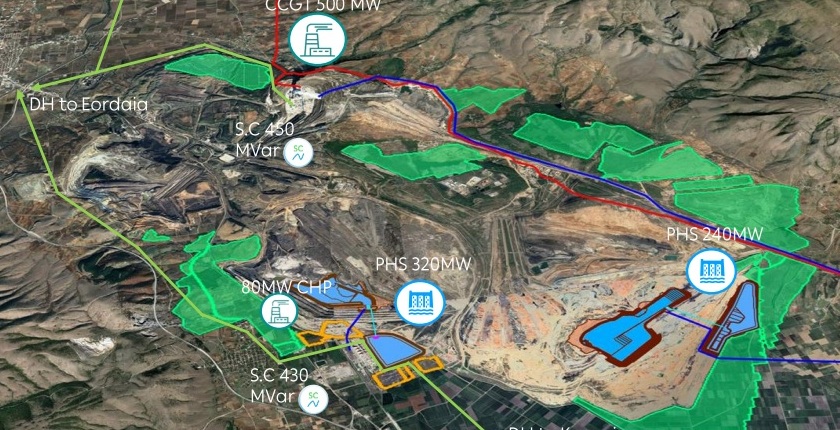
PPC’s management also unveiled a grand plan to develop data centers in its former lignite mines in Western Macedonia. It is a EUR 5 billion project that envisages the installation of a large data center of 300 MW as a first step. If conditions are favorable, it could be upgraded to 1 GW.

The group has variuos other energy investments planned in its depleted open pit lignite mines. It aims to put an end to coal use by 2026, as the last plant, Ptolemaida 5, would be subsequently converted to a natural gas facility with a capacity of 350 MW. The new asset would also be able to burn hydrogen, the company said.

Furthermore, PPC is developing 1.3 GW of photovoltaics in the mines of Amyndaio and Ptolemaida, as well as 300 MW of battery energy storage systems, plus two pumped storage hydropower projects of 320 MW and 240 MW, respectively.

The new units would supply the data centers, with PPC positioning itself on both ends of the value chain to maximize profits.

PPC is in talks with potential partners for its first data center, Stassis added. The cost per megawatt is estimated at EUR 7 million to EUR 8 million, which is lower than in other European regions, he claimed.

Post Views:155

Greek state-controlled utility Public Power Corp. (PPC) aims to become a major player in the rising data center and artificial intelligence market.

PPC (or, in Greek, Admie), announced its 2024 annual results. Earnings before interest, taxes, depreciation, and amortization (EBITDA) rose by 41% to EUR 1.8 billion, while renewable energy capacity reached 6.2 GW. At the same time, green projects with a total capacity of 3.7 GW are at a mature level of development.

“We have raised our investments to EUR 3 billion with a focus on renewable energy, in order to become a leading powertech group,” said chairman and CEO George Stassis.

First data center to have 300 MW in capacity

PPC’s management also unveiled a grand plan to develop data centers in its former lignite mines in Western Macedonia. It is a EUR 5 billion project that envisages the installation of a large data center of 300 MW as a first step. If conditions are favorable, it could be upgraded to 1 GW.

The group has variuos other energy investments planned in its depleted open pit lignite mines. It aims to put an end to coal use by 2026, as the last plant, Ptolemaida 5, would be subsequently converted to a natural gas facility with a capacity of 350 MW. The new asset would also be able to burn hydrogen, the company said.

Furthermore, PPC is developing 1.3 GW of photovoltaics in the mines of Amyndaio and Ptolemaida, as well as 300 MW of battery energy storage systems, plus two pumped storage hydropower projects of 320 MW and 240 MW, respectively.

The new units would supply the data centers, with PPC positioning itself on both ends of the value chain to maximize profits.

PPC is in talks with potential partners for its first data center, Stassis added. The cost per megawatt is estimated at EUR 7 million to EUR 8 million, which is lower than in other European regions, he claimed.

Post Views:155
April 1, 2025
by AEA in News

Serbia’s EPS examining green hydrogen production

State-owned Elektroprivreda Srbije (EPS) is analyzing options for the production and use of green hydrogen, including as an alternative fuel for coal-fired power plants, according to the power company’s representatives.

EPS CEO Dušan Živković said the Serbian utility has launched an analysis of the possibility and feasibility of production and storage of hydrogen as well as the use of hydrogen-based fuel in its production capacities.

The analysis will show EPS’s possibilities and how the company can start using hydrogen for its needs, Živković said at the 2nd Belgrade International Conference on Hydrogen, organized by the Cluster for the Development of Hydrogen Projects and Energija Balkana.

The aim is to determine potential locations, size, and method of use of production facilities. It would reveal options to store energy, diversify storage, reduce use of fossil fuel for energy production, integrate variable renewables and optimize the company’s power balance, the CEO underlined.

The best locations for hydrogen production are in thermal power plants

EPS’s Head of Ancillary Services Aleksandar Latinović explained that the best conditions for the production of green hydrogen are at the utility’s thermal power plants Nikola Tesla A (TENT A), Kostolac A, TE-TO Novi Sad, and TE-TO Zrenjanin.

The locations include facilities for chemical water treatment, connections to district heating systems and a strong grid, he added.

At the same time, EPS has significant opportunities for hydrogen consumption. The analysis includes the replacement of backup fuels in thermal power plants, such as fuel oil, with hydrogen and hydrogen-based fuels.

“If we were to build a facility for the production of hydrogen in TENT A, which we would use as backup fuel instead of fuel oil, we would need a 97 MW electrolyzer, which would be operational close to 9,000 hours a year,” Latinović explained.

Of note, EPS is analyzing several options for using alternative fuels in its coal-fired power plants.

The thermal sector will be the backbone of the power sector for several decades

Aleksandar Latinović (first from the right)

In his words, hydropower plants currently carry the biggest burden in running the system, but it will slowly transition to thermal power plants, work regimes will change and the use of fuel oil will increase.

He does not doubt that the thermal sector would be the backbone of the power industry for several more decades. The integration of renewable energy sources will only increase the role of thermal power plants. They will be required to provide flexibility as well as start and terminate production more often, with consumption of fuel oil increased, Latinović claimed.

He stressed EPS would analyze in detail the use of hydrogen from several aspects – the economic one, environmental protection and increasing the flexibility of thermal power plants and energy independence, because hydrogen would be produced on site.

Post Views:70

State-owned Elektroprivreda Srbije (EPS) is analyzing options for the production and use of green hydrogen, including as an alternative fuel for coal-fired power plants, according to the power company’s representatives.

EPS CEO Dušan Živković said the Serbian utility has launched an analysis of the possibility and feasibility of production and storage of hydrogen as well as the use of hydrogen-based fuel in its production capacities.

The analysis will show EPS’s possibilities and how the company can start using hydrogen for its needs, Živković said at the 2nd Belgrade International Conference on Hydrogen, organized by the Cluster for the Development of Hydrogen Projects and Energija Balkana.

The aim is to determine potential locations, size, and method of use of production facilities. It would reveal options to store energy, diversify storage, reduce use of fossil fuel for energy production, integrate variable renewables and optimize the company’s power balance, the CEO underlined.

The best locations for hydrogen production are in thermal power plants

EPS’s Head of Ancillary Services Aleksandar Latinović explained that the best conditions for the production of green hydrogen are at the utility’s thermal power plants Nikola Tesla A (TENT A), Kostolac A, TE-TO Novi Sad, and TE-TO Zrenjanin.

The locations include facilities for chemical water treatment, connections to district heating systems and a strong grid, he added.

At the same time, EPS has significant opportunities for hydrogen consumption. The analysis includes the replacement of backup fuels in thermal power plants, such as fuel oil, with hydrogen and hydrogen-based fuels.

“If we were to build a facility for the production of hydrogen in TENT A, which we would use as backup fuel instead of fuel oil, we would need a 97 MW electrolyzer, which would be operational close to 9,000 hours a year,” Latinović explained.

Of note, EPS is analyzing several options for using alternative fuels in its coal-fired power plants.

The thermal sector will be the backbone of the power sector for several decades

Aleksandar Latinović (first from the right)

In his words, hydropower plants currently carry the biggest burden in running the system, but it will slowly transition to thermal power plants, work regimes will change and the use of fuel oil will increase.

He does not doubt that the thermal sector would be the backbone of the power industry for several more decades. The integration of renewable energy sources will only increase the role of thermal power plants. They will be required to provide flexibility as well as start and terminate production more often, with consumption of fuel oil increased, Latinović claimed.

He stressed EPS would analyze in detail the use of hydrogen from several aspects – the economic one, environmental protection and increasing the flexibility of thermal power plants and energy independence, because hydrogen would be produced on site.

Post Views:70
April 1, 2025
by AEA in News

Solar power to energize European football, UEFA teaming up with SolarPower Europe

The Union of European Football Associations (UEFA) and SolarPower Europe have partnered to advance sustainability in European football through solar energy.

The collaboration focuses on leveraging renewable energy, specifically solar power, to help UEFA, national football associations, and football clubs reduce their carbon footprints and contribute to a greener, more sustainable future for the sport, SolarPower Europe and UEFA said.

According to Michele Uva, UEFA’s Director of Social & Environmental Sustainability, the two organizations aim to enhance sustainable football infrastructure by advancing renewable energy implementation and best practices. “This partnership brings valuable expertise to a constantly evolving area of our work,” he noted.

Solar and football are a perfect match

“Solar and football already energise communities and nations across Europe – they’re a perfect match. We’re proud to take a natural step in working with UEFA to support their 2030 sustainability goals,” SolarPower Europe CEO Walburga Hemetsberger underlined.

Walburga Hemetsberger and Michele Uva (photo: SolarPower Europe)

As part of a cooperation agreement, the partnership will focus on expanding solar power use, facilitating power purchase agreements (PPAs) for long-term renewable energy supply, and hosting a webinar in 2025 to inform national football associations about solar energy and storage options.

The deal for the largest solar power plant in a football stadium was signed

Sports offer a great opportunity for applying solar technologies, Robert Cathcart wrote in an op-ed for Balkan Green Energy News. Stadiums are often ideal for solar installations, he added.

Interestingly, the deal for the largest solar power plant in a football stadium was signed yesterday.

Photovoltaic module manufacturer JA Solar and football club Borussia Dortmund have joined forces for the installation of a new PV system on the roof of Signal Iduna Park. The outcome would be the world’s largest PV system on a stadium roof.

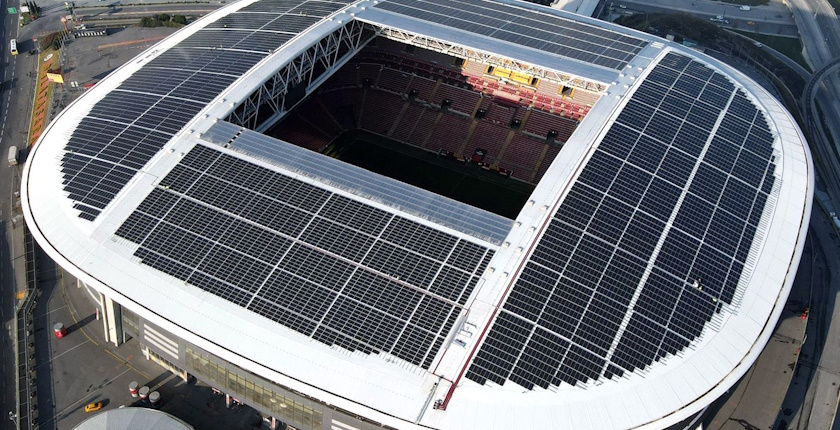
The 4.2 MW solar power plant that Turkey’s energy company Enerjisa Enerji installed on the roof of Galatasaray’s stadium in Istanbul won the Guinness World Records title in 2022.

Post Views:94

The Union of European Football Associations (UEFA) and SolarPower Europe have partnered to advance sustainability in European football through solar energy.

The collaboration focuses on leveraging renewable energy, specifically solar power, to help UEFA, national football associations, and football clubs reduce their carbon footprints and contribute to a greener, more sustainable future for the sport, SolarPower Europe and UEFA said.

According to Michele Uva, UEFA’s Director of Social & Environmental Sustainability, the two organizations aim to enhance sustainable football infrastructure by advancing renewable energy implementation and best practices. “This partnership brings valuable expertise to a constantly evolving area of our work,” he noted.

Solar and football are a perfect match

“Solar and football already energise communities and nations across Europe – they’re a perfect match. We’re proud to take a natural step in working with UEFA to support their 2030 sustainability goals,” SolarPower Europe CEO Walburga Hemetsberger underlined.

Walburga Hemetsberger and Michele Uva (photo: SolarPower Europe)

As part of a cooperation agreement, the partnership will focus on expanding solar power use, facilitating power purchase agreements (PPAs) for long-term renewable energy supply, and hosting a webinar in 2025 to inform national football associations about solar energy and storage options.

The deal for the largest solar power plant in a football stadium was signed

Sports offer a great opportunity for applying solar technologies, Robert Cathcart wrote in an op-ed for Balkan Green Energy News. Stadiums are often ideal for solar installations, he added.

Interestingly, the deal for the largest solar power plant in a football stadium was signed yesterday.

Photovoltaic module manufacturer JA Solar and football club Borussia Dortmund have joined forces for the installation of a new PV system on the roof of Signal Iduna Park. The outcome would be the world’s largest PV system on a stadium roof.

The 4.2 MW solar power plant that Turkey’s energy company Enerjisa Enerji installed on the roof of Galatasaray’s stadium in Istanbul won the Guinness World Records title in 2022.

Post Views:94
April 1, 2025
by AEA in News

Greece’s first solar panel recycling machine installed in Crete

Greek company Katheris said it installed the country’s first solar panel recycling machine. As one of few such endeavors in entire Southeastern Europe, the business move could contribute to the development of a lucrative market that would ease environmental and climate impact.

Repairing and recycling solar panels is limited, and landfilling is still a common practice throughout the world. Photovoltaic waste is expected to reach 4% to 14% of total electricity production capacity by 2030 and rise to as much as 60 to 80 million tons by 2050. Katheris, a recycling company based in Herakleion (Heraklion), the capital of Crete, Greece’s largest island, saw an opportunity in solar panel waste.

PV modules contain valuable materials, of which silver, crystalline silicon, aluminum and copper are the most valuable. There are also toxic heavy metals inside, a major environmental risk.

Before modular designs become standardized so panels can be dismantled easily, the development of a recycling market will likely remain slow. Landfilling is cheap when there are no strict regulations for such electronic waste, and recovering separate materials is costly.

Some recyclers just crush or pulverize the decommissioned or damaged photovoltaic devices. The material is then used for a different purpose. The value of separate raw materials is lost and the waste is downcycled rather than recycled or reused.

Solar panel recycling to prevent environmental devastation, save resources

Katheris said it has set up Greece’s first solar panel recycling machine. The company with 70 employees said it is evolving and expanding the range of materials that it handles and recovers.

“By recycling photovoltaic panels, we contribute to saving resources and preventing the devastating impact that the disposal of these materials can have on the environment,” the announcement reads.

Solutions other than landfilling necessary for billions of PV modules

There is some 2 TW of solar power systems installed in the world as the capacity has doubled in just two years. It means solutions are necessary for several billion PV modules that will reach the end of their operating life within 30 years.

Solar panel recycling is exceptionally important for the climate, and manufacturing expenses as well. Purifying silicon is an especially energy-intensive process, still largely conducted using fossil fuels, and the production of the remaining materials is comparable.

As for the rest of the region covered by Balkan Green Energy News, Romania is an important example with its solar panel industry grant program, as it includes funds for recycling activities.

Post Views:320

Greek company Katheris said it installed the country’s first solar panel recycling machine. As one of few such endeavors in entire Southeastern Europe, the business move could contribute to the development of a lucrative market that would ease environmental and climate impact.

Repairing and recycling solar panels is limited, and landfilling is still a common practice throughout the world. Photovoltaic waste is expected to reach 4% to 14% of total electricity production capacity by 2030 and rise to as much as 60 to 80 million tons by 2050. Katheris, a recycling company based in Herakleion (Heraklion), the capital of Crete, Greece’s largest island, saw an opportunity in solar panel waste.

PV modules contain valuable materials, of which silver, crystalline silicon, aluminum and copper are the most valuable. There are also toxic heavy metals inside, a major environmental risk.

Before modular designs become standardized so panels can be dismantled easily, the development of a recycling market will likely remain slow. Landfilling is cheap when there are no strict regulations for such electronic waste, and recovering separate materials is costly.

Some recyclers just crush or pulverize the decommissioned or damaged photovoltaic devices. The material is then used for a different purpose. The value of separate raw materials is lost and the waste is downcycled rather than recycled or reused.

Solar panel recycling to prevent environmental devastation, save resources

Katheris said it has set up Greece’s first solar panel recycling machine. The company with 70 employees said it is evolving and expanding the range of materials that it handles and recovers.

“By recycling photovoltaic panels, we contribute to saving resources and preventing the devastating impact that the disposal of these materials can have on the environment,” the announcement reads.

Solutions other than landfilling necessary for billions of PV modules

There is some 2 TW of solar power systems installed in the world as the capacity has doubled in just two years. It means solutions are necessary for several billion PV modules that will reach the end of their operating life within 30 years.

Solar panel recycling is exceptionally important for the climate, and manufacturing expenses as well. Purifying silicon is an especially energy-intensive process, still largely conducted using fossil fuels, and the production of the remaining materials is comparable.

As for the rest of the region covered by Balkan Green Energy News, Romania is an important example with its solar panel industry grant program, as it includes funds for recycling activities.

Post Views:320
April 1, 2025
by AEA in News

Sungrow ESS Experience Day Munich: accelerating to a sustainable future for Europe

As energy storage holds a key role in supporting the grid and energy transition efforts, Sungrow’s ESS Experience Day in Munich was an insightful opportunity for leading experts across Europe to exchange thoughts on this crucial topic towards a sustainable future. The event was followed by almost 300 attendees. It covered a broad range of topics, relevant to the technological, business and safety implications of energy storage systems.

Reconfirming its commitment to supporting its partners and driving the transition to a clean and sustainable future, Sungrow successfully hosted the ESS Experience Day in Munich on March 20, bringing together industry experts, partners, and stakeholders to explore the latest advancements in energy storage systems (ESS).

The event underscored Sungrow’s devotion to driving the transition towards a more resilient, stable, and renewable-powered energy landscape across Europe.

Energy Storage: A Cornerstone for Europe’s Renewable Future

As Europe accelerates its shift to renewable energy, the need for grid stability and flexibility has never been greater. Energy storage systems play a critical role in balancing supply and demand, enabling a higher penetration of renewables into the grid. By 2030, Europe aims to generate at least 45% of its energy from renewable sources, according to the European Commission’s REPowerEU plan.

However, intermittent generation from solar and wind requires advanced storage solutions to maintain grid stability and prevent curtailment. The deployment of ESS projects requires advanced technologies, but also strong collaboration between involved parties and devoted teams of experts that secure swift and efficient operations, Mr. Shawn Shi, Vice President of Sungrow and President of Sungrow Europe, emphasized in his speech that opened the event.

“The outstanding result that made possible the commercial operation of the BW ESS Bramley 331 MWh project in just 12 days after the grid energization, reflects not only the technical innovation of PowerTitan 2.0; it is also a reflection of our excellent delivery management capabilities and close collaboration with our partners,” he asserted.

An evening full of insights and meaningful discussions

The event in Munich acted as a platform to exchange in-depth knowledge and thoughts by experts in the industry, including case studies, while the almost 300 attendees had the opportunity to experience hands-on demonstrations of Sungrow’s latest state-of-the-art battery storage systems: the liquid-cooled PowerStack 200CS and PowerTitan 2.0.

One of the highlights of the event was the presentation Policies & Trends of Battery Storage by Mr. Antonio Arruebo, Market Analyst at SolarPower Europe (SPE). It included an exclusive preview of preliminary figures from the SPE Battery Outlook, the leading report about the current and future development of the field. It will be officially published at Intersolar in May 2025.

PowerStack 200CS and PowerTitan 2.0 are Sungrow’s latest state-of-the-art battery storage systems

Mr. Arruebo underlined the need for flexibility of the grid, predicting that EU power flexibility needs to increase fivefold by 2030 and arguing that batteries and demand response can meet two thirds of flexibility requirements.

At the same time, the forecast is that the European BESS market is expected to expand by 30% to 40% year on year to reach 260 GWh by 2028. The high scenario by SPE foresees that this figure could reach 400 GWh by the same year.


Two milestone European projects were showcased at ESS Experience Day

The agenda of the event covered a broad range of issues related to ESS and energy transition. It included the latest developments on grid forming capabilities, presented by Dr. Ivan Volodin, ESS Product Manager at Sungrow Europe, and the impressive PowerTitan 2.0 large-scale burn test, presented by Mr. Yang Ye, Senior Technical Marketing Manager at Sungrow OSKA, showcasing the latest developments on BESS safety.

Flexibility is a key factor for deploying more renewable energy and fighting negative prices and price volatility.

Moreover, Mr. Andres Doebel, Head of ESS for the DACH region at Sungrow Europe, emphasized in his speech the crucial aspect of the one-brand solution in securing a successful ESS project. Mr. Robert Von Wahl, Director of Sungrow EV Charging Europe, analysed the opportunities that ESS holds for the crucial role of electric vehicle (EV) charging infrastructure and operation in Europe.

The event hosted the presentation of two case studies, showcasing two milestone ESS projects in the region – the Bramley 100/331 MWh ESS project by BW ESS in the United Kingdom and the Vilvoorde 200/800 MWh ESS project by Engie in Belgium.

Dr. James Li, ESS Director Europe of Sungrow, highlighted the successful delivery story of the Bramley BESS project, while Mr. Dries Herman, Technical Project Manager of the Vilvoorde project, drew attention to the key factor of flexibility for deploying more renewable energy and fighting negative prices and price volatility.

Europe is emerging as a key driver of growth in energy storage

Finally, a panel discussion between ESS Analyst Mrs. Starry Ce, Vice President of Strategy and Development of the Griffin Group Energy Mr. Adam Zalewski, Director of Product and Supply Chain of Kyon Energy Mr. Florian Diehm, CCO of Entrix Mr. Lars Löhle, and Dr. Stefan Zhao, Director of Sungrow European Research Institute, concluded the main part of the event, with a valuable debate on the challenges and opportunities that the present and future holds on ESS development and energy transition.

As the global energy storage market is bolstered by an annual growth rate of 21% by 2030, to 137 GW / 442 GWh (BloombergNEF), Europe is emerging as a key driver of growth.

Events like the ESS Experience Day in Munich serve as crucial platforms for knowledge sharing and fostering partnerships that accelerate the deployment of storage technologies. The success of the ESS Experience Day in Munich marks another milestone in Sungrow’s mission to lead the renewable energy transition with reliable, efficient, and sustainable storage technologies and services.

About Sungrow

Sungrow, a global leader in renewable energy technology, has pioneered sustainable power solutions for over 28 years. As of December 2024, Sungrow has installed 740 GW of power electronic converters worldwide.

The company is recognized as the world’s No. 1 on PV inverter shipments (S&P Global Commodity Insights) and the world’s most bankable energy storage company (BloombergNEF). Its innovations power clean energy projects in over 180 countries, supported by a network of 520 service outlets guaranteeing excellent customer experience.

At Sungrow, we’re committed to bridging to a sustainable future through cutting-edge technology and unparalleled service. For more information, please visit www.sungrowpower.com.

Post Views:61

As energy storage holds a key role in supporting the grid and energy transition efforts, Sungrow’s ESS Experience Day in Munich was an insightful opportunity for leading experts across Europe to exchange thoughts on this crucial topic towards a sustainable future. The event was followed by almost 300 attendees. It covered a broad range of topics, relevant to the technological, business and safety implications of energy storage systems.

Reconfirming its commitment to supporting its partners and driving the transition to a clean and sustainable future, Sungrow successfully hosted the ESS Experience Day in Munich on March 20, bringing together industry experts, partners, and stakeholders to explore the latest advancements in energy storage systems (ESS).

The event underscored Sungrow’s devotion to driving the transition towards a more resilient, stable, and renewable-powered energy landscape across Europe.

Energy Storage: A Cornerstone for Europe’s Renewable Future

As Europe accelerates its shift to renewable energy, the need for grid stability and flexibility has never been greater. Energy storage systems play a critical role in balancing supply and demand, enabling a higher penetration of renewables into the grid. By 2030, Europe aims to generate at least 45% of its energy from renewable sources, according to the European Commission’s REPowerEU plan.

However, intermittent generation from solar and wind requires advanced storage solutions to maintain grid stability and prevent curtailment. The deployment of ESS projects requires advanced technologies, but also strong collaboration between involved parties and devoted teams of experts that secure swift and efficient operations, Mr. Shawn Shi, Vice President of Sungrow and President of Sungrow Europe, emphasized in his speech that opened the event.

“The outstanding result that made possible the commercial operation of the BW ESS Bramley 331 MWh project in just 12 days after the grid energization, reflects not only the technical innovation of PowerTitan 2.0; it is also a reflection of our excellent delivery management capabilities and close collaboration with our partners,” he asserted.

An evening full of insights and meaningful discussions

The event in Munich acted as a platform to exchange in-depth knowledge and thoughts by experts in the industry, including case studies, while the almost 300 attendees had the opportunity to experience hands-on demonstrations of Sungrow’s latest state-of-the-art battery storage systems: the liquid-cooled PowerStack 200CS and PowerTitan 2.0.

One of the highlights of the event was the presentation Policies & Trends of Battery Storage by Mr. Antonio Arruebo, Market Analyst at SolarPower Europe (SPE). It included an exclusive preview of preliminary figures from the SPE Battery Outlook, the leading report about the current and future development of the field. It will be officially published at Intersolar in May 2025.

PowerStack 200CS and PowerTitan 2.0 are Sungrow’s latest state-of-the-art battery storage systems

Mr. Arruebo underlined the need for flexibility of the grid, predicting that EU power flexibility needs to increase fivefold by 2030 and arguing that batteries and demand response can meet two thirds of flexibility requirements.

At the same time, the forecast is that the European BESS market is expected to expand by 30% to 40% year on year to reach 260 GWh by 2028. The high scenario by SPE foresees that this figure could reach 400 GWh by the same year.


Two milestone European projects were showcased at ESS Experience Day

The agenda of the event covered a broad range of issues related to ESS and energy transition. It included the latest developments on grid forming capabilities, presented by Dr. Ivan Volodin, ESS Product Manager at Sungrow Europe, and the impressive PowerTitan 2.0 large-scale burn test, presented by Mr. Yang Ye, Senior Technical Marketing Manager at Sungrow OSKA, showcasing the latest developments on BESS safety.

Flexibility is a key factor for deploying more renewable energy and fighting negative prices and price volatility.

Moreover, Mr. Andres Doebel, Head of ESS for the DACH region at Sungrow Europe, emphasized in his speech the crucial aspect of the one-brand solution in securing a successful ESS project. Mr. Robert Von Wahl, Director of Sungrow EV Charging Europe, analysed the opportunities that ESS holds for the crucial role of electric vehicle (EV) charging infrastructure and operation in Europe.

The event hosted the presentation of two case studies, showcasing two milestone ESS projects in the region – the Bramley 100/331 MWh ESS project by BW ESS in the United Kingdom and the Vilvoorde 200/800 MWh ESS project by Engie in Belgium.

Dr. James Li, ESS Director Europe of Sungrow, highlighted the successful delivery story of the Bramley BESS project, while Mr. Dries Herman, Technical Project Manager of the Vilvoorde project, drew attention to the key factor of flexibility for deploying more renewable energy and fighting negative prices and price volatility.

Europe is emerging as a key driver of growth in energy storage

Finally, a panel discussion between ESS Analyst Mrs. Starry Ce, Vice President of Strategy and Development of the Griffin Group Energy Mr. Adam Zalewski, Director of Product and Supply Chain of Kyon Energy Mr. Florian Diehm, CCO of Entrix Mr. Lars Löhle, and Dr. Stefan Zhao, Director of Sungrow European Research Institute, concluded the main part of the event, with a valuable debate on the challenges and opportunities that the present and future holds on ESS development and energy transition.

As the global energy storage market is bolstered by an annual growth rate of 21% by 2030, to 137 GW / 442 GWh (BloombergNEF), Europe is emerging as a key driver of growth.

Events like the ESS Experience Day in Munich serve as crucial platforms for knowledge sharing and fostering partnerships that accelerate the deployment of storage technologies. The success of the ESS Experience Day in Munich marks another milestone in Sungrow’s mission to lead the renewable energy transition with reliable, efficient, and sustainable storage technologies and services.

About Sungrow

Sungrow, a global leader in renewable energy technology, has pioneered sustainable power solutions for over 28 years. As of December 2024, Sungrow has installed 740 GW of power electronic converters worldwide.

The company is recognized as the world’s No. 1 on PV inverter shipments (S&P Global Commodity Insights) and the world’s most bankable energy storage company (BloombergNEF). Its innovations power clean energy projects in over 180 countries, supported by a network of 520 service outlets guaranteeing excellent customer experience.

At Sungrow, we’re committed to bridging to a sustainable future through cutting-edge technology and unparalleled service. For more information, please visit www.sungrowpower.com.

Post Views:61
April 1, 2025
by AEA in News

Largest solar power plant on football stadium to be installed at Signal Iduna Park

Signal Iduna Park, the home of Borussia Dortmund Football Club, is set to become the site of the world’s largest solar power plant installed on a stadium roof.

PV module manufacturer JA Solar, based in China, and German football club Borussia Dortmund are joining forces for the installation of a new photovoltaic system on the roof of Signal Iduna Park, creating the world’s largest PV system on a stadium roof, according to JA Solar.

The stadium, which hosts the highest average number of spectators per match in European football, has also become a flagship of sustainable innovation.

Of note, the 4.2 MW solar power plant that Turkey’s energy company Enerjisa Enerji installed on the roof of Galatasaray’s stadium in Istanbul won the Guinness World Records title in 2022.

The system will generate over 4 MWh annually for Borussia Dortmund’s own consumption

The announcement came a day before the Union of European Football Associations (UEFA) and SolarPower Europe partnered to advance sustainability in European football through solar energy.

Aligned with the sustainability goals and long-term vision of both Borussia Dortmund and JA Solar, this project will generate reliable green electricity for the next 30 years.

More than 11,000 modules will be installed on the stadium roof. The system will generate over 4 MWh annually for Borussia Dortmund’s own consumption.

The rooftop system is expected to reduce the club’s CO₂ emissions by about 1,800 tons a year, while significantly improving the stadium’s energy security and resilience.

Cramer: We are setting the course for a more environmentally friendly future

Installation is scheduled to begin in the summer of 2025, with completion targeted by the end of that same summer, JA Solar said.

Carsten Cramer, Managing Director of Borussia Dortmund GmbH & Co. KGaA, said that JA Solar would play a key role in the planned renovation of the photovoltaic system on Signal Iduna Park’s roof.

“With JA Solar’s modules, which will power the largest photovoltaic system on any stadium roof, we are setting the course for a more environmentally friendly future,” Cramer added.

According to Henning Schulze, Vice President of JA Solar, the company is proud that its modules will be used for this project at this iconic stadium. “In times of rapid political change and market disruption, our participation in this project is a clear statement from JA Solar that we are here to stay,” Schulze noted.

Post Views:72

Signal Iduna Park, the home of Borussia Dortmund Football Club, is set to become the site of the world’s largest solar power plant installed on a stadium roof.

PV module manufacturer JA Solar, based in China, and German football club Borussia Dortmund are joining forces for the installation of a new photovoltaic system on the roof of Signal Iduna Park, creating the world’s largest PV system on a stadium roof, according to JA Solar.

The stadium, which hosts the highest average number of spectators per match in European football, has also become a flagship of sustainable innovation.

Of note, the 4.2 MW solar power plant that Turkey’s energy company Enerjisa Enerji installed on the roof of Galatasaray’s stadium in Istanbul won the Guinness World Records title in 2022.

The system will generate over 4 MWh annually for Borussia Dortmund’s own consumption

The announcement came a day before the Union of European Football Associations (UEFA) and SolarPower Europe partnered to advance sustainability in European football through solar energy.

Aligned with the sustainability goals and long-term vision of both Borussia Dortmund and JA Solar, this project will generate reliable green electricity for the next 30 years.

More than 11,000 modules will be installed on the stadium roof. The system will generate over 4 MWh annually for Borussia Dortmund’s own consumption.

The rooftop system is expected to reduce the club’s CO₂ emissions by about 1,800 tons a year, while significantly improving the stadium’s energy security and resilience.

Cramer: We are setting the course for a more environmentally friendly future

Installation is scheduled to begin in the summer of 2025, with completion targeted by the end of that same summer, JA Solar said.

Carsten Cramer, Managing Director of Borussia Dortmund GmbH & Co. KGaA, said that JA Solar would play a key role in the planned renovation of the photovoltaic system on Signal Iduna Park’s roof.

“With JA Solar’s modules, which will power the largest photovoltaic system on any stadium roof, we are setting the course for a more environmentally friendly future,” Cramer added.

According to Henning Schulze, Vice President of JA Solar, the company is proud that its modules will be used for this project at this iconic stadium. “In times of rapid political change and market disruption, our participation in this project is a clear statement from JA Solar that we are here to stay,” Schulze noted.

Post Views:72
April 1, 2025
by AEA in News

Hybrid solar cuts levelized cost of electricity 10% compared to standalone projects

Hybrid solar, which combines solar with energy storage or wind, reduces the levelized cost of electricity by 10% compared to standalone projects, according to the latest report from SolarPower Europe.

Hybrid solar supports system flexibility, improves the cost-effectiveness of an asset, and makes energy generation more reliable, SolarPower Europe stressed.

“Embracing the benefits of Hybrid PV systems” reveals how hybrid projects enhance the security of supply by ensuring electricity generation even after sunset.

Hybrid solar projects have surged in recent years. Since 2015, solar (PV) + battery energy storage systems (BESS) have accounted for 5% of total BESS additions across Europe. The UK leads in hybrid PV+BESS installations, which make up 62% of total PV+BESS capacity, driven by strong policy support, market dynamics, and large-scale projects, according to the report.

PV+Wind hybrid projects, with only 555 MW installed, have yet to gain traction in Europe

In contrast, EU countries like Sweden (10%), Italy (8%), Germany (6%), Bulgaria (6%), and Denmark (5%) follow at a much lower level, with the rest of the EU-27 and Switzerland making up for only 3%.

The market for PV+Wind is equally concentrated, led by Poland with 277 MW, thanks to conducive policies and complementary generation patterns. However, in co-located setups, sharing the same connection point, regulations still need proper implementation.

The Netherlands (150 MW), Portugal (78 MW), and Denmark (7% share) have also advanced, with the UK and the rest of Europe lagging behind, with just 11 MW of PV+Wind, the report underlines.

Overall, PV+Wind hybrid projects have yet to gain traction in Europe, with only 555 MW installed by the end of 2024—less than 1% of the utility-scale solar fleet.

Five benefits

According to the report, Hybrid projects bring numerous benefits to end-users as they offer cleaner, cheaper, and more reliable electricity. The benefits can be distributed in five categories:

  1. Resources utilisation. By combining different generation technologies, a more efficient usage of the existing resources can be achieved.
  2. Efficient storage usage. Allowing hybrids to withdraw electricity from the grid enables an optimized system operation.
  3. Cost reduction. Hybrid projects realize cost synergies by maximizing existing infrastructure usage and reducing the financing costs for renewables.
  4. Curtailment avoided. By hybridizing renewables with storage, the surplus renewable output can be stored and injected later into the grid during hours of peak demand.
  5. Increased reliability. Combining different generation technologies and/or storage increases the reliability of the energy output.

Hybrid systems offer a wide range of cost-saving benefits, including reduced expenses for grid connections, land use, project development (such as feasibility studies), and operations and maintenance (O&M). Hybrid projects can also reduce the project financing costs.

The levelized cost of electricity (LCOE) of a renewable generator is reduced under a hybrid project as a result of the savings in the investment costs and operational expenditures associated with the connection of the project.

Furthermore, the risk perception of a hybrid project can be decreased, seen both from the debt and the equity perspective, as the project outcomes are more predictable and/or can be further guaranteed in a PPA (i.e., less merchant risk).

SolarPower Europe sets policy recommendations

When comparing solar PV and storage hybrid systems to gas plants, the International Energy Agency (IEA) provides detailed modeling on how the LCOE for solar plus storage compares to that of coal in China and India, as well as gas in the US. The analysis shows that solar plus storage is significantly more cost-effective in these markets, often by more than 20%.

SolarPower Europe stresses that the EU is far from exploiting the full potential of hybrid solar systems, and the report brings key policy recommendations.

Post Views:48

Hybrid solar, which combines solar with energy storage or wind, reduces the levelized cost of electricity by 10% compared to standalone projects, according to the latest report from SolarPower Europe.

Hybrid solar supports system flexibility, improves the cost-effectiveness of an asset, and makes energy generation more reliable, SolarPower Europe stressed.

“Embracing the benefits of Hybrid PV systems” reveals how hybrid projects enhance the security of supply by ensuring electricity generation even after sunset.

Hybrid solar projects have surged in recent years. Since 2015, solar (PV) + battery energy storage systems (BESS) have accounted for 5% of total BESS additions across Europe. The UK leads in hybrid PV+BESS installations, which make up 62% of total PV+BESS capacity, driven by strong policy support, market dynamics, and large-scale projects, according to the report.

PV+Wind hybrid projects, with only 555 MW installed, have yet to gain traction in Europe

In contrast, EU countries like Sweden (10%), Italy (8%), Germany (6%), Bulgaria (6%), and Denmark (5%) follow at a much lower level, with the rest of the EU-27 and Switzerland making up for only 3%.

The market for PV+Wind is equally concentrated, led by Poland with 277 MW, thanks to conducive policies and complementary generation patterns. However, in co-located setups, sharing the same connection point, regulations still need proper implementation.

The Netherlands (150 MW), Portugal (78 MW), and Denmark (7% share) have also advanced, with the UK and the rest of Europe lagging behind, with just 11 MW of PV+Wind, the report underlines.

Overall, PV+Wind hybrid projects have yet to gain traction in Europe, with only 555 MW installed by the end of 2024—less than 1% of the utility-scale solar fleet.

Five benefits

According to the report, Hybrid projects bring numerous benefits to end-users as they offer cleaner, cheaper, and more reliable electricity. The benefits can be distributed in five categories:

  1. Resources utilisation. By combining different generation technologies, a more efficient usage of the existing resources can be achieved.
  2. Efficient storage usage. Allowing hybrids to withdraw electricity from the grid enables an optimized system operation.
  3. Cost reduction. Hybrid projects realize cost synergies by maximizing existing infrastructure usage and reducing the financing costs for renewables.
  4. Curtailment avoided. By hybridizing renewables with storage, the surplus renewable output can be stored and injected later into the grid during hours of peak demand.
  5. Increased reliability. Combining different generation technologies and/or storage increases the reliability of the energy output.

Hybrid systems offer a wide range of cost-saving benefits, including reduced expenses for grid connections, land use, project development (such as feasibility studies), and operations and maintenance (O&M). Hybrid projects can also reduce the project financing costs.

The levelized cost of electricity (LCOE) of a renewable generator is reduced under a hybrid project as a result of the savings in the investment costs and operational expenditures associated with the connection of the project.

Furthermore, the risk perception of a hybrid project can be decreased, seen both from the debt and the equity perspective, as the project outcomes are more predictable and/or can be further guaranteed in a PPA (i.e., less merchant risk).

SolarPower Europe sets policy recommendations

When comparing solar PV and storage hybrid systems to gas plants, the International Energy Agency (IEA) provides detailed modeling on how the LCOE for solar plus storage compares to that of coal in China and India, as well as gas in the US. The analysis shows that solar plus storage is significantly more cost-effective in these markets, often by more than 20%.

SolarPower Europe stresses that the EU is far from exploiting the full potential of hybrid solar systems, and the report brings key policy recommendations.

Post Views:48
  • 1
  • …
  • 116
  • 117
  • 118
  • 119
  • 120
  • …
  • 140

AEA – Albania Energy Association is a industry association dedicated to representing the interests of Albanian and West Balkan for energy producers and consumers. AEA works to advance the development and adoption of sustainable energy solutions in Albania and the Western Balkans, supporting the region’s transition toward a cleaner, more secure, and more competitive energy future. AEA is registered by decision of the Court of Tirana, DECISION NO. 3032, (VAT:L11827451K).

[email protected]

Address
Blv Zogu 1
Tirana
1057
ALBANIA

LinkedIn  |  Facebook
Events
May 25, 2022 Connecting Green Hydrogen Europe 2022
May 25, 2022 Energy Week Western Balkans 2022
Copyright © Albania Energy Association