AEA-Albania Energy Association
  • Main
  • About Us
  • Services
  • Sectors
  • News
  • EventsEvents
  • PublicationPublication
  • Contact Us
AEA-Albania Energy Association
  • Main
  • About Us
  • Services
  • Sectors
  • News
  • EventsEvents
  • PublicationPublication
  • Contact Us
AEA-Albania Energy Association
  • Home Page
  • About Us
  • Sectors
  • Our Services
  • News
  • Contact Us
April 2, 2025
by AEA in News

New European Commission weighing energy affordability versus decarbonization goals

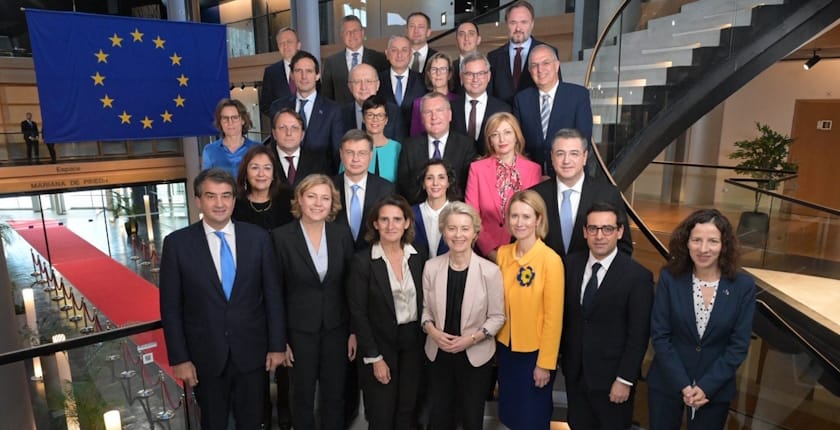
The European Parliament voted in Ursula von der Leyen’s second European Commission, with a mandate until 2029. Much of her team, including Executive Vice President Teresa Ribera and European Commissioner for Energy and Housing Dan Jørgensen, is tasked with the green transition and climate policy.

The European Union wants to maintain the rapid pace of decarbonization while enabling affordable energy prices for the industry and households. The new top officials aren’t enthusiastic about funding nuclear energy projects, but Jørgensen did confirm support for research including for small modular reactors.

Innovation, decarbonization and security (with energy security) – European Commission President Ursula von der Leyen presented the pillars of the policy framework for the new College of Commissioners. The European Parliament voted for the lineup at a plenary session in Strasbourg with 370 lawmakers in favor, 282 against and 36 abstentions.

The first major initiative is the Competitiveness Compass, Von der Leyen revealed. She explained the EU needs to close the innovation gap with the United States and China. Another priority is a joint plan for decarbonization and competitiveness, and the third is increasing security and reducing dependencies.

The EU has some of the most ambitious goals for the green transition in the world. After already stretching its finances in the previous mandate to overcome the impact of the pandemic and work on economic resilience, the 27-member bloc is struggling to maintain the pace.

It is jeopardized by deindustrialization, with high energy prices among the major factors. Therefore, there is a tough tradeoff between climate goals and competitiveness.

Von der Leyen: Success in green transition depends on strengthening people, businesses

The European Commission will start by unlocking the financing needed for the green, digital and social transition, according to Von der Leyen. Everyone in the team will contribute to achieving the main goals, she pointed out. The head of the EU’s executive arm also highlighted the plan to publish the Clean Industrial Deal within the first 100 days.

“We must and will stay the course on the goals of the European Green Deal. But if we want to be successful in this transition, we must be more agile and better accompany people and business along the way. And we need to play to our traditional strengths – our industries and SMEs, our innovators and our workers,” Von der Leyen told European parliamentarians.

At least a third of the new commission is directly responsible for the green transition and climate policy, but its chief stressed the need for everyone to contribute

At least a third of the new commission is directly responsible for the green transition and climate policy. It includes Executive Vice President for Clean, Just and Competitive Transition and Commissioner for Competitiveness Teresa Ribera, and European Commissioner for Energy and Housing Dan Jørgensen.

“We have done a lot to respond to Russia’s energy blackmail and the high inflation that followed. But the price of energy has to go down further. And this is what Dan Jørgensen will be working on, building on his previous experience. To bring down costs for households and companies. To invest in clean energy. And to replace Russian LNG imports,” Von der Leyen stressed.

Energy policy is at core of all challenges in Europe

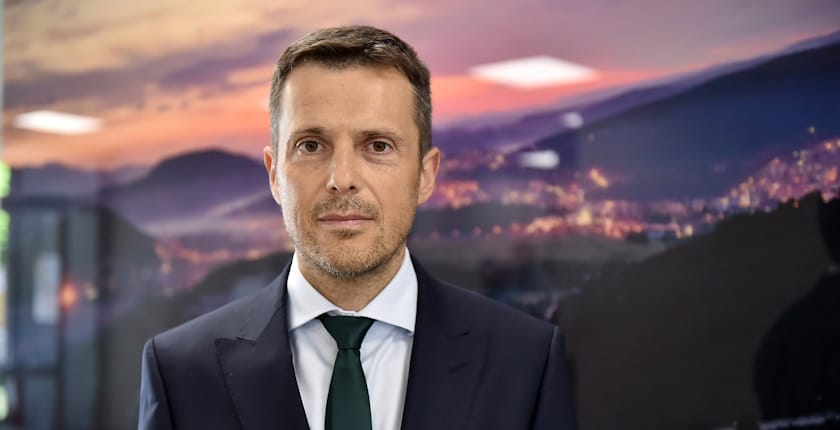
At his confirmation hearing, Jørgensen said energy policy is at the core of all the challenges Europe currently faces – on competitiveness, jobs, growth, security with the war in Ukraine, climate change and social justice.

European companies pay two to three times more for energy than their competitors in the US and China while 10% of Europeans are not able to heat their homes adequately during winter, he added. Jørgensen vowed to lower the prices for the industry and people as a top priority.

Companies pay two to three times more for energy in the EU than in the US and China, Jørgensen warned

He also pledged to boost the deployment of renewables via faster permitting procedures, expand energy grids, develop interconnectors, boost carbon capture and storage (CCS), energy storage technologies and power-to-X or PtX solutions.

Southeastern Europe is, notably, suffering the most from energy price volatility and is in urgent need of more interconnection and storage capacities.

The new energy commissioner promised to come up with a strategy on geothermal energy. As for green hydrogen, he acknowledged a lot of work remains to establish an actual market. “We cannot afford to not have a 100 percent focus on speeding this up,” Jørgensen underscored.

Photo: European Parliament

Ribera highlighted water resilience, just transition among main tasks

In light of the devastating floods in Valencia and much of Spain, the European Commission’s Executive Vice President Teresa Ribera told members of the European Parliament before confirmation that it is necessary to do more on the EU’s resilience to extreme weather events. She put an emphasis on early warning systems and the response ability.

At her hearing, she promised a new European Climate Adaptation Plan to address those issues. Ribera also committed to making water resilience a priority.

Support is underway for industrial decarbonisation and a just transition including housing and quality jobs, she asserted.

Photo: European Parliament

Dependence on Russian nuclear fuel hindering energy security

The new top officials noted that the EU plans to cut greenhouse gas emissions by 90% from the 1990 level by 2040. It is a key milestone toward achieving carbon neutrality by mid-century.

While the EU formally supports the expansion in the nuclear energy segment, they showed little enthusiasm about funding, especially the projects based on conventional technology.

The new commissioner advised the nuclear energy industry to lean on private financing

In Jørgensen’s opinion, it is best to back a surge in private funding. “I don’t see it as the role of the European Union … to fund the building of a nuclear power plant,” he has told MEPs.

On the other hand, he confirmed support for scientific research. Jørgensen is also tasked with facilitating the development of small modular reactors (SMRs).

He warned against increasing Europe’s dependence on the nuclear industry and fuels-related foreign supply chains, notably Russia. The then-commissioner-designate said the issue would be addressed in an upcoming SMR strategy.

While the EU will respect the energy mix in every country, nuclear energy will be needed to achieve the climate transition and will be part of the commission’s clean energy plans, Jørgensen clarified.

Post Views:576
April 2, 2025
by AEA in News

Sustainability reports obligatory for 50 firms in Croatia

From this year, businesses in Croatia are required to submit sustainability reports. The first round covers 50 companies.

The Ministry of Finance, which is responsible for sustainability reporting in Croatia, has published a list of companies obligated to send documentation for the business year starting on or after January 1, 2024.

The rule was introduced by the Accounting Act, within which the country transposed the European Union’s Corporate Sustainability Reporting Directive (CSRD) into the national legislation, the Croatian Chamber of Economy (HGK) said.

Reporting is mandatory for all large public interest companies including parent companies of large groups designated as public interest entities, together with credit institutions and insurance or reinsurance companies with over 500 employees.

Utilities are exempted from the obligation to report in the first round

The ministry published an indicative list of firms for the second round of sustainability reporting. They will report in 2026 for the business year starting from January 1, 2025. They were included based on the data for the last day of the business year 2023 while the final list will be based on the last day of 2024.

Public utilities are exempted from the obligation to report in the first round, but they are joining the group next year.

HGK has introduced the Croatian ESG rating as a model for sustainable practices evaluation

Of note, the European Commission adopted the European Sustainability Reporting Standards (ESRS) in August 2023. But the rules were criticized for “watering down” the sustainability reporting requirements and paving the way for greenwashing.

HGK organizes ESG Academy workshops to prepare companies for sustainability reporting. It has also prepared an ESG guide where the firms can find all the key information on ESG factors, key regulation and strategic guidelines, sustainable financing, and ESG rating.

In July last year, the chamber introduced the Croatian ESG rating as a model for evaluating sustainable activities in the corporate sector.

HGK has called on companies to use the tool as part of preparations for the sustainability reporting.

Post Views:444
April 2, 2025
by AEA in News

Montenegro drafts NECP: TPP Pljevlja to be shut down by 2041

The Montenegrin coal power plant Pljevlja should be shut down by 2041, according to the draft National Energy and Climate Plan.

The Ministry of Energy of Montenegro prepared and submitted the draft NECP to the Energy Community Secretariat for a review, Minister of Energy Saša Mujović said, as reported by Vijesti.

He pointed out that Montenegro needs EUR 1.1 billion to achieve all the goals set in NECP. It is a heavy financial burden for the government and makes 2030 goals unachievable, so it is asking for its obligations to be eased.

The Ministry of Energy has officially asked the secretariat in August to reconsider Montenegro’s 2030 climate and energy goals.

Electricity prices must reach 16-17 euro cents per kilowatt-hour

Montenegro is obliged to reduce greenhouse gas emissions by 55% to 2,400 kilotons of carbon dioxide equivalent, which means introducing strict measures in the electricity and transport sectors. It is necessary to build many renewable electricity plants, introduce electric cars, modernize public transport, and introduce a mandatory share of biofuels, the minister added.

Mujović explained that Montenegro suggested the 2041 deadline for TPP Pljevlja to secure time to install new power plants.

He announced that by the end of the year, the government would determine subsidies for the electricity sector to prevent price increases. However, according to Mujović, the price of electricity must rise by 2027 toward the EU average, which is 27-28 euro cents per kilowatt-hour.

The current price is around ten euro cents.

The price will increase to 16-17 euro cents and reach Croatia’s average, Mujović estimated, adding that socially vulnerable categories would be assisted.

The authorities have prepared a solution for the second cable of the submarine power link

The Ministry of Energy and the Montenegrin TSO CGES have prepared the final solution to unblock the laying of the second cable of the submarine power link between Montenegro and Italy, with a capacity of 1,000 MW. The project part of the Trans-Balkan Electricity Corridor.

He failed to reveal the details but promised that the issue would be solved by the end of the year.

Two major obstacles are the legal status of properties along the corridor route and the planning documentation for the Pljevlja – Bajina Bašta transmission line.

He recalled that a feasibility study is underway for electricity storage projects. The locations are within hydropower plant Perućica, the former Željezara Nikšić steel plant and the Pljevlja coal mine.

Post Views:538
April 2, 2025
by AEA in News

Croatia to grant EUR 5 million for climate action projects in BiH

Croatia has prepared subsidies in the amount of EUR 5 million for climate action projects for municipal authorities in Bosnia and Herzegovina.

The Ministry of Environmental Protection and Green Transition issued a call for awarding funds for climate change mitigation and adaptation projects in Bosnia and Herzegovina.

It allocated EUR 5 million for the subsidies. Eligible measures were defined in a plan for the use of funds obtained from the sale of greenhouse gas emission allowances at Croatia’s auctions from 2021 to 2025.

The public call is open for the following local authorities and public institutions that they founded:

  • West Herzegovina Canton
  • Canton 10
  • Posavina Canton
  • Herzegovina-Neretva Canton
  • Central Bosnia Canton
  • Zenica-Doboj Canton
  • Tuzla Canton
  • Sarajevo Canton
  • City of Banja Luka
  • City of Derventa
  • City of Prijedor
  • Municipality of Brod
  • Brčko District

The Croatian ministry intends to subsidize a total of nine activities. The grants are intended for municipal and cantonal authorities to draft action plans for climate neutrality and adaptation to climate change.

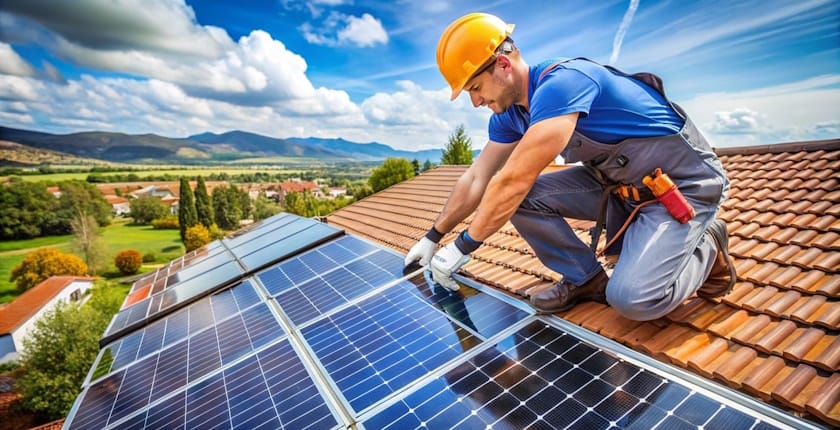
Potential beneficiaries can apply for energy renovation. The funds are for works such as the insulation of buildings and replacement of windows and doors, internal lighting upgrades and the installation of photovoltaic systems, heating and cooling systems, boilers and heat pumps, according to the public call.

Municipalities and public institutions can also receive money for installing electric vehicle chargers and replacing old vehicles that run on fossil fuels with electric ones.

The call is open until February 16. Additional information can be obtained from the Ministry of Environmental Protection and Green Transition.

Post Views:483
April 2, 2025
by AEA in News

European Green Deal’s secret weapon: education

Author: Dr. Eng. Alexandru Muresan/Technical University of Cluj-Napoca, Renergia, and EUSEW Young Energy Ambassador

As the EU and its member states make significant investments in green technologies and infrastructure, it is imperative to address the human element of this transition. There is a pressing need for a specialized workforce, and many countries are already experiencing shortages in key areas. At the same time, the success of the Green Deal depends on the ability of citizens to understand and adopt new technologies and practices.

Climate change can be regarded as a disruptive “black swan” event, compelling the allocation of substantial financial resources for investments in renewable energy sources, advanced energy infrastructure, energy storage solutions, hydrogen-based technologies, energy efficiency, and other sustainable innovations. However, I propose examining this situation from a different perspective—one that merges social, civic, and professional dimensions.

Many EU Member States have implemented support programs to encourage the adoption of renewable energy systems in residential and commercial sectors, leading to a significant increase in the number of prosumers. However, even if they are not always aware of their lack of energy literacy, a considerable share of the consumers of this new renewable capacity (including some prosumers) do fully understand how their behavior impacts the grid or the potential benefits of their choices in the energy system.

This phenomenon observed among the general population can be linked to the Dunning-Kruger effect—the tendency to overestimate one’s understanding of the complex implications of the energy system. This is unsurprising, considering that energy infrastructure and market dynamics require advanced technical and economic knowledge, which is often inaccessible to individuals outside these fields.

Based on the scientific foundation of this idea, another phenomenon with profound societal implications has emerged in public discourse: the artificial conversion of opinions into knowledge (pseudo-knowledge). This phenomenon underscores the importance of equipping citizens with the tools and resources needed to make informed decisions, particularly in areas like energy policy, where public opinion increasingly influences regulatory outcomes.

This calls for a deliberate effort to enhance individual capacity to engage with complex topics, including re-skilling initiatives and adapted educational programs that enable citizens to grasp the intricacies of technological and economic systems altogether. Addressing the need for informed decision-making is not solely an intellectual endeavor but a fundamental step toward cultivating a knowledgeable and adaptable society equipped to navigate the complexities of a rapidly evolving energy sector, where all of us must play an active role.

The fundamental question arises: what is the gap between the pace of technological advancement and the average level of energy literacy within civil society?

To address these issues, I, as an EUSEW Young Energy Ambassador,  recommend central and regional authorities make education a cornerstone of the European Green Deal. This could be done by launching the program: The Green Deal Education Initiative – Education First. This initiative would support educational institutions—schools, high schools, universities, and parent associations—in adapting existing curricula and creating new educational subjects centered on the green transition.

While I fully understand that the European Union has limited competencies in the field of education and cannot directly change curricula or mandate new subjects. However, it can play a supporting role by collaborating with Member States and their Education Ministries. The EU’s role should involve scaling up existing best practices, facilitating knowledge-sharing platforms, and providing financial and technical support to Member States to adapt and enhance their educational frameworks.

For younger generations, education is of paramount importance, as they will become the principal actors in achieving long-term climate goals, and developing sustainable skills and competencies. For users of green technologies, whether it is residential, commercial use, or use by local public authorities, educational programs are vital to maximizing the efficiency of these technologies and facilitating their integration into daily practices.

European Union must support Member States in implementing large-scale educational programs

Furthermore, technical education and vocational training for those working in the production, installation, and maintenance of these technologies are important to ensuring the optimal performance of green technologies across all sectors. In parallel with the investment programs, the European Union must support Member States in implementing large-scale educational programs by providing financial and logistical assistance to universities, research centers, and high schools, thereby ensuring an efficient and sustainable transition for all stakeholders involved.

To unlock a large-scale adoption of green technologies, several practical measures and actions are required. First and foremost, the training of teaching staff is a priority, as educators play a key role in preparing future generations. This would require financial support and continuous professional development programs will enable them to integrate sustainability-related topics into school curricula, equipping young people to face the challenges of the green transition.

Secondly, for the existing workforce, reskilling programs such as Back to School will facilitate the transition to roles within the green economy, providing the competencies required to meet new market demands.

Community involvement through local campaigns and parent associations is essential for reinforcing sustainability values

Lastly, community involvement through local campaigns and parent associations is essential for reinforcing sustainability values and promoting lifelong learning, thereby fostering a culture of sustainability across society. These measures are fundamental to the success of the transition to a green and sustainable future.

The Clean Energy Transition will not happen without taking citizens on board and doing so, requires a historic educational effort. The Green Deal education initiative The Green Deal Education Initiative – Education First has the potential to mark a historic moment in transforming the European educational system, aligning it with the demands of a sustainable future. By prioritizing education, we can cultivate a well-informed and skilled workforce capable of driving the ecological transition and supporting the European Union’s ambitious sustainability goals.

The Back to School Re-skilling Program could be implemented through partnerships with technical universities and high schools to train citizens whose jobs are impacted by the green transition. With financial support from the EU, these programs would offer practical courses to prepare individuals for opportunities in renewable energy, energy efficiency, and sustainable technologies.

This opinion editorial is produced in co-operation with the European Sustainable Energy Week 2025. See ec.europa.eu/eusew for open calls.

Post Views:322
April 2, 2025
by AEA in News

Croatia to allocate EUR 652 million for green transition in 2025

The Croatian Ministry of Environmental Protection and Green Transition and the Environmental Protection and Energy Efficiency Fund (FZOEU) plan to allocate EUR 652 million in subsidies for renewable energy, decarbonization of district heating systems and road traffic and waste management.

The Ministry of Environmental Protection and Green Transition has published an indicative annual plan for public calls for awarding EUR 651.8 million to firms, local authorities and households in 2025.

It earmarked EUR 526.8 million from the European Union’s Competitiveness and Cohesion Programme 2021-2027, the National Recovery and Resilience Plan and the EU’s Modernisation Fund. FZOEU plans to disburse EUR 125 million. Most of the sum is from EU funds, while only EUR 47 million comes from national sources.

The ministry listed eligible beneficiaries, the amount for each measure and a schedule. It intends to launch 23 public calls, and FZOEU has nine on its calendar.

EUR 160 million is planned for renewable energy in public utilities and decarbonization of district heating

The largest chunks are planned for the production of electricity for renewables for water and waste utilities, and for investment in decarbonization and modernization of district heating systems. The two tenders would be worth EUR 80 million each.

A total of EUR 45 million is allocated for investment in road traffic with zero emissions. The call for grants is for taxi drivers, delivery fleet owners, and car-sharing or bike-sharing services, the plan reads.

Households are eligible for EUR 35 million

Zero-emission vehicles will also be subsidized with favorable loans or leasing schemes for micro, small, and medium-sized enterprises to modernize their vehicle fleets. The measure amounts to EUR 44 million.

In the waste management sector, EUR 30 million is intended for the rehabilitation of a location highly polluted by hazardous waste – the Sovjak pit. An equal sum is for the construction and equipment of a facility for processing recyclable waste.

Households are entitled to EUR 35 million. EUR 10 million is available for the installation of solar panels in households. EUR 25 million would be allocated to households at risk of energy poverty, for energy renovation.

Post Views:576
April 2, 2025
by AEA in News

2024, record year for EU power sector – wholesale electricity prices decreased by 16%

The European Union had the cleanest power generation mix ever last year. Emissions were 59% lower than in 1990, while negative prices occurred 1,480 times. The average day-ahead wholesale electricity price in the EU declined by 16% from 2023.

2024 was a year of records for the European power sector, according to Eurelectric’s data. The only not-so-bright side was demand. Power demand didn’t pick up since the crisis, primarily due to low industrial consumption, Eurelectric said.

The EU has closed the year with lower electricity prices on average. In 2024, wholesale day-ahead market prices came down to EUR 82 per MWh from EUR 97 per MWh in 2023.

Investments in renewable electricity generation must be complemented by flexible capacity to balance their variability

The average was even lower – EUR 76 per MWh – up until the last quarter of the year, when a surge in gas prices, high winter demand, scarcity of solar power, and windless days brought power prices up, causing several spikes in Germany, Hungary, Romania and Sweden, to name a few, the organization said.

In parallel, negative prices broke a new record this year as they were registered 17% of the time in at least one bidding zone.

“Eurelectric’s data proves once again that investing in higher renewable generation is the right path for a more competitive and decarbonized economy, but it must be complemented by more firm and flexible capacity to balance their variability, limit reliance on costly fossil fuels and contain price spikes,” Eurelectric’s Policy Director Cillian O’Donoghue said.

The lowest emissions from the EU power sector

2024 marked the lowest emissions from the EU power sector. The annual drop was 13%. Renewables contributed 48% of the EU power generation mix, followed by nuclear, at 24% and fossil fuels at 28% – the lowest share ever.

While nuclear remained the single leading technology in producing power, wind kept its lead over natural gas from the past year, the data showed.

According to O’Donoghue, electrification remains to be the low-hanging fruit to decarbonize the EU. “The more you electrify your energy applications the easier you decarbonize, but demand for electricity is not where it should be today,” he added.

Power demand grew by less than 2% and remains lower than pre-crisis levels

Power demand grew by less than 2% from 2023, but it remained lower than pre-crisis levels. Eurelectric attributes some of the reduction to higher energy efficiency and energy savings. However, it said more than 50% of the decline was caused by industrial slowdown.

In Germany, the industry’s power consumption decreased by 13% in 2023 compared to 2021 and is expected to have sunk further in 2024 since industrial production declined 4% year on year, the organization underlined.

It has praised the Clean Industrial Deal as the ideal opportunity to provide new incentives to electrify, such as creating an electrification bank, electrification accelerated areas and de-risking mechanisms for long-term power purchase agreements.

Post Views:946
April 2, 2025
by AEA in News

EU proposes four carbon pricing options to members of Energy Community

The European Commission has proposed four carbon pricing design options to the contracting parties of the Energy Community – regional market under an emissions trading system (ETS), fixed price ETS, carbon tax and integration into the European Union’s ETS, according to the Impact Assessment for the Establishment of a Regional Emission Trading System in the Contracting Parties of the Energy Community Treaty.

The impact assessment for carbon pricing was presented at a meeting of the Energy Community Ministerial Council in Vienna on December 12.

Ministers representing the contracting parties agreed to analyze the report and communicate the preferred carbon pricing policy scenarios to the European Commission and the Energy Community Secretariat before the next, informal meeting of the Ministerial Council, scheduled for mid-2025.

The Energy Community Secretariat expects the scheme adopted by the end of 2025 in the form of an update to the Energy Community Decarbonisation Roadmap.

Cwetsch: We now enter into the political process

Adam Cwetsch, Head of the Green Deal Unit at the secretariat, said the European Commission presented a list of different options to the contracting parties and that it stressed it isn’t imposing any concrete policy model. The contracting parties have demanded for the report not to focus only on a regional ETS but to go broadly to show the pros and cons of each policy model, he said and added that carbon pricing designs could be mixed in different scenarios.

All the scenarios, in his words, have different potential scopes of carbon pricing. “The analytical process as such has been finalized and now we enter into the political process,” Cwetsch told Balkan Green Energy News.

Some countries have declared their positions. For example, Serbia intends to introduce a carbon tax.

“The contracting parties need to take into consideration the future aspect of joining the EU ETS. It means that what they decide here has to bring them to the trajectory to join EU ETS,” Cwetsch stressed.

Four design options and three scenarios

The impact assessment has analyzed four carbon pricing design options: regional market ETS, fixed price ETS, carbon tax and integration into the EU ETS. For example, every option has a different institutional set-up, ambition level and allowance allocation.

The carbon pricing scheme is modeled in three scenarios, differing in sectoral coverage. The study has designed three main policy scenarios that represent alternative options for carbon pricing, according to the executive summary of the Impact Assessment. Policy scenarios introduce alternative options for carbon pricing starting from 2026. All imply a commitment to drive net greenhouse gas emissions to zero by 2050, according to the presentation.

All three scenarios are compared against a baseline case – status quo

All scenarios are compared against a baseline case, the status quo. It doesn’t include additional carbon pricing policies apart from the ones already enforced by July 2024. The baseline comprises existing policy measures, already in action or announced at the individual level in draft national energy and climate plans (NECPs).

The electricity-only scenario (P1) assumes a single CO2 price for the power sector. It has two pathways: reaching price equivalence with EU ETS by January 1, 2030 (P1A) and a more gradual CO2 price trajectory toward an alignment with EU ETS by 2035 (P1B). The former implies that the electricity sector is exempted from the Carbon Border Adjustment Mechanism (CBAM) for electricity exports. The P1B scenario entails CBAM costs before 2035, as the CO2 price would be lower than in EU ETS.

Under the CBAM sectors scenario, CO2 pricing would be applied to all sectors

Industrial sectors are not subject to any form of carbon pricing at least until 2030 and therefore bear the full cost of CBAM, similarly to the baseline scenario.

Under the CBAM sectors scenario (P2), CO2 pricing will be applied to all sectors, starting in 2026. It also has two versions: a unified CO2 price for all contracting parties required to reach national climate objectives (P2A) and allocating 50% of the allowances free of charge (P2B) for the transitional period until 2035.

The P2A scenario models a unified CO2 price for all contracting parties with the aim of reaching national climate objectives. The price would be at only 60% of the EU ETS in 2030, inconsistent with the CBAM regulation. The carbon price effectively paid would be deducted from CBAM obligations.

The EU ETS scenario (P3) envisages the integration of contracting parties into the EU ETS by 2030 as part of the broader EU accession process. All contracting parties commit to 2030 climate targets, representing a timely pathway to decarbonization.

Carbon revenues in the period 2026-2035 are estimated at EUR 17 billion to EUR 20 billion in the first scenario, EUR 15 billion to EUR 23 billion in the second one, and EUR 33 billion in P3.

A shift from energy-intensive activities to the production of clean energy fuels and other segments

The report’s authors assessed the impact of the scenarios on CO2 emissions, the power sector, the industrial sector, the cost of power generation, climate targets, gross domestic product, and employment.

Under the baseline scenario, the operation of coal- and lignite-fired plants is extended. The gradual increase in carbon pricing in scenario P2 questions the extension of the operational life of coal power plants and halves their generation by 2030.

EU ETS prices in scenarios P1A and P3 lead to an almost complete replacement of coal by 2035. The results in variant P1B are similar to P2 in 2030, but converge to the results of P1A by 2035.

The impact of carbon pricing on GDP is limited

On average, 2030 electricity generation costs are projected at 13% to 29% above the baseline. They are the highest in scenarios P1A and P3 (29%). P1B and P2A show a mildly lower increase (21%) and variant P2B envisages a rise of 13%, according to the study.

Results at the country level reveal a limited impact of carbon pricing on gross domestic product. It is higher in Kosovo*, Bosnia and Herzegovina (due to higher electricity costs), and Ukraine, with cumulative losses for the period 2025-2040 ranging between 0.4% and 1.7% for the three contracting parties.

Smaller impacts are projected for Albania, Georgia, Moldova, North Macedonia, Montenegro, and Serbia. For example, Serbia gets significant gains from higher investments and from recycling carbon revenues.

The most negatively affected activities are associated with power generation from coal

In most of the countries there is a shift from energy-intensive activities to the production of clean energy fuels and other segments, such as the production of consumer goods, the report reads.

All scenarios see employment gains throughout the projection period for most contracting parties. P1B and P2B score best per contracting party and as a whole. The most negatively affected activities are associated with power generation from coal, notably coal mining.

Overall employment losses from 2030 to 2040 are minimal compared to the baseline, fluctuating between 0.5% and 1.5% across scenarios, according to the report.

Post Views:596
* This designation is without prejudice to positions onstatus and is in line with UNSCR 1244/99 and the ICJ Opinion on the Kosovo declaration of independence.
April 2, 2025
by AEA in News

The green transition at a crossroads: how equity can take it forward

By Eliza Barnea, EUSEW Young Energy Ambassador focuses on the need for a Green and Social Deal in the EU to ensure a just and equitable green transition, balancing climate action with social protection for vulnerable groups.

As the new European Commission takes office, debates regarding the bloc’s priorities for the future in a time of permacrisis are in full swing. From the COVID-19 pandemic, the Russian full-scale invasion of Ukraine, the energy crisis and ever-more frequent natural disasters, the events of the past years have kept the EU in a constant stream of crisis response. Yet today’s challenges are structural in nature and long-term in breadth. The cost of living, the international security landscape, the state of democracy and climate change were some of the top priorities that brought people to the polls in the EU election with highest turnout of the past 30 years.

Perhaps the most transformative in its potential impact is the EU ambition to spearhead the transition to climate neutrality. Yet this has been met with mounting frustrations from the part of workers, frustrations which has been exploited by extremist political discourse across Europe. As seen in the results of the recent elections in Romania, the rise of populist movements risks taking us back to square one by questioning the very notion of climate change. The future of the European Green Deal (EGD) and the Fit for 55 package seems still uncertain, yet the need for action is becoming more urgent with every passing moment. According to the Emissions Gap Report published by UNEP in October, the world is on course for a temperature increase of up to 3.1°C. This is more than double the threshold of 1.5°C which governments worldwide committed to upholding almost 10 years ago through the Paris Agreement.

The disastrous effects of climate change have continued to ravage the continent this year, resulting in human and material losses worth tens of billions of euros. As a result, EU election results clearly display the need to better address perceived tensions between environmental objectives and social equity. Climate policy can only work if we also address societal needs.

Climate action and social justice, two sides of the same coin

One poignant example of the interconnectedness between climate action and social justice is the 2024 wave of farmers protests across Europe.  A common point of contention are the strict EU environmental regulations and recently agreed-upon trade deal between the EU and the South American trade bloc Mercosur. According to French farmers, the trade deal will flood the EU market with cheap products, developed with loose environmental standards. In response to the farmers’ discontent, the Commission withdrew the Sustainable Use Regulation proposal, which sought to halve the use of pesticides by 2030 in a bid to build sustainable food production chains and support biodiversity restoration.

But agriculture is not the only strategic sector where the push for faster climate action is disproportionately affecting the most vulnerable. The green transition is a whole-of-economy, generational process, a paradigm shift that will reverberate in local communities as much as in geopolitical dynamics.

Some  important steps have been taken, from the targets to phase-out coal or fossil fuel boilers  to the introduction of the Emissions Trading System for buildings and road transport (ETS2) starting 2027. But while these are essential measures for driving down GHG emissions in the EU, their effect can come as a double-edged sword, to be felt within and beyond the borders. A lack of mitigation of the disproportionate transition costs on the most vulnerable EU citizens bears the risk of further deepening intranational inequalities, fuelling extremism and Eurosceptic sentiments. Outside EU borders, the race to electrification risks displacing polluting activity, driving up environmental and social damage in resource-rich countries and increasing the risk of conflict and displacement in already fragile regions. These are only a few of the negative externalities that cannot be ignored if we want to make the promise of a fairer, greener economic model a reality for all of us and the EU a global leader in the process.

The Social Climate Fund & the Just Transition Fund, an integrated approach to climate action

In this context, it is undeniable that the way forward for the green legislation of the EU executive needs to be a Green and Social Deal, which carefully intertwines social and environmental protection measures along the value chains. EU’s Just Transition Mechanism and the Social Climate Fund are such instruments. If well implemented, they can alleviate the disproportionate impact of green policies on vulnerable groups, while creating opportunities for everyone.

Created in 2023, the Social Climate Fund ((EU) 2023/955) will pool revenues from auctioning allowances from the newly created ETS2 covering CO2 emissions from fuel combustion in buildings, road transport and small industry. It is expected to mobilise over EUR 86 billion over the 2026 – 2032 period, supporting EU countries address the increasing challenge of energy and transport poverty. Tackling the structural causes of energy poverty and providing long-term relief to the most vulnerable is essential for ensuring the legitimacy of one of the most important EU instruments for climate action, the EU Emissions Trading System. Access to these funds will depend on the development of national Social Climate Plans and  payments will be conditioned by social and climate targets.  These must be done in a participatory way, ensuring that interests of those affected are represented and proposed investments respond to local challenges.

Another essential instrument aimed at balancing social equity and climate action is the Just Transition Fund (JTF, (EU) 2021/1056)). Adopted in 2021, the JTF came as an acknowledgment that achieving the bloc’s 2050 objective of climate neutrality will pose disproportionate challenges on regions dependent on declining polluting industries, with highly-specialised workforce and scarce employment alternatives. Part of the Just Transition Mechanism, the JTF has a budget of over EUR 17.5 billion over 2021–2027. It aims to tackle in an integrated manner the cross-sectoral challenges arising in the decarbonisation of mono-industrial regions, and especially coal regions.

JTF are part of the solution for adapting the future policies to the challenges and realities of the green transition

In many ways, the foundational principles of the JTF are part of the solution for adapting the future policies to the challenges and realities of the green transition. With a focus on territoriality and place-based development, JTF’s targeted support was conditioned by the drafting of Territorial Just Transition Plans (TJTPs) at regional level. In line with the Partnership Principle, the drafting and implementation of TJTPs coagulated diverse stakeholders around a common goal. In many ways, the participatory process unlocked by the JTF has created a best practice precedent essential to the success of the green transition, creating the synergies for local ownership and broader public buy-in. The JTF is now laying the foundation for a green economy, in an ambitious approach unimaginable to coal-dependent and mono-industrial regions just a decade ago.

In Latvia, EUR 1.8 million are allocated to improving the skills of local governments and regional specialists and mitigating the socio-economic consequences of climate change. In Greece, the JTF will provide dedicated support to energy communities for developing self-production initiatives in lignite regions. In the Romanian coal-region of Jiu Valley, the JTF will support the development of a robotics hub for youth on the site of a former mine. In September, CEE Bankwatch Network and 41 other European organisations launched a joint statement asking European decision-makers to continue and strengthen the JTF in the next financial period to ensure that “no one is left behind on the EU’s path to climate neutrality”.

The way forward for the green transition

Creating a level-playing field in the green transition must be a priority through the next Multiannual Financial Framework. As the next long-term EU budget will be negotiated, the focus must remain on continuing the ambitious work already started through the EGD.

Areas of prioritisation should centre on providing adequate financing for targeted support with a territorial approach, based on significant social dialogue, collective bargaining and transparent shared management. Protecting those most affected by mainstreaming strong social and environmental conditionalities and addressing the linkages between social and climate change vulnerability must be guiding principles. Accessing public money should also come with public responsibilities towards the common good. This means supporting local authorities with financial and non-financial tools to develop the knowledge necessary to guide their cities and villages towards climate neutrality. Bringing climate action and its benefits closer to the citizens remains essential for ensuring long-term public acceptance and supporting the behavioural change needed to have sustainability embedded as societal value.

Accessing public money should also come with public responsibilities towards the common good

Additionally, efforts must continue to fill the gaps on sustainable food systems and animal welfare, green industrial transformation and green public procurement in line with EGD objectives, especially on efficiency, sufficiency and circularity. Finally, the external footprint on labour rights and environmental protection of EGD policies and trade agreements must receive increased attention if we are to take the lead in the global transition towards sustainability and act as catalyst for security and prosperity.

A just green transition is an unprecedented opportunity for creating the paradigm shift necessary to tackle the triple crisis of climate change, biodiversity loss and pollution, in a transformative, rather than reformative manner. As laid out in the Fit for 55 Package, the green transition is “an opportunity to reduce systemic inequality” and bring forward a new economic model that holds the well-being of people and the environment at its core. The mission of advancing this forward-looking political vision must be upheld by European institutions and national governments alike.

The promise of the European Green Deal for a fair transition towards a greener, more equitable economic model is perhaps the most ambitious endeavour undertaken by the EU since its foundational promise. Similarly to when the 1950 Schuman Declaration put forward the proposal for what would become the EU, achieving this momentous objective requires “creative efforts proportionate to the dangers which threaten it”. A choice should not have to be made between protecting the environment, the economy or the people. Transforming the economy so it serves all people and our environment, this must be the way forward.

This opinion editorial is produced in co-operation with the European Sustainable Energy Week 2025. See ec.europa.eu/eusew for open calls.

Disclaimer: This article is a contribution from a partner. All rights reserved.

Neither the European Commission nor any person acting on behalf of the Commission is responsible for the use that might be made of the information in the article. The opinions expressed are those of the author(s) only and should not be considered as representative of the European Commission’s official position.

Post Views:298
April 2, 2025
by AEA in News

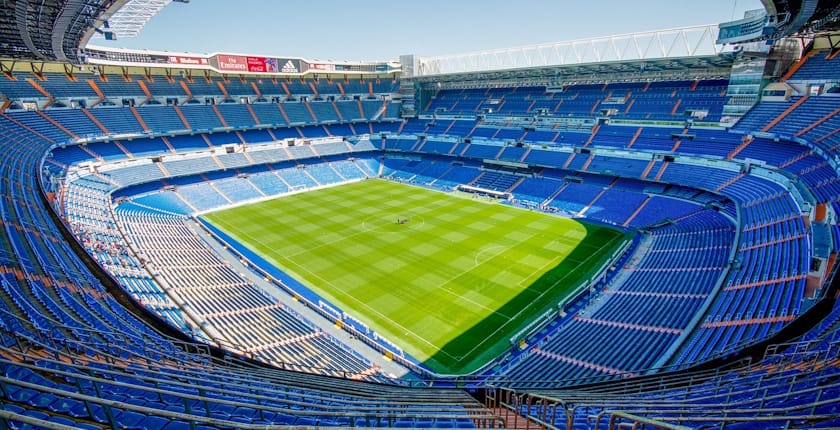
Match schedules for the 2026 World Cup could expose footballers to extreme heat stress

Footballers playing in the 2026 FIFA World Cup could face dangerous levels of heat stress, scientists warn. A new study shows that temperatures at 14 out of the 16 stadiums could reach thresholds at which football governing bodies recommend postponing matches. The most critical period is in the afternoon, when games are usually scheduled.

The 2026 FIFA World Cup will take place in Canada, the United States, and Mexico from June 11 to July 19 next year. Matches are set to be played in 16 cities. Climate change is leading to an increasing number of extremely hot days, which affect daily life and pose challenges for organizing various events, including sports competitions.

In a study by Donal Mullan from Queen’s University Belfast, scientists analyzed meteorological data from the past 20 years to predict how high temperatures might rise at the host stadiums. To assess heat stress, they used the wet-bulb globe temperature (WBGT) method.

Heat stress is the way the human body responds to high temperatures

Heat stress is the way the human body responds to high temperatures combined with other factors such as humidity and wind speed. Prolonged exposure to extreme heat can worsen health conditions and increase the risk of heat-related illnesses such as heat exhaustion and heatstroke. A potentially dangerous level of heat stress is 28 degrees Celsius in WBGT terms.

Findings indicate that the threshold could be reached at 14 out of the 16 stadiums during the tournament. In an exceptionally hot summer, nine stadiums could exceed 28 degrees WBGT for at least half the time, while four could reach an extreme 32 degrees.

“After analyzing 20 years of data, our modeling shows that high temperatures are extremely likely, and these will have a major impact on players,” Mullan emphasized.

Mexico City and Vancouver are the only host cities where WBGT has never crossed the potentially dangerous threshold, according to the study.

Peak temperatures in the afternoon

The study reveals that stadium temperatures are highest in the afternoon, which is also the most common time for scheduling matches. Outside the period, extreme heat levels drop significantly across all locations.

Mullan suggests that the best protective measure would be to reschedule matches outside the hottest hours, especially at stadiums without air conditioning, such as those in Miami and Monterrey.

The previous World Cup, held in Qatar in 2022, was originally scheduled for June and July, when temperatures exceeded 40 degrees, but it was moved to November and December to protect players and fans.

The authors warn that the 2026 tournament could see matches played in conditions exceeding the threshold at which some football governing bodies recommend delaying or postponing games.

For example, Football Australia’s policy is that a match may be delayed or rescheduled if the WBGT reaches 28 degrees Celsius. On the other hand, FIFA guidelines mandate cooling breaks in each half as a protective measure when WBGT is between 28 and 32 degrees. Matches are only rescheduled if WBGT exceeds 32 degrees.

Post Views:227
  • 1
  • …
  • 112
  • 113
  • 114
  • 115
  • 116
  • …
  • 140

AEA – Albania Energy Association is a industry association dedicated to representing the interests of Albanian and West Balkan for energy producers and consumers. AEA works to advance the development and adoption of sustainable energy solutions in Albania and the Western Balkans, supporting the region’s transition toward a cleaner, more secure, and more competitive energy future. AEA is registered by decision of the Court of Tirana, DECISION NO. 3032, (VAT:L11827451K).

[email protected]

Address
Blv Zogu 1
Tirana
1057
ALBANIA

LinkedIn  |  Facebook
Events
May 25, 2022 Connecting Green Hydrogen Europe 2022
May 25, 2022 Energy Week Western Balkans 2022
Copyright © Albania Energy Association