AEA-Albania Energy Association
  • Main
  • About Us
  • Services
  • Sectors
  • News
  • EventsEvents
  • PublicationPublication
  • Contact Us
AEA-Albania Energy Association
  • Main
  • About Us
  • Services
  • Sectors
  • News
  • EventsEvents
  • PublicationPublication
  • Contact Us
AEA-Albania Energy Association
  • Home Page
  • About Us
  • Sectors
  • Our Services
  • News
  • Contact Us
April 3, 2025
by AEA in News

Montenegro’s TSO CGES achieves EUR 25 million profit in 2024

Montenegro’s transmission system operator CGES recorded a profit of EUR 24.8 million last year.

The net income of TSO CGES compares to EUR 35.7 million from 2023. In 2022, the company’s profit amounted to EUR 20.3 million, after EUR 16.9 million in the previous year.

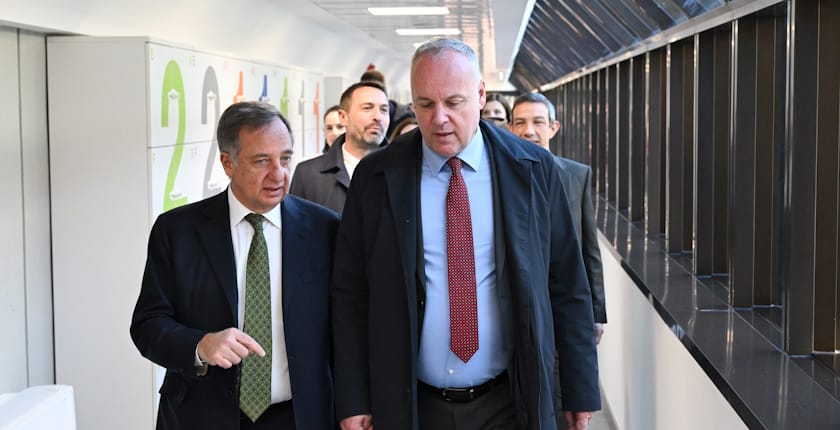
President of the Board of Directors of CGES Aleksandar Mijušković noted in a statement to Mina news agency that the total since his appointment is almost EUR 100 million.

He recalled that the company’s operations are regulated by the Energy and Water Regulatory Agency of Montenegro (REGAGEN), pointing out that the profit is subject to revision, in line with the regulatory mechanism.

Implementation of visionary projects led to income growth

Implementation of crucial infrastructure projects, investments in new technologies, and improvement of work processes were the decisive factors for the success, Mijušković underlined.

In his words, conducting important, visionary projects has led to a significant increase in income from electricity transit. In addition, by applying new technologies and improving work processes, the company achieved a more efficient and reliable system with the lowest grid loss rate so far, despite a much higher transit and flow of energy through the system, Mijušković pointed out.

He added that good business results secure multiple benefits for shareholders and users of the transmission system in Montenegro. CGES’s results have contributed to lowering the transmission tariff paid by citizens and businesses, Mijušković said.

The company plans to continue the investments within its five-year plan, worth EUR 207 million. It envisages significant infrastructure projects.

The Trans-Balkan Corridor will facilitate market coupling with Europe

He singled out the Trans-Balkan Corridor among the largest infrastructure projects. Its completion will significantly increase the capacity for power transit from the Balkans to Italy.

It will enable coupling the Montenegrin electricity market with the Italian one and, with it, the single European electricity market, Mijušković said.

The green transition brought great challenges for the European power system, he stressed. The production of electricity from renewable sources cannot be controlled, so large, uncontrolled electricity flows began appearing in the system, threatening its stability, Mijušković said.

The issues can be effectively solved only by strengthening the internal grid and interconnections with neighbors, which CGES has envisaged in its plans, he asserted.
Post Views:22
April 3, 2025
by AEA in News

Greek companies expand to Bulgaria with solar power investments

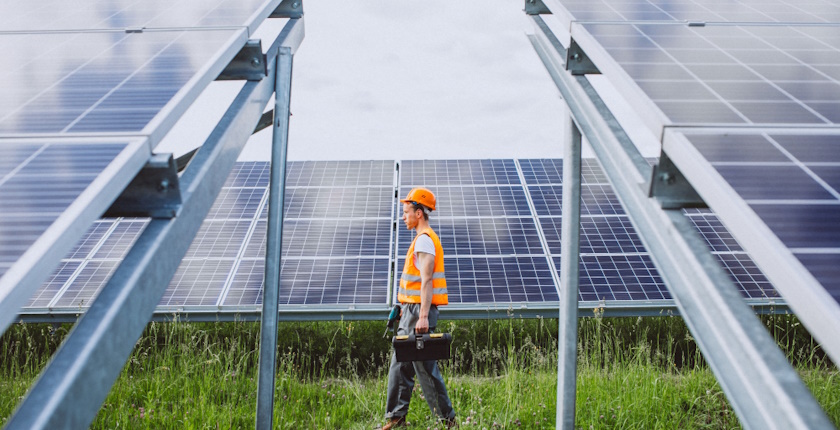
Greece’s government-controlled power utility PPC and Masdar’s subsidiary Terna Energy are separately building two photovoltaic plants in Bulgaria, worth an estimated EUR 190 million in total.

The biggest two renewable energy companies in Greece have taken over one major project each in neighboring Bulgaria, where domestic investors dominated the photovoltaics market until recently. Soon after government-controlled Public Power Corp. (PPC) said it began building a 165 MW solar power plant with batteries, Capital reported that Terna Energy plans to complete a 130 MW project by the end of next year.

The segment appears saturated, given the lack of energy storage capacities in Bulgaria to balance high PV output at times of abundant sunshine. Permits that the Sustainable Energy Development Agency (SEDA) issued show 4 GW in overall installed solar power capacity. Nevertheless, Executive Director of Electricity System Operator (ESO) Angelin Tsachev estimated there is as much as 5 GW, the media outlet noted.

In its annual statistics update, the International Renewable Energy Agency (IRENA) said Bulgaria hosted 3.9 GW of PV capacity at the end of 2024.

Terna Energy bought out initial developer one year ago

Terna Energy became a subsidiary of Abu Dhabi Future Energy Co. (Masdar) last year. The Greek company entered the ownership of the project firm Bio PD Solar Energy for the 130 MW facility three years ago with a 25% stake.

In mid-2024, Terna Energy Overseas Ltd., registered in Cyprus, became the sole owner. It invested some EUR 25 million and bought out Helios Construction Project. According to the article, the previous parent company is associated with businessman Ahmed Dogan. He was the founder and long-time leader of the Movement for Rights and Freedoms party, representing Muslim minorities.

Both projects are on municipal land

The project spanning more than 200 hectares was initially planned at 180 MW. The lot is on municipal land in Kameno in eastern Bulgaria.

According to the news website, the investment amounts to EUR 92 million. The location near the village of Vratitsa isn’t subject to an environmental impact assessment study except for the intended construction of a 33/110 kV substation.

Terna Energy said its former affiliate Terna, part of the GEK Terna conglomerate, is building the solar power plant in Burgas province.

New hybrid power plant in Bulgaria is part of PPC’s regional expansion

PPC is building its PV plant in the Chirpan municipality in Stara Zagora province. Having included a battery energy storage system in the project, and given the power links with its assets in Romania and Greece, the company is counting on a strategic advantage in the market with the new hybrid facility. PPC is pursuing major expansion in the region, including Italy.

The investment is valued at EUR 97 million, of which the energy storage segment accounts for EUR 10.2 million to EUR 12.8 million, the article adds.

The Colosseum site consists of 11 municipal properties formerly designated as agricultural land, on 200 hectares altogether. PPC bought the project from Enery. The company is headquartered in Austria and active in the renewables sector in Romania as well.

Post Views:48
April 2, 2025
by AEA in News

Germany looks into underground heat storage to decarbonize heating

Germany is increasingly looking into geothermal energy storage as a way of decarbonizing its heating sector. The technology allows storing heated water in underground caverns and using it for warming homes and public and private buildings during winter, according to a report by Clean Energy Wire.

This thermal energy storage system, called Geotes, promises “the almost universal availability of cheap and practically inexhaustible storage capacities,” according to Peter Ruschhaupt from the think tank Future Cleantech Architects (FCA), German business daily Handelsblatt reported.

The process involves heating water and injecting it into underground caverns, where heat can be retained for months by the surrounding rock. The warm water can then be pumped back to the surface and used for district heating.

Heat can be retained underground for months

The cost of drilling is the main challenge in ensuring that the process is economically viable, but once the caverns are ready, the technology can be very cost effective, as heat can be stored for an entire season, according to Ruschhaupt.

Such systems already exist in northern Europe

One such research project is currently underway in former coal mines in Germany’s Ruhr valley, the daily wrote. In the Netherlands and Scandinavia, “there are already thousands of Geotes systems,” said Ruschhaupt.

According to the German geothermal association, geothermal energy could cover 40% of the country’s heating needs, Clean Energy Wire wrote, noting that Germany is seeking to phase out fossil-run heating boilers and requiring cities to prepare municipal heat plans by mid-2028 at the latest.

In Serbia, the district heating company in Novi Sad is developing a thermal energy storage project, as part of an innovative hybrid system that would combine solar collectors, seasonal thermal storage, and heat pumps. The investment is aimed at decarbonizing the Serbian city’s district heating and helping balance the power system.

Post Views:119
April 2, 2025
by AEA in News

Trump administration suspends USD 20 billion in emissions reduction funding

The US Environmental Protection Agency (EPA) has frozen USD 20 billion in funding for greenhouse gas reduction projects, citing, among other things, concerns over potential fraud, waste, and abuse, news agencies reported. The move prompted a lawsuit by environmental NGO Climate United Fund, one of the beneficiaries of the program aimed at financing thousands of green energy and climate action projects.

The funding was appropriated by Congress under former President Joe Biden, but the new US administration, led by Donald Trump, decided to freeze it, the reports noted. The Greenhouse Gas Reduction Fund, commonly known as the green bank, was launched in 2022.

The green bank was launched under the Biden administration

In a statement, the EPA said that the Justice Department and the Federal Bureau of Investigation (FBI) were now reviewing the program. Lee Zeldin, the EPA’s new chief, said that “EPA will be an exceptional steward of taxpayer dollars dedicated to our core mission of protecting human health and the environment, not a frivolous spender in the name of ‘climate equity,’” according to news agencies.

The EPA also said it would seek to use the green bank funds “with enhanced controls.”

Over the weekend, Climate United Fund, which had been awarded nearly USD 7 billion under the program to finance clean energy and climate-friendly projects, sued the EPA, demanding access to the funds.

Climate Action Fund had been awarded nearly USD 7 billion for thousands of projects

The organization also sued Citibank, though which the money was to be disbursed, for withholding the funds, according to reports.

In April 2024, it was announced that the EPA had selected eight recipients, including Climate United Fund, to be awarded a total of USD 20 billion in grants to finance tens of thousands of projects aimed at combating climate change and promoting environmental justice. The money was formally awarded in August.

Post Views:165
April 2, 2025
by AEA in News

Seven cities, regions in Western Balkans to strengthen climate resilience with CLIMAAX

Seven cities and regions in the Western Balkans will receive financial and technical support to enhance their climate resilience.

Four local authorities in Albania and one each in Bosnia and Herzegovina, Montenegro, and Serbia are among the 69 in 23 countries selected within the CLIMAAX call for applications.

As a result of the two open calls, municipalities, cities and regions will receive more than EUR 12 million in total from the European Union’s Mission on Adaptation to Climate Change, the announcement reads.

The maximum amount of financial support within CLIMAAX ranges between EUR 115.227 and EUR 300.000.

The selected cities and regions will conduct multi-risk climate risk assessments

Tirana, Vlora, Belsh, and Libohova in Albania became beneficiaries together with the municipalities of Neum in BiH and Bijelo Polje in Montenegro and the Secretariat for Urban Planning and Environmental Protection in Serbia’s Autonomous Province of Vojvodina.

As for other countries tracked by Balkan Green Energy News, regions and cities in Bulgaria (7), Croatia (2), Cyprus (1), Greece (8), Romania (3), Slovenia (1), and Turkey (7) have also been selected, according to the List of selected beneficiaries 1 and List of selected beneficiaries 2.

The CLIMAAX program highlights the increasing frequency and intensity of extreme weather events, rising sea levels, and other climate-related hazards as significant risks to economies, societies, and ecosystems across the globe. Therefore it is critical to understand the risks and develop effective strategies to manage and adapt to them.

Sempere-Torres: We are building a collaborative network of communities committed to climate resilience across Europe

The main objective is to support the implementation of the EU Adaptation Strategy and especially the first objective of the Horizon Europe Mission Adaptation: preparing and planning for climate resilience.

Selected cities and regions will implement the proposed methodological framework and toolbox to conduct multi-risk climate risk assessments. The regions are eligible for support from the CLIMAAX consortium in their work on the assessments.

“With CLIMAAX expanding to more regions, we are enhancing our efforts to make climate risk assessment into a practical process that leads to real, impactful action. By empowering regions with the necessary tools and financial support, we are not just improving local adaptation strategies—we are building a collaborative network of communities committed to climate resilience across Europe,” said Daniel Sempere-Torres, project co-coordinator of CLIMAAX and director of the Center of Applied Research in Hydrometeorology of the Universitat Politècnica de Catalunya.

Post Views:51
April 2, 2025
by AEA in News

EU mission in Serbia handed 100,000 signatures against declaring Rio Tinto’s Jadar a strategic project

Informal environmentalist organization Eko Straža has submitted a letter to the Delegation of the European Union to Serbia urging the EU not to grant strategic status to Rio Tinto’s Jadar project in the country. The letter opposing the lithium mining and processing project is backed by the signatures of 100,000 citizens.

Bojan Simišić of Eko Straža said the signatures had been submitted because of the European Commission’s upcoming decision on strategic projects to produce critical raw materials in third countries. The decision is expected to be adopted this week, Fonet reported.

The letter, supported by 100,000 signatures, is the first concrete step by environmental associations and citizens after the announcement that the EU could grant Jadar the status of a strategic project. The site of Rio Tinto’s underground mine and processing unit is near the Western Serbian city of Loznica.

The EU has adopted the first list of strategic projects

On Tuesday, the European Commission approved the first 47 strategic projects, within EU territory, for the production of critically important raw materials. According to the announcement, the decision on the potential selection of proposals for facilities in third countries will be adopted at a later stage.

Under the EU’s Critical Raw Materials Act (CRMA), such strategic projects are eligible for administrative and financial support.

Shortly after the decision was announced, Serbian President Aleksandar Vučić said that within seven or eight days, the EU would also declare the Jadar lithium project as strategic. He made the claim the same evening in Brussels, where he met with the bloc’s top officials.

Eko Straža: If the EU designates Jadar as strategic, protests will follow

Eko straža stressed that the EU does not have jurisdiction to designate Jadar as a strategic project. The organization also pointed out that Jadar was canceled by the Serbian government’s decision in 2022.

“If the EU puts the Jadar project on its list of strategic projects, we will press ahead with protests. However, we will no longer address the Serbian government, which has resigned, but will instead turn to international institutions,” said Eko Straža.

Balkan Green Energy News has compiled a chronological overview of the most important events concerning Jadar since 2001, when Rio Tinto established a subsidiary in Serbia.

Post Views:51
April 2, 2025
by AEA in News

City of Tuzla seeks to block lithium mining on Mount Majevica

Two weeks after the local authorities and residents of the municipality of Lopare voiced their opposition to plans to open a lithium mine on Mount Majevica, the City of Tuzla sent a similar message. A few days ago, the Tuzla city council adopted a document requesting a ban on the mining of lithium and similar metals within a 40-kilometer radius over concerns for the environment and public health.

In the document, adopted on March 27, the local authorities express concern about the ongoing procedure to grant a concession for a lithium mine at Majevica to Arcore AG, as well as about the agreement between the Republic of Srpska and Hungary on rare earth mining, signed on March 3, 2025.

State authorities urged to initiate an environmental impact assessment

The city council demands an urgent review of the potential environmental impact of these projects on Tuzla and the wider area and calls on the Government of the Federation of Bosnia and Herzegovina and the Council of Ministers of Bosnia and Herzegovina to promptly initiate a procedure to assess their environmental impact, including the potential pollution of groundwater and rivers.

The City of Tuzla demands that the competent institutions of Bosnia and Herzegovina immediately launch an international environmental protection mechanism, including the implementation of the Aarhus Convention, to ensure public participation and prevent any harmful impacts of lithium mining. It also calls on the National Assembly and the Government of the Republic of Srpska to suspend the concession award process until an independent environmental study is conducted.

Neighboring municipalities invited to act together against lithium mining

In the document, Tuzla invites neighboring municipalities to join forces and create a joint plan to prevent lithium mining in the area of ​​Mount Majevica, while also recalling that in September 2024, Tuzla adopted a declaration strongly opposing the lithium mining plans.

The protest in Lopare in mid-March was attended by residents and activists from the neighboring towns and municipalities, including Bijeljina, Banjaluka, Šipovo, Brčko, Fojnica, Maglaj, and Tuzla.

Post Views:40
April 2, 2025
by AEA in News

Serbian organizations, academic community urge EU against declaring lithium project Jadar strategic

The National Convention on the European Union in Serbia has sent a letter to European officials, expressing concern over the potential consequences of designating Rio Tinto’s Jadar lithium project as an EU strategic project. The body warns that such a decision could further erode the support for the country’s European integration. Members of the academic community and numerous citizens also urged the administration in Brussels to reject the company’s application.

The National Convention on the European Union is a platform for cooperation and consultations between civil society and the Government of Serbia in the EU accession negotiation process. It sent the letter to European Commission President Ursula von der Leyen, High Representative of the EU for Foreign Affairs and Security Policy Kaja Kallas, Commissioner for Enlargement Marta Kos, European Commission Vice-President for Prosperity and Industrial Strategy Stéphane Séjourné, and Commissioner for Trade and Economic Security Maroš Šefčovič. The convention expresses concern over the possible consequences of including the Jadar lithium project in the EU’s list of strategic projects under the Critical Raw Materials Act (CRMA).

“Given the immense public distrust surrounding the preparation process of the Jadar project, its designation as a project of strategic importance to the European Union, especially in the current geopolitical climate and during Serbia’s institutional and societal crisis, would further undermine citizens’ confidence in the benefits of European integration. Additionally, the long-term geopolitical orientation of Serbia could be affected, potentially jeopardizing the political stability of the Western Balkans,” the letter states.

The convention added that Serbian citizens’ trust in the European Union has been eroded, pointing to the results of a recent public opinion survey. For the first time, more citizens have expressed opposition to EU membership than support for European integration, the body stressed.

EU strategic projects and reactions

The European Commission has approved the first 47 strategic projects in EU territory for important raw materials. The decision for candidate projects in third countries, including Serbia, has been postponed. Under the EU’s Critical Raw Materials Act, such strategic projects are eligible for administrative and financial support.

Shortly after the European Commission’s decision, Serbian President Aleksandar Vučić stated in Brussels that the EU would declare the Jadar project strategic “in seven or eight days.”

Together with nongovernmental organizations and community associations from Romania, Germany, Spain, and Portugal, the Marš sa Drine group from Serbia reacted to the European Commission’s decision, and later also to Vučić’s statement. They said they would legally challenge the strategic status designation for disputed mining projects.

The convention recalled that over 60% of Serbian citizens currently oppose the Jadar project, which includes technology that has never been deployed anywhere in the world.

Citizens’ opposition to the Jadar project should be understood primarily as a reflection of distrust in Serbian institutions

“This opposition primarily reflects a deep mistrust in Serbian institutions and their ability to impartially assess the public interest in such a complex project, as well as to enforce environmental and other regulatory standards should the project proceed,” the document reads.

Transparency in decision making has been lacking, and the reactions of Rio Tinto have been inadequate, it added.

“The local community was not adequately informed about earlier phases of research or the project’s potential consequences. Furthermore, the documents forming the basis of the draft environmental impact assessment study have yet to be made public, further fueling doubts about the objectivity and thoroughness of the decision-making process,” the convention said.

It warned that including projects in Serbia in the list of EU strategic projects, before the rule of law is established and before compliance with European environmental standards is ensured, could be perceived as support for maintaining the current state of affairs.

Letters to the European Commission

Environmentalist organization Eko straža previously submitted a letter to the representatives of the European Union in Belgrade, supported by 100,000 citizens with their signatures. They urged the European Commission to leave Jadar off the list of strategic projects.

In addition to the general public, the academic community has also voiced its opposition and concern. Around 2,800 of its members of Serbia’s academic community signed an initiative to reject the Jadar project.

The academic community and a group of student protesters submitted letters to the EU Delegation in Serbia, addressed to the European Commission, opposing the designation of the Jadar project as strategic.

“The right to clean water, land, nature, and health must take precedence over corporate profit,” the Serbian student blockade organization wrote on its Instagram account.

The Kreni-promeni movement also submitted a petition, signed by more than 300,000 citizens, demanding from the EU to reject the Jadar proposal.

Post Views:24
April 2, 2025
by AEA in News

EU gives European carmakers more time to comply with CO2 standards

The European Commission has decided to give more time to the automotive industry to meet CO2 standards for new cars and vans. Transport & Environment says the delay must be the final concession.

The European Commission has proposed an amendment to the regulation that sets CO2 emission performance standards for new cars and vans. It would add a flexibility measure within the targets for 2025-2027, the commission said.

According to the EU’s executive arm, manufacturers’ compliance with the CO2 targets for the three calendar years would be assessed over the entire period, averaging the performances, instead of annually.

The solution allows the companies to balance any excessive annual emissions by outperforming the target in the remaining years, the commission added.

European Commission says it would help the industry to invest in the clean transition while maintaining the 2025 target

It sees the additional flexibility as help to the industry to invest in the clean transition while maintaining the 2025 target and keeping the industry on track for the next round of emissions reductions.

The proposal was announced as part of the European Commission’s Industrial Action Plan for the European automotive sector, adopted on March 5.

According to President of the European Commission Ursula von der Leyen, the EU’s highly innovative automotive industry is decarbonizing to contribute to the fight against climate change but also to maintain its competitive edge in the world markets.

“We grant more flexibility to this key sector, and at the same time we stay the course of our climate goals,” she stated.

T&E: European carmakers used unrepresentative 2024 sales data to argue for flexibilities

Transport & Environment pointed out that the commission has formally proposed legislation to give carmakers until 2027 to comply with their 2025 emissions reduction targets. The delay to EU car climate rules must be the final concession to European carmakers which used unrepresentative 2024 sales data to argue for flexibilities, the organization added.

It expressed the belief that the concession was a mistake, arguing that battery electric car sales in Europe increased by 28% over the first two months of the year as the industry prepared to comply with the existing 2025 target.

According to Julia Poliscanova, senior director for vehicles and e-mobility supply chains at T&E, the EV sales rebound shows that the existing EU target is working.

“Require carmakers to sell more electric cars and the buyers will come. This must be the last flexibility carmakers are given. Let’s allow the 2030 and 2035 targets to do their work and bring affordable EVs and cleantech investment into Europe,” she stressed.

Post Views:10
April 2, 2025
by AEA in News

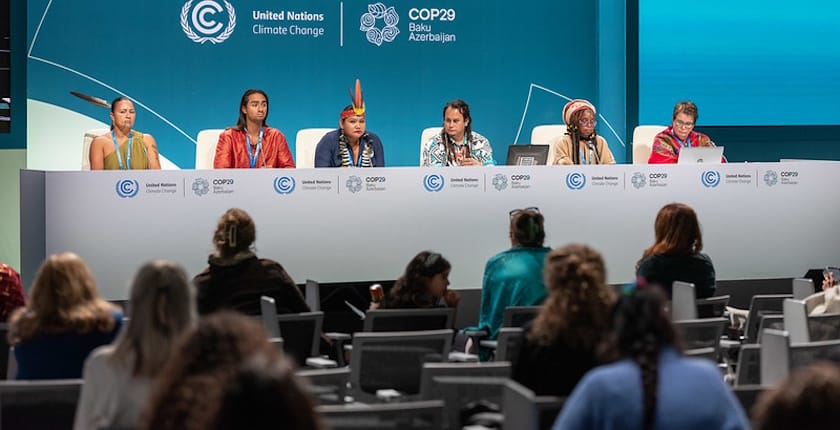
COP29 decisions ambitious but insufficient to curb global warming

Consensus was achieved at the COP29 summit on providing USD 300 billion per year in financial assistance to the poorer and most vulnerable countries and rolling out a global carbon market, alongside a series of declarations. But they still fall short of required climate targets.

Negotiators traditionally went into overtime at the United Nations Climate Change Conference COP29 – and churned out the Baku Climate Unity Pact. It includes the New Collective Quantified Goal (NCQG) for Climate Finance. It will also be known as the Baku Climate Finance Goal.

The talks were expectedly tense. At one point, representatives of island states and other countries imperiled by climate change left the table. Eventually, the most vulnerable group accepted a pledge to get at least USD 300 billion a year in financial assistance until 2035. It is USD 50 billion more than in the draft.

Developed countries only recently delivered on the commitment to provide USD 100 billion per year. But the vulnerable part of the world actually needs more than USD 1 trillion every year.

While rich countries are racing to decarbonize by mid-century or earlier, others are in thirst, some literally, for the basics. They face devastating heat, drought, wildfires and flooding. Rising sea levels may soon wipe out countless inhabited islands and alter the world’s coastlines. Jeopardized regions also require funding for renewables, mechanisms to protect lives, livelihoods and nature and to adapt agriculture and infrastructure.

Biden sees climate finance as tool to sell US products

With a one-and-a-half-day delay, envoys agreed as well on a broader package of USD 1.3 trillion per year. The USD 300 billion sum is based on grants and subsidized loans, while private financing and climate taxation dominate the rest.

“It will help mobilize the level of finance – from all sources – that developing countries need to accelerate the transition to clean, sustainable economies, while opening up new markets for American-made electric vehicles, batteries, and other products… While some may seek to deny or delay the clean energy revolution that’s underway in America and around the world, nobody can reverse it — nobody,” outgoing United States President Joe Biden pointed out.

Private investments and commercial loans are likely to dominate the sum of USD 1.3 trillion per year pledged for poor and most vulnerable countries

Multilateral development banks (MDBs) announced projections for their contributions to climate action as USD 170 billion per year by 2030, of which USD 120 billion for low- and middle-income countries.

For instance, China is active overseas through climate finance development agencies, multilateral development banks, climate funds, export credits and bilateral loans. The country avoided specifying figures and purposes and opted to participate on a voluntary basis.

Notably, the USD 300 billion level wouldn’t be adjusted for inflation.

“The Baku Finance Goal represents the best possible deal we could reach,” COP29 President Mukhtar Babayev claimed. He is Azerbaijan’s minister of ecology and natural resources.

The Loss and Damage Fund is becoming operational as early as next year. The idea behind it is to mitigate the consequences of climate disasters and bolster adaptation in vulnerable regions. But the war chest amounts to a mere USD 730 million, for now.

Saudi Arabia stifles fossil fuel phaseout hawks

Slovenia’s Minister of Environment, Climate and Energy Bojan Kumer warned that existing agreements and policies wouldn’t curb global warming at less than three degrees Celsius by the end of the century. Scientists prevalently see the level as catastrophic, with irreversible consequences.

The consensus is that the rise needs to be limited to 1.5 degrees. Global temperatures already surpass the threshold regularly on daily, monthly and even annual scales. However, some still believe the long-term average can be returned below the critical point.

At the same time, Saudi Arabia managed to sideline the efforts to phase out fossil fuels, according to climate diplomats. The goal is not even mentioned by name in the final document, diluting the initiative. The Conference of the Parties of the UN Framework Convention on Climate Change (UNFCCC), which is the international body’s official name, only reaffirmed the conclusions from COP28.

Kumer expressed disappointment at the lack of concrete commitments for a faster reduction of greenhouse gas emissions and the gradual elimination of fossil fuels. Nevertheless, he emphasized the importance of continued cooperation with countries within the so-called High Ambition Coalition.

The conference also approved a document on gender equality, calling for greater assistance to girls and women in the climate crisis, Kumer’s ministry said. Unfortunately, the language regarding gender equality and human rights was not sufficiently included in the other texts of the decisions, as the European Union sought, it added.

Global CO2 market nearing launch

One major breakthrough at COP29 was the new framework for a global carbon market under UN supervision. It allows countries and companies to purchase and trade certified emissions allowances. Article 6 of the 2015 Paris Agreement facilitated the mechanism. Technical details remain.

Financial flows from compliant carbon markets could reach USD 1 trillion per year by 2050, the COP29 Presidency said. They also have the potential to reduce the cost of implementing national climate plans by USD 250 billion per year, it added.

The summit’s leadership urged the parties-governments to reinvest the savings in scaling their climate ambitions.

COP29 operationalized an international carbon credit scheme to direct financial flows to the developing world and reduce the cost of implementing national climate plans.

After a decade of talks, envoys operationalized the carbon credit scheme to direct financial flows to the developing world and reduce the cost of implementing national climate plans.

Article 6.4 standards define reliable and transparent carbon markets. Among other points, a deal on 6.8 facilitates international cooperation through non-market approaches.

Trust in provisional international and bilateral carbon dioxide certificates has deteriorated. There have been cases of major fraud while some emission offsetting technologies and methods proved to be unreliable or ineffective. Skeptics are pointing the finger at the fossil fuel industry and arguing that planting trees and capturing emissions are excuses for companies to maintain business as usual.

A global mechanism could create an asset category out of preserving rainforests, national parks and ecosystems. Delivery and effects are anyone’s guess, though.

New climate, decarbonization initiatives

With endorsers from over 50 countries, the COP29 Declaration on Water for Climate Action calls for an integrated approach to combating the causes and impacts of climate change on water basins and water-related ecosystems. It advocates integrating water-related mitigation and adaptation measures in national climate policies.

More than 50 maritime shipping industry actors agreed to accelerate zero and near-zero emission fuels by 2030.

As part of a USD 193 million package for clean energy endeavors, the United Kingdom supported clean cooking for 10 million people across Sub-Saharan Africa, South Asia and the Indo-Pacific, to leave coal and wood cooking behind.

All G20 countries now have net zero targets

Twenty five countries and the EU indicated they would commit to a policy of no new unabated coal power plants. The initiative is to include the decision in their nationally determined contributions before COP30.

The group includes 13 EU member states: Austria, Belgium, Cyprus, Czech Republic, Denmark, France, Germany, Italy, Malta, the Netherlands, Slovakia, Slovenia and Sweden, as well as Norway and the UK.

Over 50 countries endorsed the Reducing Methane from Organic Waste Declaration. Eight are among the world’s largest organic waste methane emitters and represent 51% of global methane emissions from organic waste.

Mexico vowed to eliminate net greenhouse gas emissions by 2050, meaning all members of the Group of Twenty (G20) have committed to a net zero target.

Post Views:451
  • 1
  • …
  • 111
  • 112
  • 113
  • 114
  • 115
  • …
  • 140

AEA – Albania Energy Association is a industry association dedicated to representing the interests of Albanian and West Balkan for energy producers and consumers. AEA works to advance the development and adoption of sustainable energy solutions in Albania and the Western Balkans, supporting the region’s transition toward a cleaner, more secure, and more competitive energy future. AEA is registered by decision of the Court of Tirana, DECISION NO. 3032, (VAT:L11827451K).

[email protected]

Address
Blv Zogu 1
Tirana
1057
ALBANIA

LinkedIn  |  Facebook
Events
May 25, 2022 Connecting Green Hydrogen Europe 2022
May 25, 2022 Energy Week Western Balkans 2022
Copyright © Albania Energy Association