AEA-Albania Energy Association
  • Main
  • About Us
  • Services
  • Sectors
  • News
  • EventsEvents
  • PublicationPublication
  • Contact Us
AEA-Albania Energy Association
  • Main
  • About Us
  • Services
  • Sectors
  • News
  • EventsEvents
  • PublicationPublication
  • Contact Us
AEA-Albania Energy Association
  • Home Page
  • About Us
  • Sectors
  • Our Services
  • News
  • Contact Us
April 6, 2025
by AEA in News

Montenegro’s EPCG to install 200 MW of solar power plants

Power utility Elektroprivreda Crne Gore plans to install solar power plants with a total capacity of 200 MW over the next three years, CEO Ivan Bulatović announced.

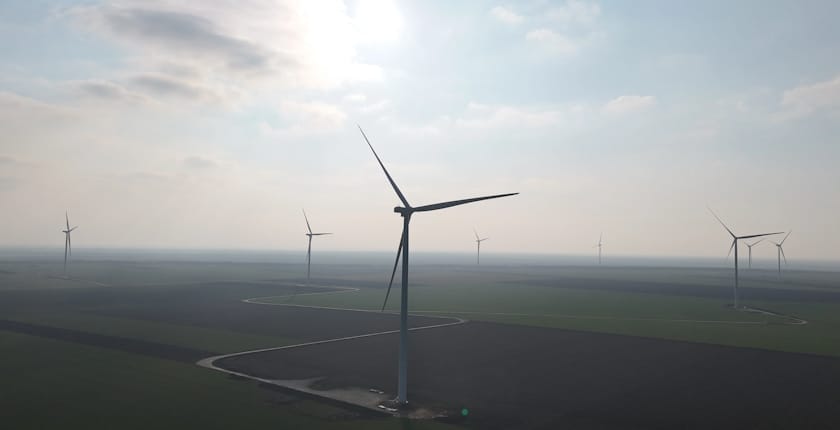
State-owned power company Elektroprivreda Crne Gore (EPCG) intends to start production at the Gvozd wind farm by the end of the year and connect photovoltaic plants with a total capacity of 200 MW to the grid over the next three years.

With small rooftop solar systems of an overall 70 MW already online, Montenegro is a leader in the region in the development of the prosumer concept, Bulatović claimed and added that by the end of the year the capacity would reach 100 MW.

He also pointed to the importance of the Kruševo hydropower project, which is being developed in cooperation with French partners. In December last year, EPCG signed a contract for project design. The company’s partner in the endeavor is EDF.

Montenegro’s grid is relatively well developed thanks to the investments made in former Yugoslavia

Bulatović underlined that the problem of insufficient development of the transmission system is not a case only in Montenegro, but in the entire region and Europe. Simply, the grid wasn’t prepared for the sudden introduction of renewable energy, according to him.

The utility’s chief recalled that investors in Montenegro have the opportunity in the country’s legal framework to build a grid connection themselves.

The Montenegrin network, as he emphasized, is relatively well developed thanks to investments from former Yugoslavia, Bulatović noted.

Everything is ready for the installation of the second line of the submarine electricity interconnection to Italy

Turning to the undersea interconnection with Italy, he said the second cable is expected to be laid as the required infrastructure has been built on both sides. The first link has 600 MW.

Another cable to Italy and the planned new interconnections are creating transmission capacities enabling Montenegro and the entire region a better connection with the European electricity market, according to Bulatović.

The construction of the Trans-Balkan Corridor is underway and interconnectors with Albania and Bosnia and Herzegovina are in the pipeline, he stressed at the Trebinje Energy Summit.

The development of the transmission system will continue in line with the needs of investors and for electricity production, Bulatović asserted.
Post Views:148
April 4, 2025
by AEA in News

Eurowind Energy signs virtual PPA in Romania with automotive manufacturer

Denmark-based Eurowind Energy signed a 12-year virtual power purchase agreement (PPA) with Autoliv in Romania, for the supply of electricity from the Pecineaga wind park. The automotive manufacturer headquartered in Stockholm also signed one such deal for a solar park in Finland.

The strongest wind turbines in Romania will generate electricity for Autoliv, which makes safety systems for vehicles including airbags and seatbelts, as well as steering wheels and other components. Eurowind Energy will supply the energy from its Pecineaga wind power plant for 12 years under a virtual PPA. In addition, the Swedish automotive manufacturer has another new contract in Finland.

Eurowind Energy recently completed the construction of all eight SG 6.6-170 turbines at the site in Northern Dobruja (Dobrogea in Romanian). However, the 48 MW wind farm is expected to become operational by 2027, according to an update from Autoliv.

PPAs essential for project development for Eurowind Energy

Estimated annual output is 176 GWh, equivalent to the electricity needs of 48,000 Romanian households. The investment is worth EUR 79 million. Eurowind Energy, based in Hobro, Denmark, is one of the biggest wind and solar power developers in Romania.

The company is also a partner in the construction of a giant photovoltaic plant in Bulgaria. The Tenevo facility is planned to be combined with a future wind park and a battery energy storage system into a hybrid power plant.

“PPAs are essential in developing new energy parks. Power purchase agreements with large, ambitious companies like Autoliv ensure the continuous development of new parks and a cleaner future for all of us,” Commercial Director Jesper Schaumburg-Düring said. Eurowind Energy is 50% owned by EWE Holding while Norlys Holding controls the other half.

Autoliv is combining wind with solar in different countries to optimize electricity production

Autoliv’s other new virtual PPA, also for 12 years, is with Alight, for a proposed solar power plant of 100 MW in peak capacity. The two deals are important for ensuring a consistent and reasonably priced energy supply for the manufacturer’s activities in Europe, reducing the risks associated with potential future energy price fluctuations, the announcement reads.

“The innovative approach of combining solar and wind technologies ensures optimal energy generation during both day and night. This approach and the fact that the facilities are located in two different European countries provides flexibility in Autoliv’s physical operations and electricity procurement,” the company added.

The PV park in Eurajoki, Finland is supposed to come online in 2026. Autoliv revealed that it intends to “contract a majority of the clean electricity produced.” Construction is set to start during the spring, the statement adds.

“Through these initiatives, we support our ability to supply customers seeking sustainable products and we take a significant step forward in achieving our climate targets for the European operations,” said Autoliv Europe’s President Magnus Jarlegren. The company aims to achieve carbon neutrality in own operations by 2030 and net zero emissions across the supply chain by 2040.

Post Views:36
April 3, 2025
by AEA in News

Bulgaria aims to make Europe’s biggest energy community

The Ministry of Energy, Electricity System Operator (ESO) and the Bulgarian Development Bank (BDB) are launching a solar power program for municipalities, schools, kindergartens, hospitals and small businesses. There are no upfront costs and the installations become the beneficiary’s ownership within eight years.

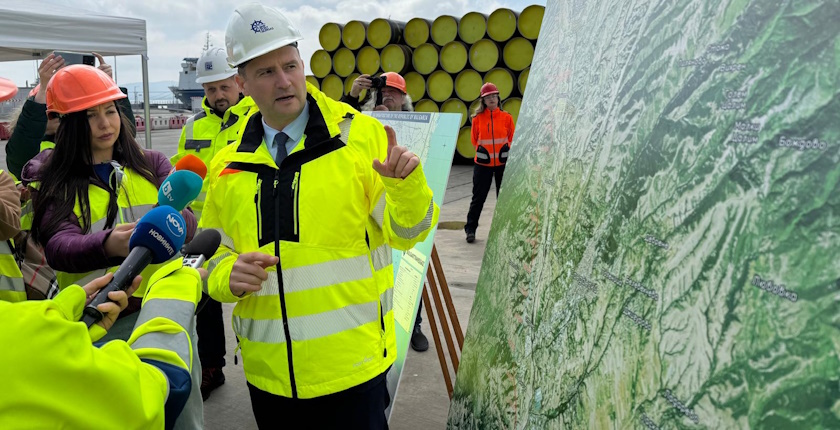
Minister Zhecho Stankov said the goal is to create the largest energy community in Europe and hinted that the government would finance the scheme with a green bond. He also declared the start of the regional Vertical Gas Corridor project in Bulgaria as the first pipes were delivered.

Every school and hospital in Bulgaria can become an electricity producer, Minister of Energy Zhecho Stankov stressed as he presented a financial support mechanism designed with the ambition to create the largest energy community in Europe. The model will benefit both the public sector and private business, he pointed out in the port city of Burgas at a ceremony marking the arrival of the first 4,000 pipes for the Bulgarian sections of the regional Vertical Gas Corridor.

The joint initiative with the country’s power transmission system operator ESO and the Bulgarian Development Bank is for the installation of solar panels with no upfront costs. Beneficiaries – municipalities, schools, kindergartens, hospitals and small businesses – would pay through energy savings and become owners in six to eight years, Stankov claimed.

Bulgaria mulls issuing green bond to finance sustainable energy

The minister also said the project could lead to the government’s first green bond to finance clean and locally produced energy available to a wide range of consumers.

For example, Burgas Municipality can equip all schools, hospitals, kindergartens and other facilities with photovoltaic panels without spending a penny from the local budget, Stankov explained.

Government to invest EUR 57 million in Vertical Gas Corridor

The Vertical Gas Corridor is envisaged to connect Greece, Bulgaria, Romania, Moldova and Ukraine. They plan to transport the fuel from liquefied natural gas (LNG) terminals Alexandroupolis and Revithoussa in Greece, and from the Caspian region, via the Southern Gas Corridor.

The government is fully funding the first stage of the project on Bulgarian territory, with EUR 57 million. The pipes for the pipelines came from India.

Stankov: Bulgaria will never again be left without natural gas

“Bulgaria will never again be left without natural gas,” said Minister Stankov. The capacity of the line between Kulata, on the border with Greece, and Kresna will be increased to 3.6 billion cubic meters per year from 2.3 billion, he added. The distance is 48.5 kilometers.

The most difficult part is between Mikrevo and Ribnik, where three kilometers will be built by horizontal drilling, the minister revealed. He explained there would be no aboveground work, so that nature and infrastructure wouldn’t be affected.

Another section, 80 kilometers, is from Rupcha to Vetrino. The purpose of the investment is to double the maximum annual flow toward Romania to 10 billion cubic meters, Stankov stressed. The last one, Tarnik-Piperovo, is 51 kilometers long.

The compressors on the corridor are reversible, allowing gas supply in both directions, the minister noted.

April 3, 2025
by AEA in News

Number of prosumers in Romania spikes 79% in one year to 204,000

Prosumers in Romania operated 2.44 GW of capacity at the end of January or 63% more than one year before. Their number soared 79% to 203,984 and it is set to keep growing substantially with more government subsidies underway.

Once again, prosumers confirmed their role as the main pillar of Romania’s energy transition. Growth in the segment is fueled by government support, mostly through funds obtained via the European Union. The number of households, small firms and institutions with the status reached 203,984 by the end of January or a stunning 79% more than 12 months earlier. There were only 303 registered at the end of 2019!

Total capacity jumped 63% on an annual basis, to 2.44 GW, the National Energy Regulatory Authority (ANRE) said. Photovoltaic installations in Romania surged 57% last year, to 4.7 GW, according to the International Renewable Energy Agency (IRENA). It means prosumers still account for more than half.

The Environment Fund Administration (AFM) said it would propose a record EUR 442 million budget for the Casa Verde Fotovoltaice subsidy scheme for prosumers

The number of households was 180,617 two months ago, so roughly 2.4% are currently prosumers. They had 1.13 GW installed.

The remaining ones are legal entities, 23,277 of them, with 1.31 GW.

Most prosumers are in Ilfov county, almost 13,783, followed by Timiș (10,007) and Bihor (8,286).

The Environment Fund Administration (AFM) said it would propose a record EUR 442 million budget for Casa Verde Fotovoltaice. It is a subsidy program for the installation of solar panels, mostly for households. Last year the sum amounted to EUR 402 million.

This year the fund is introducing a scheme worth EUR 80.4 million for battery storage for prosumers. More than 66,000 candidates already applied for a maximum of EUR 6,000 per household for solar panels with storage systems.

President of the APCE association of prosumers and energy communities Dan Pîrșan said EUR 80.4 million for 2025-2026 enables one in four existing prosumers to install batteries and become almost energy independent.

Post Views:19
April 3, 2025
by AEA in News

Power exchanges to test cross-border day-ahead trading in 15-minute intervals

Nominated electricity market operators in Europe are starting joint member testing on April 7 for cutting the cross-zonal day-ahead power trading interval to 15 minutes. The switch is expected to improve the integration of renewable energy sources.

The European wholesale electricity market is preparing to switch its market time unit (MTU) from 60 to 15 minutes within the Single Day-Ahead Coupling (SDAC) mechanism. The move is significant in competition terms as well as for liquidity and the optimization of power production resources. The Market Coupling Steering Committee, MCSC, said joint member testing is kicking off on April 7 with a plan to complete it on May 15.

It scheduled the go-live for 15-minute products for June 11, for delivery on June 12.

“Testing will allow us to fine-tune processes, validate key scenarios and ensure everything is in place for a smooth launch. Our teams are committed to rigorous testing to guarantee the system’s efficiency and reliability from day one. TSOs will provide production-like capacities,” the body added.

Intermittent renewables require shorter market time units

The Single Intraday Coupling (SIDC) and SDAC projects merged and formed MCSC three years ago. It consists of exchanges, formally called nominated electricity market operators or NEMOs, and transmission system operators (TSOs).

SDAC allocates scarce cross-border transmission capacity by coupling wholesale electricity markets from different regions through a common algorithm. It simultaneously takes into account cross-border transmission constraints. The aim is to create a single pan-European cross-zonal day-ahead electricity market.

The market is experiencing a surge in intermittent sources – wind and solar energy, completely exposed to unexpected weather changes. The 15-minute MTU could eventually be cut to five minutes or even less.

“This new development will refine market operations by enhancing precision, improving the integration of renewable energy sources, and increasing overall efficiency and flexibility. By enabling better adaptation to fluctuations in energy supply and demand, it will support more accurate pricing and scheduling, delivering significant benefits to market participants,” the announcement reads.

NEMOs, TSOs to monitor as exchange members test new system

NEMOs and TSOs are responsible for monitoring as market participants test the shorter interval. The two sides will collaborate to further enhance process stability, MCSC said.

The tests include full decoupling with a shadow auction and the simulations of bidding errors and a lack of liquidity. The switch implies checking functional and simulation integration, among other elements.

JAO, the single allocation platform (SAP) for all the TSOs for cross-border transmission capacity, said it would conduct shadow auctions on April 7, 8 and 9.

As for power exchanges region that Balkan Green Energy News covers, the Romanian Gas and Electricity Market Operator (OPCOM), Independent Bulgarian Electricity Exchange (IBEX), Croatian Power Exchange (CROPEX) and Greece’s Hellenic Energy Exchange (EnEx or HEnEx) updated their members on joint testing ahead.

Of note, Greece and Bulgaria recently achieved another step in power market integration. Both connected to the Platform for the International Coordination of Automated Frequency Restoration and Stable System Operation (PICASSO). It enables them to trade balancing energy.

The Western Balkans aren’t coupled yet with the single European electricity market.

Post Views:27
April 3, 2025
by AEA in News

Energy efficiency, renewables in rural communities in Serbia’s Zlatibor region

Author: Stevan Vujasinović

The population in rural areas in the municipalities of Priboj, Čajetina and Arilje in Serbia have been heavily affected for years with frequent and prolonged interruptions in electricity supply. The interruptions not only disturb everyday life but they also substantially hinder the development of family businesses, especially in tourism and agriculture. However, solutions do exist.

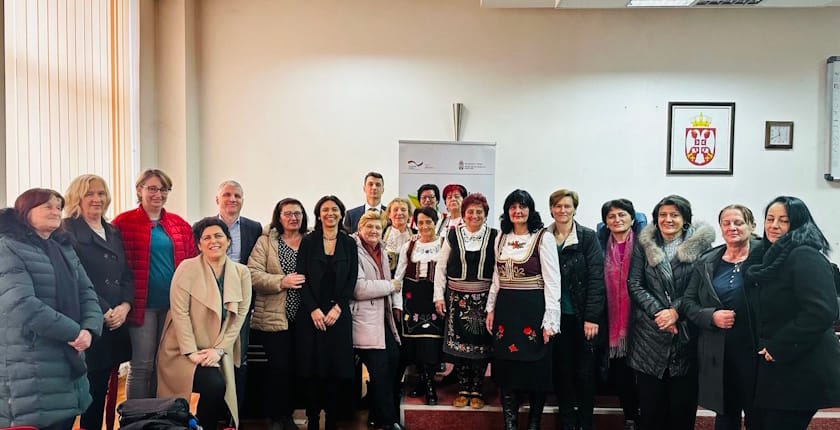
Regional Development Agency Zlatibor almost simultaneously marked World Energy Efficiency Day (March 5) and International Women’s Day (March 8) last week. On the occasion, it organized “energy discussions” with members of women’s associations in rural areas of these municipalities, and the main topics were energy efficiency and renewable energy sources for rural households.

The Zlatibor mountain is one of Serbia’s main tourist and skiing resorts. It partly spans the territories of Priboj, Čajetina and Arilje.

Energy needs and challenges in rural households

“We are without power for several hours at a time in the winter. It is not only discomfort, but a serious problem for heating and preserving food, and especially for us who have guests in rural tourism”, said one of the participants at a discussion in Čajetina. The event gathered the members of the Čajetina Rural Women’s Association and Zlata association.

It became clear from the discussions that there is great interest in installing solar panels, among private households as well as hospitality facilities. However, the access to these technologies is often difficult because of high initial costs and complex procedures for obtaining subsidies, which despite growth in the available volume for the purpose still don’t meet all the existing demand.

High initial expenses and complex procedures for obtaining subsidies make the availability of solar panel installations more difficult

The problem is exacerbated by the fact that many houses in the villages were built illegally, making it more difficult to access energy efficiency subsidies. Besides, the calls are too often only accessible for the beneficiaries that already have initial capital to invest, while the village population often doesn’t know about them.

The Municipality of Čajetina acknowledges the significance of energy efficiency. Last year it issued a public call for cofunding energy efficiency measures in family houses and apartments. However, targeted support for users with the vulnerable energy buyer statuses still hasn’t been provided. Assistance could additionally improve the availability of these measures to the wider population, and in fact the very people who need help the most.

Photo: Members of the Čajetina Rural Women’s Association and Zlata association (Miloš Radojević)

Possibilities for using renewable energy sources

One of the key conclusions of the discussion was that solar panels and heat pumps can significantly improve the situation. Aleksandar Macura from RES Foundation pointed out that the law already enables households to produce their own energy and exchange it with state-owned power utility Elektroprivreda Srbije (EPS). “There are sufficient examples of good practice – around 2,500 households in Serbia already use rooftop power plants and work as buyers-producers,” Macura stated.

Buyers-producers are Serbia’s legal category for prosumers.

Nevertheless, solar panels still require initial investments of several thousand euros, which is an insurmountable obstacle for many. The participants in the discussion proposed solutions such as subsidized loans with delayed payment, in installments, to make the technology more accessible both to retirees and socially disadvantaged persons.

Assembling and energy communities

Another important aspect of the discussion was the possibility of establishing energy communities. In line with European regulations, Serbia is opening the space for joint production and use of solar energy within local communities.

It means any village council could install a solar power plant and distribute the energy among households. It would be especially useful for women running family businesses in agriculture and tourism, as it would provide them with a stable energy source without leaning on an unpredictable power distribution network.

Wood is traditional but inefficient energy source

Wood biomass usage still dominates in many rural households. Some said in Arilje: “Wood is irreplaceable” and “we believe in wood!” However, for people in villages, wood is almost never, even though it is the most accessible, never the most efficient solution for heating. It is partly because of moisture in the solid fuel, and mostly because of inefficient devices.

There are fewer and fewer people in the countryside, so it is getting more difficult and more expensive to timely obtain the wood felling and preparation service, even in one’s own forest. “We have been using wood for decades, but who today can afford quality dried wood? We often heat ourselves using wet wood, which only increases consumption and air pollution,” said one of the participants in an event in Arilje, describing her experience. It was attended by women from two associations: Sibirka and Ariljka.

Photo: Members of associations Sibirka and Ariljke (Miloš Radojević)

How to proceed?

It is clear that rural communities mustn’t be left behind in the energy transition process. Solar panels, energy communities and subsidies for more efficient heating are solutions that can bring concrete changes. However, the key to success lies in a greater accessibility of these solutions for all citizens, regardless of their financial situation or the place of residence.

Energy sustainability in rural communities is not just a matter of comfort but also of the survival and development of local communities. If we want villages to be vital and economically stable, it is necessary to facilitate a stable, sustainable and affordable energy source for them. Through smart investments, better subsidy organization and the development of energy communities it is possible to significantly improve the quality of life in these areas. In addition, additional training in the usage and maintenance of energy-efficient systems can contribute to a greater deployment of the technologies.

The energy discussions with the women of the Zlatibor county was organized within the project Improving the Use of Sustainable Energy in the Zlatibor region, financed by the German Organization for International Cooperation (GIZ) by order of the Government of the Federal Republic of Germany (Federal Ministry for Economic Cooperation and Development – BMZ).

Post Views:152
April 3, 2025
by AEA in News

Bring clean heating and cooling to buildings: a circular energy economy in urban environments

Author: Thomas Nowak, EUSEW’s digital ambassador

Efficient heating and cooling is essential, yet much thermal energy goes to waste. What if we could avoid this thermal pollution and instead establish a circular energy economy in urban areas by recovering and recycling waste heat? Thermal networks as heat collectors and transport means, heat pumps as energy lifts, storage, and clean renewable energy sources can turn this dream into reality today.

Clean heating and cooling in cities is not happening

As the climate crisis worsens and urban populations grow, cities face increasing pressure to improve infrastructure and services. Cities need to be made more resilient against extreme weather incidents and heat waves. The use of fossil energy must be replaced by clean alternatives. This is not only a response to climate change, but also an obligation codified in EU law, notably the EU Energy performance of buildings and the Renewable Energy Directives.

The symbiosis of heat pumps, low temperature energy grids and the use of renewable electricity/heat provides a solution.

Low temperature thermal networks to unlock “the energy chest” of cities

Traditional district heating and cooling distributes high temperature thermal energy generated in central plants to its clients. Even using insulated pipes, some energy is lost in the distribution. Changing from central to decentralised networks and reducing operating temperature avoids this disadvantage. Low temperature, multi-input-output networks connect all types of buildings requiring heating and cooling. They collect waste heat from many different sources (e.g. industrial processes, offices, data centres, or public infrastructure) and distribute it where it is needed.  Heat pumps raise the temperature to the required level at the point of demand.

Photo: The symbiosis of heat pumps, thermal energy grids and multiple energy sources for clean heating and cooling of apartments and buildings in cities. Source: Qvantum Industries
© Qvantum Industries AB

Heat pumps for clean thermal energy

Heat pumps extract heat from a source (air, water, ground or a thermal network), lifting it to a higher temperature level to provide heating. At the same time the source is slightly cooled. Heat pumps always provide useful heating and cooling and it depends on the system design which of these services can be used.

Connecting the many energy users and (waste) heat providers in a city through a thermal network and adding heat pumps of different types and capacities in apartments and buildings (see circles) enables the collection of waste heat and highest heating and cooling efficiency. One user’s waste heat becomes another users heat source (see figure 1).

Multiple benefits for cities

The benefits for cities of transforming their heating and cooling infrastructure are plentiful.

  • Replacing fossil fuels with clean energy reduces CO₂ emissions and air pollution, leading to better air quality.
  • Collecting waste heat from cooling limits the heat island effect in cities. Buildings equipped with cooling help citizens withstand heat waves. Cities and citizens are more resilient to already observable climate change.
  • Storage tanks and the energy grid itself operate as thermal battery, balancing the electric grid.
  • Local energy sources, used by European technology solutions and designed and installed by a European workforce, help Europe become largely independent of fossil energy.

Breaking barriers to adoption

Implementing heat pump technology and thermal networks faces challenges. Upfront investment costs, regulatory hurdles, and limited public awareness can slow progress. Cities and policymakers should incentivise modern heat pump-based heating and cooling by making deployment easy and economically attractive. Cities should make thermal networks part of their public waste heat collection infrastructure.

Convincing humans is also key. Campaigns explaining policy, highlighting the benefits of clean heating and cooling and explaining how end users will be supported in their decision making will create trust and accelerate adoption by decision makers.

A path to sustainable cities

Urban heating can become decarbonised, efficient and sustainable while creating cleaner, more affordable, and more resilient communities. The technology exists, its potential is enormous. Let’s make use of it. Clean heating and cooling is not just a choice – it is the cornerstone of Europe’s energy and climate policy.

This opinion editorial is produced in co-operation with the European Sustainable Energy Week 2025. See ec.europa.eu/eusew for open calls.

Disclaimer: This article is a contribution from a partner. All rights reserved.

Post Views:157
April 3, 2025
by AEA in News

Building resilient cities: how to align competitiveness and sustainability in Europe’s energy transition?

By Filipe Araùjo, Deputy Mayor of Porto, Portugal and Vice President of Energy Cities,one of EUSEW partner organisations

With the new EU Institutions taking office, it seems that the main discourse has shifted from the EU Green Deal to competitiveness. This new narrative presents both a challenge and an opportunity for European cities. We want our territories to prosper, but this can’t happen at the expenses of our health and safety.

Resilient local economies for a competitive Europe

A city that is thriving is a place where there is community wealth: the needs of its inhabitants are met, preferably by local economic actors. This contributes to reinforcing the local economic system, the social bonds and overall help withstand crisis situations. Resilient local economies are a precondition to EU’s competitiveness.

This community wealth approach applies to many sectors, but I believe it’s quite effective when it comes to energy. Nowadays, very few are questioning the need to have more renewable energy fed into the grid, not only to fight climate change, but also to ensure everyone (businesses and citizens alike) has access to energy at a relatively stable and affordable price, no matter the geopolitical context. But if we want to speed up RES deployments, we need to ensure everyone is on board. Not in my backyard behaviours (NIMBY) are still a reality many local leaders are confronted with. According to our experience in Porto, local ownership of renewable energy is a way for cities to address NIMBY, but also to help tackling energy poverty and contribute to thriving local economies.

Community energy addressing energy poverty in Porto

That is why Porto is planning to include all municipal social housing, around 12% of buildings in the municipality, in community energy projects. 6MW of solar power is going to be installed, providing clean electricity to vulnerable families at a lower price.

While some of the projects are still being tendered, some are already in the implementation phase. For example, the energy community in the Agra do Amial district, active since May 2024, is already providing its members with renewable energy, with around 50% of the energy generated consumed by vulnerable families

While our ambition is high, we can’t ignore the many challenges we are confronted with – some are common to many European municipalities. Cities frequently lack staff and financial resources to lead highly participatory process, often involving citizens who are very difficult to engage (such as vulnerable households) or even to provide information to their community on energy related issues. This, combined with the complexity of such topics, makes our work even more difficult.

In addition, burdensome administrative processes and challenging legal frameworks at national level can halt innovative projects and discourage citizens and small businesses from participating. When setting up Porto’s first energy community, it took us 2 years to get social housing units connected to the solar panels we installed.

Leveraging on local ecosystems for a more resilient Europe

Luckily, solutions do exist to ensure local communities can play their part to contribute to a more resilient and democratic Europe. Aside from ensuring legislation is properly transposed so that everyone across Europe can benefit from the same energy rights, we need capacity building programmes, develop local One Stop Shops to inform/engage citizens on the opportunities available to them and energy literacy programs.

For this to happen, cities will have to access finance, and the integration among the different initiatives at all levels that aim at increasing renewable energy deployment (and energy security) is fundamental. Another important aspect will be to ensure multilevel governance, so that cities can participate in the decision making around what concerns them, and not just been asked to implement.

In the coming period, the new European Commission is set to work on a new Citizens Energy Package, but also to develop a Clean Industrial Deal and reform the EU Cohesion Policy. This presents as a unique opportunity to align the EU approach to competitiveness with its energy and environmental targets, by establishing proper governance mechanisms and funnelling the necessary resources accordingly.

This opinion editorial is produced in co-operation with the European Sustainable Energy Week (EUSEW) 2025. See ec.europa.eu/eusew for open calls.

Post Views:92
April 3, 2025
by AEA in News

Heliup wins European Solar Startup Award 2025 with solar panels 60% lighter than conventional ones

France-based Heliup has been awarded the Gold European Solar Startup Award 2025 for its Stykon solar PV panels for flat rooftops.

Following a successful online pitch, Heliup, Aevy and suena were nominated by the expert panel as finalists.

Yannick Veschetti, President and Co-founder of Heliup, Gautier Moulin, Co-founder and Chief Operating Officer of Aevy, and Felix Heimke, Senior Product Manager at suena, presented their work on stage at the SolarPower Summit 2025.

Yannick Veschetti stressed there is over four billion square meters of available large rooftop space in the European Union. Heliup wants to harness the potential of this available rooftop space and fast-track solar installations across Europe, he added.

Veschetti: The startup is committed to revolutionizing solar energy with lightweight solutions manufactured in Europe

The startup is committed to revolutionizing solar energy with lightweight solutions manufactured in Europe that unlock the potential of commercial and industrial rooftops, Veschetti pointed out.

According to the startup, solar panels have considerable weight which, combined with around 15 kilograms per square meter for the fixing structures, is not compatible with a large proportion of existing building roofs.

To address the issue, Heliup uses a patented CEA technology developed for over three years at France-based Institut National de l’Energie Solaire (INES).

The unique technology is based on the conservation of thin glass and on an innovative installation concept, the startup said.

The solar panel is 60% lighter than conventional panels

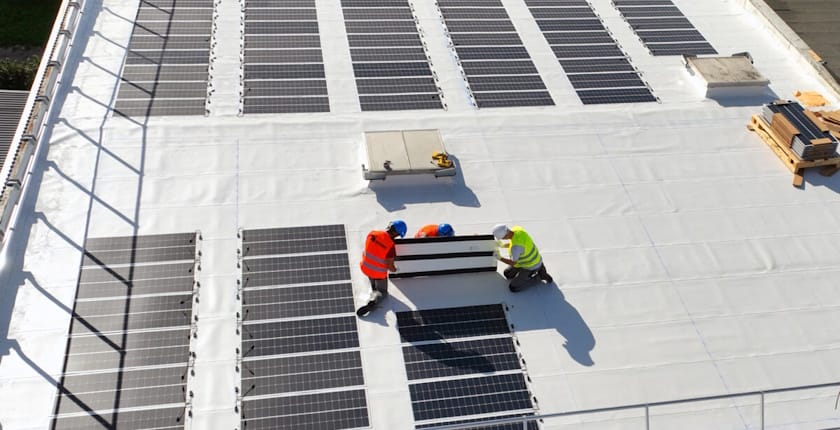
The Stykon range is intended for flat roofs, with an innovative, simple and quick installation system based on gluing the panel directly onto the roof’s waterproofing membrane. It is 60% lighter than conventional panels while maintaining the same level of performance and durability, Heliup added.

SolarPower Europe explained that Heliup’s panels are lightweight, at five kilos per square meter. They have an efficiency of 20% and are resistant to extreme weather conditions. The equipment is made in Europe and has an easy and fast installation process, the organization said.

“Only with these forward-thinking innovators can we strengthen Europe’s competitiveness and guarantee a swift energy transition,” SolarPower Europe CEO Walburga Hemetsberger stated.

The award jury panel comprised Jenny Chase, Solar Analyst at BloombergNEF; Stefan Müeller, Co-Founder, Shareholder and Board Member at Enerparc AG; Felix Krause, Managing Partner at Vireo Ventures; and Michael Schmela, Director of Market Intelligence at SolarPower Europe.

Post Views:59
April 3, 2025
by AEA in News

Renewables equipment factory to contribute to just transition of coal region in Romania

Monsson Group is preparing to build a manufacturing facility in Petrila for renewable energy equipment, including robots that clean solar panels. The project received funding to contribute to the just transition of Romania’s coal region Jiu valley – Hunedoara.

An investment of nearly EUR 10 million in the first phase is underway in Transylvania, in the town of Petrila, economically devastated after the closure of a coal mine. The project is aimed at reviving the area with a factory for renewable energy equipment such as enclosures for battery energy storage systems, wiring and robots that clean photovoltaic panels.

Monsson Group revealed its facility would also manufacture gear for monitoring environmental parameters and tracking fauna in the area. The Sweden-based company has said 70% of the investment would be covered from Romania’s Just Transition Program which is in turn part of the European Union’s Just Transition Facility.

Romania is planning to prolong the operation of its coal power plants and mines for a smoother switch to renewable sources, in terms of electricity supply. However, such facilities are becoming less financially viable by the day all across the EU. Coal regions are facing economic blows from early shutdowns of power plants and mines.

First major private investment in Petrila

According to Monsson, the new factory would employ more than fifty people in the first phase. It expects to begin construction mid-year.

It is the first major private investment in Petrila, Mayor Vasile Jurca said. He said the project enables reskilling and sustainable development. The local authority provided the land for the factory. Romania has earmarked substantial funding for the construction of renewable energy equipment plants.

The second part of the plan is to install a 20 MWh battery energy storage system to provide system services to the national grid, followed by a 50 MWh unit.

Reskilling program underway

The group, which includes Wind Power Energy and its RenewAcad network of renewable energy training centers, established cooperation with the University of Petroșani in getting skilled workers. Monsson is one of the biggest renewable energy investors in the country.

Petrila is part of the Jiu Valley in Hunedoara county, Romania’s main coal region. It is located near Oltenia, the other coal complex, in the counties of Gorj and Dolj.

Notably, the Maritsa East 3 coal power plant in neighboring Bulgaria ceased operations yesterday again after it was briefly brought back online to maintain energy security.

Post Views:48
  • 1
  • …
  • 110
  • 111
  • 112
  • 113
  • 114
  • …
  • 140

AEA – Albania Energy Association is a industry association dedicated to representing the interests of Albanian and West Balkan for energy producers and consumers. AEA works to advance the development and adoption of sustainable energy solutions in Albania and the Western Balkans, supporting the region’s transition toward a cleaner, more secure, and more competitive energy future. AEA is registered by decision of the Court of Tirana, DECISION NO. 3032, (VAT:L11827451K).

[email protected]

Address
Blv Zogu 1
Tirana
1057
ALBANIA

LinkedIn  |  Facebook
Events
May 25, 2022 Connecting Green Hydrogen Europe 2022
May 25, 2022 Energy Week Western Balkans 2022
Copyright © Albania Energy Association