by in News

North Macedonia’s May 2025 blackout was a voltage-control failure, and Europe should read it that way

ENTSO-E’s final report on the Grid Incident in North Macedonia on 18 May 2025 turns what could look like a local technical failure into a broader system warning. At 04:59 CEST, North Macedonia’s power system split between the 400 kV and 110 kV networks, leaving the 110 kV system in blackout while the 400 kV network stayed operational. MEPSO restored the system by 07:47, and the wider Continental Europe system saw no major disturbance. The report therefore matters not because it describes a large geographic event, but because it exposes how voltage stress can cascade into a full loss of supply in a part of the grid that planners had already marked as vulnerable.

The key point is that this was not a surprise in the narrow sense. The factual report says MEPSO had already identified recurring nighttime overvoltage during the spring and autumn low-load season and had introduced countermeasures, including transformer-protection optimisation and the disconnection of one internal 400 kV overhead line. Even so, some 400 kV substations were still operating above the normal band, with voltages reaching 430-437 kV and, in some places over the preceding months, peaking even higher. In other words, the network was already being managed at the edge of its voltage envelope before the incident occurred.

Topology of the transmission system of North Macedonia

Topology of the transmission system of North Macedonia

The report also shows that regional security tools did not flag an imminent crisis in the way operators would have liked. RCC analysis before the incident judged the grid secure based on the information available, yet it also detected that all 400 kV nodes in the MEPSO control area were expected to exceed acceptable voltage limits. At the same time, MEPSO did not deliver the individual grid model for 18 May, so the backup model used by the RCC relied on the last submission from 13 May. That combination – a system that was already voltage-stressed, plus imperfect visibility in the planning chain – is exactly the kind of operational blind spot the report is trying to highlight.

The final report’s diagnosis is structural, not accidental. Its root causes point to operating the system above defined voltage limits, reduced awareness of overvoltage risk in operational planning, insufficient reactive-power reserves with adequate activation time, and limited availability of effective voltage-control assets. That is an important distinction. The event was not simply about “too much generation” or “too little demand”; it was about a system that lacked enough fast, effective, and coordinated tools to absorb reactive power and hold voltage within bounds during a low-load operating regime.

That diagnosis is already driving a policy and investment response. The report points to three layers of recommendations: continuation of ENTSO-E work on voltage and reactive-power modelling quality and operationally useful KPIs; new regional SEE measures for monitoring voltage-limit violations and coordinating action among TSOs, RCCs and ENTSO-E; and MEPSO-specific changes to its System Defence Plan, including broader low-load and high-renewable scenarios and clearer coordination between TSOs and DSOs. The same logic is visible in the post-incident actions: MEPSO has moved to improve reactive-power support, including a 150 MVAr shunt reactor in SS Dubrovo, expected to be finalised by 2027.

For the wider European power sector, the lesson is straightforward. Security of supply in a more renewable, more dynamic grid is no longer only about enough megawatts and enough interconnection capacity. It also depends on voltage discipline, reactive-power capability, modelling quality, and the speed with which operators can see and correct abnormal conditions. North Macedonia’s blackout shows that a grid can remain “adequate” on paper and still fail in practice if voltage-control assumptions are too optimistic or if the operational toolkit is too thin. That is why this report should be read not as a post-mortem for one country, but as a warning for the entire South-East European system and, by extension, for any grid entering a lower-load, higher-renewables operating era.

by in News

North Seas region signs landmark offshore wind deal

Seven heads of state and government and energy ministers of nine countries gathered in Hamburg today to boost the expansion of offshore wind. Together with industry and transmission system operators, the countries launched the Offshore Wind Investment Pact for the North Seas. They envisage cross-border projects totaling 100 GW.

Nine European countries committed to building 15 GW of offshore wind per year over 2031-2040 and derisking offshore wind investments. The industry, in return, pledged cost reductions, 91,000 additional jobs and EUR 1 trillion of economic activity.

Europe is charting the massive offshore wind buildout it needs to deliver on its energy security and competitiveness objectives, WindEurope said.

At the North Sea Summit in Hamburg today, Belgium, Denmark, France, Germany, Ireland, Luxembourg, the Netherlands, Norway and the United Kingdom confirmed their ambition to build 300 GW of offshore wind in the so-called North Seas by 2050.

Over one hundred companies participate in offshore wind pact

Governments, the wind industry and transmission system operators (TSOs) signed the Offshore Wind Investment Pact for the North Seas. The agreement is underpinned by separate declarations of the heads of state, energy ministers and the industry. The last of the three is an undertaking by more than 100 offshore wind companies across the value chain, the update adds.

Offshore wind has been a European success story with 37 GW installed across 13 countries, WindEurope stressed.

“That’s more than 6,000 turbines providing homegrown, clean and competitive electricity at scale. But deployment has been dragged by suboptimal auction design, increased costs of capital and lack of visibility for the supply chain due to an uncertain project pipeline,” the organization pointed out.

Two-sided CfDs to be auction standard

In the Investment Pact, governments pledge to provide planning and investment security and derisk offshore wind projects. It involves two-sided contracts for difference (CfDs) as the standard for offshore wind auction design, for visibility on revenue. The countries agreed to remove any regulatory obstacles to power purchase agreements (PPAs) – direct agreements between electricity producers and corporate end-consumers.

A steady pipeline of offshore wind projects will bring the needed confidence to invest in new capacity for manufacturing, ports infrastructure and vessels, according to WindEurope.

In return, Europe’s offshore wind industry pledges to drive down costs of offshore wind by 30% towards 2040 against the 2025 levels. The cost reduction would be driven by scale effects, lower costs of capital and further industrialization underpinned by clarity and visibility on the project pipeline.

The industry vowed to create lasting value for the economy, communities and consumers. It also said it would invest EUR 9.5 billion in the value chain including manufacturing, port infrastructure and vessels.

The TSOs intend to identify cost-effective cooperation opportunities and 20 GW of economically promising cross-border endeavors by 2027 for deployment in the 2030s. It includes offshore projects with interconnections to more than one country. The operators are about to develop cost-sharing principles.

The new partnership will secure 100 GW of joint offshore wind projects, Britain said.

by in News

Greece’s IPTO mulls capital increase with existing shareholders

Greece’s Ministry of Environment and Energy is reportedly nearing a final decision regarding a capital increase for Independent Power Transmission Operator. The state-controlled transmission system operator (TSO) needs EUR 1.1 billion to continue its investment projects. The government is said to be in favor of existing shareholders providing the funds. There were rumors earlier that the government was going to sell a stake, where it would become a minority co-owner but remain in the driver’s seat, like it did before with Public Power Corp.

Independent Power Transmission Operator (IPTO) needs a capital injection of some EUR 1.1 billion to keep the ten-year core growth plan worth EUR 7.8 billion on track, according to Greek media reports. The government holds a 51% stake through two entities, and the only other major shareholder is State Grid Corp. of China. It acquired 24% in 2017.

The company, also known for its Greek acronym Admie, is said to require an urgent capital increase as it can’t get loans anymore. The last one amounted to EUR 300 million, from the National Bank of Greece.

Greece aiming to keep 51% stake amid geopolitical uncertainty

Energypress learned, citing unnamed sources in the Ministry of Environment and Energy, that the government is about to make a decision. The latest unofficial information was that, due to unprecedented geopolitical uncertainty, Greece wants to keep its majority stake and raise the capital in tandem with other existing shareholders.

China’s State Grid holds 24% of IPTO since 2017

Earlier reports have indicated that the government was considering a sale of a stake and a stock market listing. It would keep some 34%, allowing it to continue running the Independent Power Transmission Operator, like it did in 2021 with Public Power Corp. – PPC Group.

Major tender already underway for Dodecanese Interconnection

Most of the capital expenditure through 2034 is scheduled for before the end of the decade, EUR 6.5 billion. The biggest projects on the current ten-year list, updated in September, are the Dodecanese Interconnection, North Aegean Interconnection and the one for the second line to Italy. They amount to EUR 5.2 billion in total. All three are for submarine cables.

Last month the TSO published a tender for a bidirectional undersea link between the mainland grid, in Corinth, and the Dodecanese island of Kos. The cable system would be 1,290 kilometers long and have 1 GW in total transmission capacity. The budget is EUR 1.35 billion.

Notably, the company froze another major tender last year after receiving the bids in April.

Interconnections with Egypt and Saudi Arabia are planned in the longer term. The Crete-Cyprus link, part of the Great Sea Interconnector endeavor, is also separate.

BlackRock, Meridiam, Fortress, Fidelity, KKR and Abu Dhabi National Energy Co. (TAQA) were rumored to have expressed interest in entering ownership, among others.

by in News

Greece’s IPTO mulls capital increase with existing shareholders

Greece’s Ministry of Environment and Energy is reportedly nearing a final decision regarding a capital increase for Independent Power Transmission Operator. The state-controlled transmission system operator (TSO) needs EUR 1.1 billion to continue its investment projects. The government is said to be in favor of existing shareholders providing the funds. There were rumors earlier that the government was going to sell a stake, where it would become a minority co-owner but remain in the driver’s seat, like it did before with Public Power Corp.

Independent Power Transmission Operator (IPTO) needs a capital injection of some EUR 1.1 billion to keep the ten-year core growth plan worth EUR 7.8 billion on track, according to Greek media reports. The government holds a 51% stake through two entities, and the only other major shareholder is State Grid Corp. of China. It acquired 24% in 2017.

The company, also known for its Greek acronym Admie, is said to require an urgent capital increase as it can’t get loans anymore. The last one amounted to EUR 300 million, from the National Bank of Greece.

Greece aiming to keep 51% stake amid geopolitical uncertainty

Energypress learned, citing unnamed sources in the Ministry of Environment and Energy, that the government is about to make a decision. The latest unofficial information was that, due to unprecedented geopolitical uncertainty, Greece wants to keep its majority stake and raise the capital in tandem with other existing shareholders.

China’s State Grid holds 24% of IPTO since 2017

Earlier reports have indicated that the government was considering a sale of a stake and a stock market listing. It would keep some 34%, allowing it to continue running the Independent Power Transmission Operator, like it did in 2021 with Public Power Corp. – PPC Group.

Major tender already underway for Dodecanese Interconnection

Most of the capital expenditure through 2034 is scheduled for before the end of the decade, EUR 6.5 billion. The biggest projects on the current ten-year list, updated in September, are the Dodecanese Interconnection, North Aegean Interconnection and the one for the second line to Italy. They amount to EUR 5.2 billion in total. All three are for submarine cables.

Last month the TSO published a tender for a bidirectional undersea link between the mainland grid, in Corinth, and the Dodecanese island of Kos. The cable system would be 1,290 kilometers long and have 1 GW in total transmission capacity. The budget is EUR 1.35 billion.

Notably, the company froze another major tender last year after receiving the bids in April.

Interconnections with Egypt and Saudi Arabia are planned in the longer term. The Crete-Cyprus link, part of the Great Sea Interconnector endeavor, is also separate.

BlackRock, Meridiam, Fortress, Fidelity, KKR and Abu Dhabi National Energy Co. (TAQA) were rumored to have expressed interest in entering ownership, among others.

by in News

EU simplifying CBAM exemption for electricity, improving emissions calculation

The European Union is further simplifying the Carbon Border Adjustment Mechanism (CBAM), but with stricter oversight and an extension to 180 steel- and aluminium-intensive downstream products. From January 1, importers of designated goods and commodities will be paying the emissions tax.

Among the novelties, countries in the Energy Community that transposed the relevant EU regulations are getting an opportunity for exemptions for CBAM for electricity earlier than initially planned. The new legislation is tackling the hurdles for electricity transit as well. The calculation of emissions on national levels in the same sector is becoming more favorable for the payers of the cross-border CO2 tax. There is even a possibility, in theory for now, to declare the actual emissions level, which would suit renewable energy producers.

In response to feedback from industrial producers and other stakeholders, the European Commission proposed measures to prevent circumvention of CBAM and strengthen its efficacy. The next step is to expand it to 180 manufactured products with high steel or aluminum content, 79% on average. The list mostly consists of machinery and hardware, and 6% of the items are household appliances.

From January 1, importers will be paying a carbon price within the Carbon Border Adjustment Mechanism, which is tied to the Emissions Trading System (EU ETS). It concerns aluminum, cement, electricity, iron and steel, hydrogen and fertilizers, and the expenses will spill over to their suppliers in third countries such as the Western Balkans and Turkey.

The charge for downstream products is planned to be rolled out in January 2028.

Striving for level playing field

The system gradually levels the field, by the beginning 2034, with producers of the same goods and commodities in the EU. The measures are introduced in the form of delegated and implementing acts. They enter into force if other institutions responsible for them, like the European Parliament, don’t block them.

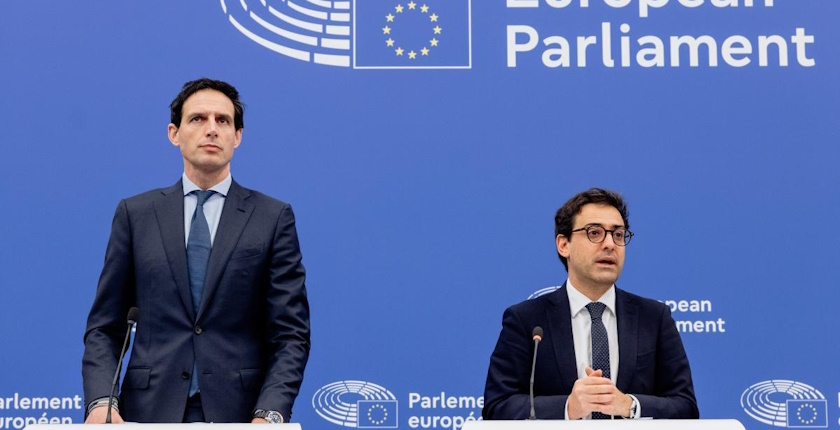
Hoekstra: Our system was too broad, too clunky and had too many loopholes.

“CBAM makes sure there is a level playing field – that we’re not asking anything more, or asking anything less for those goods that come into the EU. And in doing so, we’re rewarding investments in low carbon… We’re not going to ask anything more from others, than we’re asking from ourselves. During the CBAM transition period, we learned important lessons. Our system was too broad, too clunky and had too many loopholes,” said European Commissioner for Climate, Net Zero and Clean Growth Wopke Hoekstra.

Thoroughly against evasion

The tax level is envisaged to be proportional to an established quantity of greenhouse gases released in production. However, if the authorities notice attempts to evade the levy, they can make the process of providing evidence stricter and, in the meantime, switch to a charge under the emissions factor of the particular country of origin.

“If I had to summarize these points in a few words, I would say: a simpler CBAM, more robust in its application, and fairer in its scope,” said the European Commission’s Executive Vice-President for Prosperity and Industrial Strategy Stéphane Séjourné.

Shortcut to exemption from CBAM for electricity

One of the measures is intended for easing the administrative burden for countries in the process of electricity market coupling with the EU, namely the Energy Community contracting parties.

There is going to be a possibility to sign an MoU with the European Commission with a detailed schedule

The commission may sign a memorandum of understanding with a third country, once the commission has assessed that the country has fully transposed the electricity market acquis, the proposal reads. The document would lay down details on the timeline for the CBAM exemption, including in relation to technical work still to be carried out between transmission system operators (TSOs), and for implementing a carbon pricing instrument equivalent to the EU ETS as far as electricity generation is concerned.

Hoekstra said technical adjustments to CBAM would be made to facilitate market coupling when the relevant countries are ready.

Import tax for electricity from Energy Community to be 30% lower on average

Stakeholder feedback and the experience with the implementation of CBAM during the transitional period – before the actual charge – demonstrated that the rules for electricity imports are overly rigid, the European commissioners added. In particular, they ascertained that progress in decarbonizing electricity production isn’t sufficiently acknowledged or encouraged.

Unlike with the goods, for electricity there is a default country-specific emissions value. It is based on production from fossil fuels and a five-year average. Coal is mostly dominant in the Western Balkans, except for Albania, which has a completely green mix. In addition, the conditions which must be met to declare actual emissions of electricity have proven to be almost impossible.

The proposed package is introducing solutions for electricity transit and cross-border PPAs

In the new setting, the national value will reflect the carbon intensity of all sources of electricity. The estimated taxes in the Energy Community would be over 30% lower on average.

The procedure is being streamlined for declaring actual emissions. On the other hand, at least in the Western Balkans, there has been almost no progress in that area. The proposed package is also introducing solutions for the hurdles in electricity transit through Energy Community Contracting Parties and cross-border power purchase agreements (PPAs).

Power imports from the Western Balkans account for 1% of the EU’s demand, but their share in Croatia, Bulgaria and Greece is significant, the European Commission explained. Importantly, exports of electricity to the EU represent some 58% of Montenegro’s exports to the EU, compared to 5% for Serbia and Albania.

Funds for maintaining competitiveness of domestic industrial producers in third countries

A fund has been launched to temporarily support EU producers of CBAM goods and mitigate carbon leakage risks. It addresses the competitiveness loss in third-country markets with a weaker climate policy and lower costs. Potential beneficiaries will have to demonstrate decarbonization efforts.

Th European commission is also preparing proposals for limiting scrap aluminum exports and using more scrap metal. Furthermore, it said pre-consumer metals scrap, from manufacturing, would come under CBAM.

by in News

Slovenia and Italy to upgrade electricity interconnectors

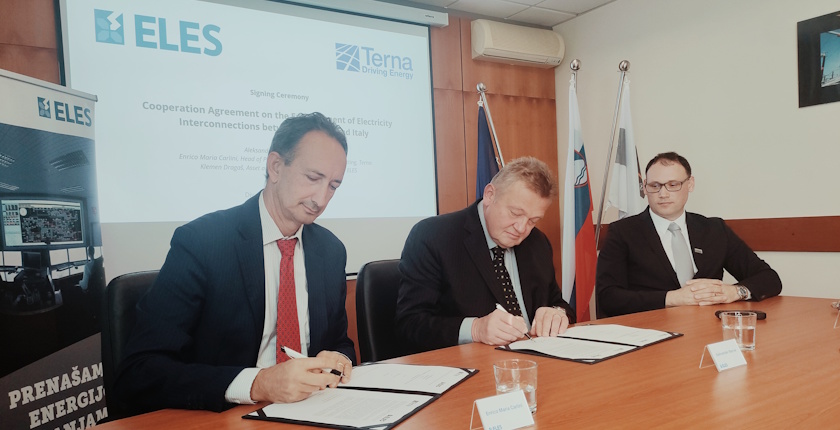
Slovenian transmission and distribution system operator ELES and Italian transmission system operator Terna agreed to upgrade their cross-border electricity network in an investment of EUR 250 million. The project aims to increase the transmission capacity between the two countries by 600 MW, strengthening supply and trade.

After a decade of coordination, ELES and Terna signed an agreement to raise the electricity transmission capacity between Slovenia and Italy by 600 MW or more than 50%. According to ELES, it is an important step in market integration and strengthening the reliability of the interconnected electricity system.

Interconnections between Slovenia and Italy are currently among the most heavily loaded ones in the Slovenian network, the country’s TSO pointed out.

As ELES further explained, with the growth of electricity imports and exports, there is an increasing need to strengthen transmission routes between the two countries. The company expects a rise in electricity imports in the countries gradually phasing out fossil fuel–based production to further increase the demand for cross-border transmission capacity.

The project consists of three upgrades

The project includes three main improvements. On the Slovenian side, the phase-shifting transformer at the Divača substation would be upgraded, alongside adding a third unit, which enables full utilization of the capacity of the 400 kV transmission line between Divača and Redipuglia (Sredipolje). The current transmission capacity, 1,200 megavolt-amperes (MVA), would be lifted to 1,800 MVA.

On the 220 kV transmission line between Divača and Padrice in Italy, low-sag conductors, capable of withstanding higher temperatures will be installed, ELES said. The transmission capacity would be doubled to 700 MVA.

On the Italian side, the existing 220 kV Padriče-Redipuglia connection and the Redipuglia substation are to be upgraded with a new phase-shifting transformer. It is crucial for managing internal power flows, the update reads.

“With an additional 600 MW of cross-border capacity, Slovenia is solidifying its role as a key electricity hub between Central and Southern Europe and as a reliable regional partner. This is a strategic investment in the future, ensuring reliability, resilience, and connectivity of our grid in the decades when electricity will become the main energy currency,” said ELES CEO Aleksander Mervar.

Slovenia’s share of the project is estimated at EUR 90 million

The total value of the project is EUR 250 million, with the Slovenian share estimated at EUR 90 million and the Italian side securing EUR 160 million. Pending all necessary permits and documentation, construction is planned to begin in 2029, and completion is expected by the end of 2031.

ELES announced it would seek European funds to finance the Slovenian side of the investment.

“The agreement not only strengthens the historic partnership between the two transmission system operators but also marks an important step toward developing and implementing innovative solutions that enhance the efficiency of transmission network investments. The agreement encourages system operators to introduce not only capital-intensive projects but also solutions with lower capital requirements that can increase net benefits and investment returns for all electricity system users,” said Enrico Maria Carlini, Head of Power System Planning and Permitting at Terna.

by in News

Romania to roll out flexibility market where you get paid to consume less power

Companies and, eventually, households will be able to participate in the Romanian flexibility services market, getting compensated for cutting their electricity use at a time scheduled one day earlier. The aim is to prevent power outages during peak loads in the transmission grid.

The National Energy Regulatory Authority (ANRE) of Romania published a draft regulation that would allow payments to electricity consumers – companies or, in the future, even households – for temporarily reducing their consumption. The mechanism is called the consumption flexibility service. Its purpose is to balance the grid and prevent power outages during peak consumption.

Romania’s transmission system operator Transelectrica would be able to purchase consumption reduction services from market participants: large companies, suppliers and aggregators. They would commit to temporarily limiting energy use.

Demand response also replaces expensive emergency power imports.

Day-ahead market for demand response

Transelectrica will schedule the service through auctions organized a day earlier. Market participants would be able to bid with available consumption capacity reductions and prices.

The proposed regulation requires providers or aggregators to transfer at least half of the revenues to their end customers who contributed to the consumption cut.

Renewable electricity production – especially solar – has increased significantly over the previous years. During the day, Romania sometimes produces more energy than it consumes, but in the evening, when people return home and consumption increases sharply, production no longer covers demand.

The trend is known as the duck curve, per the shape of the daily chart of demand and solar power production. It leads to imbalances and bolsters the risk of grid overload. Through flexibility services, Transelectrica will be able to shave the peaks.

Households to eventually join through their aggregators

In the first stage, the mechanism will involve large consumers such as factories, retail chains, logistics operators and office buildings. They would be able to bid with a minimum of 500 kW. Households could join at some point through so-called flexibility aggregators.

It is also important that demand response decreases balancing costs, which spill over to electricity bills.

The draft regulation is undergoing a public consultation process until December 3. According to the schedule, the flexibility market will be established in the spring.

by in News

Several EU member states face uncertainty amid looming Russian gas ban

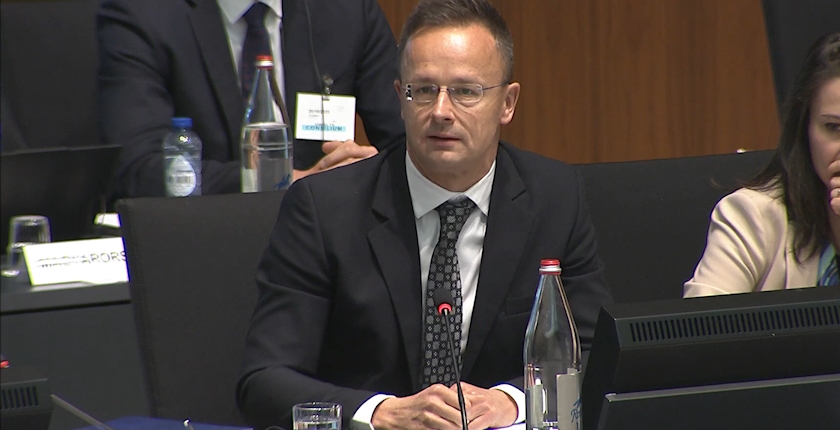
The European Union’s proposed measures to phase out imports of Russian oil and gas would destroy Hungary’s security of supply, according to Minister of Foreign Affairs and Trade Péter Szijjártó, who spoke at the meeting of energy ministers in Luxembourg. Slovakia is in a similar situation, while Romania pointed to the difficulty of proving the origin of foreign gas.

The draft regulation that the Council of the EU adopted doesn’t explicitly call for a ban on the transit of gas to third countries, while it foresees a temporary suspension for member states in case of supply disruption. The proposal also allows the possibility of importing non-Russian gas through the TurkStream pipeline.

The meeting of the so-called Energy Council highlighted several issues and concerns among EU member states about the proposed ban on Russian natural gas, including liquefied natural gas (LNG). Energy ministers in the Council of the EU adopted their position ahead of negotiations with the European Parliament on measures that they plan to introduce on January 1.

There would be a transition period for existing contracts for Russian fossil gas. Short-term ones concluded before June 17 this year would remain in force until June 17, 2026. Long-term contracts may run until January 1, 2028. It is also the targeted date for ending imports of Russian oil.

Szijjártó: The remaining infrastructure, physically and capacity-wise, is not able to supply Hungary

“The real impact of this regulation is that our safe supply of energy in Hungary is gonna be killed,” the country’s Minister of Foreign Affairs and Trade Péter Szijjártó stressed at the meeting.

He clarified that he wasn’t speaking about prices, and warned of damage from the proposed regulation – in the name of diversification.

“As now we are phasing out supply routes towards Hungary, the remaining infrastructure, physically and capacity-wise, is not able to supply the country. This has nothing to do with politics. This has nothing to do with Russia. This has nothing to do with the war in Ukraine. This is mathematics and physics,” Szijjártó stressed.

He also reiterated that his country would be left dependent on one oil supply route, via Croatia. It would leave Hungary “totally defenseless to a monopoly” as the transit fee doubled since the start of the war and it is five times higher than the current European benchmark, the minister underscored.

Bulgaria asks for protection from arbitration for gas TSOs

Slovak Deputy Prime Minister and Minister of Economy Denisa Saková said the supply of gas to her country is limited. There are interconnections with all neighbors, but external capacity bottlenecks remain, she argued. Bulgaria asked for provisions protecting gas transmission system operators (TSOs) from arbitration and financial penalties.

Romania voted for the draft regulation, but warned that identifying the origin of imported gas would be difficult

Secretary of State in Romania’s Ministry of Energy Cristian Bușoi urged for a workable and harmonized verification system and for the development of clear guidelines.

“This is not a matter of energy policy, but of strategic autonomy and European solidarity. At the same time, as we move from political vision to implementation, we believe it is important that the new authorization and verification system remains practical, transparent and proportionate. The additional requirements to demonstrate the exact country of production represent a new level of responsibility that, while understandable, and we support this in principle, may be difficult to fulfill in practice, particularly for pipeline [and] natural gas traded on hubs, and shipments transport, including LNG cargos that involve multiple sources and blending,” Bușoi told the ministers.

Council of EU proposes suspension clause

Notably, the Energy Council’s position, part of the REPowerEU plan and sanctions against Russia, is that the regulation should contain a suspension clause. The European Commission could temporarily lift the ban on Russian gas and LNG in case of significant disruptions of supply.

Another important element is the possibility of importing non-Russian gas through the TurkStream pipeline if the fuel’s origin is proven.

Gas transit through EU not subject to prohibition

Energy ministers said the EU should ensure that natural gas which crosses the 27-member bloc under a transit procedure is not ultimately entering into free circulation in the union.

It would imply that Serbia, Bosnia and Herzegovina and North Macedonia, non-EU countries, could continue to buy Russian gas that is delivered through Balkan Stream. It is the extension of TurkStream running through Bulgaria and Serbia to Hungary.

“Any gas which, before its import into the EU, was exported from the Russian Federation, either via direct export from Russia to the EU or via indirect export through a third country, should, except in case of transit, be subject to the prohibition”, the document reads.

Serbia still hasn’t signed a long-term gas supply contract with the Russian side, and the previous one expired in May. Moreover, the United States have imposed sanctions on Gazprom-controlled NIS, Serbia’s national oil importer, refiner and operator of a chain of service stations.

On top of it all, hydropower output is at a record low due to chronic drought, while coal is being imported as domestic mines don’t produce enough lignite.

by in News

Montenegro, Italy sign memorandum on electricity market coupling

A memorandum of understanding on Italy and Montenegro’s electricity market coupling was signed in Rome. It also paves the way for the installation of the second cable of the Monita interconnector, which runs under the Adriatic Sea.

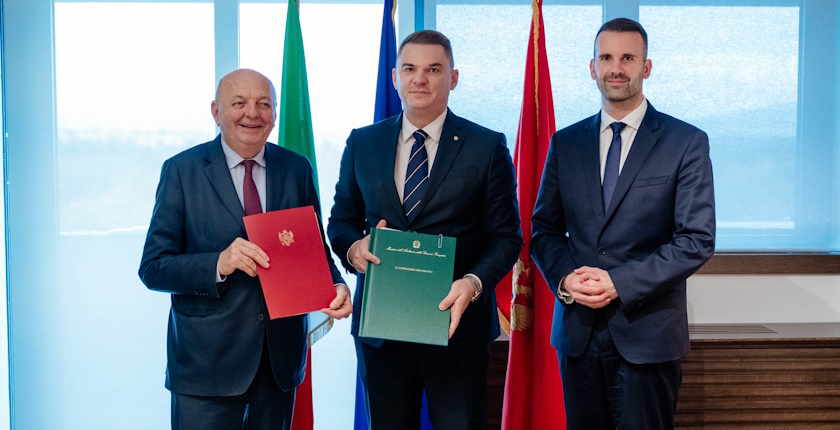
Minister of Energy and Mining of Montenegro Admir Šahmanović (pictured middle) and Italian Minister of the Environment and Energy Security Gilberto Pichetto Fratin (left) pointed out that energy links mean a more secure future, more stable supply and more development possibilities. They signed a bilateral memorandum of understanding on electricity market coupling.

Montenegrin Prime Minister Milojko Spajić (right) attended the ceremony together with Minister of Public Works, Spatial Planning and State Property Majda Adžović. The agreement is opening a new chapter in cooperation between the two countries and further strengthens Montenegro’s position on the European energy map, the Ministry of Energy and Mining said.

Market coupling alongside strengthening interconnection with second cable

Montenegro and Italy are linked with the Monita electricity interconnector, laid below the Adriatic Sea. In the new phase of their cooperation, they intend to couple their electricity markets for a freer power flow and safer functioning of the system, the ministry’s announcement reads.

“With this agreement, Montenegro is confirming its status as a reliable partner and energy bridge between the region and Europe. After several years of stagnation, this is a bit step forward, as it enables us to initiate the continuation of the project and the construction of the second wire of the subsea cable toward Italy. It opens the possibilities for our green, clean energy to become a distinguished export product, which means new income for companies and greater competitiveness in the European market. Today we once again confirmed good neighborly relations with Italy and we are showing that Montenegro is, slowly but firmly, entering the European family through concrete projects and partnerships. This is a step that brings our citizens long-term energy security and new opportunities for development to our companies,” Šahmanović stated.

Trade at Montenegro’s wholesale electricity market is expected to triple

There are 29 companies from 13 countries participating in Montenegro’s electricity market. Since the day-ahead market was established at the Montenegrin Power Exchange (MEPX or Belen) in April 2023, some 900 GWh of electricity changed hands, while the entire volume, together with the long-term market, amounts to about 3 TWh, the statement adds.

The memorandum’s implementation will create the conditions for at least three times higher trading volume, clearer price signal for new investments and a direct contribution to improving the security of supply, the ministry claimed.

National transmission system operators (TSOs) Terna and CGES have commissioned the first part of the interconnection in 2019. The current plan is to double the capacity to 1.2 GW. Šahmanović recently said the second line should be installed by 2031.

The project is valued at EUR 500 million. A double cable enables a two-way exchange at the same time.

by in News

Montenegrin TSO CGES buying power transmission lines from its Serbian counterpart EMS

Serbian transmission system operator (TSO) Elektromreža Srbije (EMS) and Montenegrin TSO CGES agreed that each would become the owner of the parts of overhead transmission lines on its country’s territory, and signed a contract.

EMS and CGES signed a contract on the purchase of electricity infrastructure. The two state-owned TSOs said it is the confirmation of their many years of cooperation and of their joint commitment to the development of a stable and reliable regional electricity system.

The reason for such an arrangement is that maintenance and utilization of transmission lines on the other country’s territory is complex and demanding, both from the technical and legal perspectives, the announcement reads.

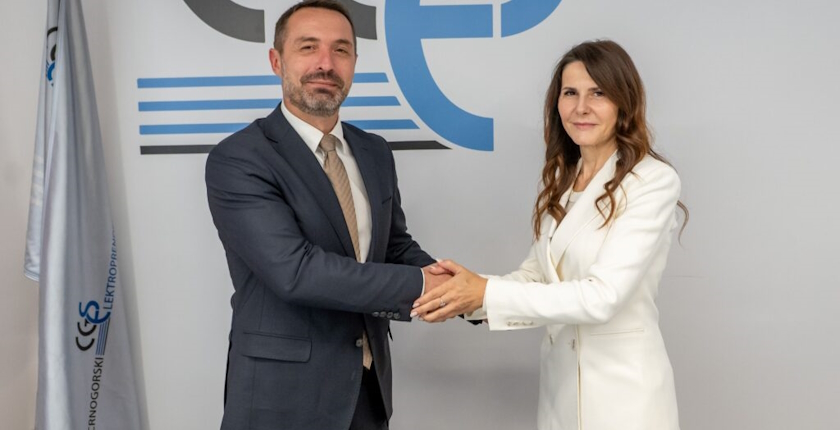
Contract was signed by CEOs Jelena Matejić, Ivan Asanović

CGES will become the owner of the parts of EMS’s interconnector power lines of 220 kV and 110 kV that are located in Montenegro, they said, without revealing the purchase sum.

CGES is taking over the parts of EMS’s interconnector power lines that are on the territory of Montenegro

The contract was signed by General Manager of EMS Jelena Matejić and Executive Director of CGES Ivan Asanović. The two companies explained that they have initiated the search for a sustainable solution for interconnector power lines of 220 kV from Pljevlja in Montenegro to Bajina Bašta in Serbia and from Pljevlja to Bistrica in Serbia, and the one from Pljevlja 1 to Potpeć in Serbia, of 110 kV, all owned by EMS, and for CGES’s internal overhead power line Mojkovac-Pljevlja of 220 kV, which has a section in neighboring Serbia.

Deal aimed at simplifying operations, greater legal clarity

They adopted a model under which each TSO is becoming the owner of transmission lines on the territory of its country. It is a principle enabling simpler management, more efficient maintenance and greater legal and operational clarity for transmission systems, the operators said.

“With this contract we are creating a more stable basis for a technically and legally regulated transmission system, additionally strengthening the reliability and safety of the electricity grid in the region,” Jelena Matejić stated.

The companies showed that they are able to solve complex issues jointly and in the interest of both countries and all users of the electricity system, according to CGES head Ivan Asanović.

Of note, EMS has a 15% share in CGES, while the Government of Montenegro controls 55.4%. Jelena Matejić is a member of the board of directors. Italian TSO Terna owns 22.1%.