by in News

Hidroelectrica to set up joint venture with EDF for 1 GW pumped storage project

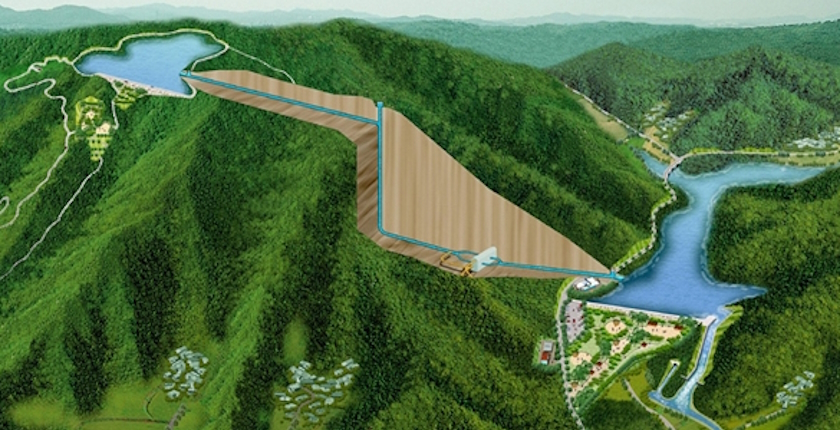
After numerous failed attempts for half a century, Romania intends to revive the Tarnița-Lăpuștești pumped storage hydropower project in tandem with France’s EDF. State-owned Hidroelectrica published a proposal to its shareholder assembly to establish a 50%-50% joint venture for the 1 GW endeavor. The utility also intends to buy the Frasin-Pângărați pumped storage facility when Hidro Blue Energy builds it.

The plans for Tarnița-Lăpuștești date back to mid-1970s. According to a feasibility study from 2008, updated in 2014, the pumped storage hydropower plant on the river Someşul Cald in Romania would consist of four units of 250 MW each. After numerous failed attempts, the Ministry of Energy sat with the representatives of Japanese Itochu and French EDF last year to discuss the project.

In November 2024, Romania signed a memorandum of understanding with Itochu. The latest update came from government-controlled hydropower plant operator Hidroelectrica. It has just scheduled an extraordinary general meeting of shareholders for January 27.

Romania may fast-track Tarnița-Lăpuștești project

In a stock exchange filing, Hidroelectrica said it is proposing a joint undertaking with EDF Power Solutions International, where both state-owned companies would have equal stakes.

The location for Tarniţa-Lăpuşteşti is 30 kilometers from Cluj-Napoca, Transylvania’s biggest city. The river is called Meleg-Szamos in Hungarian.

The old study envisages five to seven years of construction. Within a legislative push to unlock dormant hydropower projects, the project could be given a priority status. In that case, it would be exempted from some permits including the obligation to conduct the study all over again.

Hidroelectrica plans to buy Frasin-Pângărați pumped storage hydropower plant upon its commissioning

In another item for the meeting, Hidroelectrica seeks approval for obtaining advisory services with regard to its intention to acquire, upon commissioning, the Frasin-Pângărați pumped storage hydropower plant.

A company called Hidro Blue Energy is working on the project for 300 MW. The location is in Neamț County in the northeast. Lake Bicaz would be the facility’s lower reservoir.

Hidroelectrica said it would update shareholders about the upcoming refurbishment of pumped storage systems Petrimanu, Jidoaia and Lotru, downstream of the Dorin Pavel hydropower plant. The utility has awarded the contract to Electromontaj, with Elin Motoren, Voith Hydro and Butan Grup as subcontractors.

The project is worth EUR 97.9 million, excluding value-added tax.

Hidroelectrica is also rehabilitating hydroelectric plants Gogoșu, Bradișor and Stejaru.

The company has RON 56.23 billion (EUR 11.04 billion) in market capitalization, according to data from the Bucharest Stock Exchange. The government has an 80.1% share.
by in News

Enery obtains financing for 600 MWh battery project in Bulgaria

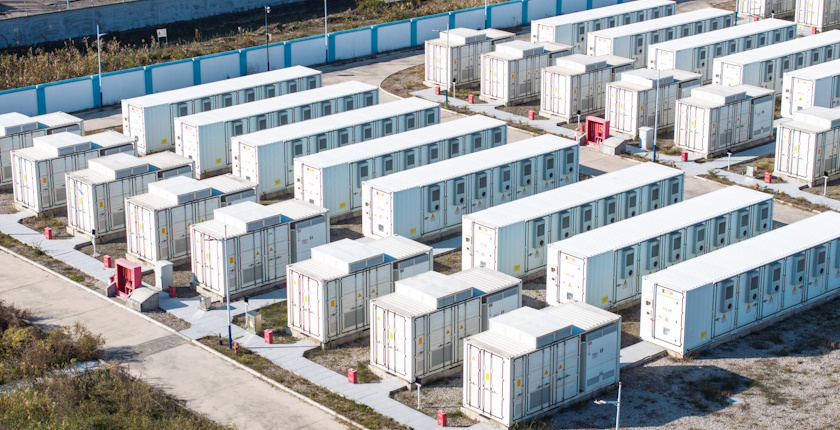
Austria-based Enery intends to commission a four-hour battery storage system of 150 MW in central Bulgaria by the end of the first quarter of next year. The project relies on a virtual power purchase agreement (PPA) with Vitol.

Enery said it has secured a green financing package from DSK Bank AD for its flagship 600 MWh battery energy storage system (BESS) in Nova Zagora, Bulgaria. It is one of the country’s most advanced storage financing deals to date, supporting its transition toward a more flexible and renewables-powered energy system, the update reads.

The facility would have 150 MW in capability, meaning it can operate at full power for four hours. It would be the biggest BESS in Bulgaria at this moment, according to available data, though there are larger projects underway as well.

The site is in a coal region centered on the Stara Zagora lignite basin, in the central part of the country.

Virtual PPAs, optimization services are key for bankability

Enery scheduled the commissioning for March. The BESS would feature its own substation, linked to a new 33/110 kV substation on the transmission grid.

The Austria-based independent power producer revealed that it has signed an innovative virtual power purchase agreement (PPA) with Vitol.

“Sophisticated instruments such as virtual financial deals, combined with Enery Portfolio Optimization’s best-in-class physical optimization services, are now key to unlocking bankable storage projects. This transaction demonstrates how innovative commercial structures, when paired with disciplined execution, can create long-term value for both lenders and project sponsors,” Chief Commercial Officer Severin Vartigov stated.

Vitol plans many more deals with Enery

Vitol expressed confidence that there would be many more deals with Enery. The global energy and commodity trader, headquartered in Geneva, has experience in developing, owning and optimizing BESS in Australia, Europe and the United States, the update adds.

Enery operates a diversified portfolio of 566 MW, generating 766 GWh of clean electricity per year. Its development pipeline is nearing 10
GW across 10 countries in Central and Eastern Europe.

The firm also manages more than 700 MWh of battery capacity across its own and third-party systems. In Bulgaria, it is present through its Enery Element joint venture as well.

by in News

Applications open for first wind power auction in Kosovo*

The Ministry of Economy of Kosovo* invited the three prequalified entities to submit bids for a wind power auction for a targeted capacity of up to 100 MW. The authorities didn’t declare any deadline.

Eight months after the prequalifications process was completed, when Minister of Economy Artane Rizvanolli said the next phase would start soon, eligible bidders can now submit proposals within the first wind power auction in Kosovo*. They are France-based Akuo Energy, consortium of Notus Energy from Germany and domestic firm Stublla Energy, and a consortium led by Güri̇ş, headquartered in Turkey.

The prequalifications call was launched one whole year ago. The Ministry of Economy said it intends to award up to 100 MW. According to earlier updates, the plan is to support 150 MW in total in two rounds. Participants will bid for 15-year power purchase agreements (PPAs) and contracts for difference (CfDs).

Maximum bidding price is EUR 80.2 per MWh

Interestingly, no deadline was published in the announcement. Rizvanolli earlier said the request for proposals would last half a year.

The lowest price per megawatt-hour wins and the upper limit is EUR 80.2 per MWh.

Investments envisaged as public-private partnerships

Wind projects would be run by special purpose vehicles (SPVs), firms where the government would have a share of up to 49%, as per initial documentation. The Ministry of Economy intended to use the funds from the International Monetary Fund’s Resilience and Sustainability Facility (RSF) in the development of the 150 MW.

The purpose of the public-private partnership scheme is to reduce risk for the private investors. They will be obligated to design, build, operate, maintain and decommission wind parks.

Balancing responsibility is limited to imbalance volumes greater than 10%. Curtailment is subject to financial compensation.

Funded by Germany, International Finance Corp. – IFC, which is part of World Bank Group, has provided support for organizing the first wind power auction in Kosovo*, alongside the now defunct United States Agency for International Development (USAID), Luxembourg Development Cooperation Agency – LuxDev, and the European Bank for Reconstruction and Development (EBRD).

Kosovo* hosts just three wind power facilities: Selac, also known as Bajgora (104.1 MW), Kitka (32.4 MW) and Golesh (1.35 MW).

The first solar power auction was held last year.

* This designation is without prejudice to positions onstatus and is in line with UNSCR 1244/99 and the ICJ Opinion on the Kosovo declaration of independence.
by in News

CBAM tests market integration and green investments

Author: Zoran Gjorgjievski, CEO of North Macedonia’s National Electricity Market Operator MEMO

This text reflects a personal viewpoint and represents an attempt to present the Macedonian position in an argument-based manner — with respect for European objectives, but also with a clear message that the implementation of CBAM must be just, proportionate, and based on clearly defined implementation phases.

The Carbon Border Adjustment Mechanism (CBAM), which is scheduled to enter into force on 1 January 2026, represents one of the most ambitious instruments within the European climate package. Its objective – to create a level playing field between industries within the European Union and those outside the Union – is, at a theoretical level, justified and logical. However, the application of CBAM to electricity in regions such as ours, where market and regulatory conditions are still transforming, raises serious risks and challenges that deserve careful assessment. This is particularly relevant given the increased volume of investments in renewable energy sources (RES) recorded in recent years, accompanied by ambitious plans for their further expansion through active institutional support.

For Macedonia, which has invested significant efforts in the development of an organized electricity market – currently operating at the day-ahead level and, as of next year, also at the intraday level – as well as in its gradual integration with the single European market, the application of CBAM may create structural imbalances.

Changes in the structure of electricity generation and price formation on European markets in recent years indicate high volatility, which is even more pronounced in markets of a similar size to ours, primarily due to limited liquidity and the specific characteristics of the generation mix. The introduction of an additional carbon component, based on indirect verification methodologies, may introduce further unpredictability and reduce the competitiveness of domestic RES producers.

At the same time, subjecting exports to CBAM could create pressure during hours of low consumption and increased RES production – periods in which the majority of electricity exports from our country are concentrated. This could lead to a paradoxical situation in which RES producers are forced to curtail or suspend production in order to avoid imbalance costs.

Risks for the organized electricity market

Although initial analyses suggest that an increase in trading volumes on the day-ahead market may be expected in the short term, the inability to place total production through the organized market will encourage market participants to seek alternative channels. This carries the potential to undermine the development of a transparent and competitive market and to reduce trading liquidity.

For a young market like ours, which has recorded significant liquidity growth of over 40% and a record number of active participants in just the past year, this could represent a real slowdown of its development momentum.

The energy crisis of the 2021–2023 period clearly demonstrated that security of supply and price stability cannot be ensured without functional, liquid, and investment-attractive electricity markets. Under such conditions, the application of CBAM to electricity, without taking into account the specific characteristics of organized markets in non-EU countries, may produce the opposite effect: reduced liquidity, increased uncertainty, and delayed investments in renewable energy.

Differing speeds of two interrelated mechanisms – market coupling and CBAM – call into question the integration of electricity markets

This is particularly important given that regional integration into the single European market has been slowed by a number of objective and subjective factors, both in the Energy Community Contracting Parties and within the EU itself, and cannot proceed at the same pace as the implementation of CBAM. These differing speeds of two interrelated mechanisms – market coupling and CBAM – call into question the very rationale of the Energy Community, namely the integration of electricity markets.

It thus becomes evident that introducing CBAM without adequate progress in market integration with the EU creates a structural imbalance, whereby Energy Community countries incur additional costs without fully benefiting from an integrated market. Therefore, accelerating market coupling and aligning the start of CBAM implementation accordingly is a key prerequisite for mitigating the economic and investment impacts of CBAM.

Potential slowdown of renewable energy investments

Although CBAM is theoretically intended to stimulate green investments, in practice, there is a risk that it could have the opposite effect on already implemented projects, primarily due to the seasonal and daily characteristics of RES generation and the limited capacities for electricity storage.

A premature and insufficiently calibrated introduction of CBAM for electricity may create a perception of increased regulatory risk

This situation may place serious pressure on the financing sources of RES projects, exposing them to increased credit risk, especially in cases where expected returns on investment (ROI) are brought into question due to CBAM-related effects. This analysis does not even address the distorted investment expectations created during the energy crisis, when extreme electricity price growth further skewed investment projections.

Furthermore, Macedonia’s energy transition largely depends on private capital and strategic investors, who expect a stable, predictable, and competitive market environment. A premature and insufficiently calibrated introduction of CBAM for electricity exports by the EU may create a perception of increased regulatory risk, which could result in the postponement or redirection of investments to other markets.

Need for a transitional period and regional coordination

Despite the challenges outlined above, it is important to emphasize that Macedonia supports the objectives of European decarbonization and is already making substantial efforts to align with EU policies. What is essential is the provision of an appropriate transitional period, aligned with the pace of integration into the single European market.

Such a transitional period would allow the domestic industry and the energy sector to adapt gradually, without compromising already established market instruments and ongoing investments.

The regional context is equally important. The electricity systems of the Western Balkans are highly interconnected, and the risk of destabilization in one country can easily spill over into others. Therefore, it is necessary for the European Commission to consider a model that rewards reforms, supports the gradual phase-out of coal, and enables the integration of electricity markets without creating new barriers.

Where is the market headed?

Although CBAM has a clear climate and economic rationale, the question remains whether its application at this point in time is aligned with the realities in the countries of the Energy Community.

Macedonia demonstrates a clear commitment: market liquidity is increasing, renewable energy sources are developing dynamically, and concrete steps are being taken toward market coupling with the EU. Excessive rigidity in the application of CBAM could undermine this positive trajectory.

by in News

KEK seeks contractor for 100 MW solar power project near Prishtina

Government-controlled Kosovo Energy Corp. (KEK) launched the prequalifications call for its Solar4Kosovo photovoltaic project. The area is in the municipalities of Obiliq (Obilić) and Fushë Kosovë (Kosovo Polje), northwest of Prishtina.

After more than four years of planning the project, KEK is receiving applications for the design and construction of its first solar power plant, on a former coal ash dump. The government-owned power utility operates coal plants Kosovo A and Kosovo B, which account for some 90% of domestic electricity.

The location for the first part of the Solar4Kosovo project is in the municipalities of Obiliq (Obilić) and Fushë Kosovë (Kosovo Polje). The area, northwest of Prishtina, is in the Sitnica river valley, near Kosovo A.

The facility is planned for a grid connection of at least 100 MW. It translates to 120 MW in peak capacity, according to earlier updates. It would be the biggest PV plant in Kosovo*.

KEK is receiving prequalification bids until January 22, within the process of selecting contractors for the project. Companies apply through the exficon (exfitender) platform. Three months ago, the utility said agricultural activities on the designated land weren’t allowed anymore.

KEK obtained EUR 32 million EU grant

The financing for the Solar4Kosovo facility is part of the European Union’s Economic and Investment Plan for the Western Balkans of EUR 9 billion in grants. The package is aimed at mobilizing a total of EUR 30 billion.

The European Investment Bank is providing a EUR 33 million loan. The EU has approved a EUR 32 million grant via its Western Balkans Investment Framework (WBIF), while Germany’s KfW Development Bank is lending EUR 29 million to KEK. The investment was earlier estimated at EUR 107 million overall.

Annual output estimated at 169 GWh

The proposed solar power plant is expected to produce 169 GWh per year. It would have an underground connection to the existing substation at the Kosovo A thermal power plant.

The other part of the Solar4Kosovo project is for a solar thermal facility of 30 MW for the capital city’s district heating system. The site is in the village of Shkabaj (Orlović) in Obiliq municipality. Another segment of the investment is for a further network extension of 20 MW with supply from Kosovo B.

* This designation is without prejudice to positions onstatus and is in line with UNSCR 1244/99 and the ICJ Opinion on the Kosovo declaration of independence.
by in News

EU simplifying CBAM exemption for electricity, improving emissions calculation

The European Union is further simplifying the Carbon Border Adjustment Mechanism (CBAM), but with stricter oversight and an extension to 180 steel- and aluminium-intensive downstream products. From January 1, importers of designated goods and commodities will be paying the emissions tax.

Among the novelties, countries in the Energy Community that transposed the relevant EU regulations are getting an opportunity for exemptions for CBAM for electricity earlier than initially planned. The new legislation is tackling the hurdles for electricity transit as well. The calculation of emissions on national levels in the same sector is becoming more favorable for the payers of the cross-border CO2 tax. There is even a possibility, in theory for now, to declare the actual emissions level, which would suit renewable energy producers.

In response to feedback from industrial producers and other stakeholders, the European Commission proposed measures to prevent circumvention of CBAM and strengthen its efficacy. The next step is to expand it to 180 manufactured products with high steel or aluminum content, 79% on average. The list mostly consists of machinery and hardware, and 6% of the items are household appliances.

From January 1, importers will be paying a carbon price within the Carbon Border Adjustment Mechanism, which is tied to the Emissions Trading System (EU ETS). It concerns aluminum, cement, electricity, iron and steel, hydrogen and fertilizers, and the expenses will spill over to their suppliers in third countries such as the Western Balkans and Turkey.

The charge for downstream products is planned to be rolled out in January 2028.

Striving for level playing field

The system gradually levels the field, by the beginning 2034, with producers of the same goods and commodities in the EU. The measures are introduced in the form of delegated and implementing acts. They enter into force if other institutions responsible for them, like the European Parliament, don’t block them.

Hoekstra: Our system was too broad, too clunky and had too many loopholes.

“CBAM makes sure there is a level playing field – that we’re not asking anything more, or asking anything less for those goods that come into the EU. And in doing so, we’re rewarding investments in low carbon… We’re not going to ask anything more from others, than we’re asking from ourselves. During the CBAM transition period, we learned important lessons. Our system was too broad, too clunky and had too many loopholes,” said European Commissioner for Climate, Net Zero and Clean Growth Wopke Hoekstra.

Thoroughly against evasion

The tax level is envisaged to be proportional to an established quantity of greenhouse gases released in production. However, if the authorities notice attempts to evade the levy, they can make the process of providing evidence stricter and, in the meantime, switch to a charge under the emissions factor of the particular country of origin.

“If I had to summarize these points in a few words, I would say: a simpler CBAM, more robust in its application, and fairer in its scope,” said the European Commission’s Executive Vice-President for Prosperity and Industrial Strategy Stéphane Séjourné.

Shortcut to exemption from CBAM for electricity

One of the measures is intended for easing the administrative burden for countries in the process of electricity market coupling with the EU, namely the Energy Community contracting parties.

There is going to be a possibility to sign an MoU with the European Commission with a detailed schedule

The commission may sign a memorandum of understanding with a third country, once the commission has assessed that the country has fully transposed the electricity market acquis, the proposal reads. The document would lay down details on the timeline for the CBAM exemption, including in relation to technical work still to be carried out between transmission system operators (TSOs), and for implementing a carbon pricing instrument equivalent to the EU ETS as far as electricity generation is concerned.

Hoekstra said technical adjustments to CBAM would be made to facilitate market coupling when the relevant countries are ready.

Import tax for electricity from Energy Community to be 30% lower on average

Stakeholder feedback and the experience with the implementation of CBAM during the transitional period – before the actual charge – demonstrated that the rules for electricity imports are overly rigid, the European commissioners added. In particular, they ascertained that progress in decarbonizing electricity production isn’t sufficiently acknowledged or encouraged.

Unlike with the goods, for electricity there is a default country-specific emissions value. It is based on production from fossil fuels and a five-year average. Coal is mostly dominant in the Western Balkans, except for Albania, which has a completely green mix. In addition, the conditions which must be met to declare actual emissions of electricity have proven to be almost impossible.

The proposed package is introducing solutions for electricity transit and cross-border PPAs

In the new setting, the national value will reflect the carbon intensity of all sources of electricity. The estimated taxes in the Energy Community would be over 30% lower on average.

The procedure is being streamlined for declaring actual emissions. On the other hand, at least in the Western Balkans, there has been almost no progress in that area. The proposed package is also introducing solutions for the hurdles in electricity transit through Energy Community Contracting Parties and cross-border power purchase agreements (PPAs).

Power imports from the Western Balkans account for 1% of the EU’s demand, but their share in Croatia, Bulgaria and Greece is significant, the European Commission explained. Importantly, exports of electricity to the EU represent some 58% of Montenegro’s exports to the EU, compared to 5% for Serbia and Albania.

Funds for maintaining competitiveness of domestic industrial producers in third countries

A fund has been launched to temporarily support EU producers of CBAM goods and mitigate carbon leakage risks. It addresses the competitiveness loss in third-country markets with a weaker climate policy and lower costs. Potential beneficiaries will have to demonstrate decarbonization efforts.

Th European commission is also preparing proposals for limiting scrap aluminum exports and using more scrap metal. Furthermore, it said pre-consumer metals scrap, from manufacturing, would come under CBAM.

by in News

Solarpro and LONGi collaborate on Europe’s largest back-contact solar plant

European leading EPC and O&M contractor of PV and BESS systems Solarpro is building what will be the largest solar power plant in Hungary, using photovoltaic modules from industry leader LONGi. Located in the northern county of Heves, the 450-megawatt project will deploy nearly 700,000 modules from LONGi’s ultra-efficient Hi-MO9 product series. The plant also marks an expansion of Solarpro’s partnership with LONGi, following a 176 MW solar park the two companies partnered on last year in Studina, Romania.

With a peak capacity of 450 MW, the new plant is expected to generate 470 gigawatt-hours (GWh) per year, enough electricity to power around 106,000 households annually.

Replacing fossil fuel use, the project’s clean energy output can reduce greenhouse gas emissions by 415,000 tons every year, the equivalent of removing over 100,000 gas-powered cars from the road.

Solarpro chooses LONGi’s back contact technology for watershed project

The Hi-MO9 solar module offers the plant the advantage of LONGi’s back contact (BC) technology, a complex engineering and design upgrade that reduces micro-cracking in the glass by 50% compared to traditional modules, increases electricity generation by up to 8%, and safeguards the module’s long-term performance – particularly under the sometimes-tough conditions present in northern rural Hungary, like high heat, dust, and cloud cover.

The 450 MW photovoltaic plant will be Hungary’s biggest

The BC module’s benefits also compound over the three decades of the product’s lifespan, meaning Solarpro’s new plant can anticipate more efficient production as well as more cost-effective, more reliable clean power for the area’s energy consumers.

Leon Zhang, President of LONGi Europe, said: “It’s an honour to supply Solarpro the modules for this landmark Hungarian project. In partnering with one of Europe’s leading project developers, we’re able to contribute to the region’s clean energy future and, at the same time, to set a new technological standard. At LONGi and Solarpro, we’re both committed to innovation and long-term sustainability, so we’re looking forward to continuing the cooperation.”

Krasen Mateev, CEO of Solarpro, said: “We are proud to join forces with LONGi once again on this major project in Hungary. At 450 MW, the solar plant will be Europe’s largest back-contact installation and a milestone in Solarpro’s mission to deliver reliable, high-efficiency clean energy across the region. The advanced technology of the Hi-MO9 was a clear choice to maximize the project’s performance and long-term reliability. By combining Solarpro’s EPC expertise with LONGi’s innovation, we are setting a new standard for utility-scale solar in Europe.”

About LONGi

Founded in 2000, LONGi is committed to being the world’s leading solar technology company, focusing on customer-driven value creation for full scenario energy transformation. Under its mission of ‘making the best of solar energy to build a green world’, LONGi has dedicated itself to technology innovation and established several business sectors, covering mono silicon wafers cells and modules, commercial & industrial distributed solar solutions, green energy solutions and hydrogen equipment.

The company has honed its capabilities to provide green energy and has more recently, also embraced green hydrogen products and solutions to support global zero carbon development.

About Solarpro

Solarpro is part of Renalfa Solarpro Group GmbH, a Vienna-based clean energy and e-mobility investment group with a focus on renewable energy generation assets.

As a multi-technology integrator, Solarpro specializes in developing and delivering hybrid projects that combine photovoltaic (PV), wind, battery energy storage systems (BESS), and hydrogen solutions. With 18 years of experience and a team of more than 1,500 professionals, the company has designed, built, and integrated over 12 GW of solar capacity and more than 4 GWh of battery storage systems.

A recognized technology innovator, Solarpro leads in the design and digitalization of renewable energy projects, turning them into flexible and manageable assets that align with the dynamic energy market. The company’s expertise has been acknowledged internationally, winning the award for Best EU Project under 100MW, for the first large-scale energy storage system in the region (55 MWh).

Driven by sustainability, Solarpro also invests in circular economy practices, advancing the recycling of PV modules and batteries to support the clean energy transition.

For more information, please contact us at [email protected]

by in News

Turkey awards 1.15 GW in wind power auctions – all at just EUR 35 per MWh

The six winners from the latest round of wind power auctions under the YEKA state support mechanism in Turkey will have at least EUR 35 per MWh guaranteed from the sale of electricity in the first six years. It was the floor price in the bidding. After it was reached for each zone, the remaining participants had to compete by offering to pay for the right to sign the contract.

Delays and the lack of money for the construction of high-voltage, transmission lines is one of the main hurdles slowing the uptake of wind and solar power. Turkey’s approach has turned out to be successful, as it allows investors to compete to pay one-off fees for available predetermined projects in auctions. At the same time, the beneficiaries get guaranteed prices for the future sales of their electricity.

The country has earned EUR 530 million overall this year from two rounds for solar and two for wind power, Minister of Energy and Natural Resources Alparslan Bayraktar said. It includes EUR 208 million just from the latest bidding under the Renewable Energy Zones (REZ) state support mechanism, he claimed. It is better known by its Turkish acronym YEKA.

The winners are getting grid connections for 49 years

The ministry awarded zones for six projects for 1.15 GW in total connection capacity. The winners are getting grid connections for 49 years, a minimum price during the six-year open market sale period and power purchase agreements (PPAs) at the same level for another 20 years.

Entire capacity allocated at floor price

In the bidding in the REZ WPP 2025 (YEKA RES 2025) round, the ceiling price was EUR 55 per MWh. With 75 applications altogether, 30 companies participated – between six and 20 per zone.

In all cases, the bottom price of EUR 35 per MWh was reached, so the remaining bidders were switched to the second phase. The YEKA auctions are broadcast live.

The winners need to pay between EUR 56,000 per MW and a stunning EUR 312,000 per MW of capacity, or from EUR 23.8 million to EUR 34.3 million for each zone. Combined, the contribution fees amount to EUR 173 million, or some EUR 470 million for all auctions held this year.

Bayraktar estimated total investments in projects involved in the last wind power round at USD 1.1 billion.

Eksim, Polat among winners

The Kütahya zone of 120 MW went to İçdaş Elektrik Enerjisi, for EUR 222,000 per MW. Stone Enerji snatched the Aydın-Denizli project of 140 MW with a winning bid of EUR 170,000 per MW. The firm was a winner at the recent solar power auctions as well.

For the Sivas area, the largest of all (500 MW), Kanat Rüzgar Enerji will be required to pay EUR 56,000 per MW, which is the lowest level.

Three zones are in Balıkesir province. Eksim Energy (Enerji) committed the most of all winners, EUR 312,000 per MW, for the Balıkesir-3 project. It is for 110 MW. Balıkesir-2, of 120 MW, was won by Balıkesir Elektrik. It offered a contribution fee of EUR 218,000 per MW.

The Balıkesir-1 area is for 160 MW in connection capacity. Polat Enerji’s subsidiary Soma Enerji was the best bidder, with EUR 212,000 per MW.

Turkey hosts wind power plants of more than 14 GW combined, of more than 121 GW in total electricity capacity.

by in News

Bulgarian firm Hydrogenera gets electrolyzer order from Volkswagen

Hydrogenera will integrate its electrolyzer with a gas burner at Volkswagen Poznań’s automotive factory in western Poland with the aim of cutting the consumption of the fuel as well as related emissions by up to 30%. The produced hydrogen and oxygen would both be utilized within the system, the Bulgarian company said.

Hydrogenera, which was listed on the Bulgarian Stock Exchange (BSE) in July, is one of the few companies in Southeastern Europe designing and manufacturing proprietary equipment for cutting-edge energy technologies. Its parent company Green Innovation recently became Volkswagen’s authorised supplier and obtained the giant automotive giant’s Sustainability Rating, setting the stage for a new order.

In addition to mixing it with gas for combustion, industrial producers are gradually introducing hydrogen and electrolyzers into other processes. Collaboration is underway with Volkswagen Poznań for a hydrogen-oxygen system at the carmaker’s plant in Września, in western Poland.

Hydrogenera explained that the challenge is to enhance the combustion efficiency of a natural gas burner with 1.5 MW in nameplate capacity. The 90 kW electrolyzer would operate as a non-intrusive add-on to the existing equipment – not affecting installations, automation or safety systems, according to the update.

Oxygen produced in the electrolyzer will be utilized as well, improving combustion

Hydrogen and oxygen are supplied separately to optimize the flame. Hydrogen is mixed with natural gas directly before the burner, while oxygen is introduced into the air stream directed to the combustion chamber. It enables complete fuel combustion, minimizing losses, Hydrogenera said.

The company claimed the solution can reduce fuel consumption by 30%, alongside a corresponding cut in emissions at the facility near Poznań.

Of note, green or renewable hydrogen is produced using electricity only from renewable sources, therefore without greenhouse gas emissions.

Green Innovation has raised BGN 7.96 million (EUR 4.1 million) in the initial public offering in Sofia. Its market capitalization has slipped 2% to BGN 92.1 million (EUR 47.1 million) since listing on July 29 under the ticker HYDR.

by in News

Borusan EnBW puts 80 MW Pelit wind farm online in Turkey

Borusan EnBW Enerji’s first wind investment in Central Anatolia, the Pelit wind power plant, began production. Located near Sivas, it has 80 MW in capacity.

The joint venture of Borusan Holding and Energie Baden-Württemberg increased its wind power portfolio in Turkey to 212 turbines in operation and 776 MW. Its tenth facility, Pelit, is located near Sivas and is the first in Central Anatolia.

Borusan EnBW’s new wind park consists of 14 Nordex machines, of which 13 have 5.7 MW each, according to project documentation. The remaining one is of 5.9 MW.

At 80 MW, Pelit is the firm’s fifth-largest wind park in Turkey. It said it would and prevent 178,000 tons of carbon dioxide emissions, equivalent to the carbon sequestration of 4.6 million trees.

Estimated annual output, 280 GWh, is sufficient for the needs of 122,000 households. The partners, which established the firm in 2009, initially intended to install 40 turbines of 2 MW apiece.

Due to its location, the Pelit wind farm creates seasonal and regional diversity in Borusan EnBW Enerji’s generation portfolio, the update reads. The largest wind power plant is Saros, at 143 MW, in Çanakkale. A 94 MW photovoltaic system was built and integrated with it, creating a hybrid power plant.

The joint venture has two other small solar power plants and the Yedigöl Aksu hydropower system, of 50.3 MW. It is also active in electricity sales and trading, as well as the operation of an electric vehicle charger network.

Turkey hosts wind power plants of more than 14 GW in combined capacity.