by in News

Investors in BiH developing 3,800 MW of wind, 12,500 MW of solar

Wind farms with a capacity of 3,800 MW and solar power plants with a capacity of 12,500 MW are currently in various stages of development in Bosnia and Herzegovina, according to the indicative plan for the development of production  2026-2035, published by the Independent System Operator in Bosnia and Herzegovina.

The goal of the ten-year plan is to provide information on projects initiated for the construction of new production capacities to be connected to the transmission system, according to the transmission system operator (TSO), Independent System Operator in Bosnia and Herzegovina (NOSBiH).

The plan is supposed to prioritize covering domestic consumption and capacity needs with domestic resources.

NOSBiH said investors continued in 2024 to apply with their renewable energy projects. The interest in grid connections wasn’t affected by the significant reduction in electricity purchase prices, especially for the hours when solar power plants typically produce, it added in the plan

A lack of transmission capacities could become an obstacle to the export of electricity

According to the register of the applications for grid connections, which Elektroprenos BiH manages, there are about 3,800 MW of proposed wind farms and 12,500 MW of photovoltaic facilities in various stages of development, NOSBiH underlined.

Results of an adequacy assessment showed that increasing production makes it possible to increase exports. BiH’s TSO warned that in such a scenario, the currently planned transmission capacity expansion wouldn’t be sufficient.

Another 100 MW of solar is seen coming online in BiH by the end of 2025

With the current production development plans, the system could be left without sufficient balancing capacities. NOSBiH therefore called for developing balancing capacities in parallel.

The document shows that four solar power plants of 206 MW in total were added last year to the transmission network in BiH: FNE Zvizdan (28.5 MW), SE Bileća (55 MW), FNE Hodovo (92.47 MW), and FNE Deling invest 1 (29.75 MW), together with one wind farm, VE Ivovik, of 84 MW. In February of this year, the Ivan Sedlo wind farm (25 MW) was also put online.

By the end of 2025, the start of trial operation of another five PV plants is expected, the plan showed. They would have 100 MW altogether: FNE Hodovo F1-F4 (11.96 MW), FNE Brotnjo (9.98 MW), FNE Polog 1-8 (7.99 MW), FNE Plavo Sunce 1-2 (40 MW) and FNE Livno 1-6 (27.6 MW).

Batteries can bridge the period until the transmission grid capacity becomes adequate

The plan anticipates a similar tempo of grid connections for 2026, too.

In that case, along with the integration of renewables into the distribution network and similar power plants coming online in neighboring countries, a congestion can appear in the transmission network, together with complications in operating the country’s transmission system from a regulatory point of view, NOSBiH said.

Battery energy storage systems can solve both potential issues in the medium term, until investments get the transmission grid to an adequate level, it suggested.

BiH needs battery capability of 225 MW and 450 MWh in total capacity

The company recalled that a year ago it produced a study, together with the Deutsche Gesellschaft für Internationale Zusammenarbeit (GIZ), provisionally called Operational Models for Battery Energy Storage Systems in the Balancing Market of NOS BiH.

They estimated the need for additional balancing based on hour-by-hour production profiles for facilities of 1,500 MW in total photovoltaic capacity and 1,000 MW of wind. The authors said a combined 225 MW in battery operating power is required and an overall capacity of 450 MWh.

The study also explored revenue generation opportunities for BESS, particularly through participation in the ancillary services market.
by in News

Zagreb on track to reach almost 20 MW of solar on public buildings

Zagreb operates solar power plants with a total capacity of 2.43 MW on public buildings, and an additional 16 MW is set to be installed on roofs, according to Mayor Tomislav Tomašević.

In 2021, the capital city of Croatia presented the Sunny Roofs program for the installation of photovoltaic plants with a combined capacity of 50 MW. Implementation began three years ago with the Solarization of Institutions of the City of Zagreb (SOLIZAG) project.

It was worth EUR 1,1 million. Within SOLIZAG, power plants were installed on eight city buildings – swimming pools Utrina, Svetice, and Jelkovec, kindergarten Trnsko, psychiatric hospital Sv. Ivan, homes for the elderly Trešnjevka 1 and 2 and waste management utility Čistoća. They have a total capacity of 1.6 MW.

The city currently has 2.43 MW of solar power plants in operation on public buildings

“In total, we currently have 2.43 MW of solar power plants in operation on public buildings owned by the City of Zagreb. It is three times the capacity we found in June 2021, only 0.7 MW,” Tomašević stated.

Currently, a total of 16 MW of solar power plants on city-owned buildings have been contracted or are in the process of being contracted. A firm has been selected for the design and construction of 10 MW of solar panels on approximately 200 city buildings, with implementation set to begin this year.

The mayor describes it as the largest investment in the solarization of public buildings in Zagreb’s history. In his view, it is a key step toward the goal of a more energy self-sufficient city.

Residents of Zagreb have a digital platform for assessing the solar potential of their roofs

In addition to the investments, commercial projects are being developed through the company Zagrebački Sunčani Krovovi. The PVMax project, supported by the North-West Croatia Regional Energy Agency (REGEA), is also underway for 41 MW in total on company buildings. So far, 6 MW has been installed.

Residents of Zagreb can assess the solar potential of their roof on a digital platform. It also calculates the cost-effectiveness.

Croatia’s capital is also participating in the Climate City Contract, which unites 100 cities committed to achieving climate neutrality by 2030. As part of the initiative, Zagreb is preparing a climate neutrality plan, expecting to adopt it this year.

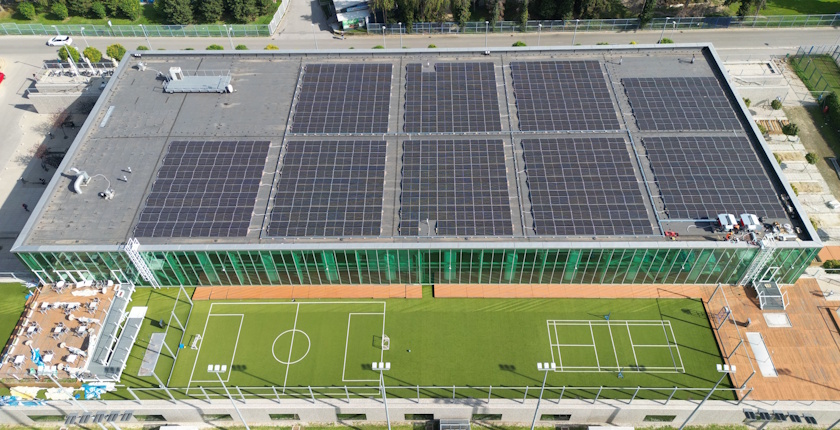
Marking Earth Day, Mayor Tomašević visited one of the PV plants built within the SOLIZAG project, at the Svetice swimming pool complex. He was accompanied by his deputies Danijela Dolenec and Luka Korlaet.

Photo: City of Zagreb
by in News

Montenegro’s power consumption grows 25%

Electricity consumption in Montenegro has risen by 25% over the past four years, driven, among other factors, by solar power expansion. The installed capacity of photovoltaic plants amounts to around 80 MW, and it is expected to exceed 100 MW by the end of the year.

Jovan Kasalica, executive manager of the supply department in power utility Elektroprivreda Crne Gore (EPCG), attributed the surge in electricity consumption both to a low price of electricity and the growing contribution of solar power plants.

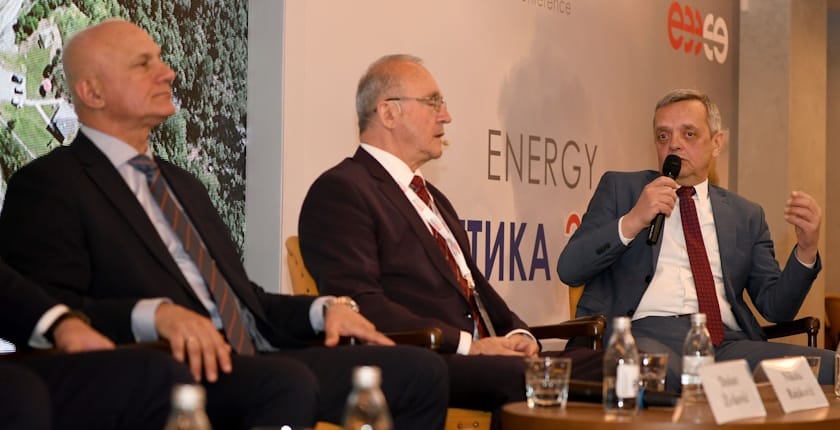
“The majority of this increase is linked to the heating sector, especially in central and northern Montenegro. We are making a significant contribution to decarbonization in the region, which we will document with precise data,” Kasalica noted at the international conference Energy 2025, held in the Zlatibor mountain in Serbia.

Rooftop solar is capacity is increasing

He said the development of the solar power segment was successful. Currently, nearly 80 MW of solar capacity is operational in Montenegro.

The Solari 3000+ and 500+ project brought online 30 MW of solar panels, and the second project, Solari 5000+, which aims for another 70 MW, is currently in advanced stages.

The initiatives focus on installing photovoltaics on the roofs of households and businesses, enabling citizens and entrepreneurs to produce electricity for self-consumption and become prosumers.

The Gvozd wind farm is set to be connected to the grid by the of the year

By the end of the year, it is anticipated that the total capacity of PV facilities in Montenegro will surpass the planned 100 MW, according to Kasalica.

He further noted that the company didn’t have any additional costs for the Solari 3000+ project, because the loans for the installation were switched to the funding facilities and consumers. The project has resulted in lower bills and greater energy efficiency, Kasalica said.

Additionally, he announced plans to connect the 54 MW Gvozd wind farm to the grid by the end of the year.

In addition to increasing the number of prosumers in Montenegro, EPCG plans to install ground-mounted solar power plants and to put online a total capacity of 200 MW within the next three years.

The company has also recently kicked off the main phase of the so-called ecological reconstruction of the Pljevlja thermal power plant. The only coal-fired facility in Montenegro won’t produce electricity until November.

by in News

Serbia allocates entire quota at second auctions, investors to install 645 MW of wind, solar

Serbia allocated the entire 424.8 MW quota in its second wind and solar power auction. According to the Ministry of Mining and Energy, the winning bids came from investors from China, the United States, France, and Serbia. They intend to install ten power plants with a total capacity of 645 MW.

The Ministry of Mining and Energy conducted the second round of renewable electricity auctions. Forty-one applications were submitted for market premiums, and 37 were declared valid. Both segments were oversubscribed. Investors in wind submitted bids for 444 MW, and the quota was 300 MW. For solar, they applied for premiums for 260 MW, compared to the available 124.8 MW.

The winners have the right to sign 15-year contracts for difference (CfDs).

Seven bids were declared valid for wind, and five filled the quota. Investors will build wind parks with an overall capacity of 468 MW, and premiums will be awarded for 300 MW, according to the proposed ranking list, published on the ministry’s website, which tracks renewable energy tender procedures. The maximum acceptable bid for wind farms was EUR 79 per MWh, and the investors offered from EUR 53.59 to EUR 68.25, according to the announcement.

These are the winning bidders: Matrix Power, owned by French developer Akuo Energy, Windvision Windfarm A, Windvision Windfarm B, Crni Vrh Power, owned by Chinese companies Shanghai Electric Power & Energy Development Limited and CMC Capital, and Jasikovo, owned by Serbian citizens.

The crowd was much bigger for the solar segment. Five projects won the right to market premiums. A total of 30 applications were valid. The quota was 124.8 MW, and the selected investors are set to install photovoltaic plants with 177 MW in combined capacity, the ministry’s proposed ranking list shows.

It said that the investors offered prices from EUR 50.9 to EUR 59 per MWh. The ceiling for electricity from photovoltaic plants was EUR 72. The following firms had winning bids: Vemi Biogas, Kobra Global, Solarina, Mona Green Energy 2, and Brankov Solar. The 150 MW Solarina project is the only large one, while Brankov Solar is an agrisolar one.

Solarina is owned by CWP Europe, and Mona Green Energy 2 by Serbia’s Mona Holding. The three other firms are owned by Serbian citizens.

The ministry noted that the total planned investments of the winning bids is EUR 782 million.

Đedović Handanović: All produced electricity will be offtaken by Serbia’s utility EPS

Minister Dubravka Đedović Handanović said the second round of auctions was highly successful in capacity and offered prices. Importantly, all electricity from the power plants that get the premiums will go to state-owned power utility Elektroprivreda Srbije (EPS) and be used to supply domestic businesses and households.

“The offered prices are very competitive, i.e. EUR 50.9 per MWh for solar and EUR 53.5 per MWh for wind, which is significantly below the market levels. According to our incentives model, this means we don’t expect power plants will be subsidized but that they will return windfall profit to the state as long as market prices are higher than those offered by the auction winners,” she stated.

The confirmation of good conditions for investment in Serbia

Đedović Handanović stressed that the high interest by investors is a confirmation of good conditions for investments in Serbia.

“In addition to domestic investors, the winners of these auctions are also investors from China, the USA, and France. It demonstrates that Serbia is globally recognized as a good destination for investment, which will be very significant in achieving our strategic goals in the energy transition process,” she said.

In 2023, the Government of Serbia adopted the incentives plan for renewables for a three-year period through 2025. It said it would award market premiums for 1.3 GW. The first round of auctions was conducted in 2023. The selected projects, for 715 MW in total capacity, are all supposed to be connected to the grid by the end of next year.