by in News

Celje, Šoštanj among Slovenian municipal authorities pursuing energy independence

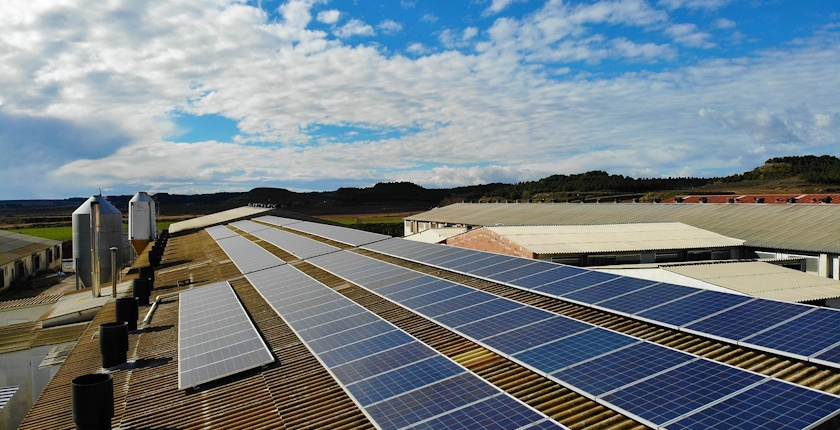
The City of Celje in Slovenia plans to install 11 solar power plants on its public buildings, and the Municipality of Šoštanj agreed contracted four such units. The photovoltaic systems would be part of energy communities. Šoštanj expects to save EUR 70,000 per year while Celje is counting on EUR 200,000.

Novo Mesto, another municipality in Slovenia, recently made a similar move toward achieving energy independence.

The total capacity of the solar power plants in Celje and Šoštanj is 1.9 MW. They have signed contracts with ECE, a subsidiary of state-owned power utility Holding Slovenske Elektrarne (HSE). The projects are funded from the National Recovery and Resilience Plan (NRRP) and by the two municipal authorities.

Šoštanj is set to get solar power plants with a capacity of 500 kW altogether, at four locations: the sports hall of the Karel Destovnik Kajuh elementary school, a music school, health center, and the Pilon Center.

The total investment is EUR 500,000, with the local authority receiving a EUR 450,000 grant via the NRRP.

Both municipal authorities now have energy communities

In Celje, approximately 1.4 MW would be installed at several locations including the Z’dežele Stadium, Celje Summer Pool, Celje Health Center, elementary schools and kindergartens.

The City of Celje secured a EUR 1 million grant from NRRP, and the total investment is estimated at EUR 1.4 million.

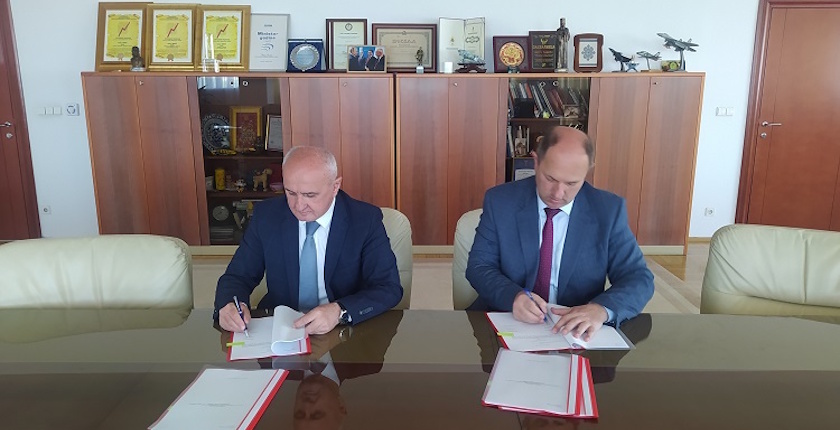
Sebastijan Roudi and Boris Goličnik (photo: Municipality of Šoštanj)

In addition to building solar power plants, the contract includes five years of maintenance, offtaking surplus electricity production, and supply during insufficient power generation. It also involves managing the energy community.

In Šoštanj, the energy community would involve more than 15 public buildings, and the one in the City of Celje would consist of PV units on more than 40 public buildings.

The two projects are scheduled for completion in December and November, respectively.

Šoštanj aims to produce 70% of the electricity consumed by its public buildings

When the power plants are built, the municipality expects to cover 70% of the consumption of all public buildings, and the third-largest city in Slovenia aims for a 15% share.

The Šoštanj project is envisaged for 500 MWh of clean electricity output per year, reducing electricity costs by about EUR 70,000. Total savings over the entire lifespan of the solar power systems is seen at EUR 2 million.

Celje’s PV plants would produce 1,462 MWh of energy annually and save approximately EUR 200,000, translating to around EUR 5 million throughout their service life.

Investment for the long-term benefit of the community

Mayor of Šoštanj Boris Goličnik said the contract signifies the continuation of the municipality’s vision of energy independence.

“This is an investment in the future, in the green transition, and for a permanent benefit of our community,” he stated.

According to Celje’s Mayor Matija Kovač, it is a strategic decision on managing energy, costs, and the environment in the future. He said the planned PV units are just the beginning.

Sebastijan Roudi, ECE CEO, asserted that as part of the HSE group, the firm places grea t emphasis on demanding energy projects, developing new billing models, and seeking ways to accelerate the green transition.
by in News

Worrying results of coal, overburden production in BiH’s power utility

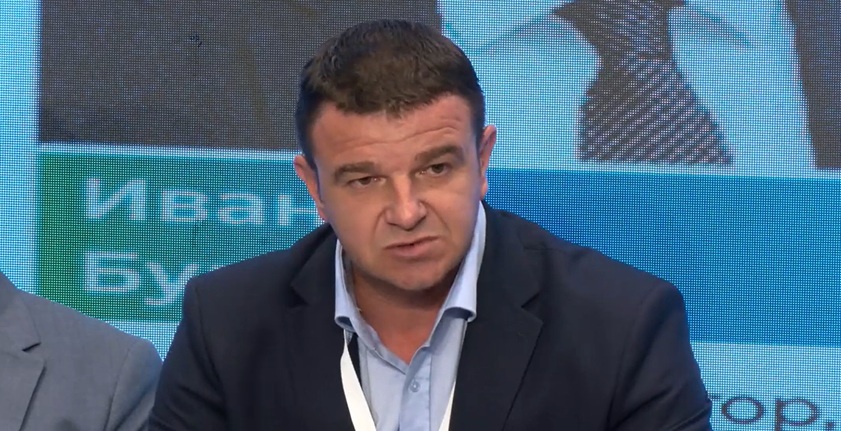
Coal deliveries to thermal power plants in the first half of the year reached 73% of the plan, while only 43% of the overburden excavation target was achieved, warned Sanel Buljubašić, CEO of Bosnia and Herzegovina’s state-owned power utility Elektroprivreda Bosne i Hercegovine (EPBiH).

Increasing coal production is the only way to stabilize the energy system in the Federation of Bosnia and Herzegovina (FBiH), Sanel Buljubašić told state news agency Fena. Focus.ba republished the report.

FBiH is one of the two entities making up BiH. The other one is the Republic of Srpska.

The chief executive pointed to the significance of coal, stressing that 80% of EPBiH’s production comes from coal power plants, with hydropower plants providing the remainder.

Of note, the company recorded a loss of BAM 45.47 million (EUR 23.25 million) for the first half of this year. BiH’s electricity imports were 4.5 times higher than in the same period of 2024.

Buljubašić: We will fulfill our obligations only if the mines fulfill theirs

Buljubašić recalled that the Government of FBiH raised the price of coal at the beginning of 2024 and signed a new collective agreement in the mining sector to demonstrate its commitment to improving working conditions for miners and their status.

The coal mines are operating under an entity called EPBiH Concern. They must produce the planned quantities of coal, which have been jointly agreed and contracted, the CEO underscored and added that EPBiH would meet its obligations only if the mines do the same.

Buljubašić said RMU Breza and RMU Đurđevik are facing the most pressing issues while that RU Kreka is making its best result of the past three years. Coal mine operators RU Kreka, RMU Kakanj, and RMU Abid Lolić have increased production, he added.

Of the nearly 5,000 workers, 1,226 are occupationally disabled

The company head said EPBiH Concern’s mines employ 4,967 workers, of whom 1,226 are occupationally disabled. Additionally, on average, between 1,500 and 1,700 employees are absent every day for various reasons, such as annual leave or sick leave.

In his words, restructuring would imply a program for surplus workers at RMU Zenica, closing mines that are technologically and economically unviable and continuing investments by procuring equipment for economically viable mines to increase productivity.

One of the main problems is the devastated coal deposits, a result of years of delay in overburden excavation, Buljubašić stressed.

Just transition includes mine shutdowns, installation of solar power, batteries, and the use of biomass

The just transition project in BiH’s coal regions, estimated at BAM 160 million (EUR 81.8 million), is being implemented with a World Bank loan. Most of the funds will be spent on closing mines and taking care of surplus employees of RMU Zenica, repurposing RU Kreka’s land, building the 12.2 MW Dubrave photovoltaic plant, repurposing the land of RMU Banovići and installing another solar power plant, of 15 MW, the CEO explained.

He pointed out that the authorities are preparing a law on the closure of Zenica mines — the first such legislation in BiH.

Green investments within a just transition platform for coal regions can include the construction of battery energy storage systems (BESS) and fast-growing biomass plantations, according to Buljubašić.

He announced that EPBiH would soon present its Prosumer 5000+ project and a long-term development plan for EPBiH for the period 2025-2050, within the energy sector development strategy.

by in News

Slovenia’s HESS inks 9.2 MW deal for two solar power plants near HPP Brežice

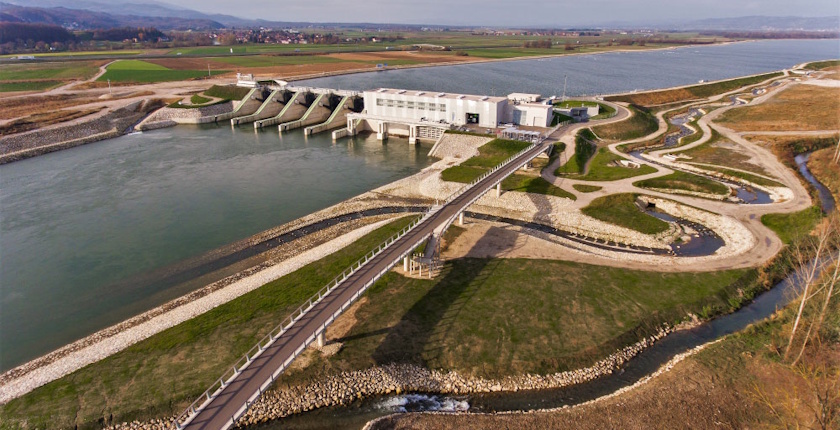
Hydropower plant operator Hidroelektrarne na Spodnji Savi will build two solar power plants with a combined capacity of 9.2 MW near its Brežice hydropower plant. It picked Končar as the contractor.

Two new photovoltaic facilities in the pipeline are the continuation of investments in solar near the Brežice hydropower plant. Hidroelektrarne na Spodnji Savi (HESS), owned by GEN and HSE, installed a 6 MW PV plant in May 2023 next to the reservoir of its HPP Brežice’s.

At the time, it was the largest in Slovenia, and it remains the largest hybrid system in the country.

The existing PV plant is FEBR-D3, while the two new ones are called FEBR-D1 and FEBR-D2.

“We’re excited to announce a new chapter in our collaboration with HESS,” Croatia-based Končar said.

Končar will install the two solar power plants

Končar, an engineering company, signed a contract in July for the construction of FEBR-D1 and FEBR-D2. It said the endeavor extends the partnership established at HPP Brežice. Of note, it supplied generators for the 47.4 MW HPP, which began operating in 2017.

Located just a few kilometers upstream from HPP Brežice, on the left bank of the Sava River, the two units will have a combined peak capacity of 9.2 MW, powered by 14,790 PV modules, Končar added.

The Croatian firm revealed that the contract is worth EUR 4.5 million. It sets an ambitious goal: both plants are scheduled to be fully operational and handed over to the client by the end of next year, according to Končar.

The largest solar power plant in Slovenia has a capacity of 7.1 MW

In late May, on World Sun Day, HESS announced that it obtained construction permits for the FEBR-D1 and FEBR-D2 solar plants. It is the continuation of the story within which, on June 21, 2023, Slovenia’s largest hybrid solar power plant FEBR-D3 began production, it added.

Of note, the largest solar power plant in Slovenia has a capacity of 7.1 MW. It came online last month on the border with Italy.

Hydropower and solar energy make an excellent combination, so numerous power utilities, including the ones in the Western Balkans, decided to invest. The latest example comes again from Slovenia, where Soške Elektrarne Nova Gorica (SENG), part of HSE, commissioned its first PV unit at its Avče pumped storage hydropower plant.

by in News

INVL fund secures loan for 71 MW of solar projects in Romania

INVL Renewable Energy Fund I has secured a EUR 29.3 million loan for the installation of solar power plants with a capacity of 71 MW in Romania.

INVL Renewable Energy Fund I, managed by INVL Asset Management, invests in renewable energy projects.

The new EUR 29.3 million loan agreement has been signed with Kommunalkredit Austria AG, the fund revealed.

It is its second loan to the fund. In November 2023, the bank approved EUR 25 million for the construction of solar power plants in Romania.

Kommunalkredit’s long-term support plays an important role in accelerating the transition to green energy in the region, according to Liudas Liutkevičius, Managing Partner at INVL Renewable Energy Fund I.

INVL Renewable Energy Fund I is focusing on the Polish and Romanian markets

Construction of the facilities of an overall 71 MW in Dolj County is scheduled for completion by the end of September next year, according to the update. It is the fund’s third large-scale solar energy project in Romania.

INVL Renewable Energy Fund I is focusing on the Polish and Romanian markets, having a combined portfolio of projects in development of 389 MW.

In Romania, the fund is planning eight photovoltaic units with a total capacity of 356 MW. Its future solar parks in Poland would have 32 MW overall. All are due to be completed by the end of 2027.

Ponomarenko: The bank is committed to enabling the energy transition in high-growth markets

Investments in Romania and Poland are expected to exceed EUR 250 million altogether, the fund added.

Konstantin Ponomarenko, a Senior Structurer at Kommunalkredit Austria, said the development of solar energy infrastructure in Romania reflects both the fund’s strategic vision and the bank’s commitment to enabling the energy transition in high-growth markets.

The transaction underlines Kommunalkredit’s dedication to delivering bespoke financing solutions that empower sustainable development across Europe, he added.

by in News

Three quarters of global solar, wind capacity under construction is in China

China continues to dominate the renewable energy landscape, representing 29% of all planned wind and solar capacity and a staggering three quarters of the segment under construction, according to the Global Energy Monitor.

All prospective projects in the world would have 4,484 GW in total capacity, of which 1,302 GW is in China. Next are Brazil, Australia and the United States.

The group consists of announced projects and the ones in the pre-construction phase and under construction. The list comprises solar projects of 20 MW or more and wind projects of at least 10 MW, both in terms of connection capacity.

There is 689 GW of new wind farms and photovoltaic plants in the world under construction. China accounts for 74% or 510 GW, the data reads.

According to Global Energy Monitor’s Global Solar Power Tracker, China has over 709 GW of prospective solar capacity, representing over one third of the global pipeline in 2025.

The country’s wind capacity has a similar rate of growth as solar, per Global Energy Monitor’s Global Wind Power Tracker. There is over 590 GW in prospective phases — nearly 530 GW onshore and 63 GW offshore. China’s prospective capacity accounts for about one third of the worldwide total.

The rapid buildout underscores China’s drive to accelerate its renewable energy development, with at least 205 GW slated to come online by the end of the year, though the total capacity is expected to be even higher, the update shows.

“China is fast-tracking a 1.3 TW pipeline of utility-scale solar and wind projects. Of this, 510 GW is already under construction, primed to be added to China’s 1.4 TW solar and wind capacity already in operation,” Global Energy Monitor said.

As of March 2025, China is the world’s offshore wind powerhouse, growing from under 5 GW in 2018 to 42.7 GW in 2025 (50% of global capacity).

China’s 1.4 TW in operating solar and wind parks outstrips thermal power

In Q1 2025, China’s combined wind and solar capacity surpassed its total coal and gas segment for the first time, supplying nearly 23% of the country’s total electricity consumed, compared to roughly 18% in Q1 2024, the National Energy Administration (NEA) revealed.

Moreover, the increase in output from solar, wind, and other non-fossil energy met China’s additional electricity demand in Q1 2025. Its operating solar and wind capacity soared to 1.4 TW altogether, now accounting for 44% of the global total. It is also more than the combined total of the European Union, United States, and India, the Global Energy Monitor underscored.

by in News

Serbia shelves plan for strategic partnership for 1 GW in wind farms

Serbia has revised its Baselines of the Energy Infrastructure Development Plan and Energy Efficiency Measures for the period up to 2028, with projections up to 2030. It defines priority projects in the energy sector.

The Baselines of the Energy Infrastructure Development Plan and Energy Efficiency Measures were adopted in mid-2023 at the proposal of the Ministry of Mining and Energy. In the new document, the construction of 1 GW wind farms is no longer among the priority projects. The plan was to involve with a strategic partner, similar to the project for 1 GW of solar power plants, which is currently being developed by state-owned power utility Elektroprivreda Srbije (EPS) with a strategic partner.

The development plan serves as a basis for the implementation of Serbia’s Energy Development Strategy and the National Energy and Climate Plan (NECP).

The ministry outlined projects across six sectors

The investment cycle planned for the upcoming strategic period represents the backbone of the Energy Development Strategy. It provides the foundation for further assessments and projections of the targeted energy mix through 2030 and 2050. It aligns with the international commitments undertaken in the process of European Union accession as well as with the obligations within the Energy Community, the document reads.

The plan includes projects in six sectors: electricity generation, transmission network, distribution network, natural gas, oil and petroleum products, and energy efficiency. It ranks the projects within each sector.

The most significant change in renewable energy is that the construction of wind farms with a combined capacity of 1 GW is no longer on the list of priority projects.

Solar power plants Kolubara and Morava on the priority list

The 1 GW of solar power and the Kostolac wind farm remained among the four most important endeavors, while the new items are the Morava and Kolubara photovoltaic projects. The Klenovnik solar power plant has been removed from the list. According to the document, the projects on the list are the most advanced.

In total, EPS has 41 projects for power generation or 20 less than in the original document.

Fewer projects, but more realistic

The authors explained that the number of renewable energy projects is lower, but more realistic and better optimized. The entire EPS investment portfolio across all areas requires significant funds and loans, so it would not be realistic to pursue a larger number of high-value projects that cannot be financially or physically implemented within a reasonable timeframe, the document underlined.

It was also taken into account that many private projects, mainly wind farms, are being developed through the auction system, so the focus of EPS’s projects is primarily on solar power plants, to create a balanced ratio between wind and solar power plants in the system. The company’s project for the wind farms with a strategic partner remained a backup option, in case an additional capacity is needed, according to the document.

There are new items on the list for the electricity distribution network

There were no changes in the transmission network segment. The priority projects are the third and fourth sections of the Trans-Balkan Corridor, the Pannonian Corridor, and Beogrid 2025. The list contains 66 investments, five fewer than in the original plan.

Changes have been made regarding investments in the power distribution network. The most important projects now are the 110/10 kV substations National Stadium and Surčin. Automation of the medium-voltage network was kept, together with the ongoing replacement of wooden poles with concrete ones and the replacement of electricity meters with smart ones.

The integrated system for remote monitoring, diagnostics, and control of the low-voltage distribution network has been removed from the list. Instead of replacing transformers at 10 kV, 20 kV, 35 kV, and 110 kV voltage levels, the new focus is on the reconstruction of 25 substations of 110/35 kV.

Planning the first district cooling systems

The energy efficiency part of the baselines was changed the most.

The previous document was primarily focused on reviewing and securing financial support for ongoing projects, while the current one is envisaging expanding the scope and considering new financial mechanisms and sectors that require additional support.

Among other initiatives, the Strategic Plan for the Decarbonization Policy of the District Heating and Cooling Sector in the Republic of Serbia is being prepared. It is a joint endeavour of the European Bank for Reconstruction and Development (EBRD), the Association of Serbian Heating Plants, and the Ministry of Mining and Energy.

The project aims to define steps to improve the district heating system, including heat storage, the use of heat pumps, utilization of heat generated from waste treatment, and the development of the first district cooling systems, according to the document.

Special attention will be devoted to developing guidelines for expanding the district heating system by connecting new users while simultaneously shutting down fossil fuel boilers. It will directly contribute to reducing CO2 emissions and pollution, the authors noted.

by in News

Everything is ready for Belgrade Energy Forum 2025 – welcome!

Everything is ready for the third Belgrade Energy Forum – BEF 2025. On May 14 and 15, the conference will gather four hundred participants from more then 30 countries from the region, Europe, and beyond.

Participants of the Belgrade Energy Forum 2025 (BEF 2025) will have the opportunity to hear from speakers from the European Union and five countries in the region and exchange views. Eight panels featuring more than 50 officials, executives and prominent energy experts will try to untangle the currently most important issues in the energy sector.

Representatives of governments, regulatory agencies, regional and international institutions and organizations as well as the business community will outline their future moves, which is invaluable information given the new reality of a turbulent geopolitical landscape.

Latest information on the largest project for the installation of solar power plants in the region and beyond

Energy Community Secretariat Director Artur Lorkowski and Serbian Minister of Mining and Energy Dubravka Đedović Handanović will open the event. One of the key speakers is Christian Zinglersen, director of the EU Agency for the Cooperation of Energy Regulators (ACER).

The ministerial panel consists of ministers and other officials from Montenegro, Croatia, Hungary, Serbia, and the Republic of Srpska, which is one of the two entities making up Bosnia and Herzegovina.

Representatives of the Hyundai Engineering – UGT Renewables consortium will summarize the next steps in the largest solar power project in the region and beyond. The consortium is the diamond sponsor of the event this year as well.

It entails solar power plants with a total connected power of 1,000 MW, and battery energy storage systems (BESS) of 200 MW in overall capability and 400 MWh in capacity.

It is a joint project with Serbian state-owned power utility Elektroprivreda Srbije. The partners took another important step this week by signing a grid connection contract with the country’s transmission system operator Elektromreža Srbije.

Hitachi’s cutting-edge technological solutions are indispensable in Southeast Europe

Keynote speakers Seung-Won Lee, Vice President of Hyundai Engineering, and Chan Wo Park, Global Executive Advisor at UGT Renewables, will present the project.

Hitachi Energy‘s cutting-edge technological solutions are indispensable in Southeast Europe. Some examples of its contribution to the energy transition of the region are the largest solar power plant in the Balkans – Apriltsi in Bulgaria, of 250 MW, as well as the second wind farm in North Macedonia – Bogoslovec, with a capacity of 36 MW.

Together with the Association of Serbian Energy Intensive Industry, Hitachi Energy is in the group of silver sponsors of BEF 2025.

The association was founded by Metalfer Group, Elixir Group, Lafarge Serbia, Moravacem (part of CRH) and TITAN Cementara Kosjerić. They are producers of steel, fertilizers and cement driven by a vision of sustainable development, industrial innovation and regulatory clarity.

Zečević: Decarbonization must be shaped by strategy, not imposed by circumstance

BEF 2025 will be attended by the association’s manager Stanislava Simić, Metalfer Group president, Branko Zečević and Lafarge Serbia CEO Dimitrije Knjeginjić.

“As Europe enforces carbon accountability through CBAM, Serbia and the Western Balkans must not remain a regulatory blind spot. Without our own regionally adapted carbon border policy, we risk being overwhelmed by carbon-intensive imports, eroding both our industry and climate goals,” Zečević stressed.

The association calls for a regional, synchronized approach – one that levels the playing field, accelerates innovation, and positions the Western Balkans as a credible partner in Europe’s green transition, he added. Decarbonization must be shaped by strategy, not imposed by circumstance, according to Zečević.

Batteries are the stars of BEF 2025

The panel ‘Energy storage system market in SEE: trends and forecasts’ has attracted great interest.

One of the panelists is Ioanna Barouni, Research Associate in Aurora Energy Research, a reliable energy market analyst and a knowledge partner of the forum. The company’s analysis unveils answers to questions that everybody asks – politicians, investors and regulators alike. For instance, one burning issue is the effect of cannibalization in solar power on wholesale power prices.

Aurora recently presented its first forecast for the Western Balkans, based on investment activity. The firm now provides forecasting services for Albania, Kosovo*, North Macedonia, Montenegro, and Bosnia and Herzegovina.

Cerović: BEF is a key event bringing together industry experts

Financing battery energy storage systems is a job banks such as UniCredit Bank Serbia, a bronze sponsor of the conference.

“I’m delighted to once again represent UniCredit Bank Serbia, in BEF, a key event that brings together industry experts and leaders in the energy transition in Southeast Europe. As the global market moves towards decarbonization and greater use of renewable sources, the role of energy storage systems becomes increasingly important,” said Svetlana Cerović, Head of Specialized Lending at UniCredit Bank Serbia.

She is also last year’s winner of the Female Leader in Sustainable Energy award.

Fortis brings its vast experience in investments in energy storage

Fortis is bringing its vast experience in investments in energy storage. In February, the firm inked a deal for batteries for North Macedonia’s largest PV plant, Oslomej, while a 36 MWh battery in Serbia is in the pipeline. Fortis has also signed a framework agreement with PowerChina on joint investments in renewable energy projects.

Nikola Oklobdžija, CEO of Fortis Energy for Eastern Europe, will present the company’s vision.

Renewable Energy Insurance Broker, a bronze sponsor, was one of the key factors for the largest photovoltaic plant in Romania. It provided insurance packages for every phase of development of the 155 MW Rătești facility. REIB is a specialized insurance intermediary focused exclusively on the renewable energy sector.

Tailored insurance solutions improve project bankability and long-term security, according to the firm.

Four companies are exhibitors

BEF 2025 has an exhibition segment, too. One of the companies showcasing its activities is ScadaWatt, which develops smart and reliable solutions for power plants. The company provides remote monitoring, real-time control, and AI-powered analytics to improve efficiency and reduce losses.

SciEngineer and Zarja Elektronika will also present their services and solutions. SciEngineer is the exclusive representative of MathWorks, COMSOL, and Speedgoat in Central and Eastern Europe. Their solutions reduce development time, cut costs, improve reliability, and accelerate time-to-market.

Zarja Elektronika is a leading Slovenian company specializing in advanced fire detection and alarm systems. With over 40 years of experience, it provides innovative, reliable, and tailor-made safety solutions for industrial, commercial, and residential environments.

DRI and YEO are friends of the conference

The Chinese company SANY Renewable Energy, which owns the Alibunar 1 and Alibunar 2 wind farms, will also have an exhibition stand.

DRI and YEO are joining the group of the friends of the conference. DRI is an Amsterdam-headquartered renewables developer and a subsidiary of the DTEK Group, one of the biggest private investors in Ukraine’s energy sector.

Joffroy Beckers, Head of PPA, will speak at a panel dedicated to the topic.

In January, DRI said it planned to start building the 120 MW Ljubovo wind power plant in Croatia in 2027. It revealed it right after it completed a 60 MW solar power plant in Romania.

Turkey-based YEO is active in more than 30 countries, delivering turnkey solutions in energy and industrial systems. In the Balkans, in addition to its energy expertise role, the company invests in renewable energy projects.

* This designation is without prejudice to positions onstatus and is in line with UNSCR 1244/99 and the ICJ Opinion on the Kosovo declaration of independence.
by in News

Republic of Srpska awards concession for Trebinje 3 solar project

The Ministry of Energy and Mining of the Republic of Srpska, one of the two entities constituting Bosnia and Herzegovina, has awarded a concession to power utility Elektroprivreda Republike Srpske for the proposed Trebinje 3 solar power plant.

The Trebinje 3 photovoltaic plant would have an installed capacity of 53.63 MW and an estimated annual production of 85.5 GWh.

According to the ministry, construction is expected to be completed within the next four years. The concession has been granted for 50 years and the total investment value is BAM 84.2 million (EUR 43.1 million), the ministry said.

Before finalizing the concession contract, the concessionaire, state-owned Elektroprivreda Republike Srpske (ERS), delivered a one-off payment to the budget of the Republic of Srpska of BAM 842,049 (EUR 430,992).

Almost the entire amount of the concession fee will be allocated to the budget of the City of Trebinje

After the facility becomes operational, the concessionaire will be obligated to pay a fee of BAM 0.0055 (EUR 0.0028) per kWh of generated electricity to the budget of the Republic of Srpska. A 95% share is allocated for the budget of the city.

The concession agreement for the construction and operation of the Trebinje 3 solar power plant was signed by the Minister of Energy and Mining of the Republic of Srpska Petar Đokić, who will be among the speakers at Belgrade Energy Forum 2025 (BEF 2025), and ERS CEO Luka Petrović.

ERS already has two concessions for solar power projects

It is the third concession that the company received for solar power plants from the government. The first, for Trebinje 1, with a capacity of 73 MW, was awarded in 2020..It was followed by Trebinje 2, for 53 MW, awarded in 2022. Neither of the two PV plants has been constructed yet.

In March 2022, ERS announced Lugos Renewables was acquiring 70% ownership of the Trebinje 1 project, with ERS retaining control of the remaining 30%.

In February of this year, the Government of the Republic of Srpska approved concessions for two solar power projects. Their total capacity would be 110 MW.

by in News

Engie Romania takes over 54 MW wind power project

Engie Romania has completed the acquisition of a 54 MW wind power project located in Mereni in central Romania.

Engie Romania said the Mereni wind project is located in Constanța county, an area with high wind potential, recognized for its superior yields in green energy production.

The project represents a strategic step in expanding the company’s renewable energy portfolio and supports its goal of reaching an installed capacity of 1 GW by 2030, according to Engie Romania, a subsidiary of the French energy giant Engie.

The project was acquired in a “ready-to-build” stage, with all necessary building permits in place to begin construction. Installation is scheduled to begin later this year, with commissioning scheduled for 2027, according to a press release.

The Mereni wind farm will deliver 180 GWh of renewable energy annually

With an estimated annual production of 180 GWh, the Mereni wind farm will deliver renewable energy equivalent to the annual consumption of approximately 90,000 households. Engie estimates that this amount of electricity can support the operation of about 20 medium-sized data centers with 1 MW of continuous power each.

Cristian Buzan, Deputy General Manager of Engie Romania, underlined that this acquisition reflects the company’s constant commitment to actively contributing to the energy transition by developing a diversified portfolio of renewable projects.

Engie Romania currently operates an installed capacity of 211 MW from renewable sources

“We continue our evolution with concrete steps, supported by the ambition to be a trusted partner for our customers, offering sustainable and competitive solutions, adapted to their long-term needs,” Buzan noted.

Engie Romania currently operates an installed capacity of 211 MW from renewable sources. The portfolio comprises three wind farms with a combined capacity of 178 MW and five photovoltaic plants totaling 33 MW. These assets are located in different regions of the country.

The company’s latest projects are its first 57 MW hybrid power plant and the acquisition of an operational 80 MW wind farm.

Its next move is to put into operation a 37.2 MWp solar power plant in Ariceștii Rahtivani, Prahova County.

by in News

Army joins forces with municipality, energy company, road firm to install solar panels in Slovenia

The Sunčana Vipava solar power project has brought together several key stakeholders in Slovenia – state electricity producer Soške Elektrarne Nova Gorica (SENG), the Ministry of Defense of the Republic of Slovenia (MORS), road management firm Družba za Avtoceste v Republiki Sloveniji (DARS), and the Municipality of Vipava.

The Sunčana (Sunny) Vipava project envisages installing solar power plants with a total capacity of 20 MW along highways, near military barracks, and on municipal land.

The initiative is seen as a strategic move towards achieving greater energy independence, enhancing energy supply security, and promoting sustainable development through advanced photovoltaic solutions, in both military and civilian areas, according to SENG.

The company operates 28 hydropower plants, with a combined capacity of 346 MW, on the Soča River and its tributaries, and is part of the Holding Slovenske Elektrarne (HSE) group.

In the Vipava municipality, SENG has identified several potential sites for harnessing solar energy, located adjacent to military barracks, along highways, and on municipal land.

The Vipava municipality intends to establish business zones in the vicinity of the future solar plants

The primary objective for all parties involved in the agreement is to maximize the utilization of solar potential, in conjunction with modern technologies such as hydrogen, SENG underlined.

The estimated potential at these sites is substantial, and it is currently financially viable to install solar panels with a total capacity of 20 MW. Additionally, the Municipality of Vipava plans to develop business zones in the vicinity of the future photovoltaic plants.

SENG and DARS have had a longstanding collaboration, initiated in July 2023, when the two state-owned companies agreed to develop solar power plants next to highways and signed a contract to build the first one in the southern region of Primorska.

SENG stressed the Sunčana Vipava project is one of its several green initiatives. The company plans to open its largest solar power plant at Kanalski Vrh before summer. The plant, located near the Avče pumped storage hydropower plant, will have a total capacity of 8 MW, and its first, 2.9 MW phase is nearing completion.

The official opening of the first phase is scheduled for early June.

Slovenia’s army involved in various energy projects

Photo: SENG

The involvement of the Ministry of Defense of the Republic of Slovenia (MORS) and Slovenian Armed Forces in energy projects is not a surprise.

In April 2023, a public-private partnership was initiated to build photovoltaic plants at the Edvard Peperko military barracks in Slovenia’s capital, Ljubljana. A year later, MORS launched the Defense Resilience Hub Network in Europe (RESHUB) project, which envisages establishing self-sufficient energy hubs.

In addition to highways and military barracks, Slovenia plans to install solar panels along railways, demonstrating its commitment to placing solar energy facilities in degraded or underutilized locations.

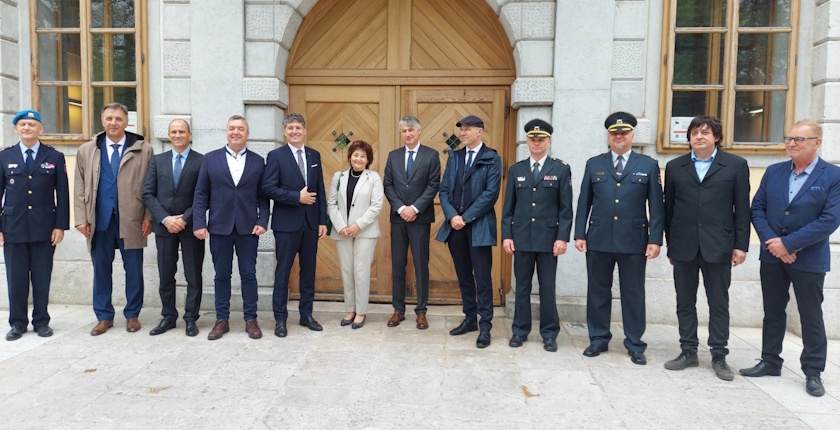
A cooperation agreement for this project was signed by Vipava Mayor Anton Lavrenčič, Slovenian Minister of Defense Borut Sajovic, DARS Board Member David Skornšek, and SENG CEO Mitja Gorjan.

Gorjan explained that SENG’s responsibilities include preparing project and investment documentation for the installation and construction of solar power plants at the Mlake military training ground, along military infrastructure and the highway, and in other locations within the Municipality of Vipava.

According to HSE CEO Tomaž Štokelj, the locations for energy facilities in the Vipava region present excellent opportunities for the multifunctional use of space.