by in News

Renewables account for 99% of Turkey’s net electricity capacity additions

Electricity capacity in Turkey reached 122 GW in 2025, of which 62% was from renewable sources, according to the SHURA Energy Transition Center. Photovoltaics grew by 4.9 GW, compared to 1.7 GW in the wind power segment. Renewables made up 99% of the net additions, amounting to 6.3 GW, the think tank calculated. This year, however, the first unit of the Akkuyu nuclear power plant is scheduled to come online, adding 1.2 GW.

Gross electricity production in Turkey increased 2% last year, to 360 TWh, the SHURA Energy Transition Center estimated in a new report. The share of renewables dropped to 44.1% from 46%. Namely, hydropower output is on a downward trajectory, due to droughts. Wind, solar and geothermal power rallied to 24.6%, though. Photovoltaics and wind power together surpassed 20%.

Renewables continue to dominate the sector’s development, accounting for 99% of the overall 6.3 GW in net additions, the think tank calculated. The total reached 122 GW. Renewable sources made up 62%, compared to 59.7% in 2024.

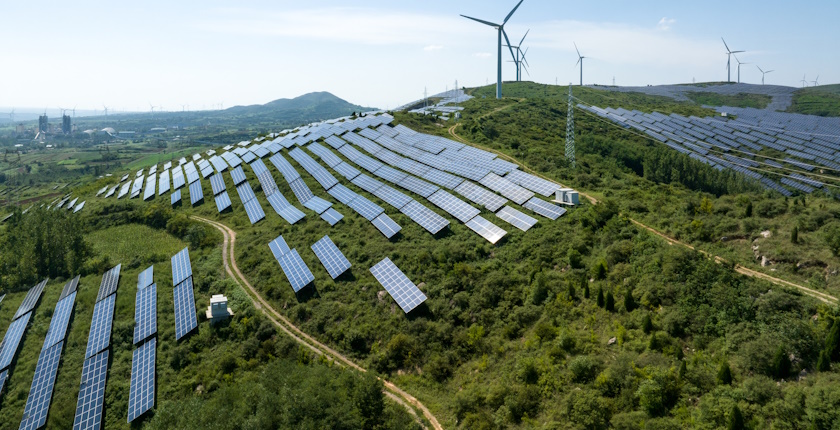
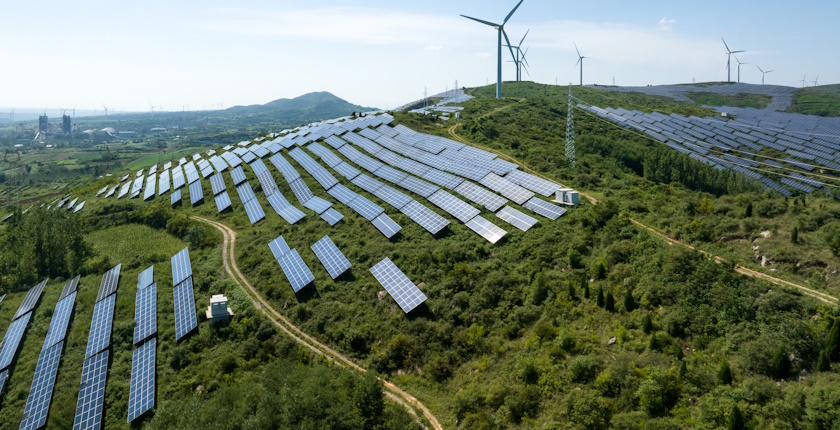
Solar power surged by 4.9 GW and the wind power capacity jumped by 1.7 GW, while the natural gas item declined by 684 MW.

Importantly, the picture is about to change, as the first, 1.2 GW reactor in Akkuyu, Turkey’s first nuclear power plant, is scheduled to be commissioned this year. Coal plant projects remain dormant and uncertain.

Race to 2035 targets

Daily power consumption reached an all-time high of 1,244 GWh on July 29. SHURA attributed the record to cooling demand caused by rising temperatures.

To reach the 2035 targets, an average of 8 GW of combined solar and wind capacity must be commissioned each year. The high momentum is expected to continue in 2026, the report reads. The government aims to hit 120 GW altogether from the two technologies, against the current 40 GW.

However, grid constraints for self-consumption units (formally, unlicensed power plants) may slow solar energy growth, the authors warned. The plan is to resolve the issue through capacity allocations for the segment. The increasing prevalence of renewable and hybrid power plants with storage will enhance system flexibility, SHURA added.

Electricity decarbonization plan costs USD 15 billion per year

Just transition plans for coal regions are critical, the think tank said. It estimated that decarbonizing the electricity sector by 2053 would require an average annual investment of USD 15 billion.

Decisions regarding fossil fuels made for security of supply reasons must be more carefully balanced with the net zero target, SHURA stressed. Temporary solutions risk creating a permanent deadlock, it underscored.

Focus switching to grid, flexibility

Turkey has reached a critical juncture in its energy transformation, according to the update. The authors commended the rise in capacity and new tenders and investments. Nevertheless, they claim the pace cannot be sustained without strengthening the grid, flexibility and implementation capacity, while implying expansion in storage, electrification and financing.

In the view of SHURA’s Steering Committee Chair Selahattin Hakman, energy transition should no longer be considered solely as a topic of climate policy, but rather in conjunction with geopolitical developments, security and economic resilience. Clean energy investments, particularly in solar and wind power, continue to grow despite increasing global uncertainties, he noted.

“In this new era, energy transition is defined at the intersection of geopolitical independence, economic resilience and social justice. Energy policies have transcended the boundaries of the environment and have become central to foreign policy, industrial strategy and trade policies,” Hakman stated.
by in News

Renewables account for 99% of Turkey’s net electricity capacity additions

Electricity capacity in Turkey reached 122 GW in 2025, of which 62% was from renewable sources, according to the SHURA Energy Transition Center. Photovoltaics grew by 4.9 GW, compared to 1.7 GW in the wind power segment. Renewables made up 99% of the net additions, amounting to 6.3 GW, the think tank calculated. This year, however, the first unit of the Akkuyu nuclear power plant is scheduled to come online, adding 1.2 GW.

Gross electricity production in Turkey increased 2% last year, to 360 TWh, the SHURA Energy Transition Center estimated in a new report. The share of renewables dropped to 44.1% from 46%. Namely, hydropower output is on a downward trajectory, due to droughts. Wind, solar and geothermal power rallied to 24.6%, though. Photovoltaics and wind power together surpassed 20%.

Renewables continue to dominate the sector’s development, accounting for 99% of the overall 6.3 GW in net additions, the think tank calculated. The total reached 122 GW. Renewable sources made up 62%, compared to 59.7% in 2024.

Solar power surged by 4.9 GW and the wind power capacity jumped by 1.7 GW, while the natural gas item declined by 684 MW.

Importantly, the picture is about to change, as the first, 1.2 GW reactor in Akkuyu, Turkey’s first nuclear power plant, is scheduled to be commissioned this year. Coal plant projects remain dormant and uncertain.

Race to 2035 targets

Daily power consumption reached an all-time high of 1,244 GWh on July 29. SHURA attributed the record to cooling demand caused by rising temperatures.

To reach the 2035 targets, an average of 8 GW of combined solar and wind capacity must be commissioned each year. The high momentum is expected to continue in 2026, the report reads. The government aims to hit 120 GW altogether from the two technologies, against the current 40 GW.

However, grid constraints for self-consumption units (formally, unlicensed power plants) may slow solar energy growth, the authors warned. The plan is to resolve the issue through capacity allocations for the segment. The increasing prevalence of renewable and hybrid power plants with storage will enhance system flexibility, SHURA added.

Electricity decarbonization plan costs USD 15 billion per year

Just transition plans for coal regions are critical, the think tank said. It estimated that decarbonizing the electricity sector by 2053 would require an average annual investment of USD 15 billion.

Decisions regarding fossil fuels made for security of supply reasons must be more carefully balanced with the net zero target, SHURA stressed. Temporary solutions risk creating a permanent deadlock, it underscored.

Focus switching to grid, flexibility

Turkey has reached a critical juncture in its energy transformation, according to the update. The authors commended the rise in capacity and new tenders and investments. Nevertheless, they claim the pace cannot be sustained without strengthening the grid, flexibility and implementation capacity, while implying expansion in storage, electrification and financing.

In the view of SHURA’s Steering Committee Chair Selahattin Hakman, energy transition should no longer be considered solely as a topic of climate policy, but rather in conjunction with geopolitical developments, security and economic resilience. Clean energy investments, particularly in solar and wind power, continue to grow despite increasing global uncertainties, he noted.

“In this new era, energy transition is defined at the intersection of geopolitical independence, economic resilience and social justice. Energy policies have transcended the boundaries of the environment and have become central to foreign policy, industrial strategy and trade policies,” Hakman stated.

by in News

YEO invests in ARC Clean Technology to pave way for SMRs in Turkey

YEO Technology’s strategic investment in ARC Clean Technology, which develops advanced small modular reactors, brings potential cooperation opportunities for the deployment of the technology in Turkey. The startup with headquarters in Canada and the United States has closed a series B financing round, with a focus on its advanced sodium-cooled fast reactor of 100 MW.

Amid its push into other sectors and markets, Istanbul-based YEO Technology (YEO Teknoloji Enerji ve Endüstri) aspires to be an early mover in advanced small modular reactor (aSMR) technologies, counting on Turkey’s upcoming investments in nuclear power. The company revealed that it invested in ARC Clean Technology, valuing the startup at USD 60.4 million.

Advanced small modular reactors are expected to become a complementary solution for baseload power demand, the update adds. YEO said it expects the transaction to open the way for cooperation with the startup, which has headquarters both in Canada and the United States, in the deployment of the technology in Turkey and the surrounding region.

The investment is strategic, in line with the company’s goals of early positioning in future energy technologies, access to carbon-free and sustainable energy solutions, and long-term value creation, according to the announcement. YEO didn’t reveal other details.

ARC counts on rising demand for AI computing

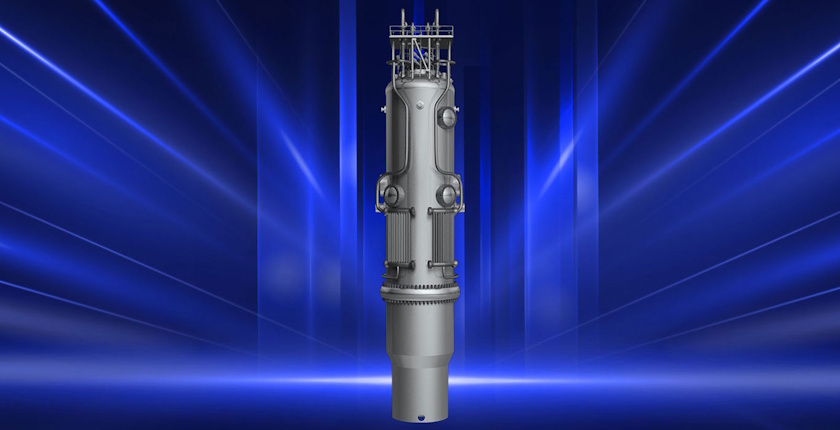
ARC Clean Technology is developing the ARC-100, a generation 4 sodium-cooled fast reactor. It originates from the Experimental Breeder Reactor-II (EBR-II), which worked for 30 years at Idaho National Laboratory.

Using metallic uranium-zirconium fuel, ARC-100 provides 100 MW of electricity capacity, from 286 MW of heat. It is also intended for supplying steam for industrial processes as well as powering electrolyzers in hydrogen production and data and artificial intelligence (AI) centers.

The ARC-100 would only need to be refueled after 20 years

The startup is targeting a 20-year refueling cycle and a design life of 60 years.

Just last week, ARC Clean Technology said it closed its series B financing round. It involved new and existing investors from the energy, infrastructure and technology sectors. The proceeds are for advancing commercialization programs for the ARC-100.

Additionally, the funding will support work with the US Department of Energy, the collaboration agreement with Korea Hydro and Nuclear Power (KHNP) for global aSMR fleet deployment, and continuation of a Canadian project supported by strategic partner Hatch.

Global search for partners for nuclear reactors in Turkey

Turkey expects to put the first reactor at the Akkuyu nuclear power plant into operation in 2026. While developing the legal framework for small modular reactors (SMRs), the government is also considering a partnership with South Korea and the US for the second conventional nuclear plant, in Sinop.

Discussions about small reactors and a large nuclear power plant in Eastern Thrace are also underway with China and Russia. Turkish officials earlier mentioned contacts with Canada, France and the United Kingdom as well. The country aims to reach 7.2 GW in nuclear power capacity by 2035 and 20 GW by 2050.

The capacity of Reap Battery’s new LFP battery production facility is 5 GWh per year

Of note, YEO’s subsidiary Reap Battery launched production in mid-December of lithium-iron-phosphate (LFP) battery energy storage systems (BESS) in Tuzla, Istanbul.

In addition to the domestic market, the facility with an annual capacity of 5 GWh is targeting the US, Europe, the Middle East, Central Asia and Africa. It manufactures systems for renewable energy projects, the power grid, mobility, commercial and industrial applications, and residential energy storage.

by in News

YEO invests in ARC Clean Technology to pave way for SMRs in Turkey

YEO Technology’s strategic investment in ARC Clean Technology, which develops advanced small modular reactors, brings potential cooperation opportunities for the deployment of the technology in Turkey. The startup with headquarters in Canada and the United States has closed a series B financing round, with a focus on its advanced sodium-cooled fast reactor of 100 MW.

Amid its push into other sectors and markets, Istanbul-based YEO Technology (YEO Teknoloji Enerji ve Endüstri) aspires to be an early mover in advanced small modular reactor (aSMR) technologies, counting on Turkey’s upcoming investments in nuclear power. The company revealed that it invested in ARC Clean Technology, valuing the startup at USD 60.4 million.

Advanced small modular reactors are expected to become a complementary solution for baseload power demand, the update adds. YEO said it expects the transaction to open the way for cooperation with the startup, which has headquarters both in Canada and the United States, in the deployment of the technology in Turkey and the surrounding region.

The investment is strategic, in line with the company’s goals of early positioning in future energy technologies, access to carbon-free and sustainable energy solutions, and long-term value creation, according to the announcement. YEO didn’t reveal other details.

ARC counts on rising demand for AI computing

ARC Clean Technology is developing the ARC-100, a generation 4 sodium-cooled fast reactor. It originates from the Experimental Breeder Reactor-II (EBR-II), which worked for 30 years at Idaho National Laboratory.

Using metallic uranium-zirconium fuel, ARC-100 provides 100 MW of electricity capacity, from 286 MW of heat. It is also intended for supplying steam for industrial processes as well as powering electrolyzers in hydrogen production and data and artificial intelligence (AI) centers.

The ARC-100 would only need to be refueled after 20 years

The startup is targeting a 20-year refueling cycle and a design life of 60 years.

Just last week, ARC Clean Technology said it closed its series B financing round. It involved new and existing investors from the energy, infrastructure and technology sectors. The proceeds are for advancing commercialization programs for the ARC-100.

Additionally, the funding will support work with the US Department of Energy, the collaboration agreement with Korea Hydro and Nuclear Power (KHNP) for global aSMR fleet deployment, and continuation of a Canadian project supported by strategic partner Hatch.

Global search for partners for nuclear reactors in Turkey

Turkey expects to put the first reactor at the Akkuyu nuclear power plant into operation in 2026. While developing the legal framework for small modular reactors (SMRs), the government is also considering a partnership with South Korea and the US for the second conventional nuclear plant, in Sinop.

Discussions about small reactors and a large nuclear power plant in Eastern Thrace are also underway with China and Russia. Turkish officials earlier mentioned contacts with Canada, France and the United Kingdom as well. The country aims to reach 7.2 GW in nuclear power capacity by 2035 and 20 GW by 2050.

The capacity of Reap Battery’s new LFP battery production facility is 5 GWh per year

Of note, YEO’s subsidiary Reap Battery launched production in mid-December of lithium-iron-phosphate (LFP) battery energy storage systems (BESS) in Tuzla, Istanbul.

In addition to the domestic market, the facility with an annual capacity of 5 GWh is targeting the US, Europe, the Middle East, Central Asia and Africa. It manufactures systems for renewable energy projects, the power grid, mobility, commercial and industrial applications, and residential energy storage.

by in News

France, Slovenia sign declaration on nuclear energy

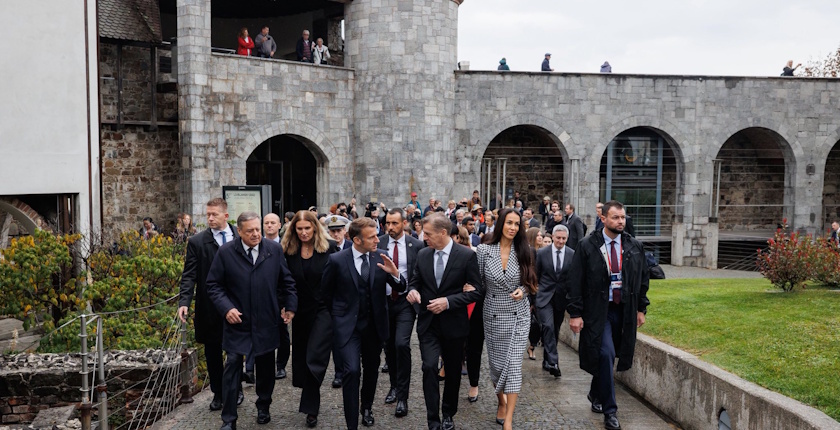
Slovenia and France have signed a declaration on cooperation in the nuclear energy sector. The document was signed during French President Emmanuel Macron’s visit to Slovenia.

Slovenia has been developing a project to build a new unit at the Krško nuclear power plant for several years. In early September, the project’s developer, GEN Energija, said that three reactor projects offered by EDF and Westinghouse had been assessed as technically feasible for the site of the future Krško 2 nuclear power plant.

According to the Slovenia Times, Macron and Slovenian Prime Minister Robert Golob committed to closer cooperation between the two countries, particularly in the economy and energy.

 Golob: France is a European nuclear power

The two countries signed an agreement on cooperation in the field of education and a declaration of intent to establish long-term cooperation in the nuclear energy sector.

According to Golob, France is a European nuclear power that is building its carbon-free future based on the development of this energy source. There is good cooperation between experts from the two countries, he recalled at a joint press conference in Slovenia’s capital, Ljubljana, stressing that the declaration opens up new opportunities.

Golob said he is convinced that between two equally qualified bidders for Krško 2, Slovenia will be able to choose the solution that best serves its long-term interests and that gives regional importance to the project.

The potential new power plant is not intended only for Slovenia

Krško 1 was built using US technology, but Golob also sees certain advantages in the French bidder, EDF. He revealed that the potential new power plant is not intended only for Slovenia, but would also enable Southeastern Europe to meet a significant portion of its electricity needs.

In October 2024, Slovenia canceled a referendum on building its second nuclear unit. However, GEN Energija continued to develop the project.

In July this year, the Ministry of Natural Resources and Spatial Planning initiated the preparation of a spatial plan for the second unit of the Krško nuclear power plant and invited the public to submit comments.

by in News

UPDATE: CEO Dejan Paravan leaving Slovenian state-owned GEN energija

CEO of Slovenian state-owned energy utility GEN energija Dejan Paravan has resigned. According to a news report, he is joining NGEN, but the company still didn’t comment on the speculation.

GEN energija, which is developing a project for Slovenia’s second nuclear power plant, is about to appoint a new CEO. After necenzurirano.si reported that Dejan Paravan, the current head of the government-controlled energy company, has quit, the supervisory board officially acknowledged that he submitted his resignation on October 10.

The news website also learned that he would assume a position at privately owned NGEN, which didn’t issue any statements yet on the matter. The same media outlet later wrote that Paravan has agreed to step down at the end of November.

Nada Drobne Popović and Bruno Glaser, the other two members of the board, allegedly offered their resignations and they were rejected.

Paravan has been a close associate of Prime Minister Robert Golob for two decades. The government appointed him as CEO in October 2022.

GEN energija holds the Slovenian half of the Krško nuclear power plant (NEK or, in Slovenian, JEK), and owns hydropower plant operators Savske elektrarne Ljubljana (SEL) and Hidroelektrarne na Spodnji Savi (HESS), and the Brestanica gas-fired power plant.

GEN-I, which was co-founded by Prime Minister Golob, is also part of GEN Group. He was the firm’s CEO until 2021.

As GEN energija’s chief, Paravan is responsible for the NEK 2 (JEK 2) project, for another nuclear power plant. The investment is valued at between EUR 9 billion and EUR 16 billion.

A referendum was scheduled about the proposal, but the National Assembly canceled the vote a year ago.

NGEN builds and operates battery energy storage systems (BESS), and develops software and hardware for running decentralized systems, cybersecurity and access to all segments of the energy market.

Of note, both Dejan Paravan and Co-Founder and CEO of NGEN Group Roman Bernard spoke at this year’s Belgrade Energy Forum (BEF 2025), organized by Balkan Green Energy News.

by in News

Bulgaria to start talks with developers of small modular reactors

Bulgaria should discuss the possibility of installing small modular reactors on its territory with companies developing the technology, according to Minister of Energy Zhecho Stankov. In his view, it is a logical step after the country signed a memorandum of understanding with the United States on nuclear energy and assistance in preliminary studies.

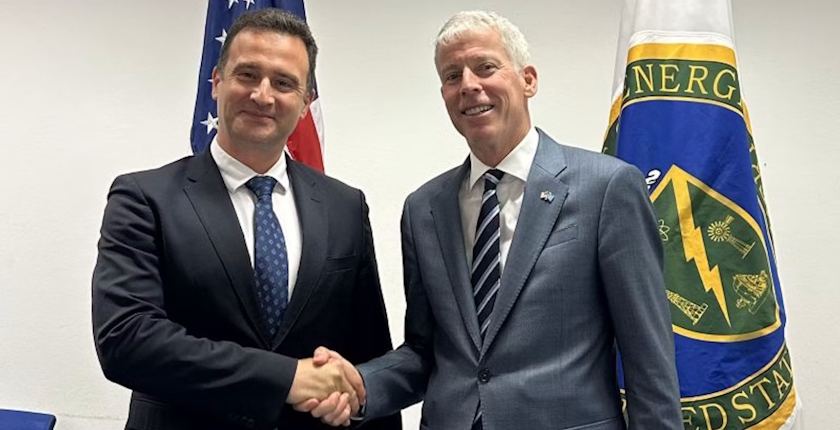
Minister of Energy of Bulgaria Zhecho Stankov said that during his forthcoming visit to Ontario, Canada, he is going to a site where the first four small modular reactors (SMRs) are being built. Last week, he signed a memorandum of understanding with United States Secretary of Energy Chris Wright reaffirming the objectives of the bilateral agreement to strengthen cooperation in civil nuclear energy use.

Bulgaria’s government considers the SMR technology a tool for long-term stability, predictability and affordable low-emission electricity production.

“After signing a joint statement last week with the US Secretary of Energy Chris Wright on that country’s assistance for sites on Bulgarian territory for small modular reactors – it is a new, modern technology, very flexible, which attracts investments in data centers and artificial intelligence centers – the normal next step for the Bulgarian side is to start talks with potential companies that develop this type of technology,” Stankov told reporters in New York City.

US to assist Bulgaria in prefeasibility studies

The memorandum envisages cooperation in the development and deployment of innovative technologies for nuclear reactors, aimed at enhancing Bulgaria’s economic security and energy resilience with the support of the US Department of Energy’s Office of Nuclear Energy.

Minister Stankov called for regional cooperation to reduce vulnerabilities and form a sustainable energy market

The Balkan country would benefit from the expertise of US laboratories in conducting preliminary studies of the feasibility and suitability of potential sites for the deployment of small modular reactors. The US Trade and Development Agency has said it is prepared to fund the assessment of SMR technologies to identify the ones most adequate for Bulgaria, the ministry added.

Speaking in New York City, Stankov also outlined the priorities – new energy corridors, investments in green energy and balancing capacities including pumped storage hydropower plants and battery energy storage systems (BESS), the projects for units 7 and 8 at the Kozloduy nuclear power plant, and regional cooperation for reducing vulnerabilities and forming a sustainable energy market.

Prime Minister Zhelyazkov endorses both rival projects for electricity corridors

Notably, Prime Minister Rosen Zhelyazkov said that he spoke with President of Azerbaijan Ilham Aliyev about the supply of green energy from the Caspian region to Europe. The plans involve 6 GW from Azerbaijan or, potentially, 10 GW if Kazakhstan and Turkmenistan are involved, he added

The proposed subsea power interconnector under the Black Sea is increasingly realistic and so is an onshore corridor from Armenia and Georgia through Turkey, according to Zhelyazkov.

by in News

Serbia, South Korea’s KHNP to cooperate on nuclear energy, hydrogen

Serbia and South Korean company Korea Hydro & Nuclear Power have signed two memorandums of understanding on cooperation in the fields of nuclear energy and hydrogen.

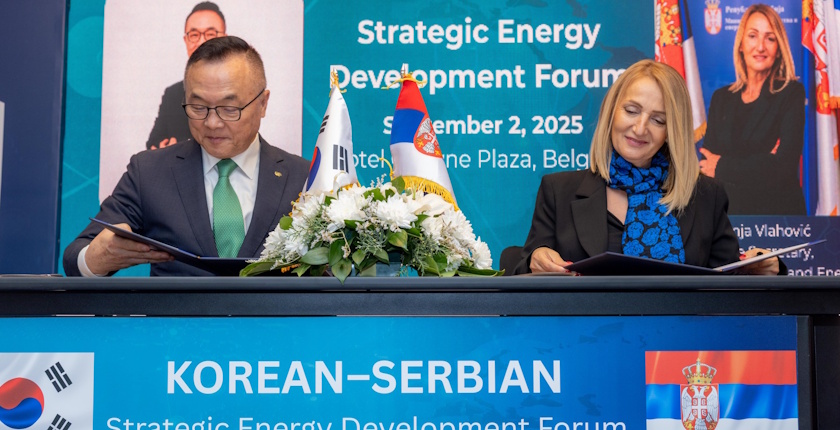
The memorandums were signed by Sonja Vlahović, State Secretary at the Ministry of Mining and Energy, and Joo-ho Whang, President and CEO of Korea Hydro & Nuclear Power (KHNP), a subsidiary of Korea Electric Power Corporation (KEPCO).

Notably, South Korean company Hyundai Engineering is part of Serbia’s largest renewable energy project—the deployment of 1,000 MW of solar power plants with battery storage.

The memorandums were signed during the Korea-Serbia Strategic Energy Development Forum, held in Belgrade and organized by the Ministry of Mining and Energy and the Korea Trade-Investment Promotion Agency (KOTRA).

So far, Serbia has established contacts or started cooperation on nuclear energy with China, France, Russia, Slovenia, and the United States.

Vlahović: We’ll consider pilot hydrogen projects

The main goal of the nuclear energy memorandum is to help the ministry develop and train personnel in Serbia in the field of nuclear technologies, as well as to facilitate the exchange of technical information and expertise.

Photo: Balkan Green Energy News

The second memorandum, on hydrogen cooperation, will enable joint work to assess the potential for developing pilot green hydrogen projects in Serbia. It envisages technical exchanges and support for human resource development, as well as sharing know-how in the full hydrogen cycle and supply chain management.

State Secretary in the Ministry of Mining and Energy Sonja Vlahović noted that Serbia is considering nuclear energy as one of the potential energy sources that could help it achieve energy security while transitioning to clean energy sources.

Joo-ho Whang: Cooperation will enable sustainable growth for Serbia and the company

“For us, it is very important to develop cooperation with countries and companies that are global leaders in nuclear technologies, to exchange knowledge and experience, and to invest in the development of our experts. We are also very interested in the opportunities offered by hydrogen technologies and, together with partners from South Korea, we will explore potential pilot projects,” she said.

According to KHNP President and CEO Joo-ho Whang, the cooperation will enable sustainable growth for both Serbia and the company.

“We particularly expect that demonstration projects in the field of hydrogen will play a key role in developing the hydrogen industry in Serbia. Additionally, the agreement will open new opportunities for cooperation in the clean energy sector,” he added.

KHNP to assist with workforce training

The nuclear energy memorandum calls for KHNP to support the development of training programs for personnel in the ministry and other relevant government institutions, faculties, and companies. The support is expected to cover various aspects of nuclear technologies, safety, and the regulatory framework.

It also includes establishing a mechanism for regular exchange of technical information, research results, and best practices in nuclear energy, the ministry said.

Dimović: Serbia could have a nuclear power plant by 2040

Photo: Ministry of Mining and Energy/Nenad Kostić

The signing was followed by presentations delivered by KHNP, the ministry, state power utility Elektroprivreda Srbije (EPS), the Vinča Institute for Nuclear Sciences, and KOTRA.

Park So-hyun, Senior Manager of Overseas SMR Project Section, presented nuclear power plant projects that the company is developing in South Korea and other parts of the world.

Hydrogen projects and cooperation with Serbia were the theme of a presentation by Kim Su-Jy, Senior Manager of Global KHNP Hydrogen & Energy Business Sector.

EPS is conducting a hydrogen study

Assistant Minister of Mining and Energy Radoš Popadić outlined the main goals and planned activities of Serbia’s Energy Development Strategy through 2040. Aleksandar Latinović, Head of Ancillary Services at EPS, presented the company’s development projects, recalling that EPS is currently conducting a study on possibilities for hydrogen utilization.

The Vinča Institute highlighted its rich history. CEO Slavko Dimović announced a public discussion aimed at explaining nuclear energy to all of Serbia, not just Belgrade. His optimistic yet realistic plan is for Serbia to have a nuclear power plant by 2040.

Milan Rajić, Senior Specialist at KOTRA, highlighted the agency’s results and invited Serbian entrepreneurs to collaborate with Korean companies.

The signing ceremony was also attended by the Ambassador of the Republic of Korea, Kim Hyung Tae, Serbia’s Minister of Science, Technological Development, and Innovation, Bela Balint, and the Director General for KOTRA Europe Headquarters, Kim Hyeon-cheol.

by in News

Germany, France move to bridge nuclear divide with joint EU energy policy

Germany and France have agreed to work together on shaping a common European energy policy that would include nuclear power as a low-carbon energy source. The deal could help resolve the two countries’ long-standing division over the role of nuclear energy in Europe’s green transition.

Paris and Berlin might offer joint proposals for the European Union’s energy policy through 2040 that would “ensure non-discrimination among all net-zero and low-carbon energy technologies in their respective contribution to European energy, sustainability, and climate goals,” according to a joint economic agenda adopted at a meeting in Toulon, France.

The common EU policy would ensure non-discrimination among all net-zero and low-carbon energy technologies

In Europe, nuclear power is widely considered a low-carbon technology that provides reliable energy while also supporting climate goals and reducing dependence on fossil fuels, with France advocating for its revival. However, Germany shut down its last remaining reactors in 2023 and is focusing on renewables as a way to achieve climate neutrality.

The two countries have now agreed to promote technology neutrality and try to harmonize their respective energy policies in the interests of Europe, said French President Emmanuel Macron.

In turn, France will support Germany’s plans to establish hydrogen interconnections to southwestern Europe. This includes the long-stalled Southwestern Hydrogen Corridor, which connects Spain, Portugal, France, and Germany, according to reports. The corridor comprises the pipeline projects H2Med and HY-FEN.”

Germany and France will support hydrogen interconnections with Spain and Portugal

The initiative will be continuously supported through a Franco-German working group on hydrogen, according to the Franco-German Economic Agenda.

The two countries’ deal to jointly lead the way in shaping a competitive, secure, sustainable, and decarbonized European energy market also involves supporting a potential new electricity interconnector that transmission system operators Amprion, TransnetBW, and RTE are assessing, reads the document.

by in News

Final investment decision for Romania’s SMR project could be delayed

The final investment decision regarding a 462 MW small modular reactor system northwest of Bucharest could be delayed to early 2027, according to NuScale CEO John Hopkins.

RoPower Nuclear, the joint venture established for the SMR project, intends to use NuScale’s technology. The facility in Doicești in Dâmbovița county in the Muntenia region would be built at the site of a former coal plant.

NuScale expected RoPower to make the final investment decision early in the second quarter of next year at the latest. It is slated to be made after the completion of the upcoming front-end engineering design (FEED). Fluor was hired for the job in July, with its subsidiary NuScale as a subcontractor.

The former coal-fired power plant is now entirely removed, NuScale Power revealed with its earnings report for the second quarter. The company said it is working with Fluor regarding the input for the final investment decision.

RoPower Nuclear intends to deploy six NuScale Power Modules

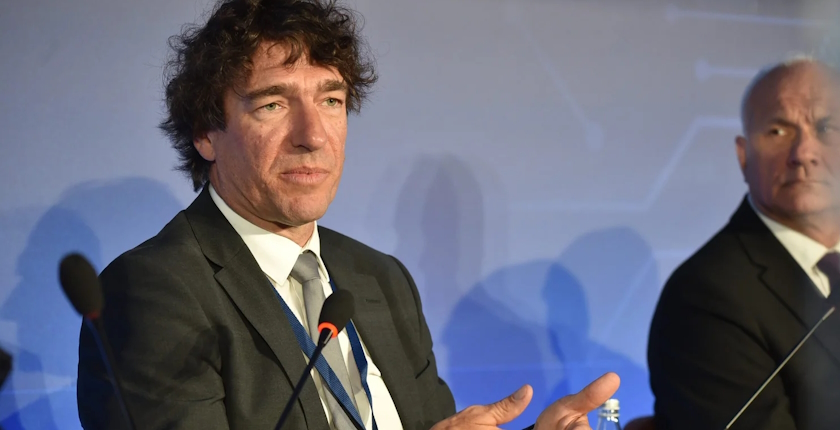
“RoPower and the Romanian government continue to pay their bills, and we’re keeping our finger on the pulse and watching it very closely. We have almost weekly conversations on progress,” of the FEED 2 study, NuScale CEO John Hopkins said at the earnings call, Profit.ro reported. The final investment decision looks to be probably between mid-to-late 2026 and early 2027, he estimated.

The CEO said the Romanian side is taking a phased approach, claiming it remains very enthusiastic.

RoPower Nuclear intends to deploy six NuScale Power Modules at the planned facility.

The joint venture is undergoing a change in ownership. Its current owners, each with 50%, are state-controlled Nuclearelectrica, operator of Romania’s only nuclear plant, Cernavodă, and Nova Power and Gas, a subsidiary of E-Infra from Cluj.

The deal for a new investment round reportedly implies them dropping to 46.5% and 14%, respectively, while DS Private Equity from South Korea would control the remaining stake through its DSPE Beta Private Equity Fund.

The project is backed by the Export-Import Bank of the United States.