by in News

Private equity fund to take over 39.5% stake in Romanian SMR project

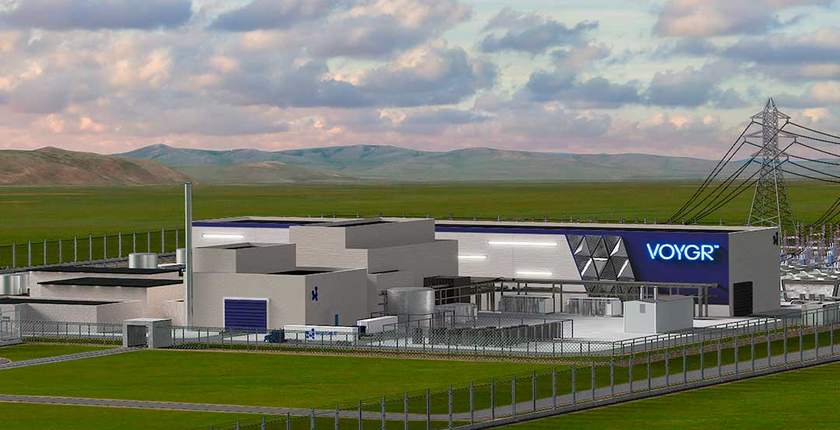
DS Private Equity (DSPE) is reportedly entering ownership in RoPower Nuclear, a project firm working to build a small modular reactor (SMR) in Romania. In a proposed capital increase, current co-owners Nuclearelectrica and Nova Power and Gas, now at 50% each, would land at 46.5% and 14%, respectively. The South Korean firm’s DSPE Beta Private Equity Fund would control the remaining stake in the Doicești project.

RoPower Nuclear is getting a third co-owner. The joint venture established for the SMR project northwest of Bucharest is about to get a capital increase as part of the financing process, according to a document that Profit.ro obtained.

State-owned Nuclearelectrica, which operates Romania’s Cernavoda nuclear power plant, and Nova Power and Gas (NPG) of the E-Infra group, now own 50% each. Under a new deal, DSPE Beta Private Equity Fund, controlled by DS Private Equity from South Korea, would contribute EUR 68 million in cash and get a 39.5% stake, the report reveals.

Nuclearelectrica to be biggest shareholder

Nuclearelectrica has earmarked EUR 76 million, with an option to convert part of its loans to RoPower Nuclear into ownership, instead of providing cash, the article reads. It would lower the company’s stake to 46.5%.

NPG would add EUR 20 million and have 14% after the transaction. E-Infra is controlled by Romanian entrepreneurs Teofil Mureșan, Simion Mureșan and Marian Pantazescu.

The proposed agreement would lift the project firm’s capital from EUR 8 million to EUR 172 million. DSPE is a shareholder in NuScale Power, which owns the technology for the planned SMR facility of 462 MW. It would be built in Doicești in Dâmbovița county in the Muntenia region. It is the site of a former coal plant.

DSPE could bring KEXIM, Samsung on board

NuScale, based in Oregon in the United States, recently said that it expects Romania to reach a final investment decision early in the second quarter of next year at the latest.

DSPE can bolster the project through its relationship with financial institutions such as Korea Export-Import Bank (KEXIM) and potential contractors including Samsung, the news outlet learned.

The Ministry of Energy in Bucharest earlier estimated the cost of the Doicești project at EUR 4.9 billion.
by in News

Rolls-Royce SMR to start works with ČEZ on small modular reactors

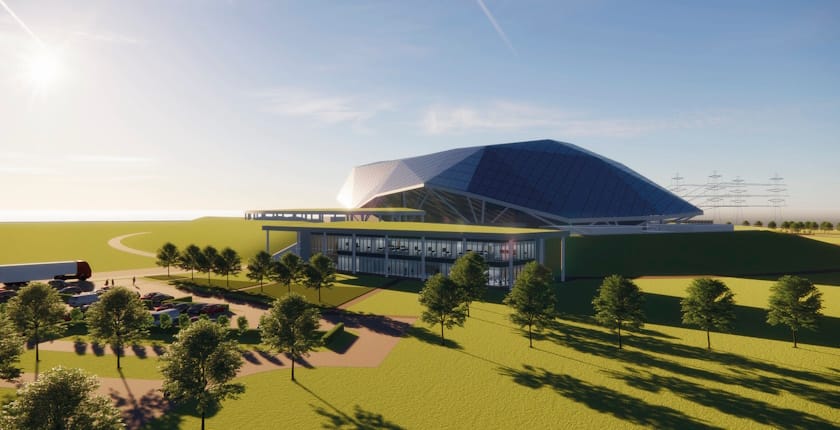
Rolls-Royce SMR and Czech utility ČEZ have signed an early works agreement. It paves the way for site-specific work on their small modular reactor project at the Temelín nuclear power plant.

British Prime Minister Sir Keir Starmer and Czech Prime Minister Petr Fiala have signed a deal to work together to seize SMR export opportunities, support highly skilled jobs, boost economic growth and deliver clean, homegrown energy in both countries. It was followed by an early works agreement between Rolls-Royce SMR and ČEZ as a step forward in their strategic partnership for up to 3 GW of low-carbon energy in the Czech Republic.

ČEZ has acquired 20% of Rolls-Royce SMR

The two companies said that now they can launch site-specific work on their small modular reactor project at the Temelín nuclear power plant. Last year ČEZ selected Rolls-Royce SMR as its preferred SMR technology partner and agreed to purchase 20% of the company based in the United Kingdom. After that, they declared the transaction complete in early March.

“We are proud to be working alongside ČEZ to deliver a programme that will bring significant industrial and economic benefits to both our nations, while helping to meet critical energy security and decarbonisation goals,” Chief Executive Officer of Rolls-Royce SMR Chris Cholerton said.

Czech Republic’s first SMR to be deployed in mid-2030s

ČEZ will closely cooperate with Rolls-Royce SMR on preparing the construction of the country’s first small modular reactor, expected to be built at the site of the Temelín nuclear power plant in the mid-2030s, according to the Czech utility’s board member Tomáš Pleskač, who is at the helm of its New Energy Division.

Modular reactors represent a significant opportunity for the country’s economy and are an essential part of the ongoing energy transformation, he added and stressed that the cooperation offers a unique opportunity for growth and prosperity in the field of nuclear energy.

Additional opportunities at ČEZ’s Tušimice nuclear plant

The activities would initially be focused on the site of ČEZ’s Temelín nuclear plant in the South Bohemian region, the update reveals. The companies pointed to additional deployment opportunities at the location of ČEZ’s Tušimice nuclear plant, in the Ústí nad Labem region.

The early works would include regulatory approvals and licensing and environmental assessments. Rolls-Royce SMR is designing units of 470 MW, set to operate for 60 years.

Temelín is near the city of České Budějovice. It is the largest power station in Czechia, housing two VVER 1000 reactors.

by in News

Solar beats nuclear in June, becoming EU’s biggest electricity source for first time

Solar became the EU’s largest source of electricity for the first time in June 2025. National records for both photovoltaics and wind rolled in in May and June, pushing coal to an all-time low.

Solar was the largest source of electricity in the European Union for the first time last month, with multiple countries producing record amounts of solar power, Ember found. Wind power achieved the highest ever generation for the months of May and June, the think tank said.

Solar power generated 22.1% of EU electricity (45.4 TWh) in June, more than any other power source. It was a year-over-year increase of 22%. In second place was nuclear, with 21.8% (44.7 TWh), followed by wind, with 15.8% (32.4 TWh).

The big opportunity now comes from adding battery storage and flexibility to extend the use of renewable power into mornings and evenings, where fossil fuels still set high power prices, according to Ember’s Senior Energy analyst Chris Rosslowe.

At least thirteen EU countries set monthly solar records

At least thirteen countries recorded their highest-ever month of solar generation, amid an ongoing surge in photovoltaic installations. Among them were Bulgaria, Croatia, Greece, Slovenia and Romania, all the EU countries in the region that Balkan Green Energy News is focused on except Cyprus, for which there was no data for June.

Wind power reached an all-time high shares of 16.6% (33.7 TWh) and 15.8% (32.4 TWh) in May and June, respectively

Strong photovoltaic output helped the power system to handle higher levels of demand resulting from heatwaves that gripped the continent towards the end of the month, according to the report.

Wind farms generated 16.6% (33.7 TWh) and 15.8% (32.4 TWh) of EU electricity in May and June, respectively. It was an all-time high for both months. Notably, at the start of the year, wind conditions were relatively poor. They improved, and they were the main driver, though capacity has been continuously growing over the past year. Several large offshore wind farms were commissioned.

Coal falls to record low

As a result of high renewables generation in June, coal had the lowest-ever share of EU electricity. Total fossil generation was also low, but it grew in the entire first half of the year on an annual basis.

Coal generated just 6.1% (12.6 TWh) of EU electricity in June, down from the 8.8% registered in the same month of last year.

The two countries that account for the vast majority of EU coal power (79% in June) both saw record lows in June. Namely, Germany generated just 12.4% (4.8 TWh) of its power from coal, and Poland 42.9% (5.1 TWh). Four other countries recorded their lowest-ever month of coal generation in June: Czechia (17.9%), Bulgaria (16.7%), Denmark (3.3%) and Spain (0.6%), which is approaching its coal phaseout.

Fossil fuels generated 23.6% (48.5 TWh) of EU electricity in June, just above the record low of 22.9% in May 2024. Nevertheless, fossil generation in the first half of 2025 was 13% higher (by 45.7 TWh) than in the first half of 2024, mainly due to a jump in gas generation by 19% or 35.5 TWh. Lower hydropower (due to drought) and wind generation than last year, and increasing demand marked the period.

Electricity demand continued on an upward trajectory. In the first half of 2025, the EU consumed 1.31 PWh of electricity or 2.2% more than in the same period of last year.

by in News

Heatwave strains European grid, brings profit to energy storage operators

Record solar power production, backed by yet insufficient energy storage capacity, helped maintain the stability of the electricity system in Europe during the latest heatwave, Ember said. Many nuclear and other thermal power plants reduced their activity as river water temperature wasn’t low enough for efficient cooling. Intraday price spreads at European power exchanges landed a windfall for owners of battery energy storage systems and pumped storage hydropower plants.

The heatwave since late June has caused stress for European power systems, driving electricity demand and doubling daily power prices. Yet grids remained stable, fueled by record volumes of solar, think tank Ember pointed out in a report.

Outside temperatures jumped to more than 40 degrees Celsius, triggering an increase in electricity demand as the use of air conditioners soared. Outages in nuclear and thermal power plants exacerbated the challenges.

Daily electricity demand on July 1 was by up to 6% higher in Germany, 9% in France and 14% in Spain than on June 24. As for peak demand, it jumped by 12% in France, 15% in Spain, and 5% in Germany and Poland.

A bigger electricity price spread within one day means higher income for operators of battery energy storage systems

The average daily price surged 15% in Spain, 106% in Poland, 108% in France and 175% in Germany.

“Despite the huge pressure, European grids passed the stress test, and solar electricity played a major role in keeping them running. The surplus of solar energy during the day helped prevent blackouts. However, the use of energy storage is still insufficient, leading to reduced energy supply after sunset. This translated into a sharp increase in electricity prices,” said Ember’s Europe Programme Director Paweł Czyżak.

Record EU solar generation helps keep power supply stable

June saw the highest solar generation on record in the European Union – 45 TWh, which kept the grid well-supplied during daytime hours. The result was 22% up from one year before.

“Heatwaves will not go away – they will only get more severe in the future. Solutions that can help mitigate their impacts, such as battery storage, interconnection, demand flexibility and dynamic tariffs, should become a key part of grid planning and power market design,” Czyżak added. The biggest opportunity is to store solar electricity, to help power air conditioning well into the evening, he stressed.

Outages limited but still posing concern

The overheating of cables is the likely cause of power outages in Italy on July 1. With rising air and water temperatures, the cooling of thermal power plants becomes more challenging as well. It led to forced reductions in electricity generation from nuclear power plants in France and Switzerland.

The French nuclear fleet has been impacted the most, with all but one of the 18 facilities experiencing some type of capacity reduction. According to the update, up to 15% of the capacity may have been impacted.

A blackout of several hours struck large parts of the Czech Republic including Prague on July 4. However, the authorities only blamed it on a transmission cable in the country’s northwest falling, and the resulting domino effect. Notably, the air temperature was much lower than in previous days.

Sun brings power alongside heat

In the peak days of the heatwave in Germany, solar delivered 50 GW and even more, generating 33% to 39% of Germany’s electricity. The country hosts 14 GW of battery energy storage systems (BESS) and 10 GW of pumped storage, which partly bridged the gap between the peaks of production and consumption.

The rallies in electricity prices in the evenings are getting passed on to consumers, so using air conditioners gets more expensive upon sunset. It is a business case for clean flexibility solutions. Due to a high supply of solar electricity during the day, and a cooling-related demand peak in the late afternoon hours, the daily electricity price spreads skyrocketed.

The spread in Poland in the day-ahead segment almost reached EUR 500 per MWh on July 1. Namely, the daily low was EUR 21.04 per MWh below zero, and the peak amounted to EUR 471 per MWh. In Germany, the benchmark went from EUR 0.16 per MWh in negative territory to EUR 404.91 per MWh.

Storage assets charge at low prices and discharge during peak time, reducing the need for costly imported fossil fuels in the evening, and supporting the balancing of the grid, the analysts underscored.

Interconnection played a role as well. The heatwave peaked in different countries on different days, so interconnectors moved electricity to where it was needed most, dissipating the price peaks in the process.

by in News

Slovenia launches public consultation on spatial plan for second unit at Krško nuclear plant

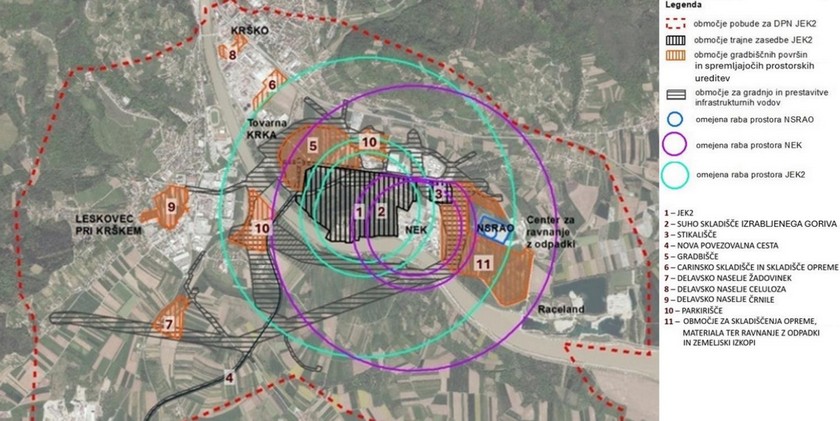
The Slovenian Ministry of Natural Resources and Spatial Planning initiated the development of a spatial plan on the country level for the second unit of nuclear power plant Krško. It invited the public to submit comments and suggestions.

The initiative was announced at a press conference last week by representatives of GEN energija, the state-owned company developing the Krško 2 (NEK 2) project. The document has now been made public and will remain available for comments until the end of September.

The initiative will be available for comments until the end of September

To keep the public informed, GEN energija will open information offices in several locations across Slovenia – Krško, Ljubljana, Maribor, and Nova Gorica.

At the press conference, State Secretary at the Ministry of the Environment, Climate and Energy Tina Sršen described the document as a “milestone,” adding that the project was now moving into broader social and professional coordination.

Final decision on capacity and technology expected in 2028

GEN energija’s chief operating officer, Bruno Glaser, said the capacity of the proposed second unit and the technology to be used have yet to be determined, but that the initiative envisages a capacity of 1,000 MW to 1,650 MW.

He also said that the final investment decision should be made in 2028, along with decisions on the reactor’s capacity and the supplier.

Croatia is willing to participate in the Krško 2 project

Another issue to be resolved before a final investment decision is made is the possible participation of other investors. Croatia has repeatedly expressed its interest in taking part in the project, recalled Gen Energija CEO Dejan Paravan, noting that Croatia’s state-owned power utility Hrvatska Elektroprivreda (HEP) co-owns the existing power plant in Krško.

Slovenian Prime Minister Robert Golob and his Croatian counterpart, Andrej Plenkovič, discussed the topic at a recent meeting, according to Paravan.

by in News

EU nuclear ambitions: EUR 241 billion in investment needed by 2050

The European Commission has estimated that EUR 241 billion in investment is needed for the implementation of member states’ plans for nuclear energy until 2050. It includes extending the lifetime of existing power plants and building new large-scale reactors.

Additional investment is needed for small modular reactors (SMRs), advanced modular reactors (AMRs), and microreactors, as well as for fusion for the longer-term future, according to the European Commission’s eighth Nuclear Illustrative Programme (Programme Illustrative Nucleaire – PINC).

A few days ago, the World Bank decided to lift its 2013 moratorium on financing nuclear energy projects amid growing global electricity demand.

The commission has now underlined that for some EU countries, nuclear energy is an important component of decarbonization, industrial competitiveness, and security of supply strategies. The commission estimates that over 90% of electricity in the EU in 2040 will be produced from decarbonized sources, primarily renewables, complemented by nuclear energy.

Jørgensen: To truly deliver the clean energy transition, we need all zero- and low-carbon energy solutions

Nuclear installed capacity across the EU is projected to grow from 98 GWe in 2025 to 109 GWe by 2050.

The commission recognizes that all zero- and low-carbon energy solutions are needed to decarbonize the EU’s energy system. Accordingly, the Nuclear Illustrative Programme is intended to help drive member states’ actions towards priority areas.

“To truly deliver the clean energy transition, we need all zero- and low-carbon energy solutions. Nuclear energy has a role to play in building a resilient and cleaner energy system. Ensuring the necessary framework conditions will allow the EU to keep its industrial leadership in this sector while also upholding the highest safety standards and responsible management of radioactive waste,” said Dan Jørgensen, Commissioner for Energy and Housing.

The highest standards of nuclear safety are among the EU’s top priorities

The commission highlighted the highest nuclear safety standards and a responsible management of radioactive waste as a top priority for the EU.

The commercialization and market uptake of cutting-edge nuclear technologies, including SMRs, AMRs, microreactors, and fusion for the longer term, will also be central for the sector’s future in Europe and beyond, according to the EU’s executive arm.

A requirement under Article 40 of the Euratom Treaty, PINC provides a comprehensive, fact-based overview of nuclear development trends, as well as the scope of investment needs across the EU.

The commission will publish the final version of PINC after receiving the Opinion of the European Economic and Social Committee.

by in News

World Bank to back nuclear projects again amid rising electricity needs

The World Bank has decided to end its 2013 moratorium on financing nuclear energy projects amid growing global electricity demand. The move means the lender would support projects to extend the operating life of existing nuclear power plants and speed up the rollout of small modular reactors (SMRs).

The World Bank board’s decision comes at a time when nuclear energy is experiencing a global revival, as electricity demand in developing countries is projected to more than double by 2035.

Ajay Banga, the president of the World Bank Group, said the institution would work closely with the International Atomic Energy Agency (IAEA) on the issues of safety, security, and regulation.

Banga: Delivering electricity as a driver of development

“We’ve made real progress toward a clear path forward on delivering electricity as a driver of development,” Banga said.

Recently, Germany agreed with France to end its opposition to new nuclear power technologies in the European Union. Economy and energy minister Katherina Reiche said Germany would respect other EU member states’ choice of energy mix, but would not return to nuclear power itself. The country shut down its last remaining nuclear reactors in 2023.

Nuclear energy is making a comeback in Southeast Europe as well

The global nuclear energy revival includes the region tracked by Balkan Green Energy News as well. Slovenia is developing its second reactor, Krško 2, while Romania and Bulgaria are planning new units, as well as SMR projects. Croatia is also taking steps to introduce nuclear energy, including SMRs.

Hungary is already building new reactors at the Paks nuclear power plant, as is Turkey, while Serbia is considering the use of nuclear energy.

Banga said the World Bank’s revised strategy would allow countries to determine the best energy mix, with some choosing solar, wind, geothermal, or hydroelectric power, while others might opt for natural gas or nuclear.

However, no agreement has been reached yet on ending a ban on upstream natural gas projects, with further discussions needed on the issue, according to him.

by in News

Eric Scotto: Falling storage and renewables costs will help meet rising electricity demand

Declining energy storage costs and expanding renewables capacity will enable Europe to meet the challenge of intensified electrification and rising consumption, according to Eric Scotto, CEO of Akuo Energy. Thanks to falling costs, renewable energy has already won the race against nuclear power, he emphasized at Belgrade Energy Forum 2025.

The price of energy storage today is ten times lower than it was ten years ago, and the density of storage has tripled in the last three years, Eric Scotto said. Speaking at a panel on decarbonization in Southeast Europe, he explained that the operating power of a battery system in a standard TEU container, twenty feet or 6.1 meters long, now reaches 6 MW.

“Today, the challenge is flexibility. We know how to produce cheap, but what is important is to reconcile offer and demand… Thanks to storage, we can do that today,” Scotto said on the sidelines of the conference.

Renewables have already won the race against nuclear energy

Talking about the cost of generation from renewable sources and nuclear power, he argued that the race has already been decided. “It’s over. We won the race. Renewable is the cheapest way to produce energy,” he underscored.

[wpcc-iframe title=”Eric Scotto, CEO, Akuo Energy at the Belgrade Energy Forum” width=”500″ height=”281″ src=”https://www.youtube.com/embed/ZVg8ole0VaM?feature=oembed” frameborder=”0″ allow=”accelerometer; autoplay; clipboard-write; encrypted-media; gyroscope; picture-in-picture; web-share” referrerpolicy=”strict-origin-when-cross-origin” allowfullscreen=””]

Scotto emphasized that the Balkan region, which is lagging in the energy transition, can now enjoy the benefits of the latest and cheapest renewable energy and storage technologies. “This morning, some people were saying that we are late in the Balkans, and that’s the best news we could get this morning because renewables are the cheapest way to produce energy, so we’re going to benefit from the latest and most efficient technologies… from solar, from wind, from hydro, and storage,” claims the top man of the French renewable energy company.

The slow energy transition is good news for the Balkans

Scotto stressed the importance of collaboration among Western Balkan countries, adding that he hopes to see more of it in the coming days, weeks, and months. “We have the skills and we have the know-how in those countries. We need to share, we need to work more together, and, of course, we need more international interconnection,” he said.

Akuo Energy has secured a PPA for its Bela Anta 2 wind project in Serbia

Talking about Akuo Energy, Scotto said that it brings to the region its knowledge and experience from numerous project around the world. The France-based independent global renewable energy producer recently signed a power purchase agreement (PPA) with Serbia’s state-owned power utility Elektroprivreda Srbije (EPS) for the Bela Anta 2 wind project.

With a total installed capacity of 80 MW, Bela Anta 2 was among the awarded projects in Serbia’s second round of renewable energy auctions, held in early 2025, securing a contract for difference (CfD).

by in News

Decarbonization of Southeastern European region: both renewables and nuclear are speeding up

Energy transition in Southeastern Europe is accelerating, and the progress depends on individual countries’ strategies and legal frameworks. At the Belgrade Energy Forum (BEF 2025), representatives of state-owned power utilities and private producers discussed the different approaches to decarbonization. The domination of investments in renewable energy is unquestionable, but there are also ambitions to develop nuclear capacities, spearheaded by Slovenia. The country is already operating one nuclear reactor and is developing a project for another one.

The electricity sector in Southeast Europe still depends for a large part on thermal power plants that burn fossil fuels. In 2023, they accounted for 43% of overall output, of which two-thirds were from lignite and the rest from gas. There is a need for accelerated decarbonization, and the speed of the transition will depend on financial possibilities and the political will and decisions, said the panel’s moderator and Director of Zagreb-based Energy Institute Hrvoje Požar Dražen Jakšić.

The acceleration trend in decarbonization is also evident in the electricity market projections for the region until 2030. The plans for the period until the end of the decade include shutting down 6.2 GW of thermal power plant capacity and installing 42.3 GW from renewable sources. Greece, Romania, Serbia and Bulgaria are expected to add the most.

Top executives of state-owned utilities in Serbia, Slovenia and Montenegro and independent power producers that invest in renewables in the region gathered at a panel called Decarbonisation strategies for power generation in Southeast Europe 2040/2050 at Belgrade Energy Forum 2025.

They agreed that decarbonization is well underway and an unstoppable process already speeding up significantly. The participants in the discussion presented the different strategies their companies will act upon in the following years and decades, leading the process to fulfilment.

Among the messages that they shared is that they expect each government to promote investments and make the legal framework clear and certain, while the countries strengthen their ties and exchange experiences. Green energy is the pillar of the energy transition and decarbonization in the region, but several states are also interested in building their first nuclear power plants—conventional ones or small modular reactors (SMRs)—or expanding the existing capacity.

EPS’s Živković: Decarbonization requires energy storage, nuclear plants

Chief Executive Officer of Serbia’s Elektroprivreda Srbije (EPS) Dušan Živković pointed out that the state-controlled electricity producer is committed to its goals regarding green energy and emission reductions as well as to the country’s targets. “We will work on that, of course, believing in these objectives, but without compromising energy security and the energy sovereignty of Serbia. It was proven to be the only sustainable path,” he asserted.

The company particularly counts on the project for solar power plants with a total connection capacity of 1 GW, with batteries of 200 MW in combined capability. The investment is conducted through a strategic partnership with Hyundai Engineering and UGT Renewables (UGTR).

A study is underway in Serbia on the potential for the construction of large nuclear power plants and small modular reactors

The decarbonization process won’t be easily feasible without serious energy storage capacity, Živković warned and added that nuclear energy wouldn’t be unrealistic. A study is underway on the possibilities of building large nuclear plants and small modular reactors in Serbia.

The head of EPS expressed the belief that “the quality of that energy needs to be visualized” for citizens of every country and that they should be explained that it is necessary to provide energy for the economy and its security.

CEOs Dejan Paravan of GEN energija, Dušan Živković of EPS and Eric Scotto of Akuo

No dilemma in Serbia about energy transition

Country Manager of WV-International in Serbia Neda Lazendić highlighted the said strategic partnership for solar power plants with battery energy storage systems (BESS), saying Hyundai Engineering is a world-renowned company.

In her view, the endeavor will be a milestone for the entire region and it is exceptionally important for gaining experience at the domestic level.

The recent second round of auctions for electricity from renewable sources showed that Serbia opted for the energy transition “and there is not any dilemma about it anymore,” Lazendić stressed and said the country is an example for the region. The prices from the bidding that were accepted are appealing and they match European trends, she noted.

Country Manager of WV-International Neda Lazendić

Lignite is highly unprofitable

Slovenia and GEN energija, one of the state-owned power utilities, are relying on both renewable sources and nuclear energy in their decarbonization investments, the company’s CEO Dejan Paravan pointed out.

“We want to get rid of coal as soon as possible. And in the short term, renewables are the only option. Why get rid of coal? The current production of domestic lignite is highly unprofitable, and because of climate goals,” he explained.

Nevertheless, it is exceptionally complicated to get permits for renewables and place them in the environment, Paravan added. On the other hand, nuclear energy is emissions-free and very stable and reliable, he asserted. The technology takes up the least space and enables the production of huge amounts of electricity, the head of GEN energija said.

Nuclear power plant Krško 2 could come online in 2040

Paravan recalled that two years ago nuclear power plant Krško marked four decades since it was commissioned and that its operating life was extended by 20 years. GEN energija is working on the Krško 2 project. The chief executive expects construction to begin in 2022 or 2023 and that the reactor could be connected to the grid in 2040.

In parallel, the company is studying SMRs. Still, the development of the technology will take a long time and, importantly, such facilities won’t have the advantage of scale like large reactors, he said. One who expects electricity from SMRs to be cheaper than from big nuclear plants is wrong, in Paravan’s view.

As for the dilemma between renewable sources and nuclear energy, he expressed the belief that they are not mutually exclusive. “We need renewables and they can provide us a lot of CO2-free electricity in the short run. But let’s make it clear that once we come to 70%, 80%, 90% based on renewables, that we have a problem of seasonal storage, that things will get very difficult,” Paravan stated.

Batteries are ten times cheaper than ten years ago

Conversely, Akuo Energy’s CEO Eric Scotto pointed out that nuclear power is expensive. “It’s over. We won the race. Renewable is the cheapest way to produce energy,” he underscored.

The price of energy storage capacity is ten times lower than ten years ago, the head of the French company noted. Moreover, operating power of a battery system in a standard TEU container, twenty feet or 6.1 meters long, now reaches 6 MW, which is three times more than three years ago, according to Scotto.

To attract investments, stability is necessary, he stressed. Scotto went on to highlight some “simple things” that could help Akuo, which was one of the winners at the last auction round in Serbia, to materialize its projects for two wind parks. He mentioned the speed of permitting for telecommunication systems and road construction, for power plants.

Turning to the slowness of the energy transition in Balkan countries, he emphasized its positive side. “We are late. Then we will benefit from the cheapest resource, the cheapest way to produce energy,” Scotto concluded.

EPCG’s Solari project kicked off energy transition in Montenegro

Technical Director of Elektroprivreda Crne Gore (EPCG) Ljubiša Đurković called the state-owned power utility’s projects Solari 3000+ and Solari 500+ the start of the energy transition in Montenegro. Since the beginning of 2023 and including Solari 5000+, launched later, the company set up photovoltaic systems on 7,380 structures, he revealed.

Total peak capacity reached 76 MW and another 125 MW will be installed by the end of the year, EPCG’s official said.

Among its projects, the company is building the Gvozd wind farm, and the Kapino polje solar park near Nikšić.

Technical Director of EPCG Ljubiša Đurković

There is already 10 MW on roofs in the former Željezara steel plant in Nikšić, and before the end of the year another 15.5 MW will be connected to the grid, Đurković said. A contract has been signed for the construction of the eighth generator in the Perućica hydropower plant, of 58 MW. It is scheduled for completion in 2027.

Đurković: A realistic date for the closure of the Pljevlja thermal power plant is between 2045 and 2050

The energy transition is about a single and connected system, including storage capacities and measures to improve energy efficiency, he underscored. “You have to create the conditions for a swift integration of renewable energy sources into the distribution and transmission networks. We were supposed to do that already. We didn’t do it, particularly in the Western Balkans. We didn’t reconstruct the distribution and transmission networks,” he stated.

As for the current reconstruction of the coal-fired Pljevlja thermal power plant, the only one in Montenegro, Đurković said the project wouldn’t make sense if the facility were to keep operating only for a short while longer.

žAccording to the National Energy and Climate Plan (NECP), which is almost complete, it will remain active at least until 2041, although the realistic date for its closure is only between 2045 and 2050, in the opinion of EPCG’s technical director. The main phase of the reconstruction began at the end of March.

by in News

US interested in pumped storage hydropower projects in Romania, Bulgaria

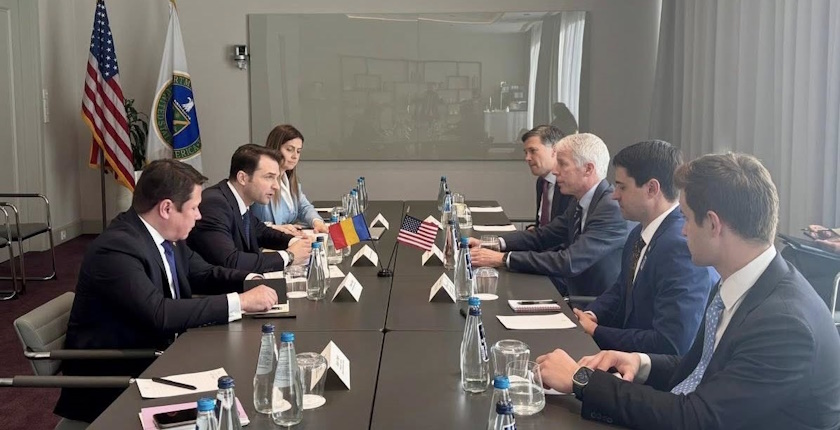
Minister of Energy of Romania Sebastian Burduja and Minister of Energy of Bulgaria Zhecho Stankov both met with United States Secretary of Energy Chris Wright and discussed bilateral cooperation in projects in their countries including for pumped storage hydropower plants and nuclear power plants. Burduja said studies would be conducted with American support for a string of pumped storage hydroelectric facilities throughout the Carpathians.

At the sidelines of the 2025 Three Seas Business Forum in Warsaw, Minister of Energy Sebastian Burduja held a meeting with US Secretary of Energy Chris Wright about ongoing strategic projects in which American companies are involved. He revealed that state-owned power utility Hidroelectrica has signed a memorandum with the National Renewable Energy Laboratory (NREL) of the United States on cooperation in pumped storage hydropower projects.

The initiative will put Romania “at the forefront of Europe” as it will store green energy throughout the Carpathian mountain range, according to Burduja. Prefeasibility and feasibility studies will be developed with American support, he added.

“In this era of energy transition, we need pragmatic and effective solutions that ensure secure, affordable, and clean energy – in that order of priorities. Romania and the United States share a vision for a common energy future, and our collaboration will significantly contribute to achieving this goal,” the minister stated.

Significant involvement of US companies in strategic energy projects in Romania

Burduja highlighted NuScale’s project for small modular reactors (SMRs) in Doicești and the contract signed with Fluor and Sargent and Lundy for units 3 and 4 at the Cernavodă nuclear power plant. Fluor is also participating in a project for a high-voltage direct current interconnector (HVDC), he pointed out.

The lack of interconnections is bolstering energy prices

The minister noted that American partners are involved in a project for mapping and utilizing geothermal sources for district heating in Bucharest, with support from the European Union’s Modernisation Fund. Namely, Electrocentrale Bucharest (ELCEN) has established cooperation with US-based SAGE Geosystems

Burduja recalled that American platform Transocean Barents is drilling for gas in the Neptun Deep project in the Black Sea.

The Romanian ministry said the two officials discussed the rise of energy prices, attributing it to the lack of interconnections and the challenge of closing coal-fired power plants without viable alternatives. They also touched upon the costs of carbon dioxide certificates and how they affect competitiveness, the announcement reads.

Stankov, Wright discuss possibility of building AI ‘gigafactories’

Bulgarian Minister of Energy Zhecho Stankov separately met with US Secretary of Energy Chris Wright. Bulgaria will be the first in Europe to deploy the American AP1000 technology, Stankov claimed.

The country is preparing to build two more units at the Kozloduy nuclear power plant, in a deal with Westinghouse Electric. State-owned Bulgarian Energy Holding is controlling the project.

The two officials discussed the possibility of building “artificial intelligence gigafactories” to complement the nuclear infrastructure and promote innovation and employment, the ministry said. In addition, Stankov and Wright spoke about projects for new pumped storage hydropower and the exploration of oil and natural gas in the Black Sea.