by in News

Two thirds of industrial gas consumers in Slovenia eye hydrogen use

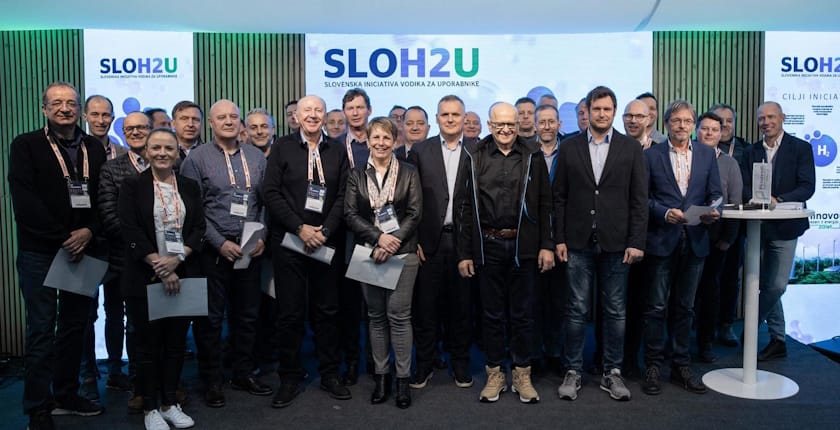
Slovenia’s natural gas transmission system operator Plinovodi and more than 50 industrial companies have signed an agreement on the establishment of the Hydrogen for Users consortium – SloH2U.

The SloH2U consortium represents a systemic response by Slovenian industrial consumers to the need for restructuring the use of hydrogen and renewable gases, according to Plinovodi.

The inclusion of more than two thirds of industrial gas consumers clearly demonstrates that Slovenia is well prepared to meet European decarbonization goals, the company said.

Marjan Eberlinc, the general manager of Plinovodi, underscored that the establishment of the SloH2U consortium is a major Slovenian hydrogen initiative connecting key stakeholders in industry, energy, and government. The aim is to achieve a coordinated, technically feasible, and timely transition to a decarbonized future, he added.

Kumer: We need an industry that is ready to invest, experiment, and collaborate

According to Minister of Environment, Climate, and Energy Bojan Kumer, infrastructure projects alone are not enough for a successful transition to low-carbon energy. “We need an industry that is ready to invest, experiment, and collaborate,” he asserted.

Matija Bitenc, a member of the executive board and deputy general manager of Plinovodi, explained that the platform was established after discussions with the industry about its needs and the technological, financial, geopolitical, and regulatory challenges.

In his words, SloH2U isn’t an ideological declaration, but a concrete foundation for the development of user infrastructure, specific pilot projects, and integration into the European hydrogen ecosystem.

Čas: It is crucial to ensure the transition doesn’t happen too late or that it isn’t too slow

“For the industry, the question is no longer whether, but how to decarbonize processes,” Steklarna Hrastnik CEO Peter Čas stressed.

Collaboration with infrastructure partners like Plinovodi is crucial to ensure the transition doesn’t happen too late or that it isn’t too slow, according to Čas.

In November last year, Slovenia joined the European Union’s Clean Hydrogen Partnership. Six months earlier the country established a consortium of 18 companies, organizations, and municipalities for an ecosystem for hydrogen from low-carbon sources.
by in News

Croatia among EU’s top three emitters of methane from oil, gas industry

Croatia is one of the three European Union member countries with the highest methane emissions from the oil and natural gas industry, according to research by Greenpeace Croatia and the Clean Air Task Force (CATF). Greenpeace Croatia noted that methane has 84 times greater global warming potential than carbon dioxide on a 20-year timescale.

Methane emissions from oil and gas infrastructure in Croatia have been comprehensively analyzed for the first time, according to Greenpeace Croatia.

“Methane hunter” Théophile Humann-Guilleminot from the international climate organization Clean Air Task Force (CATF) has examined more than 500 locations all around the world. He also recently visited 27 locations in Croatia, measuring methane emissions at all but one of them.

Greenpeace stressed it is an astonishing 96% of the investigated sites and the highest score by CATF in any EU member state.

Emissions were documented in detail by CATF at each site

The two organizations have visited several locations in Croatia with facilities for the production, transportation, and storage of oil and gas. The infrastructure is owned or operated by INA, Plinacro, and Okoli Underground Storage.

At 26 locations, methane emissions were documented in the form of gas release, venting, and flaring, which could also harm human health, Greenpeace underlined.

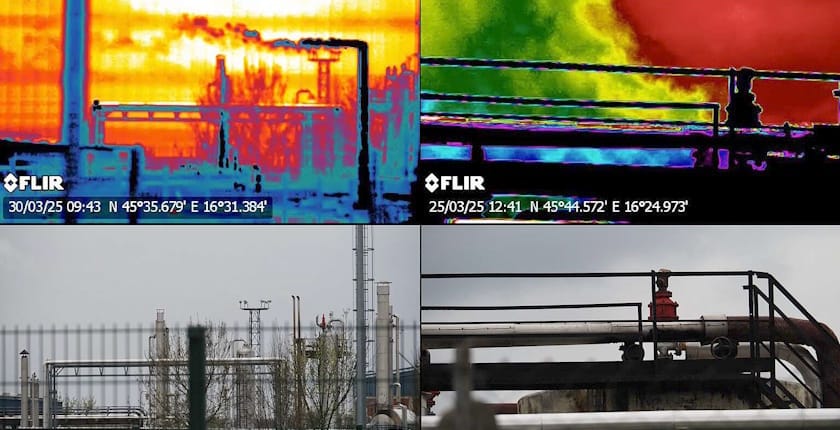
CATF carefully documented emissions at each location using infrared (IR) videos and IR and digital photos. The collected evidence is part of the group’s Cut Methane campaign in Europe and the world.

Humann-Guilleminot: Companies are releasing methane and accelerating climate change, all in pursuit of short-term profits

Théophile Humann-Guilleminot said the research strongly confirmed what scientists have been warning about for years – methane is leaking or being released along the entire oil and gas supply chain.

From the vast gas fields of Texas to Plinacro’s pipelines, companies are releasing methane and accelerating climate change, all in pursuit of short-term profits, he added. In his words, out of all the countries he visited, Croatia ranks amongst the worst three in terms of results.

“The scenes of methane gushing from open, rusted reservoirs in the Ivanić-Grad area, as well as leaks from wells at the Okoli location, are extremely worrying. During the energy crisis, this level of waste demonstrates a clear disregard for the climate and Croatian citizens,” Humann-Guilleminot stated.

Andrić: Greenpeace calls on the government to take seriously the implementation of new regulations on methane

Petra Andrić from Greenpeace Croatia pointed out the researchers could have assumed that methane emissions would be registered in some locations, but that they couldn’t have predicted such shocking results.

“Greenpeace is calling on the Government of the Republic of Croatia to take seriously the implementation of the new regulations on methane. In the long term, it is even more important to phase out fossil gas by 2035 and ban new gas and other fossil projects. The solutions are energy efficiency and renewable energy sources, in which Croatia has enormous potential, especially solar and wind,” she stressed.

Eszter Mátyás from Greenpeace Central and Eastern Europe said the new regulations would be much stricter for the operators in the fossil fuel industry. Therefore they will have to regularly carry out measurements and submit reports to regulatory bodies to prevent the release of methane from their infrastructure, she added.

by in News

Turkey pushing against rivals for transmission of green electricity to EU

Turkey’s agreement with Azerbaijan, Georgia and Bulgaria on the transmission of renewable electricity could set back the project for an interconnector under the Black Sea between Georgia and Romania. In addition, President Recep Tayyip Erdoğan’s government fiercely opposes the Great Sea Interconnector project, part of the proposed Greece-Cyprus-Israel submarine link. Turkey is also pushing against rival hydrocarbon projects around Cyprus.

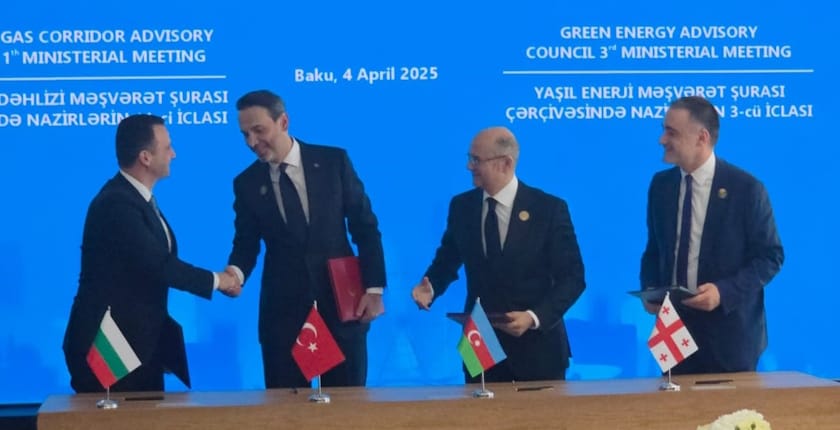
On the margins of the Southern Gas Corridor (SGC) annual meeting, a regional green energy project has come to the fore. Ministers of energy of Turkey, Bulgaria, Georgia and Azerbaijan, the host country, signed a memorandum of understanding on green electricity transmission and trade. The initiative envisages the establishment of a green energy corridor toward Europe.

The proposal for a power interconnections upgrade is an apparent competitor against a project by Romania, Georgia, Azerbaijan and Hungary. They plan to lay a high-voltage direct current (HVDC) cable under the Black Sea. Bulgaria does have a seat at the table, but even after several meetings it still hasn’t become a partner in the GECO submarine link project. The alternative onshore line through Turkey would give it a central role.

Bulgaria, which has been waiting to become a partner in the Black Sea submarine interconnection project, would get a central role in an onshore power transmission corridor that would go through Turkey

President Recep Tayyip Erdoğan’s government is determined to establish the key transmission and production hub for electricity and fossil fuels for the European Union. The new memorandum is another indicator, together with Turkey’s fierce opposition to the Great Sea Interconnector project, which is part of a proposed Greece-Cyprus-Israel submarine power link, and to hydrocarbon drilling around Cyprus.

Turkey also benefits from the TurkStream pipeline, which carries gas from Russia. It was built instead of the abandoned South Stream project, which was supposed to directly connect Russia and Bulgaria.

Studies to be commissioned by June

Turkish Minister of Energy and Natural Resources Alparslan Bayraktar said electricity from Azerbaijan and the region would reach his country via Georgia as well as Azerbaijan’s exclave of Nakhchivan. It means a line would go through Armenia.

The four energy ministers said a working group would complete the technical details and commission feasibility studies already by June.

Azerbaijani President Ilham Aliyev said his country would add 6.5 GW of renewable energy capacity by 2030, compared to the current 8 GW, from all sources. One of the biggest private investors is Abu Dhabi Future Energy Co. (Masdar).

TANAP’s capacity to be doubled

Turkey is diversifying its energy supply, Bayraktar noted. “Our natural gas imports from Turkmenistan, which started on March 1, are an important step towards the goal of securing our own supply while also carrying Central Asian energy to European markets,” he stated.

The minister highlighted the goal to increase the capacity of the Trans Anatolian Natural Gas Pipeline (TANAP), part of the Southern Gas Corridor, to 31 billion cubic meters per year from 16 billion.

Tensions rising as seabed survey for Great Sea Interconnector to resume

The NG Worker vessel is returning to carry out seabed surveys east of Greece’s Kasos-Karpathos island area, Energypress reported. The activity, part of the Great Sea Interconnector, was interrupted again in February after a Turkish corvette approached the ships NG Worker and Ievoli Relume.

After research was completed in the territorial waters of Greece and Cyprus, the last section is in international waters. Türkiye Gazetesi learned from security sources that Turkey wouldn’t allow “such a fait accompli.” The unnamed sources said the seabed survey is a breach of international law.

The power link project has also faced delays due to disputes around financing and it still risks losing a massive EU funding package. Turkey is promoting the idea of a cable connecting Cyprus to its own electricity transmission network instead.

by in News

PPC plans EUR 5.8 billion makeover of Western Macedonia coal region, including data centers

Public Power Corp. (PPC) presented a EUR 5.8 billion investment plan for the coal region of Western Macedonia in northern Greece. It held the ceremony in the retired Kardia 2 lignite-fired power plant.

According to PPC’s chairman and CEO George Stassis, the endeavor consists of the decommissioning of old assets and the rollout of new energy technologies.

Stassis: Western Macedonia can reinvent itself

PPC, or DEI in Greek, said it would return to the government 8,000 hectares of coal land that it no longer needs, after completely restoring it. All equipment, such as 400 kilometers of lignite conveyor belts, cooling towers and excavators, are planned to be recycled up to 95%.

According to the decarbonization timeframe, Ptolemaida 5 will be the last coal plant in the country, continuing to operate until the end of 2026. It is set to be converted to a gas power plant with a capacity of 350 MW. PPC is also open to upgrading it to 500 MW or even 1 GW.

New photovoltaics, storage underway

“Western Macedonia can reinvent itself using new technology,” said the CEO.

The group aims to install a total of 2.1 GW in photovoltaics across the region. A 550 MW solar power plant in the former lignite mine of Ptolemaida is almost complete. It will be the biggest in the Balkans. Separately, a group of clusters of 940 MW is under construction within the Meton joint venture with German RWE.

Energy storage is another major segment in PPC’s investment plan. Within the next three years, it aims to funnel EUR 940 million for a total capacity of 860 MW. It includes two pumped storage hydropower projects. The one in Kardia is for 320 MW and an eight-hour storage duration, and the other in the South Lignite Field – 240 MW and a 12-hour duration. The projects are worth EUR 430 million and EUR 310 million, respectively.

Equally important, battery storage units of 300 MW altogether would be installed in Amyndaio, Akrini, Meliti and Kardia in the country’s main coal region. The other one is Megalopolis in the Peloponnese.

PPC plans a 50 MW hydrogen production facility together with Motor Oil, as Hellenic Hydrogen, and a cogeneration plant to cover district heating needs from the end of 2026.

Large 300 MW data center

Last but not least, the Greek group aims to create a 300 MW data center, as part of an investment of EUR 2.3 billion. A subsidiary in fiber optic cables would upgrade the telecommunication links with Thessaloniki and Igoumenitsa to improve data flow in Greece and abroad.

If conditions are favorable, PPC would further upgrade the data center to 1 GW, increasing its investment by EUR 5.4 billion.

Greek Prime Minister Kyriakos Mitsotakis said at the event that existing infrastructure in Western Macedonia is a great advantage.

by in News

Alexandroupolis LNG Terminal to remain out of service at least until end-March

On the day when it was supposed to get the Alexandroupolis LNG Terminal in Greece back online, its operator Gastrade extended the outage by another month. The company never revealed the details of the malfunction.

Just as gas storage in the European Union slipped below 40% of capacity, the operator of the Alexandroupolis LNG Terminal substantially pushed back the target date of restarting operations. Located offshore northeastern Greece, the facility has major potential for boosting the market in other Southeastern European countries and providing ample supply.

After several shorter delays, Gastrade extended the outage by another month, until March 31. On January 23 it reported a technical issue. Then it announced that a limited regasification service would be available, but there were virtually no gas flows for a few days. On January 28, the company declared that the liquefied natural gas facility went offline.

Gastrade was supposed to bring Europe’s newest LNG terminal back to service on February 28. Instead, it prolonged the outage for a whole month that day, fueling concerns about the severity of the malfunction and speculation about the cause.

Operators association Gas Infrastructure Europe and the European Network of Transmission System Operators for Gas (ENTSOG) noted the update.

Capacity utilization of Alexandroupolis LNG Terminal was relatively low

Put into commercial operation at the beginning of October, the facility could regasify LNG to as much as 5.5 billion cubic meters per year. The capacity of the floating storage and regasification unit (FSRU), the LNG ship, is 153,500 cubic meters.

Gastrade’s update fueled concerns about the severity of the malfunction and speculation about the cause.

Importantly, the Alexandroupolis LNG terminal has only a handful of contracts. It means the controversial breakdown doesn’t directly jeopardize gas supply in the Balkans much. In addition, Bulgaria’s Bulgargaz secured a replacement from Turkey.

Founding shareholder Elmina Copelouzou, LNG carrier fleet owner and operator GasLog, DEPA Commercial, Bulgartransgaz and Greece’s National Natural Gas System Operator (DESFA) all control 20% each in the joint venture in Alexandroupolis.

Discussions are underway in the European Union to cut back the obligatory 90% gas storage level, on November 1 each year, to 80%. The measure obviously wouldn’t help next winter’s security of supply, but there would be less demand and upward pressure on prices.

Balkan Stream pipeline is currently only direct route for Russian gas

Just before the Alexandroupolis LNG Terminal crashed, an outage at Azerbaijan’s Shah Deniz gas field disrupted the deliveries to Europe through the Southern Gas Corridor, toward the Trans Adriatic Pipeline – TAP.

Ukraine declined to renew a contract with Russia, halting the flow of gas to Central Europe at the beginning of the year. The TurkStream and Balkan Stream pipelines remained the only direct and operating route for Russian gas.

Serbia, Hungary, Bosnia and Herzegovina and North Macedonia are counting on the Alexandroupolis LNG Terminal, the new interconnectors between Greece and Bulgaria (IGB) and Bulgaria and Serbia as well as on deliveries of gas from Azerbaijan. In addition, there are plans for gas pipelines connecting North Macedonia with Greece and Serbia.

Serbia and Romania intend to build a gas link of 1.6 billion cubic meters in annual capacity. Minister of Energy Sebastian Burduja said last year that Romania has become the biggest natural gas producer in the European Union. Moreover, its Neptun Deep offshore field is due to come online in 2027.

by in News

Montenegro labels 15 energy projects as infrastructure priorities

The most valuable priority infrastructure projects in the energy sector of Montenegro are the Komarnica and Kruševo hydropower plants, the Trans-Balkan Electricity Corridor and the Ionian-Adriatic pipeline.

The Government of Montenegro has adopted a list of priority infrastructure projects for the energy sector to fulfill the final criteria of chapter 21 – Trans-European Network, of the country’s negotiations on the accession to the European Union.

The list consists of 15 projects with a total estimated value of around EUR 1.38 billion, according to the announcement.

The EU will use list to consider financial support from the Western Balkans Investment Framework

The list was updated in line with the Western Balkans Investment Framework (WBIF) methodology. In line with priorities defined at the state level, the list is for the European Commission to select projects for financial support from the scheme.

WBIF is the main mechanism for the EU’s financial support in the region in the period from 2024 to 2027, the government noted.

The following projects are on the list:

  • HPP Komarnica – EUR 315 million
  • Ionian-Adriatic Pipeline for natural gas (IAP) – EUR 210 million
  • interconnection Italy – Montenegro – Serbia – Bosnia and Herzegovina (Trans-Balkan Electricity Corridor) – EUR 163 million
  • HPP Kruševo – EUR 160 million
  • energy efficiency in public and residential buildings – EUR 104 million
  • improving the quality of power supply in tourist regions – EUR 78 million
  • creation of conditions for the integration of renewables and the construction of a new power interconnection – EUR 73.6 million
  • solar power project Solari 10,000+ – EUR 66 million
  • Slano floating solar power plant – EUR 60 million
  • Krupac photovoltaic plant – EUR 40 million
  • smart grid and smart metering system for electricity distribution system operator CEDIS – EUR 35 million
  • A8 unit at HPP Perućica – EUR 24 million
  • smart grid program of electricity transmission system operator CGES – EUR 21 million
  • decarbonization – EUR 21 million
  • reconstruction of oil storage tanks – EUR 10 million.

Montenegro also has a list of priority infrastructure projects, including energy. It was introduced in 2018 and updated in the meantime.

Compared to the list from 2021, the Gvozd wind farm and the ecological reconstruction of the Pljevlja thermal power plant were erased, while the following projects were added: HPP Kruševo, Krupac solar power plant, decarbonization and the reconstruction of oil storage tanks.

by in News

Bulgaria aims to make Europe’s biggest energy community

The Ministry of Energy, Electricity System Operator (ESO) and the Bulgarian Development Bank (BDB) are launching a solar power program for municipalities, schools, kindergartens, hospitals and small businesses. There are no upfront costs and the installations become the beneficiary’s ownership within eight years.

Minister Zhecho Stankov said the goal is to create the largest energy community in Europe and hinted that the government would finance the scheme with a green bond. He also declared the start of the regional Vertical Gas Corridor project in Bulgaria as the first pipes were delivered.

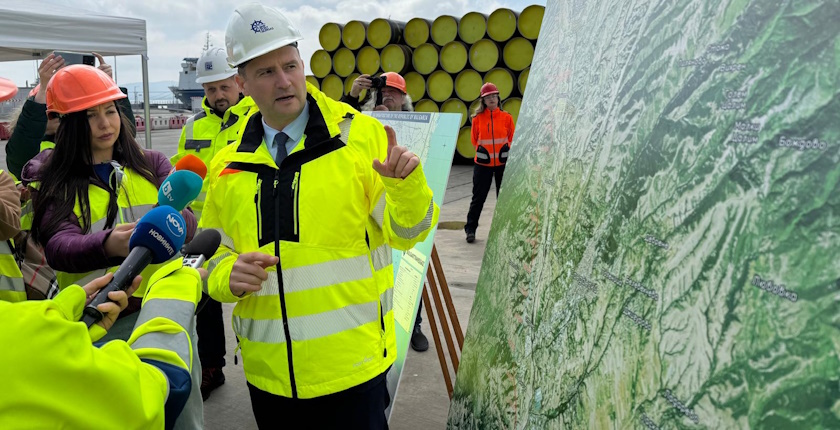
Every school and hospital in Bulgaria can become an electricity producer, Minister of Energy Zhecho Stankov stressed as he presented a financial support mechanism designed with the ambition to create the largest energy community in Europe. The model will benefit both the public sector and private business, he pointed out in the port city of Burgas at a ceremony marking the arrival of the first 4,000 pipes for the Bulgarian sections of the regional Vertical Gas Corridor.

The joint initiative with the country’s power transmission system operator ESO and the Bulgarian Development Bank is for the installation of solar panels with no upfront costs. Beneficiaries – municipalities, schools, kindergartens, hospitals and small businesses – would pay through energy savings and become owners in six to eight years, Stankov claimed.

Bulgaria mulls issuing green bond to finance sustainable energy

The minister also said the project could lead to the government’s first green bond to finance clean and locally produced energy available to a wide range of consumers.

For example, Burgas Municipality can equip all schools, hospitals, kindergartens and other facilities with photovoltaic panels without spending a penny from the local budget, Stankov explained.

Government to invest EUR 57 million in Vertical Gas Corridor

The Vertical Gas Corridor is envisaged to connect Greece, Bulgaria, Romania, Moldova and Ukraine. They plan to transport the fuel from liquefied natural gas (LNG) terminals Alexandroupolis and Revithoussa in Greece, and from the Caspian region, via the Southern Gas Corridor.

The government is fully funding the first stage of the project on Bulgarian territory, with EUR 57 million. The pipes for the pipelines came from India.

Stankov: Bulgaria will never again be left without natural gas

“Bulgaria will never again be left without natural gas,” said Minister Stankov. The capacity of the line between Kulata, on the border with Greece, and Kresna will be increased to 3.6 billion cubic meters per year from 2.3 billion, he added. The distance is 48.5 kilometers.

The most difficult part is between Mikrevo and Ribnik, where three kilometers will be built by horizontal drilling, the minister revealed. He explained there would be no aboveground work, so that nature and infrastructure wouldn’t be affected.

Another section, 80 kilometers, is from Rupcha to Vetrino. The purpose of the investment is to double the maximum annual flow toward Romania to 10 billion cubic meters, Stankov stressed. The last one, Tarnik-Piperovo, is 51 kilometers long.

The compressors on the corridor are reversible, allowing gas supply in both directions, the minister noted.

by in News

Natural gas from “Shah Deniz 2” has already been distributed among 8 countries

Shah_Deniz_Stage_2Baku, October 14,

“Natural gas to be produced from “Shah Deniz 2″ till 2044, has already been distributed among companies from 8 countries on the basis of a contract signed for a period of 25 years”, said Deputy Energy Minister of Azerbaijan Natig Abbasov in an interview to Russia’s “news.rambler.ru” website.

Russia’s “news.rambler.ru” website distorted the words of Natig Abbasov and submitted as “Azerbaijan has already sold the gas to be produced and supplied for export till 2040”.

In response to the question “If Turkey refuses Russian gas, is it possible to compensate it with Azerbaijan gas?, the Deputy Minister answered that, natural gas to be produced from “Shah Deniz 2” till 2044, has already been distributed among companies from 8 countries on the basis of a contract signed for a period of 25 years. According to these agreements, some 16 billion cubic meters of gas have been also distributed – 10 billion cubic meters will be exported to Europe and the remaining 6 billion cubic meters – to Turkey.

Stressing that, each year, the country’s energy balance is identified considering to the electricity, oil and gas demand, increasing the number of consumers and development of industry, Abbasov said that, in addition to the future ensuring of this demand, if the gas will be produced, it may be possible to export.

The 1,850 km-length TANAP project, will pump gas from the vast Azerbaijani Shah Deniz 2 field to Turkish and European Union consumers. TANAP will run from the Turkish border with Georgia, beginning in the Turkish village of Türkgözü in the Posof district of Ardahan, will run through 21 provinces until it ends at the Greek border in the İpsala district of Edirne. The pipeline is planned to be commissioned in 2018. As it was stated earlier, some 6 billion cubic meters of gas of 16 billion cubic meters will go to Turkey, while some 10 billion cubic meters of gas will go to Europe. By 2023, TANAP’s capacity will rise to 23 bcm per year and then to 31 bcm by 2026. Initially, Turkey will buy the first 6 billion cubic meters (bcm) per year of gas from TANAP. A further 10 bcm will be delivered to Europe once it is connected to the Trans-Adriatic Pipeline (TAP) by 2020.

In 2020, TANAP line will start delivering natural gas which it will buy through the South Caucasus Pipeline by connecting Trans-Adriatic Pipeline (TAP) to Europe through Greece, Albania, and Italy.

The TANAP Project’s shareholding percentages will be as follows, after the process of acquisition of shares is completed: Southern Gas Corridor Closed Joint Stock Company (SGC) – 58 percent, BOTAS – 30 percent, and BP – 12 percent.