by in News

Romania risks blackouts if it shuts coal plants as scheduled

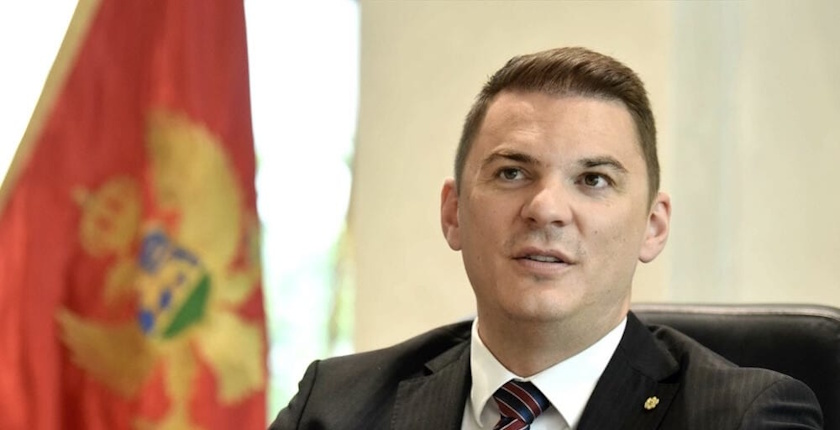
Minister of Energy Bogdan Ivan claims that energy poverty or even blackouts could hit Romania if it proceeds with the closure of coal plants. Namely, the gas power projects for replacing them are suffering severe delays.

The European Commission has become flexible for the first time in the last four years, said Romania’s Minister of Energy Bogdan-Gruia Ivan. He has asked for a postponement of the deadline for shutting down a group of coal power plants.

They need to be closed by the end of the year. If the coal plants, run by state-owned Complexul Energetic Oltenia (CE Oltenia) go before gas power plants Iernut and Mintia are commissioned, Romania is jeopardized, according to the minister.

Ivan told Digi24.ro he was negotiating with the European Commission on delaying the closure by “a few months.” Romgaz decided last week to cancel the contract with Duro Felguera, the contractor for the Iernut facility.

Energy poverty risk increasing

A study conducted with Romania’s transmission system operator Transelectrica has shown that Romania can otherwise end up in energy poverty and even risk a blackout, he underscored. “Especially in the winter, when we have no solar, when we have no wind power,” Minister Ivan explained.

Furthermore, Romania would like to keep three large coal units and another two in technical reserve for replacement them in case of damage, Ivan revealed. It would ensure a 1 GW minimum coal power supply, he asserted.

Romania requires at least 1 GW in baseload energy from coal for two more years, according to Minister Bogdan Ivan

Simulations showed that the group would need to operate for two years more, at least, until Iernut and Mintia are completed.

“We are pressed for time. We need to conclude contracts for next year. We need to conclude contracts for energy supply, contracts with suppliers, coal stocks. It is a complex of factors that must be organized very well from now on. It is already late, for Romania and for our energy companies,” Ivan stated.

Gas power projects in constant delay

Additionally, gas power plants Turceni (475 MW) and Ișalnița (850 MW) are supposed to replace some of the capacity in the Oltenia complex. The two projects suffered constant delays. The deadlines in the tenders for construction have been pushed back to September 30 and November 14, respectively.

Romania has received billions of euros from the European Union for gas power plants to substitute coal, the minister noted separately. He acknowledged that the projects are still on paper. That’s why today Romanians have almost the highest electricity price in Europe, Ivan claimed.
by in News

Montenegro plans to develop LNG terminal with JERA

The Ministry of Energy and Mining of Montenegro and Japanese company JERA have signed a memorandum of cooperation in the development of projects for a liquefied natural gas (LNG) terminal and gas power plant.

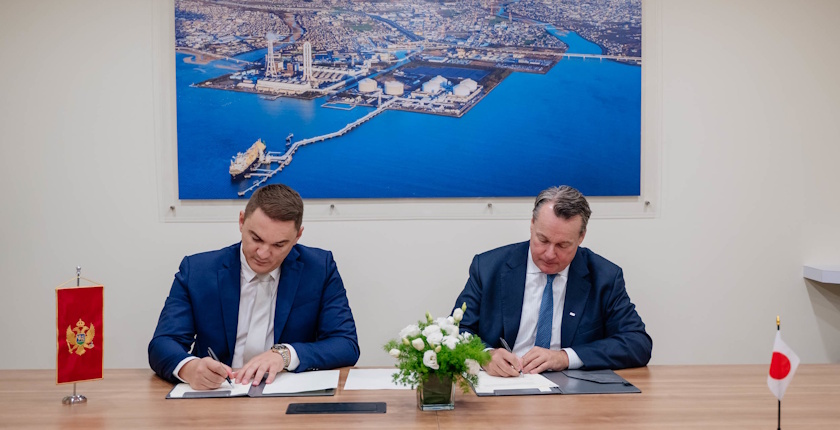
The memorandum was signed at the Gastech 2025 conference in Italy by Minister of Energy and Mining Admir Šahmanović and Steve Winn, chief global strategist of JERA. They agreed to explore the possibilities for developing a project of an LNG terminal and associated gas power plant in Montenegro, according to the Ministry of Energy and Mining.

Within the strategic partnership, the government will use JERA’s extensive global experience to enhance its national energy mix, strengthen supply security, support decarbonization goals, and position Montenegro as an important energy hub in the Western Balkans.

The Japanese company and the ministry will conduct a feasibility study for the project

They will carry out a comprehensive feasibility study, covering the technical, commercial, and financial viability of the proposed LNG terminal and associated gas power plant, including an analysis of multiple potential locations.

According to the ministry’s press release, the study will provide detailed data on the cost-effectiveness and future expansion in the use of LNG in Montenegro, making a solid ground for strategic decisions beneficial to the country’s energy security and sustainable development.

Of note, in May 2023 Montenegro signed a cooperation memorandum on the planned LNG terminal and gas power plant with companies Enerflex Energy Systems and Wethington Energy Innovation, based in the United States. The European Union has also expressed its interest in the project.

Šahmanović: The study will provide data on the profitability of developing LNG in the country

Admir Šahmanović and Steve Winn (photo: Ministry of Energy and Mining of Montenegro)

Minister Admir Šahmanović said JERA is a renowned and credible global player in the areas of energy and LNG.

In his words, Japan is recognized for innovation and advanced technologies, and the cooperation will give Montenegro access to knowledge and experience necessary for the further development of its energy sector.

“The planned feasibility study will provide us with concrete data on potential locations and the profitability of developing liquefied natural gas in Montenegro, creating the basis for making strategic decisions in the interest of our country’s energy security and sustainable development,” Šahmanović underlined.

Winn: JERA is an ideal partner to support Montenegro in achieving its strategic energy goals

Steve Winn, JERA’s chief global strategist, said its extensive experience in LNG infrastructure and proven results in implementing complex international energy projects make it an ideal partner to support Montenegro in reaching its strategic energy objectives.

“We look forward to supporting Montenegro’s vision of strengthening energy security and decarbonization through practical and economically viable solutions,” he stressed.

by in News

Romania preparing to include biomethane in gas grid

Romania has drafted a directive that would regulate the production, transportation and distribution of biomethane and its inclusion into the gas network. The change is aimed at limiting the increase in the prices of gas for household heating, expected from the upcoming introduction of the ETS 2 carbon allowance scheme in the European Union. Delaying the shift would also affect the costs of industrial production and for other non-household consumers of gas.

Biomethane produced from sustainable sources is carbon neutral under the EU Emissions Trading System (EU ETS), making it appropriate for buildings and transportation, the Romanian Ministry of Energy said in a new draft emergency ordinance. With the executive order, it intends to pave the way for utilizing the renewable fuel in the natural gas network, Profit.ro reported.

The document is set to amend several acts and regulate the production, transportation and distribution of biomethane. It would counter, to an extent, the increase in gas prices for households, which is expected from the expansion of the EU’s carbon pricing scheme to buildings and transportation, the ministry explained. Namely, ETS 2 is scheduled to be introduced in 2027.

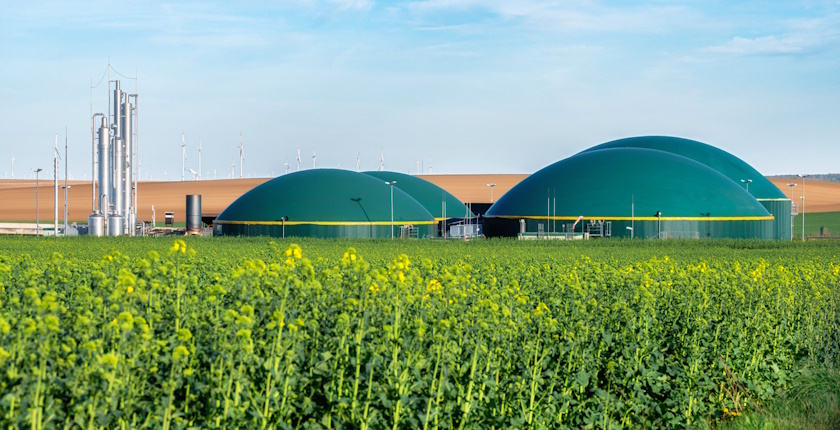
Biomethane is usually obtained by processing biogas to get methane of the same purity as in fossil gas

Any delay in allowing biomethane in the existing grid draws a risk of increasing the costs of natural gas consumption, both for non-household and household customers, the accompanying note reads.

Biomethane is usually obtained by processing biogas to get methane of the same purity as in fossil gas. The gaseous biofuel can also be produced from clean hydrogen and carbon dioxide. The EU allows incentives for biomethane facilities. Some countries in Southeastern Europe, like Greece, are developing the legal framework for embracing the technology within their energy transition.

Share in gas network planned to reach 10% by 2050

Romania is planning a 5% share of biomethane in its natural gas network in 2030 and to double it by mid-century. The sectors of waste management and agriculture can produce an estimated 501,000 tons of oil equivalent in 2050.

The EU is imposing strict requirements on the removal of biodegradable organic matter from wastewater and the reduction of food waste, the ministry noted. Together with agricultural and organic municipal waste, they are the main raw materials for the production of biogas.

According to the proposal, publicly announced business plans can secure a share of renewable gases in the grid up to 1.5%. However, without an urgent legislative intervention, the investments can’t materialize, the Ministry of Energy warned. The draft directive would update the definitions of guarantees of origin, biogas, biomethane, natural gas, renewable gases and biomethane producers.

BSOG Energy, Engie Romania at forefront of upcoming biomethane investment wave

As for other developments in the segment, BSOG Energy (BSOGE), a subsidiary of Black Sea Oil and Gas, recently hired industrial services provider Bilfinger for a biomethane facility in Alba county in Transylvania.

Earlier, BSOGE said it would invest EUR 30 million in the construction of a biomethane plant. It has signed deals with milk producer DN Agrar Group for up to 15 MW in capacity, with the possibility of exceeding 20 MW in later stages.

In April, the firm partnered with Unigrains Trading in a project for a biomethane and organic fertilizer facility. They estimated the investment at EUR 65 million, for 57 MW of biomethane capacity and over 250,000 tons of organic fertilizers per year. Parent company BSOG is controlled by controlled by investment firm Carlyle.

Engie Romania launched plans a year ago with Heineken to build a biodigester for brewery waste

Last November, French-owned Engie Romania obtained the first license in the country for biogas and biomethane supply. Earlier it established a partnership with Heineken for decarbonization projects in three breweries in Romania, including heat pumps and one biodigestion system.

The firm is the largest supplier and distributor of natural gas in the country, as well as an electricity producer and supplier.

by in News

Šahmanović: Montenegro expects first large private wind and solar plants to be online in 2026

Over the past year, Montenegro has adopted two reform laws – on energy and on renewable energy sources – and scheduled its first auctions for market premiums. Admir Šahmanović, Minister of Energy and Mining, told Balkan Green Energy News that the new regulations fully align the sector with the European Union acquis, sending a clear signal to investors that Montenegro now has a stable regulatory framework and market-based prices that safeguard citizens’ interests. Becoming part of the European energy space, he added, is not only a political goal but also the path Montenegro should follow to ensure cleaner and more secure energy for future generations.

Admir Šahmanović served as Minister of Mining, Oil and Gas in the government of Prime Minister Milojko Spajić. In February this year, he became the coordinator of the Ministry of Energy, and since April, he has served as Montenegro’s Minister of Energy and Mining. In an interview with Balkan Green Energy News, Šahmanović discusses his plans to mobilize larger investments, Montenegro’s timeframe for coupling its electricity market with Italy and the EU, the ministry’s steps to prepare the country for the EU’s carbon border tax, and plans for investments in the natural gas sector.

What are the key innovations introduced by Montenegro’s law on renewable energy sources?

The law on renewable energy sources introduced, for the first time, a clear, competitive and fully transparent support mechanism for green energy production – an auction scheme.

Over the past months, we have worked hard to ensure the law really takes hold. We have prepared about 15 by-laws that enabled us to launch the first auctions. I believe this is one of the most important contributions of the new law, as it sends a clear message to investors that Montenegro has a stable framework and market-based prices that safeguard citizens’ interests.

In this way, we are laying a solid foundation for a rapid energy transition, which is both our strategic choice and our responsibility to future generations.

Montenegro has also adopted a new law on energy. What does this regulation bring?

The Law on Energy is our umbrella regulation, providing a framework that fully aligns the sector with the EU acquis. It introduces stricter standards, greater protection of end consumers, better competition, and stronger institutional oversight.

It also opens Montenegro’s energy sector to the European market and creates a stable, predictable environment. This is important not only for investors but also for all consumers, as people are ultimately the ones affected by any change in the system.

You stated that these reforms set a clear strategic path for Montenegro, which sees its energy future within the European market. What will this future bring to Montenegro, its economy, and its citizens?

Our ambition is to make Montenegro a country with clean energy and a stable system. Being part of the European energy space ensures greater security of supply, lower costs in the long term, and a strong inflow of investments. Our economy will have access to a larger market, and our citizens will benefit from safe, sustainable, and environmentally friendly energy.

It is not just a political goal – it is a path I want us to follow in our development, so that we leave our children a country with cleaner and more secure energy.

Admir Šahmanović visiting northern Montenegro with EPCG Director Ivan Bulatović

Applications have been invited for Montenegro’s first auctions for market premiums. What benefits do you expect from auctions?

The auction mechanism allows us to select the most favorable and serious investors through a fair and competitive process. Projects are implemented without budget subsidies and with minimal risk to the state.

We expect auctions to ensure new capacities, create jobs, improve the use of our natural resources, and strengthen overall energy stability. These are the benefits citizens will feel, both on their electricity bills and through new opportunities that will open up in local communities.

Investor interest in wind and solar is strong, with requests to build power plants totaling around 5.5 GW. When do you expect these projects to be realized?

Such strong interest is the best proof that the reforms are yielding results. We expect the first large projects to be online in 2026, with significant capacities ready by 2030. Transparent procedures, good cooperation with local communities, and improved grid infrastructure will be key to making these investments a reality.

What are the main obstacles to these projects? How to remove them?

The biggest challenges are administrative procedures, transmission network limitations, and spatial planning documents. We are working to address them through interdepartmental cooperation, digitalization of processes, and the state’s commitment.

We are strengthening capacities, speeding up permitting, and modernizing regulations. I want to ensure that investors coming to Montenegro know they can work in a clear, predictable, and fair environment.

Admir Šahmanović at the ministerial panel at Belgrade Energy Forum 2025 in May

Preparations are underway to link Montenegro’s electricity market with the EU via Italy, with 2027 featuring as the target year.

Yes, we are working diligently on institutional and market integration. This involves harmonizing the rules, passing the remaining by-laws, and preparing the market operator. With the support of the EU and the Energy Community, I am confident that 2027 will remain the year when we will fully open our market to Europe.

All countries in the region are facing CBAM. How prepared is Montenegro?

CBAM will change the rules for electricity exports to the EU, bringing new costs as well as opportunities. We are aware that it will be a financial burden on our economy, but that is precisely why we view it as an additional incentive to accelerate the implementation of renewable energy projects and increase our own production of green electricity.

We are working on adjusting the regulatory framework, harmonizing economic activities, and ensuring the largest possible share of clean energy to remain competitive and maintain full access to the European market while reducing emissions.

Montenegro also has ambitious plans in the natural gas sector – a gas pipeline, a terminal for liquefied natural gas (LNG), and gas-fired power plants. How far along are these projects?

I see gas as a development opportunity – to ensure greater security of supply, diversification, and new opportunities for the economy. But I also believe that such strategic projects must be developed through dialogue with local communities, with full respect for their views.

We are currently preparing and developing the Ionian Adriatic Pipeline (IAP) project and assessing the potential for an LNG terminal. We are doing this responsibly, one step at a time, and in line with the EU’s energy transition goals.

by in News

US electricity prices soar 40% in H1 2025, outpacing EU’s 30% increase

In the first half of 2025, wholesale electricity prices in the European Union were about 30% higher than in same period of 2024, while a 40% increase was recorded in the United States. The penetration of negative prices in the EU continues, with their share doubling in H1 2025, according to the latest report of the International Energy Agency.

Wholesale electricity prices in the EU averaged around USD 90 per MWh as costs were mostly underpinned by natural gas prices, which were on average about 20% above the levels from 2024, IEA’s Electricity Mid-Year Update 2025 reads.

Prices saw upward pressure from a boost in fossil-fired generation due to a year-on-year drop in electricity generation from wind and hydropower.

While average power prices remained below the 2023 levels, they were higher than in 2019, according to IEA. The latter is a reference year because it was the last one before turbulences started – the COVID-19 pandemic, energy crisis, and the war in Ukraine.

Electricity prices in the Nordics remained the lowest in Europe

Latest futures prices in the EU average USD 80 per MWh for 2026, indicating a decline of around 15% from 2025, the report underlines.

High gas prices also affected the electricity market in the US, combined with colder weather. Power prices averaged around USD 48 per MWh. However, the increase was from a low base, as prices in the first half of 2024 were the lowest for the first half of the year since 2020, the report notes.

Average electricity prices in the Nordics remained the lowest in Europe, falling by more than 20% year-over-year in the first six months of 2025 to about USD 40 per MWh. It was the result of an increase in wind power generation and higher hydropower output, according to the report.

The update brings details on Germany, France, Japan, India, Australia, and the United Kingdom as well.

Occurence of negative prices doubled

IEA notes that the frequency of negative wholesale prices is increasing in various markets, underscoring the need for greater flexibility in supply and demand. The authors of the report propose appropriate regulatory frameworks and market designs to boost greater demand response and energy storage.

The share of hours with negative prices on the wholesale market reached 8% to 9% in the first half of the year in countries such as Germany, the Netherlands, and Spain – up from between 4% and 5% in 2024, the report reads.

The average price this year in the EU is expected to be twice as high as in the US and about 50% higher than in China

Electricity prices for energy-intensive industries continued to vary significantly across regions. After declining since their 2022 peak, they are expected to rise year-on-year in 2025 in the EU, driven by higher wholesale price levels.

The average price this year in the EU is expected to be twice as high as in the US and about 50% higher than in China, according to IEA projections. By comparison, in 2019, prices in the EU were approximately 50% higher than in the United States and 20% higher than in China.

The cost differences continue to pose challenges for the competitiveness of energy-intensive industries in the EU, IEA stressed.

by in News

North Macedonia, Kazancı sign memorandum on gas power plants

The Government of North Macedonia and Kazancı Holding have signed a memorandum of understanding that paves the way for a EUR 1 billion investment in the country’s energy sector.

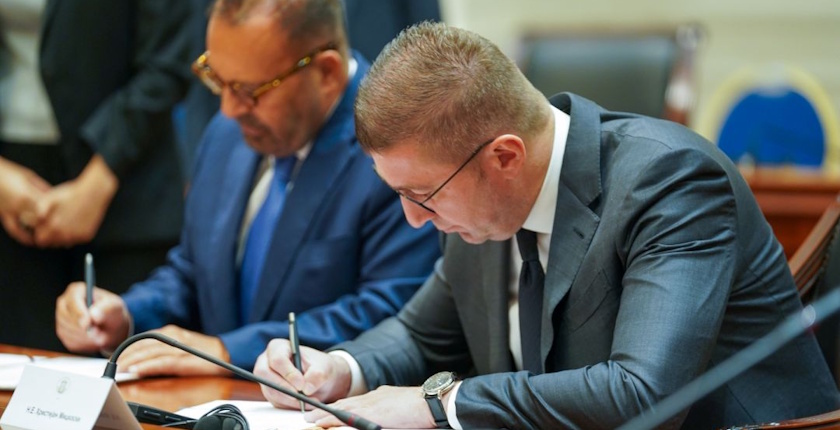
The memorandum of understanding was signed by Prime Minister Hristijan Mickoski and Cemil Kazancı, President of the Board of Directors of Kazancı Holding.

In February, Mickoski announced that the company would invest EUR 1 billion in gas power plants, gas and heat distribution grids.

Now he stressed that the memorandum demonstrates the country’s determination and plan to secure its energy sovereignty and protect its economic interests.

Mickoski: We are reducing import dependence and the impact of external price and political risks

According to the government, the document creates the conditions for a project with a long-term impact on the country’s energy sector.

It consists of three segments: development of new power production facilities, construction of natural gas and heat distribution grids, and implementation of measures to increase gas supply security, Mickoski explained.

Photo: Government of North Macedonia

In his view, a domestic energy source and a stable energy distribution system represent security, predictability, and control over one of the country’s most vital systems.

By developing domestic production facilities, North Macedonia is reducing its reliance on imports and minimizing exposure to external price and political shocks, the prime minister added.

Kazancı: The project is already prepared

Cemil Kazancı recalled that discussions about the investment began a long time ago. The project, in his words, is already prepared. Now research will be conducted, after which the implementation of the EUR 1 billion endeavor will start, he claimed.

It will be a strategic center in the Balkans, according to Kazancı. He expressed confidence that the project would be implemented shortly.

The government has not disclosed details of the memorandum with the company, which operates in the energy sector through its Aksa brand.

Earlier, Prime Minister Mickoski said the two sides were considering cogeneration facilities of 500 MW in combined capacity. They would produce 4.1 TWh of electricity and 720 GWh of heat per year.

The construction of a distribution grid for gas and heat would enable gas and heat to be distributed to as many citizens as possible.

by in News

Market assessment underway for expansion of gas Interconnector Greece-Bulgaria

The Interconnector Greece-Bulgaria (IGB) natural gas pipeline is planned to be expanded to five billion cubic meters per year from three billion. The non-binding assessment phase is underway.

ICGB, the operator of the IGB interconnection, targets an expansion in technical annual capacity to five billion cubic meters per year from the current three billion. The company launched the non-binding phase of a process to assess market interest.

The procedure is conducted under Regulation (EU) 2017/459 (NC CAM), the network code on capacity allocation mechanisms for the sector. It marks a key step toward reinforcing long-term energy security in the region, ICGB pointed out.

Interested market participants are invited to submit their non-binding demand indications by September 1. All relevant documents and participation guidelines are available at ICGB’s public consultations page.

The market demand assessment also includes a binding phase, to determine the feasibility of the potential capacity increase. The process is being carried out in close coordination with adjacent gas transmission system operators (TSOs), according to the company.

Expanding IGB’s capacity is a strategic move for the entire region, the heads of ICGB pointed out

Expanding IGB’s capacity is a strategic move for the entire region, said ICGB’s executive officers George Satlas and Teodora Georgieva. “As the first route for diversified natural gas supplies to Bulgaria, IGB plays a critical role in ensuring secure, sustainable energy for Southeast Europe. We remain firmly committed to this process and to delivering enhanced connectivity and resilience across the region with our partners,” they added.

Following the current phase, ICGB and adjacent TSOs need to compile demand assessment reports for each interconnection point. They would form the basis for possible future steps, including project proposals, consultations and regulatory approval, the announcement reads.

Serbia, Hungary, Bosnia and Herzegovina and North Macedonia largely depend on Russian gas, delivered through the TurkStream and Balkan Stream pipeline corridor. IGB and the Serbia-Bulgaria interconnector enable access to Azerbaijani gas and Greece’s liquefied natural gas (LNG) terminals.

by in News

Serbia, North Macedonia working on gas interconnector project

Serbia’s state gas company Srbijagas and North Macedonia’s gas transmission system operator Nomagas signed a memorandum of understanding expressing their intention to soon build a gas interconnector between the two countries. Srbijagas is also expected to present a plan for a gas interconnection with Romania.

The memorandum, signed by Srbijagas General Manager Dušan Bajatović and Nomagas Executive Director Muhamet Elmazi, confirms the pipeline’s border crossing point, an important step in preparing technical documentation and project implementation, according to a press release from Srbijagas.

The interconnector’s planned two-way capacity is 1.5 billion cubic meters of natural gas per year. The feasibility study, financed through the Western Balkans Investment Framework (WBIF), is expected to be completed soon, according to a statement by Nomagas.

The interconnector’s planned capacity is 1.5 billion cubic meters

In North Macedonia, the interconnector would be connected to the existing Klečovce gas pipeline, and in Serbia, to a pipeline in Vranje that has already been built. Its total length would be approximately 70 kilometers – about 47 kilometers in Serbia and 23 kilometers in North Macedonia.

The memorandum reaffirms the political will expressed in a memorandum signed by the two countries’ relevant ministries in October 2024, particularly the importance of interconnecting energy markets, strengthening the security of gas supply, and diversifying supply routes, according to Srbijagas.

With this document, the two sides also declare their support for increased cooperation between Southeast European countries and the establishment of a regional energy market as part of the European Union’s internal energy market.

Serbia-Romania interconnector project to be presented in September

Srbijagas has also signed a memorandum of understanding with Romania’s national gas transmission system operator SNTGN Transgaz. On the sidelines of a meeting in Bucharest, the two companies’ top executives agreed to present a joint plan in September for a gas interconnection.

The project involves the construction of a new natural gas pipeline to link the BRUA pipeline in Romania with the Mokrin hub in Serbia. The plan is also expected to include the construction of a gas pipeline between Južni Mokrin and Belgrade, via the Banatski Dvor underground gas storage facility and the city of Pančevo, according to a press release from Srbijagas.

The Serbia-Bulgaria gas interconnector was put into trial operation at the end of 2023.

by in News

Serbia plans hydrogen transport through gas pipelines

Serbia’s natural gas transmission system operator, Transportgas Srbija, has invited bids for the preparation of a study on the technical feasibility of transporting hydrogen through the gas network. The study should assess the quantities of hydrogen that can be transported, as well as the impact of blending hydrogen with natural gas on the transmission system and key consumers. The goal is to determine the technical, investment, and regulatory measures necessary for integrating hydrogen into Serbia’s gas infrastructure.

Transportgas notes that hydrogen, as an alternative fuel, is becoming increasingly important in the context of decarbonization and energy security. It also recalls that the Energy Community has set goals for defining natural gas quality for all transmission system operators in Southeast Europe, with special emphasis on the introduction and application of hydrogen.

Serbia would transport hydrogen by blending it with natural gas. Transportgas recalled that gas pipelines built in recent years or currently under construction in Europe are capable of transporting 100% pure hydrogen.

Transportgas: New gas pipelines in Europe can transport pure hydrogen

The study should, among other things, determine the maximum percentage of hydrogen that can be blended with natural gas, as well as the impact on equipment and transmission system losses.

The selected consultant will also be required to determine the chemical composition of the hydrogen-natural gas blend, define the blending procedure, and identify the optimal blending points within the transmission system, as well as suitable sites for hydrogen production and storage in Serbia.

The study should also assess how much hydrogen blended with natural gas can be transported through existing gas pipelines, taking into account the varying qualities of natural gas from different supply routes. The construction of the Balkan Stream gas pipeline and the interconnector with Bulgaria near Dimitrovgrad has enabled Serbia to diversify its gas supplies, Transportgas pointed out.

The study should also identify suitable sites for hydrogen production and storage in Serbia

The study must include an assessment of the impact of the chemical composition and quality of the hydrogen-natural gas blend on major gas consumers in Serbia – steelworks Železara Smederevo, asphalt plants, compressed natural gas (CNG) filling stations, oil refinery Rafinerija nafte Pančevo, cogeneration plants TE-TO Pančevo and TE-TO Novi Sad, petrochemical plant HIP-Petrohemija Pančevo, methanol producer MSK Kikinda, and district heating plants in Belgrade and Zrenjanin.

The consultant will be required to recommend investments needed to introduce hydrogen, such as installing gas analyzers, building new gas pipelines, and upgrading existing infrastructure.

The consultant will be expected to recommend necessary regulatory changes

The consultant’s obligation will also be to propose regulatory changes to enable the introduction of hydrogen into the gas infrastructure, the invitation states, noting that the regulations in question include the Law on Energy and the government decree on terms of natural gas delivery and supply.

The deadline to submit bids is July 23, and the selected consultant will have 180 days to complete the work.

by in News

Serbia secures EUR 50 million loan for air quality projects

The Government of Serbia has secured a EUR 50 million loan to fund a series of air quality projects across several cities. The funds will primarily go towards replacing coal- and fuel oil-fired boiler rooms in six cities.

For years, air pollution has been one of the biggest environmental issues in Serbia.

Minister of Environmental Protection Sara Pavkov and First Deputy Prime Minister and Minister of Finance Siniša Mali have signed two agreements with the European Bank for Reconstruction and Development (EBRD), which will soon lead to significant investments in air protection projects in multiple Serbian cities, the Ministry of Environmental Protection said.

Mali signed a EUR 50 million loan agreement, while Pavkov inked the project agreement. On behalf of the bank, both documents were signed by Matteo Colangeli, EBRD Regional Head of the Western Balkans.

EUR 50 million will be invested in cities with the highest levels of harmful emissions

Pavkov noted that based on these agreements, EUR 50 million would be invested in cities mapped as those with the largest excesses of harmful emissions. This is good news for residents of Belgrade, Niš, Valjevo, Zaječar, Novi Pazar, and Smederevo, where the projects will be implemented, she added.

In these cities, old, outdated boilers running on fuel oil, coal, and other fuels with an adverse impact on air quality will be replaced. Modern and sustainable heat energy sources, such as heat pumps, biomass, and industrial waste heat, will be installed, she stressed.

The projects will also include, where possible, connection to district heating systems or natural gas networks.

An air protection law is in the process of adoption

“These projects are the culmination of years of work. We have entered a phase where we can expect the launch of construction and intensification of the efforts for cleaner air, which remains one of our top priorities,” Pavkov stressed.

She recalled that an EBRD loan had helped replace 50-year-old coal boilers with state-of-the-art gas boilers at the Kragujevac district heating plant. The second phase, the remediation of the ash landfill, has also begun, she added.

From 2021 to 2024, the ministry has implemented projects to replace 169 boiler rooms in public institutions across 76 local authorities, according to Pavkov.

Under a public call, funds have been allocated for projects in 18 municipalities in 2025, with another call currently underway. An air protection bill is now before the National Assembly, intended to provide a new overarching framework and fresh momentum in the fight for better air quality, Pavkov noted.