by in News

Greece, Serbia, North Macedonia and Bulgaria Advance Vertical Gas Corridor Expansion

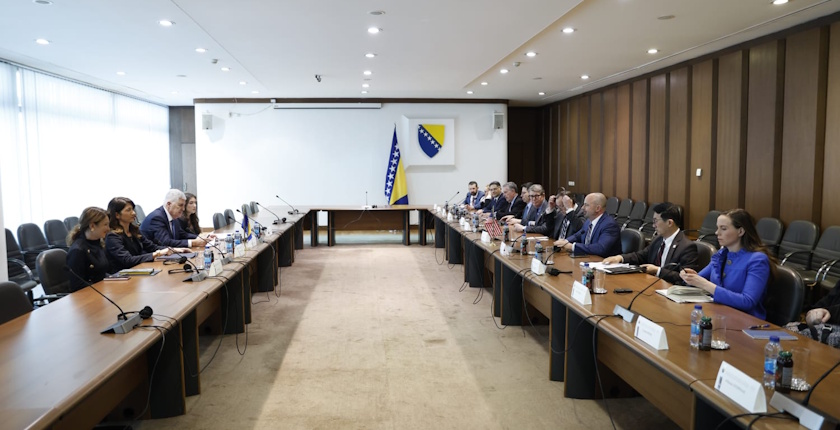
Energy ministers and senior officials from Serbia, Greece, North Macedonia and Bulgaria met today in Athens to discuss the development of regional natural gas supply routes and cross-border interconnections. During the meeting, Greek Minister of Environment and Energy Stavros Papastavrou announced that the Vertical Corridor initiative would be extended to include North Macedonia and Serbia.

Greece, Bulgaria and Romania have already achieved significant progress in developing the Vertical Corridor, a strategic gas route designed to facilitate supplies toward Ukraine and Moldova. Key milestones include infrastructure upgrades, the construction of new pipelines such as the Interconnector Greece–Bulgaria (IGB), as well as commercial agreements and dedicated capacity auctions. The same approach is now being applied to the western Balkans through the creation of an additional branch of the corridor.

The Athens meeting focused primarily on two major gas interconnection projects: Greece–North Macedonia and North Macedonia–Serbia. The Greece–North Macedonia pipeline is currently under construction and is expected to be completed this year. Once operational, it will allow natural gas to flow northward from Greek LNG terminals at Revithoussa and Alexandroupolis, as well as from pipeline gas sources, including Azerbaijan.

Serbia Plans EUR 1.2 Billion in Gas Infrastructure Investments

The next segment of the regional gas chain, linking North Macedonia with Serbia, is expected to be completed by the end of 2027, according to Serbian Minister of Mining and Energy Dubravka Đedović Handanović. The project is currently in the spatial planning phase and is designed to connect with the southern Serbian city of Vranje. Its planned annual transport capacity is 1.5 billion cubic meters of natural gas.

Minister Đedović Handanović also stated that Serbia intends to invest approximately EUR 1.2 billion in gas infrastructure, including the modernization and expansion of existing pipeline networks.

North Macedonian Minister of Energy, Mining and Mineral Resources Sanja Božinovska emphasized that the regional interconnection would soon become operational.

“By the end of next year, we will be ready and the interconnection between Greece, North Macedonia and Serbia will be operational,” she said.

She also confirmed that the tender procedure for the pipeline connecting North Macedonia and Serbia was launched yesterday.

Greek Minister Papastavrou highlighted the broader strategic importance of the initiative, stressing Greece’s role in shaping the region’s emerging energy architecture.

“Greece plays a leading role in the new European architecture through projects of strategic importance. Infrastructure, interconnections, market coupling and the Vertical Corridor are initiatives that strengthen security of supply, reinforce geopolitical stability and create new development opportunities across the region. Today, we agreed on the expansion of the Vertical Corridor to North Macedonia and Serbia, as well as on institutionalizing cooperation among the four countries,” he stated.

Bulgaria was represented at the meeting by Deputy Minister of Energy Kiril Temelkov.

Further Regional Meetings Planned

The four officials agreed to continue their cooperation through a series of follow-up meetings. The next session is scheduled for September in Belgrade, with subsequent meetings planned in Skopje and Sofia.

The Athens discussions were also attended by representatives of gas and electricity transmission system operators from all four countries, underscoring the technical and strategic importance of the planned regional energy integration.

by in News

Bosnia and Croatia Advance Southern Gas Interconnection to Strengthen Regional Energy Security

Bosnia and Herzegovina and Croatia have formalized an intergovernmental agreement to advance the construction of the Southern Gas Interconnection, a strategic infrastructure project aimed at strengthening energy security and ensuring a more stable gas supply for Bosnia and Herzegovina.

The planned interconnection will provide Bosnia and Herzegovina with an alternative supply route via Croatia, reducing its current dependence on Russian natural gas delivered through Turkey, Bulgaria, and Serbia. By enabling access to new sources, the project is expected to significantly enhance supply resilience.

The agreement was signed in Dubrovnik during the Three Seas Initiative summit by Borjana Krišto, Chairwoman of the Council of Ministers of Bosnia and Herzegovina, and Croatian Prime Minister Andrej Plenković.

The pipeline network will span multiple routes, including Split–Zagvozd in Croatia, extending into Bosnia and Herzegovina through Posušje, and continuing across key locations such as Tomislavgrad, Kupres, Bugojno, and Travnik. Additional शाखing routes will connect areas including Mostar, Livno, Jajce, Tuzla, and Čapljina, creating a comprehensive distribution network.

According to the Council of Ministers of Bosnia and Herzegovina, the project will diversify both supply routes and energy sources, contributing to greater energy independence. The pipeline is expected to be supplied with gas from the liquefied natural gas (LNG) terminal on the Croatian island of Krk.

The signing ceremony was attended by US Energy Secretary Chris Wright and Vedran Lakić, Minister of Energy, Mining and Industry of the Federation of Bosnia and Herzegovina. US-based AAFS Infrastructure and Energy has been designated to manage the pipeline within Bosnia and Herzegovina.

Although the project has been under consideration for years, tangible progress accelerated recently. In January, authorities in Bosnia and Herzegovina indicated that AAFS Infrastructure and Energy would receive a 30-year concession. Subsequently, in late February, twelve countries from Central and Eastern Europe and the Balkans, including Bosnia and Herzegovina, reached an agreement with the United States to strengthen cooperation on LNG supply.

The Federation of Bosnia and Herzegovina, the entity through which the pipeline will pass, recently adopted a special legal framework (lex specialis) designating the US firm as the project investor. This decision has drawn criticism from the European Union, which warned of potential consequences.

Borjana Krišto emphasized that Bosnia and Herzegovina occupies a strategic position at the crossroads of energy flows in Southeast Europe. She noted that, beyond being a consumer, the country has the potential to play an active role in developing a more secure and resilient regional energy system. She also highlighted the importance of transatlantic cooperation in accelerating investment and improving market integration.

Prime Minister Andrej Plenković underscored that the agreement reinforces Croatia’s role as a regional energy hub, particularly by enabling the transport of gas from the Krk LNG terminal to Bosnia and Herzegovina. He also pointed to the broader significance of the Three Seas Initiative, which brings together 13 EU member states from Central and Eastern Europe to enhance connectivity between the Baltic, Black, and Adriatic seas, with a focus on infrastructure, transport, and energy integration.

by in News

Aktor LNG USA–Albgaz Deal Signals Structural Shift in Western Balkans Gas Market

A landmark long-term gas supply agreement between Aktor LNG USA and Albania’s state-owned Albgaz marks a significant step in the transformation of Southeast Europe’s energy architecture, reinforcing both market diversification and geopolitical realignment.

The agreement, valued at approximately $6 billion, establishes a 20-year framework for the delivery of liquefied natural gas (LNG) sourced from the United States, with contracted volumes of around 1 billion cubic meters annually starting in 2030.

From Hydro Dependence to Gas Integration

For Albania, the deal represents a structural pivot away from near-total reliance on hydropower toward a more diversified energy mix. The introduction of long-term LNG supply contracts provides a stable foundation for baseload generation, system balancing, and regional trading capacity.

The agreement is not limited to commodity supply. It is complemented by a memorandum of understanding between Aktor Energy USA and the Albanian government to develop an integrated energy hub, including a planned gas-fired power plant with an estimated capacity of 380 MW.

This integrated approach reflects a broader transition strategy: linking fuel supply, infrastructure development, and power generation into a single investment framework.

Infrastructure First: Vlora and the Missing Gas System

A central component of the strategy is the planned development of LNG infrastructure in Vlora, which is expected to evolve into a key entry point for imported gas. Until domestic infrastructure is completed, supply will be routed through Greece, leveraging the Revythoussa LNG terminal and the Trans Adriatic Pipeline (TAP) for onward delivery into Albania.

This transitional routing underscores a critical reality: Albania’s gasification remains at an early stage, and the success of the agreement depends heavily on timely infrastructure deployment.

The Vlora energy hub concept—combining LNG import, regasification, and power generation—positions Albania not merely as a consumer, but as a potential transit and redistribution node for the Western Balkans.

The Vertical Gas Corridor: Strategic Context

The deal is embedded within the broader framework of the “Vertical Gas Corridor,” a US-backed initiative aimed at expanding north–south gas flows from Greece into Southeast and Central Europe.

According to Aktor leadership, the agreement is intended to unlock the corridor’s full potential, enabling the distribution of American LNG across multiple Balkan markets and reducing dependency on traditional supply routes.

The corridor concept is particularly relevant as Europe continues to recalibrate its gas supply strategy, with long-term LNG contracts increasingly viewed as essential for supply security beyond 2030.

Geopolitical and Market Implications

The presence of US and Greek stakeholders highlights the geopolitical dimension of the agreement. The United States is actively expanding its LNG footprint in Southeast Europe, using infrastructure and long-term contracts as instruments of strategic influence and market integration.

At the same time, Greece reinforces its role as a regional energy gateway, providing the initial infrastructure backbone for LNG imports and transmission into the Western Balkans.

The agreement also signals potential regional expansion. Discussions are already underway to extend LNG supply arrangements to additional Western Balkan markets, including Serbia and North Macedonia, as interconnection projects progress.

Commercial Structure and Market Significance

From a market perspective, the deal reflects several emerging trends:

  • Shift toward long-term LNG contracting as a hedge against future supply tightness and price volatility
  • Integration of infrastructure and supply agreements to de-risk investment in emerging gas markets
  • Growing role of private-sector intermediaries (such as Aktor LNG USA) in structuring cross-border energy flows

The estimated contract value—around $6 billion over 20 years—indicates a substantial commitment for a relatively small market, underscoring Albania’s ambition to scale beyond domestic demand and participate in regional gas trade.

Execution Risks and Critical Dependencies

Despite its strategic significance, the project faces several execution risks:

  • Infrastructure delivery risk, particularly the timely development of LNG import capacity and internal gas networks
  • Demand risk, given Albania’s currently limited gas consumption base
  • Regulatory and market integration challenges, especially in aligning with EU gas market frameworks

The reliance on interim routing through Greece also introduces transitional dependencies that must be carefully managed.

Conclusion: From Peripheral Market to Emerging Energy Node

The Aktor LNG USA–Albgaz agreement is more than a supply contract—it is a foundational step in repositioning Albania within the regional energy system.

If successfully implemented, it could transform the country from a hydropower-dependent system into a flexible, gas-integrated market with regional relevance. More broadly, it reinforces the Western Balkans’ gradual integration into European energy networks, underpinned by transatlantic LNG flows and new infrastructure corridors.

The real test, however, will lie not in the signing of the agreement, but in its execution—particularly the alignment of infrastructure, regulation, and market demand over the coming decade.

by in News

EU Eyes Urgent Gas Price Cap as Geopolitical Tensions Destabilize Energy Markets

The European Commission is weighing aggressive interventions in the energy market—including a potential cap on natural gas prices—to shield consumers and industries from a sharp spike in electricity costs. Speaking at a European Parliament plenary debate, Commission President Ursula von der Leyen signaled that the executive branch is preparing a suite of emergency measures to decouple gas prices from broader power bills.

Geopolitical Volatility Hits the Grid

The move comes as energy markets face renewed turbulence driven by the armed conflict involving the US and Israel against Iran. The escalation has severely disrupted shipping lanes in the Strait of Hormuz, a vital chokepoint for global oil and liquefied natural gas (LNG) supplies.

The impact on European benchmarks has been immediate and severe:

  • Late February: TTF gas traded at a relatively stable €31 per MWh.

  • Peak Surge: Following the escalation, prices spiked by 100%, briefly eclipsing €62 per MWh.

  • Current Standing: Prices have leveled off slightly but remain elevated at over €51 per MWh.

The “Merit Order” Dilemma

Under the EU’s current “merit order” system, electricity prices are determined by the most expensive power plant required to meet total demand. Because natural gas plants are frequently the final resources called upon to balance the grid, they effectively set the price for the entire market—even when cheaper renewables are available.

“It is crucial that we reduce the cost impact when gas sets the electricity price,” von der Leyen stated. “We are exploring better use of Power Purchase Agreements (PPAs), Contracts for Difference (CfDs), and direct gas price caps to break this link.”

Breakdown of the Average EU Electricity Bill

To address the crisis holistically, the Commission is analyzing the four primary drivers of consumer costs:

Component Share of Bill Commission Strategy
Energy Generation 56% Gas price caps, subsidies, and state aid.
Grid Charges 18% Increasing grid productivity to reduce waste.
Taxes & Levies 15% Encouraging member states to lower local burdens.
Carbon Costs (ETS) 11% Modernizing the Emissions Trading System.

Beyond Price Caps: A Long-Term Overhaul

While a gas cap serves as a “firebreak,” the Commission’s strategy extends to structural reforms. Von der Leyen emphasized that increasing the productivity of existing grids is a priority to ensure that renewable energy is not “wasted” during periods of peak production. Furthermore, the Commission aims to modernize the EU Emissions Trading System (EU ETS) to ensure carbon pricing remains a tool for transition rather than a prohibitive burden during supply shocks.

By targeting every component of the power bill—from the raw commodity cost to the underlying taxes Brussels hopes to stabilize a continent currently caught in the crosshairs of global conflict.

by in News

Greece Fast-tracks Strategic Hydrocarbon Agreements with Chevron and HelleniQ Energy

The Hellenic Parliament is set to ratify a series of landmark energy concessions this week, signaling Greece’s most decisive move in decades to unlock the hydrocarbon potential of the Eastern Mediterranean. The legislation authorizes exploration and exploitation contracts for high-prospect offshore blocks located south of Crete and the Peloponnese.

Designated by government officials as a “national priority” for energy security, the bills cleared their final committee review early this week. A plenary vote is scheduled for Thursday, which would formally greenlight a partnership between the Greek state and a powerful consortium led by global major Chevron and national champion HelleniQ Energy.

A Strategic Buffer Against Volatility

During a briefing before the Production and Trade Committee, Minister of Environment and Energy Stavros Papastavrou framed the development of domestic resources as a critical sovereign endeavor. In an era defined by regional energy instability, Papastavrou characterized the initiative as a “national affair” essential for long-term strategic autonomy.

The contractual framework is structured to insulate the Greek taxpayer from financial exposure:

  • Zero Public Risk: Private consortiums will bear 100% of the capital expenditure during the high-risk exploration phase.

  • State Revenue Sharing: If commercially viable deposits are discovered, the state is positioned to retain the vast majority of the economic benefits.

  • Technical Sovereignty: The projects represent the culmination of a 12-year national effort to map and tender Greece’s maritime wealth.

Technical Optimism Meets Industry Caution

Aristophanes Stefatos, CEO of the Hellenic Hydrocarbons Management Company (HEREMA), underscored that the state incurs no expenditure if exploration fails, while Anastasios Vlassopoulos, representing the Chevron-HelleniQ partnership, assured lawmakers that state-of-the-art seismic evaluations would maximize the chances of a successful find.

However, the ambitious timeline has drawn some scrutiny from industry experts. Konstantinos Stambolis, Executive Director of the Institute of Energy for Southeast Europe (IENE), welcomed the legislation but noted a potential regulatory gap. Stambolis raised concerns regarding the absence of mandatory drilling timelines within the current text, suggesting that stricter windows for physical exploration would better ensure rapid development.

Regional Implications

The ratification comes at a pivotal moment for European energy policy. As the continent continues to diversify away from Russian gas, Greece is positioning itself as a vital energy gateway for the Balkan corridor. Success in these offshore blocks could transform Greece from a transit hub into a significant primary producer, fundamentally altering the energy architecture of South East Europe.

by in News

Strategic Pivot: Greece Formalizes Offshore Exploration Agreements with Chevron and HELLENiQ Energy

Greece is signaling a decisive shift toward “energy realism” as the Ministry of Environment and Energy formalizes major concession agreements for hydrocarbon exploration. Minister Stavros Papastavrou announced the signing of deals with a consortium led by U.S. major Chevron (70%) and HELLENiQ Energy (30%), covering four offshore blocks.

The move is framed not just as an energy play, but as a pillar of national confidence. Minister Papastavrou emphasized that these agreements bolster Greece’s economic, energetic, and geopolitical standing, effectively positioning the nation as a potential natural gas producer for both domestic and European markets.

Geopolitics and the “New Era” of Energy

The government’s strategy aims to balance sustainable development with the country’s strategic advantages. This includes heavy investment in LNG terminals, cross-border interconnections, renewables, and grid digitalization. Notably, Greece has recently transitioned into a net electricity exporter for the first time in nearly 25 years.

The major pipeline projects in the area are the Trans-Adriatic Pipeline (red), the Trans- Anatolian Pipeline (orange) and the East Med pipeline (red arrows), this last currently under discussion.

The major pipeline projects in the area are the Trans-Adriatic Pipeline (red), the Trans- Anatolian Pipeline (orange) and the East Med pipeline (red arrows), this last currently under discussion.

Beyond the balance sheet, the entry of a global giant like Chevron carries significant geopolitical weight. Minister Papastavrou suggested that the partnership serves as a “de facto” counter-manoeuvre to the controversial maritime memorandum between Turkey and Libya, reinforcing Greece’s sovereignty and role in the Eastern Mediterranean.

Exploration Roadmap: Blocks and Timelines

The four lease agreements, which span a combined 47,000 square kilometers, are slated for parliamentary ratification next month.

  • Target Areas: The concessions include Lot A2 (bordering the South of Peloponnese block) and two blocks south of Crete (South of Crete 1 and 2).

  • Operational Schedule: Preliminary exploration activities are expected to commence in the second half of this year.

  • Deepwater Expertise: While monetizing deepwater resources remains capital-intensive, Chevron’s track record in technically challenging offshore environments is seen as a critical asset for the consortium.

Expanding the Footprint: Block 10 and Beyond

Industry insiders suggest the Chevron-HELLENiQ partnership may soon expand. Reports indicate the two companies are evaluating cooperation for Block 10 in the Gulf of Kyparissia. Currently held solely by HELLENiQ Energy, Block 10 borders Lot A2 and covers 2,400 square kilometers. Exploration drilling there is tentatively scheduled for the second quarter of 2028.

Greece’s offshore blocks

Greece’s offshore blocks

The strategy appears to favor the creation of large, unified exploration zones. By grouping these blocks, the consortium can manage the high costs and logistical complexities of deepwater extraction more efficiently.

Regional Upstream Activity

The broader Greek upstream sector is also gaining momentum:

  • ExxonMobil: Preparing for its first exploratory drilling in over 40 years, targeted for the first half of 2027.

  • Energean: Currently operating the Prinos, Prinos North, and Epsilon fields (Greece’s only active complex), the company is pivoting toward decarbonization. Its subsidiary, EnEarth, is progressing with plans to convert the Prinos field into a permanent carbon dioxide storage reservoir.

by in News

US firm eyes construction of three gas-fired power plants in BiH

A US company is interested in building three gas-fired power plants in Bosnia and Herzegovina, according to Dragan Čović, First Deputy Speaker of the House of Peoples of the Parliamentary Assembly of BiH.

The natural gas power plants would be connected to the planned Southern Gas Interconnection and the liquefied natural gas (LNG) terminal in Krk, Croatia, Dragan Čović explained in an interview with Avaz.

The Southern Gas Interconnection is a project designed to provide BiH with an alternative natural gas supply. The country currently relies on Russian gas delivered via Serbia, while the new pipeline would secure imports from the Croatian LNG terminal. The interconnection has been in development for many years, but construction has yet to begin.

Čović revealed that the power plants would be built in the Mostar area, central Bosnia, and in Tuzla. He expressed the belief that the interconnection is crucial for BiH, arguing it would ensure the country’s long-term energy and political stability.

Čović spoke with Bechtel’s representatives

Because the pipeline passes through areas with a majority Croat population, the project is also of strategic interest to the Croat people in BiH, added Čović, who is also the president of the Croatian Democratic Union of Bosnia and Herzegovina (HDZ BiH).

Čović recently met with representatives of US construction company Bechtel and the United States Trade and Development Agency (USTDA), which provides financing and technical support for international projects. Bechtel is currently being considered as a potential contractor for the pipeline’s construction.

He met with Justin Siberell, Bechtel’s President for Regions and Corporate Relations, and Sam Kwon, the USTDA’s General Counsel.

AAFS Infrastructure and Energy also visited BiH

The guests from the US also met with Acting President of the Republic of Srpska Ana Trišić-Babić and Minister of Energy, Mining and Industry of the Federation of BiH Vedran Lakić. FBiH and the Republic of Srpska are the two entities making up BiH.

Earlier, representatives of US-based AAFS Infrastructure and Energy also visited the country. According to Čović, the company is expected to receive a 30-year concession to manage the gas pipeline through BiH.

He explained that the three proposed power plants were included in the letter of intent that the firm sent to BiH authorities. The US partners’ plans extend far beyond the construction of the pipeline, he added.

A broader geopolitical dimension

Čović expressed the belief that these investments would carry a significant geopolitical dimension, claiming that if the US invests somewhere, that region is protected. This is demonstrated by the policy of President Donald Trump around the world, he added.

Čović dismissed claims that HDZ BiH is hindering the construction of the gas pipeline due to disagreements with Bosniak officials about project details. It is in the strategic interest of the Croat people to implement it, he stressed.

Of note, the Republic of Srpska has also announced plans to build gas-fired power plants and a new gas interconnection with Serbia.

by in News

Davos: China reaffirms green agenda as US slams EU’s net-zero goal

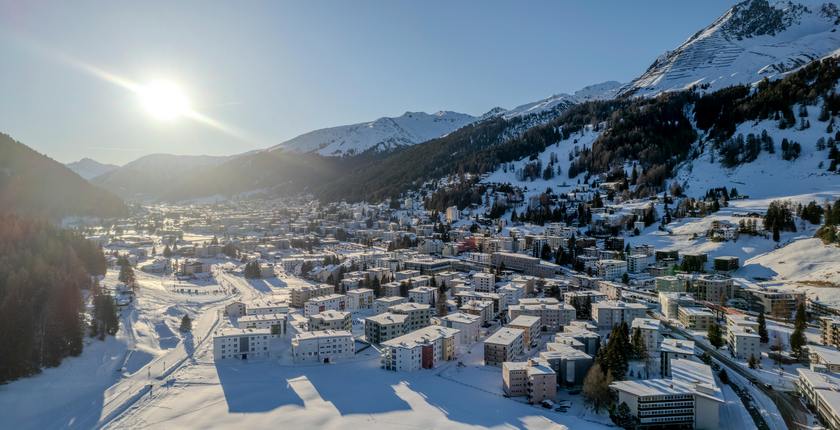
At the World Economic Forum (WEF) in Davos, China reiterated its commitment to green development, in contrast to the United States, whose secretary of commerce said America should rely on oil and gas instead of pursuing a green transition and criticized the European Union’s (EU) net-zero target. US President Donald Trump, for his part, described the energy transition as a “scam” that caused an energy collapse in Europe.

Speaking at the WEF Annual Meeting 2026 in Davos, Switzerland, Chinese Vice Premier He Lifeng emphasized China’s resolve to reduce its greenhouse gas emissions, adding that the country’s upcoming five-year plan would keep the focus on green growth fueled by solar, batteries, and electric vehicles (EVs).

China’s Vice Premier urged other countries to help combat emissions

He also urged other nations and foreign companies to collaborate with China on creating “a green and prosperous future.”

“We invite enterprises from all over the world to embrace the opportunities from the green and low-carbon transition, and work closely with China in such areas as green infrastructure, green energy, green minerals, and green finance,” He said in a speech at Davos.

In contrast, US Commerce Secretary Howard Lutnick criticized the EU’s solar and wind development, as well as its net-zero goal, adding that the green transition is not something the US should pursue. Lutnick also said that the world should focus on coal as an energy source rather than renewables, according to reports.

In January 2025, President Donald Trump signed executive orders reversing much of the previous administration’s climate policy and withdrawing the US from the Paris Agreement once again.

US Commerce Secretary claims seeking net zero without battery production would make the EU subservient to China

“Why are you going to do solar and wind? Why would Europe agree to be net zero in 2030 when they don’t make a battery? So, if they go 2030, they are deciding to be subservient to China, who makes the batteries,” Lutnick said.

“Why would the US, which has oil and natural gas, try to convert to all-electricity? China does not have oil and natural gas – electricity and electric cars make perfect sense to them,” Lutnick said at a WEF panel.

According to news agencies, Lutnick’s harsh criticism of Europe at a VIP dinner on Tuesday made European Central Bank President Christine Lagarde walk out of the event.

Trump slams “the green new scam” and claims China sells wind turbines to others, but does not build its own wind farms

For his part, Trump also criticized the EU’s transition to renewables, claiming that the US had avoided “the catastrophic energy collapse which befell every European nation that pursued the green new scam.” He also described the green transition as “perhaps the greatest hoax in history.”

In his speech in Davos, the US president claimed that wind farms “lose money” and that China only sells wind turbines without building any wind farms itself.

“They sell them to the stupid people that buy them. They don’t use them themselves,” Trump said, adding that China has only built a “couple of wind farms” in order to “show people what they could look like.”

According to available data, China has the largest wind power capacity in the world, at around 600 GW.

by in News

US firm eyes construction of three gas-fired power plants in BiH

A US company is interested in building three gas-fired power plants in Bosnia and Herzegovina, according to Dragan Čović, First Deputy Speaker of the House of Peoples of the Parliamentary Assembly of BiH.

The natural gas power plants would be connected to the planned Southern Gas Interconnection and the liquefied natural gas (LNG) terminal in Krk, Croatia, Dragan Čović explained in an interview with Avaz.

The Southern Gas Interconnection is a project designed to provide BiH with an alternative natural gas supply. The country currently relies on Russian gas delivered via Serbia, while the new pipeline would secure imports from the Croatian LNG terminal. The interconnection has been in development for many years, but construction has yet to begin.

Čović revealed that the power plants would be built in the Mostar area, central Bosnia, and in Tuzla. He expressed the belief that the interconnection is crucial for BiH, arguing it would ensure the country’s long-term energy and political stability.

Čović spoke with Bechtel’s representatives

Because the pipeline passes through areas with a majority Croat population, the project is also of strategic interest to the Croat people in BiH, added Čović, who is also the president of the Croatian Democratic Union of Bosnia and Herzegovina (HDZ BiH).

Čović recently met with representatives of US construction company Bechtel and the United States Trade and Development Agency (USTDA), which provides financing and technical support for international projects. Bechtel is currently being considered as a potential contractor for the pipeline’s construction.

He met with Justin Siberell, Bechtel’s President for Regions and Corporate Relations, and Sam Kwon, the USTDA’s General Counsel.

AAFS Infrastructure and Energy also visited BiH

The guests from the US also met with Acting President of the Republic of Srpska Ana Trišić-Babić and Minister of Energy, Mining and Industry of the Federation of BiH Vedran Lakić. FBiH and the Republic of Srpska are the two entities making up BiH.

Earlier, representatives of US-based AAFS Infrastructure and Energy also visited the country. According to Čović, the company is expected to receive a 30-year concession to manage the gas pipeline through BiH.

He explained that the three proposed power plants were included in the letter of intent that the firm sent to BiH authorities. The US partners’ plans extend far beyond the construction of the pipeline, he added.

A broader geopolitical dimension

Čović expressed the belief that these investments would carry a significant geopolitical dimension, claiming that if the US invests somewhere, that region is protected. This is demonstrated by the policy of President Donald Trump around the world, he added.

Čović dismissed claims that HDZ BiH is hindering the construction of the gas pipeline due to disagreements with Bosniak officials about project details. It is in the strategic interest of the Croat people to implement it, he stressed.

Of note, the Republic of Srpska has also announced plans to build gas-fired power plants and a new gas interconnection with Serbia.

by in News

Davos: China reaffirms green agenda as US slams EU’s net-zero goal

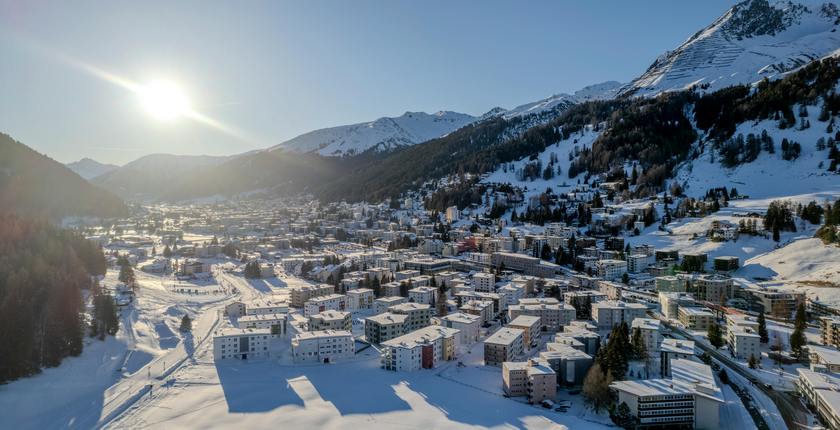
At the World Economic Forum (WEF) in Davos, China reiterated its commitment to green development, in contrast to the United States, whose secretary of commerce said America should rely on oil and gas instead of pursuing a green transition and criticized the European Union’s (EU) net-zero target. US President Donald Trump, for his part, described the energy transition as a “scam” that caused an energy collapse in Europe.

Speaking at the WEF Annual Meeting 2026 in Davos, Switzerland, Chinese Vice Premier He Lifeng emphasized China’s resolve to reduce its greenhouse gas emissions, adding that the country’s upcoming five-year plan would keep the focus on green growth fueled by solar, batteries, and electric vehicles (EVs).

China’s Vice Premier urged other countries to help combat emissions

He also urged other nations and foreign companies to collaborate with China on creating “a green and prosperous future.”

“We invite enterprises from all over the world to embrace the opportunities from the green and low-carbon transition, and work closely with China in such areas as green infrastructure, green energy, green minerals, and green finance,” He said in a speech at Davos.

In contrast, US Commerce Secretary Howard Lutnick criticized the EU’s solar and wind development, as well as its net-zero goal, adding that the green transition is not something the US should pursue. Lutnick also said that the world should focus on coal as an energy source rather than renewables, according to reports.

In January 2025, President Donald Trump signed executive orders reversing much of the previous administration’s climate policy and withdrawing the US from the Paris Agreement once again.

US Commerce Secretary claims seeking net zero without battery production would make the EU subservient to China

“Why are you going to do solar and wind? Why would Europe agree to be net zero in 2030 when they don’t make a battery? So, if they go 2030, they are deciding to be subservient to China, who makes the batteries,” Lutnick said.

“Why would the US, which has oil and natural gas, try to convert to all-electricity? China does not have oil and natural gas – electricity and electric cars make perfect sense to them,” Lutnick said at a WEF panel.

According to news agencies, Lutnick’s harsh criticism of Europe at a VIP dinner on Tuesday made European Central Bank President Christine Lagarde walk out of the event.

Trump slams “the green new scam” and claims China sells wind turbines to others, but does not build its own wind farms

For his part, Trump also criticized the EU’s transition to renewables, claiming that the US had avoided “the catastrophic energy collapse which befell every European nation that pursued the green new scam.” He also described the green transition as “perhaps the greatest hoax in history.”

In his speech in Davos, the US president claimed that wind farms “lose money” and that China only sells wind turbines without building any wind farms itself.

“They sell them to the stupid people that buy them. They don’t use them themselves,” Trump said, adding that China has only built a “couple of wind farms” in order to “show people what they could look like.”

According to available data, China has the largest wind power capacity in the world, at around 600 GW.